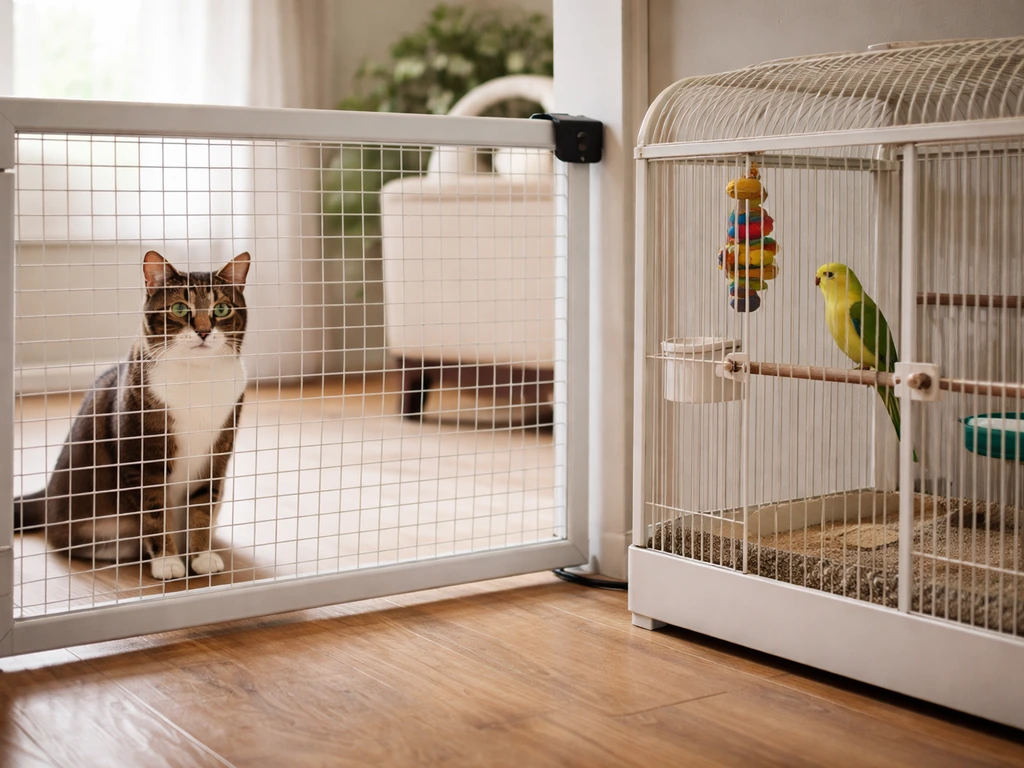
The moment you see your cat with a bird, move fast but stay calm. Get the cat away from the bird immediately, check whether the bird is alive or dead, and then decide your next step based on what you find. If the bird is alive, your window for getting it meaningful help is roughly four hours, so speed matters. If it's dead, your job is safe cleanup and prevention. Either way, do not handle the bird barehanded, and keep other people and pets well clear of the scene.
What to Do When Your Cat Kills a Bird: Safe Steps
Maya Carver
16 May 2026
Immediate safety steps after a cat catches a bird
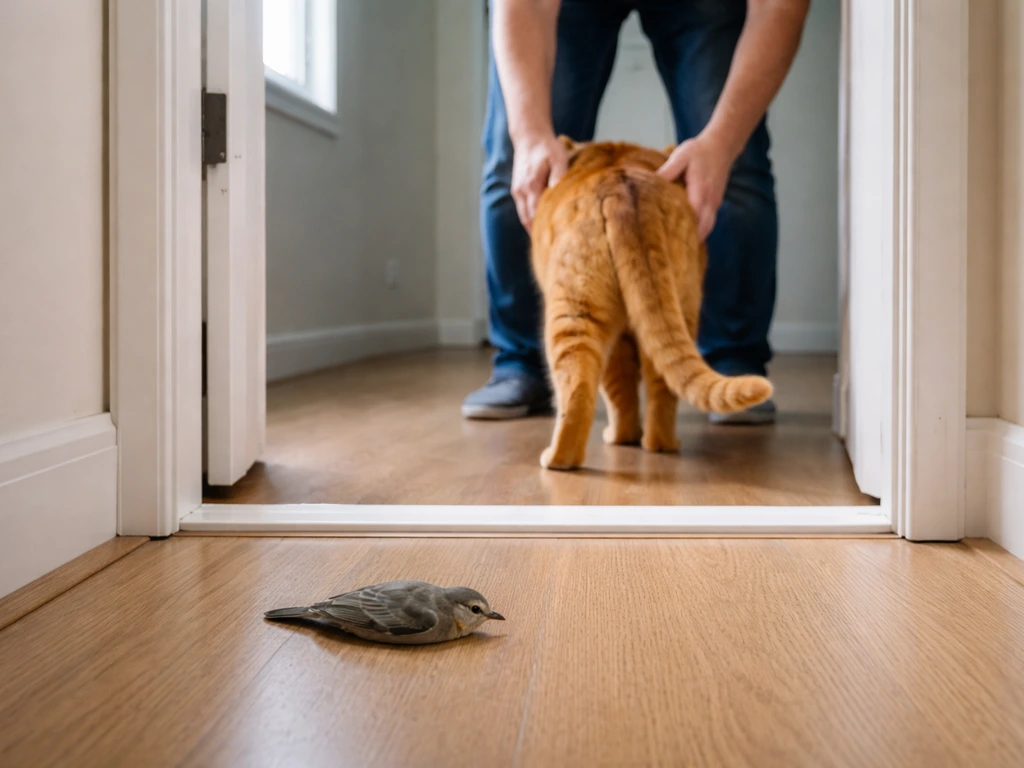
Your first priority is containment. Remove your cat from the area and bring them inside or into a separate room. Do this before you do anything else. A cat that has already caught one bird will often try again the moment your attention shifts, and an injured bird on the ground is an easy target.
- Separate the cat: bring them indoors or close them in a room away from the scene.
- Keep children and other pets out of the area immediately.
- Do not attempt to pick up the bird yet. Observe it from a short distance first.
- Put on disposable gloves before you touch anything, including the bird or any surfaces it contacted.
- If the bird is still in the cat's mouth, clap your hands sharply or use a firm voice to startle the cat into dropping it. Do not reach for the bird while the cat has it.
Keep noise and movement around the bird to a minimum from this point forward. Loud talking, excited children, barking dogs, and hovering people are genuine threats to a bird in shock. Even a bird that looks uninjured may be in life-threatening stress.
How to assess the bird and decide what to do next
Once your cat is secured and you have gloves on, take a careful look at the bird from about a meter away. You are trying to answer one question: is this bird alive or dead? The answer changes everything about what you do next.
Signs the bird is alive
- Blinking, breathing, or any visible chest movement
- Attempting to right itself or move legs/wings
- Holding its head upright, even weakly
- Reacting to your presence by flinching or turning its head
If the bird is alive, move to humane handling immediately (see the next section) and contact a licensed wildlife rehabilitator as fast as you can. Treatment is most effective within the first four hours after a cat attack. Even if the bird looks physically unharmed, cat saliva carries bacteria, especially Pasteurella multocida, that are fatal to birds within 24 to 48 hours without antibiotic treatment. A bird that seems fine can die quickly without intervention.
Signs the bird is dead
- No movement, blinking, or breathing after 30 to 60 seconds of observation
- Limp neck and body with no muscle tone
- Eyes open and fixed, with no response to movement nearby
- Severe visible trauma such as evisceration or crushed skull
If the bird is clearly dead, your next steps are safe removal, proper disposal, and thorough cleaning. Skip to the disease-risk and cleaning section below. One honest note: most birds caught by a cat do not survive, even with professional care. You can give a live bird the best possible chance by acting quickly, but the outcome is often out of your hands.
Humane handling: how to pick up and secure the bird without making things worse
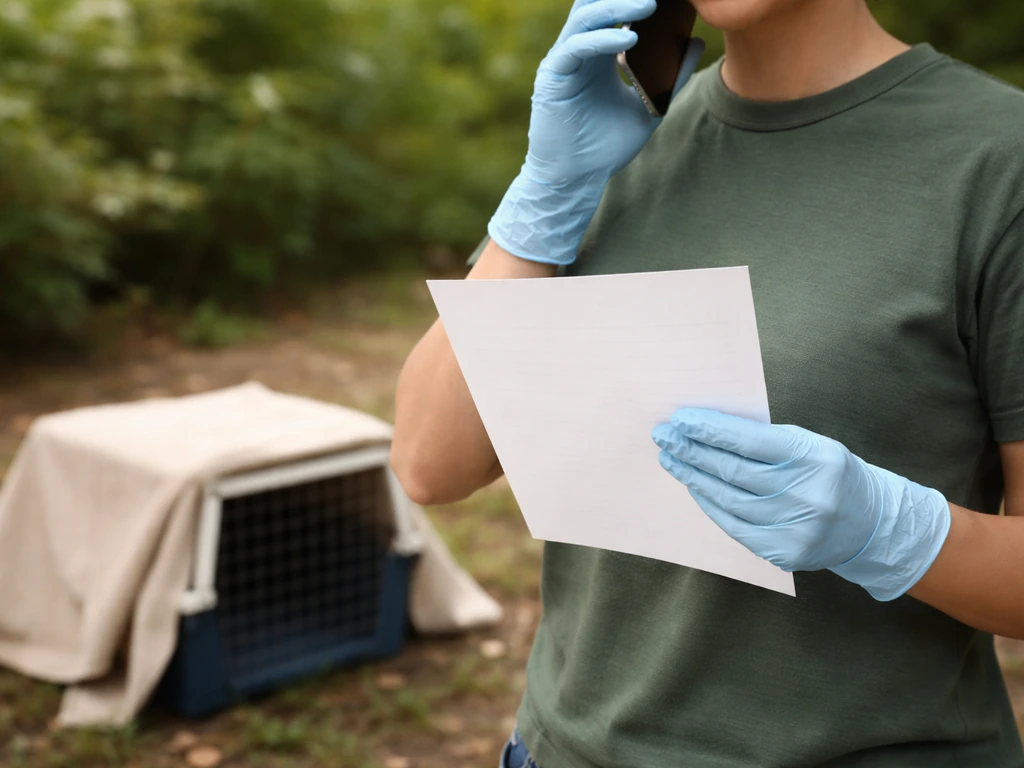
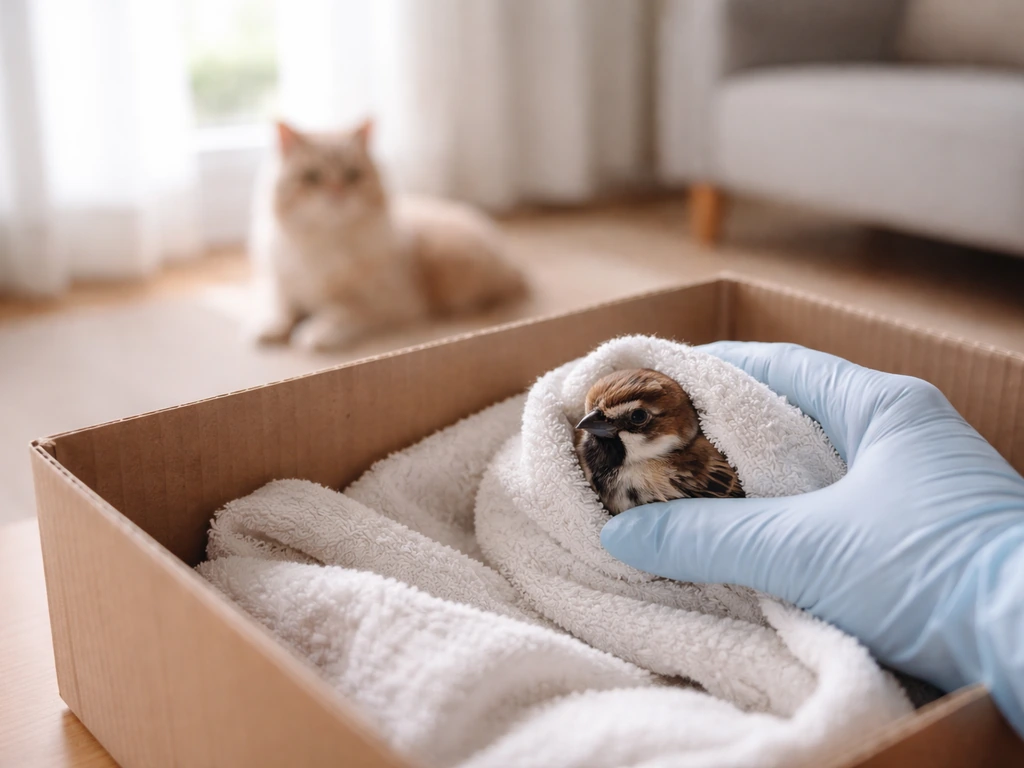
Less handling is always better. Every second a stressed, injured bird spends being touched, turned over, or stared at up close adds to its physiological stress load. Your goal is to get the bird into a dark, quiet, secure container as quickly and gently as possible. Place the bird in a secure container and keep it in a dark, quiet, warm place before calling a licensed wildlife rehabilitator dark, quiet, secure container as quickly and gently as possible.
What you need
- Disposable gloves (impermeable, not just thin latex if you have them)
- A cardboard box with a lid, or a paper bag with air holes, large enough that the bird is not cramped
- A small, clean towel or cloth
- Tape or a rubber band to secure the lid
- A quiet, dark, warm indoor space (room temperature is fine, roughly 70 to 75°F)
How to pick up the bird
- Approach slowly and keep talking and movement to an absolute minimum.
- Drape the towel gently over the bird, covering its head first. A covered head reduces panic dramatically.
- Gently fold the wings against the body as you wrap the bird. Loose, flapping wings can break easily.
- For birds of prey (hawks, owls), keep your grip away from the talons, which can puncture gloves and skin.
- Place the wrapped bird into the box and close the lid immediately. Punch a few small air holes in the top if not already there.
- Put the box somewhere dark, quiet, and away from pets, children, and noise. Do not open it to check on the bird.
Do not offer water, food, or any attempt at first aid. Do not try to splint a wing at home. Well-meaning interventions often cause more harm, and the bird needs a trained rehabilitator, not a dropper of water or a makeshift bandage. Do not keep the bird overnight without professional guidance. Call for help right now. This guide also covers how to stop your cat from attacking your bird in the first place.
Cleaning up and managing disease risk for people, cats, and surfaces
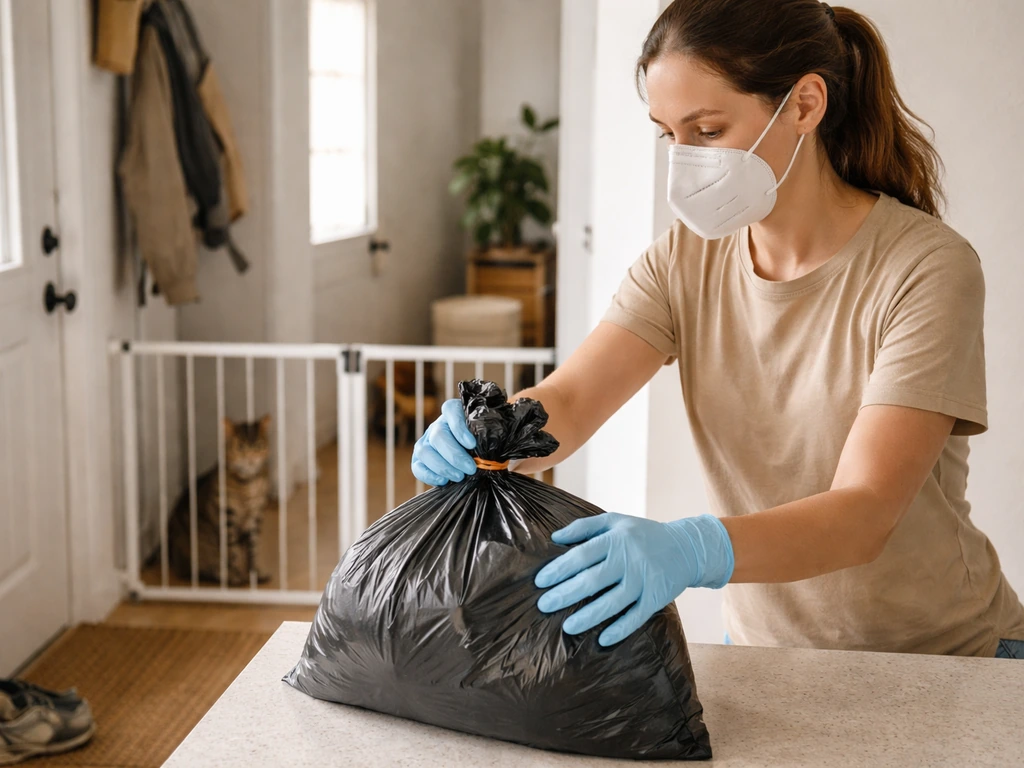
Cat-caught birds carry real health risks. Dead birds, in particular, can harbor pathogens including West Nile Virus, Salmonella, and, increasingly in 2025 and 2026, H5N1 avian influenza. Your cat is also at risk if they ate any part of the bird or were in close contact with it. Take cleanup seriously. Once you have handled the emergency, focus on prevention strategies so you can get your cat to leave your bird alone going forward how to get my cat to leave my bird alone.
Personal protection during cleanup
- Wear disposable impermeable gloves for all handling of the bird, feathers, or surfaces the bird contacted.
- Wear a surgical or N95 mask if handling a dead bird, especially indoors or in an enclosed space.
- Avoid touching your face during cleanup.
- After removing gloves, wash hands thoroughly with soap and water for at least 20 seconds.
- Change and wash the clothing you were wearing during cleanup, particularly if there was direct contact.
Disposing of a dead bird
- While still wearing gloves, place the dead bird directly into a sealed plastic bag without removing it with bare hands.
- Double-bag it and tie or seal both bags securely.
- Place the bags in your outdoor trash bin. Check with your local agency if you suspect a protected or unusual species, as some localities collect dead birds for disease surveillance.
- Do not compost a dead bird.
Cleaning the scene
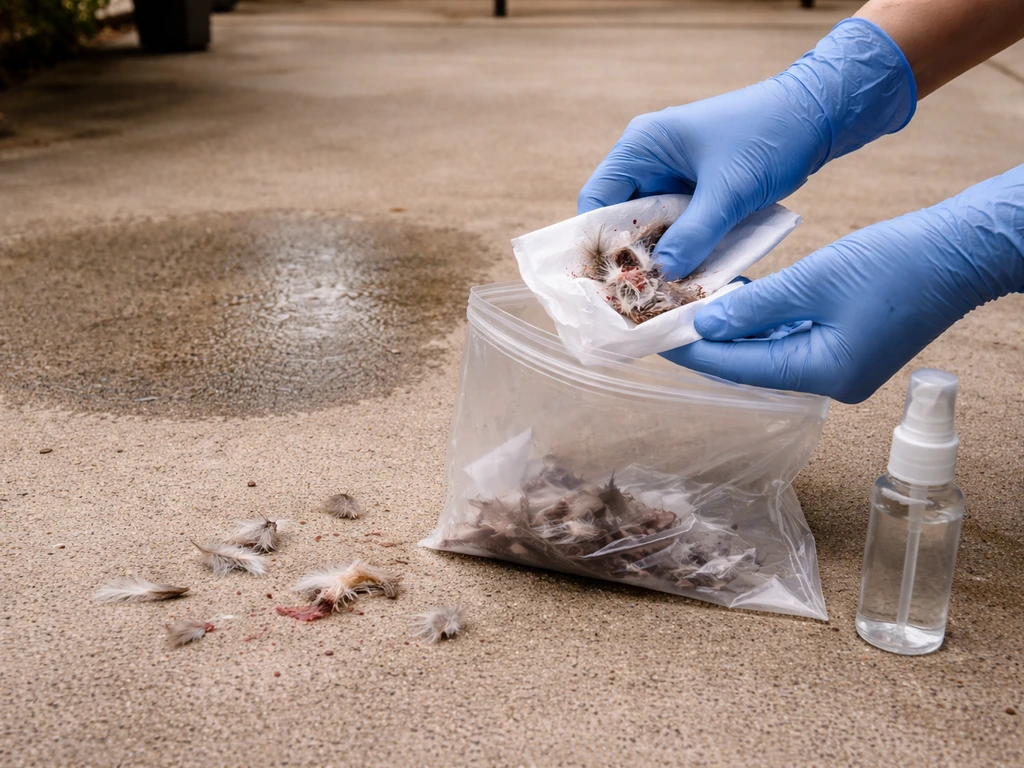
- Collect any feathers, blood, or tissue with paper towels while wearing gloves, and bag them with the bird.
- Disinfect hard surfaces (patio, floor, concrete) with a household disinfectant or a diluted bleach solution (1 tablespoon of bleach per quart of water).
- For grass or soil, remove surface debris and allow sunlight and natural drying to do the rest.
- Wash any clothing, towels, or gloves that came in contact with the bird or scene (or dispose of single-use items).
Monitoring your cat after the incident
Watch your cat closely for the next several days. Signs of H5N1 avian influenza in cats include coughing, sneezing, nasal discharge, difficulty breathing, lethargy, disorientation, and sudden severe illness. If your cat shows any of these symptoms after contact with a wild bird, isolate them from other cats immediately and call your veterinarian. Do not wait to see if they improve on their own.
When to contact wildlife rehab or animal control, and what to say
Call a licensed wildlife rehabilitator any time you find a live bird that a cat has caught, regardless of how uninjured it looks. This is not optional. Cat bacteria are lethal to birds without antibiotic treatment, and you are not equipped to provide that at home. The four-hour window is real.
How to find the right person to call
- Search the U.S. Fish and Wildlife Service's Migratory Bird Rehabilitation Facility locator online for federally permitted rehabilitators near you.
- Contact your local Humane Society, SPCA, or animal control agency. They often maintain a current list of local wildlife rehabilitators.
- In Canada, the BC SPCA and similar provincial SPCAs run wildlife rehabilitation helplines.
- Your local veterinarian may accept injured wild birds or can refer you to someone who does.
What to tell them
- The type of bird if you can identify it (sparrow, robin, pigeon, hawk, etc.)
- The approximate time the cat caught the bird
- What you observed: whether the bird is breathing, moving, responsive
- Any visible injuries (bleeding, wing position, leg position)
- Whether the bird was indoors or outdoors when found
- Your location so they can direct you to the nearest facility or arrange pickup
Under U.S. federal law (50 CFR 21.22), you are authorized to take possession of an injured or sick migratory bird without a permit for the sole purpose of immediately transporting it to a licensed veterinarian or federally permitted wildlife rehabilitator. You are not permitted to keep it, treat it yourself, or release it without professional involvement. If you find a dead migratory bird, a regulatory authorization effective since December 31, 2024 replaced the old salvage permit requirement, but local rules still vary, so check with your state or local agency if the species looks unusual or rare.
Preventing future attacks: cat-proofing and bird-safe building fixes
The most effective thing you can do for wildlife is keep your cat indoors. Outdoor cats kill birds at rates that exceed those of most native carnivores. That is not an opinion, it is documented across multiple wildlife studies. If your cat currently goes outside, this incident is a reasonable moment to reconsider that arrangement, or at minimum to implement some serious modifications.
Cat management options (most to least effective)
| Option | Effectiveness | Notes |
|---|---|---|
| Keep cat fully indoors | Highest | Eliminates predation risk entirely. Best for both cat and wildlife. |
| Supervised outdoor time only | High | Requires consistent human presence. No unsupervised access. |
| Enclosed outdoor 'catio' | High | Gives cat outdoor access without free roaming. Good DIY option. |
| Birdsbesafe collar cover (bright pattern) | Moderate | Shown to reduce bird predation in some studies. Less effective on mammals. |
| Bell collar | Low to moderate | Results are mixed across studies. Some studies show ~50% reduction, others show no effect. |
| Proximity deterrents (motion sprinklers) | Low to moderate | Keeps cats out of specific zones but does not stop roaming elsewhere. |
If full indoor confinement is not possible right now, combining a Birdsbesafe collar with supervised outdoor time and removing bird feeders from cat-accessible areas is a reasonable interim step. But be honest with yourself: partial measures reduce risk, they do not eliminate it. If your cat is jumping onto a bird cage, the same cat-proofing strategies can help prevent repeat attacks.
Bird-safe building and habitat modifications
If you manage a property where birds nest, roost, or frequently land, there are structural steps you can take to make the environment less dangerous. Window strikes are another major killer of birds around buildings, and many simple fixes dramatically reduce collisions.
- Apply bird-safe window film, exterior tape patterns (spaced 2 inches apart horizontally or 4 inches vertically), or crop netting to glass to reduce strike risk.
- Install exterior screens on windows and glass doors, which both reduce strikes and act as a physical barrier.
- Use exterior netting to exclude birds from nesting in eaves, ledges, or gaps where they become ground-level targets after fledging.
- Remove or relocate bird feeders and birdbaths to enclosed areas or elevated positions that cats cannot easily access.
- Keep dense ground-level shrubs trimmed back from areas where cats roam, eliminating cover that allows stealthy approach.
- Consider motion-activated lighting or sprinkler deterrents in garden areas where birds forage on the ground.
Seasonal planning and protected-species considerations
Cat predation on birds is not a uniform year-round risk. Two seasons deserve extra attention: spring fledgling season (roughly April through July in most of North America) and fall migration (August through October). During spring, fledgling birds spend days on the ground while learning to fly, which makes them extremely vulnerable. During fall migration, exhausted birds land at ground level to rest, and unfamiliar territory means they do not know where your cat patrols.
Seasonal checklist
| Season | Key Risk | Action |
|---|---|---|
| Spring (Apr-Jul) | Fledglings on the ground | Restrict cat to indoors or supervised time only. Check yard before letting cat out. |
| Summer (Jul-Aug) | Young birds learning to fly | Keep feeders elevated. Remove low ground cover near nesting sites. |
| Fall (Aug-Oct) | Migrating birds landing to rest | Keep cat indoors at dawn and dusk when ground-level bird activity peaks. |
| Winter (Nov-Mar) | Reduced risk but feeders attract birds | Relocate feeders away from cat access. Check window film is still intact. |
Legal notes on protected species
In the United States, the Migratory Bird Treaty Act (MBTA) protects the vast majority of wild bird species you are likely to encounter, including common songbirds, raptors, and shorebirds. This means that even possessing a feather or egg from a protected species without authorization is technically a federal violation. In practice, you will not be prosecuted for picking up a dead sparrow in a bag and putting it in the trash. But if you find a dead raptor (hawk, eagle, owl), a wading bird, or any bird you do not immediately recognize, contact your U.S. Fish and Wildlife Service regional office or state wildlife agency before handling or disposing of it. Some dead birds are collected for disease surveillance, and some localities require reporting. The USFWS provides a searchable online directory for finding permitted Migratory Bird Rehabilitation Facilities when you need to escalate.
If you are regularly dealing with cats and bird interactions around your property, whether it is your own cat or neighborhood strays, the longer-term strategies covered in related guides on stopping cats from attacking birds and keeping cats away from bird areas give you more detailed options to layer into your prevention plan. The combination of indoor cat management, bird-safe building modifications, and seasonal awareness is genuinely effective. If you want to stop cat kills bird situations, focus on keeping cats indoors and making the area safer for birds year-round cat kills bird how to stop. Each step you take reduces the chance you end up back here, gloved up and watching the clock.
FAQ
How long should I wait before I call a wildlife rehabilitator if the bird seems fine?
Do not wait. Even if there are no obvious injuries, contact a licensed wildlife rehabilitator immediately, because cat bacteria in the mouth can cause fatal illness in birds within about 24 to 48 hours without antibiotics.
What should I do if the bird is still moving but clearly not able to fly?
Treat it as live and injured. Secure your cat first, minimize noise and people around the bird, and place the bird into a dark, quiet, escape-proof container with minimal handling, then call a wildlife rehabilitator right away.
Can I rinse the bird or wipe it off before taking it to help?
No. Avoid washing, applying solutions, or attempting any first aid. Handling and wetting can worsen stress and injuries, and it can delay treatment that a rehabilitator will provide.
Is it safe to pick up the bird with tissues or a towel if I do not have gloves?
Try not to. The key point is to avoid direct barehand contact, but tissues and towels still increase the chance of contamination through tears or poor grip. If you truly have no gloves, use a barrier like thick disposable gloves, then prioritize containment and professional help.
What if my cat only played with the bird but didn’t bite it?
Assume risk. Cat saliva can be present even when damage looks minor, and stress from capture can still make the bird’s condition worse. Contact a rehabilitator for any live bird your cat caught, regardless of how it appears.
If the bird is dead, should I bring it inside or bag it where my family can see it?
Bag it and reduce exposure. Put the bird in a sealed container or trash bag, keep it away from children and other pets, and avoid unnecessary handling. Then disinfect the area where the incident occurred.
What areas should I clean after a cat kills a bird?
Clean the immediate contact zone and anything the cat touched, including nearby floors, countertops, trash areas, and any surfaces with potential saliva or blood. Use appropriate disinfectant for the surface type, and wash your hands thoroughly after cleanup.
My cat ate part of the bird. Do I need to call a vet even if my cat seems normal right now?
You should call your veterinarian for advice. Predation plus contact with wild birds can carry disease risks for cats as well, and early guidance can help you decide whether to monitor, test, or treat symptoms.
What symptoms in my cat after the incident mean it is urgent?
Do not wait if you see coughing, sneezing, nasal discharge, breathing trouble, lethargy, disorientation, or a sudden severe decline. Isolate the cat from other cats and call your veterinarian promptly if any of these show up after contact with a wild bird.
Should I quarantine my cat from other pets for a set number of days?
If your cat had close contact or ate the bird, it is safer to isolate at least immediately and follow your veterinarian’s guidance on duration. The article recommends isolation when symptoms appear, but disease timelines vary, so your vet should set the monitoring period.
Is it okay to keep a live bird overnight if I can’t get help until morning?
No. Do not keep it overnight without professional guidance. Call for help right now, then follow the rehabilitator’s instructions for temporary transport or holding.
What container should I use for a live, stressed bird?
Use a secure, escape-proof container that is dark and quiet, with minimal handling and no constant opening. The goal is to reduce stress, prevent further injury, and make it easier for a rehabilitator to assess on arrival.
If the bird is a species I recognize, can I handle it myself if it seems healthy?
Still avoid DIY. Cat saliva risk does not depend on species, and the article emphasizes that birds need antibiotic-capable care. For any bird your cat caught, contacting a rehabilitator is the correct next step, even if it looks uninjured.
What should I do if I find a dead bird and I am not sure if it is protected?
If you cannot confidently identify it, avoid prolonged handling and escalate to the appropriate wildlife agency. The guidance is especially important for dead raptors (hawks, eagles, owls), wading birds, or birds you do not recognize.
Do I need to report every dead bird to the government?
Not in every case, but reporting can be required depending on location and species. If the bird is unusual or rare, or it is a group the guidance flags (like raptors), check with your state or local agency before disposing.
Will a cat collar or deterrent work if my cat is very determined?
They can reduce risk but are not a guarantee. If you use a Birdsbesafe collar with supervised time, remove other attractants like cat-accessible bird feeders, and expect that partial measures still leave gaps that need indoor confinement or stronger barriers.
When should I adjust my prevention efforts during the year?
Increase vigilance during spring fledgling season (about April to July) and fall migration (about August to October). Those are periods when birds are more ground-vulnerable or exhausted and unfamiliar with local threats.
What is the fastest order of operations when I see this happen again?
Secure the cat first, then assess whether the bird is alive or dead from a safe distance with gloves on, keep the area quiet, and immediately call a rehabilitator for any live bird. If dead, bag and clean the area while keeping people and pets away.
Next Article
How to Stop Your Cat From Attacking Your Bird
Step-by-step humane plan to stop cat attacks on birds now, plus barriers, supervision, behavior training, and prevention