Cut off all light except one open door or window, give the bird a clear, unobstructed path to that single exit, and then back away and wait quietly. That one principle solves the vast majority of rafter bird situations without stress to you or the bird. Everything else in this guide builds on it: how to locate the bird, what to do when the basic method fails, how to handle nests and injuries, and how to seal things up so it never happens again.
How to Get a Bird Out of the Rafters Safely Step by Step
Maya Carver
15 May 2026
Quick emergency safety steps (and what not to do)
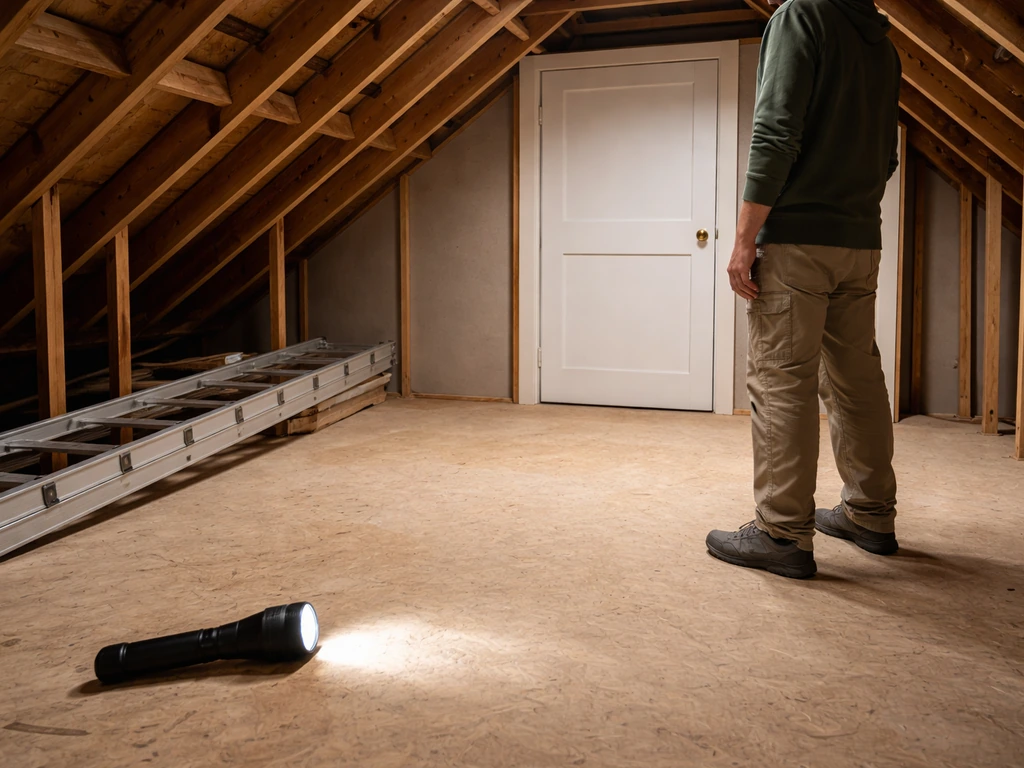
Before you do anything else, take 60 seconds to set yourself up safely. Birds in rafters are almost never dangerous, but the situation around them often is: ladders, low-light conditions, slippery droppings, and the instinct to rush all create real hazards. Here is what to do the moment you discover a bird up there.
- Stay calm and move slowly. Loud noises and fast movements push the bird further into dark corners and tire it out.
- Clear the room of pets and other people. A scared bird that dive-bombs is reacting to perceived threats.
- Do not chase, swat, or throw anything at the bird. It will exhaust itself and may injure itself on rafters or beams.
- Do not use glue traps. Wildlife experts warn these cause severe injury, and removing a live bird from one almost always makes things worse.
- Do not seal any openings yet. You need to know exactly where the bird is before you close anything.
- If you need to get near the bird for any reason, put on safety glasses and a dust mask. Dried droppings are a health hazard (more on cleanup later).
- If the space requires a ladder, use a spotter and make sure the feet are stable before you climb.
Find the bird and map the best escape route
You cannot guide a bird out if you do not know exactly where it is and where the nearest exit is. In a large barn, warehouse, or commercial building this step can take 10 to 15 minutes, and it is worth every second.
Locating the bird
- Listen for wing beats, chirping, or scratching sounds and use them to triangulate position.
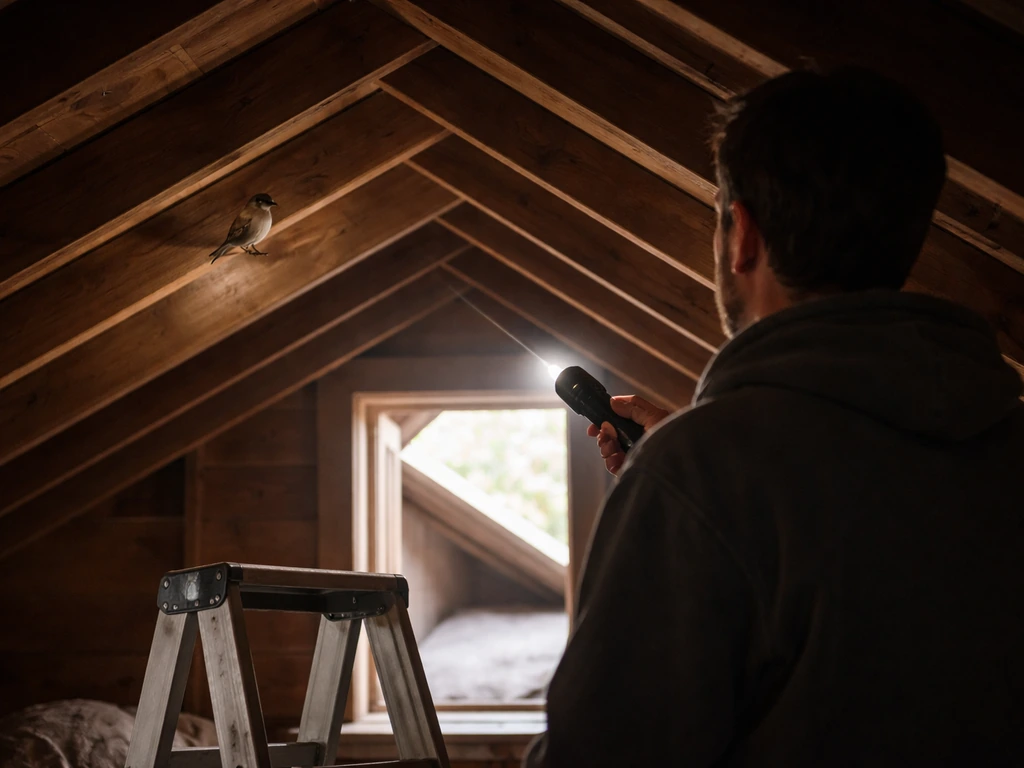
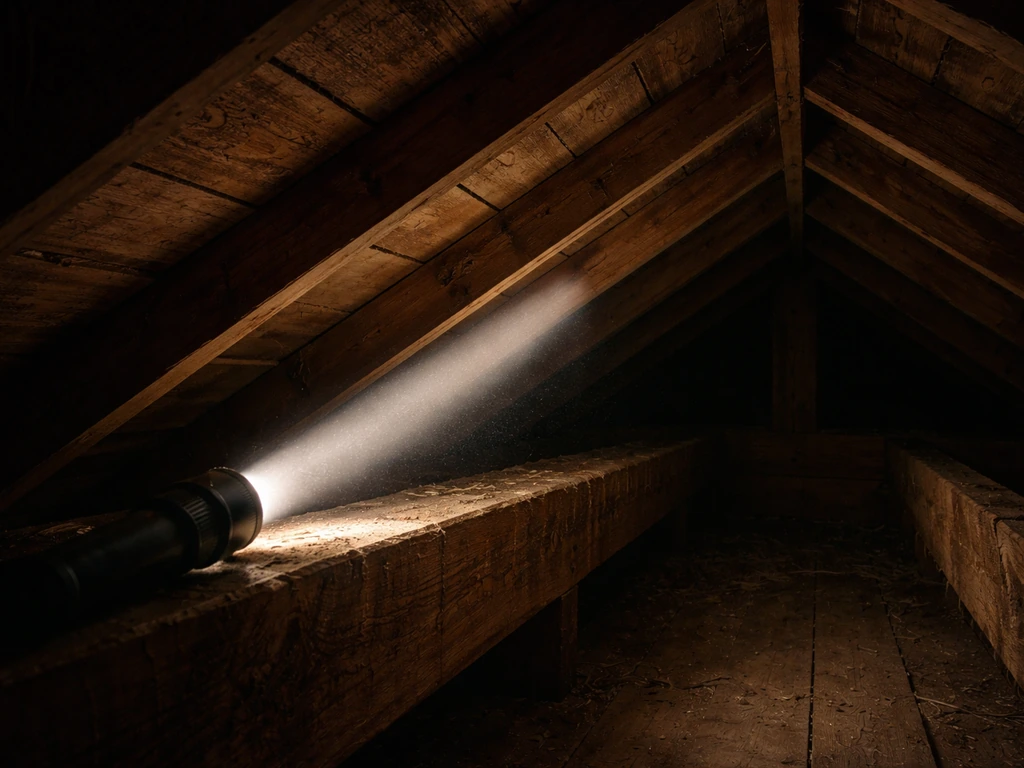
- Shine a flashlight along the top plates, purlins, and ridge beam. Birds tend to perch on the highest available horizontal surface.
- Look for fresh droppings directly below the resting spot, which narrows down the search area fast.
- In attic spaces, check near any existing light source (a vent, a gap in the fascia, a skylight) because the bird will already be gravitating toward it.
Choosing the exit
Pick the single largest opening that is as close to the bird's current position as possible and that leads directly outside. A garage side door, a large barn door, a gable vent you can open wider, or even a removed window screen all work. The key word is single: one open exit with one light source coming through it. Block or cover every other window, vent, and light source in the space. The bird will follow the light, and if there is only one light to follow, it will find the exit.
How to get the bird out humanely using light and a one-way path
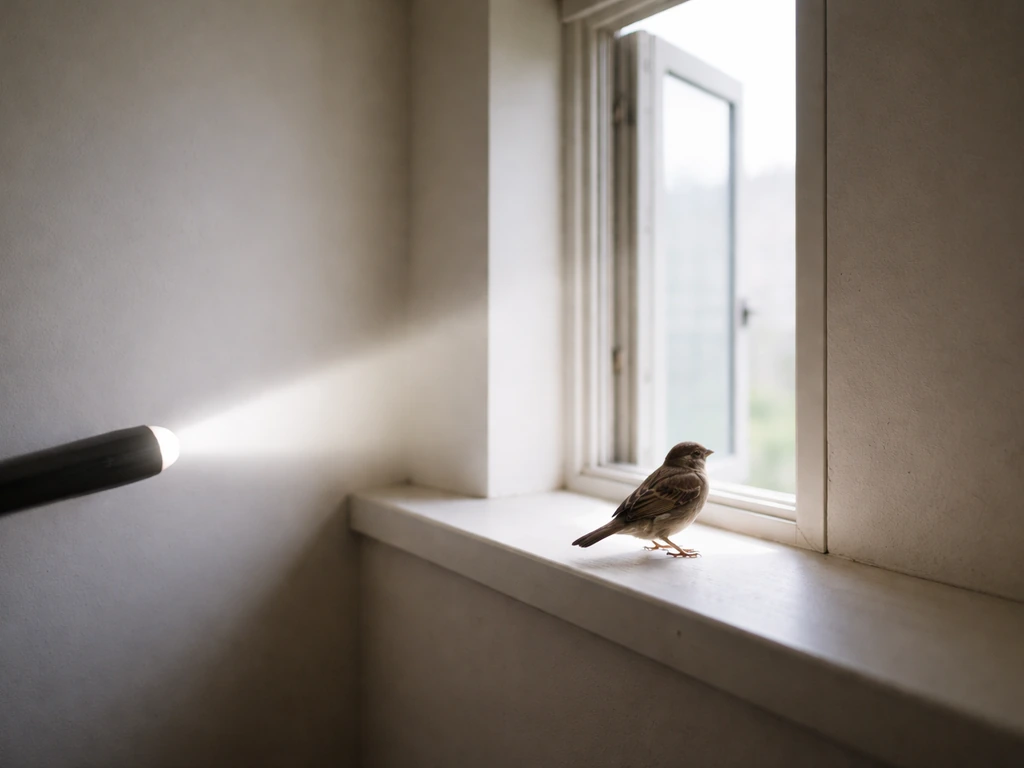
This is the core method. It works for sparrows, starlings, pigeons, swallows, and most other common rafter birds. Give it at least 30 to 60 minutes before deciding it is not working.
- Open your chosen exit door or window as wide as possible.
- Block all other light: cover windows with dark plastic sheeting or cardboard, close interior doors, cover any skylights you can reach safely.
- Turn off any artificial lights inside the space.
- Leave the area entirely. Human presence prolongs the process. Go outside and watch the exit from a distance.
- Wait at least 30 minutes before checking. If you must check, move slowly and quietly.
- If the bird has not moved after an hour, use a broom or a long pole to gently herd it toward the lighted exit from behind. Never poke or prod directly at the bird, just block the opposite direction.
- Once the bird exits, close the opening immediately and note where you think it entered, because that gap needs to be sealed.
In taller or larger commercial spaces, you can accelerate the process by attaching a bright work light or LED panel just outside the chosen exit, angled so it shines inward slightly. This makes the exit the most attractive spot in the space. Some facility managers also use a laser pointer to gently guide the bird (move the dot slowly along the beam toward the exit opening), which can work well for birds that have been sitting still for a long time.
When it gets complicated: injuries, multiple birds, stubborn cases, and hard-to-reach rafters
Injured bird
If the bird is not flying and is sitting with its wings drooping, or you can see an obvious injury, do not attempt to herd it toward an exit. It cannot follow the light method if it cannot fly. Put on gloves and a dust mask, and gently place the bird in a cardboard box with air holes punched in the lid. Keep it in a quiet, dark, warm place (around 70 to 80 degrees Fahrenheit) and contact a licensed wildlife rehabilitator the same day. Do not offer food or water unless told to by a professional. Search the National Wildlife Rehabilitators Association directory or call your local animal control to get a contact number.
Multiple birds
Multiple birds at once usually means one of two things: you have an active roost or you are dealing with a nesting colony. For a small group (two to five birds that wandered in together), the light method still works, though it can take longer because the birds distract each other. Open the largest possible exit and leave the space for 60 to 90 minutes. For a large roost or colony, especially of starlings or pigeons, DIY light methods are unlikely to fully clear the space in one session. You are now looking at a systematic exclusion project, which is covered in the proofing section below.
Bird won't move
A bird that sits in the same spot for hours is usually exhausted, cold, or mildly injured. Make sure you have actually blocked all other light sources: even a quarter-inch gap letting in daylight will confuse the bird. If the space is dark enough and the bird still will not fly toward the exit after two hours, try changing the exit location. Open a different door or window and cover the original one. Sometimes the bird's position relative to the new light source is enough to trigger movement.
Hard-to-reach rafters
Cathedral ceilings, warehouse roof trusses 30 feet up, or complex steel framework in commercial buildings all make direct herding impractical and dangerous. In these cases, your only safe tool is the light method, and you need to be more patient. Set up the exit and darkened space, then stay out for two to four hours. If the building has skylights you cannot cover, wait until dusk: the bird's internal clock will push it toward lower, warmer spots and eventually toward the exit. This is also when a call to a professional wildlife removal company makes the most sense, because they have the equipment and experience to work safely at height.
Nests vs. roosting birds: timing, legality, and what you can actually do
This is where the situation changes significantly and where you can accidentally break the law without realizing it. In the United States, the Migratory Bird Treaty Act protects most wild bird species, their nests, and their eggs. In the UK, the Wildlife and Countryside Act 1981 provides similar protections. The practical upshot is: if there is an active nest with eggs or chicks in your rafters, you generally cannot remove it, disturb it, or evict the birds until the young have fledged and left on their own.
An active nest is one that contains eggs or live young. An inactive nest (empty, no eggs, no young) can typically be removed at any time, though local regulations vary, so check with your state wildlife agency or local authority if you are unsure. Wildlife experts consistently recommend waiting until after the nesting season for any building or exclusion work that would disturb nesting sites. In most of North America, the primary nesting season runs from approximately March through August, though this varies by species and region.
| Situation | What you can do now | What to wait on |
|---|---|---|
| Single bird roosting (no nest) | Use light method to remove immediately | Nothing, proceed with exclusion after removal |
| Active nest with eggs or chicks | Leave nest completely undisturbed | Seal entry points until young fledge (usually 2 to 4 weeks) |
| Empty old nest | Remove nest and clean up | Nothing, seal entry points now |
| Nesting colony (e.g., pigeons, starlings) | Consult wildlife professional before acting | Major exclusion work until nesting season ends |
| Protected species (e.g., swallows, chimney swifts) | Contact state/federal wildlife agency first | Any removal or exclusion work without a permit |
Chimney swifts and barn swallows are two species commonly found in rafter and attic spaces that have specific federal protections. If you see deeply forked tails (barn swallow) or tiny, stiff-winged birds that chatter constantly (chimney swift), do not attempt removal or exclusion without contacting your state wildlife agency or the US Fish and Wildlife Service first.
Cleanup and health precautions after the bird is out
Bird droppings carry real health risks. Histoplasmosis, a fungal lung infection, is the most serious: it is caused by Histoplasma capsulatum spores that grow in accumulated bird (and bat) droppings. The CDC is clear that the primary risk comes from disturbing dried droppings, which aerosolizes the spores. CDC/NIOSH notes that work that disrupts bird or bat droppings aerosolizes spores, so prevention should focus on preventing droppings accumulation and/or reducing dust generation during cleanup. Any cleanup that involves scraping, sweeping, or vacuuming dry droppings without proper protection can expose you to dangerous concentrations.
Cleanup checklist
- Put on an N95 respirator (or better, a P100 half-face respirator), disposable gloves, and eye protection before entering the space.
- Wet the droppings with a 10% bleach solution (1 part bleach to 9 parts water) or an enzymatic cleaner before disturbing them. This suppresses dust and reduces spore dispersal.
- Use damp paper towels or a damp mop to collect material. Do not dry-sweep or use a standard vacuum without a HEPA filter.
- Double-bag all waste in heavy-duty trash bags and seal them before carrying out of the space.
- Disinfect the area with the bleach solution after removal.
- Wash hands thoroughly and bag and discard disposable PPE.
- For large accumulations (more than a few square feet of droppings), contact a professional remediation service. This is not a DIY job.
Also look for and remove any nest material, which can harbor mites, lice, and other parasites. Seal it in a bag before carrying it through your living space.
Long-term bird-proofing: sealing, hardware, and a seasonal prevention plan
Getting the bird out solves the immediate problem. If you are dealing with a bird that is stuck inside a wall, the same calm approach and clear exit plan still apply how to get bird out of wall. Keeping the next one from getting in is what prevents you from reading this article again in six months. Most rafter bird problems come from a small number of repeating entry points, and all of them can be fixed with basic hardware.
Find and seal every entry point
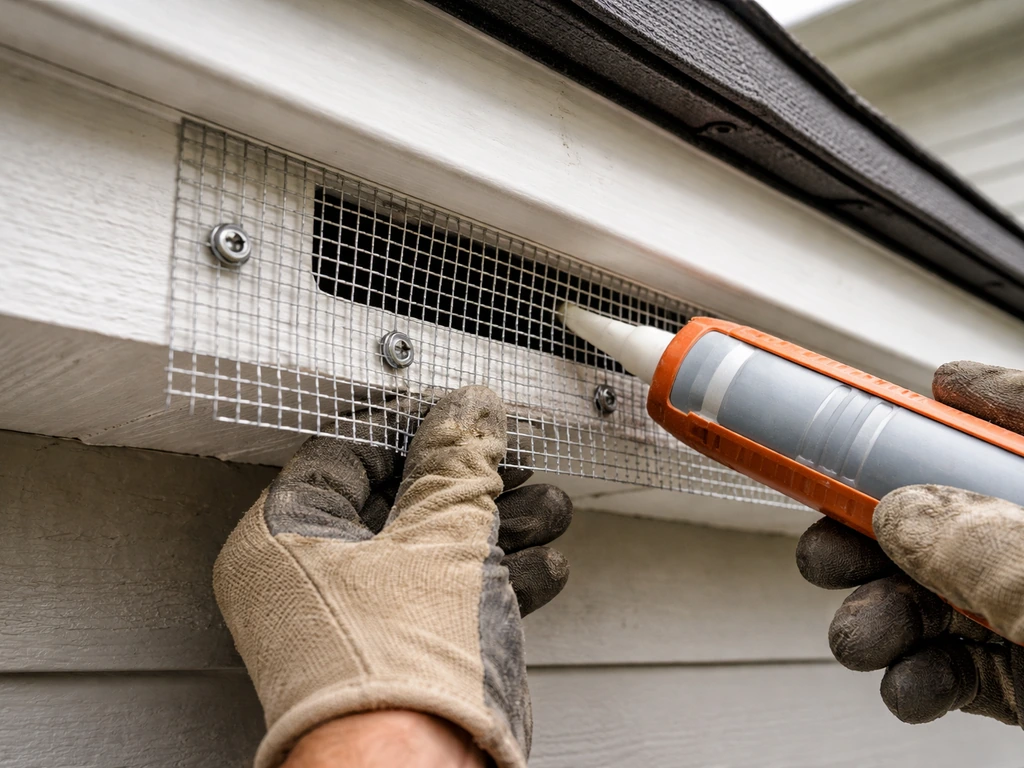
Walk the exterior of the building and look for gaps larger than half an inch anywhere in the roofline: open soffits, gaps at the ridge cap, deteriorated or missing fascia boards, unscreened gable vents, and spaces where utility lines or pipes enter the building. Common materials for sealing include hardware cloth (a quarter-inch galvanized steel mesh), metal flashing, and foam backer rod with paintable caulk for smaller gaps. Avoid soft foam-only products in areas exposed to birds, because birds will peck through them.
Exclusion hardware worth installing
- Quarter-inch hardware cloth over all gable vents and soffit vents (stapled or screwed into a wood frame, not just stapled to the vent louvers)
- Bird netting across large open gable ends on barns and outbuildings, secured with tensioned wire and stainless steel clips
- One-way exclusion doors (also called one-way tubes or excluders) installed over active entry holes during non-nesting season, which let birds exit but not re-enter
- Bird coil or stainless steel spike strips along ridge caps and horizontal beams where birds land and roost, particularly for pigeons
- Vent covers with built-in dampers for dryer, kitchen, and bathroom exhaust vents
Seasonal prevention schedule
| Season | Task |
|---|---|
| Late winter (February to March) | Inspect roofline, soffits, and vents before nesting season begins. Seal any gaps found. Install exclusion hardware at known problem spots while no birds are present. |
| Spring (March to May) | Monitor for new activity. Do not disturb any active nests. Note entry points for post-season sealing. |
| Late summer (August to September) | Once fledglings have left, remove old nests and seal entry points. This is the best window for major exclusion work. |
| Fall (October to November) | Final roofline inspection before winter roosting season begins. Clear any debris that has accumulated in vents or overhangs. |
Also reduce attractants. Open trash, pet food left outside, standing water in low points on your roof or gutters, and dense vegetation close to roof edges all draw birds. Keeping gutters clean and eliminating standing water removes two of the biggest draws.
If you are dealing with attic access issues as well, the overlap with how birds get into attic spaces is significant: many of the same entry points serve both spaces, so proofing one often proofs the other. If you are also wondering how to get a bird out of the attic, focus on the same nearby entry points and proofing steps once the bird is gone. Similarly, basement and crawlspace entries near the foundation are different enough that they need their own inspection. Basements and crawlspaces often need their own approach too, so focus on the specific entry points around the foundation basement bird removal.
When to call a wildlife professional and what to tell them
Some situations are genuinely beyond DIY, and trying to force them through anyway wastes time, risks injury, and can make the bird problem worse. Call a licensed wildlife removal professional or your local animal control if any of the following apply.
- The bird is a protected species (swallows, chimney swifts, raptors, or any bird you cannot confidently identify as a common pigeon or starling)
- There is an active nest with eggs or chicks and the situation poses an immediate structural or safety risk
- Multiple birds or a large roost has established in the space and the light method has not worked after two days
- The bird is injured and cannot fly
- The rafters are more than 20 feet high and accessing them requires specialized equipment
- There are large accumulations of droppings (more than a few square feet) requiring professional remediation
- You have sealed entry points and the birds are still getting back in despite multiple attempts
What to tell the professional when you call
The more information you give upfront, the faster they can help. Have this ready before you call:
- Species if you know it, or a description (size, color, markings, tail shape)
- How long the bird or birds have been there
- Whether you have seen a nest, eggs, or young
- The type of building and approximate rafter height
- What you have already tried
- Any access limitations (narrow attic hatch, no exterior ladder points, live electrical near the area)
A reputable wildlife removal company will ask about nesting status before quoting you, will not recommend glue traps or lethal methods for most common species, and will provide a written plan for both removal and exclusion. The Wildlife Center of Virginia also warns that glue traps can cause severe injury and make removal especially difficult. If a company recommends poison or does not ask about protected species, look for someone else.
FAQ
What if I cannot block all light sources in the rafters (like skylights or small leaks)?
Yes. Close off every other light source you can find, then pick one exit that is closest to the bird and leads outside. If you cannot fully darken the space (for example skylights you cannot cover), wait until dusk, since the bird is more likely to move toward the darker, warmer path that aligns with the exit.
How do I know the exit I picked is actually workable for guiding the bird out?
Use the quiet wait only after you have confirmed the bird has a clear, unobstructed route to the chosen exit. If the opening is blocked by a screen, debris, or a covered vent, the “follow the light” approach can stall. In that case, correct the blockage first, then restart the dark-and-exit setup for another 30 to 60 minutes.
Can I still use the light method if the bird is not flying or looks injured?
Do not. If the bird is sitting low, drooping wings, or obviously injured, it likely cannot follow the light method. In that scenario, place it in a ventilated cardboard box in a warm, quiet area and contact a licensed wildlife rehabilitator the same day, because forcing it to move can worsen injuries and increase exposure to droppings.
Do I need to wear protective gear before I try to get the bird out?
Limit handling. If you do need to box the bird, wear gloves and use a dust mask, but avoid deeper cleaning or aggressive movement of debris while the bird is present. Wait until you have removed the bird and the area is secure before dealing with nests or droppings, because cleanup that disturbs dry material raises health risks.
What should I do differently if there are multiple birds up in the rafters?
If there are multiple birds, the key is whether you have a small wandering group or a roost or nesting colony. For a small group, keep using the single-exit light approach and allow longer time. For larger groups, expect multiple sessions and switch to systematic exclusion, because one attempt rarely clears a big roost all at once.
The bird keeps staring at one spot, what are the best “next steps” before calling for help?
If it has been sitting in the same spot for hours, first confirm you actually eliminated the competing light sources (even a small gap can matter). If it still will not move after about two hours, try changing the exit location so the bird has a new light angle to follow.
What if the bird is far up, in trusses, or in a cathedral ceiling where I cannot reach safely?
In tall or complex rafters where you cannot safely access the bird, rely on the light setup and extend your patience, stay out of the area for a longer window, and consider professional help sooner. Adding direct work-light access from a safe outside position can help, but do not climb or reach unsafely for “herding.”
Can I seal entry holes immediately after the bird is out?
Most of the time, yes, but be careful about how quickly you seal. If there is an active nest with eggs or chicks, exclusion timing is restricted, and sealing too early can be illegal and harmful. Wait until fledging is complete or consult wildlife authorities if you are unsure whether a nest is active.
Are glue traps or deterrent sprays safe alternatives if the light method fails?
Not with pets and not with chemicals. Keep cats inside and do not use glue traps or poisons, because they can be inhumane and may violate protections for many species. If exclusion is needed, use physical barriers like hardware cloth and proper sealing after the bird is gone and you have addressed any nesting status.
What is the safest way to handle droppings or nest material after the bird leaves?
Search for and remove droppings and nest material carefully after the bird is out. Avoid sweeping or vacuuming dry droppings without appropriate protection, since aerosolized spores are the main concern. Bag nest material before carrying it through living areas so contamination does not spread.
How do I prevent repeat issues if the bird may have come from the attic, not just the rafters?
Yes, your proofing should cover the same nearby entry points, but do a targeted inspection around the attic, foundation, and roofline that match each area’s typical access routes. Birds can use multiple similar gaps, so fixing one location without checking adjacent spaces can leave other entry paths open.
Next Articles
How Did a Bird Get in My Basement? Quick Fix Guide
Step-by-step humane bird exit plan, safety tips, entry-point checklist, and prevention to stop birds returning to baseme
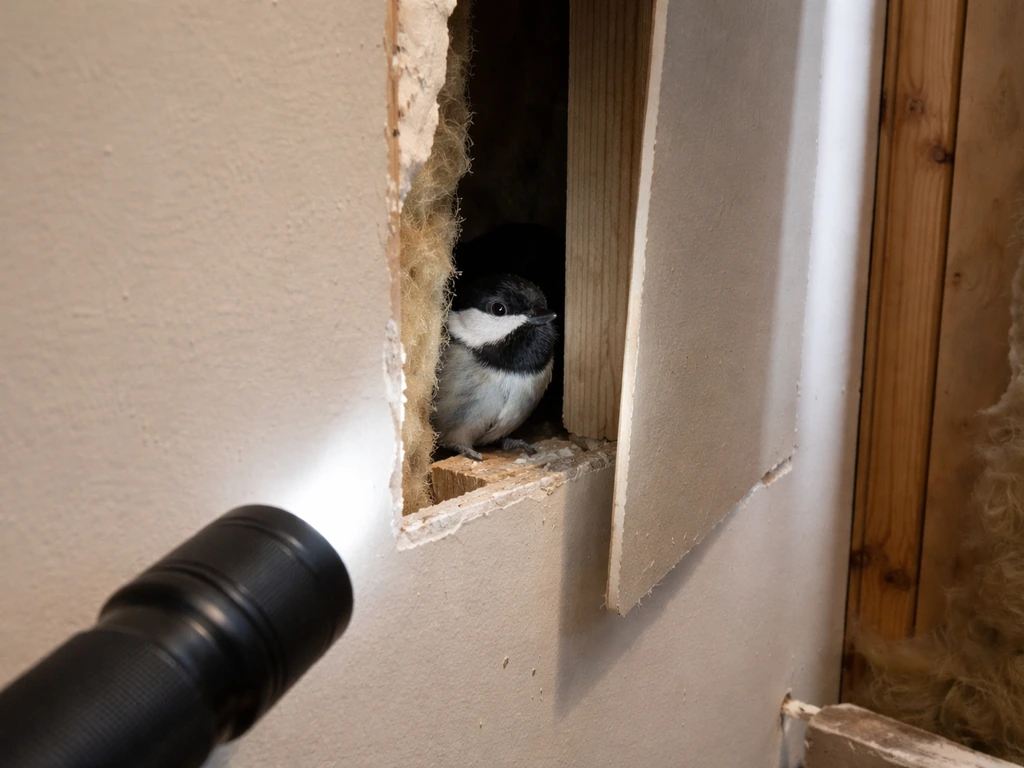
How to Get a Bird Out of a Wall: Safe Steps Today
Step-by-step guide to safely remove a bird trapped in a wall, stop re-entry, and prevent repeats with humane steps.
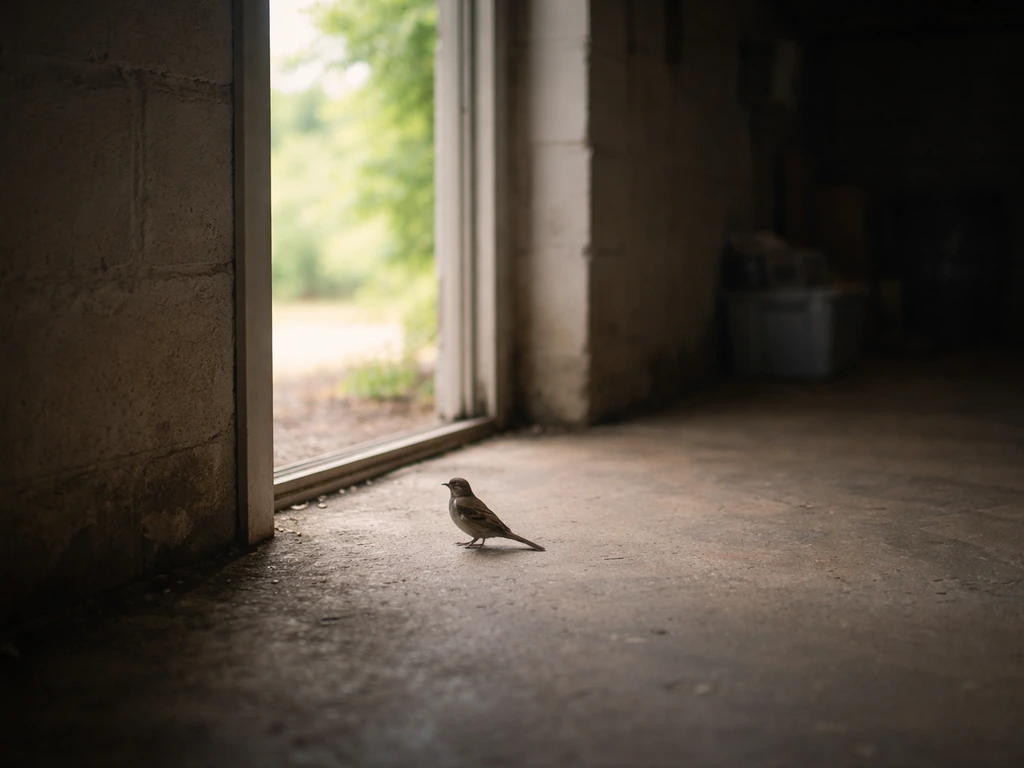
How to Get a Bird Out of Your Basement Safely and Humanely
Humane, step-by-step plan to get a bird out of your basement safely, avoid mistakes, and prevent it returning.