If there's a bird in your attic right now, here's the short answer: open or create a clear exit, dim the space, stay calm and quiet, and give the bird a chance to find its own way out. If you think the bird may be trapped in a basement area instead, the same humane, light-and-exit approach can help you figure out how to get it out safely how to get a bird out of your basement.
How to Get a Bird Out of the Attic Safely and Humanely

Maya Carver
20 Apr 2026
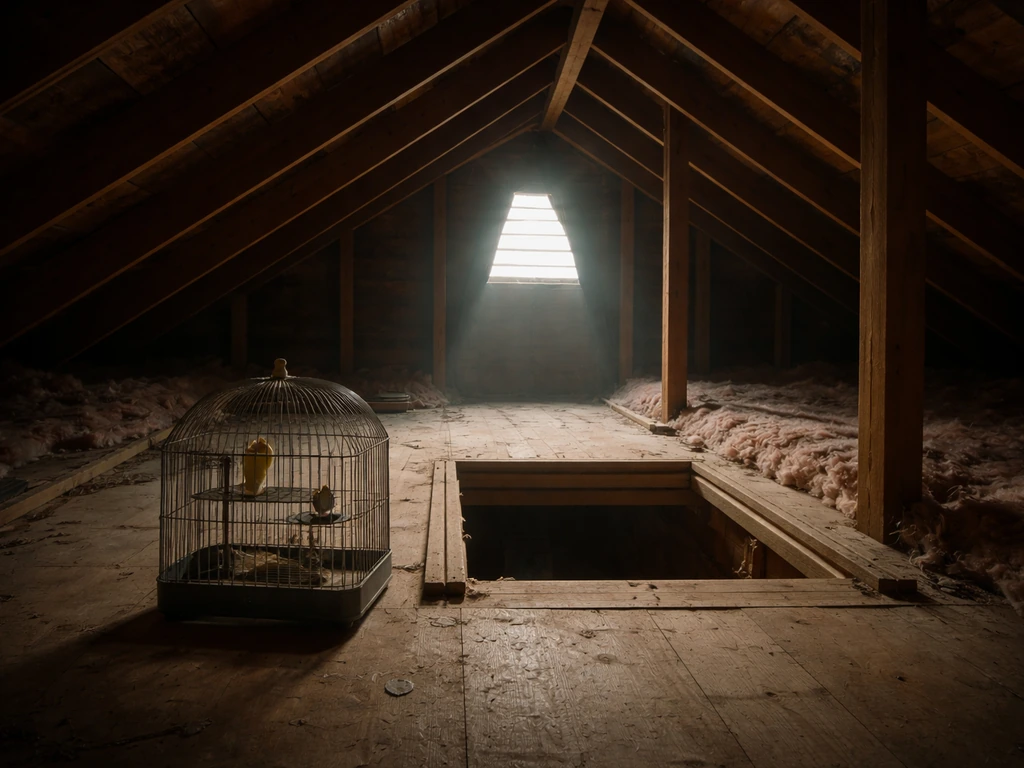
If the bird is in a basement instead of an attic, the same humane exit approach applies, but you'll focus on opening a clear escape route from the basement level how to get a bird out of your basement. If you are wondering how did a bird get in my basement, start by opening the basement exit route first, then you can go back and track down the likely entry gaps before sealing up.
Most birds will leave on their own within a few hours once they can see a way out and feel safe enough to move. The steps below walk you through exactly how to do that safely, what to do if it won't leave, how to clean up afterward, and how to seal things up so it doesn't happen again.
Quick safety first: what to do in the next 10 to 30 minutes
Before you do anything else, protect yourself. Attics concentrate droppings, dust, insulation fibers, and potential pathogens. Even if the bird just got in, you need to treat the space as a respiratory hazard the moment you open the hatch.
- Put on an N95 respirator (or better) before entering. The CDC specifically recommends an N95 or higher-rated respirator when there's any chance of disturbing bird droppings, because dried feces can carry Histoplasma fungal spores that cause histoplasmosis.
- Add disposable gloves, eye protection (goggles or a face shield), and old clothes you can bag up afterward.
- Do not sweep, vacuum, or disturb any droppings you see. Dry sweeping or vacuuming aerosolizes the most dangerous particles. Leave them alone for now.
- Check whether the bird is alone and appears to be an adult. If you see a nest with eggs or chicks, stop and read the legal section below before proceeding.
- Tell other household members to stay out of the attic access area and keep interior doors between the attic and living space closed. Birds in a panic can find their way into rooms very quickly.
- If the attic has a pull-down stair or ceiling hatch, prop it open to a manageable width rather than flinging it wide, so you control whether the bird drops into the living area.
Attics are also fall hazards. Use a rated ladder, step only on joists or a solid board laid across them, and never step on drywall between joists. Bring a headlamp, not just a phone flashlight, so both hands stay free.
How to get the bird out: humane DIY escape-route steps
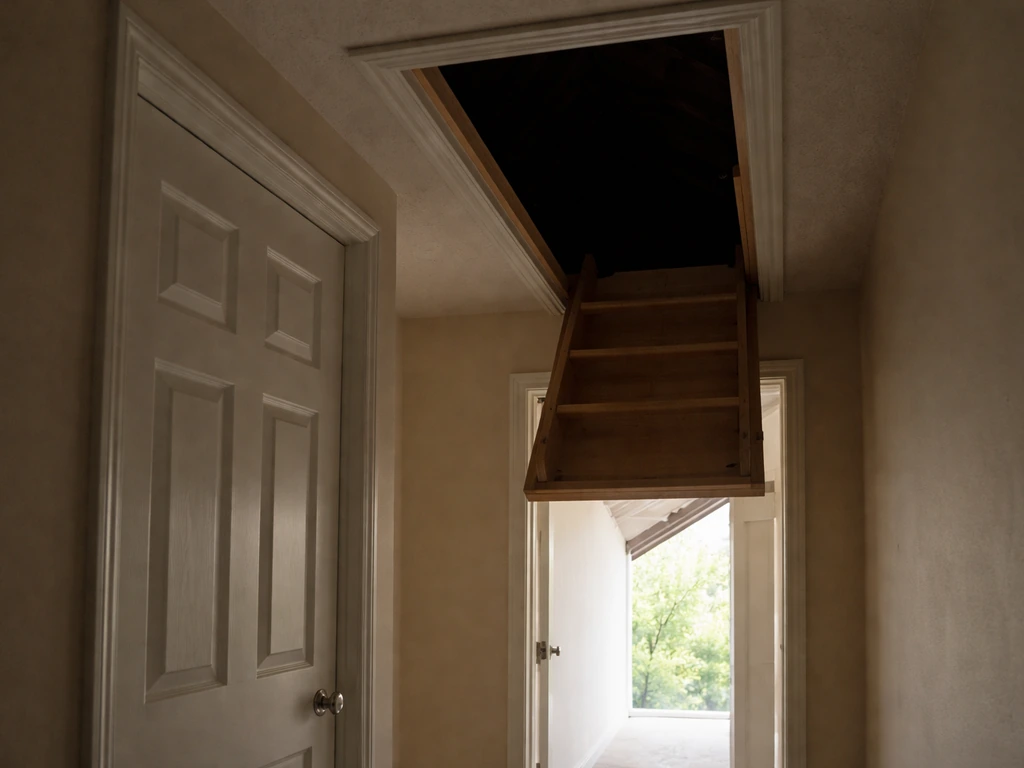
The goal is to make the outside look more appealing than the inside. Birds navigate by light, so the best approach is to darken the attic as much as possible and then open or reveal a single well-lit exit. Here's the sequence that works most reliably:
- Block off any open path into the living area first. Close the attic hatch or stuff a towel in the gap so the bird cannot drop into your bedroom or hallway while you work.
- Identify the entry point the bird used (more on how to find it below) and open or enlarge it temporarily to create a clear exit. This is usually a vent, a gap at the eave, or a gable louver.
- If there are attic windows, open them fully. Natural daylight is the strongest draw for a disoriented bird.
- Cover or turn off any artificial lights inside the attic so the only bright spot is the exit you've opened.
- Leave the attic quietly. Give the bird at least one to two hours undisturbed. A panicked, cornered bird is much harder to move than a calm one that has had time to orient itself.
- Come back and check. In most cases the bird will be gone. If it has moved closer to the exit or is perched near the opening, that's a good sign. Give it more time.
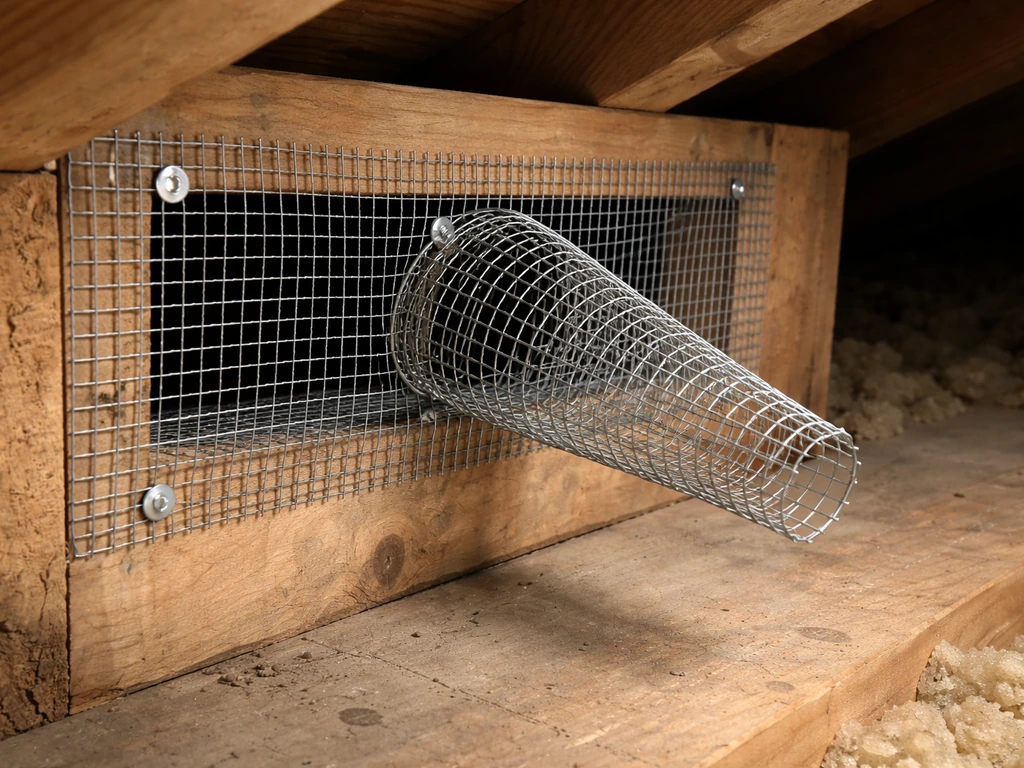
- If the bird is still present after two to three hours, place a one-way exclusion door or a piece of hardware cloth fashioned into a funnel cone over the entry point from outside. This lets the bird push out but not re-enter. Leave it in place for three to seven days to make sure all birds have exited, then permanently seal the opening.
- As a last resort for a bird that is clearly exhausted or injured, you can attempt a slow, gentle herd: move toward it from behind with a large towel or cardboard sheet held wide, guiding it toward the open exit. Never grab or chase.
If the bird drops into a finished ceiling space (between the attic floor and the room ceiling below), the situation is more like getting a bird out of a wall cavity. If the bird is in a wall instead of an attic, the same humane principles apply to getting it out without trapping it inside how to get bird out of wall. The same light-toward-exit principle applies, but access is harder. That scenario deserves its own treatment, and the wall-cavity and rafter-space situations are closely related problems worth reading up on separately.
Where the bird might be and how to access the right area safely
Birds in attic spaces tend to cluster near where they entered, near any light source, or near rafters and roof sheathing where they can perch. If you need to focus specifically on rafters in a bird removal case, use this guide for how to get a bird out of the rafters. Knowing the most likely hiding spots saves you from a long, stressful search.
Common entry points and where birds end up
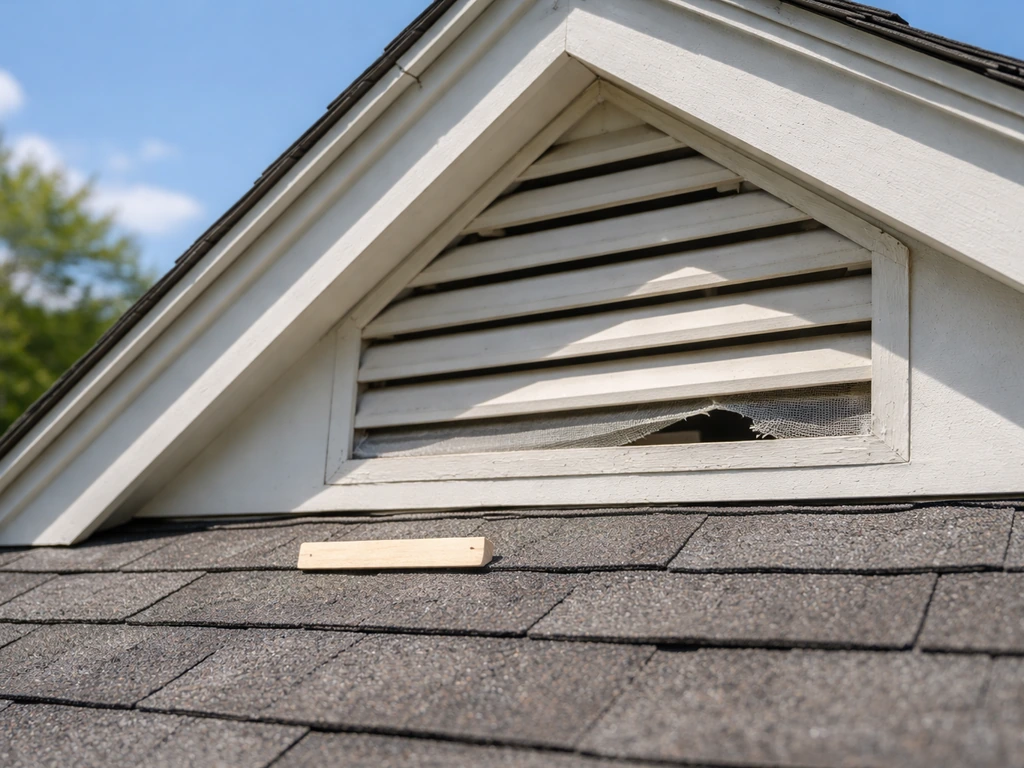
- Gable vents: louvered vents at the triangular end walls of the attic. Screens deteriorate over time, and sparrows, starlings, and pigeons exploit any gap larger than about half an inch.
- Ridge vents: the continuous vent running along the roof peak. Damage or improper installation creates gaps birds can enter through, and once inside they often roost right along the ridge.
- Soffit and eave areas: the underside of the roof overhang is one of the most common wildlife entry zones. Soffit screens corrode or pull away, and where the fascia meets the roof deck there can be a gap at the eave return.
- Plumbing stack and dormer vents: pipe penetrations through the roof and dormer corners are routinely left with gaps that birds squeeze through.
- Damaged or missing roof tiles and flashing: even a small lifted corner of flashing or a cracked tile creates an opening.
To find the specific entry point, go outside on a bright day and walk the roofline looking for gaps, missing screens, or signs of fresh droppings below a vent or gap. From inside the attic with lights off, look for pinpoints of daylight. Those bright spots are your entry points and your exit candidates.
Accessing the attic safely
Most residential attics are accessed through a ceiling hatch in a closet or hallway, or via a pull-down stair. Set your ladder on firm, level ground before pulling down the stair. Once up, lay a plank or a sheet of plywood across several joists before moving around. Blown-in insulation makes it almost impossible to see where the joists are, so probe with a foot before shifting your weight. Wear knee pads if you'll be crawling. Keep your path to the hatch clear at all times so you have a quick exit if you need it.
If it won't leave: troubleshooting and when to escalate
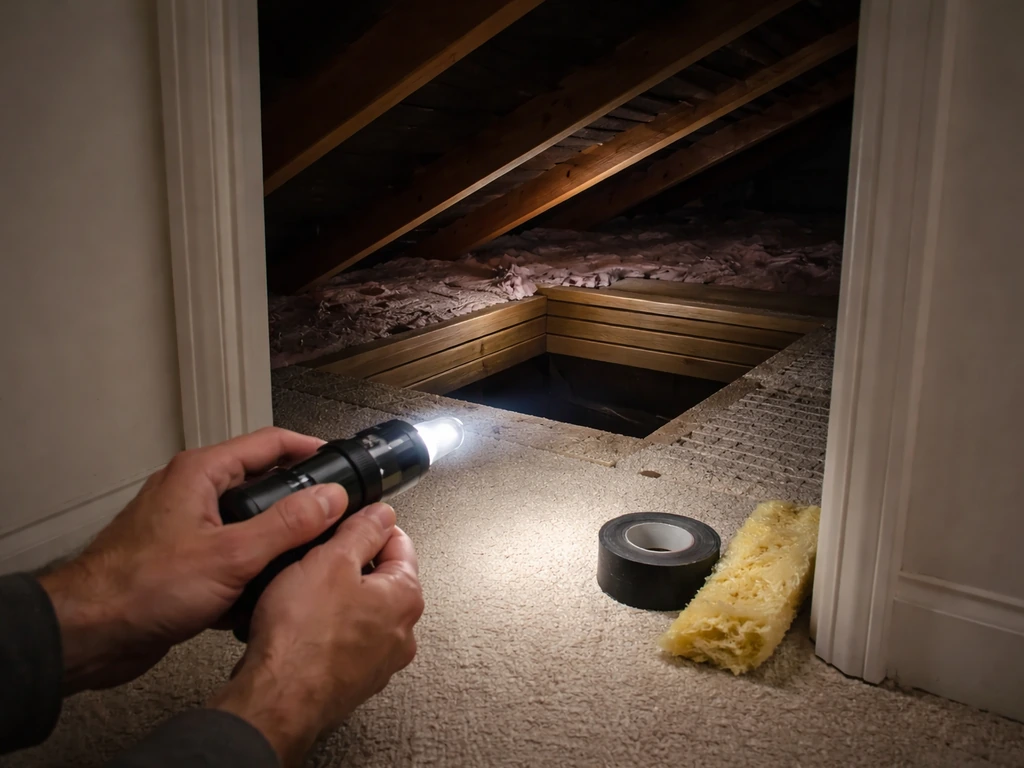
Most birds leave within a few hours once there's a clear, bright exit and the attic is quiet. If yours hasn't, work through this checklist before deciding whether to call a professional:
| Problem | Likely Cause | What to Try |
|---|---|---|
| Bird ignores the open exit | Other light sources competing with the exit | Block skylights, cover any gaps that let in light except the designated exit |
| Bird hides in insulation and won't move | Exhaustion or injury | Leave it alone overnight with exit open; check in the morning. A rested bird often leaves at dawn. |
| Bird keeps re-entering after leaving | Multiple entry points or no one-way barrier in place | Install a one-way exclusion funnel at the main entry; check for secondary gaps and block them temporarily |
| Bird is in the wall cavity or soffit channel, not the open attic | Fell or squeezed through an interior gap | This becomes a wall-removal or soffit-access problem; consider calling a wildlife technician |
| Multiple birds present, or nesting material visible | Active colony or breeding season nest | Stop all DIY removal immediately; read the legal section below and contact a permitted wildlife removal company |
| Bird appears injured (not flying, sitting on floor) | Window strike, exhaustion, or illness | Place a ventilated cardboard box over it gently to contain it, then call a licensed wildlife rehabilitator |
If the bird has been in the attic for more than 24 hours, shows no movement toward the exit, or if you find an active nest, it's time to call a wildlife removal professional. Give them the species if you know it, the location and approximate size of the entry point, and whether you've seen a nest or multiple birds. That information helps them show up prepared.
After it's out: cleanup, health risks, and damage checks
Once the bird is gone, resist the urge to grab a broom and clean up fast. How you clean matters as much as whether you clean, because bird droppings can carry Histoplasma capsulatum, the fungus responsible for histoplasmosis, and disturbing dry droppings without proper precautions is how people get exposed. NPS also warns that stirring up dust from areas contaminated with large quantities of bird droppings or bat guano can put people at risk for histoplasmosis infection.
Cleanup steps to do safely
- Gear up again: N95 respirator, disposable gloves, eye protection, and disposable coveralls or old clothes you'll bag immediately after.
- Do not sweep or vacuum dry droppings. This is the most important rule. The CDC and NPS both explicitly warn against sweeping or vacuuming dried bird or rodent waste because it creates airborne infectious particles.
- Wet the droppings first. Use a spray bottle with a diluted bleach solution (1 part bleach to 9 parts water) or a commercial disinfectant. Soak the material thoroughly and let it sit for five minutes.
- Wipe up with paper towels or disposable rags and seal everything in a heavy-duty plastic bag before removing it from the attic.
- Mist any remaining soiled surfaces with disinfectant and wipe down. Do not create excess pooling liquid near electrical components or insulation.
- Bag and remove all used PPE and cleaning materials. Wash hands thoroughly even after glove removal.
- If the accumulation is large (multiple buckets worth, or if the bird has been roosting for weeks), the CDC says to call a professional hazardous waste company rather than handling it yourself.
Damage checks before you seal up
While you're up there, check for the following before closing the attic back up: damaged or compressed insulation directly under a roosting or nesting spot (insulation saturated with droppings loses its R-value and needs replacement), any wiring the bird may have pecked at or that droppings have contacted, water stains or rot at the entry point area (wet entry points often mean the gap has been open for a while), and any structural wood showing softening or discoloration from accumulated moisture and waste. Photograph anything concerning for your insurance company or contractor.
Prevent it from coming back: proofing and exclusion plan
Getting the bird out solves today's problem. Sealing the attic properly solves next year's problem, and the year after that. Birds return to familiar entry points, so if you don't close them permanently, you'll be doing this again.
Sealing the entry points
- Hardware cloth (half-inch galvanized steel mesh) is the best material for covering vents, gable louvers, and openings. It's chew-resistant and weather-durable. Secure it with screws and washers, not just staples.
- Replace damaged soffit screens with new aluminum or vinyl soffit panels rather than patching with tape or foam. Foam and caulk alone will not hold against a persistent bird.
- Seal eave-return gaps (where the roof deck meets the fascia at the overhang) with a backer rod and exterior-grade caulk, or with metal flashing if the gap is wider than a quarter inch.
- Cap all plumbing stack vents with purpose-made vent caps that have integral screens. These are inexpensive and available at any hardware store.
- Check ridge vent for damage or lifted sections and replace the mesh insert if it's degraded.
- For large open areas like barn lofts or commercial attic spaces, heavy-duty exclusion netting installed across the opening is the most practical solution.
One-way doors and timing
If you suspect more than one bird may have been using a gap, install a one-way exclusion door (a funnel of hardware cloth or a commercial one-way valve) over the primary entry point and leave it in place for three to seven days. Once you're confident all birds have exited, remove the device and permanently seal the hole. Do not skip this step and seal directly over the opening, because trapping a bird inside the structure is both inhumane and, for many species, illegal. Environmental Literacy Council says that destroying nests in a way that leads to the unpermitted take of migratory birds or their eggs is illegal, reflecting the MBTA’s take focus.
Seasonal planning
The best time to seal attic entry points is late summer through early fall, after breeding season ends and before birds start seeking winter roost sites. A secondary inspection window is late winter, before the spring nesting season begins around March in most of the U.S. Mark your calendar for a roofline walk-around every October and every February. It takes about 20 minutes and catches problems before they become infestations. Spring and early summer are the worst times for DIY sealing because active nests may already be inside, and sealing around an active nest creates legal and practical problems.
Legal protections and when you need a wildlife professional
This is the part most homeowners skip, and it can get them into serious trouble. The Migratory Bird Treaty Act (MBTA) is a federal law that protects the vast majority of wild bird species found in the U.S. Under the MBTA, it is unlawful to pursue, hunt, take, capture, kill, or possess any migratory bird, or any part, nest, or egg of such a bird, except as permitted by federal regulations.
That means that if a bird has built an active nest in your attic, and the nest contains eggs or dependent young, you generally cannot legally remove that nest without a federal permit. The USFWS defines an active nest as one that contains eggs from the time the first egg is laid until the fledged young are no longer dependent on the nest. Once the nest is genuinely inactive (no eggs, no chicks, no adults returning to it), you can remove it and seal the entry point.
What you can and cannot do without a permit
| Action | Generally Allowed Without Permit? | Notes |
|---|---|---|
| Guiding an adult bird out of the attic without touching it | Yes | Passive exclusion and light-guiding are generally fine |
| Installing a one-way exclusion door after nesting season | Yes | Confirm no active nest is present first |
| Removing an inactive, empty nest after birds have left | Yes | Nest must be confirmed inactive and abandoned |
| Removing an active nest with eggs or dependent chicks | No, federal permit required | Contact USFWS Migratory Bird Permit Office for your region |
| Harming, killing, or trapping a migratory bird | No | Prohibited under the MBTA regardless of circumstances |
| Handling an injured bird without a rehabilitator license | Generally No | Contact a licensed wildlife rehabilitator; holding a wild bird without authorization may violate state and federal law |
If you're unsure whether the bird in your attic is a protected species or whether a nest qualifies as active, the safest move is to contact your regional USFWS Migratory Bird Permit Office before taking any action. The Florida Fish and Wildlife Conservation Commission advises homeowners to do exactly this before attempting nest removal, and the principle applies in every state. A quick phone call or email protects you legally and ensures you're not disrupting a protected bird's breeding cycle.
When to call a wildlife removal professional
- You've found an active nest with eggs or chicks inside the attic.
- There are multiple birds present, suggesting a colony or recurring roosting site.
- The bird is in a wall cavity, soffit channel, or inaccessible space where standard exclusion won't reach.
- The bird appears sick or injured and needs a licensed rehabilitator.
- The droppings accumulation is large (more than a bucketful) and requires professional hazardous waste cleanup.
- You've tried passive exclusion for 24 to 48 hours and the bird is still present with no sign of movement toward the exit.
- You're not comfortable working in the attic safely, especially around electrical wiring or on a steep-pitch roof.
When you call a wildlife removal company, ask specifically whether they use humane exclusion methods, whether they are permitted under the MBTA for any nest-related work, and whether cleanup is included or separate. A reputable company will answer all three questions without hesitation.
FAQ
Should I run fans or open other windows to get the bird to leave faster?
Stop ventilation changes that could stress the bird. Close interior doors to avoid herding it toward living areas, then focus on controlling light and access from the attic hatch so the exit route is the only obvious path. If you have to open the hatch, do it slowly and keep the rest of the home quiet.
What if I find a nest while trying to get a bird out of the attic?
Look for signs of a nest within reach of the bird’s likely entry path, such as bulky material tucked into insulation pockets, repeated droppings at the same spot, or chirping from within the insulation. If you find eggs, chicks, or a strongly persistent pair, treat it as active and do not seal until it is inactive.
How can I tell if there is more than one bird in my attic?
Assume there may be multiple birds if droppings are widespread, there are repeated entry points, or you hear more than one vocalization. In that case, set up exclusion on the main gap and wait the full 3 to 7 day window before sealing permanently, so you do not trap a bird inside.
Can I clean up immediately after the bird leaves the attic?
Avoid cleaning until the bird is out and you can control airborne dust. Use appropriate respiratory protection (at least a properly fitted N95 or better), ventilate the attic if possible, dampen droppings before disturbing them, and bag debris for disposal rather than sweeping dry.
What should I do if I can’t reach the bird safely with my ladder and attic access?
If you cannot safely access the attic or reach the hatch area without stepping between joists or disturbing insulation, do not improvise. Use a professional who can reach safely, identify the entry point, and perform exclusion and sealing without forcing the bird deeper.
Why can’t I just seal the entry hole after I hear the bird stop moving?
Do not seal over an opening that may still contain birds, even if you think they are gone. Use a one way exclusion device first (funnel or one way valve) for 3 to 7 days, then remove it only after you are confident the gap is clear.
Does the Migratory Bird Treaty Act apply even if I do not know what species it is?
Use species clues only as a guide. Feeding behavior, size, and sound can vary by individual and lighting, so the safest legal approach is to treat it as protected until you confirm whether it is active nesting and whether the species is covered by MBTA protections.
What if the bird is injured or visibly trapped and won’t leave?
If the bird appears injured, keep your distance and prevent it from escaping into the house. Place the hatch access so the bird can move toward the exit route if it can, then call a wildlife rehabilitator or removal service for safe handling and proper permits.
Is it safe to use a plank across joists if insulation is covering the area?
Yes, but do it carefully. Wait until the attic is quiet and you have already established a clear exit route, then use a plank or plywood to minimize insulation compression and keep your weight off suspect soft joist areas.
What should I do if I hear the bird but can’t find where it is in the attic?
If you hear a bird but cannot locate it, reassess the most likely zones first, near the entry gap, near rafters where it can perch, and around any vents with daylight. Turn lights off, use a headlamp with minimal motion, and avoid repeated chasing because birds often tuck deeper into insulation.
When is the safest time of year to seal attic entry points?
Wait for the late summer to early fall sealing window after breeding ends, or do a late winter inspection before spring nesting starts. If you must seal sooner because of structural damage or ongoing entry, first confirm no active nest is present and get guidance if nesting status or species is uncertain.