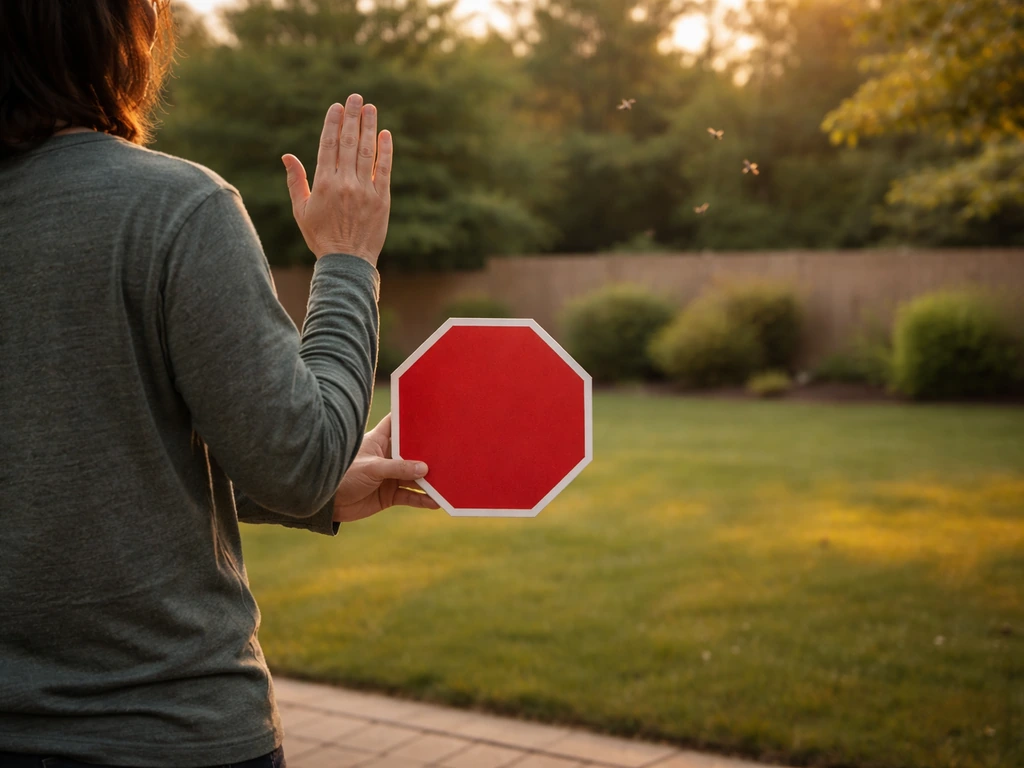
Open one exit, turn off the indoor lights, cover any windows that won't open, and then leave the room. That's the core of it. A bird indoors is almost always looking for daylight, and once you remove every competing light source except the open door or window, it will usually find its way out within minutes. The steps below walk you through the full process, from the moment you spot the bird to the proofing repairs that stop it from coming back.
How to Lure a Bird Outside: Humane, Step-by-Step Guide
Maya Carver
24 May 2026
Immediate steps to get a bird to leave safely
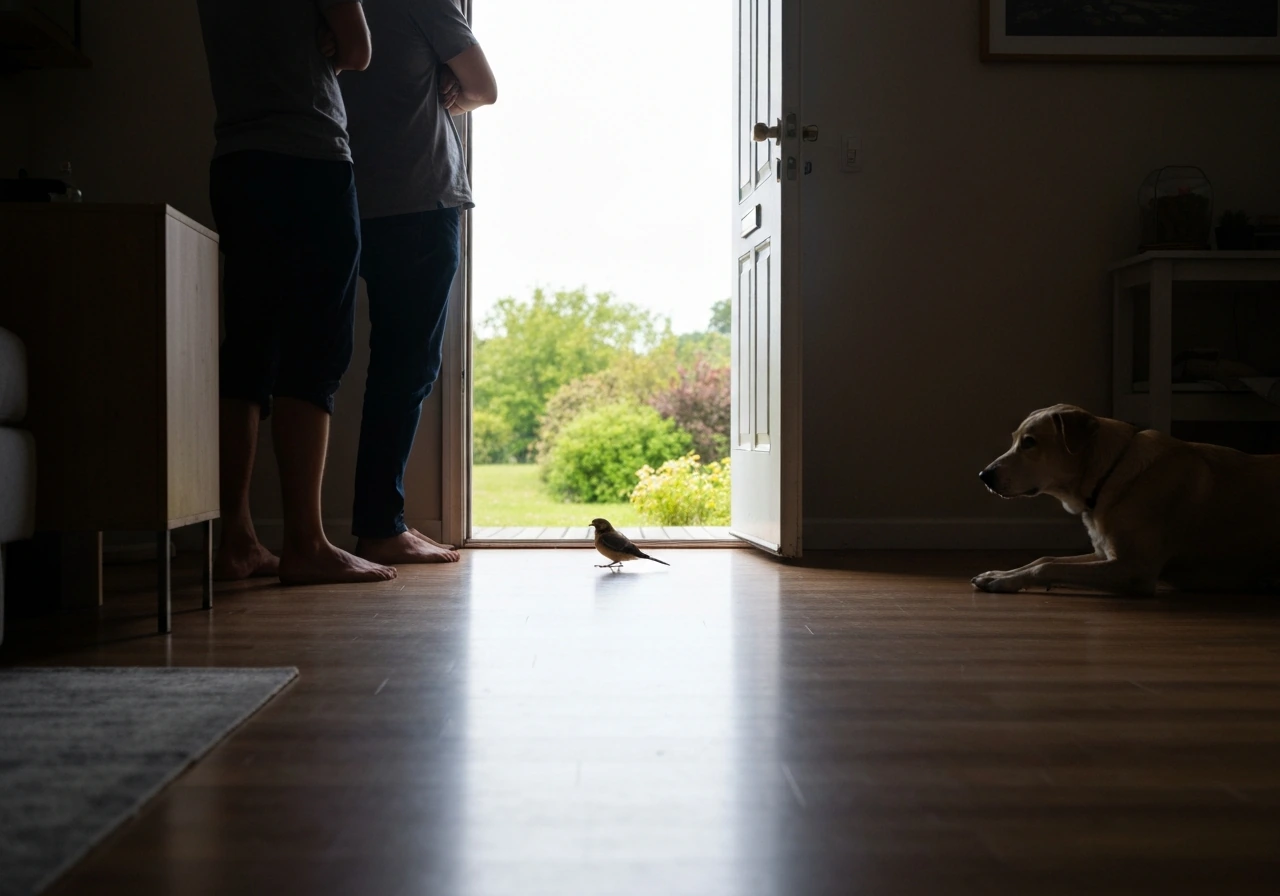
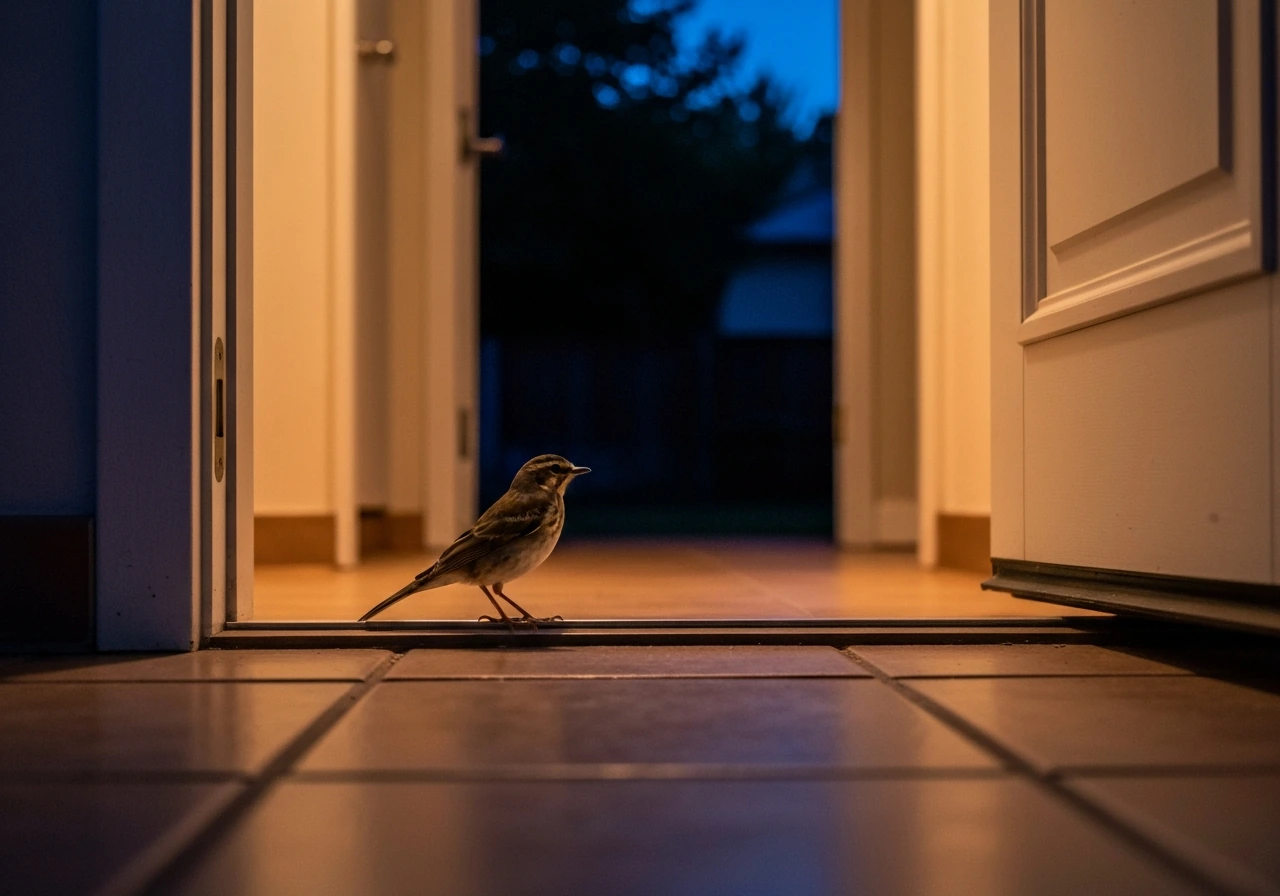
Stay calm and move slowly. Birds panic easily, and a panicking bird is more likely to fly into a wall, exhaust itself, or retreat deeper into the building. Your goal in the first few minutes is to reduce chaos, not chase the bird toward a door.
- Clear the room of people and pets. Even a dog sitting quietly in a corner raises the bird's stress level. Get everyone out.
- Turn off all interior lights, TVs, fans, and any other noise sources.
- Identify and open one clear exit: an exterior door or a single window that opens directly to the outside.
- Cover every other window that won't open. Use a blanket, towel, sheet, cardboard, or even closed curtains. This stops the bird from targeting glass it can't fly through.
- Leave the room and watch quietly from a distance. Give it time. Most birds will find the exit within 10 to 30 minutes once the confusion is removed.
- If the bird is stuck in a garage or shed, open the main garage door fully, switch off the overhead lights, and cover any side windows. The bird will see the large lit opening and fly toward it.
- For a fireplace or chimney situation, open the fireplace damper, turn off all room lights, open a nearby exterior door or window, and leave quietly. The bird will drop down toward the light coming in from outside.
Timing matters too. If the bird is an owl or another nocturnal species, it may not respond to daylight cues at all. In that case, leave the exit door open after dark and the bird will typically fly out once night falls.
Why birds end up inside in the first place
Understanding why a bird came in stops you from accidentally making the situation worse or having it happen again next week. Birds don't choose to be indoors. They follow light, food, nesting instincts, or they simply fall through an opening they didn't realize was a trap.
- Open doors and windows: The most common cause, especially in spring and summer when doors are left ajar.
- Structural gaps in eaves and soffits: Holes in loose, missing, or rotten soffit boards, fascia, or roof boards are prime entry points. Water damage makes these areas especially vulnerable.
- Vents: Gable vents and soffit vents without proper guards let birds fly straight into attic spaces. Signs include nesting material near vent openings or chirping sounds from inside walls.
- Chimneys: Chimney swifts actively nest in uncapped chimneys from roughly March through October. What sounds like a trapped bird may actually be an active nest with young.
- Accidental entry with no escape: A bird follows light or movement through a doorway and then can't find its way back because the indoor lighting or glass creates a confusing maze of false exits.
Knowing the entry route is important because if a nest is involved, luring the bird out is the wrong move entirely. Never disturb an active nest with eggs or young birds. Migratory bird nests, eggs, and chicks are protected under the Migratory Bird Treaty Act (16 U.S.C. § 703), and interfering with them without authorization can carry legal consequences. If you suspect a nest is present, stop and read the escalation section at the bottom of this article before doing anything else.
Humane lure methods that actually work
The word "lure" here really means "make the exit obvious and remove everything competing with it." You're not tricking the bird with food or sound, you're eliminating confusion so the bird's own instincts do the work.
The light method (most reliable)
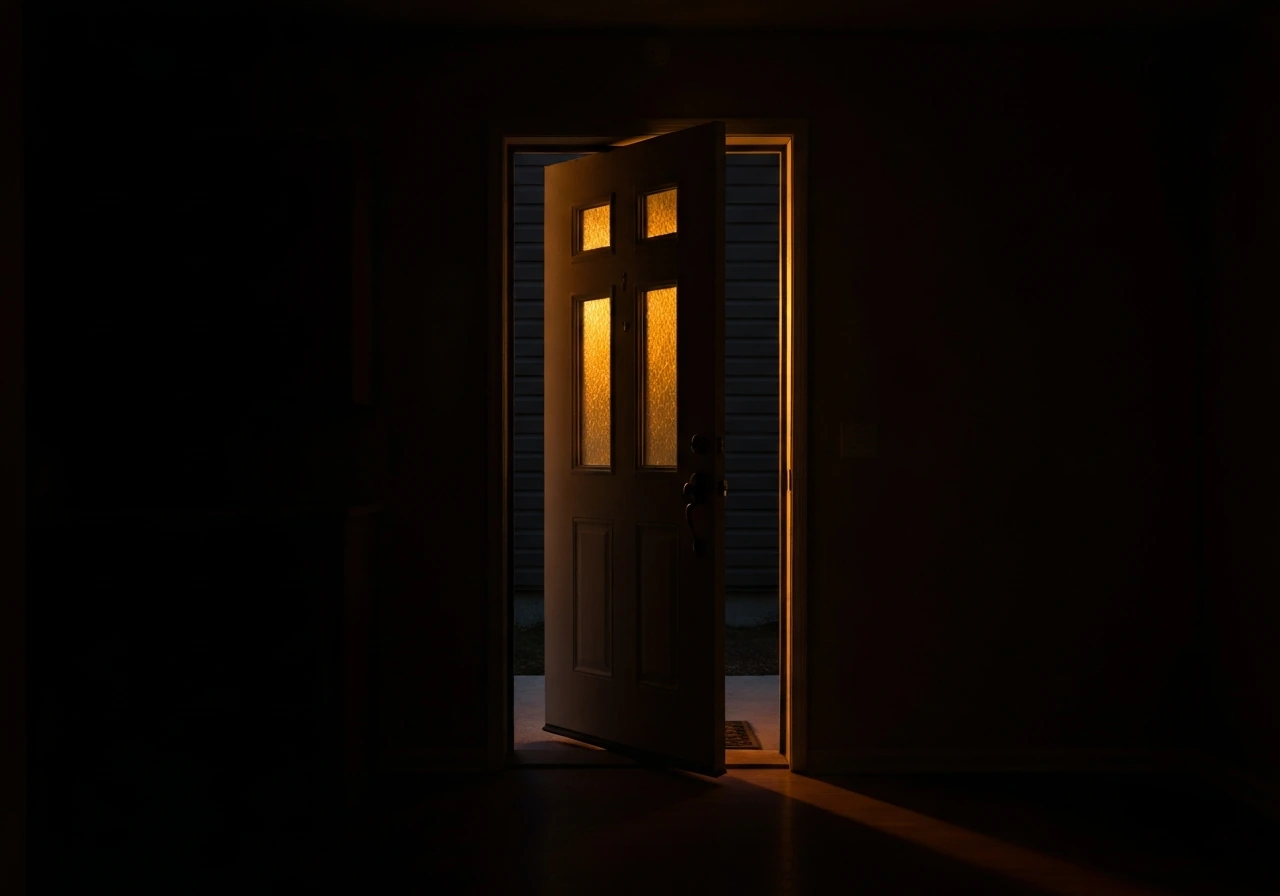
Birds navigate by light. One open exterior door or window with everything else darkened is usually all you need. Open the single exit wide, kill every interior light source, draw curtains on any closed windows, and wait. The bird will orient toward the brightest point, which is now the outside. This works in living rooms, garages, attics, and basements alike.
Gentle herding (when the light method needs a nudge)
If the bird is perched and not moving toward the exit after 20 minutes, you can gently encourage it with a broom or a long flat object held horizontally. Move slowly and calmly. The goal is to reduce the distance between the bird and the exit without startling it into a full panic flight. Never wave, swat, or make sudden movements. One slow, steady sweep in the direction of the open door is usually enough to get it moving.
Basement and dark-room situations
In a basement, turn off all interior lights and open every window you can. Cover the windows you can't open with blinds, drapes, cardboard, or towels so the bird doesn't waste energy flying at closed glass. Leave quietly. Basements can take a little longer because ambient outdoor light is lower, but the same principle applies.
Creating a one-way exit path
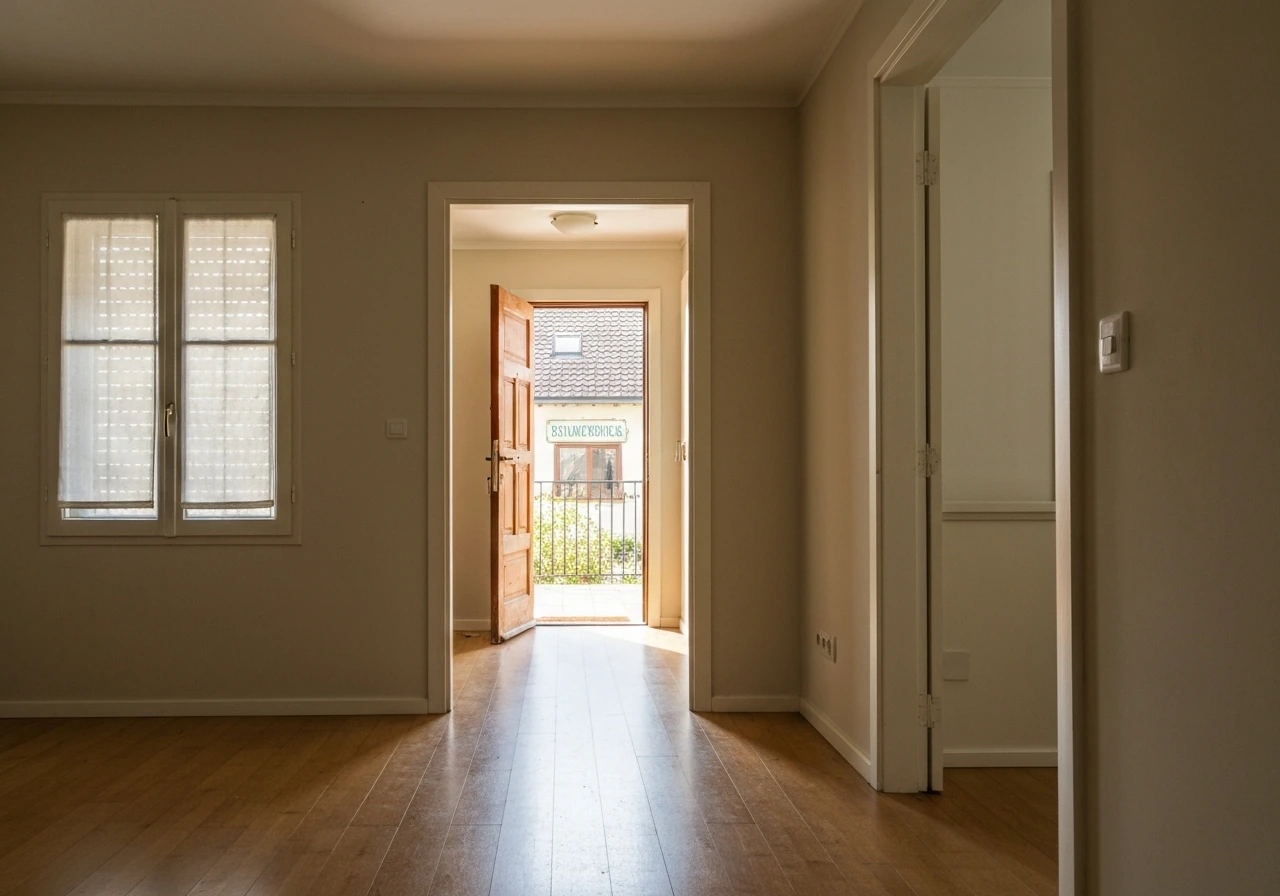
Think of this as funneling, not chasing. You want one obvious lit opening and nothing else competing for the bird's attention. Here's how to set it up properly depending on where the bird is trapped.
| Location | Best exit to open | Windows to cover | Lighting action | Timing note |
|---|---|---|---|---|
| Living room / hallway | Exterior door or large window | All closed windows | All interior lights off, curtains drawn | Wait 10-30 min; nocturnal species: leave door open after dark |
| Garage or shed | Main garage door (fully open) | All side windows that won't open | Garage overhead lights off | Bird usually exits within minutes once lights are off |
| Attic | Gable vent or roof access hatch to outside | None usually needed | No artificial light; rely on daylight from open exit | May take longer; check at dusk if no movement |
| Basement | Any window or exterior door | All closed windows (blinds, cardboard, towels) | All basement lights off | Lower ambient light means longer wait; be patient |
| Chimney / fireplace | Open damper + nearby exterior door or window | Close interior room doors | All room lights off | Open fireplace damper first; leave area completely |
Spacing matters for the exit itself. A door cracked a few inches may not be enough for a stressed bird to commit to. Open exterior doors and windows as wide as physically possible. A fully open path with no ambiguity is far more effective than a partially open one.
When the bird still won't leave (troubleshooting)
Sometimes you've done everything right and the bird is still there an hour later. Here's what to check and what to avoid.
Check these things first
- Is there still a competing light source? Even a lamp left on in an adjacent hallway can pull the bird in the wrong direction. Do a full walk-through and kill every interior light.
- Are all the non-exit windows covered? Glass that lets light through but can't be flown through is the number-one reason birds stall. Cover every one.
- Is the exit large enough and fully open? A cracked door or a half-raised window is ambiguous to a panicked bird. Open it all the way.
- Is the bird nocturnal? Owls, chimney swifts at night, and some other species don't respond to daylight. Leave the exit open until after dark.
- Is the bird exhausted or injured? A bird sitting motionless on the floor rather than perching or flying may need help. Don't attempt to herd it.
What not to do
- Don't chase or rush the bird. Aggressive movement causes it to crash into walls and windows, risking serious injury.
- Don't throw a towel or blanket over a bird that's still flying. This can make existing injuries significantly worse.
- Don't use glue traps or any adhesive capture method. These are not only inhumane but are explicitly prohibited under federal regulation (50 CFR § 21.14) when dealing with migratory birds in buildings.
- Don't open multiple exits at once without covering the windows. You'll create too many competing light signals and the bird will stay confused.
- Don't assume a bird near a chimney is simply trapped. From March to October, chimney swifts actively nest in chimneys, and what you're hearing may be a functioning nest with chicks.
If you've gone through all the steps correctly and the bird hasn't moved in three hours, that's a signal to escalate. The RSPCA uses three hours as the threshold for calling in professional help, and it's a reasonable benchmark regardless of your location.
Preventing the next bird incident: a seasonal proofing plan
Once you've gotten the bird outside, the most useful thing you can do is figure out how it got in and fix it. Most repeat incidents come down to a handful of structural issues that are easy to address once you know where to look.
Where to inspect
- Soffits and fascia: Check for holes, rotted boards, or sections that have pulled away from the roofline. Water-damaged eaves are the most common bird entry point in older buildings.
- Gable vents and soffit vents: If they don't have metal mesh guards, they're open invitations. Install bird-proof vent guards that allow airflow but block entry.
- Chimney: Cap any unused chimney with a commercial chimney cap. For active chimneys used for venting, make sure the cap has a mesh surround.
- Roof gaps and ridge vents: Look for any spot where a roofing panel or shingle has lifted, cracked, or left a gap larger than half an inch.
- Around HVAC and utility penetrations: Gaps around pipes, conduit, or ductwork that pass through walls or the roof are easy entry points.
Seasonal maintenance schedule
| Season | Key tasks |
|---|---|
| Late winter (Feb-Mar) | Inspect and repair soffit, fascia, and roof gaps before nesting season begins. Install or check chimney caps before chimney swifts arrive (typically March onward). |
| Spring (Apr-May) | Check vent guards after winter weather. Look for new gaps from freeze-thaw cycles. Do NOT seal any openings if birds or nests are already present. |
| Summer (Jun-Aug) | Monitor for signs of activity: nesting debris near vents, chirping in walls, feathers near eaves. Note locations for repair after breeding season ends. |
| Fall (Sep-Nov) | After swifts and most migratory nesters have departed (October onward), seal any identified gaps, install new vent guards, and repair damaged soffits before winter. |
| Winter (Dec-Jan) | Inspect for any new structural damage from storms or ice. Address repairs while nesting season is inactive. |
One important legal note on timing: don't seal or cap openings while birds, eggs, or active nests are present. The U. S. Fish & Wildlife Service explains that the Birds in Buildings authorization (50 CFR 21.
14) applies when birds are disrupting normal use, creating health or safety risks, damaging property inside the building, or posing an injury risk by becoming trapped don't seal or cap openings while birds, eggs, or active nests are present. .
The Migratory Bird Treaty Act protects not just birds but also their nests and eggs. Wait until after the nesting season or, [for chimney swifts, after October when they've migrated south. ](https://www. fws.
gov/story/chimney-swifts) If you're unsure whether a space is currently occupied, a wildlife professional can help you assess it safely.
When to call wildlife control or a licensed professional
Most single-bird situations resolve with the steps above. If you're wondering whether you can shoot a bird in your backyard, it's important to consider legal protections and humane alternatives first can i shoot a bird in my backyard. But there are clear scenarios where you should stop DIY attempts and pick up the phone.
- The bird is injured: If it's grounded, not flying, or clearly in distress, it needs professional medical evaluation, not herding. Contact a licensed wildlife rehabilitator.
- You suspect a nest with eggs or chicks: Don't disturb it. Call a wildlife professional who can assess the situation legally and advise on next steps.
- The bird is a protected or threatened species (including bald eagles or golden eagles): Federal regulation 50 CFR § 21.14 allows general removal of migratory birds from buildings without a permit under normal conditions, but bald eagles, golden eagles, and endangered or threatened species require additional authorization. Don't attempt DIY removal.
- The bird hasn't responded to correct luring techniques after three hours: It may be injured, disoriented, or stuck in a space you can't access safely.
- It keeps happening repeatedly: Multiple incidents in the same area point to a structural gap you haven't found yet. A wildlife inspector can identify the entry point and advise on repair.
- There's a large roost (many birds, not just one): Roost removal, especially for protected species, often requires permits and professional intervention.
- You're in a commercial or multi-unit building: Facility managers dealing with repeated or large-scale bird intrusions should work with a licensed wildlife control operator who can develop a full exclusion plan.
When you call, give the professional the species if you know it, where in the building the bird is or was, how long it's been there, and whether you've already attempted any luring steps. That information helps them respond faster and with the right tools.
If the situation involves catching, trapping, or physically handling the bird, those are covered in more detail in related guides on catching escaped birds and backyard bird situations, which can help you understand the full range of humane options available. Catching an escaped bird humanely is often covered in bird trap how to catch a bird guides.
If you need to catch an escaped bird, focus on keeping it calm and giving it a clear exit path before attempting any physical handling catching, trapping, or physically handling the bird.
FAQ
Should I use birdseed or call sounds to lure the bird out faster?
If the bird is inside a room with an open exit, don’t add extra stimuli like calling it, playing bird sounds, or offering food near the door. Those actions often redirect the bird toward you or toward the food instead of the brightest opening, and they can increase panicked flying.
What if the door or window is only slightly open?
No, and a cracked-open exit can fail when the bird is already stressed. Open the exterior door or accessible window fully, and clear the path so there is no partial barrier (screen, half-closed curtains, or clutter) that makes the exit look uncertain.
How do I decide whether to wait for daylight or try at night?
Don’t wait for daylight in every case. If it’s late evening and the bird seems calm or stationary, leaving the exit door open after dark can work for nocturnal species, but if it shows no movement after a few hours in any lighting setup, escalate to a professional rather than repeating the same steps.
What should I do if I think the bird might be nesting somewhere inside?
If you suspect a nest, stop luring immediately. Disturbing eggs or young birds can create legal risk, and the “funnel to the door” approach can fail or harm nestlings. Watch from a distance for signs of nest activity (begging calls, adult presence, visible young) and then escalate for assessment.
Can I use multiple windows to lure the bird out?
Yes, but only when the window can actually open to the outside. If a window is closed or won’t open, you should cover it so the bird does not waste energy flying at glass. For basements, also open every usable window, because outdoor light is weaker and one opening may not be bright enough.
The bird won’t head toward the open door, what should I check?
If a bird keeps flying between two rooms or never commits to the exit, check whether there are other bright sources competing with the open door, for example TVs, hallway lights, bathroom lights, or even reflections from other windows. Turn off interior lights fully and close off the areas you can to reduce options.
Is it safe to encourage the bird with a broom, and how should I do it?
Use a broom or long flat tool only as a calm “pathing” aid, move slowly, and keep it horizontal. If the bird starts repeatedly panicking, stop encouraging and return to lighting control and exit access, because sudden contact attempts can trigger wall collisions or deeper retreat.
When is it okay to patch or seal the entry point after the bird leaves?
Don’t attempt to seal openings while the bird could still be inside, and don’t permanently block entry points you are not sure are vacant. Wait until the bird is out and you’ve confirmed the space is unoccupied, then fix the structural issue (gaps around vents, chimneys, soffits, or window openings) after clearance.
What if I can’t identify the bird, or it seems injured?
If you don’t know the species, you can still follow the lighting and funneling approach, but be extra cautious about escalation timing if the bird appears injured, grounded, or unable to fly. Injured or flightless birds are higher priority for professional help than a typical “confused” indoor bird.
At what point should I stop DIY luring and call for help?
If it has been about three hours with no meaningful progress after you set up an unobstructed exit and darkened the interior, that’s the time to call. Professionals can also determine whether there’s an ongoing entry path or nesting activity that your setup can’t address.
Next Article
Can I Shoot a Bird in My Backyard? Legal and Safe Steps
Can you shoot a bird in your backyard? Learn legal limits, safety steps, humane alternatives, and when to call pros.