If there's a bird in your backyard you need to catch or remove, the safest approach is almost always to guide it out rather than grab it. Set up a clear exit, remove hazards, reduce noise and movement, and let the bird find its own way. Only handle the bird directly if it's injured and can't move on its own. The steps below walk you through the whole process, from the first 60-second safety check to long-term prevention.
How to Catch a Bird in Your Backyard Safely
Maya Carver
12 Jun 2026
Start here: assess safety and urgency first
Before you do anything else, spend 60 seconds answering a few questions. The answers determine everything that follows.
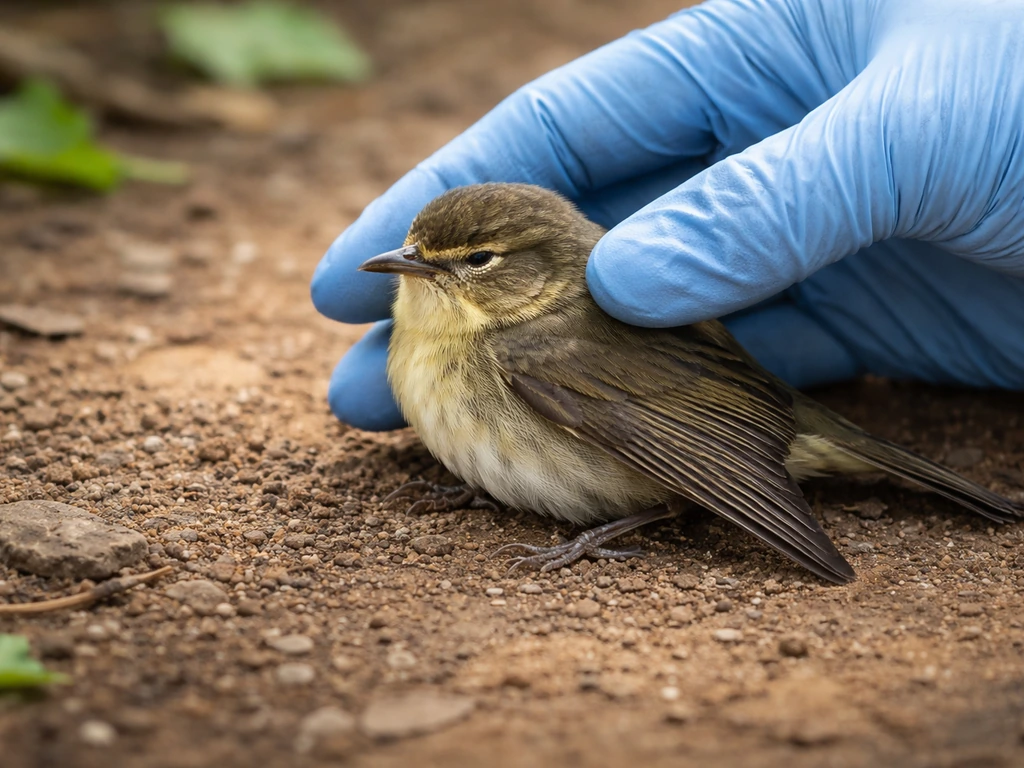
- Is the bird injured? Look for obvious signs: it's not moving, it's sitting on the ground with eyes closed, a wing is drooping at an unnatural angle, or it hit a window and hasn't recovered after 15 to 20 minutes. An injured bird needs a wildlife rehabilitator, not a DIY capture attempt.
- Is it trapped in an enclosed space? A bird inside a garage, shed, or between structures is in immediate danger and needs an exit opened right now.
- Are there active hazards nearby? Cats, dogs, children running around, open windows near power lines, or reflective glass the bird keeps flying into all need to be addressed before anything else.
- Is there a nest or chicks involved? If you're seeing a fledgling (feathered but on the ground), it may not need capturing at all. Fledglings are normal; observe for 30 to 60 minutes before intervening.
- What kind of bird is it, roughly? You don't need a species ID, but knowing if it's a songbird, a raptor (hawk, owl), or a waterfowl changes how you handle it. Raptors have talons that can cause serious injury. Most songbirds and common backyard birds can be managed with the steps below.
The most important legal point to know upfront: most wild birds in North America are protected under the Migratory Bird Treaty Act. If you are wondering, "can i shoot a bird in my backyard," the short answer is that killing wild birds is typically illegal and often protected by federal law. This means you cannot capture, keep, or relocate migratory birds without a permit except in very limited circumstances. Emergency handling to prevent suffering and immediate transport to a licensed rehabilitator is generally accepted, but housing a bird overnight yourself, attempting to rehabilitate it, or relocating it to another property on your own is not legal without proper permits. When in doubt, call a wildlife rehabilitator before you touch the bird.
Humane DIY capture methods, hands-off first
The goal is always to minimize handling. A bird that's being chased is terrified, burning through energy, and at serious risk of injury from collisions. Start with the least invasive approach and escalate only if necessary.
Step 1: clear the area
Get everyone out. Kids, pets, and curious neighbors should leave the area immediately. Human noise, eye contact, and sudden movement are all major stressors for wild birds. The quieter and emptier the space, the better the bird's chances of calming down and finding its own way out.
Step 2: guide, don't chase
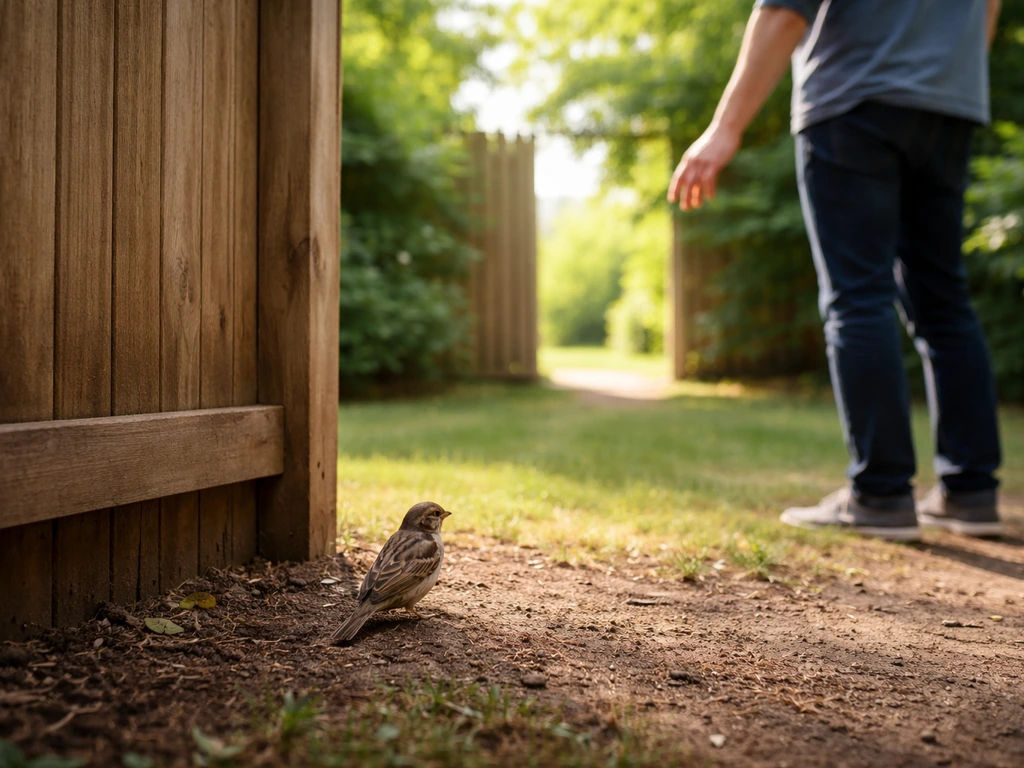
If the bird is outdoors but trapped against a fence, in a corner, or in a small enclosed yard area, your job is to gently redirect it toward open space. If you need a bird trap or a way to catch a bird, choose legal, humane guidance methods and avoid harmful or illegal capture approaches gently redirect it toward open space. Stand still, move slowly, and use a long soft object like a broom held horizontally to gently steer the bird toward an opening. Don't wave it or make fast movements. The idea is to shift the bird's direction, not frighten it into panicked flight. One slow, calm nudge at a time.
Step 3: if you must pick it up
Only handle the bird directly if it cannot move on its own or is in immediate danger (a cat is approaching, it's about to go into a drain, etc.). Use a towel or light cloth. Drape it gently over the bird, covering the head first because darkness calms birds almost immediately. Then cup your hands around the bird's shoulders with its wings held against its body to prevent flapping. Do not squeeze. Keep the head covered, hold the bird loosely but securely, and move it in one smooth motion to a ventilated container. Avoid glue traps or any adhesive method entirely; these are illegal for migratory birds and cause serious injury.
What about nets?
Nets can be useful for a bird that's in a confined space and needs to be caught quickly, but they carry real risks. A bird can become tangled, injure a wing, or die from stress if it's not freed calmly and immediately. If you use a net, make sure it's a soft mesh, move slowly, and have a towel ready to cover the bird the moment it's contained. Nets are not the first choice. They're a last resort when guiding methods have failed and the bird is in immediate danger.
Set up the environment to guide the bird out
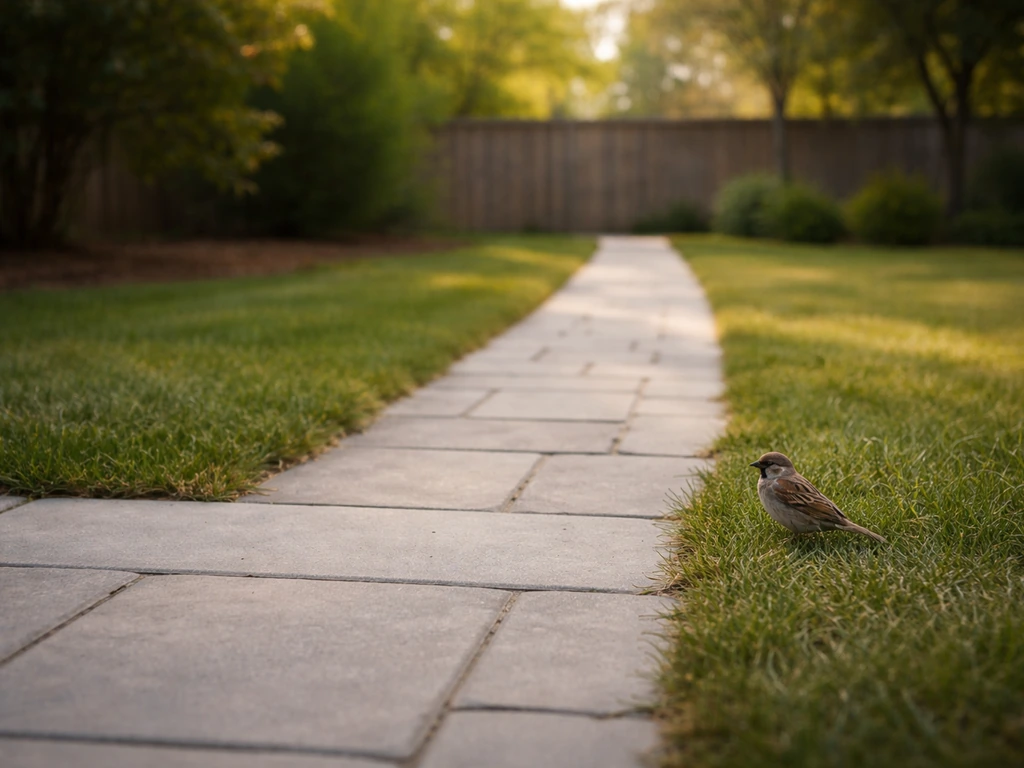
This is the most effective approach for most backyard situations, and it requires no physical handling at all. The idea is to make staying where the bird is uncomfortable and leaving easy and obvious.
- Remove food and water from the area. If there's a bird feeder, birdbath, or spilled seed nearby, remove it temporarily. You want to eliminate reasons for the bird to stay.
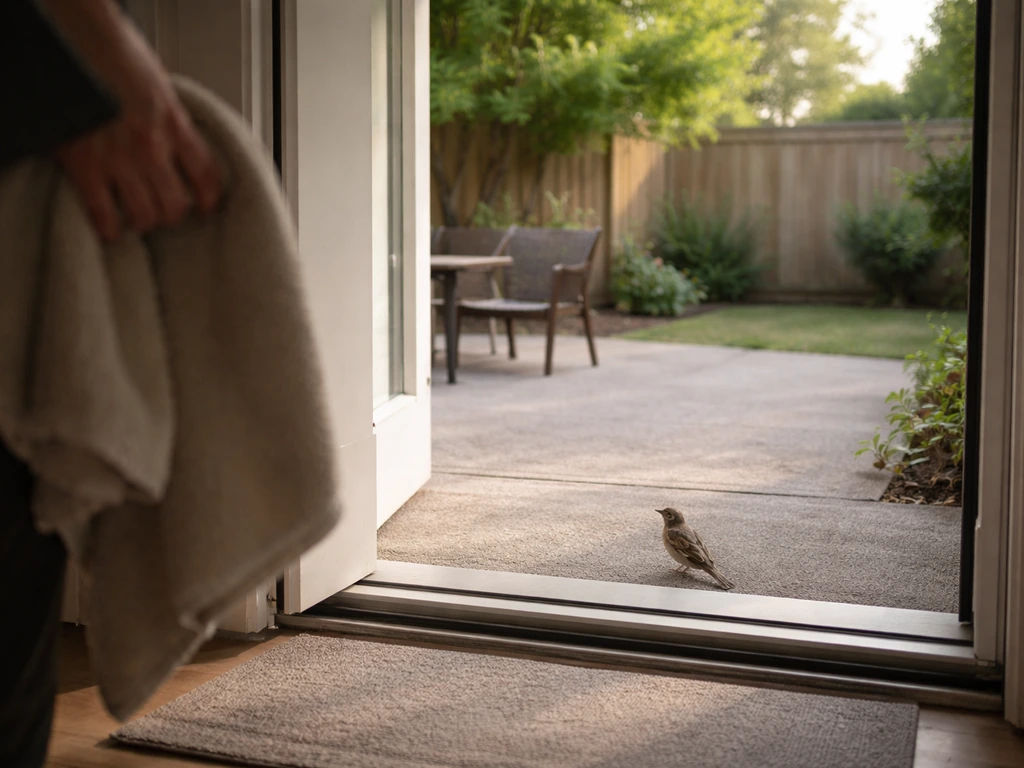
- Open a clear exit. If the bird is in a semi-enclosed space like a covered patio, pergola, or against a fence, make sure there's one obvious wide-open route out. Remove barriers, open gates, pull back tarps.
- Control light. Birds are strongly attracted to light, especially through glass. If the bird is near a window or glass door, close blinds or curtains on that side so it's not drawn repeatedly toward the glass. Turn off interior lights if there's a structure involved.
- Cover reflective surfaces temporarily. Windows that show sky or tree reflections look like open space to a bird in a panic. Cover them with a sheet or tape paper on the outside to break up the reflection.
- Give it time. Once you've removed hazards, opened an exit, and cleared people out, step back and wait at least 20 to 30 minutes before trying anything else. Most birds will leave on their own.
If the bird is stuck in a garage or shed specifically, the approach is the same: turn off all interior lights, cover any windows that face inside, open the main door wide, and leave. The San Diego Humane Society also recommends making the building as dark as possible, such as turning off interior lights and covering skylights, and then providing a single clear exit so the bird can leave safely blank" rel="noopener noreferrer">turn off all interior lights. Birds almost always find their way out when the space is dark except for the one obvious exit.
Troubleshooting: when it won't leave on its own
| Problem | What to try |
|---|---|
| Bird keeps flying at windows | Cover the glass from outside with newspaper or a sheet. Turn off interior lights. Wait 20 minutes. |
| Bird is going in circles and won't find the exit | Make sure all other exits are blocked except the one you want it to use. Darkness everywhere except the exit opening is the key. |
| Bird has been in the same spot for over an hour | Check for injury. If it's alert, moving its head, and reacts to your approach, it's probably fine but stressed. If it's not reacting at all, it may be injured. |
| There are multiple birds | Same approach. Clear people and pets, open one exit, remove food sources, wait. Do not try to herd multiple birds at once. |
| Bird is in a hard-to-access corner or under equipment | Do not force it out. Remove obstacles carefully and slowly so it has room to move. Call a wildlife professional if the space is too tight to safely work in. |
Temporary containment and safe handling if relocation is needed
If you've determined the bird is injured and needs to be transported to a rehabilitator, here's how to contain it safely while you arrange that.
- Use a cardboard box or a ventilated plastic container. Poke small holes in the lid for airflow. The container should be large enough for the bird to sit upright but small enough that it can't flap around and injure itself.
- Line the bottom with a folded towel or paper towels for grip. Birds can injure their feet and legs trying to balance on slick surfaces.
- Use the towel-capture method described above to place the bird in the container. Keep the head covered until the bird is inside, then gently remove the towel and close the lid.
- Do not give food or water. It sounds counterintuitive, but feeding or watering a bird before a rehabilitator has assessed it can cause more harm than good, especially with certain injuries.
- Keep the container in a warm, quiet, dark place. No radio, no checking on it every five minutes, no showing the kids. Darkness and quiet are the only things that help right now.
- Call a licensed wildlife rehabilitator immediately. Do not wait to see if the bird improves on its own. Every hour of delay reduces its chances.
A critical legal note: keeping a wild bird in your home overnight, attempting to feed and nurse it back to health yourself, or releasing it on a different property without authorization is illegal under federal law. A rehabilitation permit is required to possess migratory birds for rehab purposes, and that permit comes with specific facility, diet, and care requirements that are beyond what a homeowner can provide. The right move is always to get the bird to a licensed rehabilitator the same day.
Prevent repeat visits: sealing entry points and removing attractants
Once the immediate situation is resolved, take an hour to walk your property and identify what drew the bird in or what's likely to attract the next one. Prevention is almost always easier than removal.
Remove what's attracting birds
- Bird feeders and birdbaths placed directly against or near windows are the single biggest driver of window collisions. Move them either very close to the glass (less than 3 feet, so birds don't build up speed) or far away (more than 30 feet).
- Spilled seed under feeders attracts ground-feeding birds. Clean up weekly and use feeders with trays.
- Standing water in low spots, buckets, or clogged gutters creates drinking and bathing opportunities that attract birds to problem areas. Drain these or cover them.
- Fruit trees and berry bushes near entry points to garages or sheds are magnets. Net them during fruiting season or keep adjacent doors closed.
Close off entry points
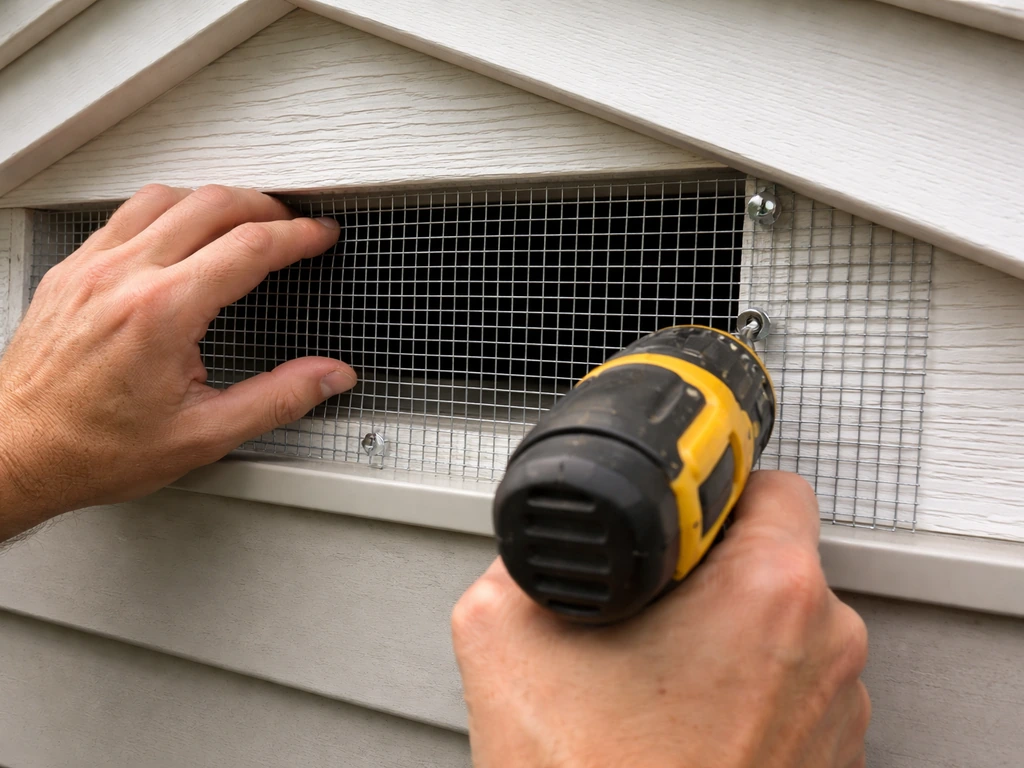
- Screen all vents, including soffit vents, gable vents, and dryer exhausts, with 1/4-inch hardware cloth. Birds regularly nest in these.
- Install door sweeps or brush seals on garage and shed doors that don't seal fully at the bottom.
- Repair or replace damaged screens on windows and doors.
- Use exclusion netting to block off eaves, rafters, and other areas where birds like to nest. Make sure netting is taut and properly secured; loose or sagging netting can trap birds, which defeats the purpose entirely.
Make windows visible to birds
Window strikes are one of the most preventable bird problems around homes. The fix is to break up the reflection or transparency so birds recognize the glass as a barrier. Effective options include window films with UV-reflective patterns (which birds can see but humans barely notice), exterior screens, vertical tape strips spaced 4 inches apart, or frosted window decals. Angling or shielding exterior lights downward at night also reduces the number of birds drawn to your building during migration season, which runs roughly March through May and August through November.
Seasonal planning
Spring (March through June) is nesting season, which means you're most likely to encounter birds in eaves, vents, and sheltered corners of your property. Check and seal entry points before March. Fall migration (August through November) brings the highest window-collision risk because of increased bird traffic. Turn off nonessential exterior lights from dusk to dawn during these months, draw curtains at night, and make sure window treatments are in place.
When to stop DIY and call a wildlife professional
There are clear situations where DIY is not the right call. If a bird has escaped and you need to catch it safely, the same hands-off, guiding approach is usually best before you consider any capture methods. Knowing these ahead of time saves you time, avoids making the situation worse, and in some cases keeps you on the right side of the law.
- The bird is obviously injured: bleeding, a wing dragging on the ground, unable to stand or hold its head up. Contact a licensed wildlife rehabilitator immediately. Do not attempt extended home care.
- It's a bird of prey: hawks, owls, and falcons have talons that cause serious puncture wounds and can grip with surprising force. These birds need a professional handler.
- You suspect a protected or rare species: if you're not sure what you're looking at, err on the side of caution and call before touching.
- There's a nest with eggs or chicks actively inside a structure. Removing an active nest of most migratory bird species without a permit is illegal. A wildlife professional can advise on your options and timeline.
- You've tried the guiding approach twice and the bird is still trapped and stressed. Each additional attempt increases the bird's stress and injury risk. Call for help.
- The bird is in a location you can't safely access, such as high rafters, inside wall cavities, or tangled in equipment. Don't put yourself at risk.
- You see signs of illness beyond injury, like discharge from the eyes or beak, unusual behavior, or the bird is one of several sick birds in the area. This could indicate disease and warrants a call to animal control or your local wildlife agency.
To find a licensed wildlife rehabilitator near you, search the National Wildlife Rehabilitators Association directory or call your local animal control office. When you call, be ready to describe the bird's species or size, its current condition, how long it's been there, and any immediate hazards nearby. That information helps them prioritize and give you accurate advice fast.
One last note: if you're weighing more aggressive options for managing birds on your property, it's worth knowing that lethal methods for most wild birds are either restricted or prohibited under federal law. The focus should stay on humane exclusion, habitat management, and professional removal for difficult cases.
FAQ
What should I use to transport the bird if it’s injured and needs a wildlife rehabilitator?
Use a ventilated carrier (like a pet carrier with air holes) and place a thin towel over part of it to reduce stress. Keep the bird in a quiet, shaded spot and minimize handling time, because the goal is same day transfer, not overnight care.
Is it okay to feed or give water to a wild bird I caught in my backyard?
Don’t try to “keep it calm” by feeding or giving water, this can cause choking or aspiration and can be harmful for wild species. If it is alert, attempt to guide it out first, only switching to containment for immediate danger or when the bird cannot move on its own.
What should I do if the bird is trapped under a structure or inside a hard to reach area?
If the bird is wedged inside a small space (under a shed, between furniture, inside a vent opening) try to make the exit path obvious, then gently guide from a safe distance. If it’s in an inaccessible area and you cannot guide it out without repeated chasing, call a rehabilitator or animal control for guidance.
If the bird is indoors or in a garage, do I need to chase it toward the door?
Yes, open a single clear exit and keep the rest of the area calm, but avoid standing directly in front of the doorway and forcing it to collide with you. Turn off interior lights if it’s inside a house, then open the door and leave so it can choose the exit on its own.
How do I tell whether a bird that’s on the ground needs help right now?
If it’s a collision or you find it sitting on the ground, keep pets and people away and watch from a distance. If it cannot right itself, has visible bleeding, is actively trying to hide in a way that suggests injury, or you’re in immediate danger zone (near traffic, cats, dogs), contact a rehabilitator and contain it only if necessary.
What’s the best setup if the bird keeps flying toward the wrong area or window indoors?
Yes, birds often use the brightest opening, so if you cannot make a full exit path, reduce interior lighting and add one obvious exit point. Cover windows facing inward and keep only the exit accessible so the bird is not pulled toward other reflective surfaces.
Are backyard bird traps or adhesive methods ever appropriate for capturing a bird?
Do not use glue or adhesive products, and avoid small animal traps because they can injure wings and legs. If you consider any capture device at all, use humane, legal guidance methods first, and treat traps or nets as last resort only when the bird is in immediate danger and you can free it quickly.
What should I do if the bird is stuck on a roof or high in a tree?
If a bird is in a tree or on a roof, the safest approach is usually to wait while you make the area quiet, then guide it out by creating an unobstructed opening at ground level if it moves. If it cannot be guided without repeated chasing, call a professional rather than trying to climb or corner it.
Once the bird leaves, what prevention steps should I do first?
After you guide the bird out, reset the conditions that caused the event. Check for window reflections, remove standing water that may attract it near dangerous zones, and seal obvious gaps near eaves or vents before the next nesting window.
What if I’m not sure whether the bird is protected or migratory?
If you’re unsure whether it is migratory, treat it as protected and assume permits are required for capture, keeping, or relocation. When in doubt, contact a rehabilitator before handling, because mistakes can create legal risk even if your intent is good.