In almost every case in the United States, shooting a bird in your backyard is illegal without a special federal permit, and often a state permit too. The Migratory Bird Treaty Act (MBTA) protects the vast majority of wild birds you will encounter, including common ones like robins, sparrows, starlings (wait, more on that), and pigeons.
Can I Shoot a Bird in My Backyard? Legal and Safe Steps
Maya Carver
18 May 2026
Killing, capturing, or even possessing a protected bird without authorization can result in federal fines and criminal charges, and being on your own property does not exempt you. Before you do anything, stop and identify what you are dealing with. If the bird is already escaped and you need to catch it safely, focus on non-lethal, legal capture steps that minimize stress and avoid harming the animal how to catch an escaped bird.
The good news: there are faster, safer, and completely legal ways to solve your bird problem today.
Quick legal and safety bottom line
The MBTA, codified at 16 U. S. Code Chapter 7, makes it unlawful to pursue, hunt, take, capture, or kill any migratory bird, or to possess any part, nest, or egg, unless specifically permitted by federal regulation. The U.
S. Fish and Wildlife Service (FWS) enforces this law against any person, business, organization, or institution operating in the United States. That includes you in your backyard. To legally capture or kill a migratory bird that is damaging your property or posing a safety threat, you generally need a federal Migratory Bird Depredation Permit (FWS Form 3-200-13), and many states layer on additional permit requirements.
Breaking this law is not a minor ticket. Federal violations can mean fines of up to $15,000 and up to six months in jail per offense for misdemeanor cases, with felony charges possible in aggravated situations.
From a safety standpoint, discharging a firearm or air rifle in a residential backyard also creates real liability. Local ordinances in most cities and suburbs prohibit firing any weapon within city limits. Even in rural areas, you are responsible for every projectile that leaves your property. So the legal and safety risks stack up quickly, and lethal options should only be considered as an absolute last resort after professional consultation.
Protected vs. non-protected: which birds can you legally deal with yourself?
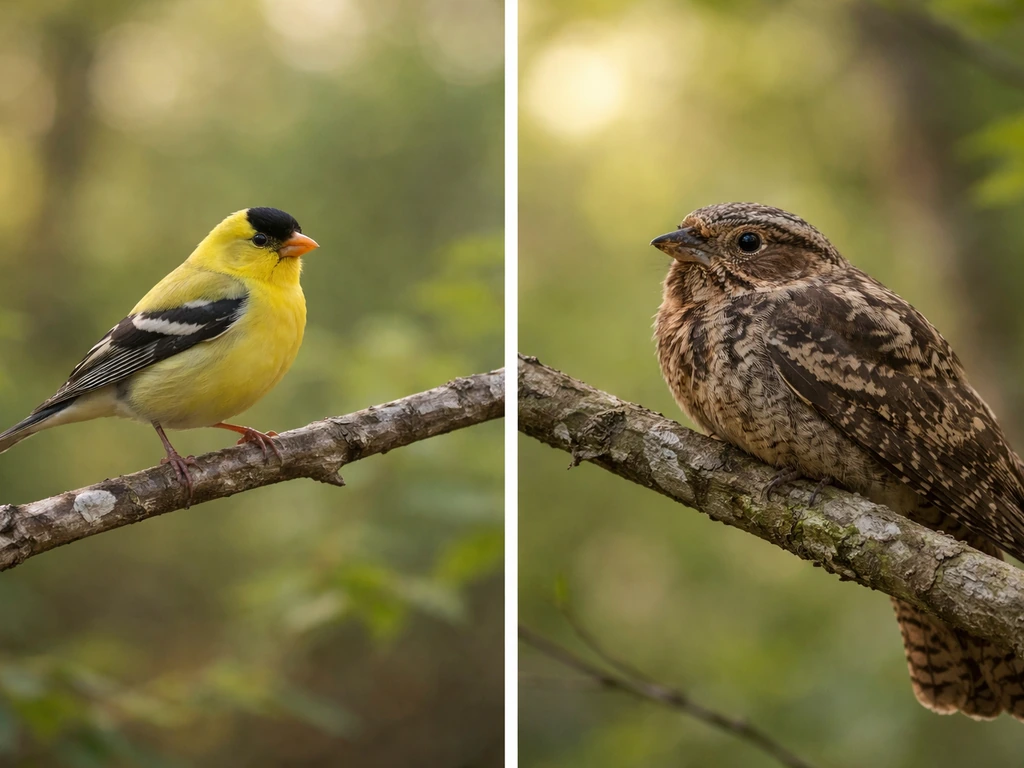
Nearly every native North American wild bird species is protected under the MBTA. The full list is published at 50 CFR § 10.13 and the FWS publishes an updated downloadable version (the 2023 List of Birds Protected by the Migratory Bird Treaty Act). If you are not sure what you are looking at, use the free Audubon Bird Guide app or Cornell Lab's All About Birds website to identify the species before you do anything else. Getting the ID wrong and shooting a protected bird is not a defense in federal court.
There are three commonly encountered birds that are NOT protected under the MBTA: the European Starling, the House Sparrow, and the Rock Pigeon (common city pigeon). These are introduced, non-native species and are excluded from MBTA protections at the federal level. However, even for these birds, state laws and local ordinances may still apply, and discharging a weapon in your neighborhood is still a separate legal issue. Check your state wildlife agency's rules before taking any lethal action, even on unprotected species.
| Bird Type | MBTA Protected? | Can You Shoot Without a Permit? | Notes |
|---|---|---|---|
| Most native songbirds (robins, cardinals, jays, wrens, etc.) | Yes | No | Federal permit required; state permit often also required |
| Raptors (hawks, owls, eagles) | Yes | No | Also protected under the Bald and Golden Eagle Protection Act for eagles |
| Waterfowl (ducks, geese) | Yes | No (outside legal hunting season/license) | May be taken during regulated hunting seasons with valid license |
| European Starling | No (federal) | Possibly, with local/state check | Still subject to local ordinances and state laws |
| House Sparrow | No (federal) | Possibly, with local/state check | Still subject to local ordinances and state laws |
| Rock Pigeon (common pigeon) | No (federal) | Possibly, with local/state check | Still subject to local ordinances and state laws |
Some states, like Wisconsin, have specific frameworks where neither a federal nor state permit is required to deal with certain birds committing active depredations or posing a health hazard, subject to conditions written into state administrative code. North Carolina, by contrast, requires a state depredation permit for most situations. The rules vary enormously. Always verify with your state wildlife agency before acting.
What to do right now if the bird is an immediate problem
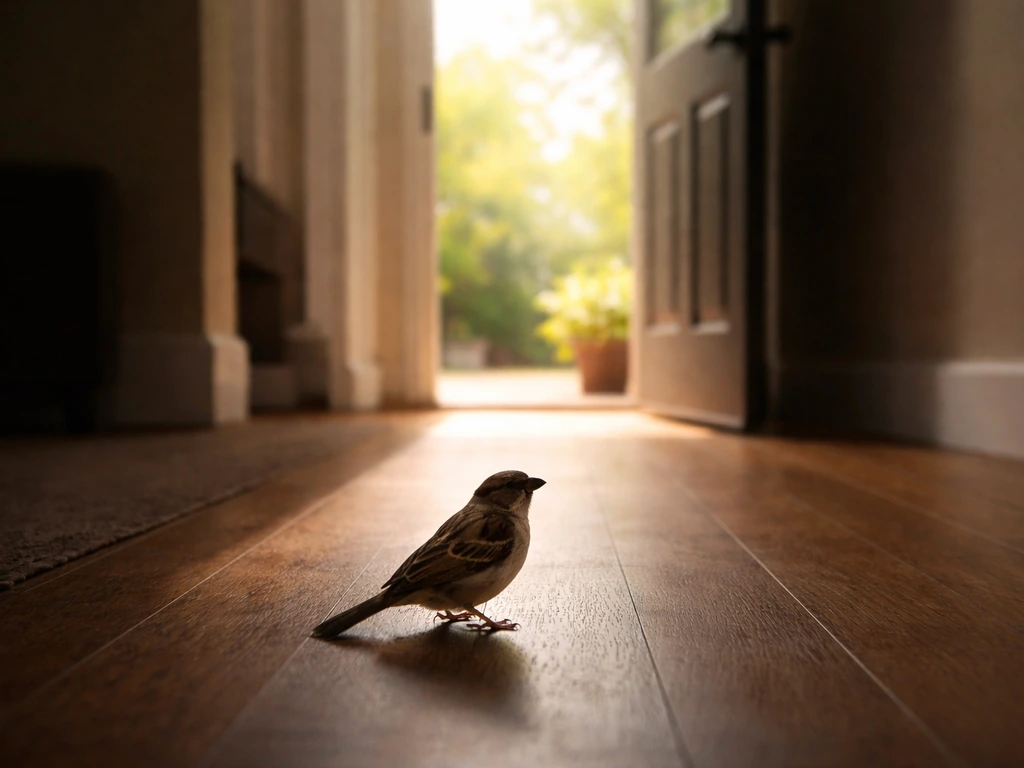
If you have a bird causing an urgent issue today, here is a practical sequence of legal, non-lethal steps you can take immediately. These cover the most common emergency scenarios: a bird inside a building, an aggressive bird near a nest, or a flock causing property damage.
Bird inside your home or building
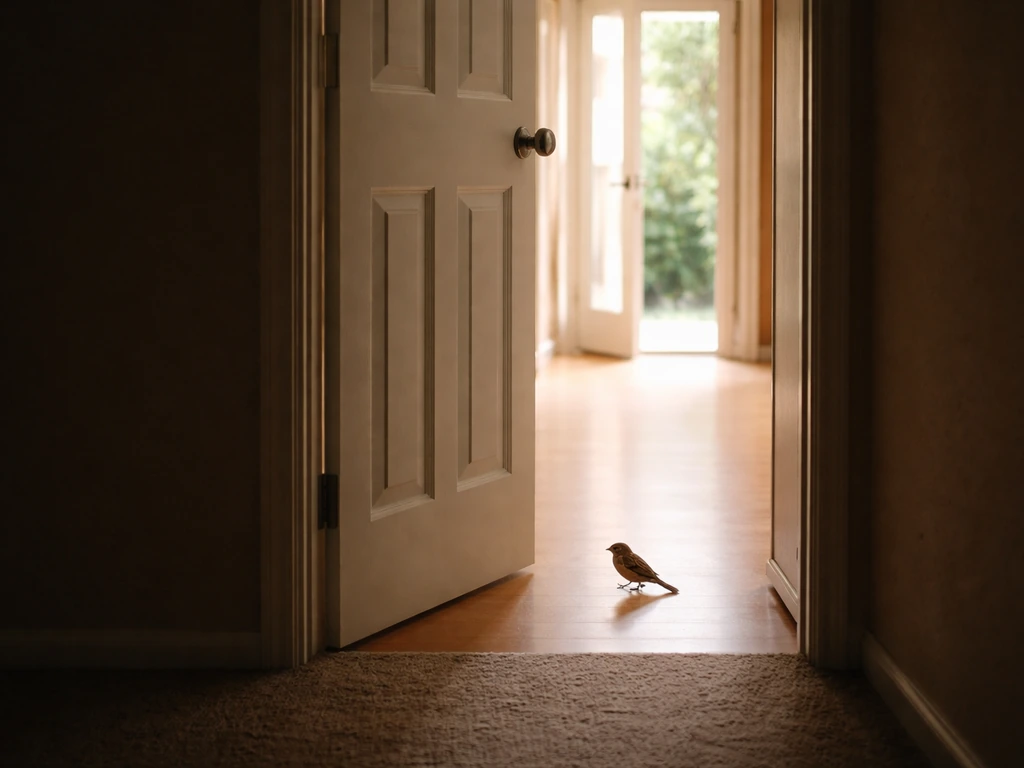
- Close interior doors to confine the bird to one room and reduce panic.
- Open the widest exterior exit (a door or large window) in that room and remove all screens.
- Darken the room by closing blinds on all other windows except the exit, which birds will fly toward the light source.
- Leave the room quietly and wait. Most birds will find the exit within 10 to 30 minutes.
- If the bird is trapped and removal risks injuring or killing it, note that under 50 CFR § 21.14, if your removal action is likely to result in lethal take of an adult migratory bird, you must first obtain a federal migratory bird permit. When in doubt, call a licensed wildlife removal professional.
Aggressive bird defending a nest near your door or walkway
- Do not approach or disturb the nest. The bird is acting on instinct and will stop attacking once you leave the zone it is defending.
- Temporarily redirect foot traffic away from the area using cones, rope, or signage.
- Wear a hat when you must pass through. Birds like robins and cardinals often dive at the top of the head.
- Mark the calendar: most bird nesting cycles complete within 2 to 4 weeks. The aggression stops when the young fledge.
- Do not remove an active nest. That is a federal violation for protected species.
Flock causing damage to garden, roof, or property

- Remove food sources immediately: bird feeders, exposed pet food, unsecured compost, and standing water.
- Cover garden beds with bird netting rated for the crop or plant you are protecting.
- Hang reflective tape, old CDs, or Mylar strips near affected areas. The light movement disrupts foraging patterns.
- Use motion-activated sprinklers as an immediate, humane deterrent.
- Make loud, sudden noises (clapping, a shaker can) when birds land. Repeated disturbance trains them to avoid the area over several days.
Humane DIY deterrence and exclusion you can do yourself
Once the immediate situation is under control, the next step is making your property genuinely less attractive and accessible to problem birds. These are all legal, humane approaches that work for most homeowner situations.
Remove attractants
- Take in or remove bird feeders if you are having a problem with unwanted species congregating.
- Secure trash cans with bungee cords or locking lids so birds cannot access food waste.
- Empty and scrub birdbaths every two to three days; eliminate standing water in gutters, pot saucers, and low spots.
- Pick up fallen fruit from trees promptly. Rotting fruit is a major attractant for starlings and crows.
- Store pet food indoors and do not leave it outside overnight.
Block entry and roosting points
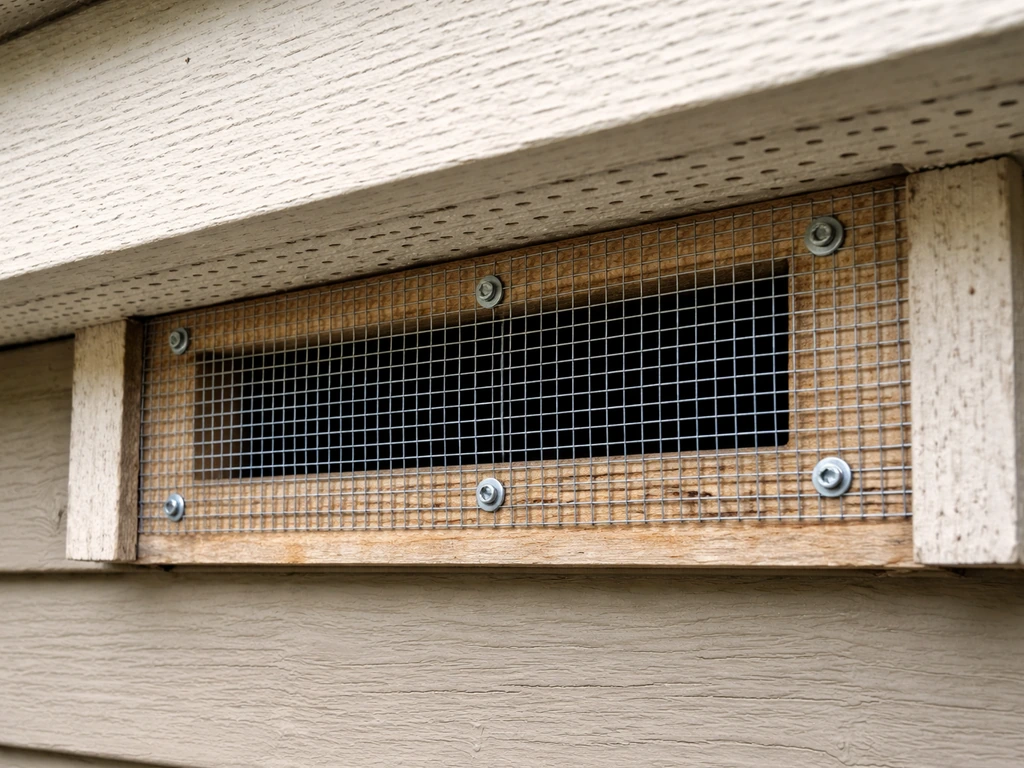
- Cover attic, soffit, and dryer vents with 1/2-inch by 1/2-inch hardware cloth, secured tightly at all edges so birds cannot pry it open.
- Install bird spikes (plastic or stainless) on ledges, railings, and roof ridgelines where birds roost. These do not harm birds; they just make surfaces too uncomfortable to land on.
- Use bird slope panels under eaves and on flat ledges to prevent perching.
- Check for and seal gaps at rooflines, gable vents, and fascia boards. A bird only needs an opening the size of your fist to enter an attic.
- Install physical netting over garden areas, ponds, and fruit trees using UV-resistant bird netting with a mesh size appropriate for the species causing damage.
Reduce window collisions (a separate but related problem)
If birds are hitting your windows repeatedly, the FWS Bird-Friendly Home Toolkit recommends applying external visual markers spaced no more than 2 inches apart both vertically and horizontally, covering the glass surface in a grid pattern. Decals, UV-reflective film, or external screens all work. The USGS notes that dense, consistent marking of the glass surface is the most reliable long-term fix, more so than a single decal or two.
Long-term proofing plan: habitat and access control
Dealing with birds is not usually a one-time fix. If your property is attractive to problem birds, they will keep coming back unless you make structural and habitat changes. Think of this as a two-part plan: controlling what brings birds in, and physically securing what they are getting into.
Habitat modification
- Trim back dense shrubs and low-hanging branches that provide shelter and perching right next to the house.
- Replace berry-producing ornamental shrubs near entryways with species that do not produce fruit attractive to birds.
- If you have a pond, install a heron deterrent line (a taut fishing line at about 10 inches above the water surface around the perimeter) to prevent wading birds from feeding.
- Grade low areas in the yard to eliminate standing water that accumulates after rain.
- Consider planting thorny shrubs like hawthorn or barberry along fence lines to reduce roosting spots without harming birds.
Seasonal timing matters
For nests in or on buildings, Mass Audubon and Massachusetts DCR both advise waiting until fall or winter to remove nests and seal entry points, after the breeding season has ended and birds have left. Attempting to exclude birds during active breeding season can trap flightless nestlings inside a structure, which creates a bigger problem and may itself violate the MBTA. The ideal window for proofing work is late fall through early spring before nesting resumes. Mark that window on your calendar now and plan accordingly.
Annual maintenance checklist
- Inspect all roof vents, soffits, and eaves for damage or gaps every February before nesting season begins.
- Check and replace any degraded hardware cloth or bird netting in March.
- Remove and clean any old nests from ledges, gutters, and vents in late October after birds have migrated or fledged.
- Reapply bird repellent gel on ledges and flat surfaces annually; it breaks down with UV exposure.
- Walk the perimeter of your property in November to identify new roosting spots before they become established habits.
When to stop DIY and call a wildlife professional
There are situations where DIY is genuinely not the right call. Trying to push through them yourself risks legal trouble, injury, and making the problem worse. Call a licensed wildlife control operator or your state wildlife agency if any of the following apply.
- You find an injured bird. Handling injured wildlife without a permit is illegal for protected species, and injury creates bite and scratch risk. The CDC notes that wild animal contact can expose people to disease, so leave injured birds to permitted wildlife rehabilitators.
- You have an active nest with eggs or chicks inside a structure you need to use. You cannot legally remove it during the breeding season without a federal depredation permit.
- You cannot positively identify the species. If you are not sure whether a bird is protected, assume it is and get professional help before acting.
- The flock is large (more than a dozen birds roosting consistently). Large-scale depredation situations typically require a federal depredation permit and professional deterrent equipment.
- A bird is displaying aggressive behavior toward people and is not stopping. While usually nest-defense related and temporary, escalating aggression warrants professional assessment.
- You suspect a bird is a raptor (hawk, owl, falcon). Raptors are protected by both the MBTA and, for eagles, additional federal law. Do not attempt any DIY removal or deterrence that could injure them.
What to have ready when you call
When you contact a wildlife professional or your state wildlife agency, be ready to give them the following information so they can help you faster and more effectively:
- A description or photo of the bird (size, color, beak shape, behavior) so they can confirm whether it is a protected species.
- The location where the bird is nesting, roosting, or entering (roof vent, attic, eave, garden, etc.).
- How long the problem has been occurring and whether it is getting worse.
- What you have already tried and what the results were.
- Whether you have observed eggs, chicks, or signs of active breeding.
When speaking with a wildlife removal company, ask directly whether they are licensed by your state wildlife agency, whether they will use humane, non-lethal methods as a first approach, and whether they have experience obtaining depredation permits if lethal control is eventually determined to be necessary. A reputable operator will be transparent about all of this upfront.
If your situation involves a bird inside the structure rather than outside, the approaches for luring a bird outside or safely catching and releasing it are worth reviewing as companion steps before escalating to professional help. If you are dealing with how to catch a bird in your backyard, review these luring and safe catch-and-release approaches before escalating to professional help catch and releasing it.
If you are wondering about a bird trap setup, focus on legal, humane catch-and-release options rather than trying to trap without the right permission safely catching and releasing it. If you need step-by-step guidance, see our tips on how to lure a bird outside using humane, legal deterrence and escape routes luring a bird outside.
Similarly, if you are trying to remove a backyard bird that keeps returning after deterrence, targeted trapping and relocation by a licensed professional is usually a far more legally defensible solution than any lethal option.
FAQ
What if the bird is damaging my property or attacking my family, can I shoot it then?
Urgent harm can make the situation feel immediate, but federal protection still generally applies. Shooting is still not a safe legal shortcut, because the MBTA covers most wild birds regardless of whether they are causing damage. The practical route is to call your state wildlife agency or a licensed wildlife control operator, and ask specifically about a migratory bird depredation process for your species and facts.
Does being on my own land (or inside my backyard) make shooting legal?
No. The MBTA applies to you even when the bird is on your property, including your yard, driveway, or other private areas. Legal permission must still come from the appropriate federal and possibly state authorization, based on the bird species and the specific conduct (pursue, take, kill, capture, or possess).
What if I accidentally shoot a protected bird, can I claim I did not know the species?
Lack of intent or an incorrect ID usually does not protect you under federal law. If you are not certain what the bird is, treat it as protected until verified by a reliable identification source or by an expert. If an incident happens, document what you saw and contact wildlife authorities promptly.
Are there any exceptions for destroying nests, eggs, or “bird parts” instead of shooting the bird?
The MBTA protection includes nests and eggs for protected migratory birds, so removing them can still be unlawful without authorization. If the issue is nesting on a building or structure, the article’s guidance on timing and proofing (late fall through early spring) is important, because excluding during active breeding can cause a bigger violation and animal harm.
What if the bird is a common backyard species like a sparrow, pigeon, or robin, are those always protected?
Most native North American wild birds you commonly see are covered, including robins and sparrows. For “pigeons,” the key detail is species, because rock pigeons (common city pigeons) are typically excluded at the federal level, but other pigeon types and any uncertain ID can still be a legal risk.
If the bird I’m dealing with is not protected federally, can I shoot it without any paperwork?
Not always. Even when a species is excluded from MBTA coverage (such as European starlings, house sparrows, and rock pigeons at the federal level), your state wildlife rules and local ordinances may still restrict firearms, trapping, or killing. Always check your state wildlife agency’s rules for lethal control, plus local discharge laws.
Do I need a permit to relocate a live bird, or is catch-and-release always legal?
Catch-and-release is not automatically legal for every bird situation. The legal permissibility depends on the species, where it is found, and what you do with it afterward (for example, possession and release location). The safer next step is to ask your state wildlife agency whether relocation is allowed for your exact bird and circumstances before you capture it.
Are there specific rules about using a trap or net at home?
Trapping methods can increase both legal exposure and animal welfare risk. Even for non-lethal approaches, what you’re trapping, where you release the animal, and whether permits are required can change the legality. If you are considering a trap, focus on humane, legal catch-and-release options and confirm requirements with your state wildlife agency first.
What if a licensed wildlife operator suggests lethal control, what should I confirm before they do it?
Ask whether they hold state licensing, what humane steps they use first, and whether they can obtain the correct depredation permitting if lethal control becomes necessary. Also ask which species they are treating and how they confirm identification, since permission is typically species-specific.
I have birds hitting windows, is shooting ever justified as a solution?
Shooting is generally the wrong tool for window strike problems, because it does not address the cause (the birds’ misperception of reflections) and it carries serious legal and safety risks. The more effective fix is dense, consistent external marking (or screens), placed so birds can reliably detect the glass as a barrier.
When I should remove a nest or seal openings after the birds are done using it?
If nests are on or in structures, timing matters. A common safe window is after the breeding season ends, typically late fall through early spring in many locations, and you should seal entry points only once birds have left. Excluding during active breeding can trap nestlings and may create legal liability.
What information should I collect before calling my state wildlife agency?
Have your bird identification as accurate as possible (species or a few likely candidates), the exact location on your property (inside room, near a nest, under a deck, at a feeder), what the bird is doing (damaging, aggressive, inside structure, window strikes), and when it started. Photos or short video can speed up guidance, especially if you are unsure of species.
Next Articles
How to Get a Trapped Bird Out of Your House Safely
Humane, step-by-step guide to get a trapped bird out safely, handle injuries, and prevent future entry.
How to Get a Bird Out of Your House Reddit Guide
Step-by-step humane bird escape, DIY fixes, prevention tips, and when to call wildlife experts for indoor bird incidents
How to Help a Bird Get Out of a House Safely
Humane, safety-first steps to help a trapped bird exit your house, plus DIY escape tips, fixes, and prevention.