Stop, take a breath, and do not chase the bird. Your first move is to slow down, secure the space, and give the bird a chance to settle. Most escaped birds, whether they got out of an aviary, flew in through an open door, or wriggled free during handling, are catchable with patience and the right setup. The key is keeping stress low for the bird and avoiding any action that could send it crashing into a wall, window, or ceiling fan.
How to Catch an Escaped Bird Safely and Humanely Now
Maya Carver
12 Jun 2026
First two minutes: safety steps and quick assessment
Before you grab a towel or open a window, run through this short checklist. Getting these steps right in the first couple of minutes saves a lot of chaos later.
- Clear other people, especially children, out of the immediate area. Sudden movement and noise are the two biggest things that push a bird into panic-flight.
- Remove or confine pets. A cat or dog in the room changes everything, and the bird will not calm down with a predator present.
- Turn off ceiling fans immediately. This is a serious injury risk for a bird in flight.
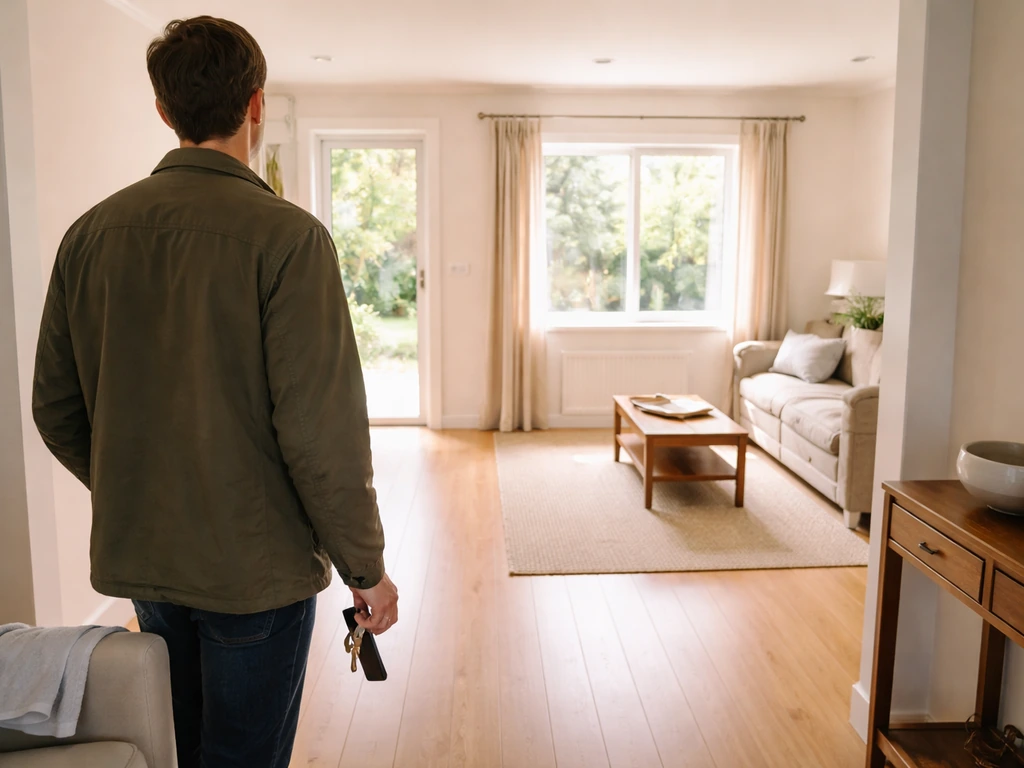
- Close all doors and windows in the room where the bird is located. If you are not sure which room it is in, do a quick sweep and close off as many exits as possible before you start searching.
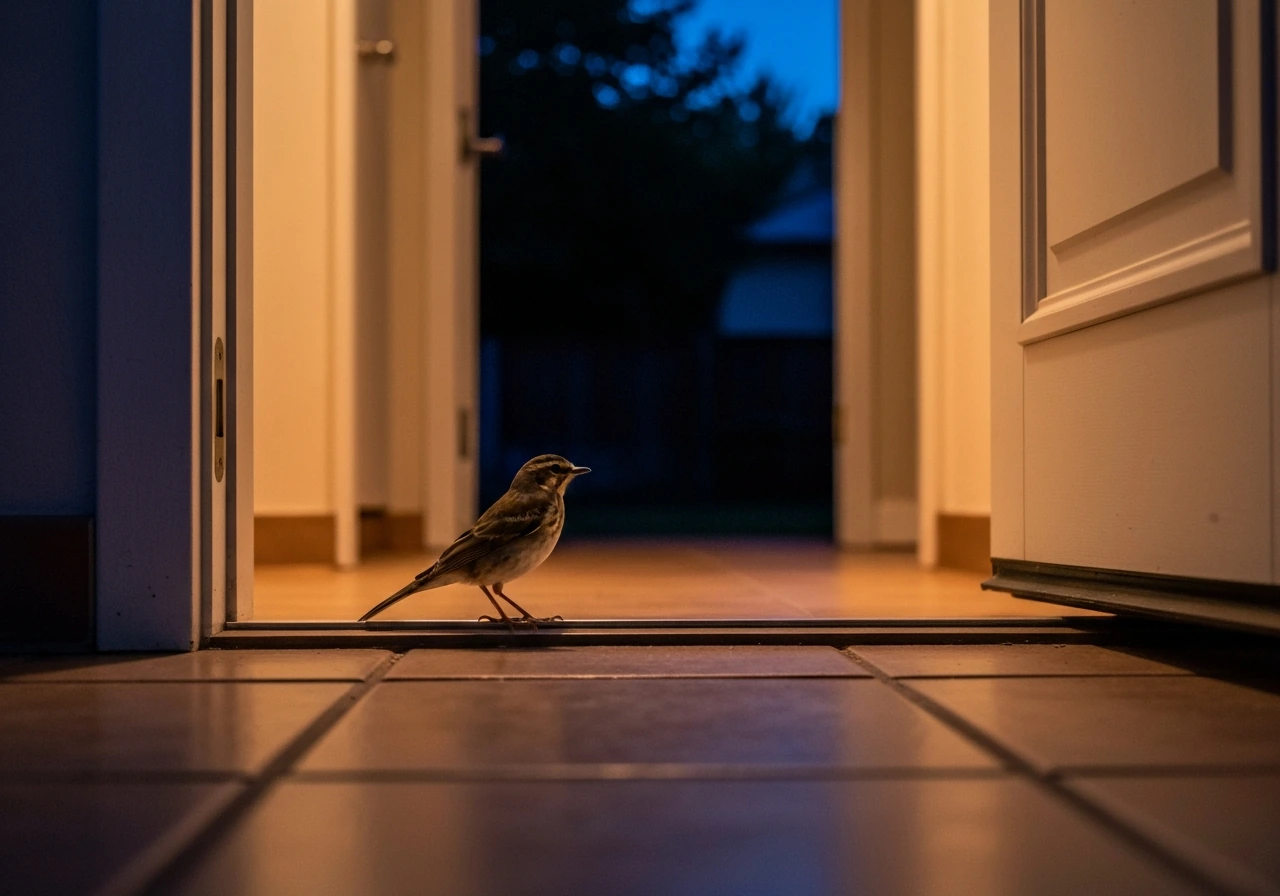
- Dim the lights if you can. A darker room reduces the bird's drive to fly toward light sources and often prompts it to land.
- Note whether the bird appears alert and strong or stunned and slow. This matters for choosing your capture approach and for deciding whether a vet call is needed.
Once you have done those six things, take 30 seconds to assess: Is the bird indoors or outdoors? Is it moving freely or is it grounded? Is it a pet bird you own, a wild bird that flew in accidentally, or an unknown species? Your answers will guide everything that follows.
Finding the bird: indoors vs. outdoors
Indoors
A bird inside a building tends to fly toward natural light. Start by checking windows, especially high ones, and any glass doors. If you have a multi-room building or a stairwell situation, work systematically from the top floor down, closing doors behind you as you clear each space. Listen for wing beats, chirping, or scratching. Birds hiding in silence are often tucked behind furniture, in curtains, or on a high shelf. Do not rush through the search; give each room 60 to 90 seconds of quiet listening before moving on.
For hard-to-reach spots like ceiling voids, wall cavities, or HVAC duct openings, resist the urge to probe with a stick or your hand. Note the location, block off the opening if you can, and reassess. A bird in a wall cavity is a situation that may need professional help, which is covered at the end of this guide.
Outdoors
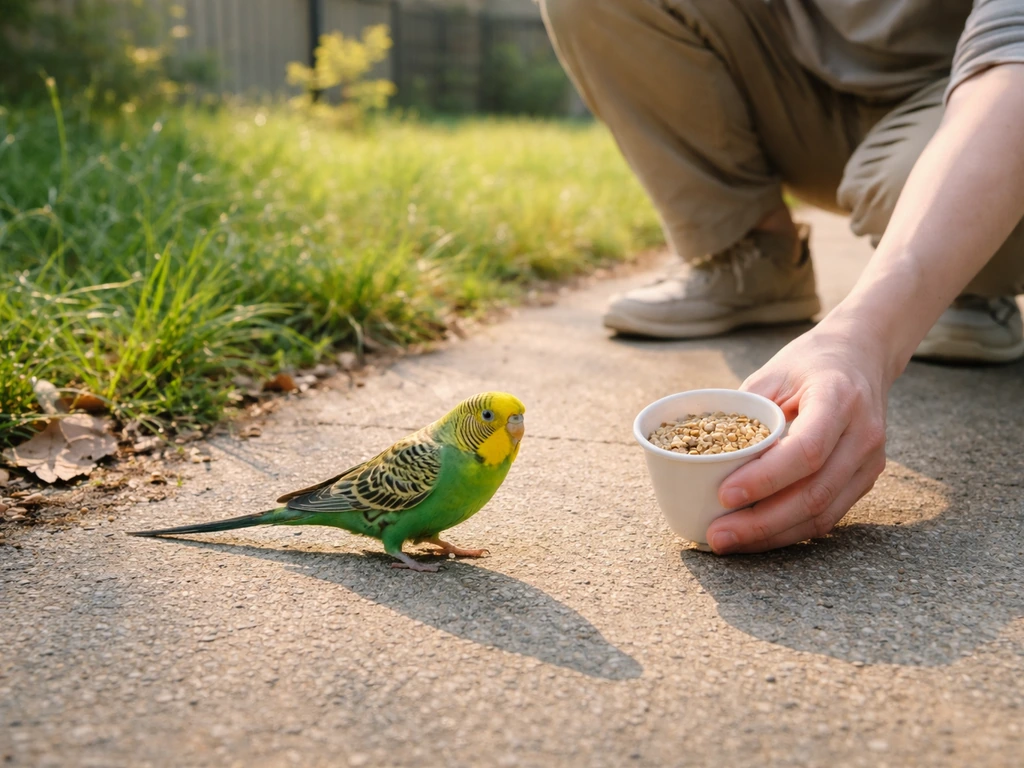
Outdoors is more difficult, but here is something useful: an escaped bird, especially a pet bird like a parakeet, budgie, or parrot, will often stay very close after its first disoriented flight. It is not immediately trying to get far away; it is scared and looking for something familiar. Check trees, shrubs, and fence lines within 50 to 100 feet of the escape point first. Move slowly and quietly. Bring the bird's own cage or carrier outside with food visible inside, placed on a flat surface near where the bird was last seen. The familiar smell and sight of its cage is one of the strongest lures you have.
For a wild bird that accidentally came indoors and is now outside, your goal shifts. If it is flying normally, it likely does not need your help at all. If it appears grounded, stunned, or injured, treat it as a wildlife situation and skip ahead to the section on calling professionals.
Humane capture methods that protect the bird
The guiding principle here, backed by wildlife rehabilitation guidance from multiple organizations, is simple: avoid injury to yourself and avoid further injury to the bird. Never grab at a flying bird. Never corner it into a tight space while it is panicking. Wait for it to land, then approach slowly.
Using a towel or cloth
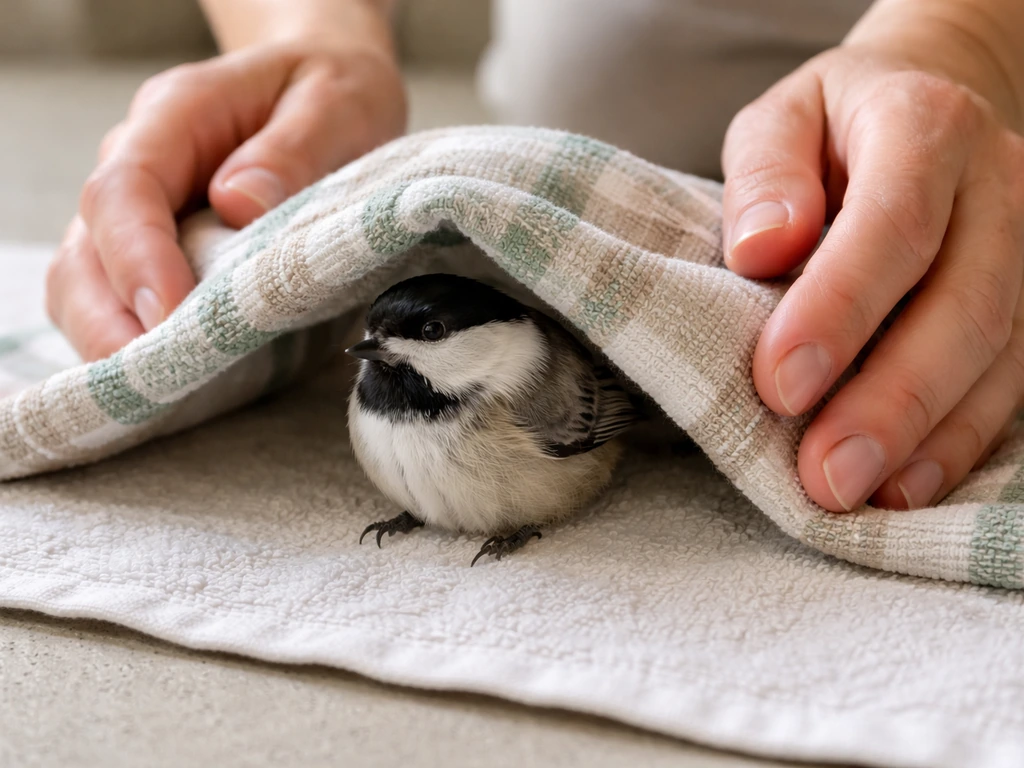
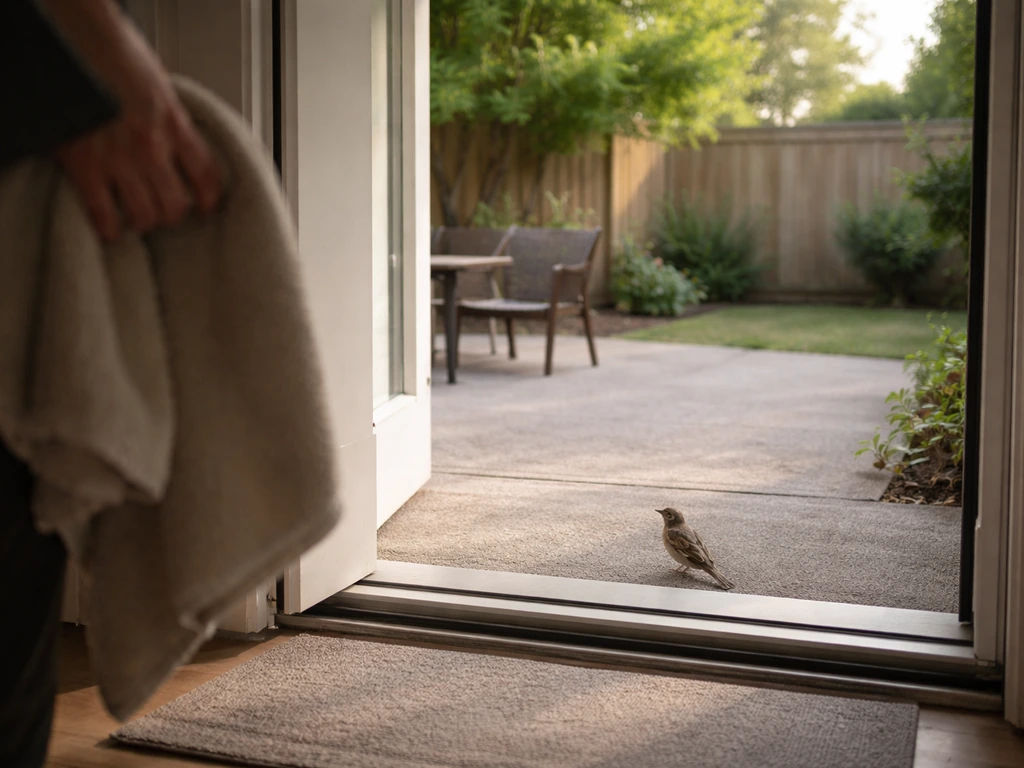
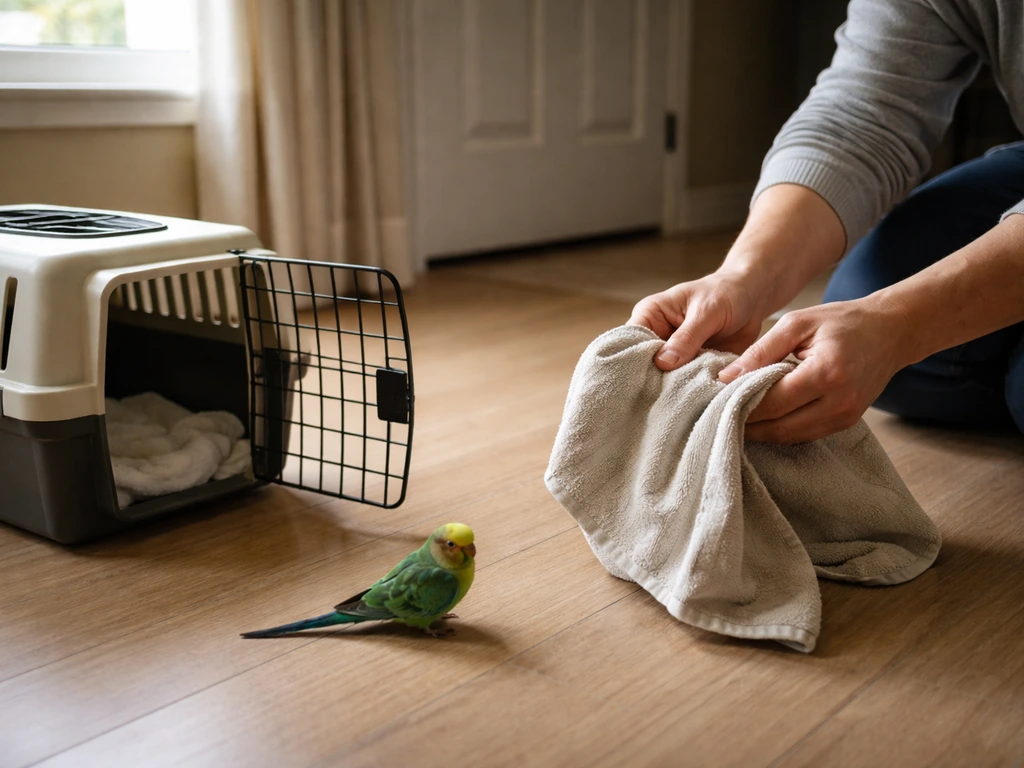
A cloth is your most practical indoor tool. Use a tea towel, a thin T-shirt, or paper towels. Avoid terry cloth bath towels because the looped fibers can catch on a bird's beak or toes and cause injury. When the bird is perched and settled, approach from the side rather than head-on, and drape the cloth gently over the bird, covering its head first. Then tuck the wings into the body with your hands over the cloth. Hold firmly but not tightly. Transfer directly into a waiting carrier or box with the lid ready to close.
Using a net
A soft-mesh net, like a fine butterfly net or a small fishing landing net, works well for birds that keep relocating before you can get close enough to use a towel. Approach calmly, swing in a smooth arc rather than a jabbing motion, and the moment the bird is inside the net, pinch the net closed above the bird so it cannot fly back out. Do not let the bird thrash in an open net. Move quickly but gently to fold the net and cover the bird, then transfer to a carrier.
Using a carrier or cage as a lure
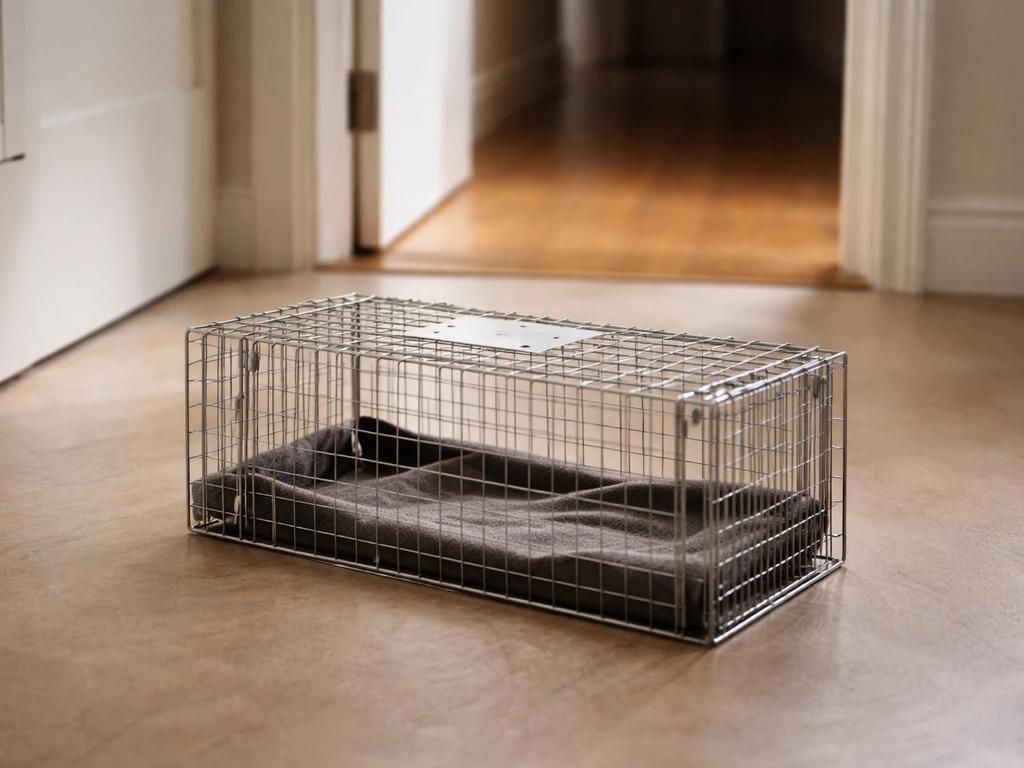
For a pet bird that knows its cage, this is often the lowest-stress option. Place the open carrier or cage in the room where the bird is, with food inside and the door propped open. Turn the lights down low and leave the room. Check back every 15 to 20 minutes. Many birds will simply return on their own to a familiar space. If the bird goes in, close the door quietly and with minimal fuss. You can also guide a bird toward an open carrier using a large towel or sheet held out to your sides like a slow-moving wall, gently narrowing the space until the bird has nowhere comfortable to land except the carrier opening.
Handler protection
If you are not comfortable handling the bird bare-handed, wear light, thin gloves. Avoid heavy work gloves or oven mitts because they reduce your dexterity and make a secure but gentle grip nearly impossible. For larger birds like raptors, herons, or waterfowl that strayed inside, do not attempt a bare-handed capture at all. Their talons and beaks can cause real injury. Use a thick jacket or heavy towel as a barrier, or wait for professional help.
Setting up a controlled environment to wait out the situation
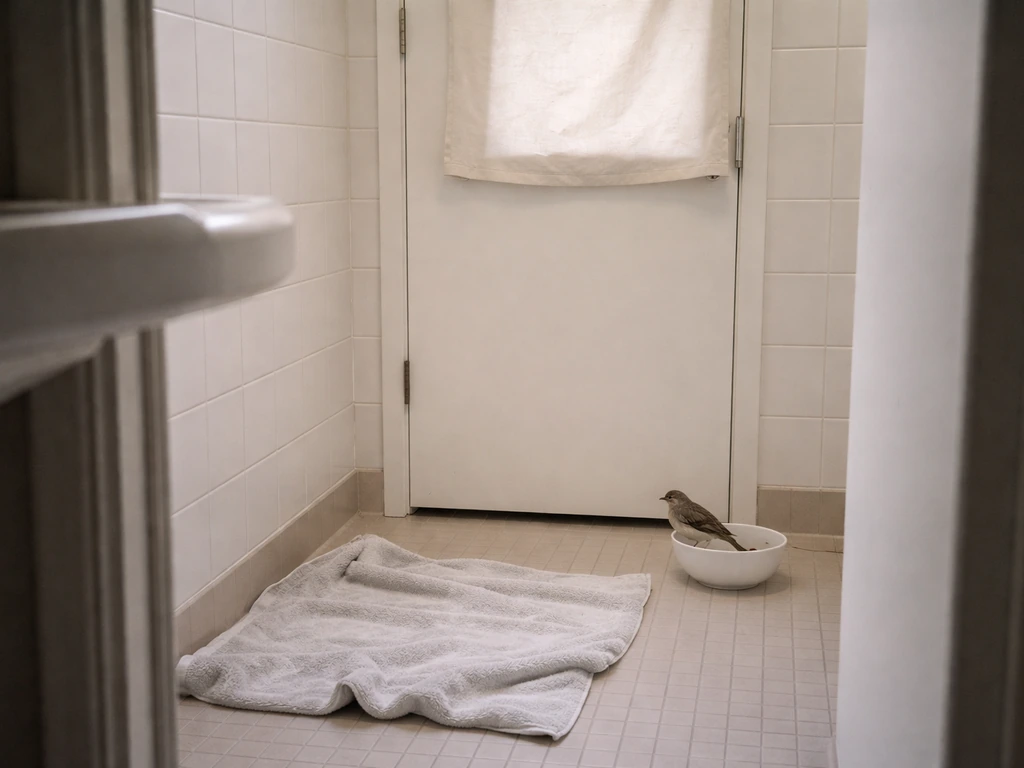
Sometimes the smartest move is not to chase at all, but to create conditions that make the bird come to you, or at least stop moving. A bathroom is an excellent choice for this because it is small, has no hidden wall cavities, and can be fully sealed. Stuff a rolled towel under the door gap to block the space. Remove anything the bird could get trapped behind or under. Place a carrier with food inside on the floor, leave the room, and check back in 20 minutes.
If you cannot get the bird into a small room and it keeps flying around a larger space, try this: dim all lights except for a single lamp placed near the carrier or cage opening. Birds tend to move toward light sources, and a single warm light near the carrier entrance can draw them in. Keep the room quiet. Keep pets and people out. Check every 15 minutes without entering noisily.
Once you have the bird contained, place the carrier in a quiet, dark area away from pets, children, and excessive noise. Keep it covered with a light cloth to reduce visual stress. If the bird is a wild bird that was stunned by a window strike, allow up to a couple of hours for it to recover before attempting to move it outdoors. If it is still not flying normally after two hours, that is the threshold where a vet or wildlife rehabilitator visit becomes necessary.
Common scenarios and quick decisions
| Scenario | Best first action | Escalate if... |
|---|---|---|
| Bird hidden in a room, not visible | Dim lights, place open carrier with food, wait quietly | No sign after 1 hour of searching |
| Bird perched high on ceiling or beam | Wait for it to descend, use a lure below, avoid climbing after it | Location is inaccessible or bird is injured |
| Bird repeatedly flying into windows | Cover windows with a sheet to reduce light draw, redirect toward carrier | Bird shows signs of injury from impacts |
| Bird stuck in a stairwell | Work from top down, close upper doors, guide toward ground floor exit or carrier | Multi-floor facility with many openings |
| Bird outdoors after escape | Place cage with food near last sighting, wait 20-30 min, net ready | Bird not spotted after 30-60 min or shows injury |
| Bird near vents or duct openings | Block opening gently with a cloth, do not chase into duct | Bird enters ductwork; call a professional |
Preventing the next escape: bird-proofing and building controls
Once the immediate situation is resolved, use it as a checklist audit. Most escapes happen through the same handful of vulnerabilities: unsecured aviary doors, open windows without screens, gaps around vents, and accidental releases during cleaning or handling. Fixing these takes less time than you might think.
Physical openings and entry points
- Install tight-fitting, bird-proof latches on all aviary and enclosure doors. Spring-loaded or two-step latches are harder for birds to manipulate from the inside.
- Fit all windows in bird-occupied rooms with secure screens. Check for gaps or tears regularly, especially at the corners.
- Cover ventilation openings with hardware cloth (1/2-inch mesh or smaller). Standard insect screen is not strong enough to contain or exclude most birds.
- Seal gaps around pipes, conduits, and exterior wall penetrations. Even a gap smaller than 1 inch can allow a small bird to pass through.
- Install door sweeps on any door that leads from a bird-occupied space to an exterior or uncontrolled interior space.
Procedural controls
- Use an airlock or double-door entry system for aviaries: one door closed before the next opens.
- Establish a clear handling protocol so anyone who works with the birds knows to close all room exits before opening any carrier or enclosure.
- Cover carriers with a light sheet when transferring birds between spaces to reduce the bird's visual stimulation and reduce the chance of a sudden escape attempt.
- Do a walk-through check of all enclosure latches and screens at least once a month, and additionally after any storm or heavy wind that might shift or damage fittings.
Seasonal planning
Spring and early summer are the highest-risk seasons for escapes. Windows and doors get opened more often as temperatures rise, handling frequency goes up during breeding season, and birds tend to be more energetic and curious. Do a full proofing audit in late March or early April before the season peaks. Similarly, check screens and latches again in autumn before indoor heating starts driving people to keep windows shut but before complacency sets in from the slower winter months.
When to call wildlife professionals and what the law says
There are situations where a DIY approach is not appropriate, and being honest about that protects both you and the bird. Here is when you should stop and make a phone call instead.
Call a professional when
- The bird is visibly injured: bleeding, dragging a wing, unable to stand, or clearly in distress.
- The bird is a large or potentially dangerous species such as a hawk, owl, heron, or goose. These birds can cause real injury to an untrained handler.
- The bird has entered ductwork, a wall cavity, or another inaccessible location where retrieval requires structural access.
- You cannot identify the species and are unsure whether it is a protected migratory bird.
- The bird has not recovered after two hours of quiet observation following a window strike.
- You or someone nearby has been injured during the capture attempt.
Who to call
Your first call for an injured or distressed wild bird should be to a licensed wildlife rehabilitator. If you cannot reach one, contact your local animal services center, which can usually connect you with the right resource. The U.S. Fish and Wildlife Service also provides regional contact points for migratory bird permit offices if you need additional guidance on a protected species.
Legal notes on protected species
In the United States, most wild birds are protected under the Migratory Bird Treaty Act. This means you generally cannot keep, hold, or possess a wild migratory bird without proper authorization, even with good intentions. The law does allow for a narrow exception: under 50 CFR 21.31(a), any person who finds a sick, injured, or orphaned migratory bird may take possession of it for the sole purpose of immediately transporting it to a permitted wildlife rehabilitator. That is the legal window you are operating in during an emergency. Once you hand the bird off to a licensed rehabilitator, your obligation under the law is fulfilled.
Rehabilitating the bird yourself without a permit is not legal. Both a state wildlife rehabilitation permit and a federal rehabilitation permit are typically required to hold and treat protected migratory birds. Requirements vary by state, so if you have any doubt about the species or situation, the safest and legally cleanest path is to transport the bird to a professional as quickly as possible. Do not attempt to treat, house long-term, or release the bird yourself unless you are already authorized to do so.
For pet birds that escaped from your own property and are not wild or protected species, standard animal control and local ordinances apply rather than federal migratory bird law. If the bird is wild, laws and safety considerations usually mean you should not shoot it and should instead contact a wildlife rehabilitator or animal control escaped from your own property. If your pet bird escapes and is recovered by someone else, contact your local animal control office and any local bird rescue organizations. Posting on neighborhood apps and local social media with a clear photo also dramatically improves recovery odds for escaped pet birds.
FAQ
What should I do in the first 60 seconds if I notice a bird has escaped indoors?
Freeze and slow your breathing, then immediately close obvious exits (open doors and screened windows) and turn off ceiling fans. Avoid any sudden movement that could trigger a high, fast flight that increases crash risk.
Is it safe to chase an escaped bird if it is very close to me?
No. Even if the bird seems near, chasing increases panic and can cause a sudden dart that leads to wall or window impacts. Instead, use a calm, slow approach, and rely on a towel or carrier setup once it pauses or lands.
How can I tell whether I should treat the situation as pet bird or wildlife?
Use three cues, the bird’s ability to fly normally, whether it is actively seeking familiar perches or people, and whether you can identify an owner or known species. If it is not clearly identifiable or it flew in from outside, default to wildlife-safe handling and contact professionals if injured or grounded.
What if the bird is hiding behind furniture or inside curtains and won’t come out?
Do not probe or grab from hiding spots. Block the escape routes you can, listen quietly for 60 to 90 seconds, and then create a clear path toward an open carrier using a towel as a slow barrier rather than pushing directly at the bird.
Do I need to cover all windows and glass doors during an indoor search?
Cover or close off reflective and open glass areas, especially any high windows, because birds often keep flying toward glare or outdoor light. If you can, dim lights in the room while you provide a controlled target near the carrier to reduce confusion.
Can I use a big towel or blanket instead of a tea towel?
You can, but use a lightweight towel or thin sheet that you can control gently. Heavy, bulky fabric is harder to slide under and can startle the bird or make it thrash, increasing the chance of injury.
What should I do if the bird keeps slipping away when I try the towel or net?
Switch tools and timing. If it relocates before you can drape, use a soft-mesh net with a smooth arc and keep the bird from thrashing in the open net. Have the carrier lid ready so transfer is immediate.
How do I position the carrier for the lowest-stress capture?
Place the open carrier where the bird already chooses to land, near where it was last seen. Use visible food, keep the room quiet, and check frequently without entering noisily, because repeated disturbance resets the bird’s fear response.
Is it okay to catch a larger bird bare-handed if it lands?
Avoid bare-handed capture for larger birds such as raptors, herons, and waterfowl. Their beaks and talons can injure quickly, even when they seem calm, so use a barrier method (heavy towel or jacket) or wait for professional help.
What if the bird is grounded and I suspect a window strike?
Keep people and pets away and allow time for recovery, up to a couple of hours, before attempting transport outdoors. If it still cannot fly normally after that window, contact a vet or licensed wildlife rehabilitator.
What if I find a bird in a wall cavity, ceiling, or HVAC opening?
Do not attempt to reach in with your hand or a stick. Block off the opening if possible and arrange for professional assistance, because forcing access can cause the bird to panic, injure itself, or end up in a more dangerous compartment.
How often should I check on the bird once it is contained in a dark, quiet area?
Check about every 15 minutes, aiming for brief, quiet visits rather than frequent, long interruptions. Maintain darkness or low light to reduce agitation, and avoid sudden handling until the next planned step.
When is it legal for me to pick up a wild migratory bird in the U.S.?
If it is sick, injured, or orphaned, you can take possession solely to immediately transport it to a permitted wildlife rehabilitator. Do not keep it longer than necessary for transport, and avoid attempting rehab or long-term housing yourself.
If my pet bird escapes and someone else finds it, what should I do?
Contact your local animal control and any nearby bird rescue groups, and post a clear photo quickly on local community channels. Provide distinguishing details (species, color bands, leg bands) because accurate identification speeds up reunions.