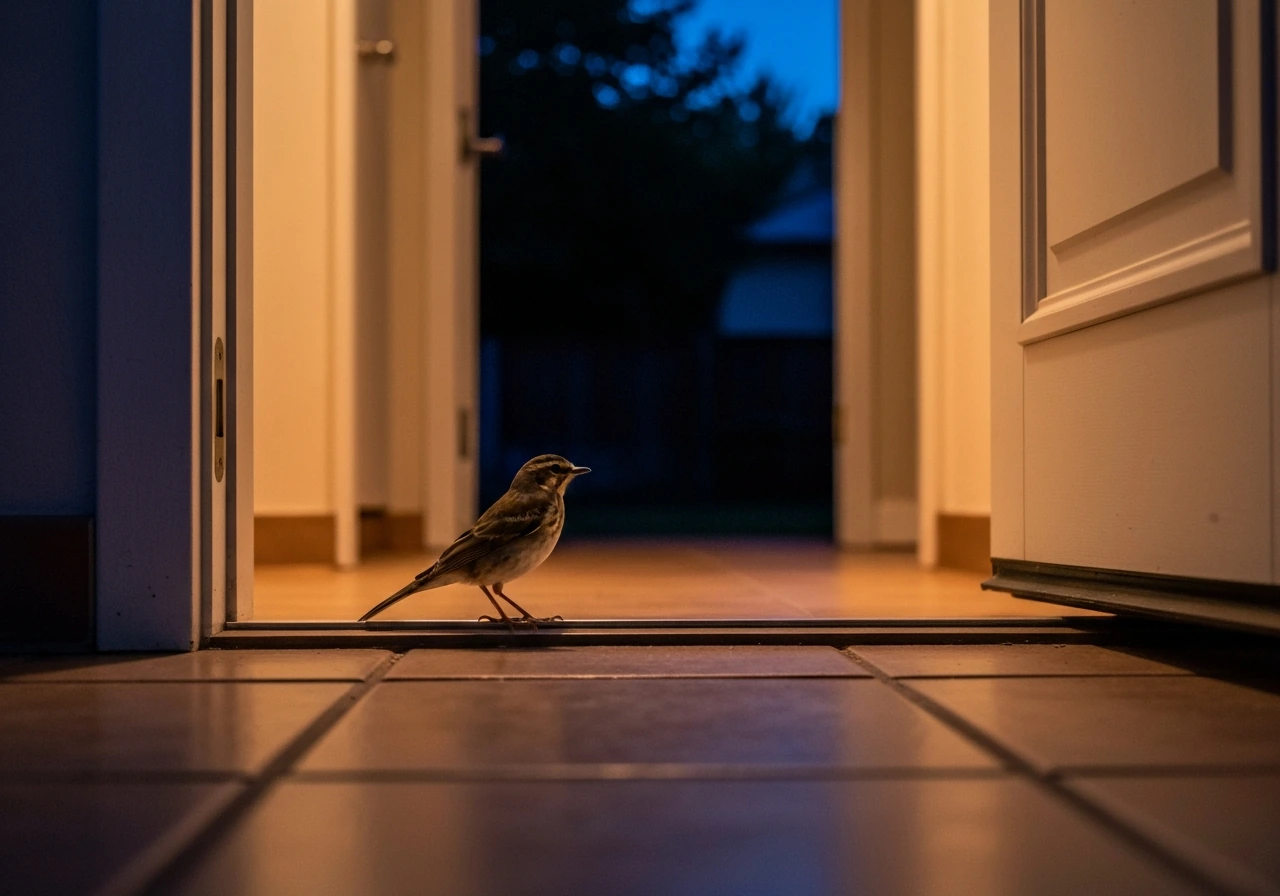
If a bird is inside your building right now, skip the trap for the moment. If the bird was found after window-related incidents, San Diego Humane Society advises placing it in a box with a lid if it is not fully alert, to help contain the bird and minimize stress a bird found after window-related incidents.
Bird Trap How to Catch a Bird Humanely and Safely
Maya Carver
7 Jun 2026
Your fastest, safest move is to blank" rel="noopener noreferrer">darken the room, clear a path to one open exterior door or window (screen removed), close every other interior door, and then back off and give the bird space to find its own way out. That works in the majority of indoor cases within 10 to 30 minutes.
A live trap makes sense when the guide-out approach fails, the bird is injured or disoriented and can't fly well, or you're dealing with a repeat-entry problem on a roof or in a warehouse. This guide walks you through every scenario so you can decide quickly what to do and do it safely.
First steps when a bird is trapped indoors right now
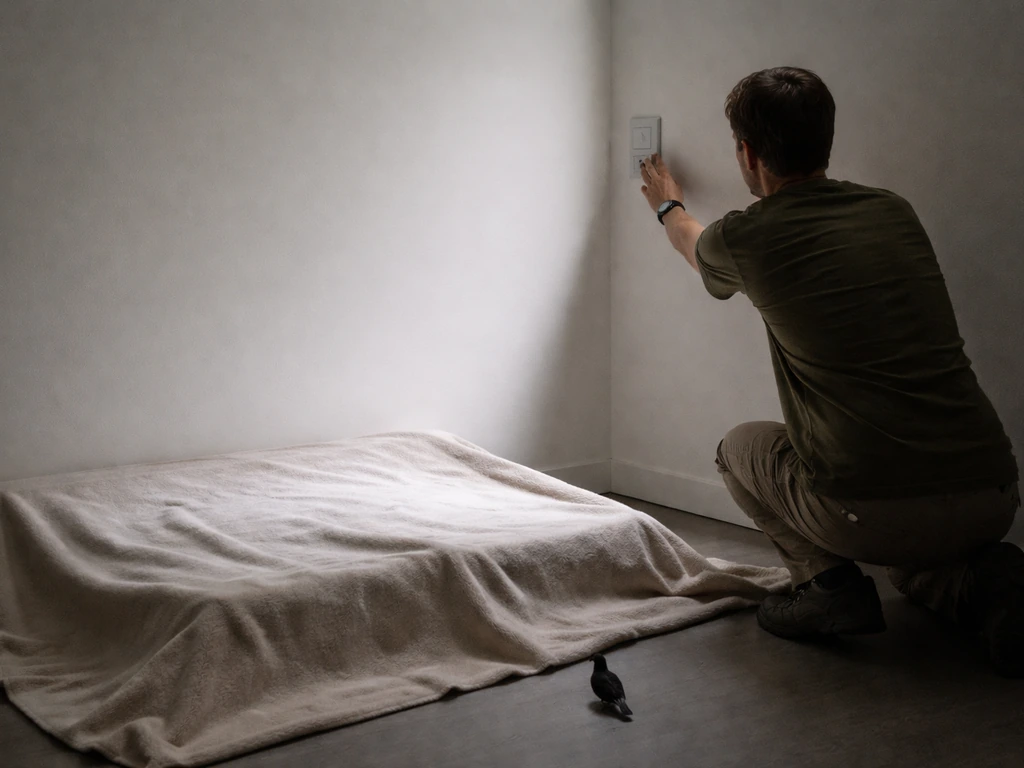
Speed and calm matter more than any tool. The first five minutes set the tone for the whole rescue. Birds panic when they're in a brightly lit, noisy, unfamiliar space, and a panicking bird is harder to catch and more likely to injure itself.
- Turn off all interior lights immediately. Cover skylights with a blanket or cardboard if you can do it safely. Birds are drawn to light, so darkness discourages them from staying near ceiling fixtures and high ledges.
- Herd the bird into one manageable room. Use a broom held horizontally (not swinging at the bird) or spread your arms wide and walk slowly toward it. Wildlife Illinois notes you can use a broom to gently move birds down from high rods or light fixtures without making contact.
- Close every interior door that you're not using as an exit. You want a single, simple route out.
- Open one exterior door or remove a window screen to create a clear escape point. Position yourself away from that exit so the bird isn't trapped between you and the opening.
- Silence the space. No music, no TV, no pets, no extra people. Loud noises and close human presence cause life-threatening stress in wild birds.
- Step out or press flat against a wall and wait up to 30 minutes. Most birds leave on their own once the room is dark and one exit is obvious.
If the bird isn't moving toward the exit after 10 minutes, try a food trail. Place a few seeds or small crumbs in a line from where the bird is perched toward the open door or window. This gentle incentive often gets a hesitant bird moving in the right direction without any physical intervention.
Choose the safest approach: guide-out, live trap, or wildlife help
Not every situation calls for a trap. Use this quick decision guide to pick the right approach before you commit to any setup.
| Situation | Best Approach | Why |
|---|---|---|
| Bird is alert, flying normally, trapped in a room | Guide-out (darken, open exit, wait) | Fastest and least stressful for the bird |
| Bird is dazed, grounded, or flying weakly | Contain in a box, then call a wildlife rehabber | Likely injured; needs professional assessment |
| Bird keeps re-entering the building over days/weeks | Live trap plus exclusion work | Behavioral pattern; trap-and-relocate plus sealing entry points |
| Bird is stuck in a large warehouse, atrium, or commercial space | Live trap or professional exclusion net | Too large a space for guide-out to work reliably |
| Bird is a protected migratory species (sparrow, warbler, swallow, etc.) | Contact your state wildlife agency or a licensed rehabber first | MBTA restrictions may apply; trapping without authorization is illegal |
| Bird is on a glue or sticky trap | Do not attempt DIY removal; call a wildlife rehabber immediately | Glue destroys feathers and skin; this is a medical emergency |
The Migratory Bird Treaty Act (MBTA) makes it unlawful to pursue, capture, trap, or possess most wild bird species without federal or state authorization. If you mean shooting a backyard bird, that is generally regulated and can be illegal without the proper authority and conditions. House sparrows, European starlings, and rock pigeons (common feral pigeons) are not protected under the MBTA, so trapping them is generally permitted.
Most other backyard and building birds, including swallows, wrens, finches, and warblers, are protected. If you're not sure what species you're dealing with, default to the guide-out method or call for help before setting any trap. A practical way to think about this is how to blank" rel="noopener noreferrer">lure a bird outside by guiding it toward the open exit without forcing it to chase you guide-out approach.
How to set a humane bird trap step by step
When a live trap is the right call, using the correct equipment and placement makes the difference between a quick catch and a bird that ignores your setup for days. To learn the safest ways to catch and remove a bird from your backyard, follow the same humane setup principles and focus on giving the bird an easy escape route how to catch a bird in your backyard. Here's what you need and how to do it.
What you'll need
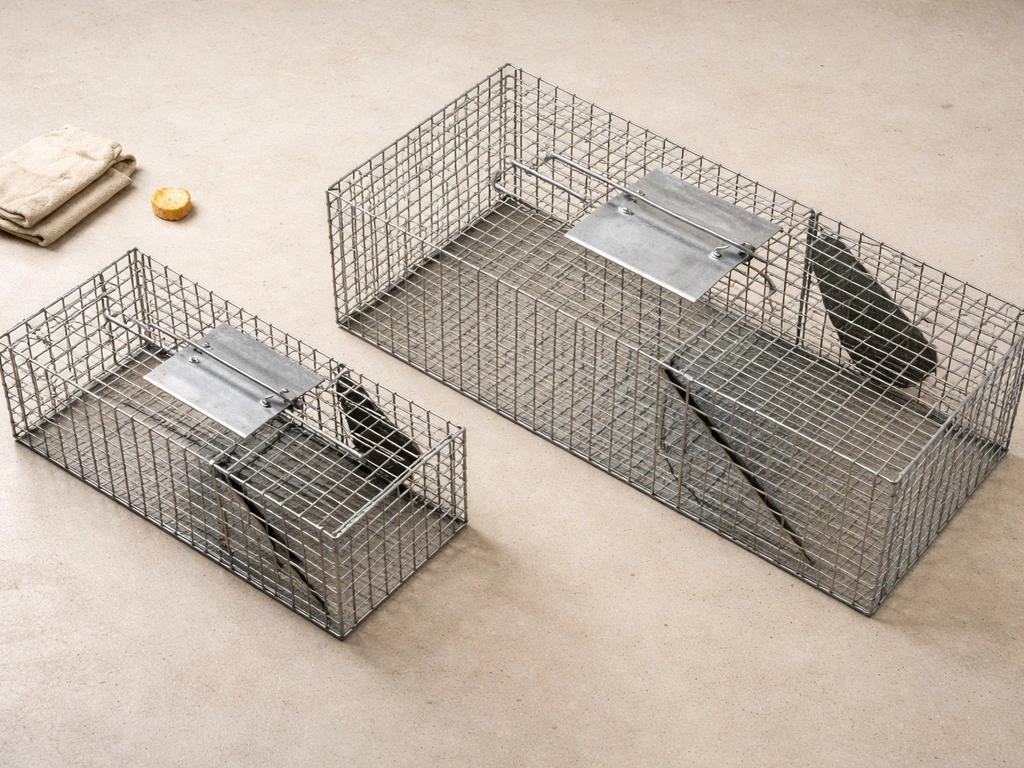
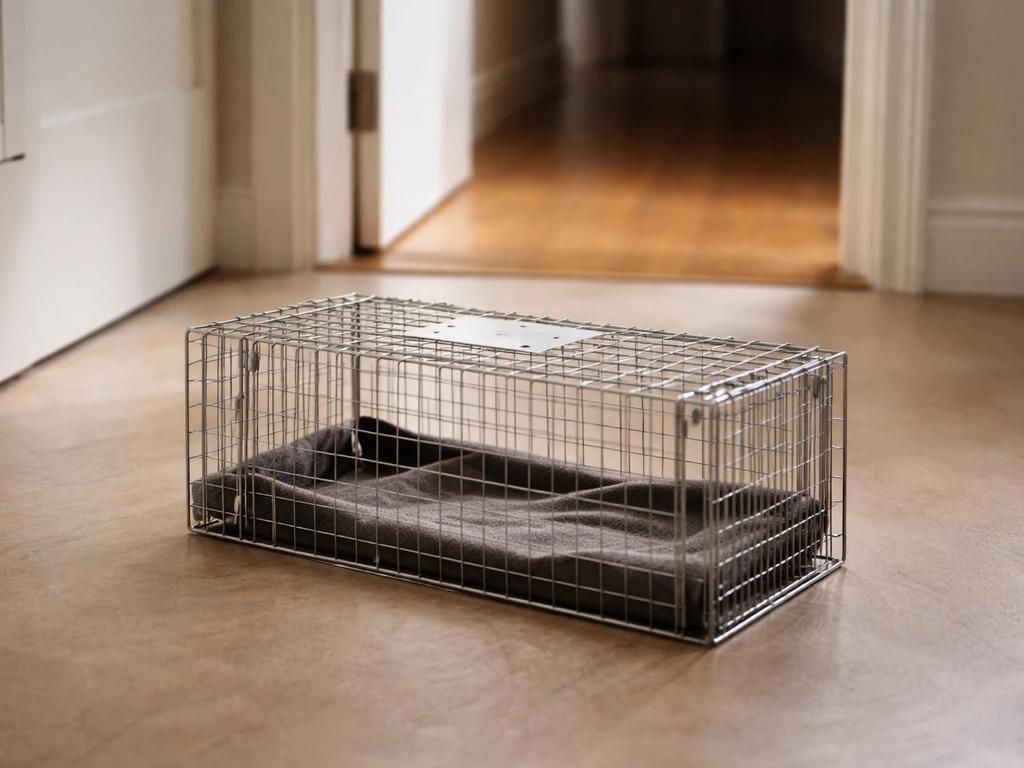
- A wire mesh live trap sized appropriately for the bird (a standard 16-inch sparrow/starling trap works for most small to medium birds; use a larger 24-inch trap for pigeons or doves)
- Bait appropriate to the species (see baiting section below)
- A light cloth or old towel to drape over the trap after capture
- Gloves (leather or thick work gloves) for handling
- A cardboard box or pet carrier with a secure lid for transport if needed
Placement
- Place the trap where the bird has been spending most of its time. For indoor situations, set it in the room where the bird is most active, on the floor near a perch or along a wall.
- For outdoor or building-entry situations, position the trap near the confirmed entry point (a gap in soffits, a loading dock, a broken vent) or directly below a ledge where the bird roosts.
- Keep the trap away from direct sunlight if temperatures are above 80°F (27°C). Overheating inside a metal trap is a real danger.
- Set the trap in the early morning. Birds are most active and most likely to investigate food sources in the first two hours after sunrise.
- Pre-bait for 24 to 48 hours before triggering the trap. Leave the trap door open and bait placed inside for a day or two so the bird gets comfortable eating from it.
Setting the trigger
Once the bird is comfortable feeding from the trap, set the trigger mechanism according to the manufacturer's instructions. Most wire live traps use a treadle plate (a pressure plate the bird steps on) or a drop door triggered by a pull cord you control from a distance. The pull-cord style is useful indoors because you can sit quietly out of sight and trigger the door the moment the bird is fully inside. Check the trap every 30 minutes maximum once it's set. Never leave a set trap unattended for more than an hour. A bird in a wire trap in warm weather can die from heat stress or exhaustion within a short time.
Baiting and containment best practices
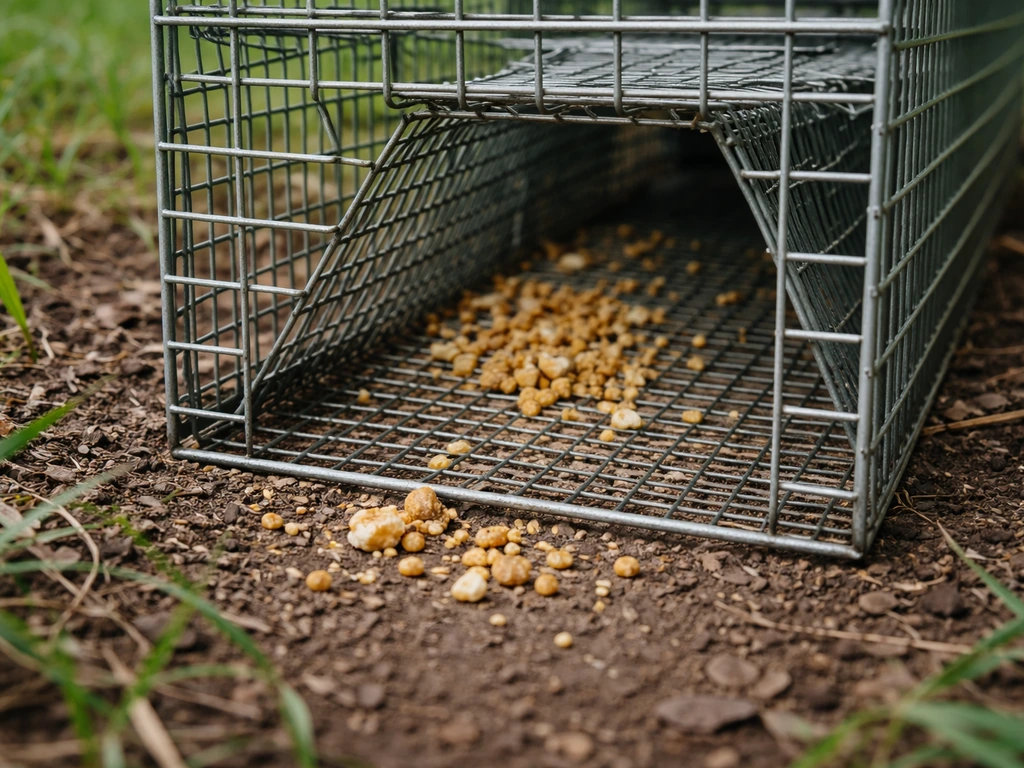
Bait choice depends on the species you're targeting. Using the wrong bait either attracts non-target birds or gets ignored entirely.
| Bird Type | Effective Bait | Placement Tip |
|---|---|---|
| House sparrow | Millet, bread crumbs, cracked corn | Scatter lightly inside and just outside the trap entrance |
| Pigeon / feral dove | Whole corn, dried peas, pigeon feed mix | Spread a trail leading into the trap from 3 to 4 feet out |
| European starling | Suet, mealworms, cracked corn | Place bait in a small cup inside the trap to reduce scatter |
| Unknown small songbird | Mealworms or sunflower chips (hull-less) | Use sparingly; goal is to lure, not overfeed |
What to avoid
- Do not use glue traps, sticky boards, or flypaper-style devices under any circumstances. Glue destroys feathers, tears skin, and causes severe injury. Any bird stuck on a glue trap requires immediate professional veterinary care and is considered an emergency.
- Do not offer food or water to an injured or dazed bird inside or near the trap. Both Audubon and Tufts Wildlife Clinic are explicit: feeding injured wild birds can cause aspiration or other harm.
- Do not leave the trap unattended for long periods. Check it every 30 minutes.
- Do not place the trap in direct hot sun or in a spot with no airflow.
- Do not put pets or children near an active trap; the commotion stresses the bird and may cause injury.
Safe handling and release
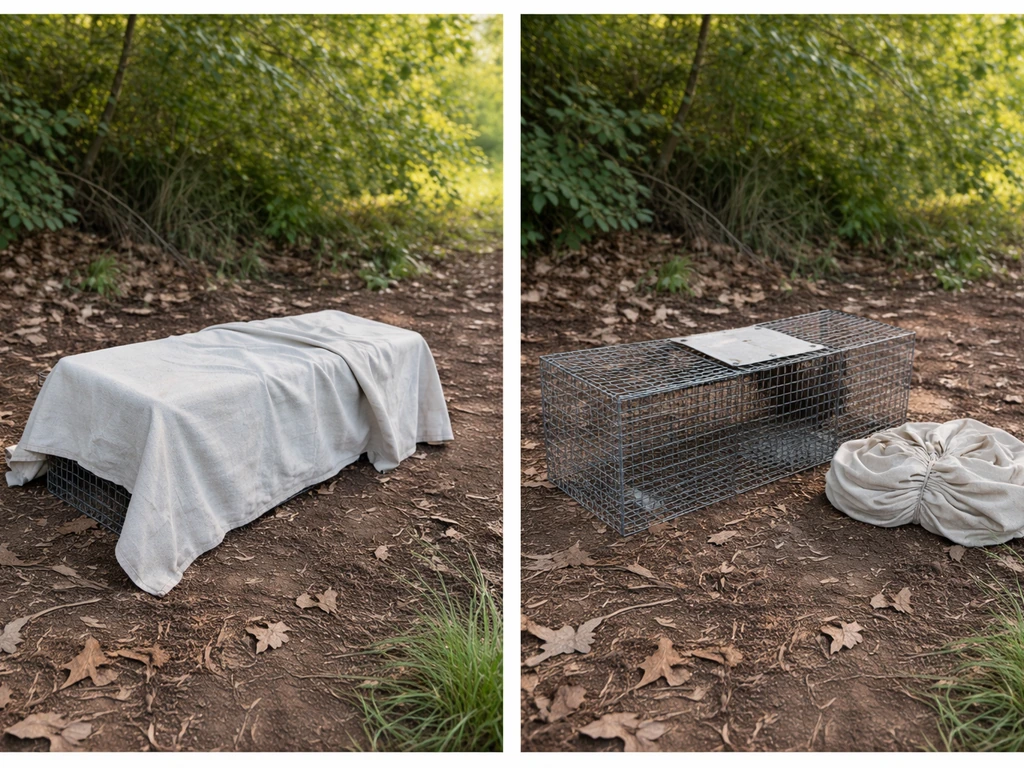
Once the bird is in the trap, slow and quiet is the rule. Rushing this step is where most people cause the bird unnecessary stress or injury.
- Drape a light cloth or towel over the entire trap immediately after capture. Darkness calms the bird and reduces the chance it will thrash against the wire.
- Put on your gloves before opening the trap. Even small birds can scratch or bite, and you want a firm, confident grip.
- If you need to transfer the bird to a box (for transport to a rehabber), open one end of the trap into the opening of the box and let the bird move in on its own. Avoid reaching in and grabbing unless necessary.
- If you must handle the bird directly, wrap it loosely in the cloth so its wings are gently held against its body. Hold it upright, not on its back. Never squeeze.
- Keep pets, loud noises, and extra people away during the entire handling process.
- Release the bird outdoors in a sheltered area with trees or shrubs nearby, away from traffic and windows. Open the trap or box at ground level, step back, and let it leave at its own pace.
- Do not release an injured or disoriented bird. If it can't fly or is clearly hurt, contact a licensed wildlife rehabilitator.
After release, disinfect the trap with a diluted bleach solution (1 part bleach to 10 parts water) before storing or reusing it. Bird droppings can carry pathogens, and cleaning the trap protects both you and any future bird that enters it.
When the plan isn't working: troubleshooting common failure points
If the bird isn't cooperating, use this quick diagnostic flow to figure out what to adjust.
| Problem | Likely Cause | Fix |
|---|---|---|
| Bird won't leave through open exit (guide-out) | Room isn't dark enough or exit isn't obvious | Cover all other light sources; hang a white cloth near the open exit to make it visually distinct |
| Bird ignores the trap for 24+ hours | Wrong bait or trap is in the wrong spot | Switch bait; move trap to the bird's most frequent perch or feeding area |
| Bird takes bait but avoids stepping on trigger plate | Trap not pre-baited long enough; trigger sensitivity too high | Pre-bait 48 hours with door open; test and adjust trigger tension |
| Bird entered trap but escaped before door closed | Trigger timing off; using pull-cord method from too far away | Reduce distance; use a longer cord and stay out of the bird's sight line |
| Bird is in an inaccessible spot (ceiling void, ductwork) | Physical access not possible without professional tools | Stop DIY attempts; call a wildlife removal professional or pest control company experienced with birds |
| Multiple birds keep entering after first is removed | Entry point not sealed; flock behavior | Immediately identify and seal or screen the entry point after every removal |
| Bird appears injured or lethargic in the trap | Pre-existing injury or heat/stress in the trap | Cover trap, move to cool/shaded area, call a wildlife rehabber immediately |
One pattern I see repeatedly: people set a trap, catch one bird, release it, and then find two more birds inside the next week. The trap is not the solution on its own. Sealing the entry point is the actual fix. Trapping is just a way to clear the building while you do the real work.
Long-term prevention and building proofing
Once you've removed the bird, you have a narrow window to prevent the problem from repeating. Birds are creatures of habit and will return to a familiar entry point. Here's how to close that window permanently.
Find and seal every entry point
- Do a full exterior inspection at dawn or dusk when birds are active, so you can watch where they enter and exit.
- Common entry points: broken or missing soffit vents, gaps around rooftop HVAC units, open ridge caps, damaged fascia boards, uncapped chimneys, loading dock gaps, and spaces where utility lines pass through walls.
- Seal small gaps (under 1 inch) with caulk or expandable foam. Use hardware cloth (1/4-inch mesh) for larger openings. Avoid plastic mesh; birds and squirrels chew through it.
- Install one-way exclusion devices on active entry points if birds are actively nesting inside. A one-way door lets birds exit but not re-enter, and removes the need to trap at all in many cases. Do not seal active nesting sites during breeding season if protected species are involved.
Reduce attractants
- Remove outdoor bird feeders within 30 feet of the building if bird entry is a recurring problem.
- Keep dumpsters and trash areas covered and clean. Food waste is a major draw for pigeons and starlings.
- Eliminate standing water on rooftops, ledges, and HVAC condensate areas.
- Trim trees and shrubs that overhang the roofline; overhanging branches give birds a direct launch point onto the roof and into gutters.
Physical deterrents
- Install stainless steel bird spikes on ledges, windowsills, parapet walls, and HVAC equipment where birds roost. Properly installed spikes are humane and highly effective.
- Use bird netting over large open areas like loading docks, courtyards, and atrium overhangs.
- Apply bird slope panels on 90-degree ledges to make landing impossible.
- Consider optical gel or visual deterrents (holographic tape, predator decoys) for low-traffic areas, though these lose effectiveness if not rotated regularly.
Seasonal maintenance checklist
| Season | Key Tasks |
|---|---|
| Late winter (Feb-Mar) | Inspect all roof vents, soffits, and chimney caps before nesting season begins. Repair any winter damage to fascia and eaves. |
| Spring (Apr-May) | Check for active nests before sealing any gaps. Install one-way exclusion devices where birds are entering but not yet nesting. Increase trap monitoring frequency. |
| Summer (Jun-Aug) | Do not disturb active nests of protected species. Focus on sealing gaps in unused areas. Clean ledges and remove old nesting material after fledglings leave. |
| Fall (Sep-Nov) | Complete all sealing and exclusion work before winter. This is the best time to seal gaps because most birds have finished breeding. Inspect and replace worn deterrents. |
Legal and safety considerations, and when to call a pro
The Migratory Bird Treaty Act is federal law, and it covers the vast majority of wild bird species in the U.S. Under the MBTA, trapping, capturing, possessing, or even disturbing the nest of a protected migratory bird without authorization is a federal offense. The U.S. Fish and Wildlife Service (FWS) does provide mechanisms for authorization in some situations, including state permit pathways and specific permits for nuisance bird situations, but these require advance approval. If you're dealing with anything other than house sparrows, European starlings, or feral pigeons, your safest legal move is to contact your state wildlife agency or a licensed wildlife rehabilitator before setting any trap.
Federal guidelines for authorized bird trapping are also explicit that you may not use adhesive traps (glue boards) or any method likely to injure or harm the bird. Humane trapping conditions, proper handling, and healthful disposition are required by regulation (50 CFR § 21.14). This isn't just an ethical standard; it's a legal one.
Call a wildlife professional when
- The bird is injured, grounded, or showing signs of illness and won't respond to guide-out methods.
- You suspect the bird is a protected migratory species and you're unsure about your authorization to trap it.
- There is an active nest with eggs or chicks involved. Disturbing an active nest of a protected species can trigger legal liability.
- The bird is in an inaccessible location: inside ductwork, in a wall cavity, in a suspended ceiling, or in a large commercial atrium where DIY methods are not practical.
- You've tried guide-out and live trapping over 48 hours with no success.
- The bird is stuck on a glue or sticky trap. This is always an emergency requiring immediate professional wildlife rehabilitation care.
- You're managing a multi-unit building or commercial facility where health and safety regulations may require licensed pest control involvement.
When you call for help, be ready to describe the species if you can identify it, how long it's been in the building, the location within the building, whether you've seen signs of a nest, and what you've already tried. That information saves time and helps the responder arrive prepared. For complex or commercial situations, look for wildlife removal companies that are NWCOA-certified (National Wildlife Control Operators Association) or that specifically list bird exclusion as a service.
The bigger picture here is that catching the bird is only step one. Sealing the entry point, removing attractants, and installing physical deterrents are what actually solve the problem. WDFW guidance for bats also emphasizes prevention steps such as turning off lights and opening doors or windows that lead outside, and using local nuisance wildlife control resources when needed Sealing the entry point, removing attractants, and installing physical deterrents. Whether you're dealing with a single sparrow that wandered through an open door or a pigeon colony that's claimed your warehouse roof, the combination of humane removal and thorough proofing is the only approach that holds up long term.
FAQ
How long should I wait before I switch from the guide-out method to a live trap?
If the bird has not moved toward the exit after about 10 minutes, switch to a food trail. If that still does not work, then consider a trap, especially if the bird is injured, cannot fly well, or keeps re-entering through the same access point.
What should I do if I cannot identify the bird species?
Don’t set a trap until you have a positive ID. For protected species, the safest next step is to use the guide-out method and contact your state wildlife agency or a licensed wildlife rehabilitator, since authorization requirements vary by species.
Can I leave a bird trap set overnight if it is cold outside?
You still should not leave a set trap unattended more than about an hour, even in cooler weather. Extended trapping increases stress and risk of injury, and the article notes heat stress is a fast risk in warm conditions.
Do I need to remove pets and cover aquariums before trying a rescue or trap?
Yes, reduce distractions and exposure. Bring pets away from the room and secure small animals (like aquariums or cages) so the bird is not repeatedly startled by movement or sound, which makes catching harder.
What are the most common baiting mistakes that cause a trap to fail?
Using bait that does not match the species can either attract non-target birds or be ignored entirely. Another mistake is placing bait too far from the entry, so the bird can approach but not go fully into the trap.
Should I try to catch the bird with a towel or net while the trap is available?
Avoid physical grabbing. The body of the guide emphasizes slow and quiet after the bird is in the trap, and rushing is where injuries happen. If you must act immediately, use the guide-out approach first to minimize stress.
What if the bird is injured or barely moving, can I still use the same setup?
Use a trap only if the bird is disoriented or cannot fly well, or it is already injured, since a live trap may be necessary in those scenarios. In any injury case, contacting a wildlife rehabilitator quickly is especially important so the bird gets proper care.
How do I prevent catching one bird now, then more birds later?
Plan for proofing immediately after removal. Birds often return to the same entry point, so seal gaps, repair screens, and remove easy access routes before you consider the problem solved. Trapping alone typically clears the building temporarily.
Is it legal to use glue boards or adhesive traps for birds?
No. Authorized trapping guidance explicitly prohibits adhesive traps (glue boards) and any method likely to injure or harm the bird, even when you have a legitimate nuisance situation.
What information should I gather before calling wildlife help or a removal service?
Be ready with species (if known), how long it has been inside, the exact location within the building, whether you’ve seen nesting signs, and what you already tried. For commercial or complex cases, choose a provider that lists bird exclusion as a service and is NWCOA-certified if applicable.
How should I clean the trap to reduce disease risk before storing it?
Disinfect after release using a diluted bleach solution (1 part bleach to 10 parts water), then store only once it is fully cleaned. This reduces pathogen risk from droppings when the trap is reused.
Next Article
How to Lure a Bird Outside: Humane, Step-by-Step Guide
Humane step-by-step tactics to lure a bird outside, prevent injuries, fix entry points, and know when to call pros.