If a wild bird is actively nesting or laying eggs on your property, you generally cannot legally remove those eggs or destroy the nest until it is completely inactive. Under the U.S. Migratory Bird Treaty Act (MBTA), blank" rel="noopener noreferrer">removing or possessing a nest with eggs or chicks is illegal without a federal permit, and those permits are issued only in specific health or safety situations. What you can do right now is stop conditions that attracted the bird in the first place, monitor the nest so you know when it goes inactive, and then move quickly to block access so the same bird (or another one) can't restart. That combination of patience now and decisive action after fledging is the most effective and legal path forward.
How to Stop My Bird From Laying Eggs Safely and Legally

Quick emergency steps when you spot a nest or eggs
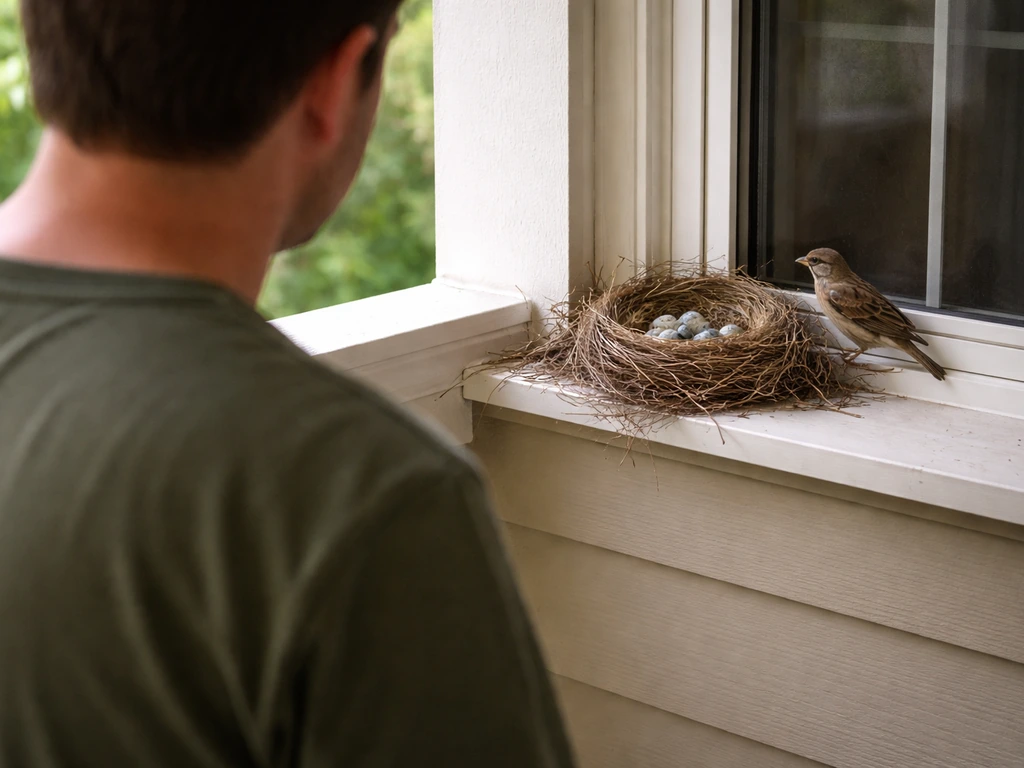
The moment you find eggs or an active nest, your first instinct might be to remove it immediately. Resist that. Instead, run through these steps in order before you touch anything.
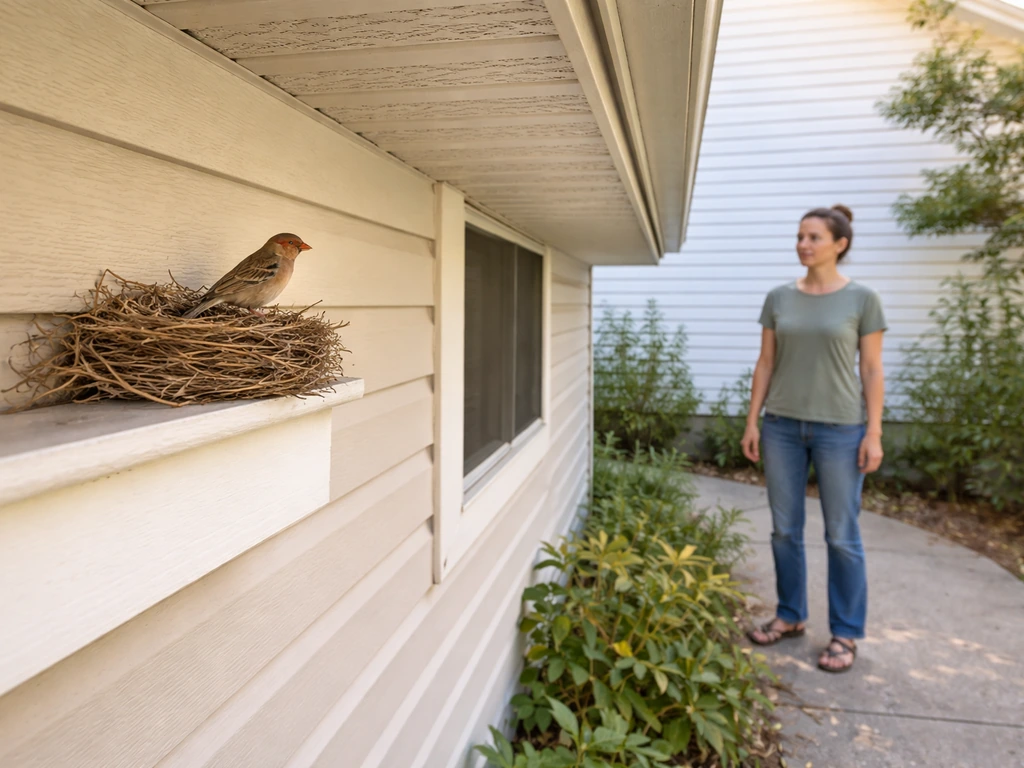
- Stop and observe from a distance first. Watch for 10 minutes to confirm whether a parent bird is actively using the nest. A bird flying to and from the site confirms it is active.
- Do not touch eggs, nestlings, or nesting material. Even picking up a single egg can expose you to legal liability under the MBTA. Take a photo instead for later identification.
- Remove any food or water sources near the site. Birdfeeders, open water containers, and accessible garbage are the fastest way to break the bird's attachment to your property.
- Block off any easy additions to the nest. If loose nesting material (twigs, dry grass, string) is sitting nearby, remove it so the bird cannot easily expand the nest.
- Note the location, date, and species if you can identify it. This information matters if you need to contact a wildlife professional or local animal control.
- Keep people and pets away from the area. Repeated disturbance stresses the bird and can cause nest abandonment, which means a longer wait for the eggs to become inactive and for you to act.
- Do not use sprays, repellents, or ultrasonic devices near an active nest. These do not work reliably and can cause harm to nestlings.
If the nest is in a location that creates an immediate safety hazard (for example, inside an electrical panel, a dryer vent that is in active use, or directly blocking a fire exit), document the specific danger with photos and contact USDA APHIS Wildlife Services or your state wildlife agency the same day. A depredation permit may be possible, but the process takes time, so start it immediately.
Identify the bird and the nesting stage before you do anything else
What species is nesting, and how far along is the nesting cycle? Those two answers determine everything about your timeline and legal exposure. You do not need to be an expert birder. You just need a rough ID and a rough stage.
Why species matters
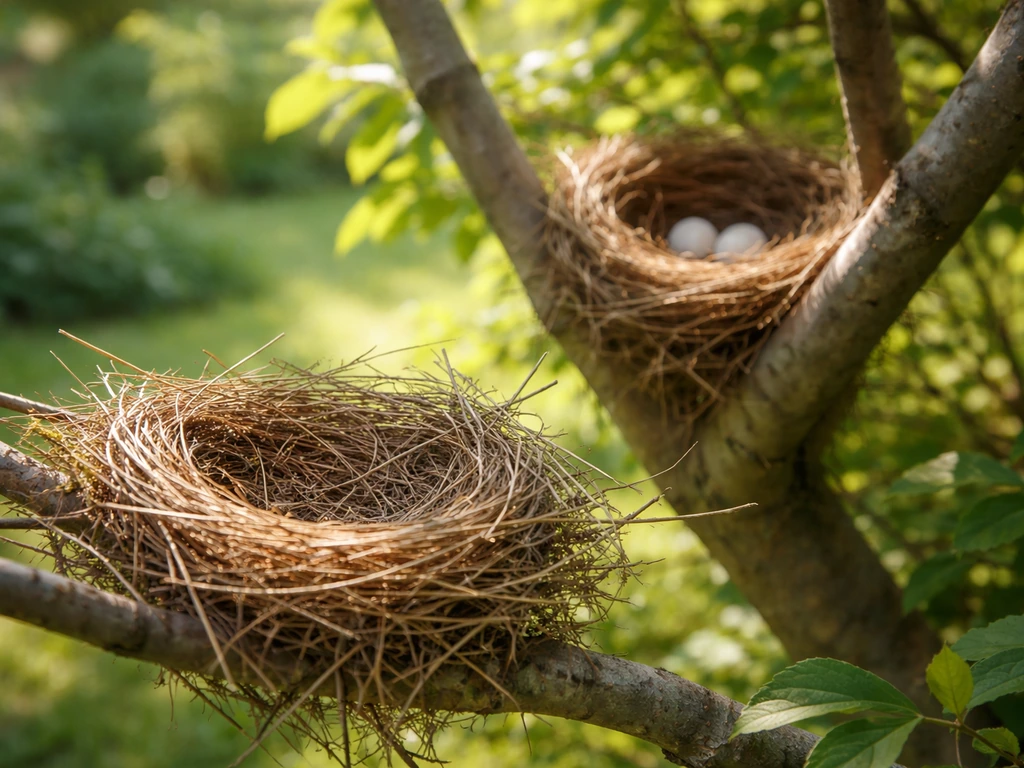
Almost all wild birds in the U.S. are protected under the MBTA. That includes common species people often underestimate, such as house sparrows, starlings, and pigeons. House sparrows and European starlings are actually not protected under the MBTA (they are introduced, non-native species), which gives you more legal flexibility to remove their nests and eggs. Pigeons (rock doves) are also generally unprotected federally, though local ordinances vary. Every other wild bird you are likely to encounter, including robins, swallows, wrens, and finches, is protected. When in doubt, treat the nest as protected and verify before acting.
How to estimate the nesting stage
Birds typically do not begin incubating until the full clutch is laid. That means the eggs in front of you may not have been incubating for as long as you think. For most small songbirds, incubation takes about 10 to 14 days once it starts, and nestlings spend a similar amount of time in the nest before fledging. So from the first egg to an empty nest can be as little as three to four weeks total for small species, though this varies by species. NestWatch maintains species-specific incubation and nestling period data that is worth checking once you have an ID. The point is: the wait is finite and usually short.
| Nesting Stage | What You See | What You Can Do Now |
|---|---|---|
| Nest building (no eggs yet) | Bird carrying twigs, grass, or feathers to a spot | Remove nesting material, block the site immediately, remove attractants |
| Egg laying (eggs present, not incubating) | Eggs in nest, parent visiting briefly | Do not remove eggs (most species). Remove attractants. Begin exclusion planning. |
| Active incubation | Parent sitting on nest for long periods | Do not disturb. Monitor and track days. Remove food/water sources nearby. |
| Nestlings present | Chicks visible or audible, parents making frequent trips | Do not disturb. Begin gathering exclusion materials so you are ready to act. |
| Fledglings / empty nest | Young birds on the ground nearby or nest is empty | Wait 48 hours to confirm the nest is truly abandoned, then remove nest and block access. |
Legal and humane do/don't checklist

This is the part most homeowners skip, and it is the part that can get you into real trouble. Print this list and keep it handy.
- DO identify the species before you take any action involving the nest or eggs.
- DO leave active nests with eggs or chicks completely undisturbed unless there is an immediate safety hazard.
- DO remove nesting material and block sites before eggs are laid. That window is your best legal and practical opportunity.
- DO contact your state wildlife agency or USDA APHIS Wildlife Services if the nest poses a documented health or safety risk.
- DO wear gloves and a dust mask when cleaning up old, inactive nests. Bird nests can carry mites, fleas, and fungal spores.
- DO remove old nests promptly once they go inactive. Leaving them in place can attract the same bird back next season.
- DON'T remove or destroy a nest containing eggs or chicks (protected species) without a federal depredation permit.
- DON'T move eggs to a different location, even outdoors. Possessing wild bird eggs without a permit is illegal under the MBTA.
- DON'T use poisons, glue traps, or any lethal measure on protected birds.
- DON'T rely on ultrasonic devices or laser deterrents near an active nest. Research consistently shows birds habituate to these rapidly, and they do not stop an already-committed nesting bird.
- DON'T repeatedly approach or disturb the nest. Stress can cause parents to abandon eggs or chicks.
How to stop the bird from coming back: remove attractants and cut off access
Exclusion and habitat management are the two levers that actually work long-term. Everything else, including decoys, shiny tape, and sound machines, buys you days at best before the bird adapts. Here is how to attack both levers.
Remove what is drawing the bird to your property
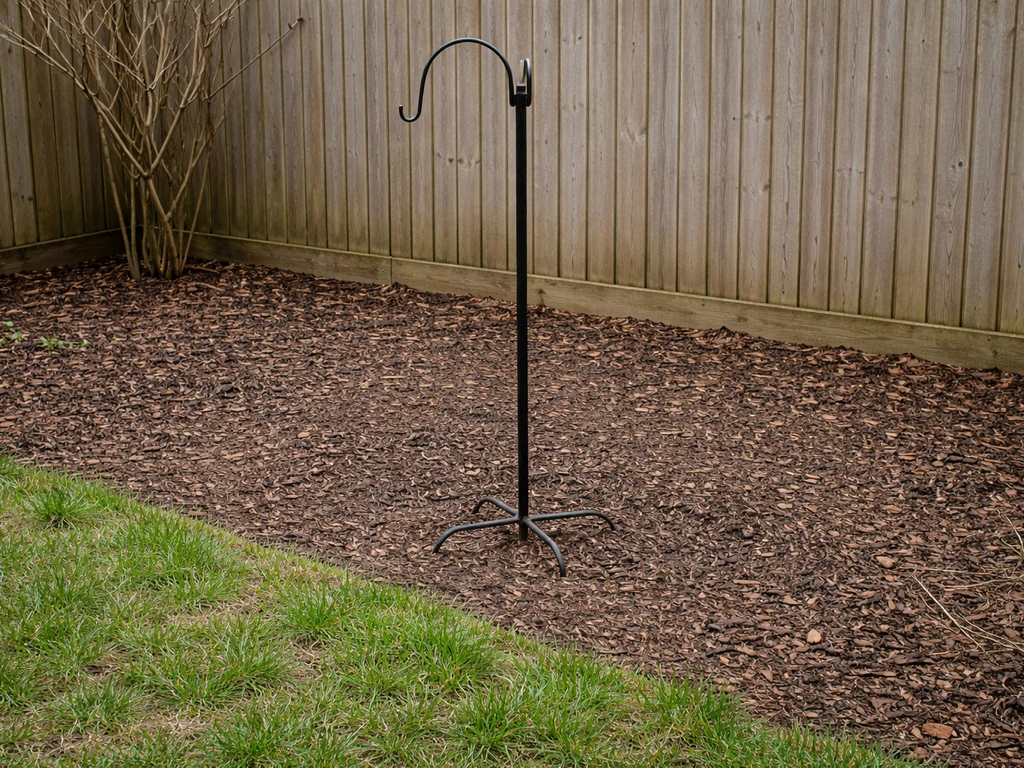
- Take down bird feeders from April through July in areas where you have nesting problems. Feeders are not necessary for bird survival in warm months and are a significant attractant.
- Secure or cover water features like birdbaths and open containers during nesting season.
- Clear vegetation against your building's exterior. Dense vines and shrubs along eaves or under awnings are prime nesting habitat.
- Pick up pet food and secure compost bins. Food scraps draw birds as reliably as a dedicated feeder.
- Trim overhanging branches within three feet of your roofline, eaves, and gutters. Branches provide perching and launching points that make nearby ledges feel safe to birds.
- Clean out gutters before spring. Debris accumulation in gutters mimics the substrate birds use to anchor nests.
Block access to nesting spots directly
Once the current nest goes inactive and you have confirmed it is empty (wait at least 48 hours after you last see adult bird activity), remove the old nest and immediately install a physical barrier. Speed matters here because some species, like bluebirds, can begin a second nesting attempt as quickly as five days after the first brood fledges. Do not give the site a chance to look available again.
Site-proofing methods for buildings: DIY steps and materials
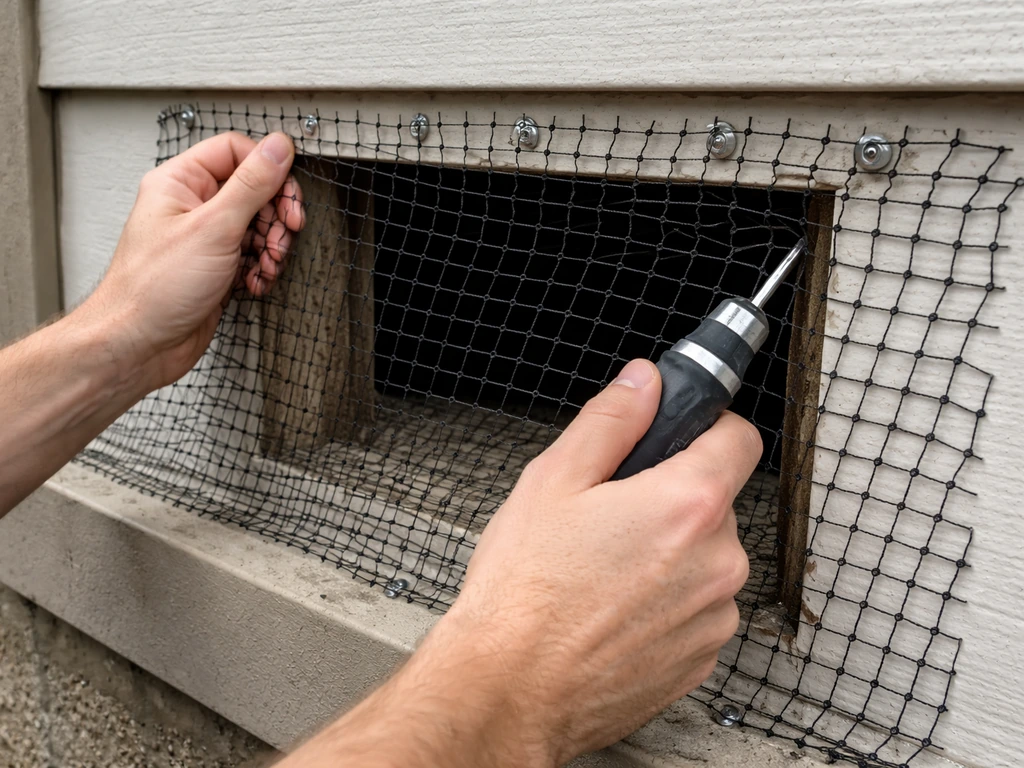
Physical exclusion is the most effective long-term strategy recommended by USDA APHIS. The goal is to make every potential nesting spot either inaccessible or physically uncomfortable. Here is how to work through your building from top to bottom.
Mesh and netting
Bird netting is the workhorse of exclusion. Mesh size matters: use 1/2-inch to 3/4-inch mesh for small songbirds and starlings, and up to 2-inch mesh for pigeons and larger birds. Polypropylene netting rated for UV exposure lasts several seasons. Install it taut against the surface, with no gaps at the edges, using staples, cable ties, or a dedicated netting frame. Loose netting defeats the purpose and can trap birds, which creates a different problem entirely.
Vent and opening covers
Dryer vents, soffit vents, and roof vents are among the most common nesting sites on residential buildings. Replace damaged or missing vent covers immediately. For dryer and bathroom exhaust vents, use covers with a flapper that opens only when air is actively moving. Cover open soffits and exposed rafter tails with hardware cloth (1/2-inch galvanized steel mesh) secured with screws, not staples, for durability. This is one of the most impactful single steps you can take for your building.
Ledges, beams, and eaves
Flat ledges on eaves, window sills, and beams can be modified with physical deterrents. Bird coil or spike strips (stainless steel or polycarbonate) installed along the full length of a ledge deny landing space. These are not cruel; they simply remove the flat surface the bird needs to set a nest foundation. For open-beam porches and pergolas where spike strips look out of place, a closely fitted run of wire mesh stapled along the beam underside works just as well and is less visible.
Light fixtures and signage
Outdoor light fixtures are a warm, sheltered nesting spot birds return to year after year. Cover the top of wall-mounted fixtures with a cone of sheet metal or a commercially made light-top deterrent. For large signs or letter boxes, seal the gap between the sign and the wall with foam backer rod or metal flashing. If you are also dealing with birds building on light fixtures specifically, that is a common enough problem to deserve its own focused troubleshooting approach. If you are specifically dealing with birds building on light, you can usually fix the issue by covering the fixture and sealing any gaps so there is no sheltered landing or nesting surface building on light fixtures specifically.
Porch and balcony areas
Open porch rafters, ceiling fan blades, and the corners above doors are high-traffic nesting zones. Installing netting across the entire porch ceiling at a slight angle (so it does not sag or pool water) is the most thorough solution for chronic nesting porches. Keeping birds from nesting on a porch usually comes down to thorough exclusion, starting in fall so the birds do not find comfortable landing and nesting spots. Use 3/4-inch mesh secured to a timber or cable frame. For balconies on multi-story buildings, this same approach works, though at height you should use a harness and have a second person present, or hire a professional for the installation. If you are regularly dealing with birds getting onto a screened porch or inside an enclosed space, the entry point management is a closely related problem worth addressing at the same time.
A note on deterrents that do not work reliably
Predator decoys (plastic owls, hawk silhouettes) and reflective tape may temporarily startle birds but birds habituate to motionless decoys within days to weeks. Ultrasonic devices have been tested in multiple published studies and consistently show no meaningful effect on bird activity. Do not spend money on these as your primary solution. They are especially unreliable once a bird is already committed to a nesting site.
When to call a wildlife professional and what to ask them
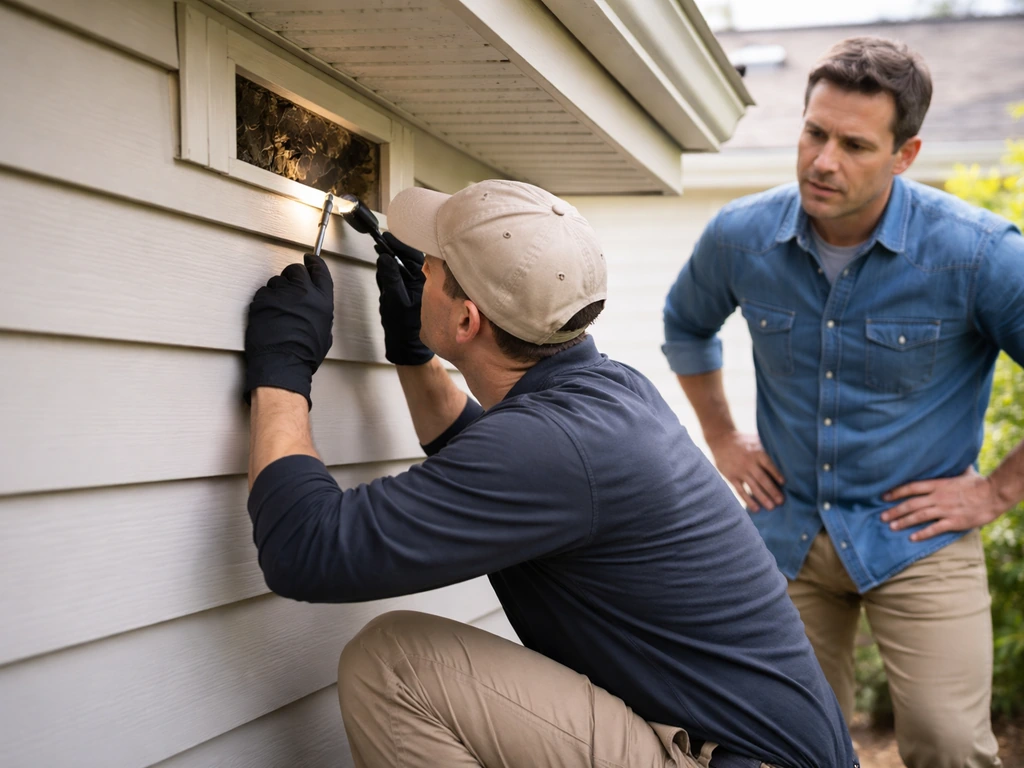
Some situations are beyond DIY. Knowing when to escalate saves you time, money, and potential legal exposure.
Situations that warrant a professional call
- The nest is inside a wall cavity, chimney, or active duct where access requires structural work or creates safety risk from height.
- The nesting location poses a documented health or safety hazard (dryer vents, electrical panels, HVAC equipment) and you need to pursue an MBTA depredation permit.
- The bird is a species you cannot confidently identify, or you suspect it may be a federally or state-listed threatened or endangered species.
- The same site has had repeat nesting for multiple years and DIY exclusion has failed.
- There is a large colony (cliff swallows under a bridge or eave, for example) rather than a single nest.
- You are a facility manager with multiple buildings and need a documented wildlife management plan for liability or compliance purposes.
What to tell and ask the professional
When you call USDA APHIS Wildlife Services (free federal service for wildlife damage management) or a licensed wildlife control operator, have this information ready: the species or your best description of the bird, the exact location of the nest on your property, how long it has been active, and photos of the site. Then ask these specific questions: Are the species involved protected under the MBTA or state law? Is a depredation permit needed for removal, and will you handle the permit application? What exclusion materials and methods do you recommend for this specific site? What is the post-job guarantee and what maintenance is required from my side? A good professional will answer all of these directly and give you a written scope of work before starting.
Seasonal timing and your prevention plan for next breeding season
The single biggest mistake homeowners make is waiting until they find eggs to take action. By then your options are severely limited. Prevention is almost entirely a fall and winter job, with a final check in late winter before birds begin scouting territories. Use this seasonal schedule to stay ahead of it.
| Season / Month | What Birds Are Doing | What You Should Do |
|---|---|---|
| Late summer (Aug–Sep) | Most breeding cycles complete; birds fledged and dispersed | Inspect all nesting sites on your building. Remove old, inactive nests now while conditions are safe. |
| Fall (Oct–Nov) | Birds not actively nesting; scouting for winter roost sites | Install exclusion: seal vents, add netting to problem ledges and eaves, block open soffits. Do structural repairs. |
| Winter (Dec–Feb) | Minimal nesting activity in most of U.S. | Complete any remaining exclusion work. Check that netting and mesh installations are secure after wind and weather. |
| Late winter (Feb–Mar) | Early species (house sparrows, starlings, pigeons) begin scouting nest sites | Final walk-around inspection. Remove any fallen or damaged deterrents. Remove feeders if nesting has been a problem. |
| Spring (Apr–Jun) | Peak nesting season for most species | Monitor weekly. If you find a new nest under construction (no eggs), remove it and re-examine your exclusion for gaps immediately. |
| Early summer (Jun–Jul) | Many species on second or third brood | Continue monitoring. Do not relax exclusion. Some birds renest within days of fledging their first brood. |
Fall and early winter are the best time to do the work because nests are inactive, weather is mild enough for outdoor repairs in most regions, and you are not racing a legal clock. If you do the exclusion correctly in October, you will rarely have an emergency situation in April. The problems that require emergency responses in spring almost always trace back to exclusion gaps that were never addressed in the previous fall.
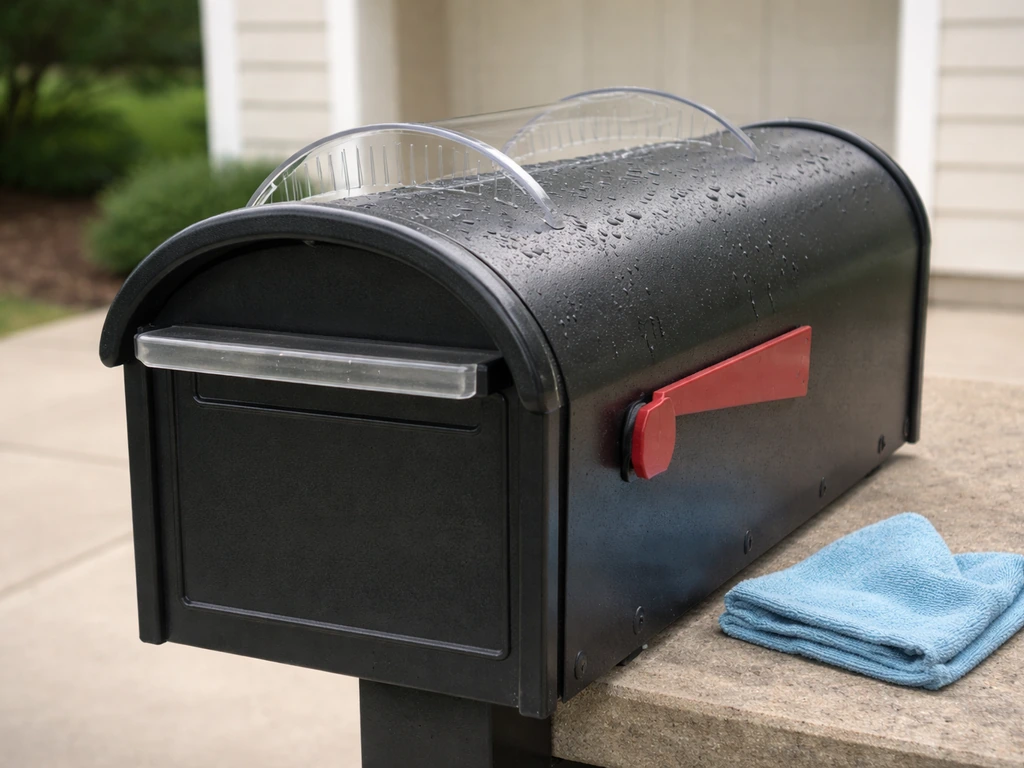
One more thing worth noting: if birds are also targeting spots like your mailbox, porch light fixtures, or areas around your door, those are the same attractant and access problems at play. If birds are pooping on your mailbox, focus on blocking landing and removing nearby attractants around the box so they cannot access it repeatedly birds targeting spots like your mailbox. Tackling your exclusion plan as a whole-property sweep in fall, rather than one spot at a time, is almost always faster and more effective than playing whack-a-mole with individual nesting sites every spring.
FAQ
What should I do if I can see eggs but the parents are still coming and going?
If the bird is still incubating or there are nestlings, you should assume the nest is protected and do not remove eggs. The practical next step is to wait until activity stops, then confirm the nest is empty, usually by monitoring for at least 48 hours after the last adult activity before installing exclusion barriers immediately afterward.
Can I just wait for the eggs to hatch and then deal with it after?
Do not rely on “waiting for it to hatch” as a legal workaround. Once eggs are present, the nest is treated as active and protected, so your safe option is to document any urgent hazards, contact the right wildlife agency, and then focus on habitat changes plus post-fledging exclusion once you can confirm the nest is finished.
How fast do birds try to nest again after fledging?
A key detail is how quickly the species can renest. After the first brood leaves, some species may attempt another nest within about a week, so you should remove the old nest and install barriers the same time window you confirm it is empty, instead of leaving the site uncovered to “see what happens.”
Is it possible that exclusion will trap birds instead of stopping nesting?
Netting and other exclusion must be fitted tightly, with edges secured and no gaps, otherwise birds may get trapped or still access the nest site. If you are worried about trapping risk, delay installation until you can block the entire potential entry area at once, or hire a professional to survey the site.
What should I do if the nest is in an area I cannot safely access?
If you find nesting in a place you cannot safely reach, like a high soffit, roof edge, or between walls, do not improvise with partial barriers. The safer path is to get a wildlife control operator or wildlife service to assess the exact access route and advise on exclusion that prevents entry without requiring you to open structures.
Does the legal guidance change if the bird is a house sparrow, starling, or pigeon?
If the bird is a common non-native species in the U.S. like house sparrows or European starlings, federal MBTA protection generally does not apply, but local rules can still exist. Before taking action, verify the ID, then check your city or county nuisance wildlife and building codes to avoid accidentally violating local ordinances.
If I cannot legally remove the nest, what changes can I make while it is active?
“Protected bird” is not just about the eggs, it is about the nest with eggs or chicks. Even if you plan to keep the site intact, you should avoid touching the nest until it is inactive, and instead switch immediately to blocking attractants (food, sheltered ledges, open vent access) so the site becomes unattractive after the nesting cycle ends.
How do I confirm the nest is empty without disturbing it too early?
To confirm emptiness, you want evidence that adults have stopped using the site, not just that you do not see activity during one visit. Use short, repeat monitoring and then wait at least 48 hours after the last adult activity before removing anything and installing barriers.
Why do birds keep coming back even after I tried to fix one nesting spot?
For recurring nesting, the biggest “miss” is leaving one overlooked entry path. A practical approach is a full-site sweep (vents, ledges, corners, light fixtures, porch ceiling areas) and then sealing or excluding all similar openings in one season, rather than responding to each new spot as it appears.
What if I cannot install permanent exclusion right away?
If you cannot fully exclude a site immediately, focus on reducing access and attractiveness first, then finish the exclusion as soon as conditions allow. Do not use sound machines or shiny tape as your main plan, because many birds habituate quickly and can continue nesting.
Who should I call when there is an urgent safety hazard, and what should I document?
If the bird is nesting and the site creates an urgent hazard, document what makes it dangerous (for example, live electrical equipment, a dryer vent that is actively used, blocking a fire exit), then contact USDA APHIS Wildlife Services or your state agency the same day. Keep yourself away from the nest until you have guidance and avoid any removal attempts while it is active.
What questions should I ask a wildlife control professional to make sure the job is both effective and compliant?
If you hire a pro, insist on a written scope that specifies the species assumptions, the exclusion materials and mesh sizes, exactly what areas will be blocked, and the maintenance plan if birds test the site. Also ask how they will handle the legal timing, for example when they will return to remove the old nest.
Are there common home-repair mistakes that make the nesting problem worse?
When you are changing something outdoors, avoid creating new, sheltered ledges or footholds during repairs. For example, after fixing vents or sealing gaps, immediately cover exposed rafter tails and ensure no open channels remain that can be used as a cavity.
How to Stop Birds From Pooping on a Mailbox Safely
Humane, safe steps to stop birds pooping on a mailbox now, with cleaning, proofing, and long-term seasonal prevention.