To stop birds from building a nest on your outdoor light today, remove any loose or partially built nesting material right now (before eggs are laid), then block access to the fixture using physical exclusion like hardware cloth, bird spikes, or a purpose-built fixture guard. Pair that with a motion-sensor switch and a warmer-color LED bulb to make the spot less attractive going forward. If there are already eggs or live nestlings in the nest, stop and read the legal note below before touching anything.
How to Stop Birds Nesting on Outdoor Lights Safely

Maya Carver
5 Jun 2026
Why birds pick lights (and what to check first)
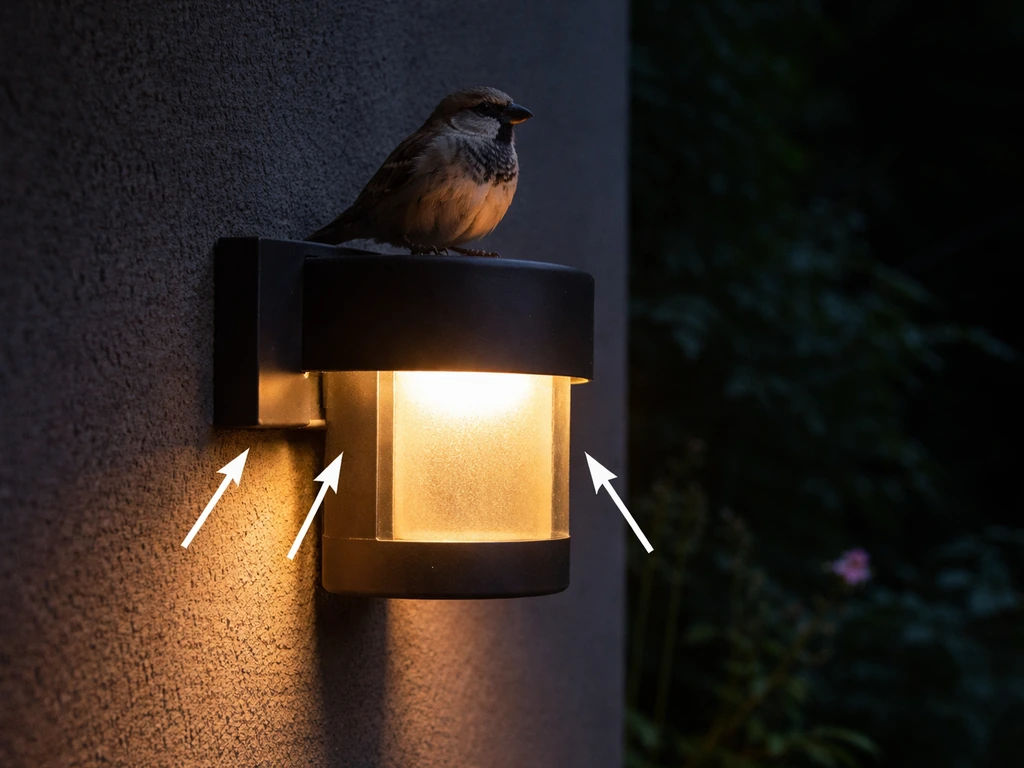
Outdoor lights solve several bird problems at once. The fixture or its mounting bracket creates a sheltered ledge. The heat from an incandescent or halogen bulb keeps the space warmer than the surrounding air. And the light itself pulls in insects all night, giving foraging birds a reliable food source nearby. For species like sparrows, swallows, starlings, and pigeons, your porch light or security fixture checks every box for a nest site: cover overhead, warmth, and food within feet.
Artificial light also disrupts birds' natural dawn and dusk cues, which can make them linger in lit areas longer than they otherwise would. During spring and fall migration, bright building lights actively disorient migrating birds and pull them toward structures they would normally fly past. So even if a bird doesn't end up nesting on your specific light, repeated visits while foraging or orienting can turn into roosting and eventually nesting.
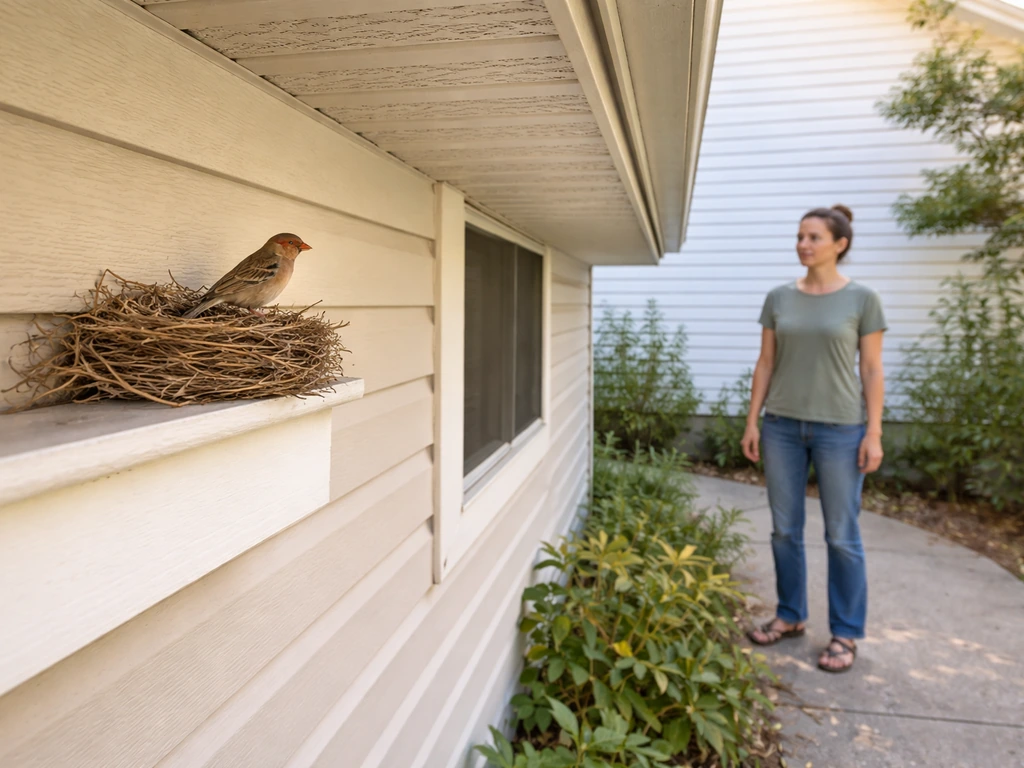
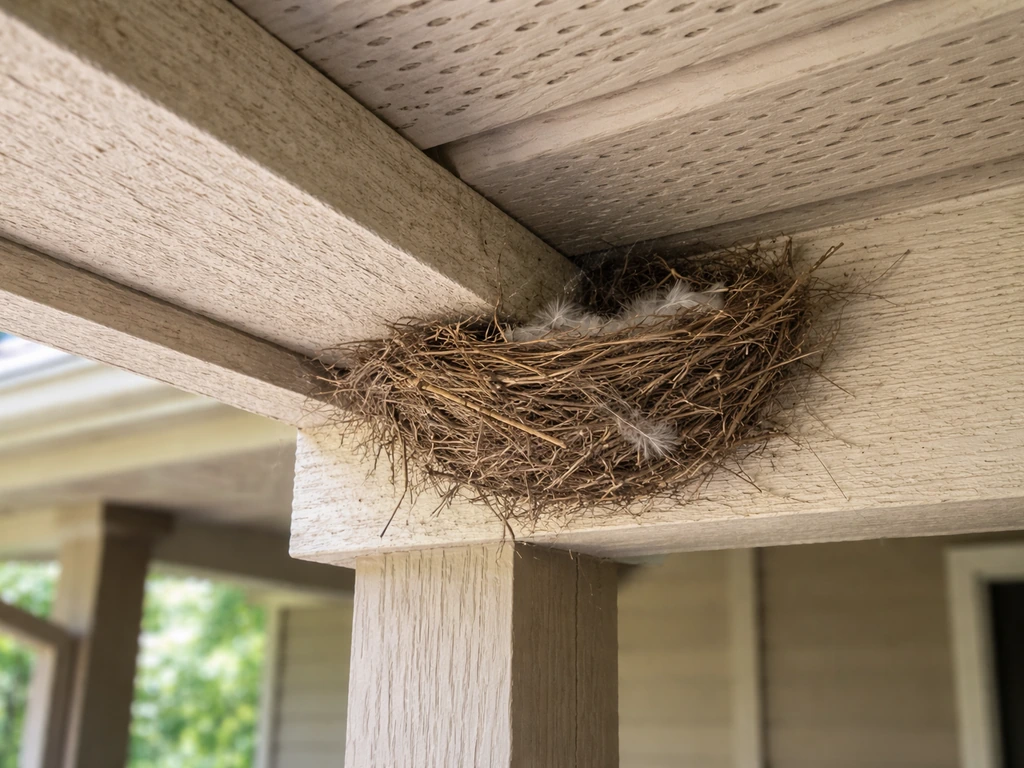
Before you do anything, confirm what you are dealing with. Check whether you see loose grass, twigs, or feathers being arranged (early nest building), a completed cup or platform nest with no eggs yet, a nest with eggs or chicks, or a bird simply perching/roosting on the fixture at night without building. Your legal options and timing differ significantly depending on which stage you are looking at.
- Loose material being arranged: act immediately, full removal is legal
- Completed nest, no eggs: you can still remove it in most cases, but act fast
- Nest with eggs or live nestlings: protected under the Migratory Bird Treaty Act (MBTA) — do not disturb until the nest is abandoned
- Roosting only (bird perching, no nest material): full range of deterrents available right now
Immediate steps for an active nest or roosting situation
If no eggs or chicks are present, act the same day. The longer you wait, the more committed the bird becomes to the spot, and once eggs appear, your hands are legally tied until the nest cycle finishes (typically 2 to 5 weeks depending on species).
- Turn off the light and let the fixture cool completely before touching it — burn risk is real with halogen and high-wattage bulbs.
- Put on gloves and, if disturbing any dried droppings, an N95 respirator. Bird droppings can carry Histoplasma spores, and the CDC specifically recommends wetting dried material before disturbing it to keep spores out of the air.
- Gently wet any dried droppings or nesting debris with a spray bottle before removal — this is the single most important safety step.
- Remove all nesting material and place it in a sealed bag. Even a small remaining clump of grass or feathers acts as a scent marker that attracts the same bird back.
- Clean the fixture surface with a diluted disinfectant solution, rinse, and let dry.
- While the fixture is off and cool, immediately apply your first physical deterrent (see the exclusion section below) so the bird cannot return to the same spot tonight.
If the nest already has eggs or live chicks, the MBTA makes it illegal to remove, relocate, or destroy it without a federal permit. This applies to the vast majority of native songbirds, swallows, swifts, and most species you are likely to encounter around building lights. The safest path is to leave the nest alone, mark your calendar for when the chicks are likely to fledge, and use that window to install exclusion hardware immediately after the nest is fully abandoned.
Stop access: humane physical exclusion around fixtures
Physical exclusion is the single most reliable long-term solution. Everything else (sprays, noise, visual scare devices) can fail if the bird has nowhere else convenient to go. The goal is to remove every flat or sheltered surface around the fixture where a bird could land and build.
Fixture-mounted options
- Bird spikes: stainless steel or polycarbonate pin arrays mounted to the top of the fixture housing and any mounting bracket ledge. Effective against pigeons, starlings, and larger sparrows. Useless if the bird is nesting inside a hollow housing or in a gap behind the fixture.
- Sloped/angled guards: a piece of sheet metal or a purpose-cut PVC angle installed on top of the fixture at 45 degrees or steeper. No flat surface means nowhere to land and stack material.
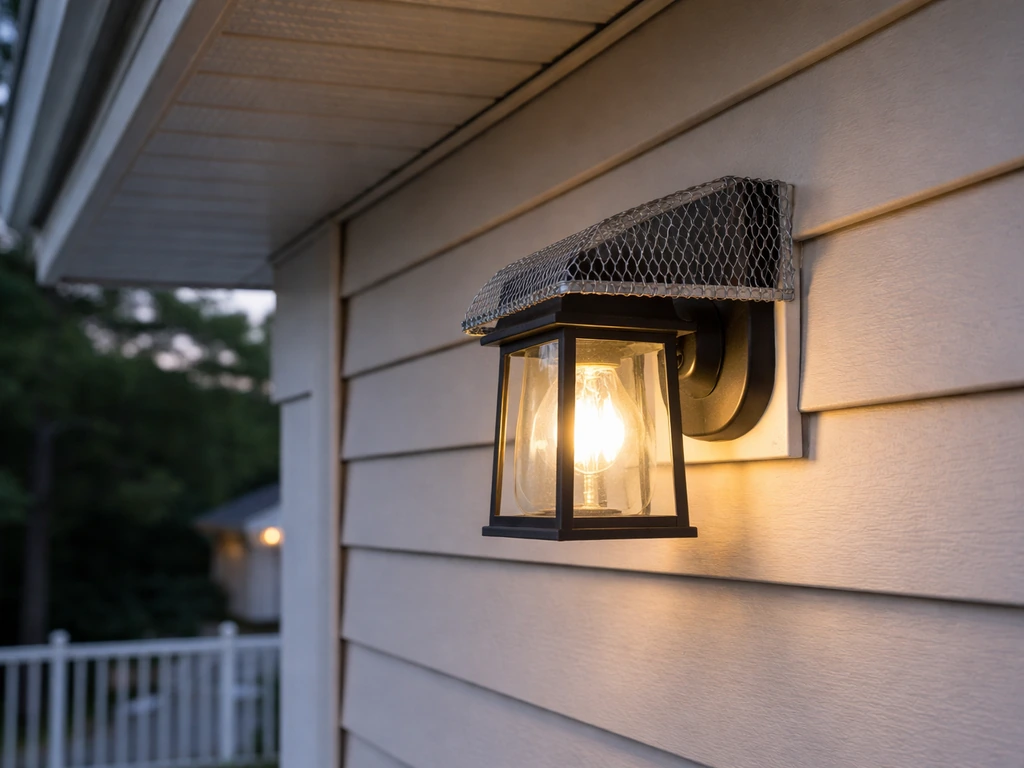
- Hardware cloth cage or wrap: 1/2-inch galvanized hardware cloth formed around the fixture body (not blocking airflow if the fixture needs ventilation) to eliminate interior gaps. For small openings where wiring enters the wall, drop to 1/4-inch mesh to block sparrows and similar small birds.
- Purpose-built fixture guards: several manufacturers sell powder-coated metal guards sized for common wall-pack, gooseneck, and barn-style fixtures. These are the cleanest option for facilities managers who need something that looks intentional.
Around the mounting point and wall penetrations
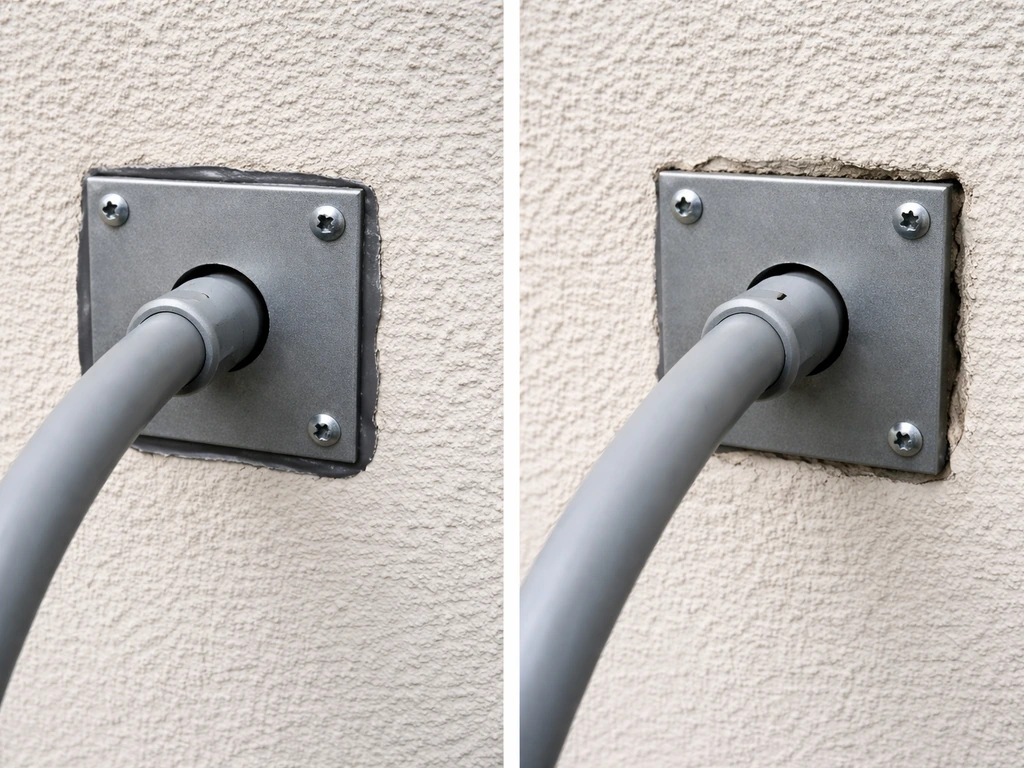
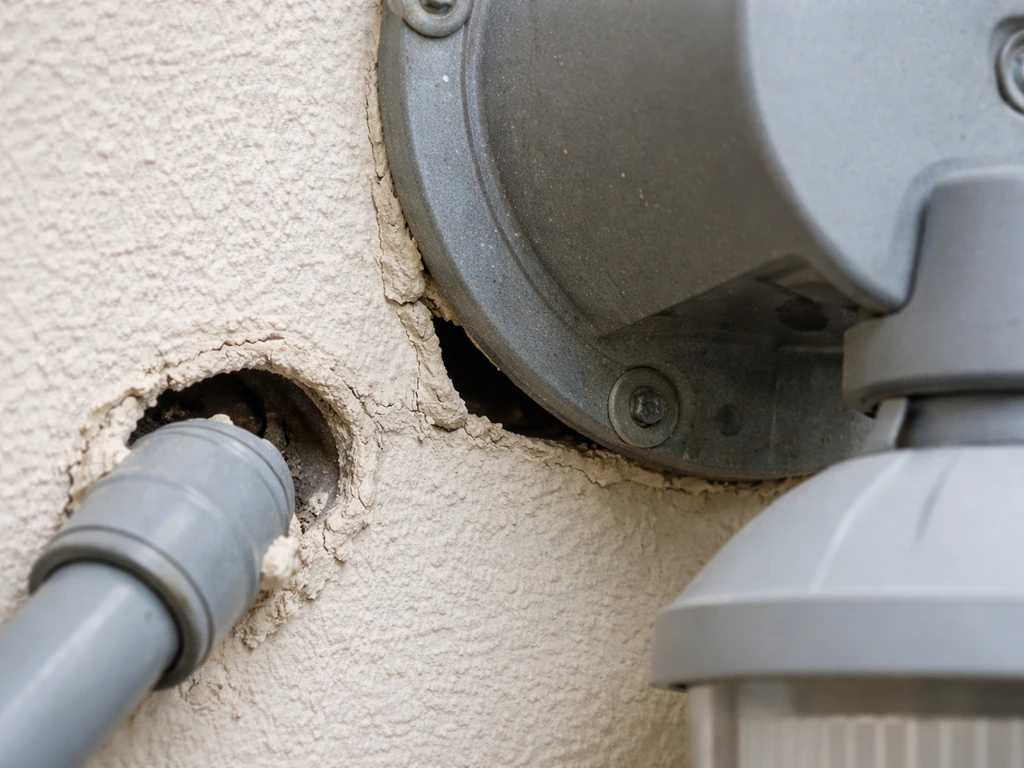
This is where most exclusion jobs fail. Birds, especially house sparrows and European starlings, exploit the gap between the back of a fixture and the exterior wall, the conduit hole, and any space under eave-mounted fixtures. After removing the nest and cleaning the surface, check for any opening larger than half an inch. Seal gaps with 1/2-inch hardware cloth secured with screws and washers, or use a weatherproof foam backer plus silicone caulk for tiny cracks. For vent openings near the fixture, 1/2-inch mesh stops most birds; go to 1/4-inch if you suspect very small species are getting through. One critical caution borrowed from chimney guard installation practice: always confirm no bird is inside the space before you seal it closed. Trapping a bird inside creates a new problem and is itself a legal and welfare issue.
Pole-mounted and security lights
Security lights mounted high on poles or at eave height are popular with cliff-nesting species like barn swallows, who love the protected overhang. For these fixtures, a metal cone baffle around the pole below the fixture (similar to a squirrel baffle) removes the safe landing approach. You can also install a small overhang guard that pitches forward, denying the sheltered corner that swallows specifically seek. If the security light has an infrared sensor housing, make sure any guard you install does not cover the sensor window, test the motion activation after installation.
Deterrents that work (and what to avoid)
Not all deterrents are equally effective, and several popular ones are close to useless without physical exclusion backing them up. Here is a realistic ranking.
| Deterrent | Effectiveness | Best use case | Limitations |
|---|---|---|---|
| Hardware cloth / mesh exclusion | High | Sealing gaps, wrapping fixtures, blocking ledges | Requires correct sizing and full coverage to work |
| Bird spikes | High (for perching birds) | Top surfaces of fixtures and brackets, wide ledges | Doesn't help if nest is inside housing or behind fixture |
| Sloped / angled surface guards | High | Fixture tops, eave angles, pole ledges | Must be steep enough (45°+) and cover the full surface |
| Reflective tape / mylar strips | Low to moderate (short-term) | Open areas with wind movement | Birds habituate within days to weeks; rarely a standalone fix |
| Plastic owl / predator decoys | Low | Very temporary distraction only | Birds quickly learn to ignore static decoys; ineffective long-term |
| Ultrasonic noise devices | Low to unreliable | Marketed widely but field evidence is weak | Most bird species do not respond to ultrasonic frequencies |
| Audible distress calls / predator sounds | Moderate (short-term) | Can move a flock from a roost temporarily | Requires rotation and volume; habituation is fast; noise complaints likely |
| Motion-sensor lighting | Moderate (combined) | Reduces time light is on, reducing insect pull and bird activity | Works best paired with physical exclusion, not alone |
The pattern is clear: anything a bird can learn to ignore will stop working within days. Physical barriers that literally prevent landing or nesting are the only category that holds up over a full nesting season. Use visual deterrents as a supplement during the installation period, not as your main plan.
Lighting changes to reduce attraction (and insect pull)
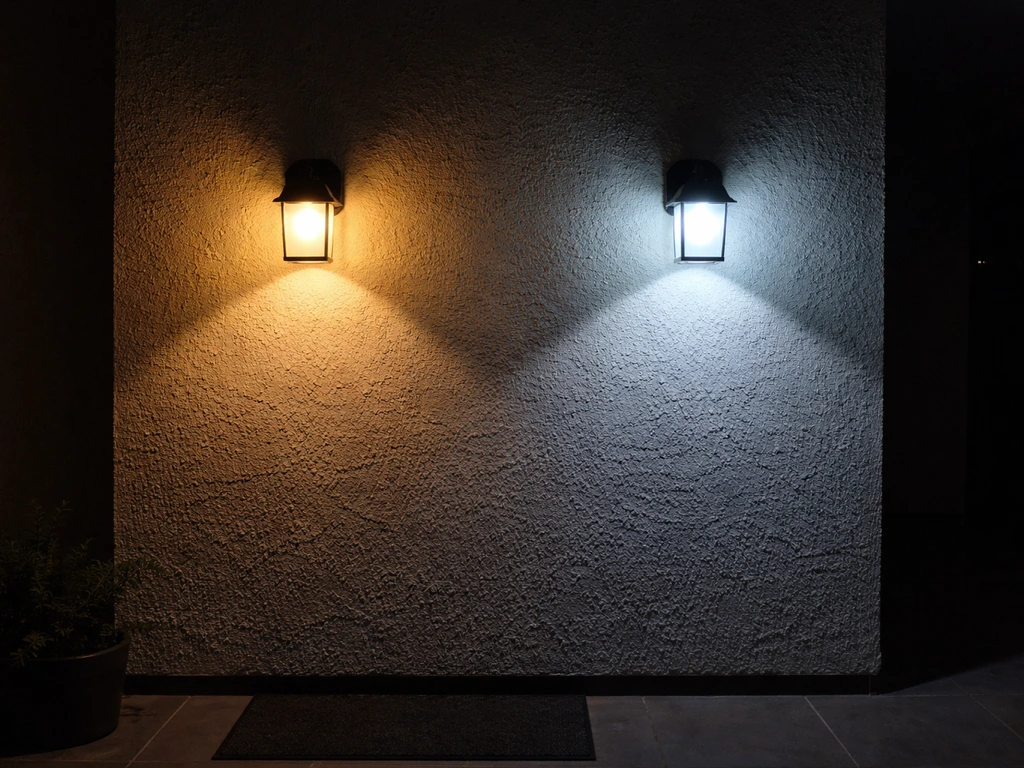
Changing how your light operates and what kind of light it emits can significantly reduce how attractive the fixture is to birds in the first place. This is the prevention layer that most homeowners skip, and it makes every other deterrent work better.
Switch to a motion sensor or timer
Audubon's Lights Out guidance specifically recommends adding motion sensors or controls to reduce the total time lights are on at night. A fixture that runs only when someone walks past it spends far less time attracting insects and providing a warm, lit perch. If you need security lighting, a motion-activated LED is a better choice than a dusk-to-dawn flood that runs all night. Fewer insect hours means less reason for foraging birds to keep returning.
Change the bulb color temperature
Cool white and blue-tinted LEDs (5000K and above) attract significantly more insects than warm-toned amber or yellow LEDs. USFWS's nighttime lighting guidance notes that warmer light options (amber, orange, or red-spectrum LEDs) trigger fewer behavioral responses in many species. Switching from a bright cool-white floodlight to a warm 2700K or 3000K LED, or better yet an amber-spectrum bulb, pulls in fewer insects, which means fewer birds coming to feed, which means the fixture becomes a less desirable nest site. This single change can reduce bird activity at a fixture by a meaningful amount without any other modification.
Consider fixture relocation
If a light is positioned right under an eave or directly above a sheltered ledge, it is structurally inviting nesting regardless of what you do to the fixture itself. If wiring permits, relocating the fixture to a position that doesn't create a sheltered corner (for example, a wall position with no overhead overhang) removes the architectural appeal. This is worth considering during any electrical update or renovation cycle.
Cleaning and damage prevention without violating protections
Bird droppings are genuinely a health and property concern, not just an aesthetic one. Dried droppings can harbor Histoplasma capsulatum, the fungus that causes histoplasmosis, and disturbing a large accumulation without precautions puts you at real respiratory risk. The CDC is clear on this: wet the material down before you disturb it, use an N95 or P100 respirator, wear disposable gloves, and bag everything before disposal. For larger accumulations (think a fixture that has hosted a colony for multiple seasons), this is professional-cleanup territory.
- Wear an N95 or P100 respirator before touching any dried droppings — not a dust mask
- Spray droppings lightly with water or a diluted disinfectant before scraping or wiping to suppress aerosolized spores
- Use disposable gloves; double-bag waste and seal before placing in the trash
- Wash hands and any exposed skin thoroughly after cleanup
- For large accumulations or enclosed spaces (inside a fixture housing, soffit gap), consider hiring a professional cleaning service familiar with biohazard procedures
On the legal side, the MBTA protects most native migratory birds, their active nests, eggs, and nestlings. Removing an empty nest (no eggs, no chicks, fully abandoned) is generally not prohibited. Removing a nest with eggs or live young is illegal without a federal permit, period. Non-native species like house sparrows (English sparrows) and European starlings are not covered by the MBTA, so their nests can be removed at any stage. If you are unsure whether the species nesting on your light is protected, treat it as protected and contact your state wildlife agency before acting. If you want help deciding what to do next, use this guide for how to stop my bird from laying eggs while staying within the legal protections for nests and eggs.
Physically, droppings and nesting debris can damage fixture finishes, corrode metal housings, and block ventilation slots that help manage heat in LED drivers. Clearing material out at the end of each season, before it packs down and retains moisture, extends fixture life noticeably. A quick inspection and clean at the end of summer, when most nesting is done and before fall migrants start roosting, is the most efficient maintenance window.
Seasonal prevention plan and when to call a pro

Bird nesting and roosting pressure on your lights is not constant throughout the year. Matching your prevention work to the calendar is more effective than reacting every time you spot a bird on the fixture.
| Time of year | What birds are doing | What you should do |
|---|---|---|
| Late winter (Feb–Mar) | Scouts checking potential nest sites before breeding season | Install all physical exclusion hardware NOW — this is the best prevention window |
| Spring (Apr–Jun) | Active nest building, egg laying, chick rearing | Do not disturb active nests with eggs or chicks; monitor and document for post-fledge action |
| Summer (Jul–Aug) | Second broods for some species; fledglings learning to roost | Check fixtures after first brood fledges; remove empty nests and repair exclusion gaps immediately |
| Fall (Sep–Nov) | Peak migration; birds roosting on lit structures at night | Switch lights to motion sensors or timers; consider warm-spectrum LED swap to reduce migration collision risk |
| Winter (Dec–Jan) | Resident birds roosting, no active nests | Ideal time for fixture replacement, relocation, or any electrical work near lights; install or repair exclusion hardware |
The single most useful time investment is a late-winter inspection and exclusion installation, before breeding season begins. If your fixtures are proofed before the first scouts arrive in February or March, you avoid the MBTA timing problem entirely.
When to call a wildlife professional
Most single-fixture nesting problems are DIY-solvable. Call a licensed wildlife professional or pest management operator experienced with birds when you are dealing with a large colony (dozens of birds, heavy droppings across a wide area), a protected species whose nest cycle needs to be professionally documented before exclusion can proceed, a situation where birds have accessed the interior of a building through gaps near fixtures, or any cleanup scenario involving years of accumulated droppings in a confined or poorly ventilated space. When you call, tell them the species if you know it, whether there are active nests with eggs or chicks, the approximate number of birds, and how long the problem has been ongoing. That information gets you a faster, more accurate quote and prevents the common situation where a contractor shows up and tells you they cannot touch the nest legally.
For facility managers dealing with multiple fixtures across a building or campus, the same principles scale up: a site survey in late winter, a priority list of fixtures with ledge or cavity access, systematic exclusion installation before April, and a post-season inspection in August or September. If your building is in a known migration corridor and you have large glazed areas, pairing light management with a broader building-lights protocol during peak migration periods (typically late April through May and August through October) addresses both the nesting problem at individual fixtures and the broader collision risk that migrating birds face at lit buildings. All About Birds notes that Lights Out programs are scheduled around peak migration periods to reduce bird impacts, tying the timing to seasonal migration risk and window-proofing needs blank" rel="noopener noreferrer">Lights Out programs are timed around peak migration periods. The NatureScot information note warns that artificial light can affect birds in ways including attraction (phototaxis) and increased collision risk on nights with poor weather such as fog or mist blank" rel="noopener noreferrer">broader collision risk that migrating birds face at lit buildings. The lighting fixes overlap naturally with keeping birds off specific fixtures, so it is worth addressing both at once.
If you are also dealing with birds on your porch, mailbox, or other building surfaces, the same exclusion and deterrent logic applies, though the specific hardware and timing may differ by location and species. If you have a bird inside a screened porch, the safest approach is to prevent it from accessing the enclosure again while you gently guide it out using an open exit and exclusion afterward. If the goal is to keep a bird from nesting on your porch, focus on blocking ledges and gaps first, then reduce attraction with motion lighting and warmer bulbs. The core principle does not change: physical exclusion first, light and insect management second, and reactive deterrents like tape or decoys only as a temporary bridge while you get the permanent fix in place.
FAQ
How long after I remove the nest should I install the exclusion hardware?
If there are no eggs or chicks and the nest is fully abandoned, you can install the barrier the same day. If there were eggs or live young, wait until the nest is fully abandoned, then install immediately. Don’t leave gaps exposed overnight, because returning adults can re-use the same ledge quickly.
What if I’m not sure whether there are eggs or chicks, or the species is unclear?
Treat it as active and protected until confirmed. Look for definite signs like feather-lined material, eggs visible from the side, begging calls, or persistent adult attendance. If you cannot confirm, contact your state wildlife agency before touching the structure, especially on elevated fixtures and enclosed eave cavities.
Can I use bird spikes or tape alone without blocking gaps?
Spikes and tape can discourage landing on the visible surface, but they often fail when birds can approach from the back of the fixture, conduit openings, or under eaves. If any sheltered ledge or access route remains, nesting may shift rather than stop, so pair spikes with complete physical exclusion of the nearby landing areas and openings.
Are motion sensors enough, or do I still need to do physical exclusion?
Motion sensors help reduce time-on and insect attraction, but they do not remove the structural nesting ledge the fixture provides. For long-term results through a full season, physical exclusion is still the most reliable layer, especially for species that repeatedly check the same sheltered spot.
What size openings should I seal around the light?
Use the 1/2-inch hardware cloth guideline as your default target for most common nesters. If you suspect very small birds are getting in (for example, repeated visits and activity at vent-style openings), step down to 1/4-inch mesh for those specific points. Don’t forget the less obvious areas like behind the fixture housing and around conduit penetrations.
Is it safe to seal a gap immediately if I don’t see a bird inside?
Do not rely on “I can’t see anything” alone. Before sealing, verify there is no bird inside the cavity by checking the opening carefully and allowing time for any hidden occupant to move away. If you seal and trap a bird inside, you create a serious welfare and potentially legal problem.
Will changing to warm 2700K or 3000K actually reduce nesting?
It can reduce visits by lowering insect attraction, which can reduce foraging pressure and repeated checks. However, it is a prevention support, not a substitute for blocking nesting surfaces. Expect the biggest improvement when you switch to warm or amber-spectrum bulbs and also limit how long the light runs at night.
What should I do with droppings if I plan to clean before installing exclusions?
Wet the area before disturbing debris, use an N95 or P100 respirator, wear disposable gloves, and bag materials for disposal. Keep cleanup localized to the fixtures, because knocking down accumulated nesting material can aerosolize particles. If the droppings are extensive or cover years, consider professional cleanup for safety and to avoid spreading contamination.
Can I install guards on security lights with infrared sensors or cameras?
Yes, but you must ensure the guard does not cover the infrared sensor window and does not block the motion detection pattern. After installation, test that the light still triggers correctly at night, and verify it does not create a new sheltered corner that birds can exploit.
Should I relocate the fixture instead of excluding it?
Relocating can be effective if wiring permits, especially when the current position creates an overhang directly above a ledge. It is usually a bigger job than exclusion, but it can remove the architectural nesting appeal at the source. Consider relocation during an electrical upgrade to minimize repeated access and cleanup.
I have house sparrows or European starlings, can I remove the nest anytime?
Generally, non-native species like house sparrows and European starlings are not protected by the MBTA, so removal at any stage is typically allowed. Even then, use safe cleanup practices for droppings and consider quick exclusion afterward, because they may re-nest rapidly if access remains.
When should I expect the best time to do the full fix?
A late-winter inspection and exclusion installation is the best window, before the first nesting attempts. Also plan a post-season inspection in late summer or early fall to clear nesting debris and check for new gaps, so the fixture does not become an attractive re-use site for the next cycle.
When is it worth calling a wildlife professional instead of doing DIY?
Call when you have a large colony, heavy droppings spread across multiple fixtures, evidence of birds accessing interior spaces, or uncertainty that triggers legal compliance needs. Also call if cleanup would involve years of buildup in a confined or poorly ventilated cavity, because that increases both respiratory risk and the chance of damaging wiring or fixtures.