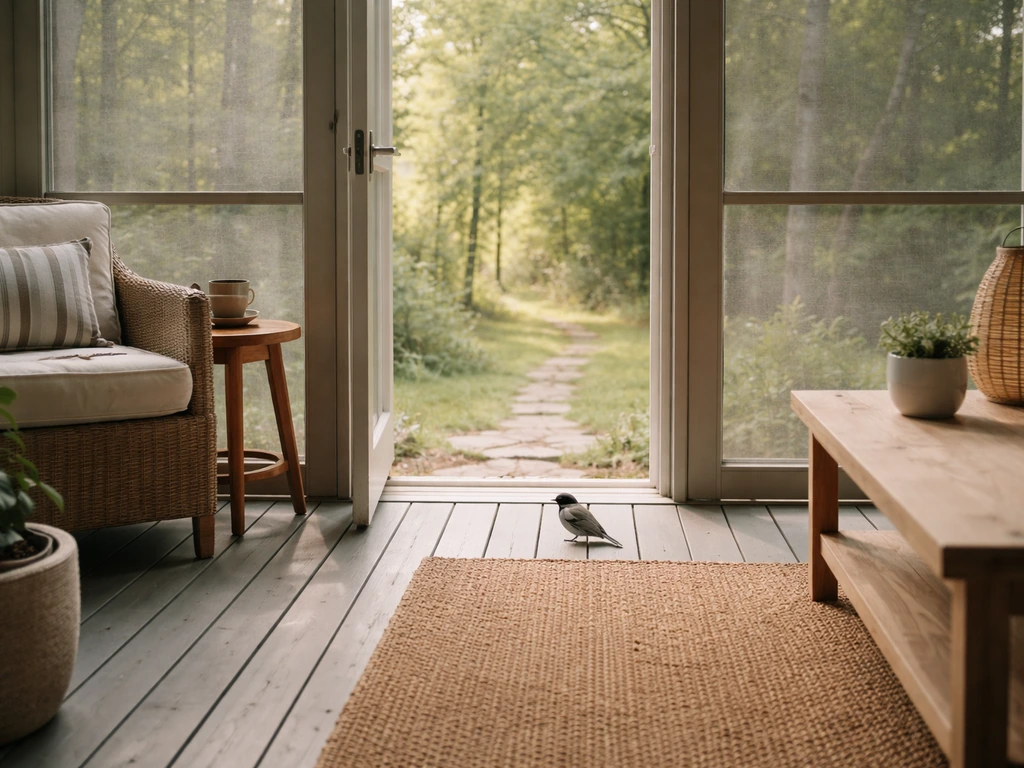
Turn off the lights on your porch, open the largest door or screen panel you have, and step back. That single move solves the problem for most trapped birds in under ten minutes. Birds instinctively fly toward the brightest opening, so making the exit the only bright spot in the space is the fastest, safest thing you can do. Everything else in this guide builds on that principle.
How to Get a Bird Out of a Screened Porch Safely
Maya Carver
2 May 2026
First Things First: Immediate Safety Steps
Before you do anything else, take thirty seconds to reduce the chaos for both you and the bird. A panicked bird can injure itself by flying repeatedly into the screen, and a panicked homeowner chasing it around makes everything worse. Stay calm, move slowly, and follow these steps in order.
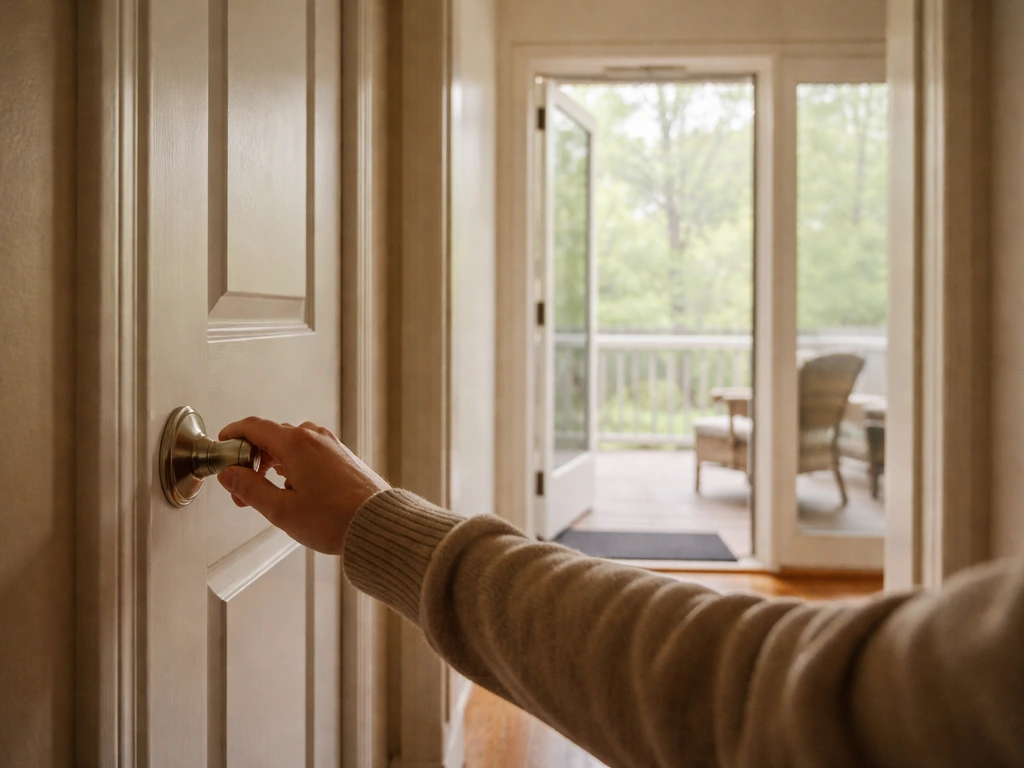
- Keep pets and children out of the porch immediately. Close any interior door that connects to the house so the bird cannot fly inside.
- Stop moving and lower your voice. Sudden movement and noise spike the bird's stress and make it fly erratically into corners or the screen mesh.
- Do not use brooms, towels, or your hands to chase the bird at this stage. You will exhaust it and push it away from the exit.
- If you have ceiling fans running, turn them off. A disoriented bird can fly into a moving fan blade.
- Note whether the bird appears injured before you do anything else. If it is grounded, not moving, or visibly bleeding, skip ahead to the injury section before attempting removal.
Most birds that fly into a screened porch are uninjured and simply confused. The screen looks like open air from the outside, so entry is easy and exit is not obvious. Your job is to make the exit obvious, not to catch the bird.
How to Create a Clear Exit and Encourage the Bird to Leave
This is the core of the whole process, and it works the same way whether you are dealing with a sparrow, a mockingbird, or a woodpecker.
- Open the largest exit available: a full screen door, a removable screen panel, or a wide door that faces outside. Bigger is better. A single door-sized opening beats two smaller windows.
- Turn off every light inside the porch including string lights, ceiling fixtures, and lamps. The exit should be the brightest point in the space.
- Cover or block any section of screen that you are NOT using as an exit. Dark towels, cardboard, or a tarp draped over the interior side of the screen panels work well. This prevents the bird from focusing on the wrong spot.
- Step back at least ten feet from the open exit and stay still. Give the bird at least fifteen to twenty minutes without human interference.
- If the bird is hovering near the ceiling or a rafter, crouch low. Birds tend to fly toward light and away from perceived predators below them, so lowering your profile can help redirect them toward the opening.
If the bird is not moving toward the exit after twenty minutes, you can add a gentle nudge. Stand behind the bird (away from the exit) and slowly wave one arm in a wide, low arc. You are herding, not chasing. The goal is mild pressure from behind, not a sprint. This almost always works for small songbirds within one or two attempts.
What About Overnight Situations?
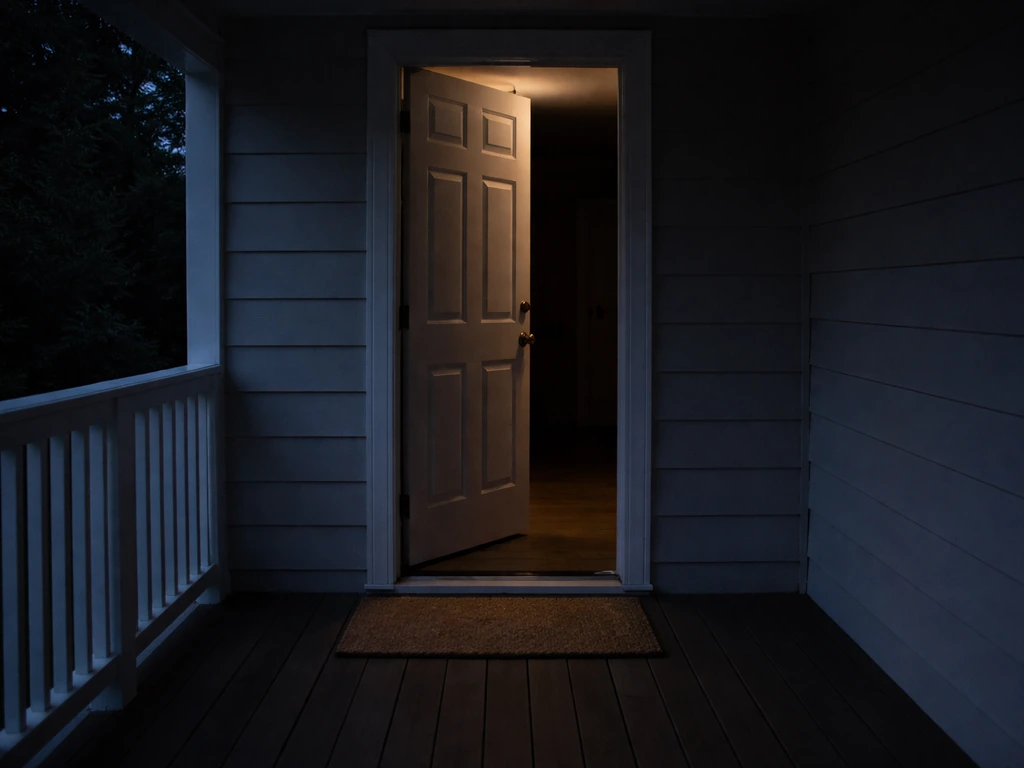
If the bird flew in near dusk and you cannot get it out before dark, the safest option is to leave a single large exit open, turn off all porch lights, and let it exit on its own overnight. Most birds will leave at first light when the natural outside light is brighter than the interior. Trying to chase a bird in the dark causes more harm than leaving it until morning. Check the porch at sunrise and close the exit once the bird is gone.
If It Won't Leave: Humane Containment and Capture Options
A small percentage of birds will not exit on their own, usually because they are exhausted, injured, young and inexperienced, or simply keep flying the wrong direction. If twenty to thirty minutes of the light-and-exit approach has not worked, you can escalate to gentle hands-on methods. The key word is gentle.
Towel or Washcloth Method (Small Birds)
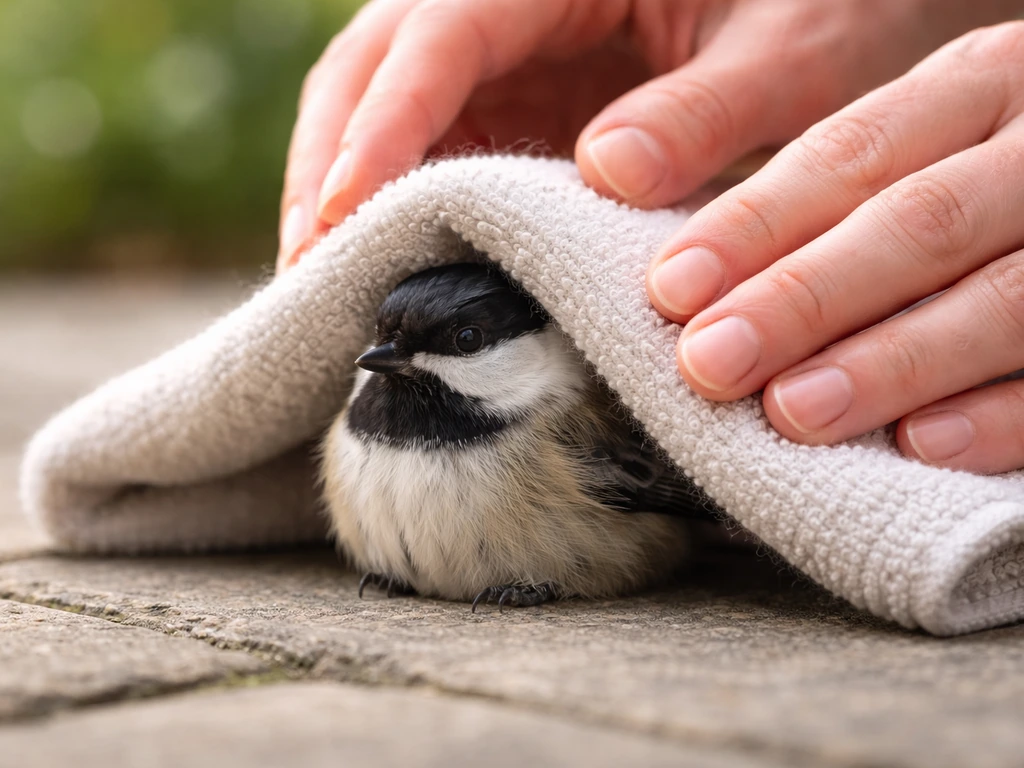
Drape a soft towel or washcloth over the bird from above when it lands on a surface. Move slowly and deliberately. Once the towel is over the bird, cup your hands around it through the towel, keeping the wings gently pressed against its body. Carry it outside immediately and open your hands at ground level so it can fly or walk free. Never grip tightly around the chest, as that restricts breathing.
Carrier or Box Method (Larger Birds)
For larger birds like pigeons, doves, or jays, place a cardboard box or pet carrier with the opening facing the bird. Use a broom handle or a large piece of cardboard held flat to gently guide the bird from behind toward the carrier opening. Do not prod or poke, just apply slow, steady pressure. Once inside, cover the carrier with a towel to reduce light and stress, then carry it outside and release.
What to Absolutely Avoid
- Sticky traps or glue boards: these cause severe injury and are considered inhumane. The RSPCA explicitly warns against them for any bird situation.
- Nets thrown by hand: improperly used netting can trap wings at dangerous angles and cause fractures.
- Chasing the bird repeatedly: exhaustion makes capture harder and injury more likely.
- Grabbing bare-handed without support under the wings: this risks injuring both you and the bird.
- Spraying water, using noise machines, or applying any chemical repellent in an enclosed space with a live bird.
Troubleshooting Common Scenarios
Not every situation is straightforward. Here are the most common complications and what actually works.
| Scenario | What's Happening | Best Fix |
|---|---|---|
| Bird stuck in upper corner or rafter | Bird is seeking the highest point it can find, which feels safe | Darken the corners with a tarp or towel hung nearby; open low exit and wait. Lower your profile to encourage downward movement. |
| Bird keeps flying into the screen mesh | It sees outside through the screen and is trying to reach it | Cover that section of screen from inside; redirect toward the one open door or panel |
| Bird circles but won't go through the open door | The door frame or threshold looks like an obstacle, or it's distracted by interior reflections | Remove any object near the door opening; step back further; try covering more interior screen panels to increase contrast |
| Bird has been in there more than 24 hours | Exhaustion is now a factor; the bird may need hands-on help or professional rescue | Attempt gentle towel method; if still unsuccessful, call a wildlife rehabilitator |
| Multiple birds entered at once | One entry point plus multiple birds increases chaos | Focus on getting one bird out at a time; isolate sections if your porch layout allows it |
| Bird keeps re-entering after release | There is an attractive feature inside (food, water, nesting spot) or the entry gap is still open | Remove the attractant immediately; locate and seal the entry gap before releasing |
Injured Birds, Protected Species, and When to Call for Help
This is the section most people skim, and it's the one they regret skimming. Two separate legal and ethical issues can come into play: the bird may be injured and need professional care, or it may be a protected species that requires specific handling under federal law. Glue traps can cause serious injuries like wing or leg dislocations and severe feather damage that reduces a bird’s ability to fly, even when skeletal harm is not immediately obvious.
Signs the Bird Is Injured
- It is on the ground and cannot fly when approached
- One or both wings are drooping or held at an odd angle
- There is visible bleeding, a wound, or missing feathers in patches
- It is lethargic, barely responding to your presence
- Its head is tilted to one side or it is spinning in circles
If you see any of these signs, do not attempt a DIY release. Place the bird in a ventilated cardboard box lined with a non-terry-cloth towel (so feet do not catch), keep it in a warm, dark, quiet space, and contact a licensed wildlife rehabilitator immediately. Audubon's online database and your state's wildlife agency website are the fastest ways to find one near you. Do not offer food or water unless a rehabilitator specifically tells you to.
Protected Species: Know Before You Handle
The vast majority of wild birds in the United States are protected under the Migratory Bird Treaty Act (MBTA). Under 50 CFR §21.14, you are legally permitted to humanely remove a migratory bird from a building without a federal permit, but you are required, to the degree feasible, to prevent the bird from re-entering afterward by patching holes or installing exclusion devices. What you cannot do without a permit is disturb or destroy an active nest that contains eggs or chicks. If you find a nest with eggs inside your screened porch, stop, document it, and contact the USFWS Migratory Bird Permit Office or a local wildlife professional before doing anything else.
Raptors (hawks, owls, falcons) and other large birds require extra caution. Their talons and beaks can cause serious injury. If a raptor has flown into your porch, use the light-and-exit method exclusively and call a wildlife rehabilitator if it does not leave on its own. Do not attempt towel capture unless a professional has guided you through it.
When to Call Wildlife Professionals: Quick Decision Guide
- The bird is visibly injured or grounded
- The bird is a raptor, large wading bird, or any species you cannot identify as a common songbird or pigeon
- The bird has been trapped for more than 24 to 48 hours despite your attempts
- You have found an active nest with eggs or chicks inside the porch
- You or anyone assisting has been scratched or bitten (seek medical advice separately)
- The bird is behaving erratically in a way that suggests illness, not just stress
Stopping Re-Entry: Screen Fixes, Exclusions, and a Seasonal Plan
Once the bird is out, federal regulations and plain common sense both say the same thing: seal the way back in. Taking steps to prevent re-entry helps stop repeat visits that can lead to birds nesting and laying eggs on or near your porch seal the way back in. If birds are pooping on your mailbox, the same idea applies: block access and remove what attracts them so they do not return.
To keep a bird from nesting on your porch, seal entry points, remove nesting-friendly materials, and use reliable exclusion methods before the next nesting season. A bird that entered once will often try again, especially during nesting season (roughly March through August in most of the U. S. ) or if there is food, water, or an attractive nesting spot inside.
Find and Fix the Entry Point
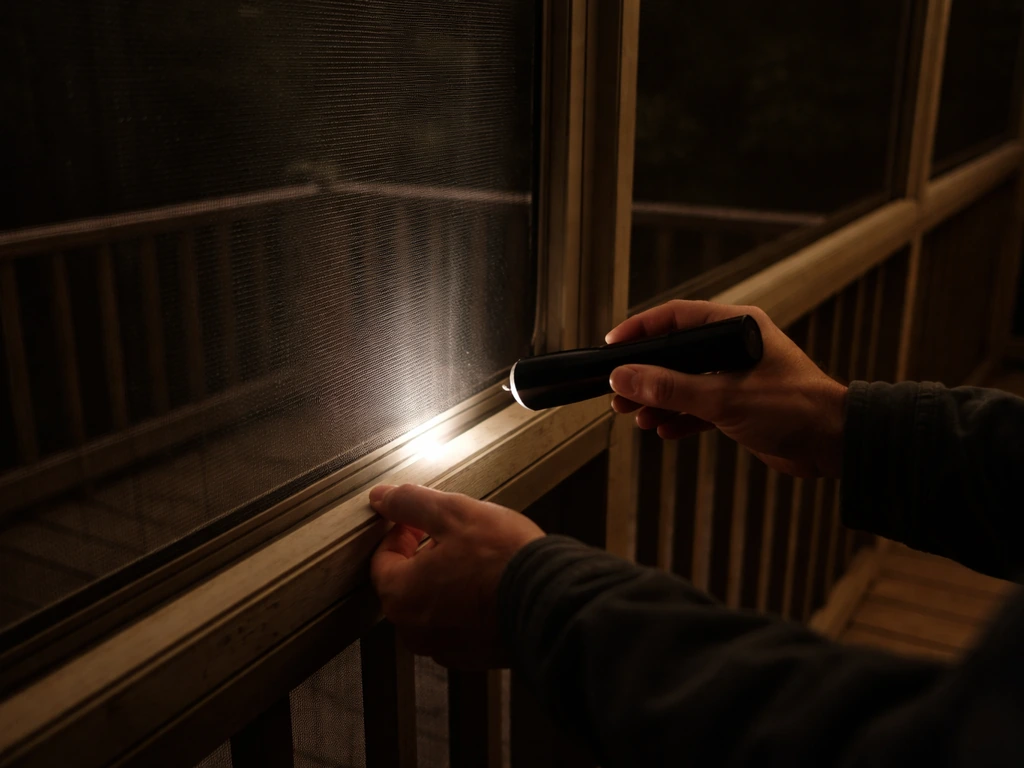
Walk the entire perimeter of the screened porch with a flashlight, looking at it from the inside in low light. Entry gaps are easiest to spot when interior light is off and natural daylight reveals bright spots through the screen. Common entry points include torn or loose screen mesh, gaps at the corners where panels meet, spaces under the door threshold, holes where pipes or conduit pass through the frame, and loose or missing screen door sweeps.
For most repairs, standard fiberglass or aluminum screen mesh works for small songbirds. For repeat entry by larger birds or for a more durable fix, consider 1/2-inch hardware cloth (welded wire mesh) over vulnerable areas, which the Building America Solution Center recommends for excluding smaller animals. Patch tears with matching mesh and screen repair tape as a short-term fix, then replace the full panel when you have time.
Remove What's Attracting Birds to the Porch
- Move bird feeders and birdbaths at least 15 to 20 feet away from the screened enclosure
- Remove any standing water inside the porch (plant saucers, buckets, gutters that drain into the enclosure)
- Take down nesting material that has started to accumulate in rafters or light fixtures
- Store pet food indoors rather than on the porch
- Install a porch light shield or switch to downward-facing fixtures so interior light does not attract insects (which attract insect-eating birds) at night
Humane Deterrents That Actually Work
For porches where birds are persistently attempting entry, a few deterrents are worth adding after you have sealed the gaps. Bird-repellent gel applied to beam edges and rafter surfaces (not mesh) makes surfaces uncomfortable to land on without harming the bird. Reflective tape hung near frequent entry points creates visual confusion outdoors. Physical exclusion, meaning well-installed screen or netting over any gap larger than one inch, remains the most reliable long-term solution. To stop birds from nesting around outdoor lights, reduce light spill and combine it with exclusion and screen repairs so they cannot settle in the same spot. Avoid ultrasonic repellers; the research supporting them is weak and they have no effect on daytime songbirds.
A Simple Seasonal Maintenance Schedule
| Season | What to Check | Action |
|---|---|---|
| Late winter (Feb–Mar) | Screen mesh condition after winter weather | Repair tears, replace damaged panels before nesting season begins |
| Spring (Mar–May) | New gaps, nesting activity starting near porch | Seal any new entry points; remove early nest-building materials immediately |
| Summer (Jun–Aug) | Active nesting nearby, increased bird activity | Check door sweeps and seals monthly; verify deterrents are in place |
| Fall (Sep–Nov) | Migratory birds passing through, screen wear from summer | Full perimeter inspection; replace worn mesh; store outdoor food and water sources |
| Winter (Dec–Jan) | Low activity but a good time for proofing work | Repair or replace screens; check and reapply exclusion materials at joints and corners |
If you are also dealing with birds trying to nest on the porch structure itself rather than just flying in accidentally, that is a related but separate problem worth addressing proactively before spring arrives each year.
Post-Incident Checklist and What to Do Next
Once the bird is out and you have caught your breath, run through this checklist to make sure you are actually done and not just pausing before the same thing happens again tomorrow.
Immediate Post-Incident Checklist
- Confirm the bird has left the porch entirely before closing the exit.
- Close and secure the exit door or screen panel.
- Locate the entry point the bird used and mark it if you cannot fix it immediately.
- Repair or temporarily cover the entry gap before leaving the porch.
- Remove any food, water, or nesting material that may have attracted the bird.
- Clean up any droppings using gloves and a dilute disinfectant spray (bird droppings can carry pathogens).
- Check the screen perimeter for additional weak spots while you are already in inspection mode.
- Note the species if you can identify it, especially if it is a raptor or unfamiliar bird, in case the situation escalates and you need to contact wildlife authorities.
Escalation Decision Flowchart
Use this sequence to decide what to do next if the situation is not fully resolved.
- Is the bird out of the porch? YES: Close the exit, repair the entry point, done. NO: Continue to step 2.
- Has it been less than 30 minutes since you opened the exit and darkened the space? YES: Wait it out, stay back, give it more time. NO: Continue to step 3.
- Is the bird injured (grounded, drooping wings, bleeding, lethargic)? YES: Box it gently and call a wildlife rehabilitator now. NO: Continue to step 4.
- Is it a raptor, large bird, or species you cannot identify as a common songbird? YES: Use only the light-and-exit method and call a wildlife rehabilitator if it does not exit within an hour. NO: Continue to step 5.
- Attempt the towel method or carrier method as described above. Did it work? YES: Release outdoors, seal entry point, done. NO: Continue to step 6.
- Has the bird been trapped for more than 24 to 48 hours, or have multiple humane attempts failed? YES: Call your local wildlife rehabilitator or animal control. Provide the species description, how long the bird has been trapped, and any signs of injury. Do not leave the bird without food and water in an enclosed space for extended periods. NO: Return to step 2 and try again with more patience and a longer wait period.
The vast majority of screened porch bird incidents are solved in under thirty minutes using nothing more than an open door and a dark room. The situations that require a call for professional help are real but uncommon, and knowing exactly when you have crossed that line is what separates a stressful afternoon from a genuinely harmful outcome for the bird. Keep this guide bookmarked, fix the screen after the bird is out, and you will probably not need to deal with this twice.
FAQ
How long should I wait before trying something beyond the open-door, lights-off method?
If the bird is moving toward the exit, keep watching without changing tactics. If there is no clear movement toward the opening after about 20 minutes, use a gentle herding wave from behind. If it still does not resolve after another short attempt (total roughly 20 to 30 minutes), transition to the next level (hands-on for small birds, carrier method for larger birds) or call for help if you see injury signs.
Can I just trap the bird with a net or towel if it is being stubborn?
Avoid nets and rapid capture. The safest hands-on option is a soft towel placed from above, then cupping the bird loosely through the towel to control flapping, with immediate release outside at ground level. For larger birds, use a carrier opening and slow guiding pressure rather than grabbing.
What if the bird is injured, bleeding, or keeps landing in one spot?
Do not attempt release if you see injury or distress signals. Place the bird in a ventilated cardboard box lined with a non-terry towel, keep it warm and dark, reduce handling, and contact a licensed wildlife rehabilitator right away. Do not feed or give water unless the rehabilitator instructs you.
What if the bird is a raptor, like a hawk or owl, and it is not leaving?
Use the lights-out and open-exit approach only, since raptors can injure you and it reduces risk to both you and the bird. If it does not exit on its own, contact a wildlife rehabilitator. Avoid towel capture unless a professional has guided you through it.
Is it always illegal to handle a wild bird on my property?
You can usually remove a migratory bird from a building humanely without a federal permit, but you must reduce the chance of re-entry afterward. You cannot disturb or destroy an active nest with eggs or chicks without the proper authorization, so if you find nesting activity, pause and contact the appropriate wildlife professionals.
I think there might be a nest in the porch. What should I do first?
Stop DIY release attempts and do not touch the nest. Document what you can safely observe (location and whether eggs or chicks are present) and then contact a wildlife professional or the relevant permit office before doing any exclusion repairs. This avoids illegal disturbance during nesting.
Should I leave the porch lights off overnight, even if it flew in near dusk?
Yes, if you cannot reasonably clear it before dark, the safest option is to keep one large exit open, turn off porch lights, and let it exit on its own overnight. Check at sunrise and close the exit once the bird is gone to prevent repeat entries.
What is the safest way to approach when the bird is on a ledge or floor?
Approach slowly and position yourself behind the bird relative to the exit. Use mild, wide, low-arc herding rather than chasing, and keep your movements steady to reduce sudden flapping into the screen.
How can I tell which part of the porch the bird used to get in?
Walk the perimeter and look from inside in low light with a flashlight, turning off interior light so natural daylight shows any bright gaps through the screen. Common sources include torn screen mesh, corner panel gaps, door threshold spaces, holes around pipes or conduit, and missing door sweeps.
What repairs should I prioritize after the bird is out?
Patch the entry points immediately. For small-songbird repeat issues, screen mesh and proper tape can work as a temporary fix, but replace the full panel later when possible. If birds keep finding the same vulnerabilities or you want durability, cover vulnerable areas with 1/2-inch hardware cloth over the gaps.
Do bird deterrents like gel or reflective tape work before I seal the gaps?
Do sealing first. Deterrents can be useful only after you have blocked entry, because otherwise birds can still access the porch through the openings. Reflective tape and repellent gel should be applied to surfaces birds land on, not to the mesh itself.
Can I use ultrasonic repellers to prevent birds from returning?
Avoid them. The evidence for ultrasonic devices is weak for daytime songbirds, so they are unlikely to solve the problem. Focus on exclusion and making the porch inaccessible through sealed gaps and reliable screening.
What if birds keep returning because there is food or water on the porch area?
Remove attractants. Block access points and eliminate what draws them, such as accessible food sources and anything that provides water. Once the porch is sealed, reduce lingering attractants near entry areas to prevent repeat attempts and potential nesting.
If the bird flies out on its own, do I still need to do anything?
Yes. After it leaves, inspect and seal the porch so it cannot re-enter. Birds that got in once may try again, especially during nesting season or if conditions inside are appealing, so repairs are the step that prevents the next incident.
Next Articles
How to Get a Trapped Bird Out of Your House Safely
Humane, step-by-step guide to get a trapped bird out safely, handle injuries, and prevent future entry.
How to Get a Bird Out of Your House Reddit Guide
Step-by-step humane bird escape, DIY fixes, prevention tips, and when to call wildlife experts for indoor bird incidents
How to Help a Bird Get Out of a House Safely
Humane, safety-first steps to help a trapped bird exit your house, plus DIY escape tips, fixes, and prevention.