You can stop birds from pooping on your mailbox by removing their perching spots, adding physical deterrents like anti-perch spikes or an angled mailbox cap, and eliminating nearby attractants. Most people can fix this problem in an afternoon with hardware they already own or can grab at any home improvement store. The key is making the mailbox an uncomfortable, unrewarding place to land, without harming the birds.
How to Stop Birds From Pooping on a Mailbox Safely

Maya Carver
23 May 2026
First: Clean up safely before you do anything else
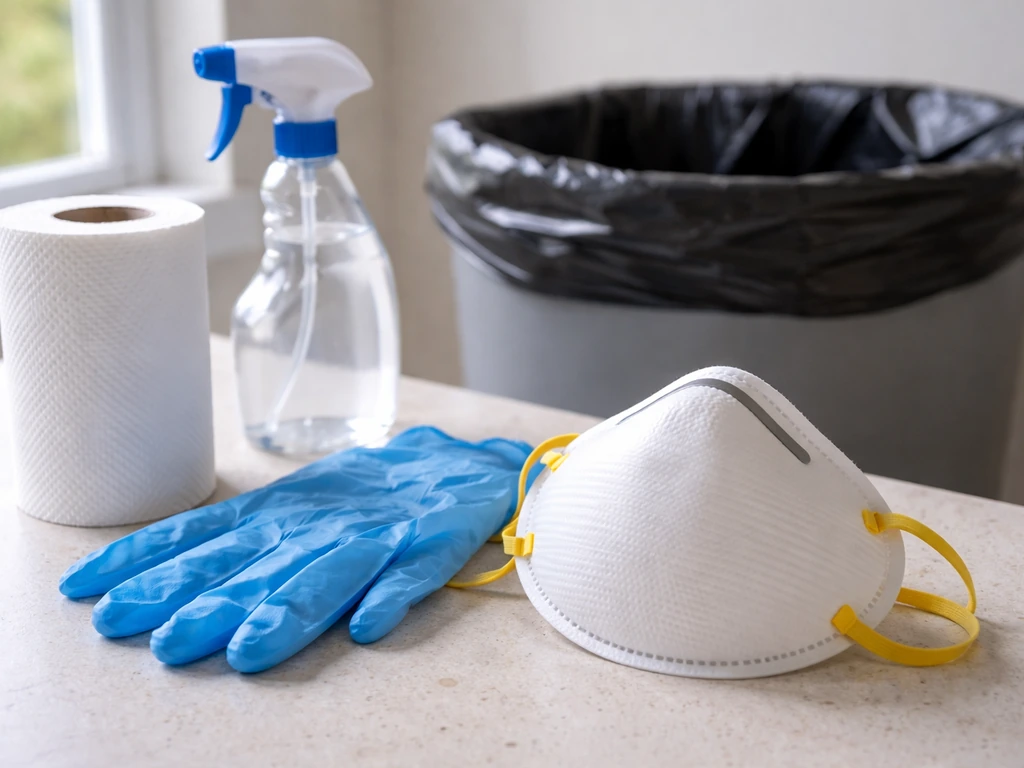
Before you install any deterrents, you need to clean off existing droppings, and how you do it matters. Wear PPE when you are in close contact (within about six feet) with sick or dead animals and with animal feces or materials that may be contaminated with HPAI A(H5N1) [close contact (within about six feet) with sick or dead animals and animal feces](https://www. cdc. gov/bird-flu/prevention/hpai-interim-recommendations.
html). Dried bird droppings can carry Histoplasma, a fungal spore that causes a serious lung infection called histoplasmosis when disturbed and inhaled. The same concern applies to avian influenza if sick birds have been in the area. Do not sweep or scrape dry droppings with a brush.
CDC/NIOSH also advises avoiding disturbing dry, dusty droppings through shoveling or sweeping and instead carefully spraying them first to reduce aerosolized dust before collection and disposal [Do not sweep or scrape dry droppings with a brush. ](https://www. cdc. gov/niosh/histoplasmosis/prevention/elimination-and-engineering-controls.
html). That kicks dust and spores straight into the air you are breathing.
Here is the safe cleanup sequence to follow every time:
- Put on an N95 filtering facepiece respirator (or better) before touching anything. Disposable gloves are also required, especially if you have a heavy buildup.
- Mist the droppings thoroughly with water mixed with a few drops of dish soap (the detergent acts as a surfactant and suppresses dust). Let it soak for a minute or two.
- Wipe or scrape the wet material into a sealed plastic bag. Never generate dry dust.
- Dispose of the bag in your outdoor trash.
- Wipe the surface again with a disinfectant spray or diluted bleach solution.
- Wash your hands thoroughly after removing your gloves and PPE.
If you are dealing with a large accumulation, meaning droppings that have built up over weeks or months and cover a wide area, the CDC recommends considering a professional cleaning company. That is not overkill. Heavy accumulations carry significantly higher exposure risk, and the cost of a professional cleanup is a lot lower than treating a respiratory infection.
Why birds keep targeting your mailbox
Birds are not targeting your mailbox out of spite. They are following basic survival instincts, and your mailbox happens to check several boxes for them. Understanding why they are drawn there helps you choose the right fix instead of wasting time on solutions that do not address the actual attractant.
- Perching: Mailboxes are elevated, flat, and often positioned in an open area with good sightlines, which makes them ideal perching spots. Birds use high perches to survey for food, predators, and mates.
- Roosting: In the morning and evening, mailboxes near trees or shrubs can serve as transitional roost spots where birds warm up or settle in for the night.
- Nearby food and water: Bird feeders, birdbaths, fruit-bearing shrubs, lawn grubs, and even pet food bowls close to the mailbox will draw birds into the area repeatedly.
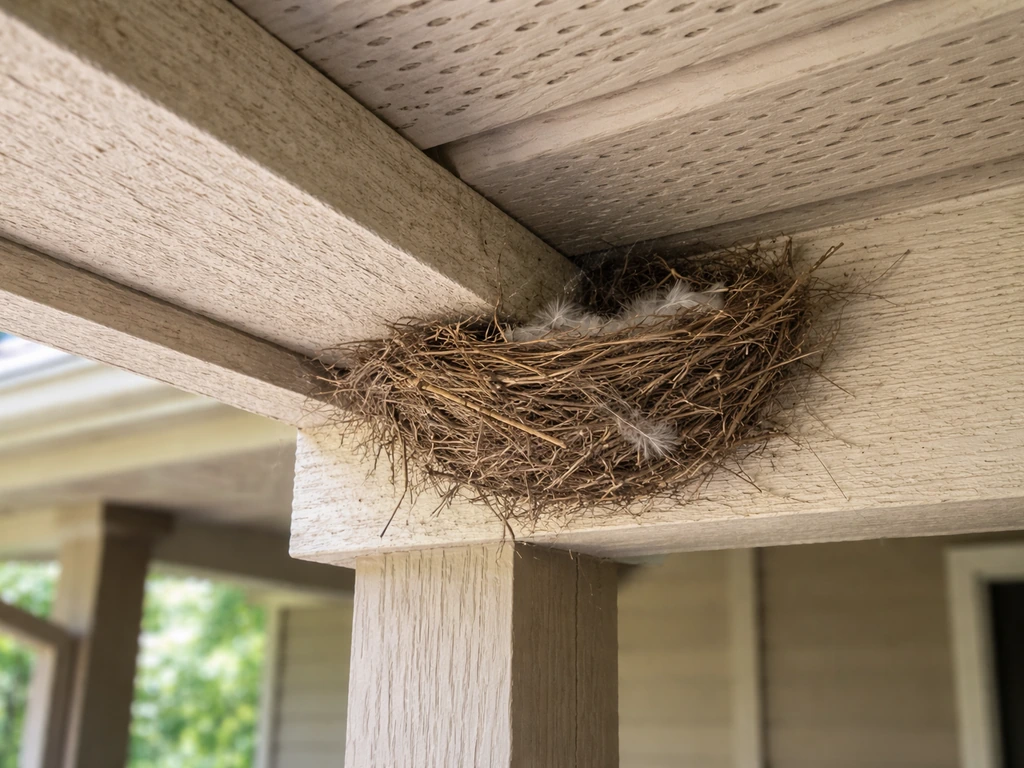
- Nesting proximity: If there is an active or recent nest on your porch, under your eaves, or in a nearby shrub, birds in that territory will perch everywhere nearby, including your mailbox.
- Habit and familiarity: Once a bird finds a safe perch with a good food source nearby, it returns. Other birds in the area observe the behavior and follow. Over a few weeks, a single bird becomes a regular flock.
Common culprits are starlings, house sparrows, grackles, and pigeons in urban and suburban settings. Mourning doves and mockingbirds are frequent offenders in residential neighborhoods. Corvids like crows and jays are intelligent and harder to deter once they have established a habit.
Immediate deterrents you can apply today
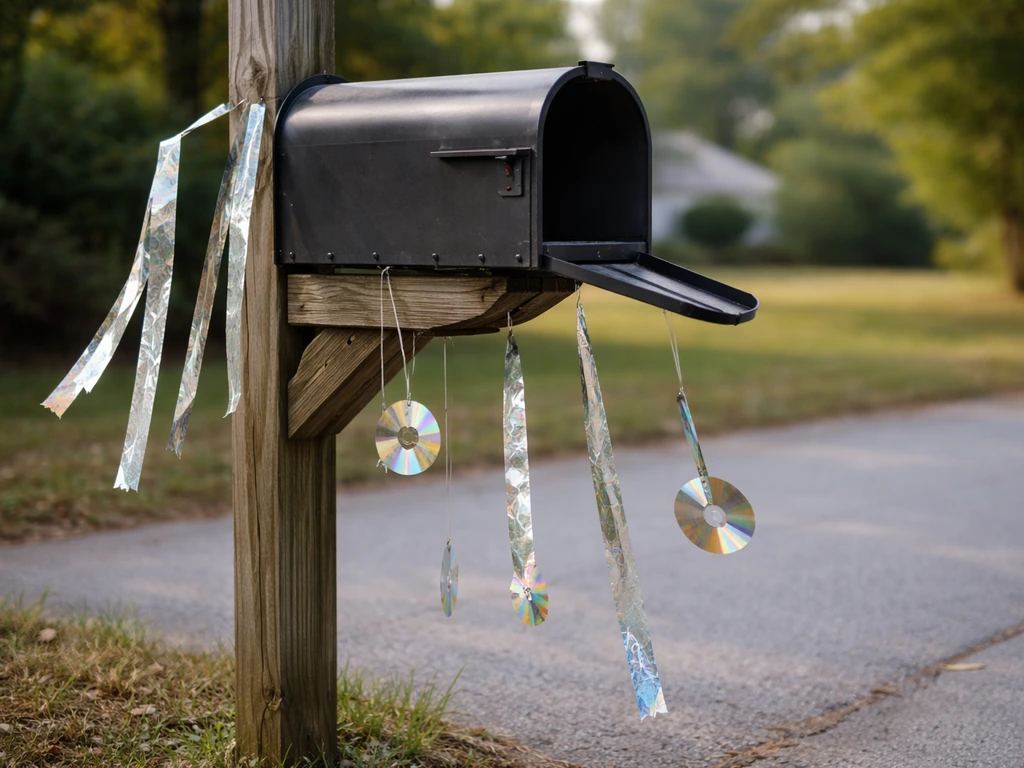
These are the fastest, lowest-cost options you can set up right now. None of them harm the birds. Start with the one that fits your situation and layer them if a single method is not enough.
Visual deterrents
Reflective tape or old CDs hung near the mailbox create flashing light that startles birds and disrupts their comfort. Hang strips so they move in a breeze, about 12 to 18 inches long. Predator decoys (plastic owls, hawks, or even a simple rubber snake draped on top of the mailbox) work well for a few days but lose effectiveness once birds habituate to them. If you use a decoy, move it every two to three days to maintain the illusion.
Tactile deterrents
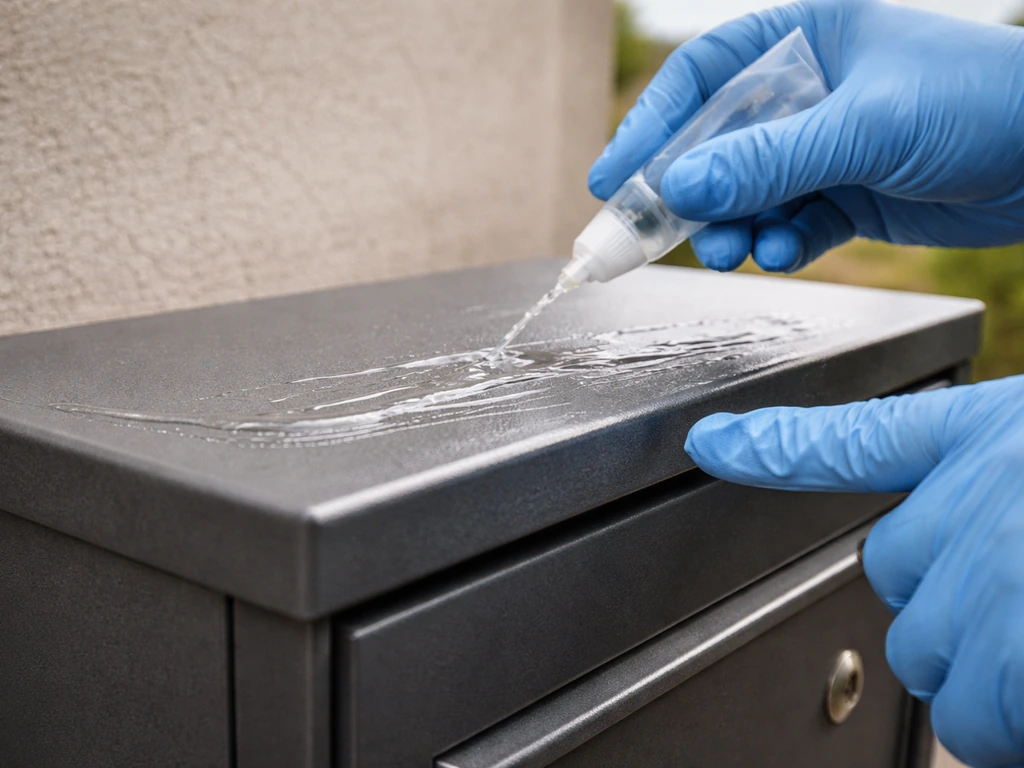
A thin smear of bird-repellent gel (products like Bird-X Transparent Bird Gel or similar) on the top surface of the mailbox makes landing uncomfortable without injuring birds. Apply it only to the top flat surface and reapply after rain. Avoid overloading, since it can stick to feathers if applied too thickly.
Repositioning and disruption
Sometimes the simplest move is to temporarily disrupt the routine. If you can, shift your mailbox post a foot or two, or change the orientation of the mailbox top. You can also try placing a balloon or a spinning pinwheel on or near the post. These are not permanent solutions, but they buy you time while you install more durable proofing.
When one tactic stops working
Birds, especially corvids and starlings, adapt quickly. If a deterrent that worked for a week suddenly stops working, rotate to a different tactic rather than doubling down on the same one. Combine a visual deterrent with a physical barrier for much better long-term results.
Mailbox-specific physical proofing
Physical proofing is the most reliable long-term solution because it removes the opportunity to perch, regardless of how motivated or habituated a bird is. The goal is to make the top and sides of the mailbox unusable as a landing platform.
Angled mailbox caps and covers
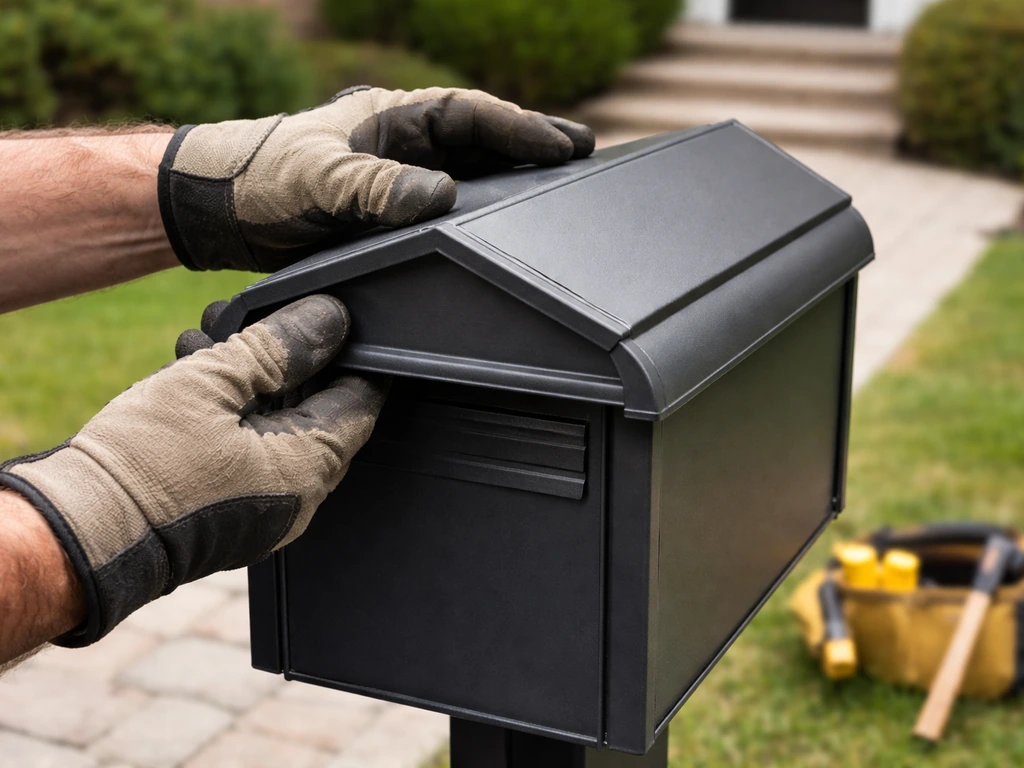
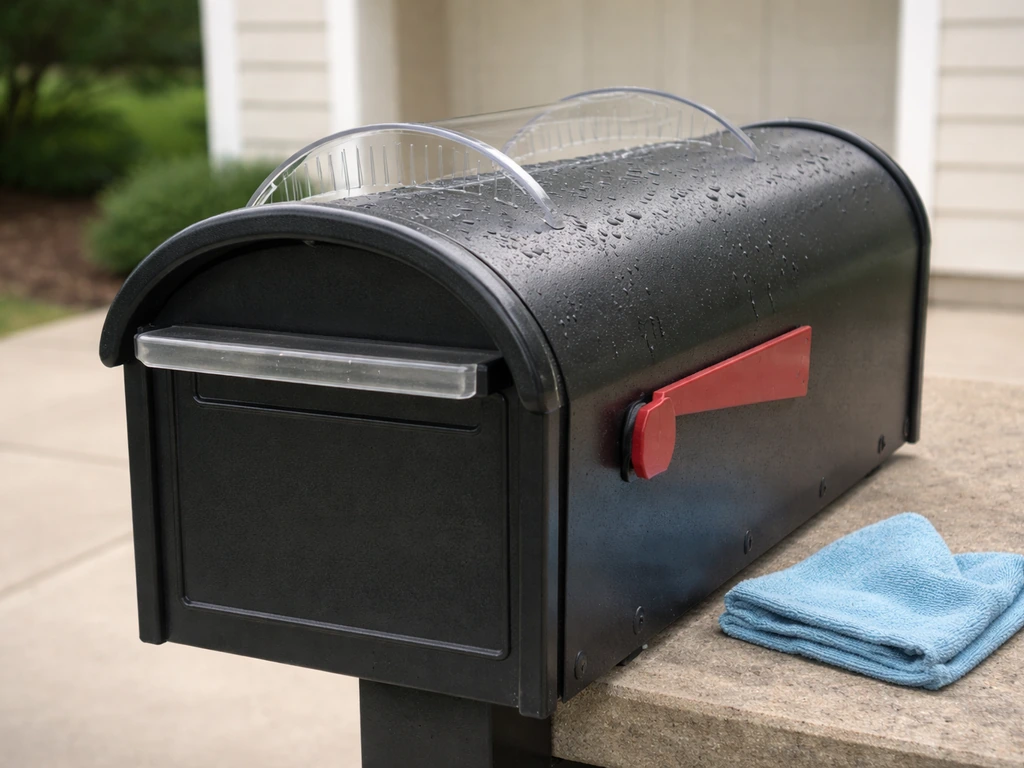
This is the single most effective mailbox-specific fix. An angled or peaked cover installed on top of the mailbox creates a sloped surface that birds cannot comfortably land on. You can buy prefabricated decorative mailbox covers with a peaked roof style, or you can cut a piece of sheet metal, aluminum flashing, or PVC board into a triangular shape and attach it to the top with weatherproof adhesive or short screws. The slope should be at least 45 degrees to prevent perching. Make sure the cover does not obstruct the mailbox door or mail carrier access.
Anti-perch spikes and rods
Bird spike strips (stainless steel or polycarbonate) can be attached to the top of the mailbox and to the post cap. They do not injure birds; they simply make it impossible to land comfortably. Choose narrow-gauge strips designed for small-to-medium birds if you are dealing with sparrows or starlings, and wider-gauge strips for larger birds like pigeons or grackles. Secure the strips with waterproof adhesive or small zip ties threaded through the base. Avoid screwing directly through the mailbox top if it would compromise the box's structural integrity or mail carrier access.
Post-top and arm modifications
Do not forget the post itself. The flat top of a wooden or metal post is a popular perch. Add a post cap with a pointed or domed top, or glue a section of spike strip there. If your mailbox has a horizontal support arm, wrap it with a loose-fitting sleeve of netting or apply spike strips along the top edge.
Netting as a barrier
If your mailbox is under an overhang or close to a wall or fence, lightweight bird netting (1/2-inch or 3/4-inch mesh) can block access to the zone entirely. This is more common for mailbox clusters at apartment buildings or facility entryways than for residential curbside boxes, but it is worth considering if your box is in an alcove or covered area.
| Method | Best for | Cost estimate | Durability | Installation difficulty |
|---|---|---|---|---|
| Angled/peaked cover | Most residential mailboxes | $10–$40 DIY or $30–$80 prefab | High (years) | Low to medium |
| Anti-perch spike strips | Flat-topped mailboxes, post caps | $10–$30 | High | Low |
| Bird repellent gel | Smooth surfaces, quick fix | $10–$20 | Medium (needs reapplication) | Very low |
| Predator decoy | Temporary deterrence | $10–$25 | Low (birds habituate) | Very low |
| Reflective tape / CDs | Immediate visual deterrence | Under $10 | Low to medium | Very low |
| Netting barrier | Enclosed or alcove mailboxes | $15–$50 | High | Medium |
Fix the area around the mailbox too
Proofing just the mailbox will slow things down, but if the surrounding environment keeps drawing birds to your front yard, you will be fighting a constant battle. The most effective approach combines mailbox-specific proofing with habitat changes in the surrounding 20 to 30 feet.
Remove food and water attractants
Bird feeders placed anywhere near the mailbox will keep birds circling the area all day. If you love feeding birds, relocate feeders to the back yard, well away from the street. Same goes for birdbaths. Check for other food sources too: fallen fruit from trees, uncovered compost, exposed pet food, or easy access to garbage bags. Eliminate those and you cut the reason birds are in that zone in the first place.
Manage nearby vegetation
Dense shrubs or low-hanging tree branches directly over or next to the mailbox are launching pads. Trim back any branches within about 10 feet of the mailbox so birds do not have a natural perch to hop from. This also eliminates potential nesting sites in the immediate area. If you are dealing with birds nesting on or near your porch or under eaves close to the mailbox, addressing that activity is equally important, since nesting birds are far more persistent about defending and patrolling their territory. If birds are getting on your screened porch, the same approach applies: remove nearby nesting or roosting spots and block easy landing paths how to get bird out of screened porch.
Check for and block nearby roosting spots
Look for ledges, fence rails, utility wire attachments, or light fixtures near the mailbox where birds are roosting. Birds that roost in a spot will poop near it as they come and go. Blocking those secondary perches with spike strips or netting reduces the overall bird pressure on your mailbox. If you notice birds actively building a nest on a nearby light fixture or overhang, dealing with that early (before eggs are laid) is much easier than waiting.
If the birds are building nests on a nearby light fixture or overhang, block that access early so they do not establish a repeat spot birds building nests on lights. If you are trying to stop a pet bird from laying eggs, the approach is different than mailbox bird deterrents.
Long-term plan and seasonal prevention
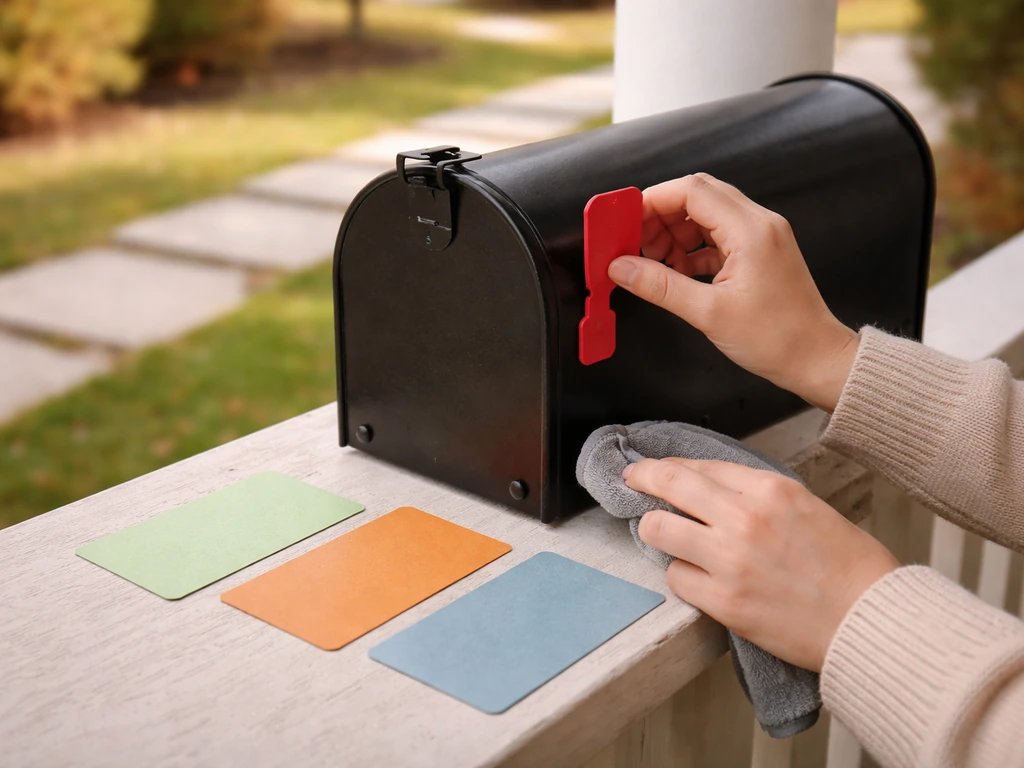
Bird pressure on your mailbox is not constant year-round. It tends to spike during spring nesting season (March through June in most of the US), during fall migration (September through November), and in winter when birds cluster around food sources. Building a simple seasonal maintenance routine keeps the problem from returning.
Spring (March through June)
This is the highest-risk window. Birds are actively scouting nesting territories and perching constantly. Check your mailbox top and post for any signs of nest material being placed, and remove it before eggs are laid (more on the legal side of this below). Reinspect any spike strips or angled covers you installed to make sure adhesive has not failed after winter. Touch up repellent gel if needed.
Summer (July through August)
Bird activity is high but more stable. Do a quick monthly visual check of your deterrents. Clean off any droppings using the safe wet-wipe method above. Replace any reflective tape that has faded or lost its effectiveness.
Fall (September through November)
Migrating flocks move through and can suddenly overwhelm deterrents that worked fine all summer. Starlings and grackles in particular move in large numbers and can find any gap in your proofing. If you see a sudden uptick, add a temporary visual deterrent like reflective tape as a supplement until the migration passes.
Winter (December through February)
Cold weather can cause adhesives on spike strips and gel products to crack or fail. Do a quick inspection in early winter and replace anything that looks like it has come loose. Birds roosting for warmth in sheltered spots are common in winter, so check the post and any nearby wall-mounted surfaces too.
Simple annual maintenance checklist
- Inspect spike strips and covers each spring before nesting season starts
- Reapply bird repellent gel after winter and after heavy rain seasons
- Trim nearby shrub and tree branches back to at least 10 feet from the mailbox each March
- Relocate or remove bird feeders and birdbaths from the front yard each spring
- Check for early nest material on or around the mailbox in March and April and remove it before eggs appear
- Do a post-migration inspection each November to catch any damage or deterrent failures
When to call a wildlife professional (and what the law says)
Most mailbox bird problems are straightforward DIY fixes, but there are situations where you should stop, step back, and get professional help. Knowing the line before you cross it protects you legally and keeps birds from being harmed.
Protected species
The Migratory Bird Treaty Act (MBTA) protects most wild bird species in the United States, including their nests, eggs, and young. If a bird has already built an active nest with eggs or chicks on or against your mailbox, you cannot legally remove that nest until the birds have fledged and left. Touching, disturbing, or destroying an active nest of a protected species can result in significant fines.
Common exceptions include non-native invasive species like house sparrows, European starlings, and rock pigeons, which are not covered by the MBTA, though local ordinances may still apply. If you are not sure whether the bird you are dealing with is protected, contact your state wildlife agency or a local wildlife rehabilitator before acting.
When to escalate to a professional
- There is an active nest with eggs or chicks and you cannot identify the species
- You are seeing a large, persistent flock (more than 10 to 15 birds regularly) that is not responding to deterrents
- You cannot safely install proofing on your own due to height, access, or physical limitations
- You suspect the birds may be sick (lethargic, stumbling, or dying birds in the area) since this may indicate avian influenza or another reportable disease
- The droppings accumulation is large enough to require professional remediation rather than a simple wipe-down
When you call a wildlife professional or pest control company that specializes in birds, give them the species (or your best description), the duration of the problem, what deterrents you have already tried, and whether there is any active nesting activity. That information helps them give you an accurate assessment and quote without an unnecessary site visit.
For large accumulations that require professional cleanup, make sure the company is experienced in bird dropping remediation and uses appropriate containment and PPE protocols. The CDC recommends professional cleanup when the scale of droppings presents a meaningful health risk, and a competent company will treat it as the hazardous waste removal job it is.
If your mailbox bird problem is part of a larger pattern around your property, including birds nesting on your porch, under eaves, or on light fixtures near entries, the same deterrence and legal principles apply across all those spots. Dealing with all the problem perches and nesting sites together is almost always more effective than tackling each one separately.
FAQ
Is it safe to remove bird droppings from my mailbox right away?
Yes, but only after you confirm the birds are not actively nesting. If you see a nest with eggs or chicks on or against the mailbox, you generally must leave it alone until the birds have fledged, since protected species are covered by federal law in the US.
What is the safest way to clean if the droppings are on the angled cover or spike strips?
Do not wash droppings with a hose, since mist and splatter can spread contaminated dust into the air. Instead, follow the wet-wipe style cleanup you are already using, keep the area damp, and avoid any dry brushing or scraping that creates airborne particles.
Why did the reflective tape or decoy stop working after a few days?
Corvids, like crows and jays, often habituate faster to “scare” tactics. If a reflective or decoy method stops working, switch to physical proofing, like an angled/peaked cover plus spikes or netting, rather than adding more of the same visual device.
What if the birds stop on the mailbox but the poop shows up on the post or nearby ledges?
Yes. Even if the mailbox is proofed, birds can still roost and poop on nearby secondary perches (light fixtures, fence rails, cable attachments, or utility wire). A quick scan within about 10 feet for perching ledges can prevent the “it worked, but it moved the mess” problem.
How often should I reapply tape, repellent gel, or reposition a pinwheel?
Replace or reposition deterrents based on performance, not a fixed schedule. Reflective tape and spinning items fade in effect when they stop moving consistently or when the surface gets dirty, so check after rain and strong sun exposure, then refresh immediately if you notice reduced bird activity.
Does mounting the deterrents higher on the mailbox actually work, or do birds still find another spot?
Higher placement helps, but the key is denying a landing surface. If the mailbox is under an overhang, birds may target the underside edge or nearby wall. In that case, extend proofing to the adjacent roost edges or use netting to block the entire access zone.
How do I pick the right spike size if I cannot identify the bird?
Choose spike products and mesh sizes based on the bird you see. Narrow-gauge spikes or smaller-mesh netting are better for sparrows and starlings, while larger birds like pigeons may need wider-gauge spikes and stronger access blocking so they cannot perch comfortably or straddle gaps.
What should I do about adhesives and proofing during freeze-thaw weather?
If you are using adhesive-mounted spike strips or a peaked cover, cold can weaken bonds. Inspect early winter and after freeze-thaw cycles, then reseal any lifted edges with weatherproof adhesive so birds cannot slip into small gaps.
What is the quickest way to reduce bird traffic if I have feeders or a birdbath nearby?
Start by reducing attractants within 20 to 30 feet, then add barrier proofing. If feeders or birdbaths are nearby, relocating them far from the mailbox is often the fastest reduction in bird traffic, and it also makes proofing stay effective longer.
If birds nest on an overhead light near the mailbox, will mailbox proofing alone be enough?
If you notice birds nesting on nearby fixtures or eaves, treat that as part of the same problem. Birds repeatedly return to established roost routes, so blocking those landing paths early (before eggs are laid) usually prevents the mailbox from being targeted again.
Next Article
How to Keep a Bird From Nesting on Your Porch
Humane, safety-first steps to stop birds nesting on your porch, remove active nests, and proof access year-round.