The fastest way to get a bird out of your house is to dim or turn off interior lights, open one clear exit (a door or window to the outside), cover or block any windows that don't open so the bird isn't drawn toward glass it can't pass through, close every other interior door, then step back and give the bird a few quiet minutes to find its way out. That setup works for the vast majority of cases. Everything below fills in the details, handles the tricky scenarios, and tells you when to stop DIY and call for help.
How to Help a Bird Get Out of a House Safely
Maya Carver
30 May 2026
Immediate safety steps for you and the bird
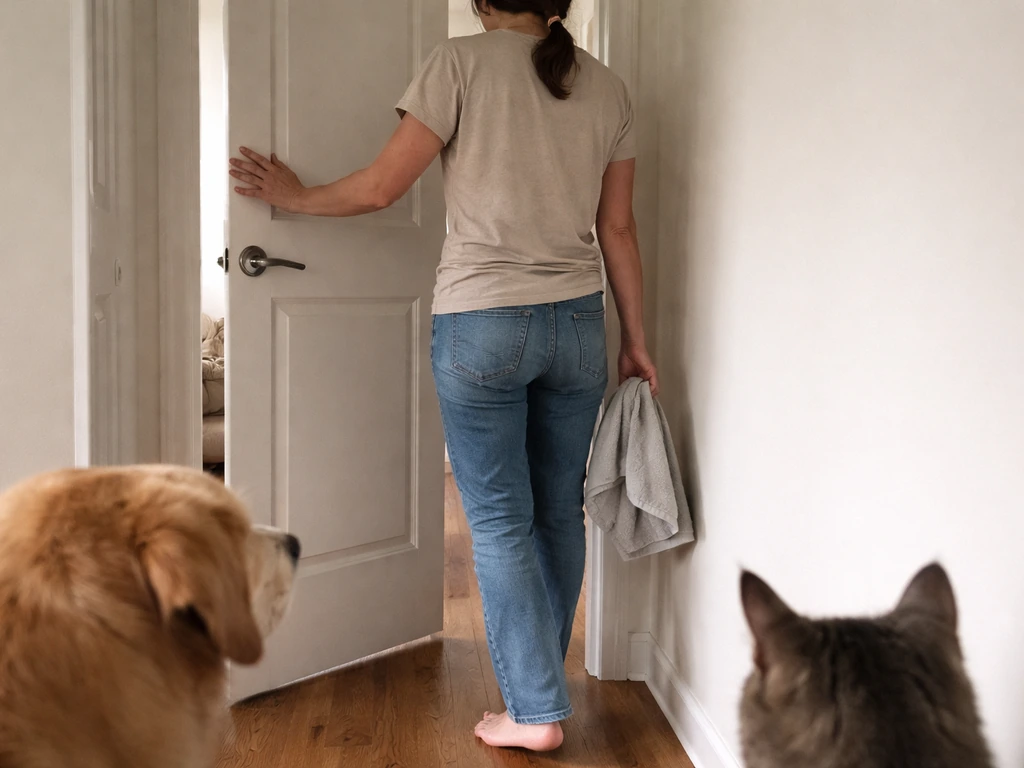
Before you do anything else, protect yourself and reduce the bird's panic. A frightened bird will exhaust itself quickly, and an exhausted bird is much harder to help. Your goal in the first two minutes is to make the environment calmer, not to chase or corner the animal.
- Get people and pets out of the room immediately. Dogs, cats, and excitable kids will spike the bird's stress and make it fly erratically.
- Turn off the TV, radio, or any other noise sources. Silence is your best tool.
- Don't touch the bird yet. Wild birds can carry pathogens including avian influenza. The CDC recommends avoiding contact with wild bird saliva, mucus, or droppings, and washing hands thoroughly with soap and water after any exposure.
- If you must handle the bird later, wear gloves. Thin nitrile gloves from a first-aid kit work fine.
- Don't chase, wave towels at, or yell near the bird. Every panic response burns the bird's energy and makes it harder for it to navigate toward an exit.
Once you've cleared the room and quieted things down, take 30 seconds to assess: Is the bird flying normally, or is it grounded, listing to one side, or bleeding? A bird that's flying and alert just needs an exit. A bird that can't fly or looks injured needs different handling, covered later in the humane handling section.
Step-by-step: guide the bird outside
These steps work for most rooms in a house. There are specific tweaks for basements, garages, and chimneys in the troubleshooting section below, but the core sequence is the same. For specific setups like chimneys, garages, and basements, see the troubleshooting section for how to get bird out of building in tricky spaces.
- Close every interior door between the bird and the rest of the house. You want to isolate the bird in one room or zone so it doesn't end up deeper inside the building while you're trying to get it out.
- Identify your one best exit: a door or window that opens wide to the outside. Bigger is better. A full exterior door is ideal.
- Open that exit fully, screen removed if possible.
- Cover or block every window that doesn't open. Tape cardboard over them, close the blinds completely, or hang a towel over the glass. Birds interpret glass as open space and will repeatedly fly into it instead of finding the real exit.
- Turn off all interior lights in the room. Leave the area outside the exit brighter, so the bird is drawn toward the light at the opening.
- Leave the room and close the door behind you, leaving a gap just large enough to peek through. Give the bird 10 to 20 minutes of quiet. Most birds will find the exit on their own when the room is calm and the path is clear.
- Check back quietly. If the bird has left, close up and do a quick scan of the perimeter to confirm it's gone.
That quiet waiting step is the one most people skip, and it's the most important one. The bird is not being stubborn. It's scared, and it needs the stimulation level to drop before it can navigate properly.
Setting up the space so the bird chooses the exit
Light management is everything here. Birds navigate toward bright, open space. If your exit door is in a dim corner and every window is glowing, the bird will gravitate toward the windows every time. The setup below stacks the deck in your favor.
Light and visual cues
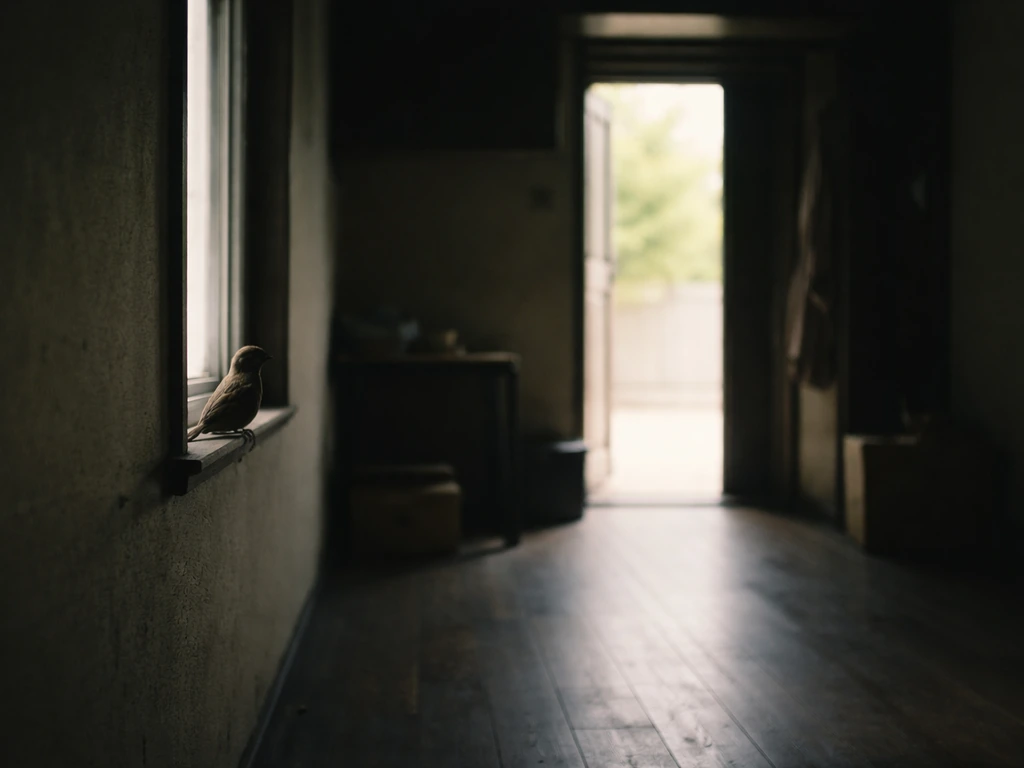
- Kill all interior lights. Lamps, overhead fixtures, everything.
- If it's daytime, the natural light coming through the open exit is your lure. If it's nighttime or very overcast, place a lamp or flashlight just outside the exit pointing inward to draw the bird toward the opening. Handling a bird at night is a separate challenge covered in a related guide.
- Block non-opening windows completely. Even partial coverage helps. The Wisconsin Humane Society specifically recommends using cardboard, blankets, or closed blinds to eliminate the misleading visual signal from glass.
- Remove anything from the sill or doorway that might make the bird hesitate, such as a screen, a decorative wreath, or a door mat flapping in the breeze.
Room layout and escape path
- Create a clear, uncluttered flight path from where the bird is perched to the exit. Move chairs, floor lamps, or anything else that would interrupt a low, panicked flight line.
- Keep the exit fully open for the entire waiting period. Don't let the door swing half-closed.
- If the bird is in a long hallway, open the exit at the far end and close off side doors so the corridor becomes a funnel pointing outside.
- In a garage, turn off all garage lights and open the main garage door. The bird will naturally fly toward the bright exterior light.
One-way setups for repeat entry points
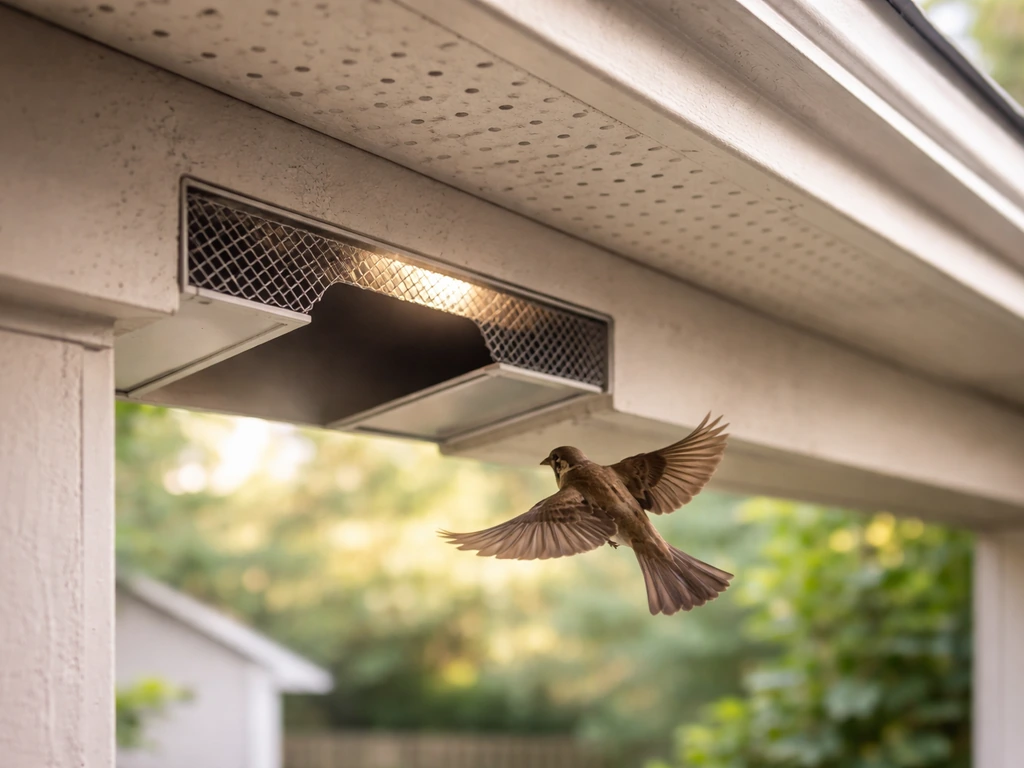
If a bird has entered through a specific gap (a broken vent, a gap under a roof eave, an open chimney flue), a one-way exclusion device lets the bird exit but not return. These are netting or door flaps placed over the entry point so the bird can push out but can't push back in. The key rule, per wildlife management guidance: only install one-way devices when you're certain there are no dependent young inside. Installing one while young are present can trap or strand them. Placement also matters. The exit needs to be visible and accessible to the bird, not tucked behind clutter or flush against a surface the bird can't approach from the right angle.
When the bird still won't leave
If you've done all the above and the bird is still inside after 20 or 30 minutes, something in the environment is working against you. If the bird still won't leave, follow a focused guide on how to get trapped bird out of house, including the right troubleshooting by situation. If you need Reddit-style crowd advice for your exact situation, search for the thread that matches your scenario and follow the humane steps above first. Here's how to troubleshoot by scenario.
Bird keeps hitting a window instead of the exit
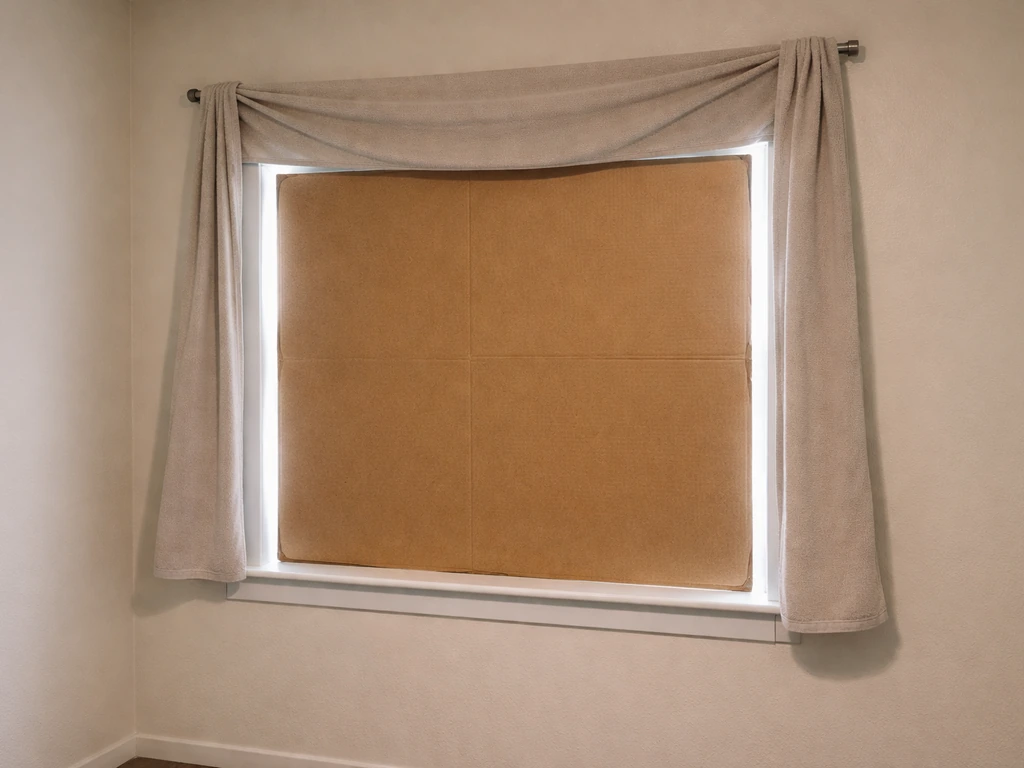
The window is giving a stronger visual signal than your exit. Cover the window completely, not just partially. A towel draped over a rod, or cardboard taped directly to the glass, will eliminate the cue. Then recheck that your exit is well-lit and fully open. Birds can become fixated on narrow escape attempts, and reflections or visible vegetation through glass are a known draw. Removing the glass signal entirely usually breaks the fixation within a few minutes.
Bird is stuck in a corner or ceiling area
A bird that's wedged itself in a high corner or behind furniture is exhausted or disoriented. Don't rush toward it. Dim the room further, make sure the exit is clearly the brightest point in the space, and wait another 10 minutes. If it still won't move, you can slowly and calmly walk toward it from the opposite side of the room (not directly at it) to gently herd it in the direction of the exit. Move in silence, take small steps, and stop if the bird panics.
Bird in the basement
Basements are particularly tricky because the bird flew downward, which is against its instincts, and it's now in a dim space full of confusing visual cues. The Wisconsin Humane Society sequence for basements: turn off all basement lights, open every window you can, cover all windows that don't open with blinds or cardboard so the bird isn't attracted to closed glass, and close the interior door to the rest of the house. Then leave and give the bird 20 to 30 minutes. If there's a basement egress window or a bulkhead door, that's your best exit candidate.
Bird in the chimney or fireplace
Keep the fireplace damper closed until you're ready. Get people and pets out of the room, turn off all noise sources, then open the damper and open the closest exterior door or window wide. If the bird is already in the firebox, open the fireplace screen or door slowly. The bird should see the natural light from the exterior exit and fly toward it. Do not light a fire to drive it out. If the bird appears to be stuck or injured in the flue and can't exit on its own, that's a case for a wildlife professional. A fine-meshed net can be used if you're comfortable with it and the bird is within reach, but this is a last resort.
Common mistakes that make it worse
- Chasing the bird around the room. This causes exhaustion and panic, not progress.
- Opening multiple windows and doors at once without a clear strategy. The bird gets confused and has no obvious single exit to aim for.
- Turning lights on to see better. Interior light competes with your exterior exit signal.
- Trying to capture the bird in a towel mid-flight. This rarely works and often injures the bird.
- Leaving pets or children in the room thinking they'll help. They won't.
Humane handling and when to call for help
Physical handling should be a last resort, not a first move. If passive methods haven't worked after 30 to 45 minutes and the bird is still mobile and not injured, you can attempt a gentle manual guide. Cup both hands loosely around the bird from above, closing your fingers slowly. Do not squeeze. Hold the bird at your side pointing toward the open exit and release it outside. Wash your hands immediately with soap and water afterward.
If the bird is grounded, glassy-eyed, or has visible injuries like bleeding, a drooping wing, or an inability to hold its head upright, do not try to release it outside. A stunned bird after a window collision may just need 15 to 30 minutes in a quiet, dark, ventilated box (like a shoebox with air holes) to recover. After that window, if it's still unresponsive or clearly injured, contact a licensed wildlife rehabilitator. Audubon is clear on this: identifying and treating bird injuries correctly is difficult for laypeople, and getting the bird to a rehabber quickly gives it the best chance.
When to call for help right away
- The bird is visibly injured and cannot fly.
- The bird has been inside for more than an hour and all passive methods have failed.
- You believe the bird is a protected migratory species and you're unsure what you're legally allowed to do.
- The bird entered through a space you cannot safely access (a high chimney flue, a sealed wall cavity).
- You're dealing with a large bird like a hawk, owl, or heron that could injure you if mishandled.
- The bird appears sick (lethargic, discharge from eyes or beak, unusual posture).
Who to call depends on the situation. Who to call depends on the situation, and the fastest option is usually your state or local wildlife agency Who to call depends on the situation.. Your state or local wildlife agency can advise on protected species and often has referrals to licensed rehabilitators. The Humane Society or ASPCA in your area handles injured wildlife calls. Animal control can assist when public safety is a concern. When you call, describe the species if you can identify it, the bird's condition, and how long it's been inside. That information helps them send the right person.
Protected species and legal notes
Most wild birds in the US are protected under the Migratory Bird Treaty Act. This means you cannot intentionally harm, capture, or kill them, and their active nests are also protected. In practice, passively helping a bird find an exit is fine. Problems arise if you try to capture a bird without authorization or disturb an active nest. In the UK, all wild bird species and their nests are protected under the Wildlife and Countryside Act 1981, and moving a nest in use can be a criminal offence. If you're dealing with a bird that has nested inside your building, consult your state wildlife agency or equivalent authority before taking any action that could disturb the nest or the adult.
Preventing repeat incidents: long-term bird-proofing
Once you've gotten the bird out, spend a few minutes figuring out how it got in. That's the only way to stop it from happening again, and it's easier to fix entry points when you know exactly where they are.
Seal common entry points
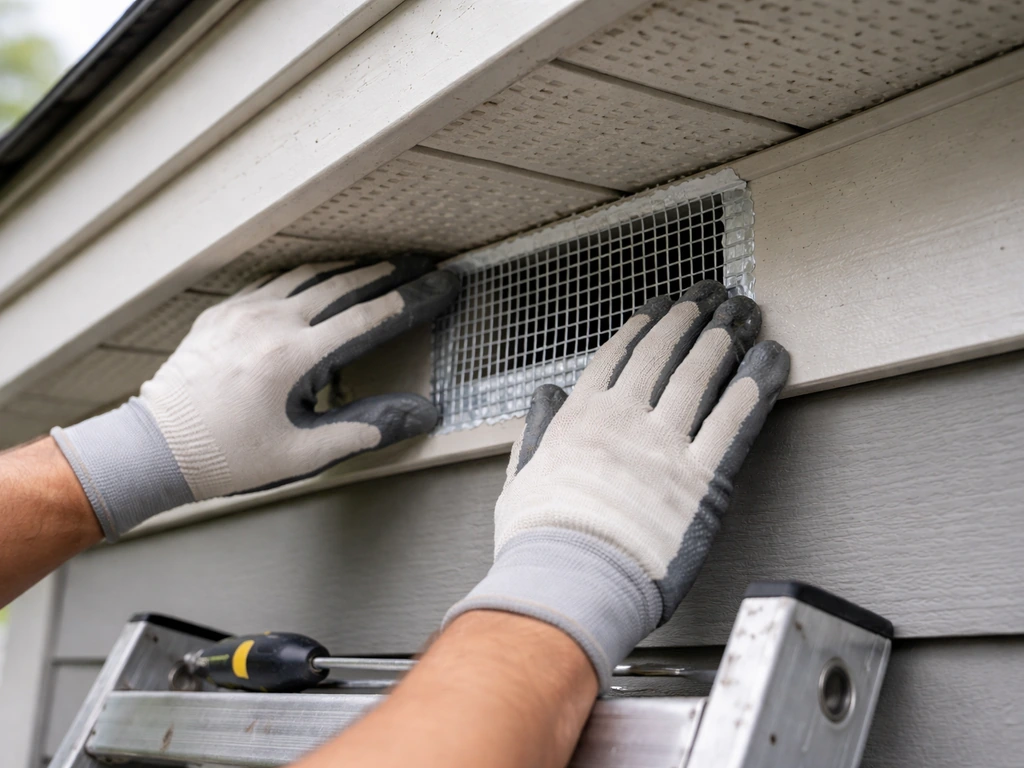
- Check roof vents, soffit vents, and ridge vents. These are the most common bird entry points on residential buildings. Hardware cloth or galvanized mesh with openings no larger than half an inch will exclude most birds while maintaining airflow.
- Inspect chimney caps. An uncapped chimney is an open invitation. Install a spark-arrester cap with mesh sides.
- Look for gaps at the roofline where fascia boards meet the soffit, and at any spot where two roof planes intersect. Even a gap of an inch or two is large enough for smaller birds.
- Check window and door screens for tears or loose frames. A bird can push through a screen that isn't properly seated.
- In commercial buildings or facilities, check loading dock doors, HVAC intake openings, and any vented mechanical rooms.
Manage window collisions
If birds are regularly flying into your windows (as opposed to entering through a gap), the fix is on the outside of the glass. Decals, tape patterns, or window films applied in a grid pattern of no more than 2 inches by 2 inches are effective because they break up the visual field enough that birds recognize the surface as a barrier. Markers placed wider apart don't work because birds simply fly between them. Apply the pattern to the exterior surface of the glass for maximum visibility to the bird.
Light management at night
Artificial light at night is a major factor in bird collisions, especially during spring and fall migration when millions of birds are moving. Birds drawn in by lit buildings often circle illuminated areas, become disoriented, and strike glass. The USFWS recommends turning off non-essential interior and exterior lights overnight, particularly during peak migration periods. At minimum, close blinds after dark so interior light doesn't bleed out through windows. If the bird is still inside overnight, you can also follow the night-focused approach for how to get bird out of house at night. The National Park Service supports the same approach: closing blinds and turning off lights inside is one of the simplest and most effective things a building occupant can do.
Seasonal planning
Bird entry incidents tend to cluster in spring (when birds are actively searching for nesting sites and young birds are making first flights) and fall (migration season, when disoriented birds are more likely to end up in the wrong place). Do a building inspection for open vents and gaps in late winter or early spring before nesting begins. A second check in late summer, before migration ramps up in September and October, lets you catch any new gaps that opened during the warmer months. Facilities managers dealing with large buildings should add bird-proofing checks to the same maintenance schedule as HVAC filter changes and roof inspections.
| Method | Best for | Cost | DIY or Pro |
|---|---|---|---|
| Hardware cloth over vents | Preventing re-entry through openings | Low | DIY |
| Chimney cap with mesh | Open chimneys | Low to medium | DIY or Pro |
| Window collision decals (2x2 grid) | Windows with frequent strikes | Low | DIY |
| One-way exclusion door | Active entry points where bird returns repeatedly | Low to medium | DIY with care |
| Closing blinds and lights off at night | Light-attracted collisions during migration | Free | DIY |
| Bird netting over large openings | Loading docks, large roof gaps, facilities | Medium to high | Pro recommended |
If you're managing a larger facility or dealing with recurring bird problems across multiple entry points, a professional bird control inspection is worth the investment. A wildlife management professional can identify all the access points at once and recommend the right exclusion hardware for each location, which is almost always faster and cheaper than discovering gaps one at a time after each incident. For trapped-bird situations specifically, questions about who to contact and what a professional can do are worth exploring so you're not scrambling for answers in the middle of a stressful situation.
FAQ
Can I release the bird right away, or should I wait for it to calm down first?
Yes. If the bird is behaving normally, you can usually put it in a quiet, dim recovery box indoors instead of releasing it immediately, then try a release when it looks steady and alert. Use a ventilated container (air holes, not airtight), keep it away from bright windows, and avoid offering food or water because many injured or stressed birds can choke or overheat.
Will putting food or birdseed near the door help it find the exit faster?
Do not put food, birdseed, or live bait near windows or doors to “lure” it. Food can increase panic or cause the bird to wedge itself behind items while it searches, and it also delays the key step of making one clear exit the brightest option. If you want to use movement, use minimal, slow herding only after passive steps have failed.
Should I turn on outdoor lights or just adjust the inside lights?
In most cases, turning lights down inside is safer than turning lights on outdoors. Outdoor lighting can create a new brightest target, pulling the bird toward glass or the wrong doorway. If you need extra light for visibility, make the single exit the brightest area by increasing light near that door/window only.
My bird keeps circling the same window instead of the open door, what do I do?
If the bird is circling repeatedly and not taking the exit, the most common fix is changing the visual cue competition. Cover the brightest window completely (no partial coverage), remove reflections if possible (close curtains or shade nearby windows), and ensure the exit is fully open and visible from where the bird is most active.
What if I suspect the bird came from a nest in the house, can I still use a one-way exit?
If you see an active nest or hear persistent begging from inside walls or an attic, stop DIY exclusion. One-way devices and attempts to block gaps can trap dependent young. Contact your state or local wildlife agency first, and only proceed with advice they give for nest status and timing.
The bird looks hurt or can’t fly, what should I do in the first hour?
For a grounded, listing, or bleeding bird, the immediate priorities are warmth (not heat), quiet, and rapid professional assessment. Keep it in a ventilated box in a low-traffic area, avoid handling unless necessary, and contact a licensed wildlife rehabilitator after initial stabilization if it cannot regain normal posture or responsiveness.
Is it ever okay to use a towel or net to catch the bird?
Avoid covering the bird with towels or grabbing it unless a pro instructs you. If you must use gentle manual help, approach slowly from the side or above, do not squeeze, and release only toward the open exit. If it panics, stop and return to passive light and exit control.
After 30 minutes, why might the bird still not leave, and what should I change first?
If the bird is still inside after 20 to 30 minutes, reassess the environment rather than increasing chase behavior. Common causes are a window cue still stronger than the exit, an exit that is partly blocked or not wide enough, clutter creating misleading routes, or the bird being stuck in a high corner. Try further window coverage and dimming, then wait again before manual intervention.
Can I open a different room’s door to give the bird another route outside?
Yes, but only if it is safe and aligns with the bird’s ability to navigate to that opening. Do not open multiple exits, because that can spread the bird’s focus. If using a staircase or hallway as the route, close other doors to keep the bird from being redirected and ensure there is a clear, brightest line to the chosen exterior exit.
How do I find and fix the entry gap after the bird is out?
After it exits, do a targeted check at likely entry points, especially the exact spot you observed it appear from. Look for gaps around vents, eaves, broken screens, soffit openings, chimney chase areas, and spaces around pipes. Fixing the entry point typically needs exterior work, so schedule repairs promptly before the next season.
What changes if the bird enters at night?
For nighttime incidents, the best approach is usually to eliminate competing indoor light and close blinds so the brightest area is outdoors or the intended exit. If the bird is inside after dark, follow the same staged process (lights down, one clear exit, cover non-open windows), because the bird’s behavior is still driven by light cues and visibility.