Close off every room except the one the bird is in, open one clear exit (a door or window leading outside), cover or darken all other glass so the bird does not fly into it, then step back and give the bird space to find its own way out. That is the core method, and it works for the vast majority of indoor bird situations. Everything else in this guide builds on those four steps. If you are still dealing with the bird after these steps, follow the same core guidance for how to get a bird out your house, then move on to long-term bird-proofing to prevent repeat visits.
How to Get a Bird Out of Your House Reddit Guide
Maya Carver
31 May 2026
Immediate safety first: calm yourself and the bird
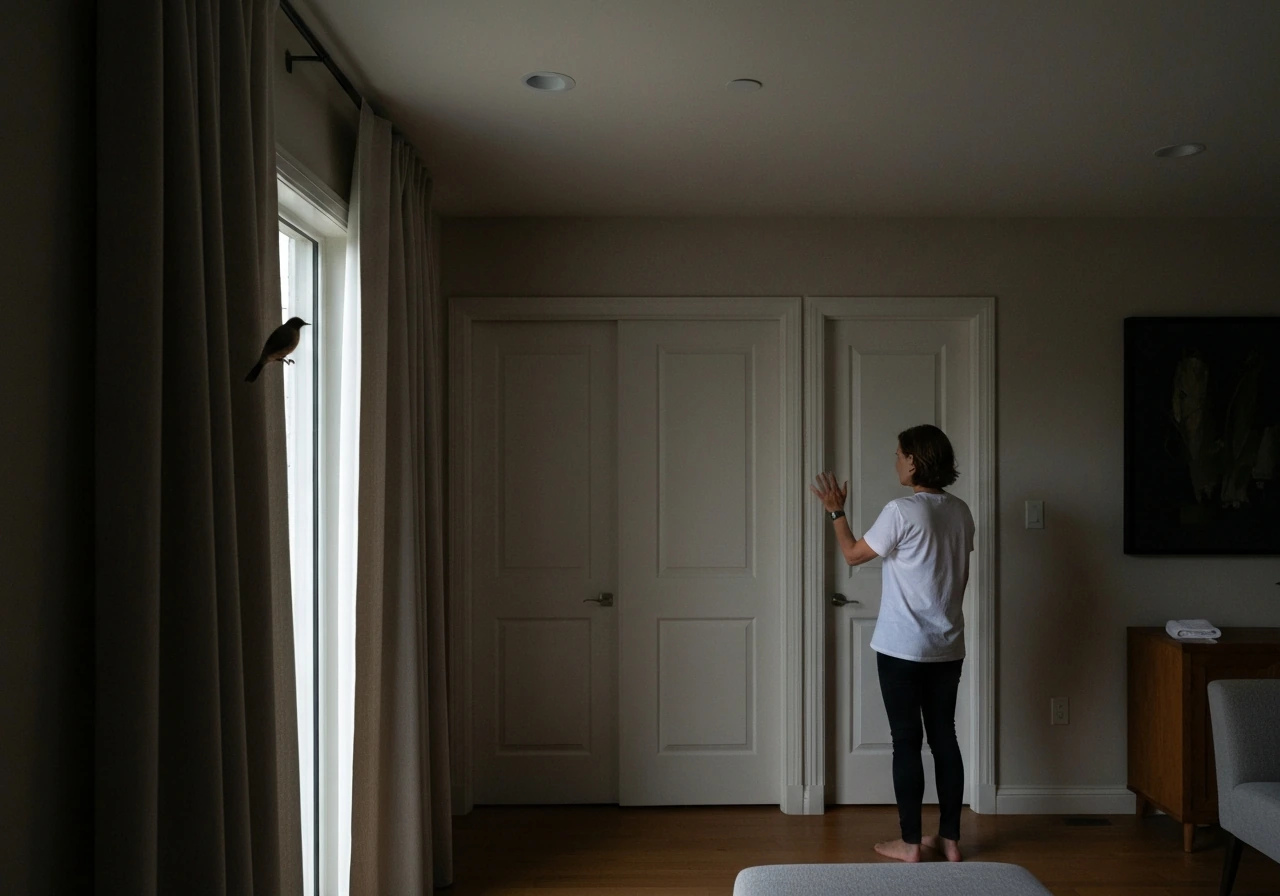
A panicked bird bouncing off walls and windows is responding to stress, not stupidity. Your first job is to reduce that stress, which means reducing noise, movement, and confusing light cues. Turn off the TV, silence your phone, and get pets and children out of the room immediately. Cats especially need to be secured behind a closed door before you do anything else. A bird that can see a cat nearby will not calm down no matter what you do.
Do not chase the bird. Do not wave your arms, throw towels at it, or try to herd it aggressively. All of that triggers a stronger flight response and makes the situation worse. Stand still, speak quietly if you need to communicate with anyone helping you, and move slowly and deliberately when you do move. The calmer the room feels, the faster the bird will find its exit.
- Remove pets and children from the room immediately
- Turn off TVs, radios, and other noise sources
- Do not chase, wave at, or corner the bird
- Close doors to all other rooms before opening any exit
- Move slowly and speak quietly
Quick DIY methods by room
The same core logic applies everywhere, but each room has its own quirks. Here is how to handle the most common scenarios.
Living room or bedroom
Close doors to hallways and adjoining rooms first. Then open one window or door as wide as possible. Cover or close the blinds on all other windows so the bird is not confused by multiple light sources competing for its attention. If the room has skylights, cover them with a sheet or towel if you can safely reach them. The San Diego Humane Society specifically recommends darkening the rest of the area so the bird focuses on the single clear exit. Then leave the room entirely if you can, or stand very still near the far wall. Most birds will find the opening within a few minutes.
Attic
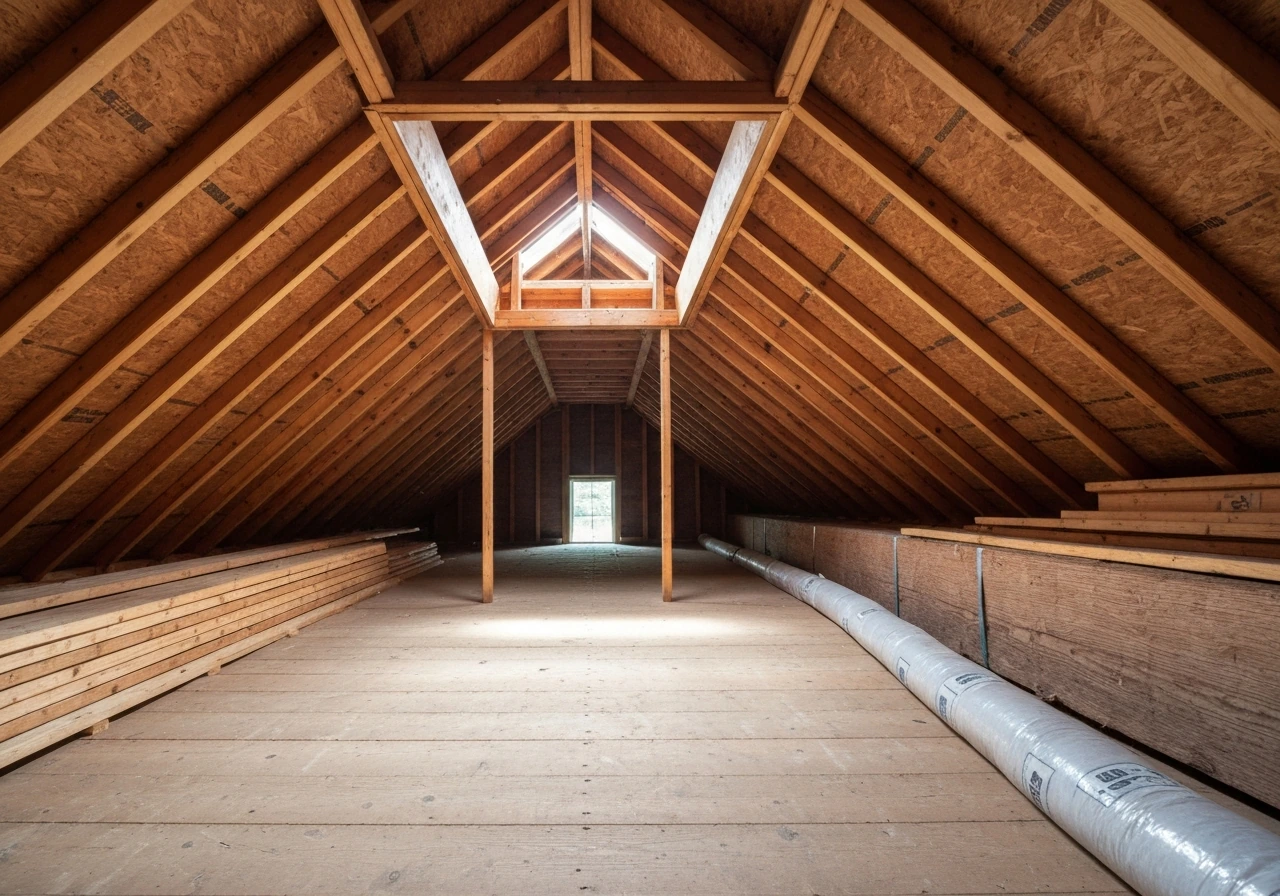
Attics are tricky because birds often get in through vents or gaps and then cannot find the same opening to leave. Open any gable vents or access hatches that lead outside. Turn off any attic lights or fans. If there is a roof hatch, open it and step back. Do not try to herd the bird toward the opening by waving or making noise. One important caution: if you hear multiple birds or see signs of nesting, stop and read the protected species section below before doing anything else. Disturbing an active nest can be a federal offense for many species.
Basement
Turn off all basement lights. Open as many windows as possible and prop open the exterior basement door if there is one. For windows that are fixed and cannot be opened, cover them from the inside with a dark cloth or cardboard so the bird does not mistake them for an exit and collide with the glass. The Wisconsin Humane Society specifically recommends this covering approach for non-opening windows. Close the door to the upstairs before you open any exit so the bird moves toward daylight rather than deeper into the house.
Garage
Turn off garage lights, then open the main garage door fully. Cover any side windows that do not open. Stand outside the garage and wait. Birds in garages almost always exit on their own once the big door is open and lights are off. If the bird has been in there for more than an hour with no progress, use a broom held horizontally (not swung) to gently direct it toward the opening from behind.
Bird on a curtain rod or high perch
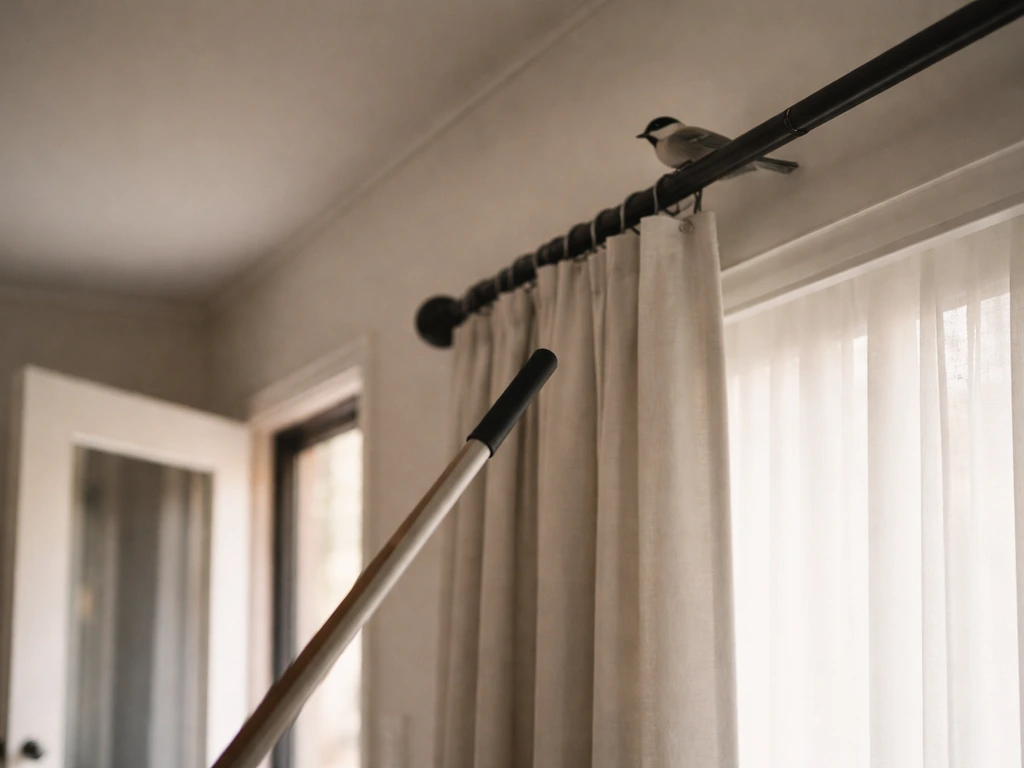
Do not try to knock the bird down. Open the nearest exit and dim the room. If after 15 to 20 minutes it has not moved, you can slowly extend a long stick or broom handle toward the perch so the bird can step onto it, then carry the bird toward the exit. Move very slowly. Any quick movement and the bird will take flight again.
Creating the right escape route
Birds navigate by light. They will fly toward the brightest opening they can see, which is why competing light sources cause so much confusion. The goal is to make one exit obviously brighter than everything else in the room. Here is how to set that up correctly.
- Close all interior doors to prevent the bird from spreading to other parts of the building
- Open one exterior door or window as wide as possible, ideally one that faces open sky rather than a covered porch
- Close blinds, curtains, or drapes on all other windows in the room
- Cover fixed windows that cannot be opened with dark cloth, cardboard, or towels
- Turn off all interior lights to reduce competing brightness cues
- If you have skylights, cover them if safely accessible
- Leave the room or stay very still and wait at least 15 to 20 minutes
For nocturnal birds (owls are the most common indoor visitor in this category), daylight methods often do not work well. Wildlife Victoria recommends waiting until night, turning off all interior lights, and then opening the exit. For how to get a bird out of the house at night, this simple timing trick can make the exit obvious waiting until night. The bird will naturally orient toward the dark sky outside rather than the lit interior.
If the bird genuinely cannot find the exit after 30 or more minutes of a properly darkened room with one clear opening, you can try gentle guiding. Drape a light towel or sheet over the bird while it is perched, scoop it up gently with both hands keeping wings against its body, carry it to the open exit, and release it. Only do this if the bird appears uninjured and alert. If it is injured, go to the next section instead.
When NOT to touch the bird
Injured birds
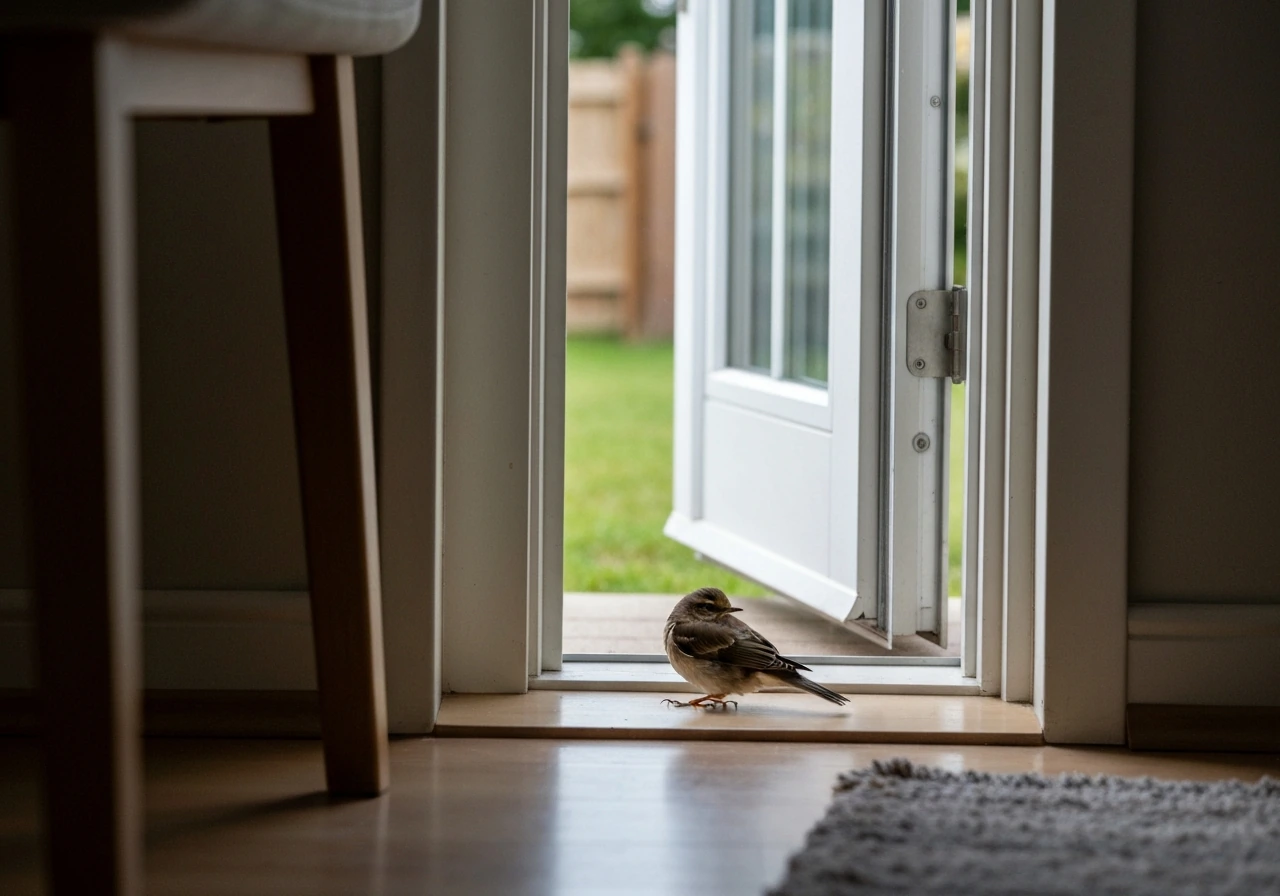
If the bird is on the floor and not flying, or if it flew into a window and is stunned, do not try to force it out. The RSPCA advises against handling an injured bird initially and recommends giving it time to recover in a quiet, contained space. If you need to move it, place it gently in a shoebox or ventilated cardboard box lined with tissue or a soft cloth. Put the box somewhere dark and quiet, away from pets and children. Then contact a licensed wildlife rehabilitator. Audubon strongly recommends taking window-collision birds to a rehabber because internal injuries are common and impossible for a non-expert to assess, and proper treatment including anti-inflammatory medication may be required.
In the US, you can find a permitted migratory bird rehabilitation facility through the US Fish and Wildlife Service website. Do not attempt to feed or give water to an injured bird while waiting for help. It can cause aspiration or other harm.
Protected species and legal limits
The vast majority of wild birds in the US are protected under the Migratory Bird Treaty Act. That includes songbirds, raptors, swallows, swifts, and many others you are likely to encounter. Federal regulations under 50 CFR 21. 14 specifically address birds in buildings and prohibit harmful capture methods such as adhesive traps.
If you do trap a bird, you are required to release it immediately and humanely. If transport to a rehabilitator is not feasible, USFWS humane capture and handling guidance still allows birds to be accepted or triaged, but you must follow the applicable permit requirements for migratory birds [If you do trap a bird, you are required to release it immediately and humanely. ](https://www. fws.
gov/sites/default/files/documents/220211TheHumaneCaptureHandlingAndDispositionOfMigratoryBirds_Final. pdf). This is not just a recommendation, it is federal law. Sticky traps, poison, and methods likely to injure the bird are all off the table.
If you find a nest with eggs or young birds inside your home, stop everything. Do not evict the birds, block the entry, or disturb the nest until you have confirmed the legal status of the species and the nesting is complete. The Wisconsin Humane Society notes that exclusion and hazing near active nests can cause parental abandonment, which may also carry legal consequences. Contact a wildlife professional or your state wildlife agency for guidance specific to your situation.
When to call a wildlife professional
Stop DIY attempts and call a professional if any of the following apply: If you need a direct answer on who to call, contact a licensed wildlife rehabilitator or a wildlife exclusion professional in your area who to call to get bird out of house.
- The bird is visibly injured, bleeding, or unable to stand
- The bird is a raptor (hawk, owl, falcon) or other large species
- You can see or hear nestlings or eggs
- Multiple birds have entered the building, suggesting an ongoing infestation
- The bird has been inside for more than several hours and is not responding to exit guidance
- You are unsure of the species and whether it is protected
- The bird is in a location that requires you to work at height or in a confined space
When you call, have this information ready: the species if you know it (photos help), where in the building the bird is, how long it has been there, any visible injuries, and how you think it got in. That information helps the professional arrive prepared and saves time.
After the bird leaves: inspect and clean up
Once the bird is out, your next move is to figure out how it got in. This matters whether you had one bird or a dozen. Walk the perimeter of your home and look at every vent, soffit, gap around window frames, chimney opening, and roof edge. Common entry points include uncapped chimneys, damaged or missing vent covers, gaps under eaves, and torn window screens.
Before you start cleaning up any droppings or nesting material, put on an N95 respirator, gloves, and eye protection. The CDC recommends avoiding stirring up dust from bird droppings because of virus dispersal risk, including avian influenza and histoplasmosis fungal spores. Dampen droppings with a diluted bleach solution before wiping them up, bag everything in sealed plastic bags, and dispose of it in outdoor trash. Do not vacuum dry droppings.
Remove anything that may have attracted the bird in the first place. Bird feeders placed too close to the house, open water sources, or accessible food debris can all draw birds toward your building. Audubon recommends cleaning feeders with a 9:1 water-to-bleach dilution. The Iowa DNR suggests a 10 percent bleach solution roughly once a month for standard feeders, with more frequent cleaning for hummingbird feeders and birdbaths. If you have a birdbath within a few feet of the house, move it further away.
Long-term bird-proofing for homes and facilities
Getting a bird out once is a short-term fix. If you want step-by-step help getting the bird out safely in the moment, follow the section on how to get bird out of building using calm, one-clear-exit guidance Getting a bird out once is a short-term fix. Permanent exclusion is the only method that consistently prevents repeat entry. Here is how to approach it systematically.
Seal entry points properly
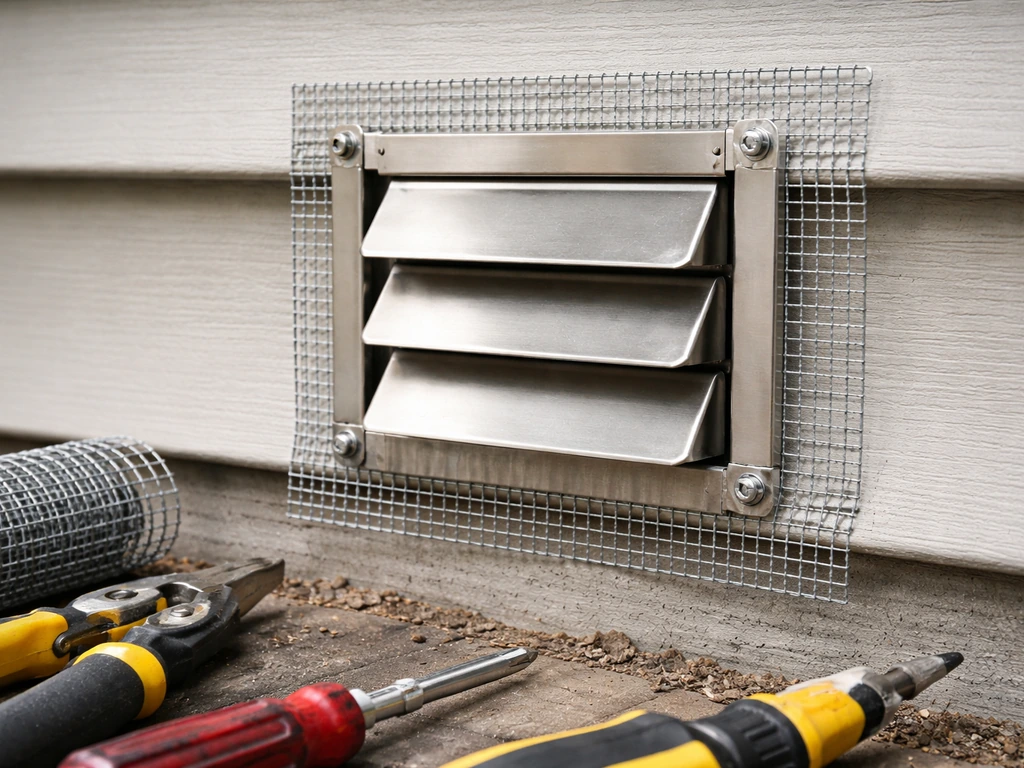
Hardware cloth (welded wire mesh) in 1/2-inch by 1/2-inch gauge is the material of choice for covering openings like attic exhaust fan vents, eave gaps, and similar spots. The Wisconsin Humane Society recommends it specifically because it is strong and long-lasting. Do not use standard window screening for structural openings because it can clog with debris and fail. The Building America Solution Center notes that even very small gaps, around 1/4 inch, can enable bird entry, so fill or cover anything larger than that around window frames, utility penetrations, and roof edges.
Chimney caps
An uncapped chimney is an open invitation. Standard chimney cap sizes include 9x9, 9x13, and 13x13 inches, so measure your flue opening before ordering. The cap needs to sit high enough above the chimney crown to allow proper airflow. If you are not comfortable working on a roof, hire a chimney professional. This is one of the most common bird entry points and one of the cheapest fixes if you catch it early.
Vents and soffits
Dryer vents, bathroom exhaust vents, and attic vents are frequent entry points. Install vent covers with built-in flap mechanisms for dryer and exhaust vents. For attic vents, add 1/2-inch hardware cloth backing on the interior side. Check soffit panels for cracks or gaps and seal them with caulk or foam backer rod before painting.
One-way exclusion devices
If birds are already roosting or nesting in an attic or eave space, a one-way door or tube allows them to exit but prevents re-entry. The principle is the same as what wildlife managers use for bats: the device sits over the main entry point, the birds leave during the day to forage, and they cannot get back in. After a week or two with no activity, you remove the one-way device and permanently seal the opening. If you are not experienced with this, hire an exclusion professional. Incorrectly installed one-way devices can trap birds inside, which creates a worse problem.
| Entry Point | Recommended Fix | Material | DIY or Professional |
|---|---|---|---|
| Uncapped chimney | Install correctly sized chimney cap | Galvanized steel cap | Either, but professional safer for roof work |
| Attic exhaust fan vent | Cover interior opening with hardware cloth | 1/2-inch welded wire mesh | DIY if accessible |
| Dryer or bathroom vent | Install flap-style vent cover | Metal vent cover with flap | DIY |
| Soffit gaps and cracks | Seal with caulk or foam, then paint | Exterior caulk or foam backer rod | DIY |
| Gable or attic vents | Back with hardware cloth from inside | 1/2-inch welded wire mesh | DIY if safely accessible |
| Active roost or nest entry | One-way exclusion device, then permanent seal | Hardware cloth cone or commercial device | Professional recommended |
| Window and door gaps | Install or replace weatherstripping and screens | Heavy-gauge screen mesh | DIY |
Seasonal prevention and maintenance checklist
Timing matters a lot with bird exclusion. Doing repair work while young birds are still in a nest is both legally risky and inhumane. Plan your inspections and repairs around the nesting calendar in your region. In most of the continental US, peak nesting runs from roughly late March through July. That means late summer through early fall, and again in late winter before nesting starts, are your best windows for exclusion work.
The Wisconsin Humane Society specifically advises approaching exclusion with knowledge of whether animals are currently active and whether young may be present. When in doubt, do your inspection first, note what you find, and get professional confirmation before sealing anything. The Washington State Department of Health also recommends inspecting and repairing air vent screens as a routine warm-season maintenance task.
Audubon's Lights Out program is also worth mentioning for facility managers and anyone in a multi-story building near a migration corridor. Reducing building lighting during peak spring and fall migration periods (roughly late April through May, and August through October) significantly reduces the number of birds disoriented and drawn to your building. This is a low-cost, high-impact prevention step.
| Season | Task |
|---|---|
| Late winter (Feb to early Mar) | Inspect roof, soffits, chimney, and vents before nesting season begins. Seal any gaps found. Install chimney caps if missing. |
| Spring (Mar to May) | Avoid exclusion work if nesting is active. Monitor for new entry points. Reduce building lighting during migration (Lights Out). |
| Early summer (Jun to Jul) | Monitor attic and eave spaces for activity. Document entry points but do not seal if young may be present. |
| Late summer to fall (Aug to Oct) | Prime exclusion window after fledglings have left. Seal all identified entry points. Clean up droppings with PPE. Reduce lighting during fall migration. |
| Year-round | Clean feeders and birdbaths monthly with diluted bleach solution. Move feeders away from the building. Check vent covers after storms. |
If you are dealing with repeated entry, meaning birds are coming back multiple times despite your efforts, that is a sign of either a missed entry point or an attractant you have not identified yet. Take photos and measurements of every gap or opening you find, even ones that look too small. Bring those photos with you when you call a wildlife exclusion professional. The more information you have, the faster they can solve it.
FAQ
Can I use a vacuum or net to get the bird out faster? (It sounds like something people mention on Reddit.)
Avoid nets, vacuums, and any method that risks injury. The article advises using a calm, one-clear-exit approach instead. If the bird is not finding the exit, only consider gentle, momentary handling if it seems uninjured and alert, otherwise go straight to a licensed wildlife rehabilitator.
What should I do if the bird keeps landing on the inside of the window where it flew in?
If the bird is actively trying to re-enter or is repeatedly choosing the same window, fully darken other glass and make sure the single exit is wide open and unobstructed. Give it time with reduced movement and noise, and do not chase it or block it in a way that forces panicked ricocheting.
How long should I wait before I try any “guiding” or call for help?
Use a timer. The guide suggests that if the room is properly darkened with one clear exit, most birds exit within minutes, and if it has not moved after about 15 to 20 minutes you may switch to the more controlled option described (and only if it seems uninjured). If it still does not improve after roughly 30 minutes under correct conditions, stop DIY handling and contact a rehabilitator.
If the bird is injured, can I still do the one-clear-exit plan?
Do not. The article separates the injured situation from the stress-based situation, recommending a quiet container and contacting a rehabilitator. A dim room and one exit can work for uninjured birds, but for stunned or bleeding birds, you should focus on containment and recovery.
Is it safe to pick up the bird to put it outside if it is on the floor?
Only under narrow conditions. The article recommends not forcing an injured bird, and suggests placing an injured bird in a ventilated box and contacting a licensed wildlife rehabilitator. If it is uninjured but confused and perched, gentle temporary handling with wings kept against the body is described as an option.
What if I have multiple birds at once, or I suspect nesting?
Stop and pause before you start exclusion or repeated entry attempts. The article notes that hearing multiple birds or seeing nesting signs requires checking protected species status first. Nest disturbance can be illegal and harmful, so switch from immediate DIY to professional guidance.
Do I need to worry about bird droppings and cleanup right away while the bird is still inside?
Wait until the bird is out and the area is settled, then clean using protective gear and dampening. The article specifically warns against stirring up dry droppings and advises N95 respirator, gloves, and eye protection, and to dampen before wiping and bagging.
Should I turn on lights to “show the bird where the door is”?
Usually no. The core method relies on making one exit clearly brighter than everything else by darkening competing light sources. If you turn on multiple lights, you can unintentionally create new “false exits” and increase confusion, especially with glass.
Does the guidance change if the bird got in at night?
Yes, timing matters. For nocturnal birds, the article recommends waiting until night, turning off interior lights, and then opening the exit so the bird orients toward the dark sky outside rather than toward indoor lighting.
Can I release the bird on my porch, or do I need to take it far away?
The article focuses on getting the bird out by giving it an opening and letting it choose the exit. It does not recommend feeding or watering, and for injured birds it recommends rehab. As a practical rule, once it voluntarily exits, leave it to settle and avoid re-entering to “check” repeatedly, since movement can restart stress.
How do I prevent the bird from coming back the same day after it escapes?
Do not seal up entry points until the situation is resolved and exclusion timing is appropriate. The guide emphasizes permanent exclusion as the real fix. If you suspect an active roost or nest, avoid sealing until you have inspected and confirmed it is safe, and prioritize identifying likely entry gaps (chimney cap, vents, eaves, window frames).
What are the most common “missed” entry points homeowners forget to check?
The article highlights gaps around window frames, vents, soffits, chimney openings, and roof edges. It also notes that even small gaps around about 1/4 inch can allow entry, so check utility penetrations and any damaged vent screens or uncapped chimneys, not just obvious holes.
If I’m calling a professional, what details help them arrive ready?
The guide suggests having the species if known (photos help), the exact location inside the building, how long it has been there, visible injuries, and how you think it got in. Include whether you saw repeated visits, since that can indicate a missed opening or a continuing attractant.