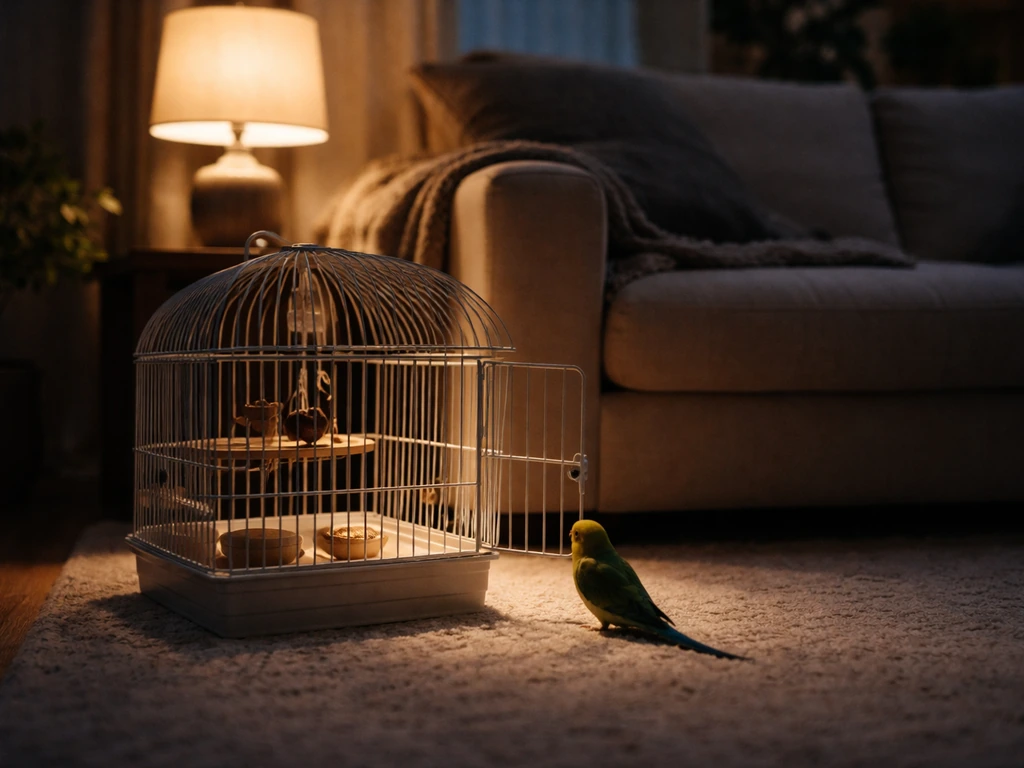
To let a bird out of its cage safely, open the cage door calmly, offer your hand or a perch at the entrance, and wait for the bird to step out on its own terms. Before you open that door, close every window and exterior door in the room, switch off ceiling fans, and cover any large mirrors or glass surfaces. That prep work takes two minutes and prevents the most common injuries. Once the bird is out, keep movements slow and low, and have a clear plan for getting it back in before it decides to explore on its own schedule.
How to Let Bird Out of Cage Safely, Plus How to Put It Back
Maya Carver
6 Jun 2026
Before you open the door: bird-proofing the room
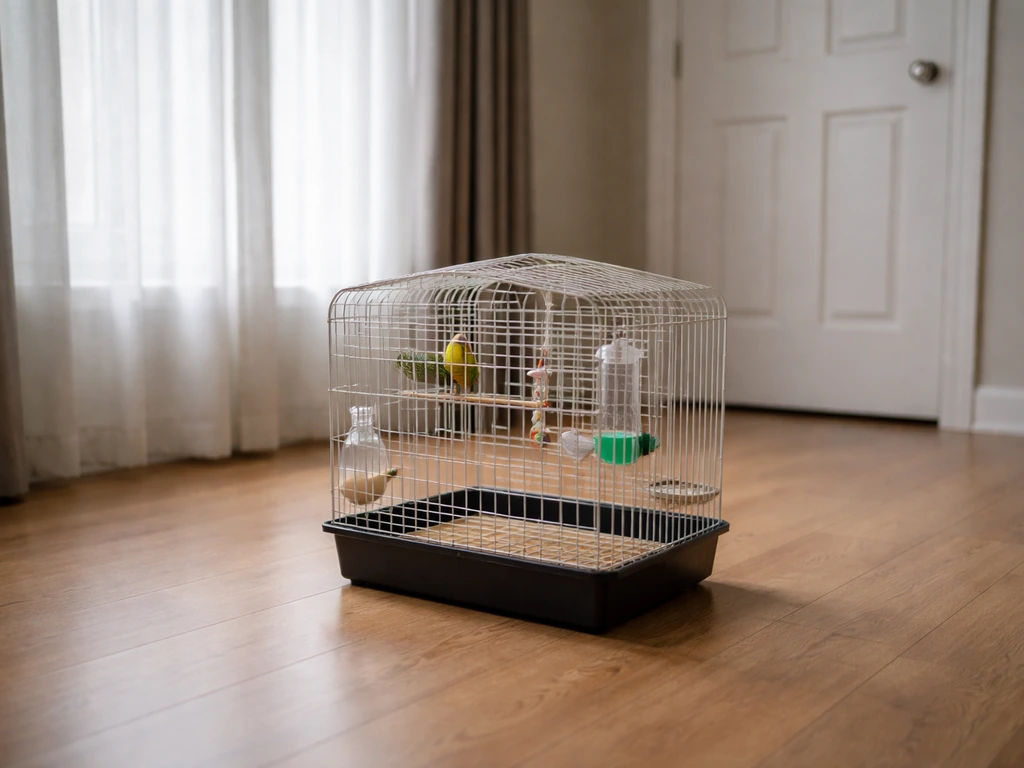
This step is non-negotiable and should happen before the cage latch moves. A bird that escapes into an unprepared room can collide with a window (birds perceive reflections as open space or rival intruders), fly into a running ceiling fan, or slip out through a gap under a door. Take two minutes to run through this checklist every single time.
- Close all windows, exterior doors, and any interior doors you don't want the bird to access
- Switch off ceiling fans completely — not just slow speed
- Cover large mirrors and floor-to-ceiling glass with a sheet, towel, or blind
- Remove or secure other pets (cats and dogs especially)
- Put away toxic houseplants, open water containers, and hot food or liquids
- Check that no other people are about to enter the room unexpectedly
Covering mirrors matters more than most people think. Birds can attack or fly headlong into their own reflection, treating it as an intruder or an open corridor. A simple sheet draped over a full-length mirror takes seconds and removes the hazard entirely. For windows, closing blinds halfway or applying frosted strips to the glass reduces the risk of a collision strike if the bird does get spooked and bolts toward the light.
Letting the bird out: calm, step-by-step
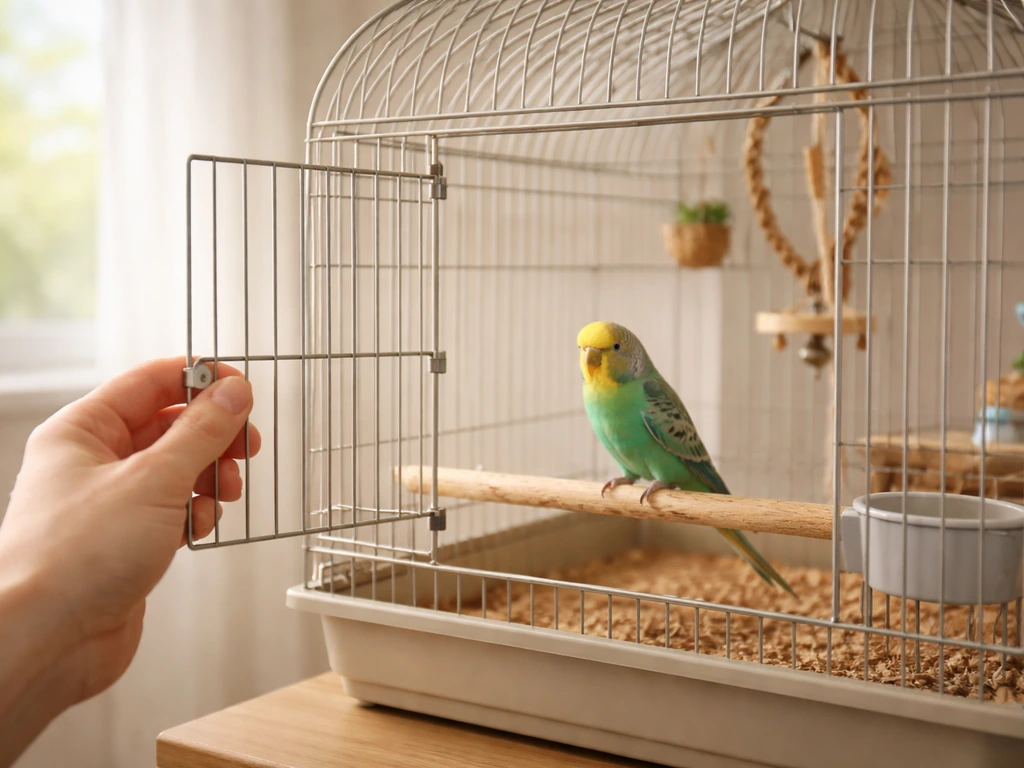
Once the room is prepped, approach the cage at a normal walking pace, not a tiptoe shuffle, but no sudden movements either. Speak quietly to the bird as you approach so it knows you're coming. Then work through these steps:
- Sit or crouch to the bird's eye level if possible — towering over the cage can read as a threat
- Open the cage door smoothly and hold it or latch it open so it won't swing back
- Offer the back of your hand or a handheld perch just inside the door threshold — don't reach deep into the cage
- Say your step-up cue if the bird knows one, and wait; reward any movement toward your hand with calm praise or a small treat
- Let the bird choose to come out — pushing a hand toward it too fast is the most common trigger for panic
- Once the bird steps onto your hand or the perch, bring it out slowly and keep your arm steady
If the bird doesn't come out in the first minute, that's fine. Leave the door open, step back a foot or two, and give it time to investigate the opening. Forcing the issue almost always makes things worse and chips away at trust. Birds that have a reliable 'step up' cue trained ahead of time come out far more readily, so if you're doing this regularly, working on that cue during normal handling sessions pays off every single day.
Taking a bird out vs getting a bird out: the handling difference
There's a meaningful difference between calmly taking out a cooperative bird and needing to physically remove a reluctant, frightened, or untrained one. Most of the time, patient positive handling is the right tool. Physically restraining a bird is a last resort for health emergencies or safety situations, not for routine cage time.
For a cooperative bird
Use the step-up cue and handheld perch method described above. Keep your movements fluid and consistent. The RSPCA recommends stopping entirely if a bird shows signs of distress during handling, panting, feathers clamped flat, lunging, biting hard, and giving the bird space before trying again. Pushing through distress signals does not desensitize most birds; it teaches them that hands mean danger.
For a reluctant or untrained bird
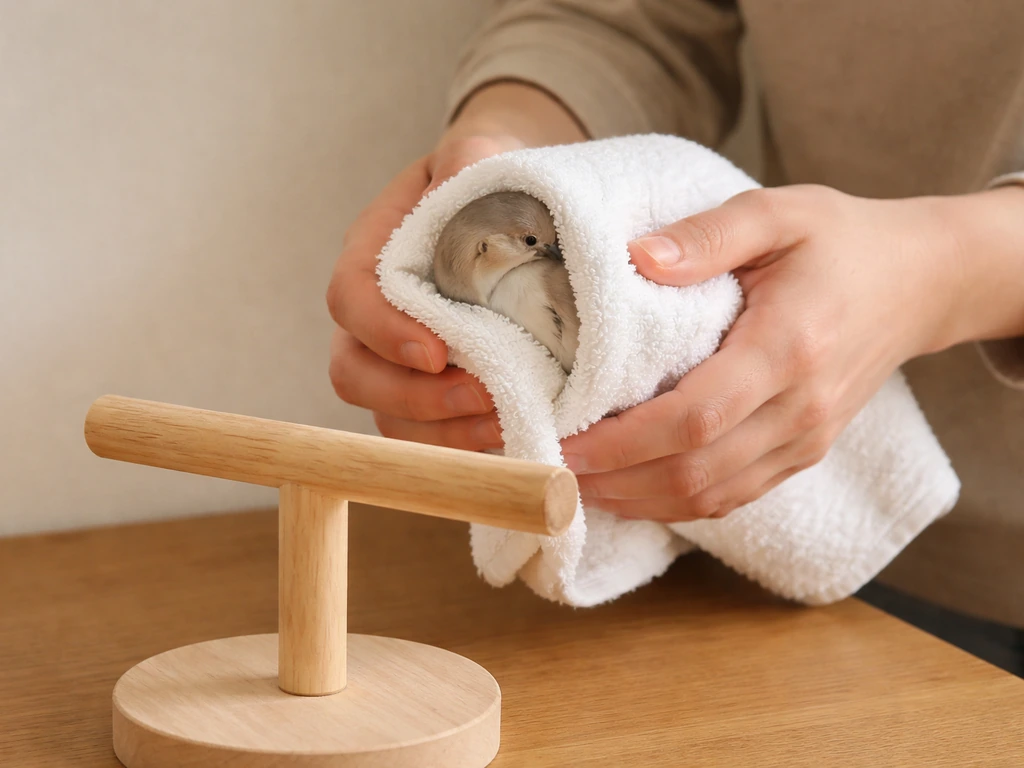
If the bird won't step up and you genuinely need to move it, a small towel is the safest option. Drape it gently over the bird, securing the wings against the body without squeezing the chest. This is critical: birds breathe using their air sac system, which requires the ribcage and keel to move freely. Pressing on the chest even briefly can restrict ventilation.
Hold the bird's head gently between your index and middle fingers so it cannot bite or swing, and keep the rest of the body loosely supported. This 'taco' wrap keeps the head unimpaired and legs and wings safely folded. Never grab a bird by its legs or wings, as both can fracture easily, and never restrain the body so tightly that you feel resistance from the chest.
Escape-proofing while the bird is out
Even with a well-prepped room, stay alert. Keep the bird within sight at all times, avoid placing it near the ceiling where it has the best launch angles toward doors, and keep out-of-cage time to a predictable routine so the bird develops a pattern of returning to its cage. If someone needs to enter the room, ask them to knock and wait for you to secure the bird first.
When the bird is stuck, panicking, or injured
These three scenarios each need a slightly different response, and staying calm is the most useful thing you can do in all of them. A panicking bird often mirrors your energy directly.
Bird is stuck inside the cage
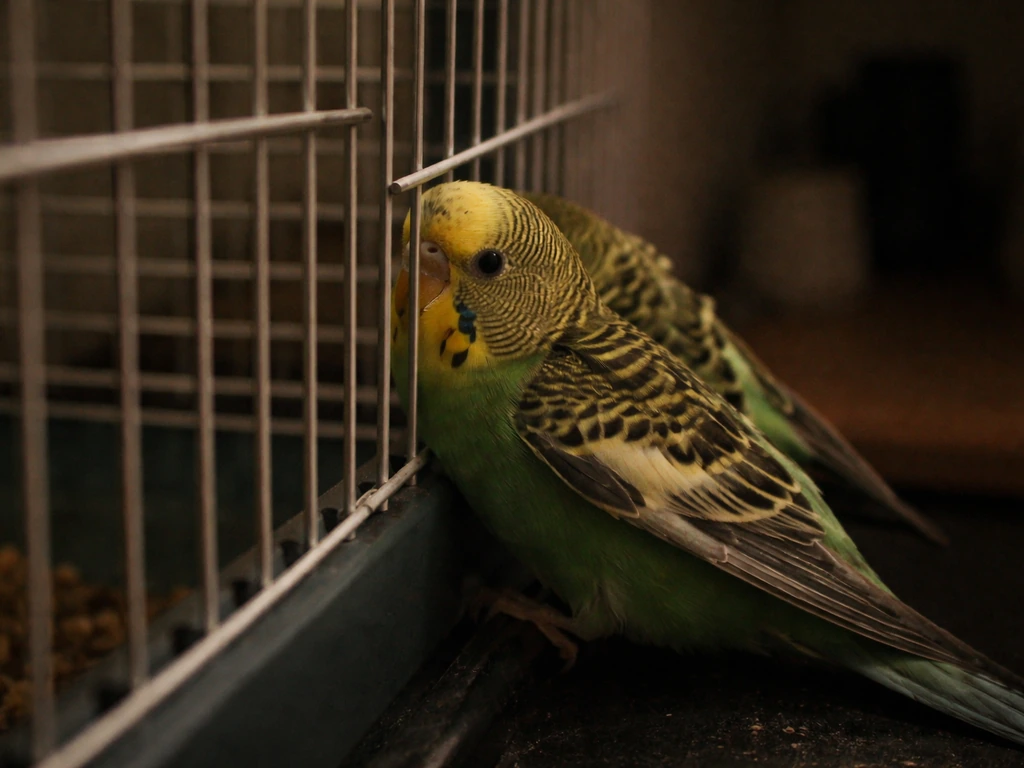
If a bird has wedged itself between bars, got a foot or wing caught in a toy, or is trapped by its head in a gap that is too wide for its body (a serious and unfortunately common cage design problem), stop and assess before you touch anything. Bar spacing should never allow your bird to fit its head through the gap, if it can, the cage is unsafe and needs to be replaced or modified.
For an immediate entrapment: remove perches or toys blocking your access, open the cage from multiple angles if possible, and work your hands in slowly. If the bird's foot is caught, support the body weight with one hand while gently freeing the foot with the other. Do not pull or twist. If you cannot free the bird without risking a fracture, call an avian vet or wildlife rehabilitator for guidance before forcing it.
Bird is panicking
Dim the room lights and lower your voice. A panicking bird that is thrashing inside its cage can injure itself badly on perches, toys, and bars. Remove toys and dangling objects from inside the cage if you can do so safely while the bird is at the opposite end. Then open the door and step well back, giving the bird a visible exit route. Most birds will calm within a few minutes once the perceived threat (often you, a noise, or a sudden movement) is removed. If the bird has been panicking long enough to exhaust itself or you see it sitting on the cage floor, move to the injured bird protocol below.
Bird appears injured
Look before you touch. Active bleeding, blood that is flowing or pooling, is an emergency requiring immediate avian vet contact. [Dried blood on feathers or the cage without active bleeding is serious but not necessarily an immediate crisis. ](https://www.
msdvetmanual. com/bird-owners/disorders-and-diseases-of-birds/injuries-and-accidents-of-pet-birds) Either way, the priority is warmth and minimal stress. Use a towel to gently restrain the bird (chest pressure rules apply equally here), place it in a small, ventilated box or carrier lined with a soft cloth, and [keep that carrier in a warm, dark, and quiet location](https://www. merckvetmanual.
com/bird-owners/disorders-and-diseases-of-birds/injuries-and-accidents-of-pet-birds). Warmth matters enormously: place the carrier partly on a heating pad set to low, so the bird can move away from the heat if needed. Do not offer food or water until you have spoken to a vet, especially if the bird may need sedation. Call an avian vet or exotics clinic immediately, a standard dog-and-cat vet may not have the equipment or knowledge to treat a bird safely.
Getting the bird back into the cage
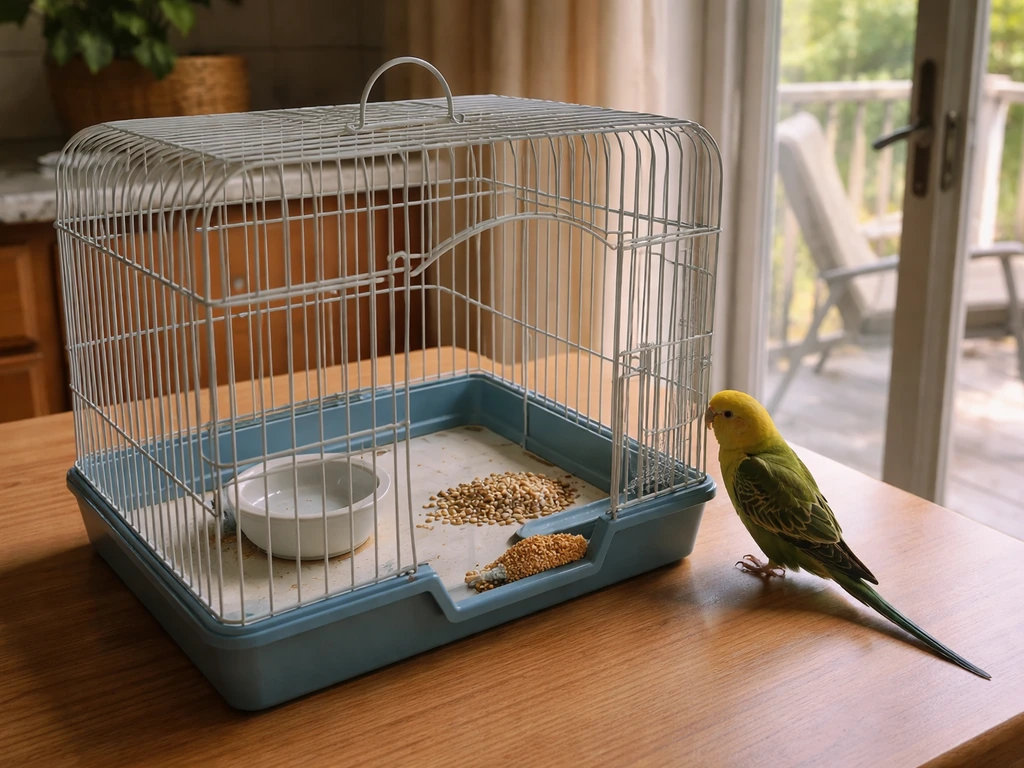
This is where many people run into trouble. The bird has been having a great time, it knows the cage means the end of free time, and it has no particular incentive to cooperate. A little forethought makes this process almost painless. If you still feel stuck getting the bird back into the cage, this related Reddit thread on how to get bird back in cage reddit can help you compare methods people actually use. If you want specifics, use this guide on how to get a bird back in its cage without escalating fear A little forethought makes this process almost painless..
- Set up the cage before the bird comes out — fresh food, water, and a favorite treat placed visibly near the door means the bird is motivated to go back in
- Carry the bird on your hand back to the cage door and offer the step-up cue in reverse: encourage it to step onto the cage door perch or directly inside
- If it refuses, place your free hand lightly over the bird's back and wings to prevent it from raising its wings to push off — this limits its ability to flee without restraining it tightly
- Never chase the bird around the room; repeated chase trips teach the bird to avoid you and make the problem worse every day
- Once the bird enters the cage, reward it immediately with verbal praise and a treat before closing the door — the cage should never feel like a punishment
If you're regularly struggling to get a bird back in its cage, that's a training and routine issue worth solving separately. Consistent free-flight times, a reliable return cue, and making the inside of the cage genuinely appealing (rotating enrichment, foraging toys, fresh food timed to cage-return) dramatically reduce resistance over weeks. The related challenge of what to do when a bird has escaped the room or the building entirely is a different scenario with its own steps.
That’s also where you’ll want to focus on how to get bird back that flew away safely and quickly without chasing it what to do when a bird has escaped the room or the building entirely. If the bird has escaped the room or building entirely, the steps for getting balance back on its return are different from just coaxing it back into the cage.
Stopping repeat escapes and accidental trapping
Once you've resolved today's situation, spend fifteen minutes on a quick cage and setup audit. Most repeat escapes and entrapments come from the same handful of fixable problems.
Latch and door checks
Parrots and larger birds are remarkably good at working latches. A spring clip or simple push latch is often not enough. Test every door on the cage: open and close it ten times and watch for any wobble, gap, or latch that doesn't fully seat. Add a carabiner clip or a lock designed for bird cages to any door a smart bird could work open. Check door hinges for rust or loosening, which can cause doors to sag and leave gaps even when 'closed.'
Bar spacing
Measure the gap between bars with a ruler. As a rule of thumb, the spacing should be narrow enough that the bird cannot fit its head through. If the head fits, the bird can get stuck or escape. Replacing a cage with wrong bar spacing is genuinely necessary for bird safety, modifying the bars yourself with added wire can create sharp edges that cause injuries, so a replacement cage is usually the right call.
Cage placement and environmental setup
- Position the cage away from windows and exterior doors to reduce the bird's drive to escape toward light and outside sounds
- Keep the cage at or near eye level — birds placed too high can feel dominant and less inclined to cooperate with handling
- Avoid placing the cage in high-traffic areas where sudden movements and sounds can startle the bird repeatedly
- Make sure perches inside are solid, the right diameter for the bird's feet, and not blocking the door opening
Quick maintenance schedule
| Task | Frequency |
|---|---|
| Check all latches and door seating | Weekly |
| Inspect bar welds and spacing for damage or gaps | Monthly |
| Test hinges and door swing clearance | Monthly |
| Audit toys/perches for entrapment hazards (frayed rope, loose parts) | Weekly |
| Refresh room bird-proofing checklist before every out-of-cage session | Every session |
When to call a professional
Some situations are beyond DIY, and knowing where that line is matters both for the bird's welfare and, in facility settings, for liability reasons.
For pet birds
Call an avian vet or exotics clinic if: the bird is actively bleeding, appears unable to perch or hold its head up, is breathing with its mouth open or tail bobbing, has a visibly broken or dragging wing or leg, or has been unconscious or unresponsive at any point. These are genuine emergencies. A general practice vet may not stock avian medications or have experience with bird anatomy, so specifically find an avian-certified or exotics vet in advance and keep the number accessible. If you don't have one yet, the Association of Avian Veterinarians maintains a find-a-vet directory.
For wild birds found in or around buildings
If you are a homeowner or facility manager dealing with a wild bird that has entered a building, the rules are different. Most native wild birds in the United States are protected under the Migratory Bird Treaty Act (MBTA), which means that capturing, possessing, or transporting them without proper federal authorization is illegal, regardless of intent. This includes common species like sparrows, swallows, starlings (with some nuance), and most songbirds.
The legally correct action is to open a window or door and allow the bird to find its own way out, use gentle herding toward the exit (a broom held low and wide, not aimed at the bird), or contact a licensed wildlife rehabilitator if the bird is injured and cannot leave on its own. Do not attempt to handle, cage, or transport a wild migratory bird yourself.
Facility managers should document any wild bird incidents and their resolution for liability records.
Finding licensed help
In the US, the USFWS lists licensed wildlife rehabilitators by state, and the National Wildlife Rehabilitators Association (NWRA) also has a locator. In the UK, the RSPCA emergency line handles injured wild birds. When you call, have ready: the species if you can identify it, the bird's current condition and behavior, and the location and containment situation. That information helps the responder triage quickly.
Quick-reference troubleshooting
Use this as a fast decision guide when something goes wrong:
| Situation | Immediate action | Next step |
|---|---|---|
| Bird won't come out of cage | Leave door open, step back, wait | Work on step-up cue in future sessions |
| Bird is panicking inside cage | Dim lights, remove threats, open door and step back | Check cage for entrapment hazards |
| Bird is stuck/trapped in cage | Support body weight, gently free limb, do not pull | Call avian vet if limb won't free safely |
| Bird is injured (active bleeding) | Towel restrain gently, warm dark carrier, call vet now | Do not offer food/water until vet advises |
| Bird won't return to cage | Carry to door, use step-up cue and treat reward inside cage | Add foraging enrichment and establish routine |
| Wild bird inside building | Open exit routes, herd gently toward opening | Contact licensed wildlife rehabilitator if injured |
| Bird escaped the room/outdoors | Search nearby perches immediately, use familiar calls and food | See escape-recovery guidance for full protocol |
The most important habit you can build is the two-minute room check before every single out-of-cage session. Almost every serious bird injury during free time traces back to a step that was skipped in those two minutes. Once that becomes automatic, letting your bird out and getting it back in becomes a smooth, low-stress routine for both of you.
FAQ
What should I do if my bird is sleepy or suddenly less cooperative when I open the cage?
Use a different plan if your bird is on sleep cycle. If it is evening or you see it getting drowsy, avoid bright lights and sudden handling, keep the room quiet, and wait until it is alert enough to step or move toward your hand or perch. Trying to “move” a sleepy bird often increases panic and makes returns harder.
Can I let my bird out if a window or door is cracked for ventilation?
Yes. Never open the cage if there is any uncontrolled draft path to an outside door, balcony, or cracked window. Even if you prep indoor windows and mirrors, a bird can bolt toward airflow and find a gap you did not notice.
What’s the best way to handle it if my bird escapes but won’t come down from a high place?
If your bird flies out immediately and lands on a high or hard-to-reach spot, do not chase. Keep your movements slow, remove other stimuli, and set up a clear landing route back to the cage (for example, a perch positioned as a step down). Then wait and work with your trained cues rather than grabbing.
My bird lunges and bites when I try to coax it out. Should I push through?
If the bird is biting and you cannot redirect it safely, stop handling and reassess your approach. Biting during handling is often a sign the bird associates the moment with restraint or threat, so switch to giving space, dim the room if it is escalating, and retry only when it is calmer, not while it is actively lunging.
What if my bird refuses to step up when I open the cage door?
If your bird won’t step onto your hand or perch, avoid repeated “reaching” attempts. Instead, slow your approach, offer the perch closer to its feet, and pause for a full minute. If you do this repeatedly, train the step-up cue during short, successful sessions when the bird is not under free-flight pressure.
Is it safe to open the cage and step out of the room briefly to grab something?
For small birds that are easy to lose track of, keep the room prep consistent and reduce visual clutter. If you must leave the bird momentarily, keep it in the room with the prepared exit route and do not let other people enter, because sudden noise or footsteps can trigger a full panic flight.
I need to retrieve something. How do I avoid my bird flying away while I’m moving around?
If you cannot reach the cage quickly without crossing the bird’s likely flight path, relocate yourself rather than forcing the bird to relocate. Stand at a consistent distance and keep a visible exit route toward the cage, then use a perch near the cage entrance to give it an obvious next step.
Can I use treats to get my bird to cooperate when letting it out?
Yes, but only in a controlled way. Avoid food rewards during the “free time starts” moment if your bird becomes motivated to fly and hunt treats rather than return. If you use rewards, keep them time-linked to returning, so the cue becomes “go back to the cage for the reward,” not “fly to you for snacks.”
Do I only need to cover mirrors and windows, or are other shiny surfaces a problem too?
Mirrors and reflective surfaces are the priority, but also cover other “space” cues. If your room has glossy TV screens, shiny picture frames, or large glass cabinet doors, they can act like windows to an alarmed bird. When possible, cover or reduce reflections before opening the cage.
What should I do if my bird approaches an unsafe area in the room while it’s out?
If your bird begins slipping back toward a potential hazard (under a door, near a ceiling fan, or toward an open exterior door), you should close it out only after you secure the environment. The safest move is to stop all sudden advances, position yourself so the hazard is blocked from your side, and then attempt the return using the same calm cueing, not grabbing.
My bird seems injured but not bleeding. Do I still need a vet call?
If you suspect an injury but there is no active bleeding, treat it as urgent and monitor breathing and posture. Keep the bird warm and quiet, minimize handling, and contact an avian or exotics vet if it shows difficulty perching, abnormal breathing (for example, mouth breathing), or weakness.
Why does my bird fight me every time I try to put it back in, even though I prep the room?
For routine returns, a common mistake is timing. Return attempts work best when you have a predictable “end of free time” routine and you open the cage door with your environment already safe. If you try to return the bird immediately after a loud event, a visitor enters, or the room is still stimulating, it tends to resist because the bird’s goal is to keep exploring.
What’s the safest way to help if my bird’s foot gets caught between bars or in a toy?
If the bird has a foot caught, support the body weight first, then free the foot gently without pulling. If you see twisting resistance or you cannot free it quickly without risking a fracture, stop and seek avian vet or wildlife rehabilitator guidance before forcing.
Next Article
How to Get a Bird Back That Flew Away Safely
Humane steps to recover an escaped bird fast: secure area, coax safely indoors, search plan, and prevent future escapes.