Stop moving, lower your voice, and don't chase the bird. That single rule saves more recoveries than anything else. If the bird is still visible, stay calm, stay low, and give it a moment to settle. Then work through the steps below: secure the space, set out familiar lures, and let the bird come to you. Most escaped pet birds are recovered the same day when the owner resists the urge to rush.
How to Get a Bird Back That Flew Away Safely
Maya Carver
30 May 2026
Emergency actions for the first 15 minutes
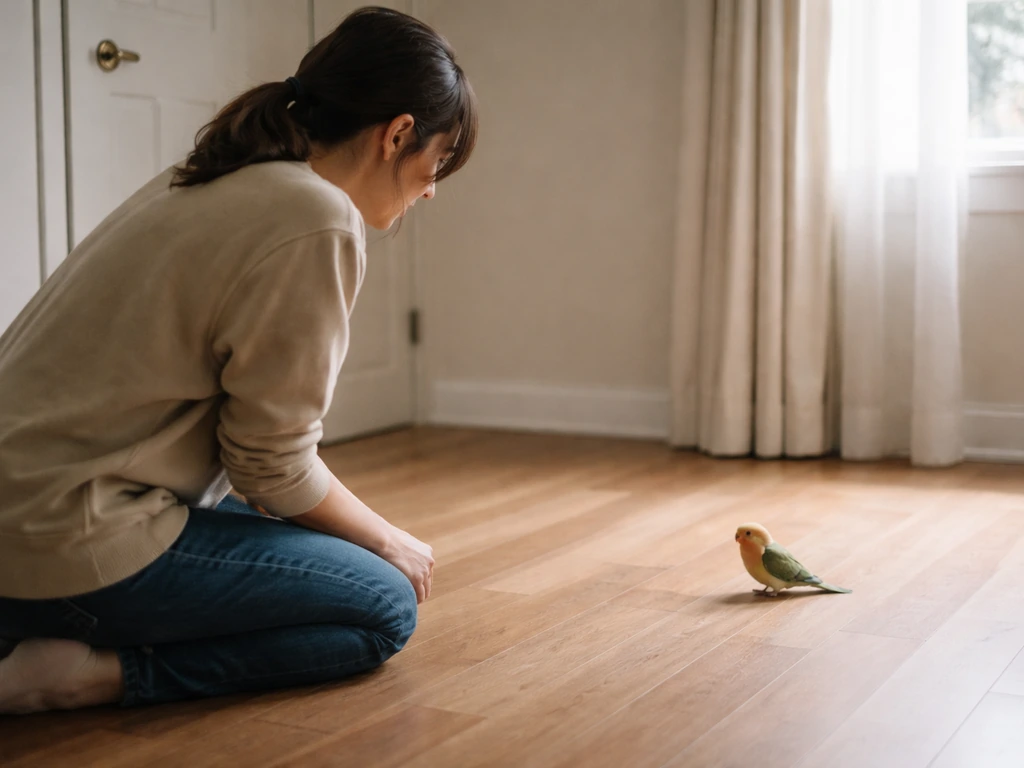
The first quarter-hour after a bird escapes sets the tone for the whole recovery. Your job is to slow everything down, not speed it up. A panicked bird flees further, climbs higher, and burns energy it needs to stay calm enough to return.
- Freeze where you are. Speak in a low, calm tone if the bird can hear you.
- Close every exit you can reach without crossing the bird's line of sight: doors, windows, vents, fireplaces. Do it quietly.
- If the bird is indoors, turn off ceiling fans immediately. Fan blades are one of the most common causes of in-home bird injury.
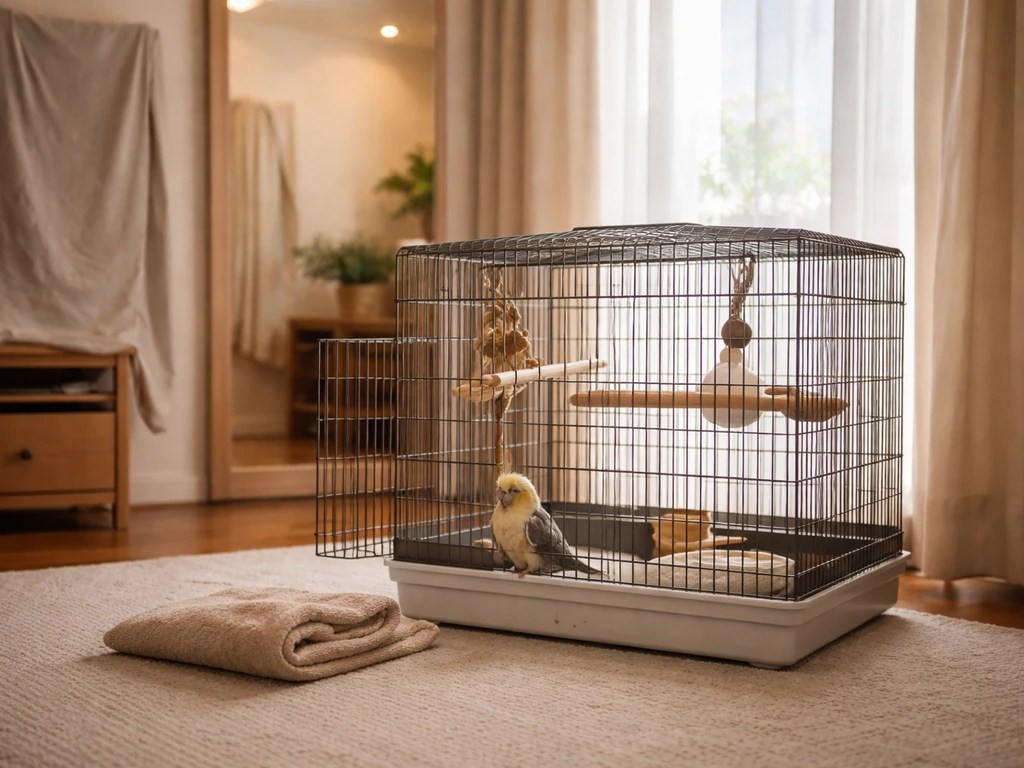
- Dim or cover mirrors and large glass panes with a towel to prevent collision.
- Remove or restrain cats, dogs, and other pets from the area right now.
- If the bird has already gone outside, note exactly where it was last seen. Mark the spot or take a quick photo of the surroundings.
- Do not chase, clap, wave, or use a net. Any of these can push the bird further away or trigger a stress injury.
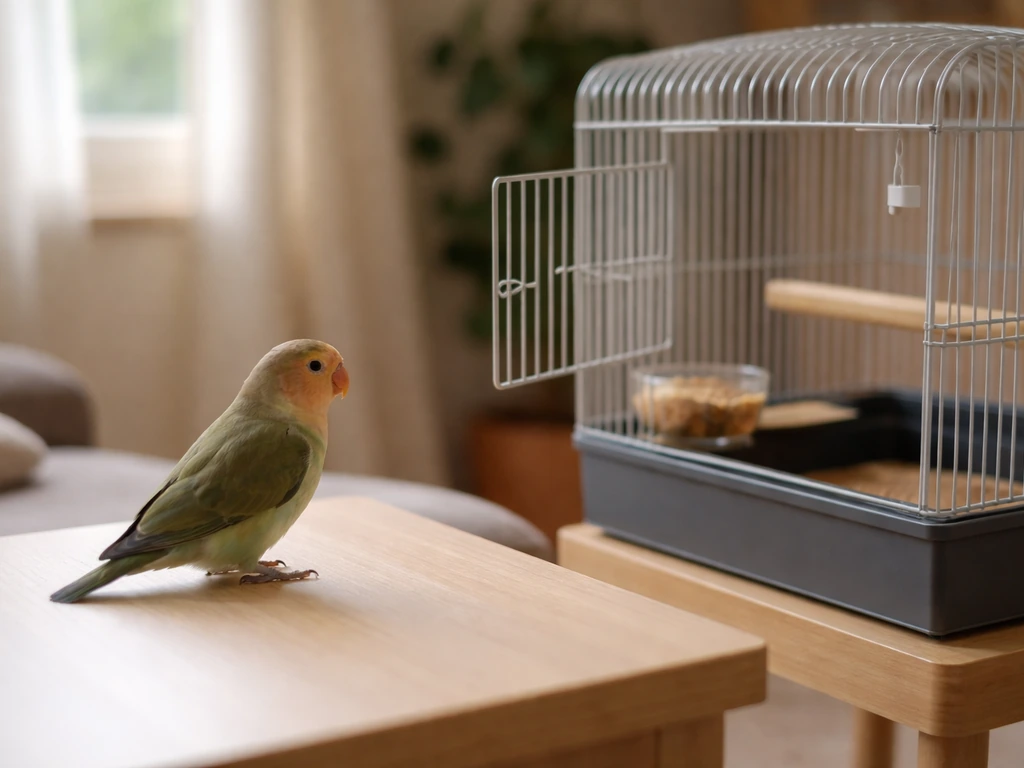
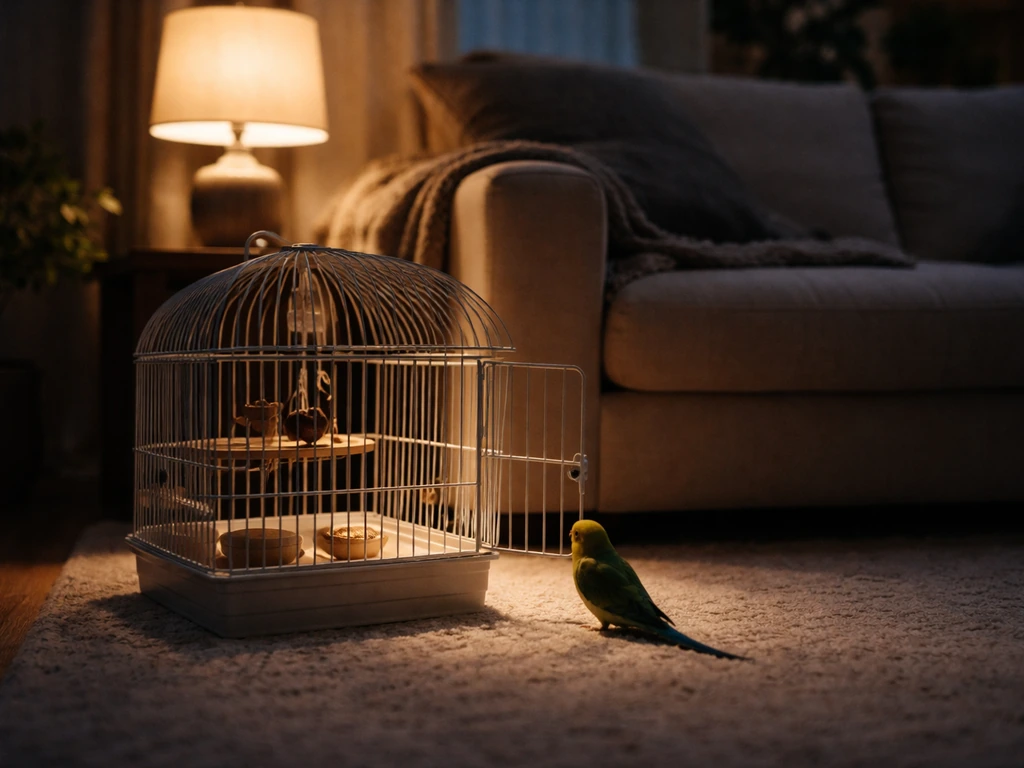
Once the immediate space is secured, set up a recovery zone near where the bird was last seen. This means placing the bird's own cage (door open, food and water inside) in that spot, keeping foot traffic minimal, and making sure the temperature in the area stays comfortable. Merck Veterinary Manual advises setting up a quiet, low-activity recovery area for sick birds before vet transport to help them destress quiet, low-activity area for sick birds prior to vet transport. Merck Veterinary Manual recommends keeping a recovering or stressed bird in the 75 to 85 degrees Fahrenheit range (24 to 29 degrees Celsius), which roughly matches most indoor rooms in warmer months. If the bird escaped outdoors on a cool day, that temperature gap becomes urgent.
Figure out what you're dealing with before you search
The recovery approach changes significantly depending on what kind of bird flew away and why. A frightened pet cockatiel behaves very differently from a building-nesting starling disturbed by a contractor, and the tools you use differ too.
Identify the bird type quickly
- Leg band or unusual coloring: almost certainly a pet or captive-bred bird. Prioritize recovery and treat it as an escape.
- Clipped wings: a pet bird that can glide but not fly far. Search a tight radius, usually within 50 feet indoors or the immediate yard.
- Small, drab, fast-moving bird with no band: likely a wild bird that got in through a gap. Your job shifts to guiding it out, not catching it.
- Larger bird with a hooked beak (parrot, macaw, cockatoo): a pet almost certainly. These birds are legally protected from take in the wild, so any bird you find that looks like one of these is probably owned by someone.
- Bird that appears sick, injured, or is a fledgling (baby bird on the ground): see the wildlife professional section below before touching it.
Assess why it flew away
Knowing the cause helps you close off the escape route and choose the right recovery method. Common reasons include: a door or window left open briefly, a screened vent or cage latch failure, construction or maintenance activity that disturbed a nesting area, or a deliberate let-out that went wrong. If a contractor was working on the building, check what access points they may have opened. If the bird's cage was left near an open window, that window is still probably open and is both an escape route and a return point.
Step-by-step indoor search plan
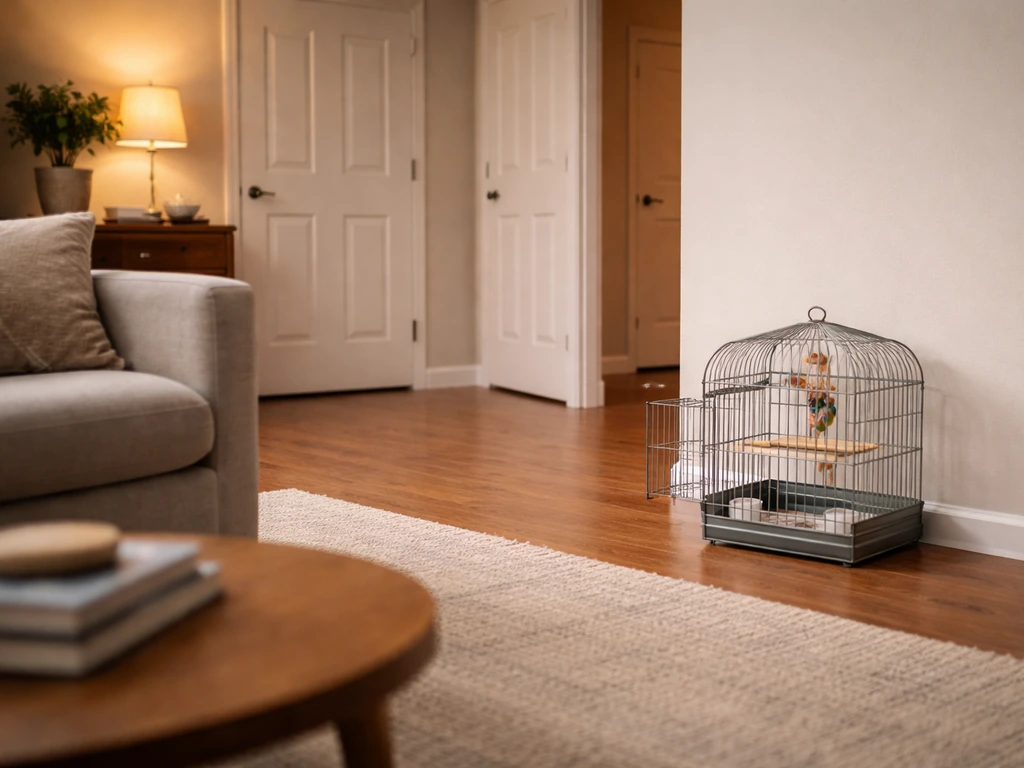
Searching a home or building for a loose bird requires patience and a room-by-room method. Birds hide in places that feel safe and high: tops of cabinets, behind appliances, inside curtain rods, under furniture, and inside shoes or bags on the floor. Work systematically rather than randomly.
- Close all interior doors to contain the search zone to one area at a time.
- Reduce background noise (TV, music, appliances) so you can hear wing flaps or vocalizations.
- Check all high perch points first: tops of bookshelves, refrigerators, ceiling fans (which should already be off), and curtain rods.
- Scan low, dark hiding spots second: inside open drawers, behind washing machines and dryers, inside potted plants, underneath sofas.
- Call the bird's name or play a recording of its voice or a flock call from your phone at a low volume.
- If the bird responds vocally but won't show itself, note the direction and move toward it slowly without direct eye contact.
- Once you locate the bird, set the open cage nearby, step back at least six to eight feet, and wait quietly for up to 20 minutes.
- If the bird remains in a dangerous spot (inside a wall gap, near a hot appliance, behind a toilet), do not reach in blindly. Use a soft towel or pillowcase to gently guide it out.
Indoor search checklist
- Ceiling fans off
- All exterior doors and windows closed
- Pets removed from the search area
- Mirrors and glass covered
- Toilets and sinks checked and covered if accessible
- Stove burners confirmed off before bird enters kitchen
- Cage placed open in last known location
- Household members assigned quiet observation posts rather than active searching
How to coax a bird back to you
Coaxing works far better than capturing. The goal is to make returning feel safe and rewarding to the bird, not to trap it. This is similar to how to let bird out of cage safely, by using familiar cues rather than forcing capture. If you want real-world suggestions and what worked for others, you can also check discussions on how to get bird back in cage reddit. This applies whether the bird is loose inside a building or has made it outdoors.
Food and water cues
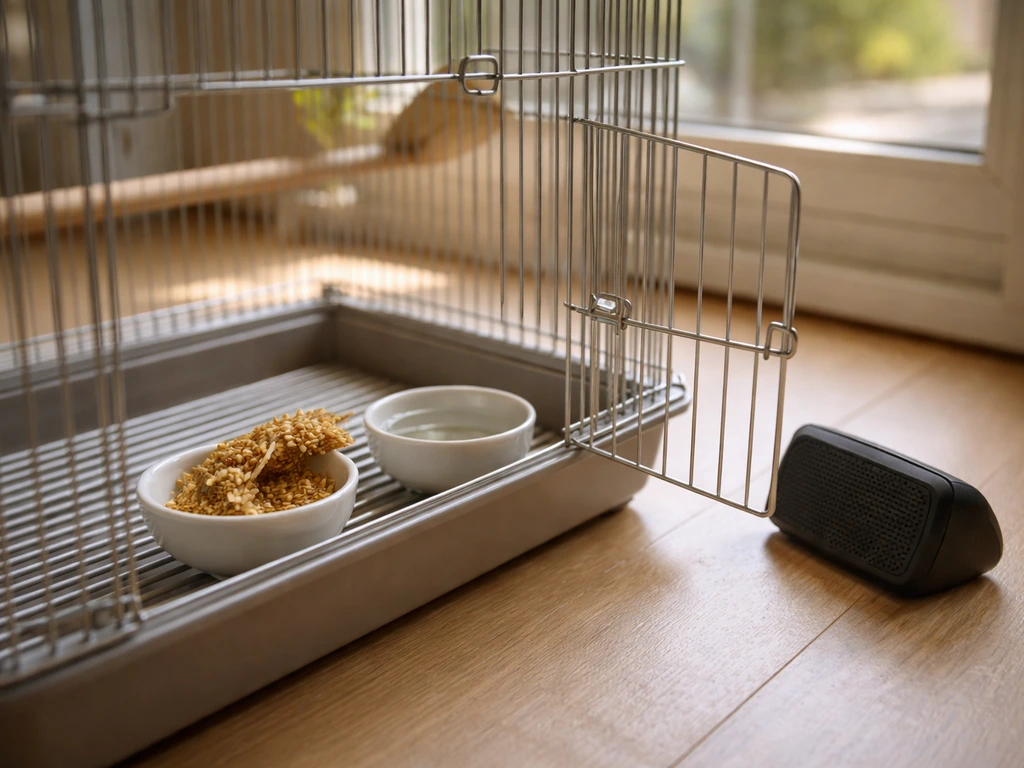
Place the bird's familiar food dish and a fresh water dish inside the open cage. Use the bird's absolute favorite treat if you have one: millet spray for small birds, a piece of walnut or almond for parrots. The smell and visual familiarity matter. For outdoor escapes, place the cage in a visible, open spot in the yard (not hidden under bushes), facing outward so the bird can spot it from above. Beak School's guidance on escaped birds specifically recommends putting the familiar cage or carrier outside where the bird can see it and giving the bird a few quiet minutes to respond before widening the search. If you still cannot locate your bird, you can also review how to get balance back from bird for additional recovery tactics before expanding your search.
Sound cues
- Play a recording of the bird's own voice or a flock-call recording at low volume from near the cage.
- If the bird has a companion bird still in the home, place that bird's cage nearby so it vocalizes naturally. This is one of the most effective lures for social species like cockatiels, budgies, and conures.
- Mimic the bird's contact call yourself if you know it. Many birds respond to familiar human voices before anything else.
- Avoid loud music, TV, or competing sounds during this period.
Light and visual cues
Birds orient using light. Indoors, darken the room except for one light source near the cage or the exit you want the bird to use. A single lamp placed near the open cage door can draw a frightened bird out of a dark corner. Outdoors, avoid searching at dusk without a flashlight, and know that birds typically roost as darkness falls and become much harder to relocate until dawn. If your bird is still missing at dusk, set the cage outside overnight in a safe, sheltered spot and check it at first light.
For birds in large buildings or facilities
If you're a facility manager dealing with a bird loose inside a warehouse, gym, or retail space, the same principles apply but at a larger scale. Reduce lighting throughout the building except for one or two lit exit points (propped doors or windows to the outside). Birds in large interior spaces tend to circle and eventually move toward light. Have staff stationed quietly at those exits to guide the bird out if it approaches, rather than chasing it away from the opening.
When to call wildlife professionals or animal control
DIY is the right first move in most pet bird escapes, but there are clear situations where you need to hand off the situation. Knowing when to stop saves the bird and protects you legally.
| Situation | Who to call | What to tell them |
|---|---|---|
| Bird is visibly injured: bleeding, wing dragging, unable to stand | Licensed wildlife rehabilitator or avian vet | Species if known, injury observed, exact location, how long since injury |
| Bird is a wild native species you cannot identify (not a pet) | Local wildlife rehabilitator or state wildlife agency | Description, behavior, location, whether it was disturbed by construction |
| Bird cannot be reached safely (high ledge, roof, wall gap) | Animal control or wildlife control operator | Location details, how long it has been there, any access points |
| Bird is a confirmed federally protected species (any native songbird, raptor, waterfowl) | U.S. Fish and Wildlife Service or licensed rehabilitator | Species identification or best description, exact location, circumstances |
| Pet bird has been missing outdoors for more than 24 hours | Local animal shelter, avian rescue groups, and neighbors | Photo, band number if any, last known location, species and color |
When you call, give the responder a clear species description, the last confirmed location, how long the bird has been loose, and any signs of injury or distress. The U.S. Fish and Wildlife Service recommends contacting a licensed wildlife rehabilitator rather than continuing to disturb an injured wild bird, because prolonged handling attempts by untrained people cause additional stress and can worsen injuries. If the bird is obviously bleeding, shivering, or unresponsive, stop coaxing attempts and make the call now.
Best Friends Animal Society also specifically warns against getting into a chase situation with no realistic chance of catching the bird. If your attempts to coax and contain have not worked after a reasonable period, set up a humane trap: place a carrier or travel cage in the bird's path, create a seed trail leading inside, and step back. If trapping or containment is needed, Best Friends Animal Society recommends using a carrier and seed trail so the bird can enter on its own rather than chasing it a carrier or travel cage. Let the bird enter on its own rather than cornering it.
Stop it from happening again: proofing, access control, and seasonal checks
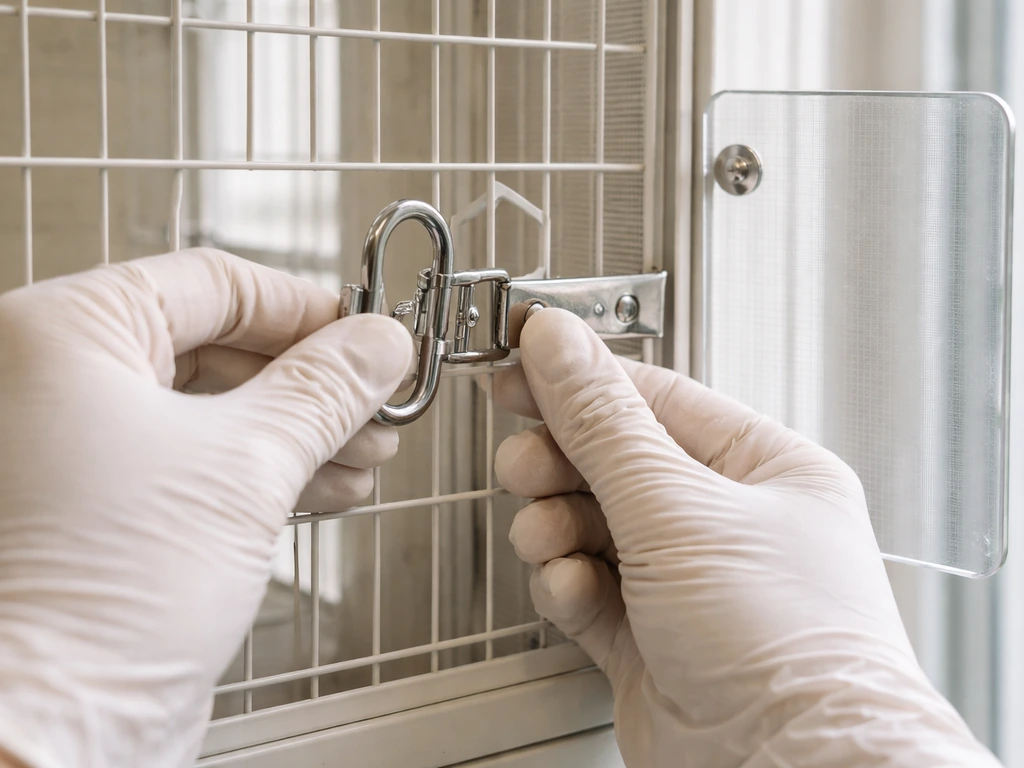
Once your bird is safely back, take a hard look at how it got out and close that gap permanently. Most repeat escapes happen through the same weak point that caused the first one.
Cage and enclosure fixes
- Inspect all cage latches and replace spring-loaded clips with carabiner-style locks for any bird that can manipulate simple latches (African greys, cockatoos, and many conures are notorious for this).
- Check bar spacing: bars should be no wider than the distance between the bird's eye and the tip of its beak to prevent head entrapment or squeezing through.
- Repair or replace any bent bars, cracked welds, or deteriorating cage coatings.
- For outdoor aviaries, inspect wire mesh for rust, holes, or areas where predator pressure has bent the frame.
Building and room access control
- Install a secondary barrier (a screen door or an air-lock vestibule) between the bird's room and any exterior-facing doors.
- Add door alarm strips or simple hooks-and-eyes on interior doors leading to the bird's space so guests cannot accidentally open them.
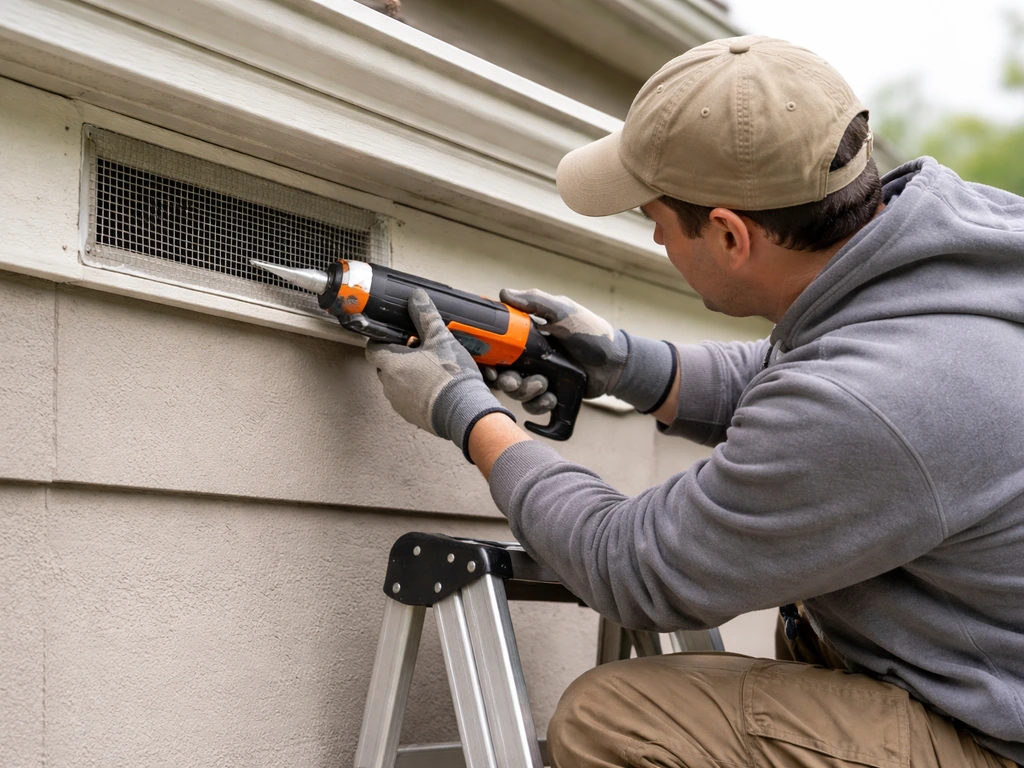
- Seal or screen any ventilation openings the bird could reach or squeeze through. Use hardware cloth (half-inch or finer gauge) rather than standard window screen, which birds can tear.
- Check all window and door screens for tears each spring and fall.
- Post a visible reminder near exterior doors in shared spaces: 'Bird loose inside. Do not open door without checking.'
Seasonal planning notes
Escape risk increases predictably at certain times of year. Spring and summer mean open windows for ventilation, which dramatically raises the odds of escape. In autumn, migratory instincts can cause even hand-raised birds to become restless and more likely to bolt toward light or outside sounds. Schedule a proofing walkthrough of your home or facility at the start of each season: check screens, latches, vent covers, and any construction access points that may have been opened for HVAC servicing or renovation. Facility managers should add bird-access inspection to their standard pre-season building checklist, particularly before summer when windows and loading dock doors open more frequently.
Legal and safety considerations you need to know
Protected species rules
In the United States, almost every native wild bird is protected under the Migratory Bird Treaty Act. That means you cannot legally capture, handle, possess, or relocate a wild native bird without a permit, even if your intentions are good. This matters because if a wild bird gets into your building and you try to catch it yourself, you could technically be in violation. The legally correct move is to guide wild birds out through open exits rather than catching them, and to call a licensed rehabilitator if the bird is injured or cannot be safely encouraged to leave.
Pet birds and captive-bred birds are not covered by the Migratory Bird Treaty Act, so recovering your own escaped parrot or cockatiel is perfectly legal. However, if you find a bird that you did not own originally, be careful about assuming it is unowned. Report found birds to local shelters and post on neighborhood apps, because keeping someone else's escaped bird without reporting it can create legal complications.
Handling limits and safety
- Wear light gloves when handling any unfamiliar or wild bird. Bites and scratches from stressed birds can be sharp and introduce bacteria.
- Wash hands thoroughly with soap and water after any bird contact, especially before touching your face.
- Never handle a bird if you are immunocompromised without speaking to your doctor first.
- Do not attempt to handle raptors (hawks, owls, eagles) yourself. Talons cause serious injury quickly and these birds require specialist handling.
- If you suspect the bird has been near a known disease outbreak area (such as an active avian influenza zone), contact your state agriculture department before handling and follow their guidance.
Disease and spillover risk
Wild birds can carry pathogens including Salmonella, Campylobacter, Chlamydiosis (psittacosis), and in some regions, highly pathogenic avian influenza. The risk to healthy adults from casual brief contact is low, but it is not zero, and it is higher for children, elderly individuals, and anyone with a compromised immune system. Keep recovery and handling time short, work in a well-ventilated space, and clean and disinfect any surfaces the bird contacted. If you are using a cage or carrier that housed a wild bird, clean it with a diluted bleach solution (1 part bleach to 32 parts water) and rinse thoroughly before it goes near your pet birds again.
One more note for facility managers: if you are recovering or releasing a bird from inside a commercial kitchen, healthcare facility, or food production space, follow your standard contamination protocols and document the incident. Some inspectors treat a bird-in-facility event as a reportable contamination issue depending on your industry.
FAQ
How long should I wait before expanding my search or calling for help?
If your bird is still visible, give it quiet time near the open cage or exit instead of immediately switching to a wider search. For birds that remain missing, reassess on a practical schedule, for example after 60 to 90 minutes of consistent, non-chasing attempts, then broaden room coverage or contact a professional if the bird is wild, injured, or you cannot make progress. The key is to keep the area calm while you adjust your plan.
What should I do if the bird is calling but won’t come closer?
Use the bird’s cues without closing the distance. Keep the cage door open and place familiar food and water inside, then sit quietly within view so the bird can choose to approach. Avoid repeating loud calls or sudden movements, which can make the bird circle farther into hiding spots rather than return.
Should I cover mirrors or turn off bright lights in my home?
Yes, especially indoors. Bright, reflective surfaces and multiple light sources can pull a frightened bird into corners or toward the wrong “exit.” Darken the room except for one controlled light near the open cage door or intended exit, and remove or cover mirrors temporarily during the recovery window.
My bird flew out a screened window or vent, how do I handle that route?
Treat the open point as both the escape route and the likely return point. Keep that specific area undisturbed and do not keep repeatedly reopening it. Place the familiar cage outside or near the visible opening (facing outward when outdoors), so the bird has a safe, familiar option to come back through rather than wandering away.
What if I cannot find the bird after an exhaustive room-by-room search?
Do a second pass targeting “high safe spots” again, but change tactics rather than just repeating. Check ceilings, curtain rods, appliance backs, top shelves, and even shoes or bags that were on the floor. Also listen from one or two central locations for 2 to 3 minutes at a time, since birds sometimes call from the same hiding spot repeatedly.
Can I use a seed trail or lure to guide my bird outdoors?
If the bird is your pet and you can do it safely, a seed trail toward the open carrier or cage can help the bird associate the path with food. Keep the trail short and near the cage, avoid scattering seeds across multiple yards or attracting other animals, and stop adding distractions if you notice the bird moving in the wrong direction.
Is it okay to set up multiple cages or carriers at different spots?
Usually better to start with one primary recovery zone near the last confirmed location. If the bird was likely to travel through multiple routes, you can place a second carrier as a contingency, but keep both options visible and consistent with familiar cues. Too many competing lures can make the bird hesitate or split its attention.
What’s the safest way to secure people and pets while I wait for the bird to return?
Use a “quiet buffer” rather than trying to herd the bird. Close doors to limit foot traffic, keep children and other pets in a separate room, and have one adult handle the recovery so the bird does not experience repeated disturbances. The moment you hear the bird move or call, stay still and let it settle before you reposition anything.
How do I tell if the bird I found is wild or someone’s pet?
Look for signs like a species-specific captive behavior, visible leg bands, a tame response to familiar routines, and whether the bird shows traits typical of common pet species in your area. If you cannot confidently identify it as your own pet, treat it as potentially someone else’s and report it to local shelters or found-bird channels instead of attempting capture. This also aligns with legal requirements for native wild birds.
If it turns out to be a wild native bird, what should I do to avoid legal problems?
Do not attempt to capture, handle, or relocate it. The legally safer approach is to guide it out through open exits, reduce panic by keeping people back, and call a licensed wildlife rehabilitator if it is injured or cannot be safely encouraged to leave.
What should I do immediately after recovery to reduce the chance of repeat escapes?
Before the bird leaves the cage again, inspect the exact failure point that likely caused the escape (latch, zipper, door alignment, open window, or vent access). Then add a simple verification step, for example tug-testing cage latches and checking window/vent covers after any movement of furniture or after seasonal HVAC servicing.
Do I need to disinfect cages or carriers even if the bird was only outside briefly?
Yes, especially if you might switch the carrier back to pet use soon. Clean and disinfect any carrier that held a wild bird using an appropriate diluted bleach solution, rinse thoroughly, and let it dry completely before it returns to your pet setup. If it was your pet bird, still sanitize bowls and high-contact surfaces to reduce general contamination risk.