Restoring balance after a bird problem means identifying exactly why birds are settling in or around your building, stopping their access humanely, cleaning up safely, and then sealing things up so they don't return. Whether you're dealing with pigeons roosting on a ledge, starlings nesting in a vent, or a single bird repeatedly entering a room, the fix follows the same sequence: triage the situation, protect people, resolve the immediate problem, then proof the building for the long term.
How to Get Balance Back From Bird: Humane, Safe Steps
Maya Carver
16 May 2026
Step 1: Figure out what's actually going on (quick triage)
Before you do anything else, you need to identify the specific imbalance. "Birds causing problems" covers a wide range of situations, and the fix for each one is different. Spend five minutes walking the affected area and answering these questions.
- Where exactly are the birds? Inside a room, inside a wall or attic cavity, on an exterior ledge or rooftop, or in a vent or soffit?
- What species is involved? Common culprits are pigeons, starlings, sparrows, swallows, and gulls. Species matters because some are federally protected under the Migratory Bird Treaty Act.
- Is there an active nest with eggs or chicks present? If yes, your legal options are immediately narrowed until the nest is no longer active.
- What's attracting them? Food sources (open trash, bird feeders, spilled grain), water, shelter, warmth, or an existing roost or nest site.
- What's the damage or risk? Droppings accumulation (disease/slip hazard), structural damage to insulation or roofing, noise, blocked vents, or entry into occupied spaces.
- Is the situation getting worse or is it a single event? A bird that flew in once is very different from a colony that has roosted for weeks.
Once you can answer those questions, you know what you're actually dealing with. A single bird inside a building is usually a quick removal job. To stop a bird from coming back after it has flown away, focus on identifying and sealing the entry points and attractants so it cannot re-enter how to get bird back that flew away. A roosting flock or a nesting colony is a multi-step exclusion project. Droppings accumulation from either situation is a health cleanup job that runs in parallel. Use the sections below in the order that matches your situation.
Immediate safety steps (do these today, before anything else)
Before you remove the bird or start cleaning, protect yourself and the people around you. Bird droppings can carry serious pathogens. The CDC warns that histoplasmosis, psittacosis, and other infections can be acquired simply by breathing in dust stirred up during cleanup. Pigeon droppings specifically have been linked to respiratory illness when disturbed without protection.
For the people in the building
- Keep occupants out of the affected area until cleanup and exclusion are done, especially anyone with a compromised immune system, HIV/AIDS, or cancer. NYC Health explicitly advises these individuals not to clean bird droppings at all.
- Close internal doors between the affected space and the rest of the building to prevent bird movement and contain contamination.
- If a bird is loose indoors, open one exit (a window or door to the outside) and close off all other exits. Turn off lights in the room and let natural light draw the bird toward the opening. Do not chase the bird.
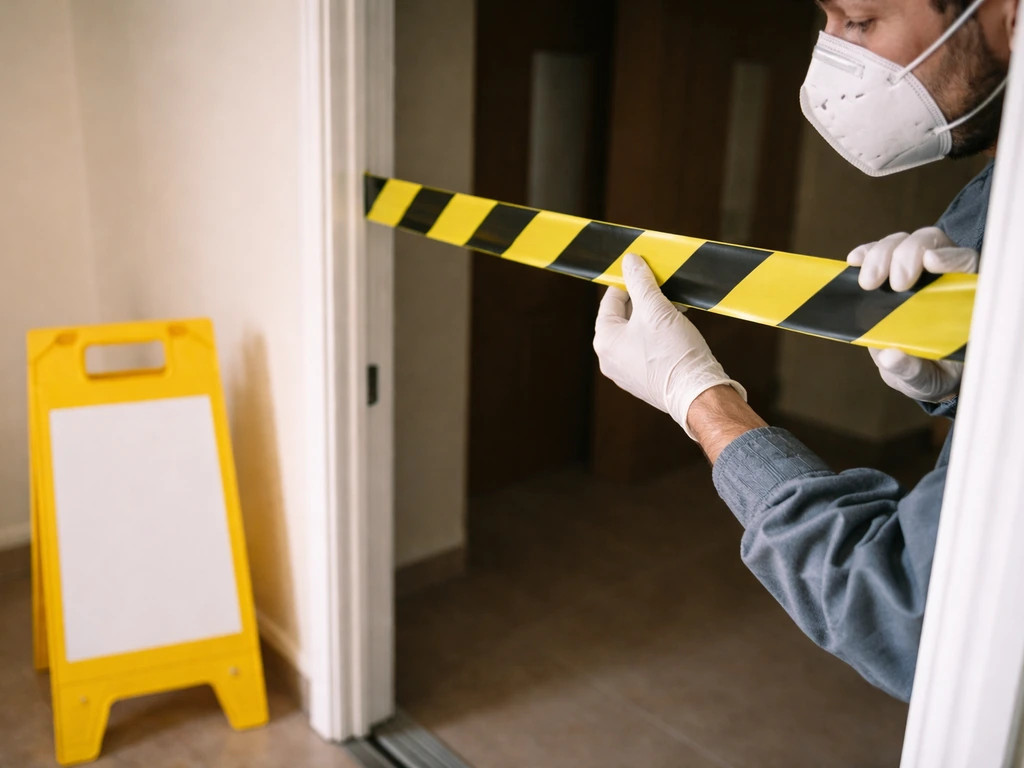
- Post a sign or alert so no one disturbs the area while you work.
For the cleanup zone
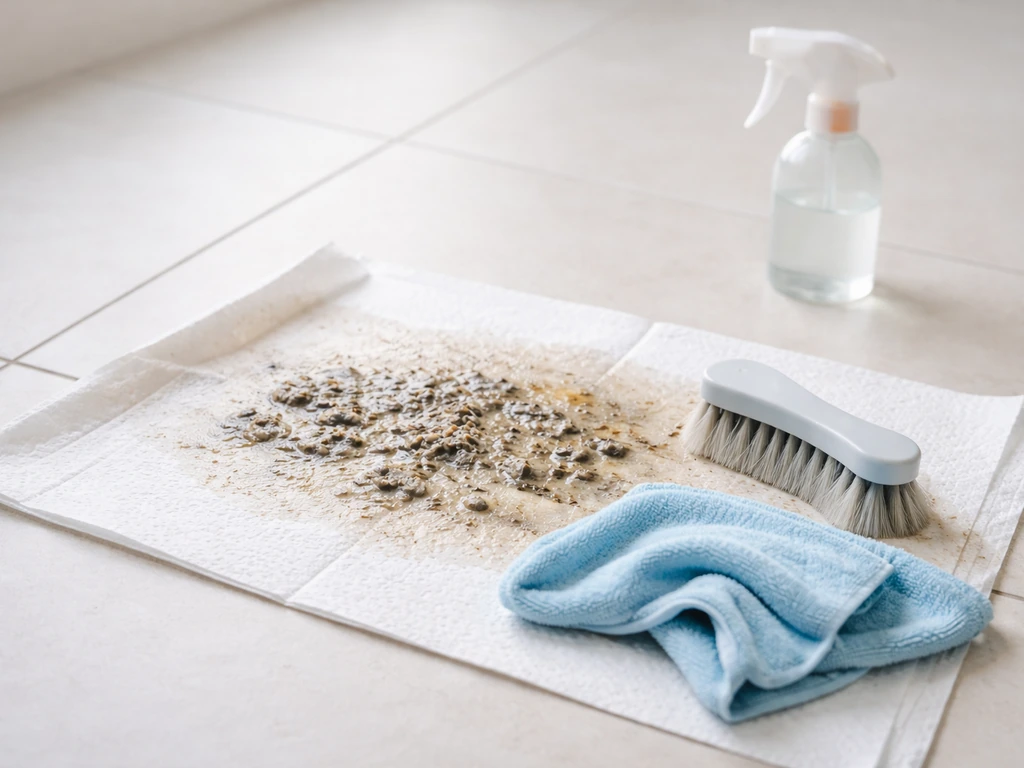
- Do not sweep or vacuum dry droppings. Both the CDC and NIOSH specifically warn against dry sweeping because it aerosolizes fungal spores and bacteria.
- Wet the droppings first using water mixed with a disinfectant before you touch anything. This is the single most important step in safe cleanup.
- Wear an N95 respirator (or higher), disposable gloves, and eye protection when working near any accumulation of droppings.
- Bag waste in sealed plastic bags and dispose of it as general solid waste unless local rules require otherwise.
- Wash hands and exposed skin thoroughly after any contact with the area.
For the bird itself
- Do not use glue traps or adhesive capture devices. Under 50 CFR § 21.14, these are explicitly prohibited because they injure or kill birds.
- Do not attempt to handle an injured or disoriented bird without gloves. Call a licensed wildlife rehabilitator instead.
- If a bird is trapped in a confined space and cannot find the exit on its own, you may gently guide it toward an open window using a broom held flat (not swung) as a visual barrier, moving slowly.
Removing the bird or resolving the immediate roost/nest issue
How you resolve the immediate situation depends on whether the birds are inside, outside, nesting, or just roosting. Here's how to handle each case.
Single bird inside a building
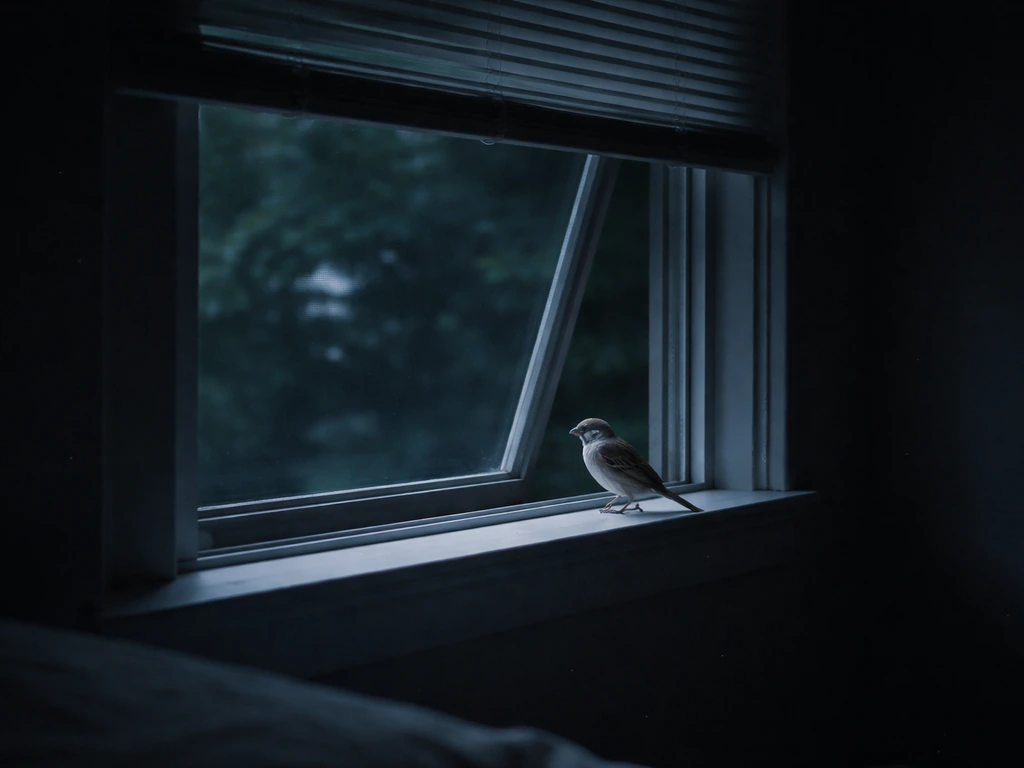
- Clear the room of people and pets.
- Open the largest available exit to the outdoors (a window without a screen works best).
- Darken the room by closing blinds and turning off interior lights so the outdoor opening is the brightest point.
- Wait quietly for 10 to 15 minutes. Most birds find the exit on their own.
- If the bird is still stuck after 20 minutes, slowly enter and use a large towel or piece of cardboard as a gentle visual guide to steer it toward the open exit.
- Once the bird is out, close the opening and immediately identify how it got in.
Roosting birds on ledges, rooftops, or exterior structures
Roosting birds (birds that sleep or rest on your building but are not nesting) can be displaced humanely without waiting for any specific season. Roosting birds (birds that sleep or rest on your building but are not nesting) can be displaced humanely without waiting for any specific season, and if you are trying to move a trapped bird back into a controlled space, see how to get a bird back in its cage as a related option. Remove or cover attractants first: close open dumpsters, eliminate standing water, and stop any deliberate or accidental feeding. The USDA APHIS Wildlife Services is direct about this: feeding wildlife, even unintentionally, draws them in and increases conflicts. Once attractants are gone, install deterrents on the surfaces they're using (see the proofing section below for specific methods).
Active nests (with eggs or chicks)
This is where you must pause. Under the Migratory Bird Treaty Act, it is illegal to destroy, move, or disturb an active nest that contains eggs or live young without a federal permit. This applies to the vast majority of wild bird species in the U.S. You cannot simply remove the nest. The U.S. Fish and Wildlife Service is clear: the safest legal path is to wait until the nest cycle is complete and the young have left on their own, then remove the empty nest and seal the entry point immediately. If the nest is posing an active health or safety risk that cannot be managed by waiting, you need to call USFWS or a licensed wildlife control operator to obtain proper authorization.
Using one-way doors for birds in wall cavities or vents
If birds have established themselves inside a wall, attic, or vent and are not nesting, a one-way exclusion door is the standard humane solution. You install a funnel or flap device over the entry point so the bird can exit but cannot re-enter. Maine's wildlife authorities specifically advise confirming no young will be trapped before installing a one-way door, because a chick left inside cannot escape and will die. Monitor the one-way door for 3 to 5 days to confirm all birds have exited, then remove it and permanently seal the opening.
Entry point and habitat proofing plan (by building area)
Proofing is the only thing that delivers a permanent fix. Everything else is temporary management. Work through the building area by area using the sequence below.
Step 1: Identify every entry point and landing site
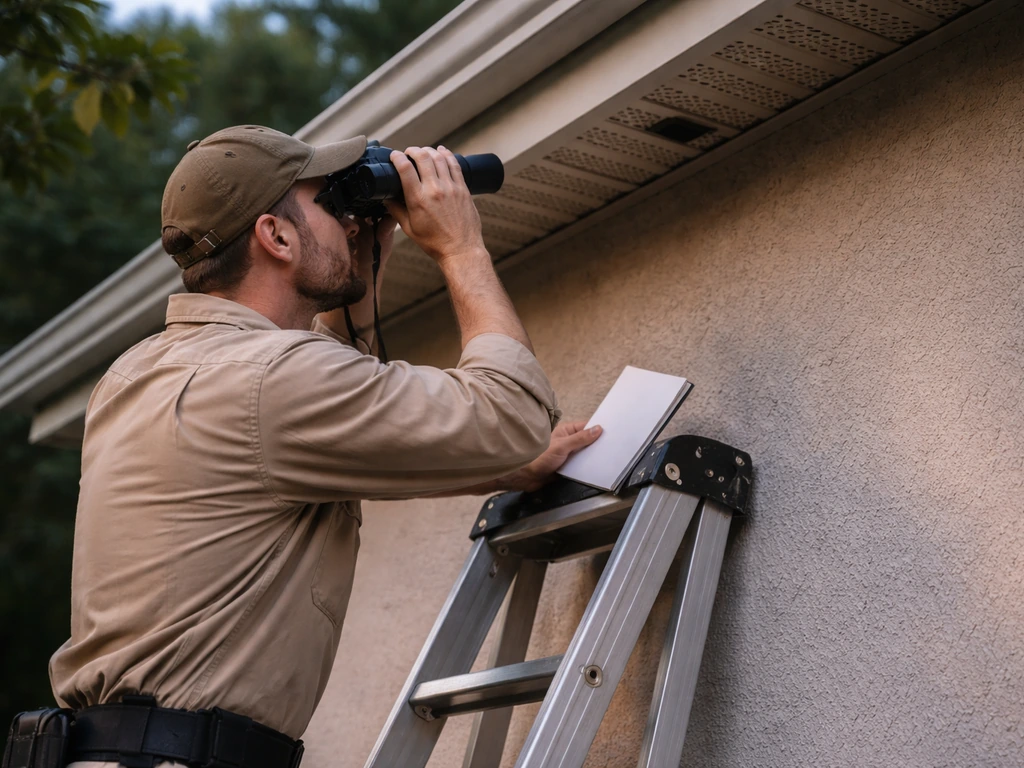
Do a full exterior walk of the building, ideally with binoculars and at a time of day when birds are active. Look for droppings trails (they show you exactly where birds are landing and entering), feathers, nesting material, and worn paint or damage. Photograph everything. Check these areas in particular:
- Roof vents, exhaust fans, and HVAC openings
- Gaps in soffits, fascia boards, and eaves
- Open or damaged chimney caps
- Gaps around utility penetrations (pipes, conduit, cables passing through walls)
- Flat roof parapet walls and drainage areas
- Ledges, windowsills, air conditioning units, and signage overhangs
- Dumpster enclosures and loading dock areas (high-risk feeding and roosting zones)
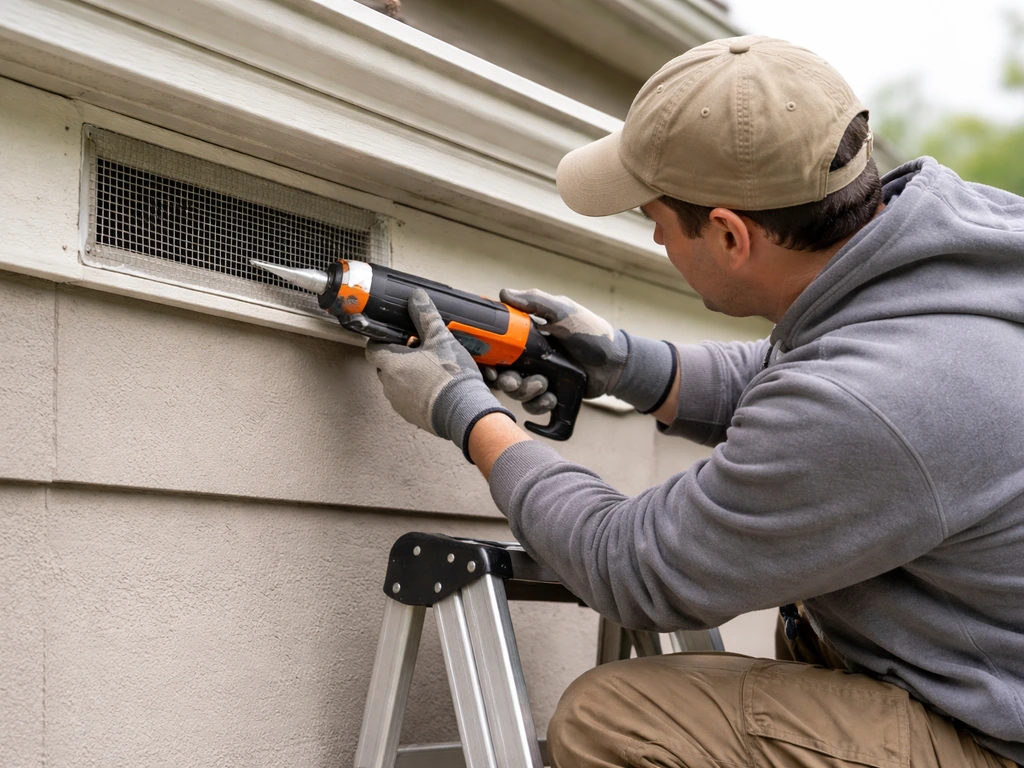
Step 2: Seal openings correctly
Any gap larger than roughly half an inch is a potential entry point for small birds. Seal openings using materials that match the building's structure and can't be pecked or pushed through. Hardware cloth (1/4-inch or 1/2-inch galvanized mesh) works well for vents and larger gaps. Use stainless steel wire mesh or copper mesh for smaller gaps around utility penetrations. Minnesota DNR also describes exclusion-method options for gulls, including using wire-spacing to restrict access and using sticky gels to drive birds away as non-lethal, non-contact deterrents wire-spacing approaches. Seal with exterior-grade caulk or mortar where the mesh meets the surface. Replace damaged vent covers with purpose-built louvered covers that include built-in mesh.
Step 3: Install humane deterrents on landing and roosting surfaces
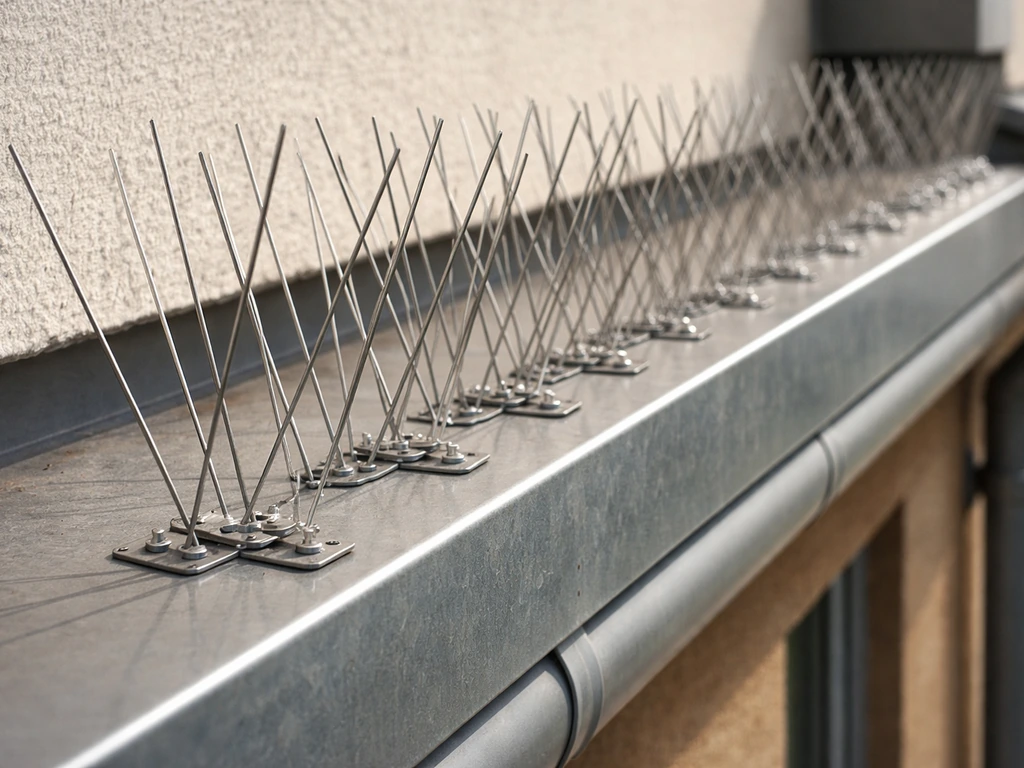
Physical deterrents prevent birds from settling on surfaces where they can't be permanently sealed. Match the deterrent to the surface and the bird species.
| Deterrent type | Best for | Where to use | Notes |
|---|---|---|---|
| Bird spikes (stainless steel or polycarbonate) | Pigeons, gulls, larger birds | Ledges, parapets, roof edges, signage | Install flush to the surface with no gaps; ineffective if birds are nesting in corners |
| Tension wire/wire grid systems | Pigeons, gulls | Flat ledges, rooftop HVAC frames | Minnesota DNR recommends wire-spacing approaches for gulls; very durable |
| Slope/angle panels (anti-perch) | Most species | Ledges and window sills with a flat top | Changes the surface angle to 45 degrees or more so birds can't land |
| Netting (heavy-duty UV-resistant) | All species | Large open areas: courtyards, loading docks, under eaves | Most complete exclusion; must be tensioned tightly with no gaps at edges |
| Sticky gel deterrents | Smaller birds, general deterrence | Narrow ledges, signage edges | Use sparingly; Minnesota DNR notes they can drive birds away but can foul feathers if improperly applied; avoid near areas where birds might get stuck |
Step 4: Eliminate habitat attractants
- Remove or secure all food sources: lidded dumpsters, covered compost bins, no open pet food outdoors
- Eliminate standing water: clear blocked gutters, fix ponding on flat roofs, remove bird baths or water features near the building
- Remove existing nesting material from every site (only after nests are confirmed empty and the season allows it)
- Cut back overhanging trees or shrubs that provide perching access to the roofline
- Remove bird feeders from within 30 feet of the building if you must have them at all
Troubleshooting common proofing failures
- Birds returning after sealing: You missed a secondary entry point. Go back and do the exterior inspection again, this time watching where birds fly to when disturbed.
- Spikes not working: Birds are nesting between the spike rows or on an adjacent unprotected surface. Add more rows or switch to netting for complete coverage.
- Birds entering through a vent you can't seal: Install a purpose-built bird-proof vent cover. Never block exhaust vents completely; always use louvered, mesh-backed covers that maintain airflow.
- Droppings returning after cleanup: An active roost or entry point was not addressed. Re-inspect and re-proof before cleaning again.
Seasonal prevention strategy and long-term monitoring
Bird problems are not random. They follow predictable seasonal patterns, and your response schedule should match them. Planning your proofing and inspection work around these patterns is the most efficient way to stay ahead of the problem.
| Season | What birds are doing | What you should do |
|---|---|---|
| Late winter (Jan-Feb) | Scouting and early pair bonding; beginning to evaluate nesting sites | Ideal time to seal entry points and install deterrents before nesting begins; do full building inspection now |
| Spring (Mar-May) | Active nesting and egg laying; protected nest activity at its peak | Do not disturb active nests; monitor edges and new entry points; document any new activity for post-season action |
| Summer (Jun-Aug) | Young birds fledging; parents teaching juveniles where to roost and feed | Watch for juveniles finding new entry points; clean and re-inspect areas that were actively used in spring after nests are empty |
| Fall (Sep-Nov) | Migratory species moving through; resident birds establishing winter roosts | Best time for comprehensive proofing of winter roost sites; clean all accumulated droppings before wet winter weather |
| Winter (Dec-Feb) | Roosting in warm spaces; seeking shelter in vents and attic spaces | Inspect heating-related penetrations and active vent areas; install one-way doors if birds are sheltering inside |
Long-term monitoring checklist
- Monthly: Walk the exterior perimeter and look for new droppings accumulation, feathers, or nesting material
- Monthly: Check that all vent covers and mesh installations are intact and haven't been dislodged
- Quarterly: Inspect gutters and flat roof drainage for blockages caused by nesting material
- Twice a year (before breeding season and after): Do a full audit of every sealed entry point and deterrent installation
- Annually: Re-apply caulk or sealant at penetrations that show cracking or separation
- After any storm: Check that physical deterrents (spikes, wire, netting) are still properly tensioned and attached
Legal, ethical, and when to call the professionals
Most bird problems can be resolved by a motivated homeowner or facilities team following the steps above. If you are looking for community advice like what people share on Reddit on how to get a bird back out, start by identifying where it is entering and then use one-way exclusion and proofing to stop re-entry motivated homeowner. But there are specific situations where DIY is either illegal, unsafe, or genuinely ineffective, and where you need to bring in a licensed wildlife control operator or contact your regional USFWS office.
The legal picture: Migratory Bird Treaty Act basics
The vast majority of wild bird species in the United States are protected under the Migratory Bird Treaty Act. This means you cannot legally kill birds, destroy active nests with eggs or chicks, or take eggs without a federal permit. Under 50 CFR § 21.14, there is a limited authorization for removing birds from buildings when they pose a health or safety risk or are causing significant property damage, but even this authorization prohibits the use of glue traps or methods likely to injure the bird. If you are unsure whether a nest is active or whether your target species is protected, treat it as protected until confirmed otherwise. The U.S. Fish and Wildlife Service recommends planning any significant building work to occur before or after nesting season precisely to avoid these situations.
Call a professional if any of these apply
- There is an active nest with eggs or chicks in a location that is causing an urgent health or safety hazard that cannot wait for the nest cycle to complete
- You have identified a protected or rare species and are uncertain about your legal options
- There is a large droppings accumulation (anything more than a few square feet or several inches deep) that requires professional-level remediation equipment and disposal protocols
- You or any occupant have had potential disease exposure (respiratory symptoms after disturbing droppings) and should also consult a physician
- The entry point or roosting site is in a location that requires working at height, in a confined space, or on a structure where falls are a real risk
- DIY exclusion has failed twice or more, meaning there's likely a secondary entry point you cannot locate from ground level
- The infestation involves a large colony (more than 20 to 30 birds) that requires coordinated exclusion across multiple entry points simultaneously
What to tell the professional when you call
- The species involved (or your best description of the bird)
- Whether there is an active nest and approximately how long it has been active
- The specific location of the problem (roof, vent, attic, interior, etc.)
- How long the problem has been occurring
- What you've already tried and why it didn't work
- Any health concerns among building occupants
A licensed bird control operator can obtain permits that a property owner cannot, access areas safely that would be risky for DIY work, and often identify entry points that aren't visible from the ground. For large facilities or complex buildings, a professional bird control assessment is worth the cost before you invest in deterrents that may not be installed correctly. Pair that with the exclusion and monitoring plan in this guide, and you'll have a genuinely lasting solution rather than a temporary fix.
FAQ
What should I do if the bird keeps getting inside even after I remove it once?
After the first removal, treat it as proof that an entry point or attractant is still active. Recheck the route you observed (droppings trails, repeated landing spots, vent/soffit gaps) and do proofing before the next active period. If you cannot find the opening, set up temporary barriers to restrict access to the room while a professional checks the building envelope.
Is it safe to clean bird droppings if the bird problem is older and the area looks dry?
Dry droppings still create airborne dust when disturbed, especially if there is nesting debris or dried material. Use respiratory protection and avoid sweeping or dry-brushing. If droppings cover a large area or are inside vents, plan for contained cleanup methods (and consider professional help) to reduce dust spread.
How can I tell whether I’m dealing with roosting versus nesting?
Look for nesting material (twigs, grasses, shredded insulation) and signs of long-term presence near an entry point, such as a concentrated accumulation directly at the hole. Roosting tends to have droppings and feathers on ledges or consistent resting surfaces, without active nest structure. If you find a cavity in a vent, do not assume it is inactive, treat it as nesting until you can confirm no eggs or live young.
Can I use spikes, tape, or spray deterrents before I do any exclusion work?
You can use deterrents as a short-term barrier, but permanent balance comes from sealing. If you apply deterrents before removing access, the bird may keep entering and roosting inside while you only discourage outside landing. For the best outcome, remove attractants first, then install deterrents only after you’ve identified and addressed entry points.
What if I see a baby bird or I suspect there are chicks inside a wall or vent?
Do not install a one-way door until you have confirmed no young will be trapped. A chick left inside cannot escape, and the outcome is likely death. In that case, contact USFWS or a licensed wildlife control operator to assess the location and obtain any needed authorization.
How long should I keep monitoring after installing a one-way exclusion device?
Monitor for 3 to 5 days after installation, then remove the device and permanently seal the opening. If you still see activity at the entry point after the monitoring window, do not seal over it immediately. Reopen and re-evaluate for a second entry point or a device that isn’t fully excluding re-entry.
Do I need a permit to remove birds from my building if the species is protected?
In the U.S., most wild bird species are protected under the Migratory Bird Treaty Act. There is limited authorization for removing birds from buildings when there is a health or safety risk or significant property damage, but it still restricts harmful methods and does not allow destroying active nests with eggs or live young. If you are unsure, treat it as protected and contact USFWS or a licensed operator for the correct path.
What’s the risk if I accidentally disturb an active nest while trying to “get balance back”?
Disturbance can be both illegal and harmful to the birds, and it can also trigger a longer conflict if adults abandon the nest and keep returning. If any nest is active or you cannot confirm it is inactive, pause work, avoid altering the nest area, and seek permit guidance or professional assistance.
What building gaps should I check first when birds keep re-entering?
Prioritize worn soffits, vent openings, utility penetrations (pipes, conduits), and any gap larger than about half an inch that could be probed with a beak. Droppings trails are especially useful, they often trace the exact landing and entry sequence, even when the opening is high or hidden.
What materials work best to seal after exclusion?
Use mesh that matches the size of the opening and cannot be pecked through, such as galvanized hardware cloth for many vent and moderate gaps, and stainless steel wire mesh or copper mesh for smaller penetrations. Seal the edges where the mesh meets the structure with exterior-grade caulk or mortar, this edge sealing is often what fails first if left incomplete.
Can birds return after proofing if I still have food or water sources nearby?
Yes. Even if you seal entry points, birds may continue to linger, and any remaining access through overlooked gaps can lead to repeat problems. Remove attractants first, close open dumpsters, eliminate standing water, and stop intentional or accidental feeding, then complete proofing so they cannot re-establish access.
When is it worth hiring a licensed wildlife control operator instead of DIY?
Hire help when the entry points are inaccessible (attics, complex vent runs, high elevations), the infestation involves nesting in hard-to-reach locations, or you cannot confidently determine whether young are present. Professionals can also identify hidden secondary entry points and coordinate an exclusion and monitoring plan that’s more reliable than deterrents alone.