If a red bird keeps hitting your window, it is almost certainly a cardinal, and there are two separate things going on: either the bird is flying into the glass because it cannot see it, or it is attacking its own reflection because it thinks another male is invading its territory. Both problems are fixable, and most people can get results the same day they start. Here is exactly what to do.
How to Stop a Red Bird From Hitting Your Window
Maya Carver
22 Mar 2026
Why red birds hit windows in the first place
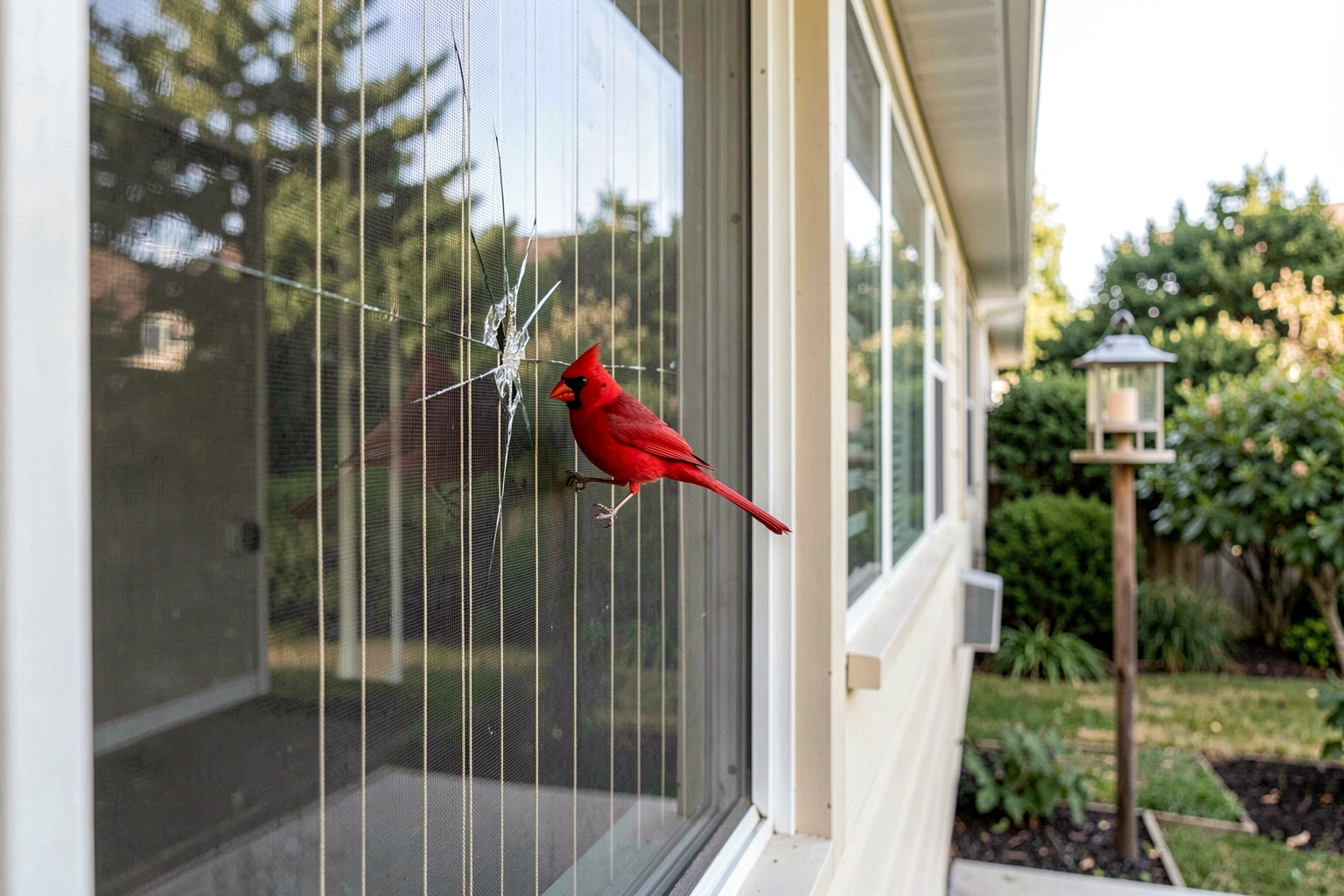
Birds cannot recognize glass as a barrier. When a window reflects trees, sky, or your yard, a bird perceives that reflection as real outdoor space and flies straight toward it. The U.S. Fish and Wildlife Service describes this as the bird seeing a "continuation of the outdoors" rather than a solid surface. That is the collision problem.
The second, separate problem is territorial aggression. During breeding season, a male cardinal sees his own reflection in the glass and reads it as a rival male that needs to be driven off. He pecks and strikes the window repeatedly because the "intruder" never backs down. He does not understand he is fighting himself. This behavior is most common in spring and early summer, but it can stretch on for weeks if nothing breaks the cycle.
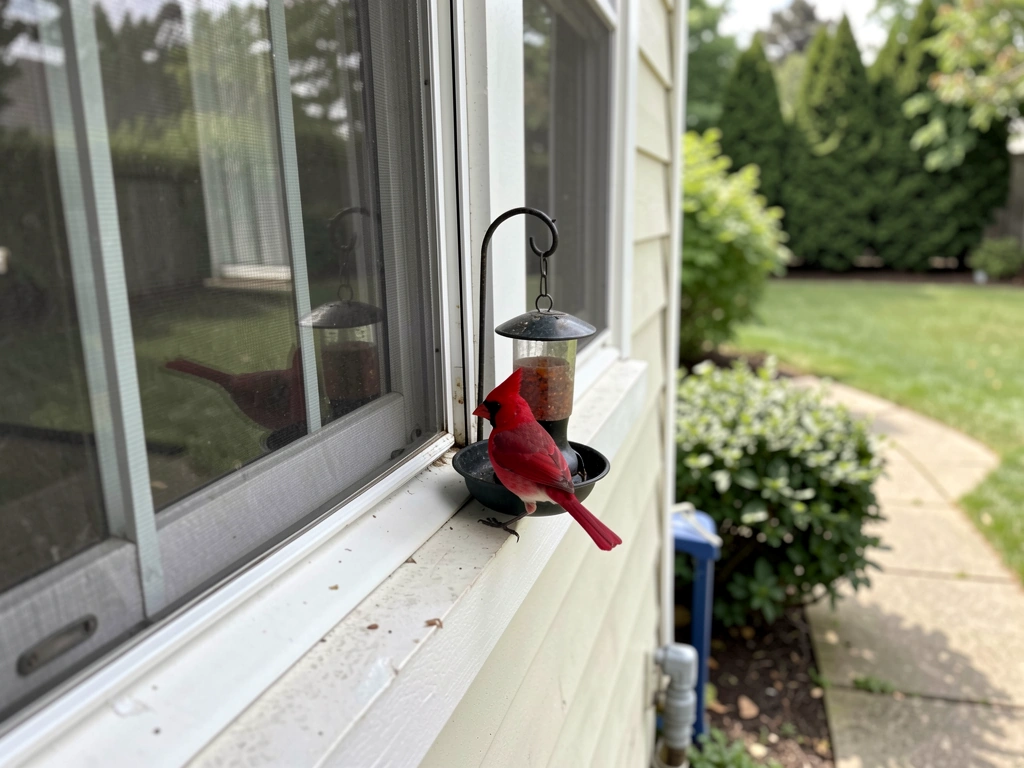
Homes with bird feeders have nearly twice as many window collisions as homes without them, because feeders draw birds in close and create repeated flight paths near glass. If your feeder is currently aimed at a window, that setup is almost certainly making the problem worse.
What to do right now to stop collisions today
The single fastest thing you can do is <a data-article-id="5841A6BE-ED7D-4EA0-9867-50D3BFDFFF70"><a data-article-id="3C0AE4D7-24B3-4A82-88CE-F47196EB0300"><a data-article-id="1F18E344-172B-4103-840F-7788EEC0F121">break up the reflection</a></a></a> on the outside of the window. Anything that makes the glass look like a solid obstacle rather than open space will reduce strikes almost immediately. Do not bother treating the inside surface during the day; interior blinds and decals placed on the inside of the glass are generally ineffective because the outside reflection is still intact. Do not bother treating the inside surface during the day; interior blinds and decals placed on the inside of the glass are generally ineffective because the outside reflection is still intact stop a bird from pecking at a window using exterior reflection fixes as a related consideration.
Move your bird feeder first. Placement matters more than most people realize. The two safe zones are very close (within 3 feet of the window) or very far (more than 30 feet away). At 3 feet or less, a bird launching from the feeder does not have enough distance to reach a lethal speed before hitting the glass. At 30 feet or more, the bird has enough time to recognize and avoid the window. The dangerous zone is everything in between, roughly 4 to 29 feet, where the bird builds up enough speed to cause serious injury or death on impact.
Temporary DIY fixes you can put up today
Cover the outside surface
Hang something on the outside of the window that breaks up the reflection. Fabric, a sheet of mesh, bird netting, or even strips of painter's tape applied in a pattern all work. The goal is to interrupt the mirror-like surface so the bird sees an obstacle. You can also try taping paper or cardboard to the outside temporarily. It looks rough, but it works until you put a better solution in place.
Use string or cord patterns
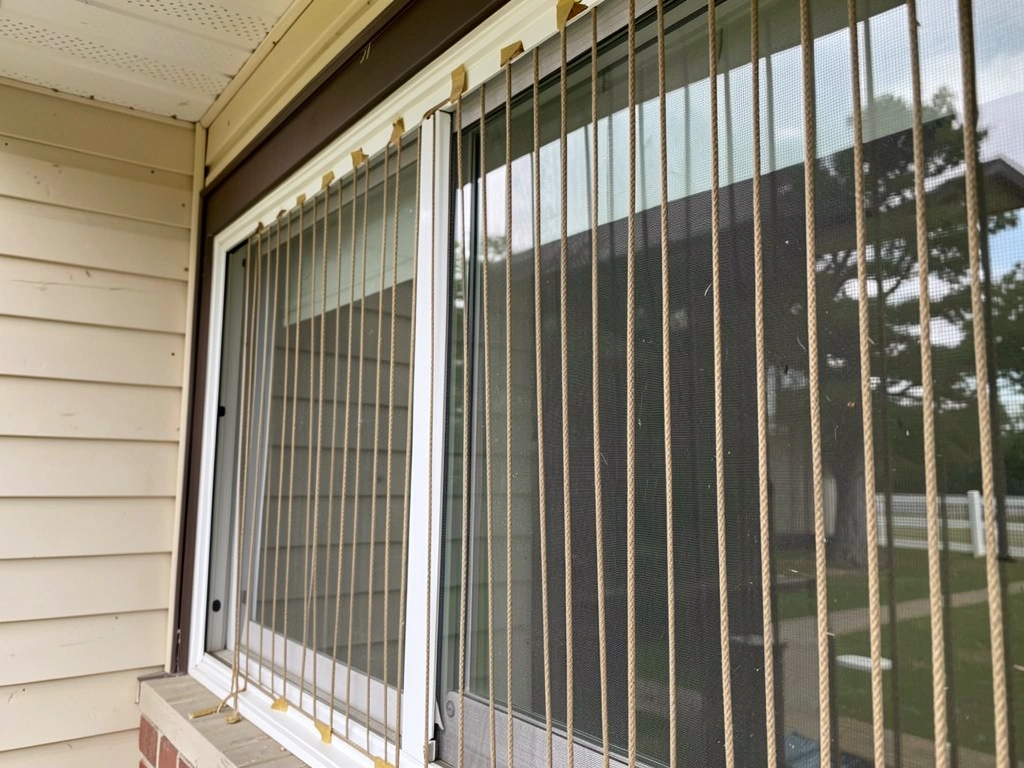
Run vertical strings across the outside of the window spaced about 2 inches apart. Paracord, twine, or even fishing line taped from top to bottom creates enough visual disruption that birds recognize the barrier and avoid it. This costs almost nothing and can go up in minutes.
Adjust lighting and reflective conditions
Interior lighting can change how reflective a window appears. During morning hours when cardinals are most active, try closing interior lights near the window or drawing a sheer curtain from the inside. This alone will not solve the problem, but it can reduce the intensity of the reflection and is worth doing while you put an exterior treatment in place.
Reposition plants and water sources
Birdbaths and dense shrubs placed near windows attract birds into the exact zone where collisions happen. Move birdbaths to an open area at least 30 feet from your house, or if that is not possible, to within 3 feet of the wall so birds landing nearby are not lined up with a window approach path.
Permanent and longer-term solutions
Window decals and marker tape
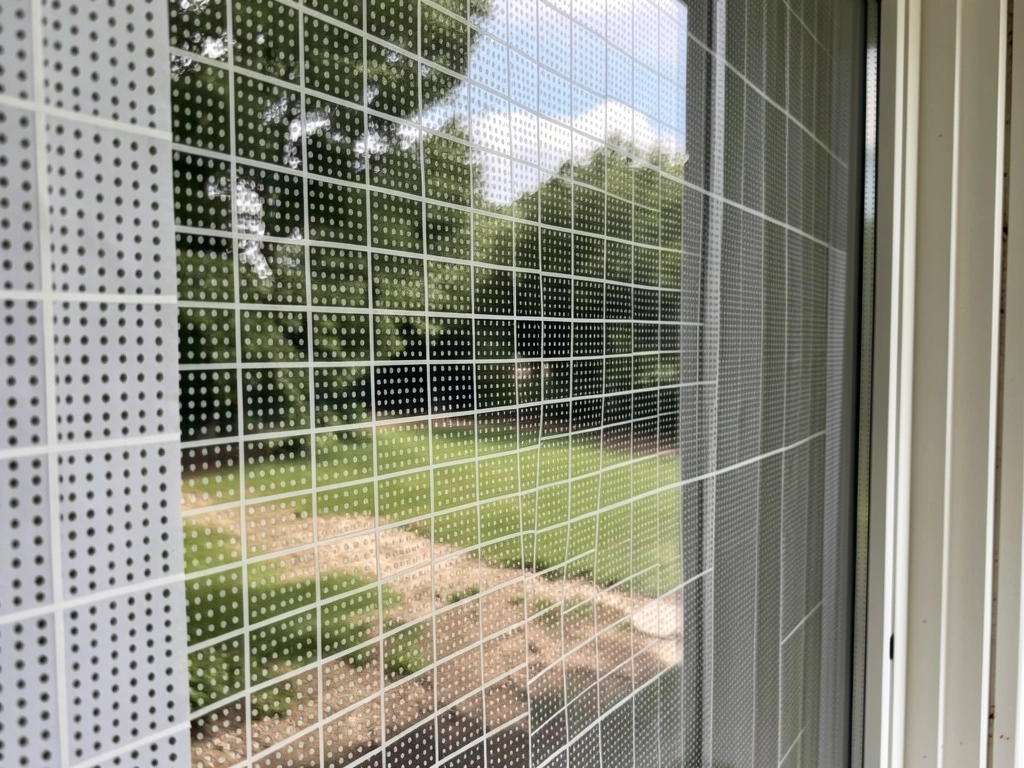
Window decals work, but most people apply them wrong. A single hawk silhouette in the center of your window does almost nothing. Birds do not avoid the decal itself; they avoid the window if the decal coverage is dense enough that there are no large open gaps they can fly "through." The correct approach is to apply markers with no more than 2 inches of space between each mark, covering the full window surface. Products like ABC BirdTape use 2-inch squares applied in a grid pattern on the outside of the glass. Applied correctly and on the exterior surface, this kind of treatment is very effective and can last years without needing to be redone.
Window film
Patterned window films applied to the exterior surface of the glass can reduce collisions dramatically. Films designed for bird safety typically use a UV-reflective pattern that is nearly invisible to humans but visible to birds. These are a strong choice for large windows and picture windows where decals alone may be hard to apply at the right density. Exterior-applied solutions like this can last 7 to 15 years according to National Park Service guidance, making them a solid one-time investment.
External screens and netting
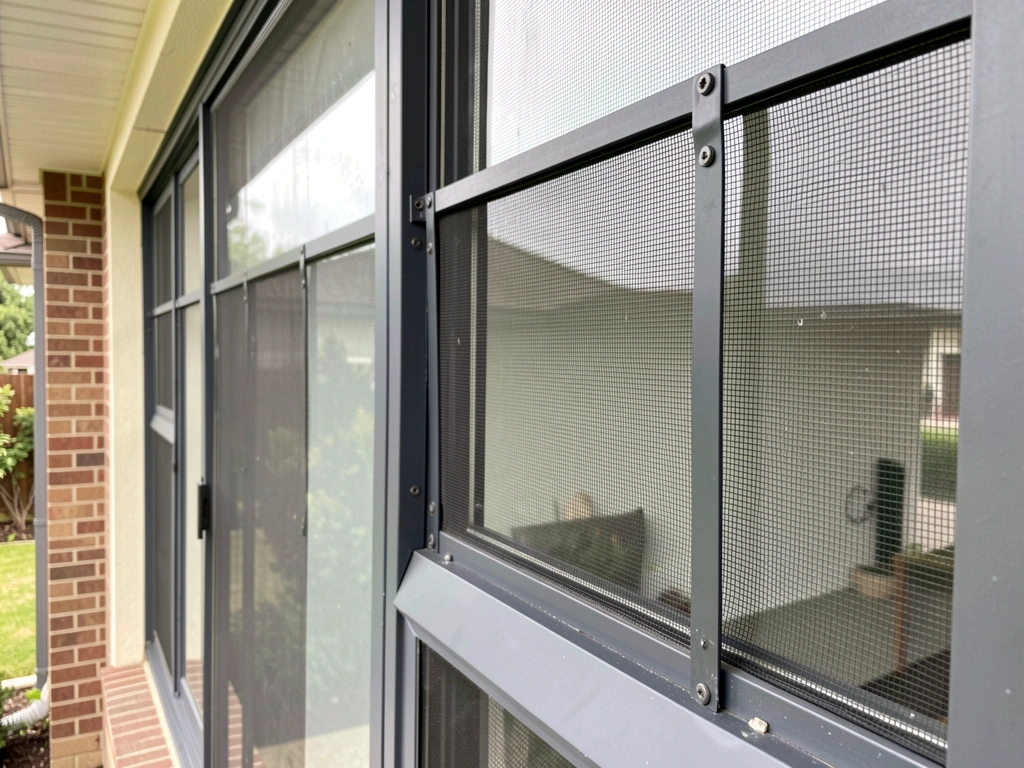
A bug screen or garden netting mounted a few inches in front of the window surface is one of the most effective long-term solutions available. It works in two ways: it breaks up the reflection so birds do not attempt to fly through, and if a bird does strike, the screen absorbs the impact and the bird bounces off without injury. Standard insect screens installed in window frames accomplish much of this. If your windows already have screens, keep them in place year-round.
Awnings and overhangs
An awning or exterior overhang installed above a problem window changes the angle of reflected light and can eliminate or greatly reduce the mirror effect. This is a larger project but a good one if you are planning other exterior improvements. It also doubles as shade and weather protection.
| Solution | Ease of Setup | Cost | Effectiveness | How Long It Lasts |
|---|---|---|---|---|
| Move feeder to within 3 ft or over 30 ft | Very easy | Free | High | Ongoing |
| String or cord on outside of window | Easy | Very low | High if 2-inch spacing | Seasonal |
| Temporary cover / netting | Easy | Low | High | Temporary |
| Window decals (exterior, dense pattern) | Easy | Low to moderate | High if applied correctly | 1 to 3 years |
| ABC BirdTape / marker squares | Easy | Low to moderate | Very high | Several years |
| Bird-safe window film (exterior) | Moderate | Moderate | Very high | 7 to 15 years |
| External insect screens | Moderate | Moderate | Very high | Many years |
| Awning or overhang | Difficult | High | High | Permanent |
For most homeowners, the fastest path is: move the feeder, apply exterior cord or netting today, then follow up with properly spaced decals or BirdTape on the outside of the glass within a week. If you have a large picture window or a window that keeps producing strikes no matter what, a bird-safe window film applied to the exterior is the most durable fix.
How to stop red birds from being territorial at your window
When a cardinal is attacking the window rather than accidentally flying into it, you need to eliminate the reflection, not just break it up. If you are also dealing with accidental collisions, use the same exterior methods to break up the reflection so birds stop hitting your window. If you are also trying to prevent bird window collisions, keep the outside reflection blocked at the exact spot where strikes happen birds stop hitting your window. The bird is responding to a specific visual stimulus: its own image. As long as that image is clear enough to look like another bird, the attacks will continue.
The most effective approach is to completely block the reflection on the outside of the window at the exact spot where the bird is striking. Tape paper, foam, or fabric directly over that pane from the outside. You can also try hanging a strip of mylar or ribbon nearby, since the movement disrupts the clear reflection the bird needs to trigger territorial behavior.
Territorial window pecking does tend to ease on its own as the breeding season winds down and as the sun angle changes, which alters where and how strongly the window reflects. But waiting it out can take weeks, and the bird reinforces the habit every time it comes back. Blocking the reflection is faster and more reliable than waiting.
Keep the deterrent in place for at least two to four weeks after the last strike. Cardinals are persistent, and if you remove the treatment too soon, the behavior often resumes within days. Breaking the learned pattern takes time, and the reflection needs to stay disrupted long enough that the bird stops returning to that spot entirely.
If a bird gets hit: what to do in the first few minutes
If you find a cardinal or other bird stunned on the ground under your window, act quickly but calmly. Do not assume the bird is fine just because it is breathing and upright. Birds can suffer serious internal injuries that are not visible from the outside, and a bird that seems only dazed may have brain trauma or internal bleeding.
- Put on gloves if you have them, then gently scoop the bird into a small cardboard box or paper bag. Do not use a cage with bars the bird can grab and injure itself on.
- Poke a few small air holes in the box, then close it. The bird needs darkness and quiet to reduce panic and shock.
- Place the box in a warm, quiet indoor spot away from children, cats, and dogs. Do not put it in direct sunlight or near a heating vent.
- Do not give the bird food or water unless a wildlife rehabilitator tells you to. Normal body temperature for a bird is around 105°F, and well-meaning feeding or watering can cause more harm.
- Call your local wildlife rehabilitator immediately. Search 'wildlife rehabilitator near me' or contact your state fish and wildlife agency for a referral. The sooner a trained person assesses the bird, the better the outcome.
- If the bird recovers quickly and flies off strongly within 15 to 20 minutes, it may be okay, but monitor the area and report to a rehabber if you are unsure.
Do not keep a wild bird in your home longer than necessary. Holding a wild bird without a permit is restricted in most U.S. states. Your job is stabilization and transfer, not rehabilitation.
Prevention checklist and what to do if it keeps happening
Run through this list to confirm you have addressed every likely cause. If strikes are still happening after you have completed these steps, the troubleshooting notes at the end will help you figure out what is still going wrong.
- Bird feeder is either within 3 feet or more than 30 feet from any window
- Birdbath is repositioned away from window sightlines
- Exterior surface of problem windows has been treated with decals, tape, string, or netting
- Decal or marker spacing is 2 inches or less with no large untreated gaps
- Treatment is applied to the outside of the glass, not the inside
- Territorial strike spots are fully covered with an opaque material
- Deterrents have been in place continuously for at least two to four weeks after the last observed strike
- Interior lighting near the window is reduced during peak cardinal activity hours (dawn to mid-morning)
If it keeps happening after all of this
Check whether the bird is hitting different windows over time. Cardinals sometimes shift patrol territories and find new windows as the season progresses. If the problem moves to a new window, apply the same exterior treatment there. Also check whether your decals or tape have peeled, faded, or lost adhesion. Treatments applied to the inside of the glass, or single-decal applications without dense coverage, are the most common reason strikes continue despite apparent treatment.
If you have tried everything and a specific window keeps causing strikes, that window likely has a reflection angle that is particularly attractive to birds. An external screen mounted a few inches in front of the glass is the most reliable fix for a persistently problem window, because it physically cushions any strike and completely disrupts the reflective surface at the same time.
Finally, be patient with the timeline. Two to four weeks of uninterrupted deterrence is the minimum needed to break a territorial bird's habit. Four to six weeks is safer. Remove the deterrent too soon and you are likely starting over. Once a full breeding season passes without strikes at a given window, the risk at that window typically drops significantly for the following year.
FAQ
Do I need to treat the inside of the window, or is an exterior fix enough?
No. Avoid trying to “fix” the problem from inside with temporary interior decals during daytime, because the bird responds to the reflection it sees from outside. If you want a quick test, place a single temporary barrier on the outside pane at the exact strike spot and see if the pecking stops within the same day.
How can I tell whether the cardinal is attacking its reflection or just colliding with glass?
Yes, and it matters when you decide what to buy. If the bird keeps hitting the same window at the same height with repeated pecks or strikes, that often points to territorial aggression, where blocking the reflection is the priority. If it looks more like random flight-and-collision, the problem is usually birds mistaking glass for open space, and any reflection-breaking barrier can help.
Why did my window decals or tape not work even though I put something on the glass?
If a bird is actively pecking, plain “visual clutter” that still leaves large clear gaps will often fail. Use a dense, continuous outside pattern (like properly spaced grid tape or closely spaced decals) so the bird cannot fly through gaps and keep triggering the behavior.
How often should I re-check or replace the deterrent after I apply it?
Because many deterrents degrade in sun and weather. Check every few days initially, then weekly for the first month, and look for peeling corners, fading, stretched mesh, or tape that has lifted. Replace any sections that leave even small open reflective areas at the bird’s target height.
Can I use cheap temporary materials like paper or cardboard on the outside, and when should I upgrade?
Temporarily taping paper, cardboard, or fabric outside is fine for a quick test, but don’t leave rough, unsecured material up indefinitely. Wind and rain can shift it, creating new reflective spots. For long-term results, switch to a sturdier exterior solution like netting, a properly applied outside pattern, or an exterior screen.
If I install an insect screen, will that automatically solve the problem?
Often, but only if it is set up to stop the reflections or cushion impacts. If you add an exterior screen, keep it mounted with a small gap off the window and ensure the whole active pane is covered, since cardinals target the specific area where the image is strongest.
What is the safest distance to move a feeder so the bird does not hit the window?
Moving the feeder can work, but not in the middle range. Place it very close (within 3 feet of the window) or very far (more than 30 feet away). If it is in the roughly 4 to 29 foot range, the bird may build enough speed to be seriously injured before it recognizes the barrier.
Can landscaping or feeder direction make the collisions worse, even if I add deterrents?
Yes, and it can make strikes worse if the feeder is aimed toward the window. Rotate or relocate the feeder so birds are not lining up for straight approaches toward the glass, and avoid positioning birdbaths or shrubs so landing spots send birds directly on a window approach path.
If the bird still hits after I place something on the glass, does that mean it won’t work?
Not usually. Cardinals can be triggered by their own image and may keep attacking until the reflection they see is blocked at the exact strike location. If there is no improvement within a day after you disrupt the outside reflection, assume you need a denser or more targeted outside treatment.
When can I remove the deterrent, and how long should I leave it up?
It depends on the situation, but a minimum uninterrupted period is important. Keep the exterior deterrent in place for at least two to four weeks after the last strike, and longer (four to six weeks) is safer for territorial pecking that may resume after brief pauses.
What should I do if the cardinal stops hitting one window but starts hitting a different one?
Switch windows if the bird changes targets. Cardinals sometimes shift patrol zones, so if strikes move to a new window, apply the same exterior reflection disruption to the new pane and check that your earlier treatment has not peeled or faded.
What is the safest way to handle a stunned cardinal I find after it hits the window?
First, don’t handle it more than necessary. If the bird is stunned under the window, keep it calm and protected from pets, then contact local wildlife rehabilitation or animal control for guidance. Birds can have internal injuries that are not obvious just from breathing and posture.
Is it okay to keep the bird indoors until it recovers?
Unless you are authorized, avoid keeping the wild bird longer than needed. In most places, holding a wild bird at home without the proper permits is restricted, and the right next step is stabilization and then transfer to a permitted rehabilitator.
Next Articles
How to Get a Bird Out of a Building Safely and Fast
Step-by-step safe methods to get a bird out fast, reduce stress, and seal entry points to prevent repeat visits.
How to Get a Bird Out of Your House Safely and Fast
Humane step-by-step steps to get a bird out fast, safely, and legally, plus prevention tips to stop it returning.
How to Catch a Bird in a Store Safely and Humanely
Humane, safety-first steps to catch a store bird now, redirect it out, then prevent future entries and know when to call