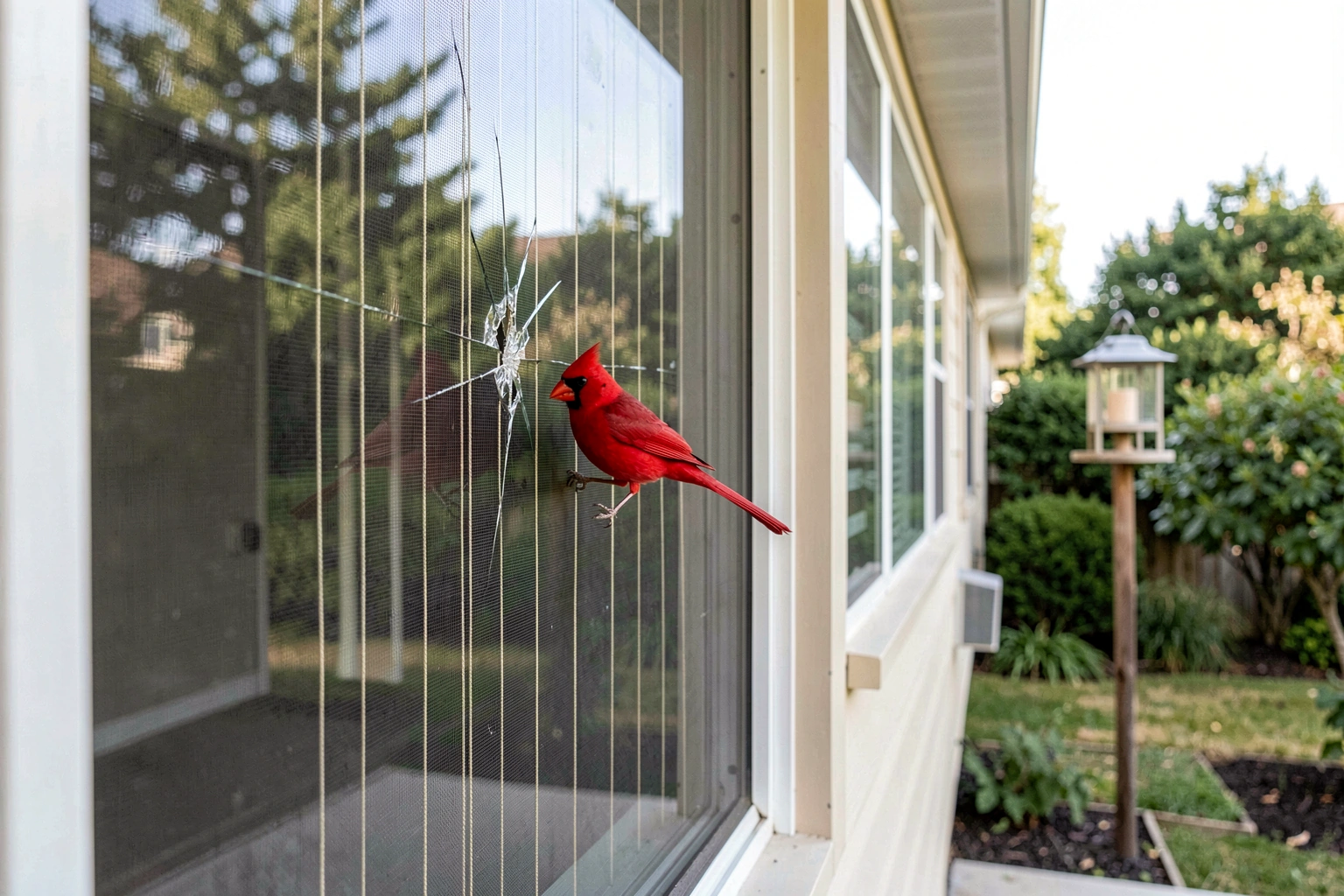
To stop a bird from hitting your window, your fastest move is to break up the reflection or see-through effect on the glass. That means adding something the bird can actually see from the outside, whether that's tape, decals, a screen, or hanging cords, placed densely enough that the bird cannot find a gap to fly through.
How Do You Stop a Bird From Hitting Your Window

Maya Carver
22 Mar 2026
Audubon notes that the simplest way to reduce window strikes is to place deterrents on the outside of the window so reflections cannot fool the bird place something the bird can actually see from the outside. That's the short answer.
But the right long-term fix depends on why the bird is hitting your window in the first place, so let's work through this step by step.
Stop the hits right now: what to do today
If a bird is repeatedly flying into a specific window as you're reading this, here's what you can do immediately, without buying anything special.
- Close your blinds or curtains on the problem window. This is the fastest fix. By reducing what's visible through the glass from outside, you eliminate the 'open flight path' illusion that's drawing the bird in.
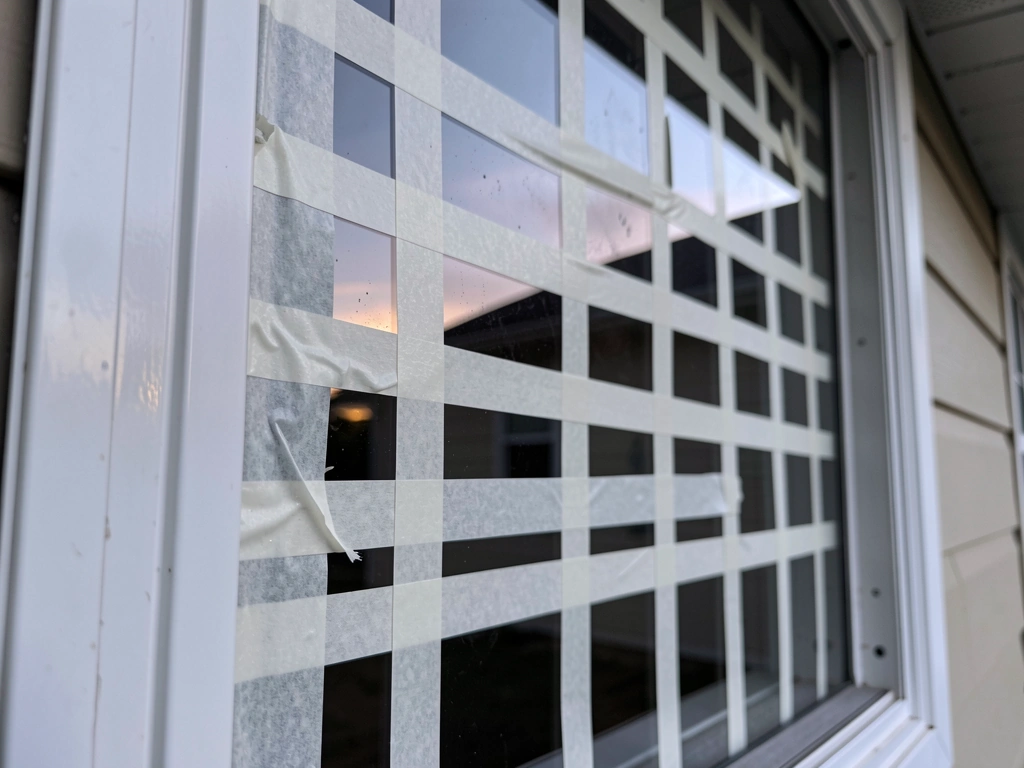
- Apply painter's tape or masking tape to the outside of the glass in a grid pattern, with strips no more than 2 inches apart. It looks rough but it works immediately.
- Hang something in front of the window. Strips of fabric, old CDs on strings, or anything that moves and catches the eye will disrupt the clear glass surface the bird sees as flyable space.
- Turn off interior lights near the window. At night especially, lighting attracts and disorients birds, particularly during spring and fall migration. Turning off unnecessary lights is one of the most recommended immediate steps from U.S. Fish and Wildlife Service guidance.
- If a bird has already hit your window and is stunned, place it in an unwaxed paper bag or a ventilated box in a quiet, dark spot. Check every 15 minutes to see if it's recovered enough to fly. If you see blood, swelling around the eyes, labored breathing, or other visible injury, contact a licensed wildlife rehabilitation facility right away.
Why birds hit windows: the three main reasons
Before you invest in a long-term solution, it really helps to know which of these three problems you're dealing with, because the fix is slightly different for each.
Reflections that look like open sky or habitat
This is the most common cause of window collisions. Shiny or reflective glass mirrors the sky, trees, and garden back at the bird. The bird genuinely cannot tell the difference between the reflection and real open space. It flies full speed into what looks like a clear flight path. Audubon notes that glass corners, internal plants visible through the window, and nearby greenery all make this worse because they reinforce the illusion of a passable habitat.
Transparent glass that looks like a pass-through
On less reflective days, the problem flips. If a bird can see through your window to plants, sky, or another window on the opposite side of the house, it reads the glass as a tunnel or gap it can fly through. The solution is the same as for reflections: make the glass visible as a solid barrier from the outside.
Territorial aggression during breeding season
The fix still involves breaking up the reflection, but in this case you're specifically trying to eliminate the mirror-like surface the bird is reacting to. If you're dealing specifically with a red cardinal doing this, or a bird that keeps pecking at the same spot rather than flying through, the approach overlaps with what's covered in guides on how to stop a bird from pecking at a window. You can also use these same strategies to address bird pecking at a window and stop the behavior at the specific spot it targets. For a specific bird like a red cardinal, the same overall fix applies, but you may need to tailor the deterrent to stop it from repeatedly pecking at one spot.
Physical deterrents and window treatments that actually work
The core principle for any physical deterrent is that it must be visible from the outside and dense enough that the bird cannot perceive any gap as flyable. This is where a lot of people go wrong. Slapping a single hawk sticker in the middle of a large window does almost nothing, because birds simply fly around it. The Cornell Lab, Iowa DNR, and U.S. Fish and Wildlife Service all make this point clearly: markers must cover the entire glass surface, with spacing of no more than 2 inches between them.
Decals and window markers
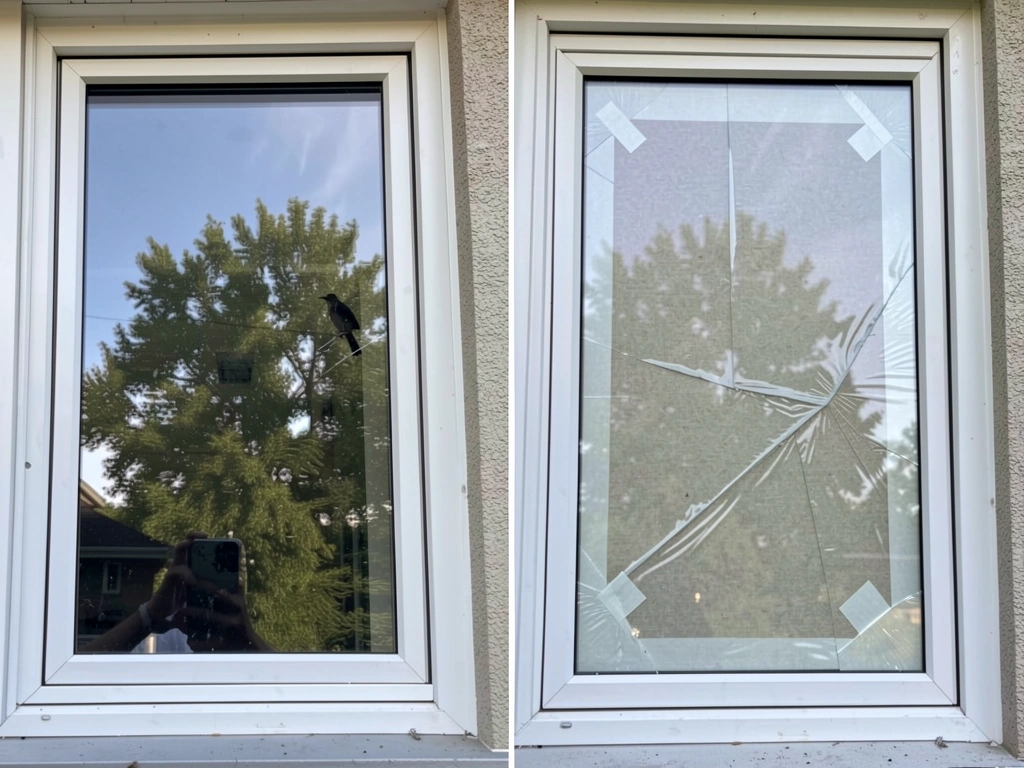
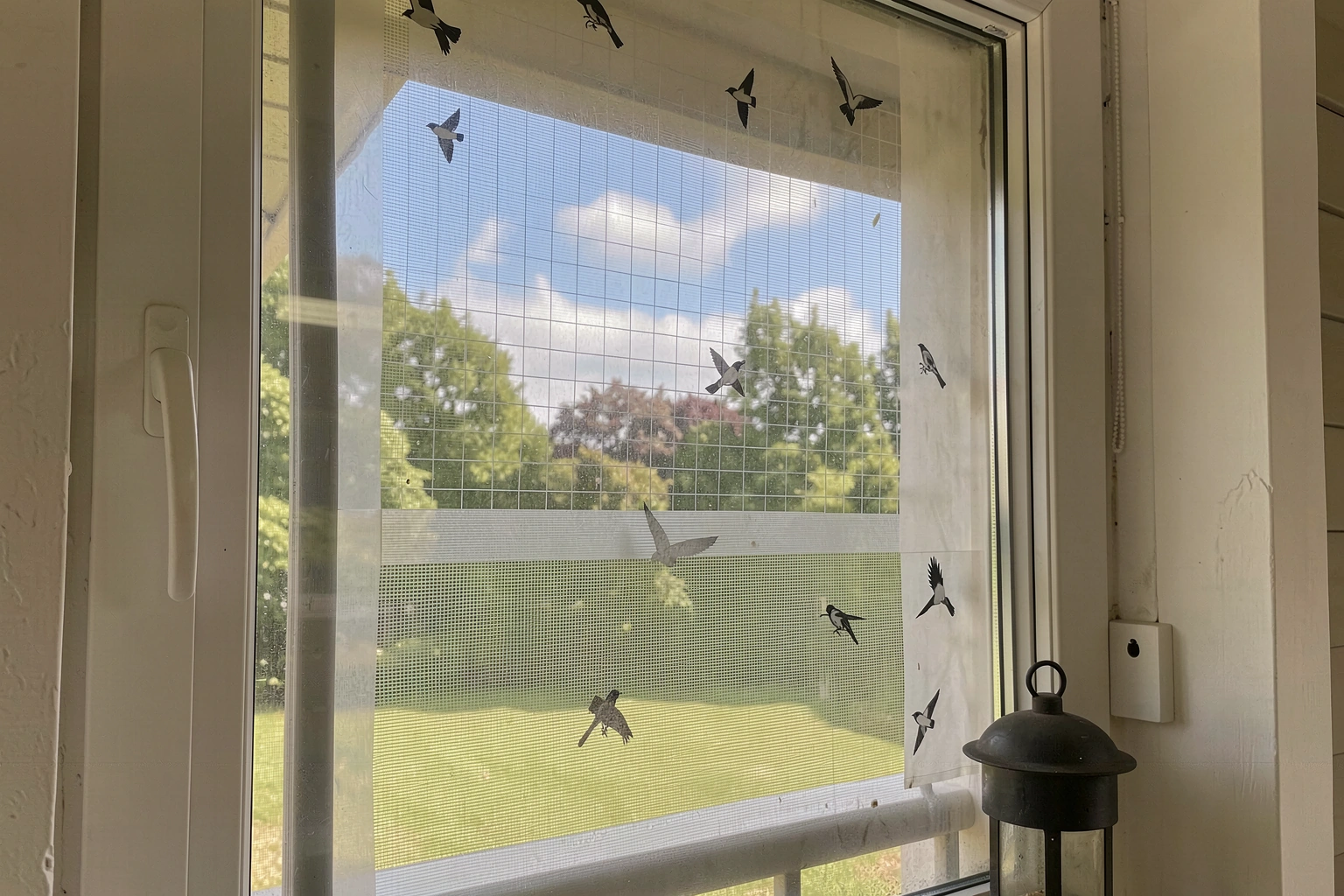
Commercially available bird-deterrent decals (like those with UV-reflective patterns) work well when applied correctly. Apply them to the outside of the glass whenever possible. Interior applications can be obscured by reflections at certain times of day, so outside placement is more reliable. Space them in a grid: markers should be at least 1/4 inch wide and no more than 2 inches apart in any direction. Cover the whole window, not just the center.
Tape and DIY strip patterns
Horizontal or vertical strips of tape on the outside of the glass are one of the most effective and cheapest options. Use tape that contrasts with your glass (white or bright colors work well). Run strips across the full window spaced about 2 inches apart. You can also use a paint pen or chalk marker to draw lines or dots directly on the outside of the glass. These wash off eventually, but they're great for testing placement before committing to a permanent solution.
Hanging cords and Zen curtains
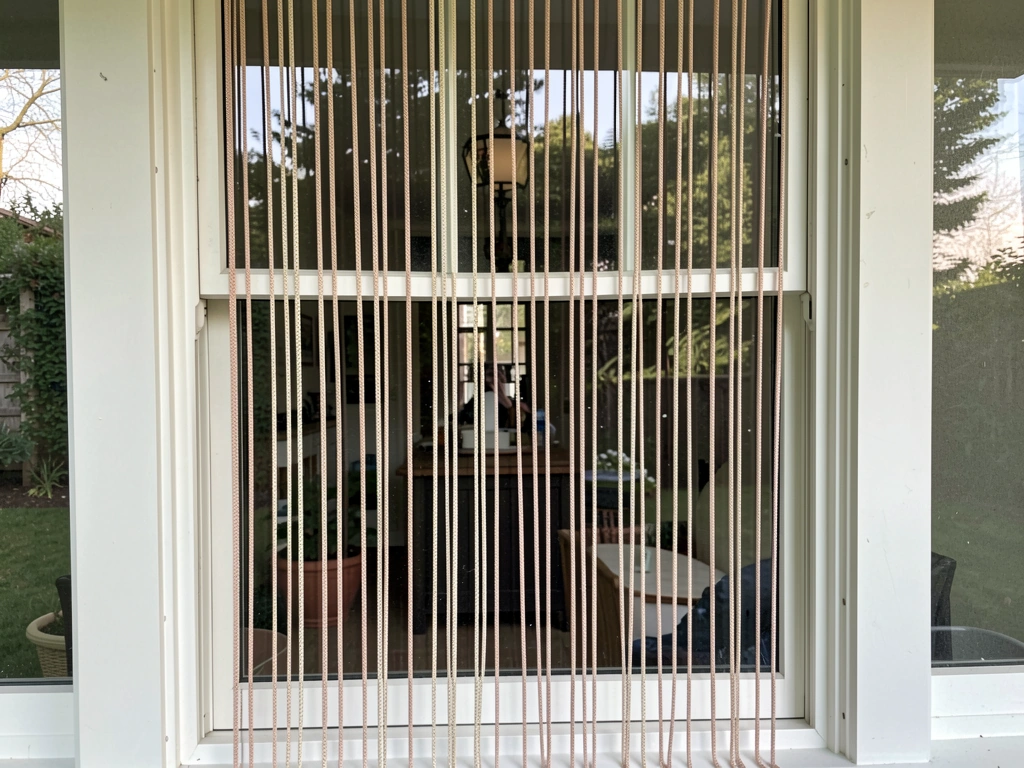
Acopian BirdSavers, sometimes called Zen curtains or Bird Crash Preventers, are lengths of paracord hung vertically in front of a window, spaced about 4 inches apart. They're one of the most effective solutions available and they look reasonably attractive, almost like a beaded curtain. The key is making sure they hang close enough to the glass and are spaced tightly enough that birds recognize them as a barrier rather than a curtain they can slip through. Bird Connect Seattle notes that if cords are too loose or spaced too wide, birds may still attempt to fly between them.
Window screens and exterior films
Installing an exterior mesh screen over the problem window is one of the most foolproof fixes. The screen breaks up both the reflection and the transparency in one shot. Bird-safe window films (including perforated or frosted films applied to the outside) work similarly. For buildings that need a more permanent retrofit, treated glass options like Feather Friendly have shown dramatic results: a 2024 building retrofit effort documented a 95% reduction in bird collisions after this type of treatment was applied.
Temporary covers
For a seasonal problem (like a territorial bird attacking during breeding season), a simple temporary fix is to tape newspaper, brown craft paper, or fabric to the outside of the glass for a few weeks until the bird loses interest. Not pretty, but it works and costs almost nothing.
Behavioral deterrents: keeping birds away without harming them
Physical treatments on the glass are the most reliable deterrents, but there are complementary behavioral tactics worth knowing. None of these involve harming the bird; the goal is to make the window area unattractive or confusing enough that the bird stops trying.
- Hang reflective tape, old CDs, or pinwheels just outside the problem window. The movement and unpredictable flicker make the area feel unsafe to birds.
- Place a fake owl or hawk silhouette near the window. This works best if you move it every day or two, because birds quickly learn that a stationary 'predator' is harmless.
- Use a motion-activated sprinkler near the window. The sudden spray startles birds without harming them and conditions them to avoid the area.
- Avoid placing food, water, or attractive perches directly in front of the window. Birds that are already in the area feeding are much more likely to fly toward the glass.
- For territorial attackers specifically, cover the exterior surface during the peak aggression window (usually early morning) since birds are most likely to see their reflection when the light angle is right.
Managing the area around the window
What's happening near your window matters as much as what's on the glass. A few strategic changes to your yard can dramatically reduce how many birds end up flying at the window in the first place.
Move feeders and birdbaths to the right distance
This is one of the most actionable and consistently recommended tips from multiple bird organizations. Place feeders and birdbaths either within 3 feet of the nearest window or more than 30 feet away. The logic: birds launching from a feeder less than 3 feet from the glass won't have enough distance to build dangerous momentum. Birds more than 30 feet away have enough room to recognize the building before they're close enough to hit it. The dangerous zone is everything in between, typically 5 to 25 feet, where birds have enough speed to cause injury when they hit the glass but not enough flight path to course-correct.
Trim or reposition plants near the window
Dense plantings or trees directly in front of a window give birds a nearby launch point and also create a realistic-looking habitat that may be reflected in the glass. Trim or reposition plants so there's a clear gap between vegetation and the window reduces both the launch risk and the reflection appeal.
Move indoor plants away from problem windows
Indoor plants placed near windows are visible from outside and contribute to the illusion that the space beyond the glass is navigable. Moving them back a few feet can reduce how convincing the glass looks as a pass-through.
Manage lighting at night
During spring and fall migration, lit windows at night disorient migrating birds and draw them toward buildings. Turn off non-essential interior and exterior lights near windows during peak migration periods, or use motion-activated lighting so lights aren't on all night.
What to try if birds keep coming back
If you've tried decals or tape and the strikes keep happening, run through this troubleshooting checklist before giving up or escalating.
| Problem | Likely cause | What to try instead |
|---|---|---|
| Decals applied but bird still hits | Markers too sparse or interior-only | Move markers to the outside; add more until the entire glass surface has 2-inch or less spacing |
| Bird attacks same spot daily | Territorial reflection response | Cover just that section of glass with tape or paper from the outside; try removing or covering nearby perches |
| Bird hits window at dawn or dusk only | Angle-dependent reflection peak | Add exterior solution specifically for that section; close blinds/curtains at those times temporarily |
| Bird returns after a few days | Tape or markers have faded or peeled | Replace or upgrade to a longer-lasting film or screen solution |
| Multiple windows being hit | Feeders or birdbaths at mid-range distance | Move feeders to under 3 feet or over 30 feet from any window |
| Bird hits window at night | Interior lighting drawing migrating birds | Turn off lights near windows from dusk to dawn, especially March through May and August through November |
One thing worth testing: tape a piece of paper to the outside of the glass at the spot where strikes are happening, then observe for a day. If the strikes stop completely at that spot, you've confirmed the issue is visual and exterior treatment will solve it. If the bird moves to a nearby spot on the same window, expand your treatment to cover the full glass surface.
When to call for help
Most window-bird problems are solvable on your own. But there are a few situations where getting professional or licensed help is the right call.
An injured bird that needs rehabilitation
If a bird has hit your window and shows any of the following signs, contact a licensed wildlife rehabilitator: visible blood, swelling around the eyes, labored breathing, inability to hold its head up, or eyes that won't stay open. Don't try to treat an injured bird yourself. Place it in a ventilated box or paper bag in a quiet spot while you locate your nearest wildlife rehabilitation facility. Most states have a hotline or directory for this.
A nesting bird that has become a persistent problem
Most wild birds and their active nests are protected under federal and state law in the U.S. If a bird has built a nest on or near your window and the situation is creating property damage or safety concerns, do not attempt to remove the nest yourself until you've confirmed it's legal to do so in your area. Contact your state wildlife agency for guidance.
Persistent or aggressive behavior you can't resolve
If non-lethal deterrents have genuinely failed after several weeks of consistent application, or if the bird situation involves health risks (droppings near HVAC intakes, large flocks causing structural damage), a licensed nuisance wildlife control operator is the appropriate resource. When hiring one, check that they are licensed in your state, bonded, and insured. Wildlife Illinois and the Washington Department of Fish and Wildlife both recommend verifying credentials before hiring any wildlife control operator. Be wary of any operator who leads with lethal removal as the first option for a songbird window issue; that should be a genuine last resort, and for many protected species it's not a legal option at all.
Choosing the right solution for your situation
Here's a quick comparison of the main deterrent options so you can pick what fits your situation, budget, and how permanent a fix you want.
| Solution | Cost | Effectiveness | Ease of application | How permanent |
|---|---|---|---|---|
| Close blinds/curtains | Free | Good for transparency issues; less effective for reflections | Instant | Temporary, daily action needed |
| Painter's tape grid (exterior) | Under $5 | High if spaced correctly | Easy, 15 minutes | Weeks; will need replacing |
| Bird-deterrent decals (exterior) | $10–$30 | High if full coverage | Easy | Months to years depending on product |
| Acopian BirdSavers / hanging cords | $20–$60 DIY | Very high | Moderate; requires mounting | Long-term |
| Window screen (exterior) | $30–$100+ | Excellent | Moderate to difficult | Long-term |
| Bird-safe window film | $50–$200+ | Excellent | Moderate | Several years |
| Feather Friendly or similar treated glass | $200+ | Up to 95% reduction in strikes | Requires professional install for large areas | Permanent |
| Motion-activated sprinkler | $30–$80 | Good for behavioral deterrence | Easy | Long-term |
For most homeowners dealing with one or two problem windows, exterior decals or tape applied correctly (full coverage, 2-inch spacing) combined with repositioning feeders is the sweet spot of cost, effort, and results. If you're willing to spend a bit more for a cleaner look, hanging cords or an exterior bird-safe film are the upgrades worth considering. Save the treated glass or screen solutions for windows with chronic, high-impact collision problems or if you're doing any window replacement anyway.
FAQ
I’m seeing strikes at one spot, do I only need to treat that section of the window?
If you are placing tape or decals only on the “hit area,” birds can learn a nearby gap. Use the paper-test method: temporarily mark the exact strike spot, watch for 24 hours, then either expand coverage across the entire window or move the marks if the bird shifts to a neighboring area.
Do feeder and birdbath placement changes actually stop window strikes, or is it all about the glass?
Yes, repositioning helps, especially for feeders and birdbaths. Put them either very close (within about 3 feet) or far away (more than 30 feet) from the window, because the highest-risk zone is typically mid-range (about 5 to 25 feet).
Will bird-deterrent decals work if I install them on the inside of my window?
Avoid interior-only solutions if they rely on the bird “not seeing” the glass. Reflections and interior visibility vary by time of day, so outside placement is more consistent, particularly for reflective windows during bright parts of the day.
What’s the biggest mistake people make when using window stickers or tape?
You should not use single, sparse markings. Markers need near-complete coverage because a bird will fly around small gaps. A practical rule is dense spacing, with no more than roughly 2 inches between elements, and you should cover the entire pane rather than just the center.
If I need a cheap temporary fix, will covering the window with paper or fabric stop the bird temporarily?
Yes, newspaper or craft paper can work as a short-term “visual block,” but it’s temporary and weather dependent. If it doesn’t reduce strikes within a few weeks or the bird keeps targeting the same window, switch to a denser exterior solution (tape, decals, cords, screen, or exterior film).
How do I tell whether the bird is colliding versus pecking, and does that change what I should do?
If the bird is pecking at one spot (often common with territorial species), check whether there is a mirror-like patch or a nearby reflection that makes that point look like an intruder. Treatments that make the glass appear solid from outside work, but persistent pecking may also require extending coverage and addressing nearby plants or feeders that reinforce the target area.
Do Zen curtains or hanging cords always work, and what spacing issues cause them to fail?
A curtain solution only works if the cords are spaced tightly enough and hang close enough that the bird recognizes the barrier as continuous. If the bird can attempt to thread between cords, you may need to reduce the spacing and ensure the cords are positioned in front of the glass surface.
Which deterrents are best for a long-term solution that still looks good from outside?
If you need a cleaner look for a long-term fix, exterior bird-safe window film or treated glass is often more reliable than washable chalk or temporary markers. Chalk and markers are useful for testing, but they will wear off, so plan to upgrade if strikes continue.
What should I do immediately after a bird hits my window, before installing anything?
If the bird is injured, do not rely on deterrents first. Provide a quiet, ventilated containment option (paper bag or ventilated box), and contact a licensed wildlife rehabilitator if you notice blood, swelling, labored breathing, or the bird cannot hold its head up.
What if the bird problem is actually a nest near my window, can I remove it?
If there is an active nest near the window, or you suspect nesting, do not remove it yourself until you confirm legality in your area. For protected species, laws can restrict removal and even non-lethal actions in nesting periods, so contact your state wildlife agency for guidance.
At what point should I stop trying DIY deterrents and call a professional?
If it has been several weeks with consistent, full-window coverage and you still see frequent impacts, it may be time for a licensed nuisance wildlife control operator. Ask for proof of being licensed, bonded, and insured, and be cautious of anyone who pushes lethal removal as the first solution.
Next Article
How to Stop a Red Bird From Hitting Your Window
Step-by-step fixes to stop red birds, especially cardinals, from hitting windows with quick and lasting deterrents.