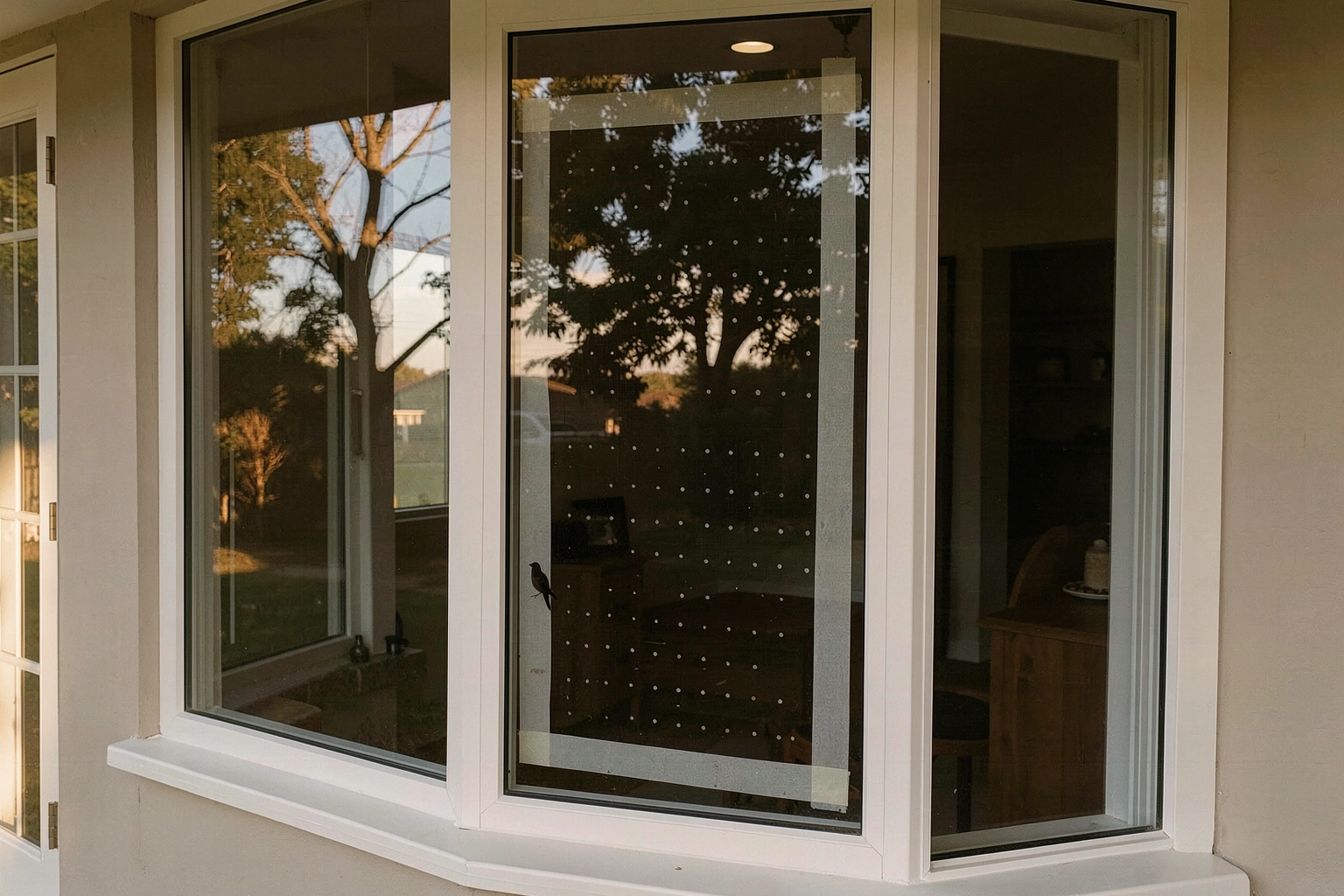
Bird window collisions are one of the most preventable causes of bird death, and the good news is you can start reducing them today without any construction or major expense. The key is understanding why birds hit glass in the first place, then layering the right deterrents correctly. A single sticker on a large window won't cut it. But a few well-placed, properly spaced treatments absolutely will.
How to Prevent Bird Window Collisions Today

Maya Carver
22 Mar 2026
Why bird window collisions happen
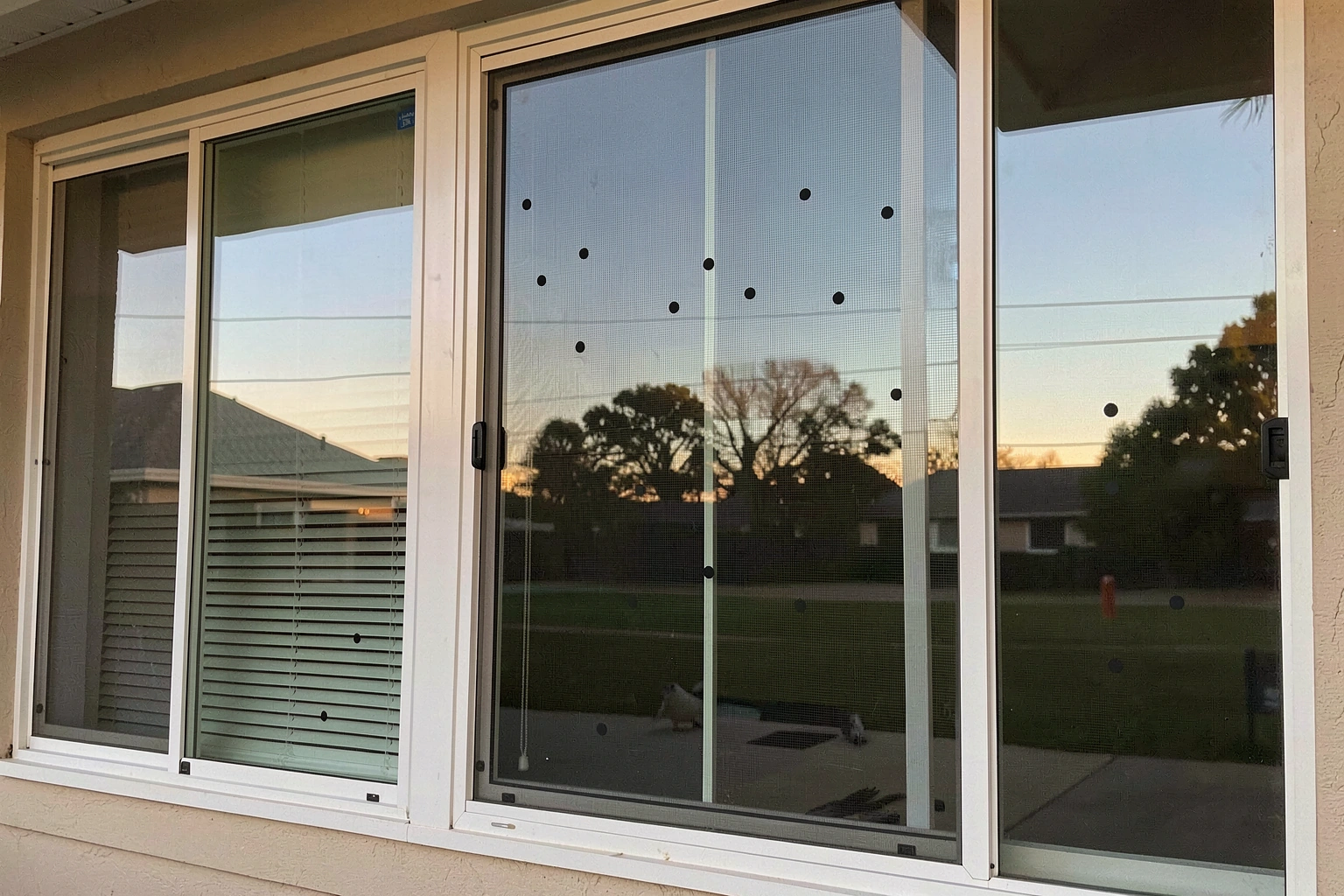
Birds don't understand glass. When they see a window, they're not seeing a barrier. They're seeing whatever the glass reflects or whatever is visible through it. A window reflecting sky and trees looks like open habitat. A window with a houseplant on the sill looks like somewhere worth flying toward. Birds react to that visual information at full flight speed, which is why collisions are often fatal.
There's also a second mechanism at play in spring and early summer: territorial behavior. Male birds, especially species like cardinals and robins, will spot their own reflection and interpret it as a rival. They'll fly at the glass repeatedly trying to drive the intruder away. This is different from a one-time collision, but it's still dangerous and disorienting for the bird.
Lighting conditions make things worse. Early morning and evening light, overcast days, and interior lights shining out through glass at night all increase collision risk. During migration, spring (April through June) and fall (August through November), birds traveling at night can be lured toward lit windows and become disoriented. This is when the problem is at its worst, and when your prevention efforts matter most.
Quick fixes you can do today (without construction)
If you want to act right now, these steps cost little to nothing and can make a real difference, especially during migration season.
- Close your blinds or curtains, especially at night and during low-light hours. This is one of the most effective immediate steps you can take. It breaks up the transparency and reflection that draws birds in, and reduces interior light escaping through the glass.
- Turn off nonessential interior and exterior lights after dark during spring and fall migration. Light attracts and disorients birds, particularly during overnight migration periods.
- Move houseplants and any visible indoor vegetation at least 3 feet back from untreated glass. Birds see those plants through the window and head straight for them.
- Apply non-toxic tempera paint to the outside of problem windows in a dot or stripe pattern. This is a legitimate short-term deterrent recommended by the U.S. Fish and Wildlife Service while you set up longer-term solutions. It washes off, but it works.
- Hang strips of ribbon, tape, or string on the outside of the window. Space them no more than 4 inches apart horizontally so there's no gap a bird would try to fly through.
- If a feeder is close to a window, move it. Feeders placed within 3 feet of a window are actually safer because birds don't have enough room to build up dangerous speed. Feeders placed 10 to 30 feet away give birds a full flight path toward the glass.
Long-term window treatments and upgrades
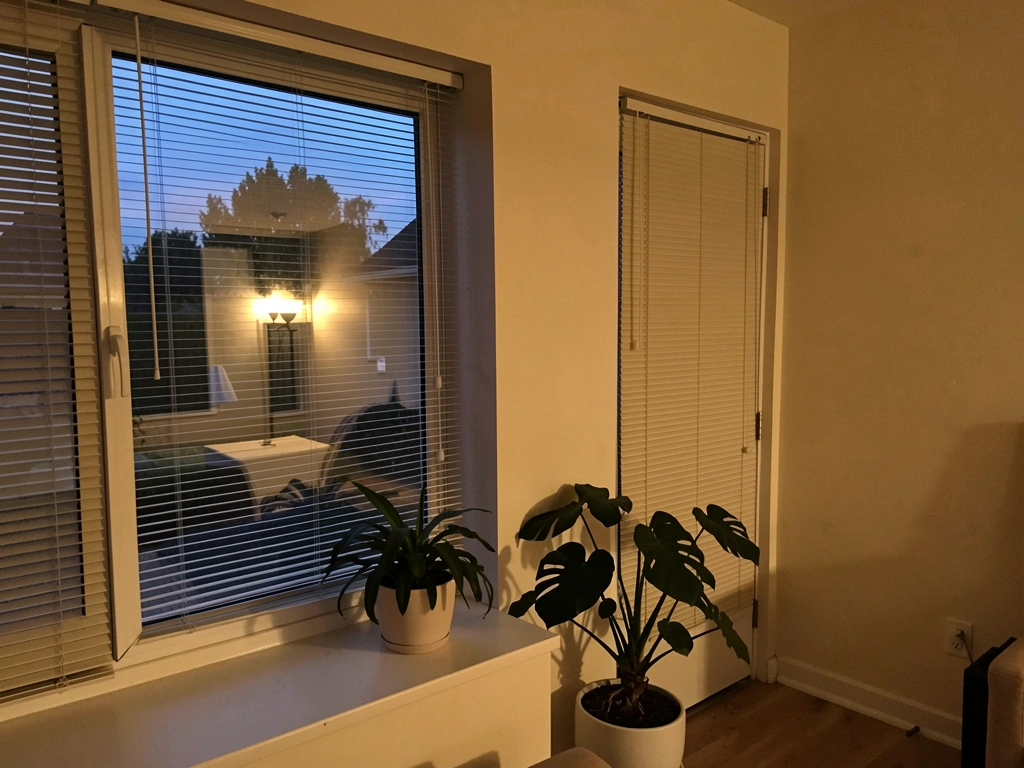
Once you've handled the immediate risk, it's worth investing in solutions that will work for years without constant attention. The most effective long-term options treat the exterior surface of the glass, which is the surface birds actually see. The U.S. Geological Survey recommends preventing repeated strikes by making windows more visible to birds with exterior visual markers such as dense dot patterns and bird-safe glass.
External window films and dot patterns
Professionally applied bird-safe window films, such as patterned stripe or dot films, are among the most durable options available. Some manufacturers claim maintenance-free service for 15 or more years, though results depend heavily on product quality and installation. These films are applied to the outside of the glass and create a permanent visual pattern that birds can see and avoid. They're a strong choice for large problem windows like floor-to-ceiling panes or picture windows.
Adhesive markers and decals
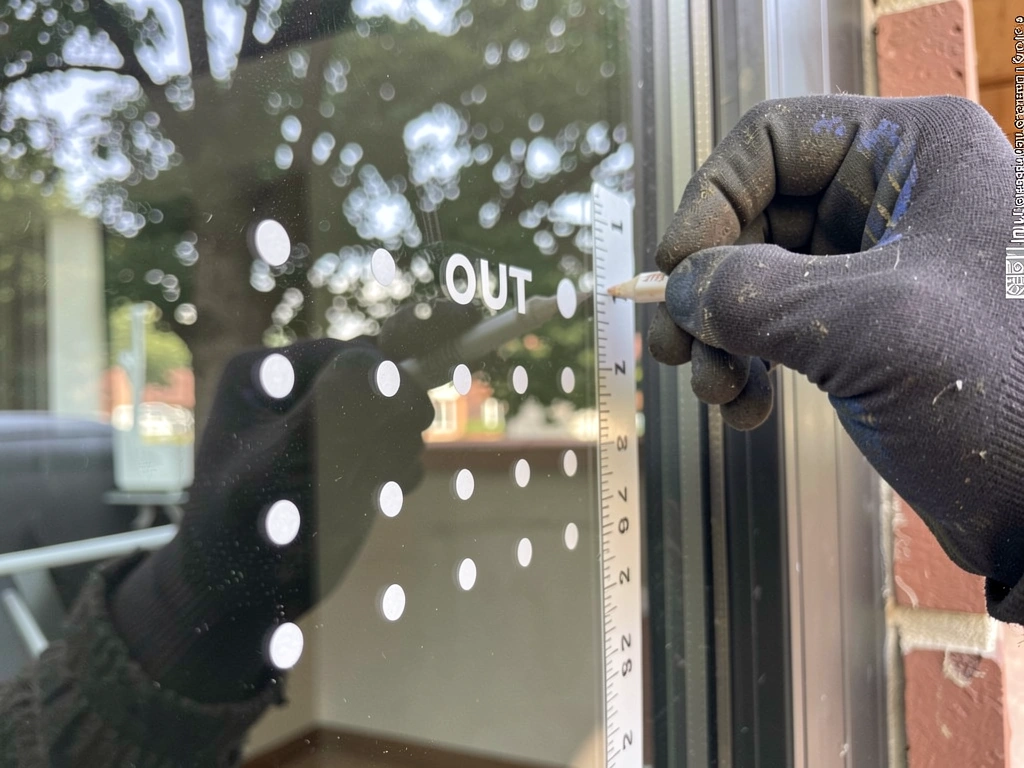
Window decals and adhesive dot markers are widely available and easier to apply yourself. The critical rule: apply them to the exterior surface. Birds perceive the outside of the glass, and decals applied only to the inside are less effective, particularly on windows with reflective coatings. Quality decals designed to withstand regular window washing can last for many years if applied correctly. UV-reflective decals are a popular option, but be aware that they're least visible in low-light conditions and can fade over time with sun exposure, requiring eventual replacement.
External screens and netting
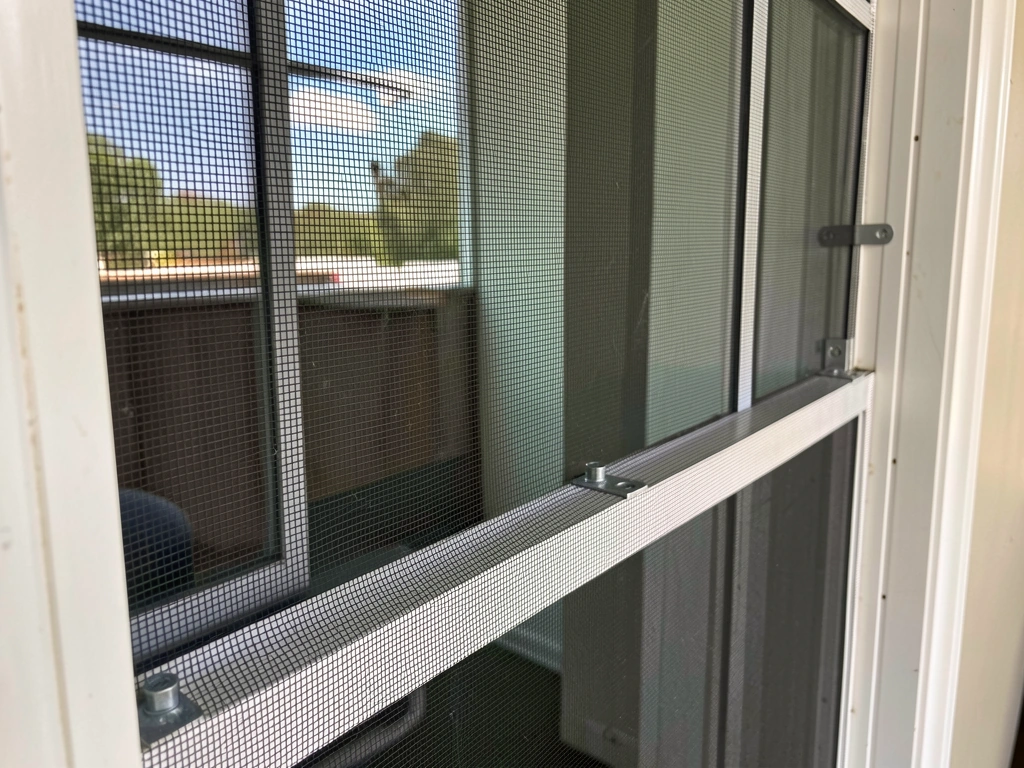
A fine mesh screen mounted a few inches in front of the glass is one of the most reliable deterrents because it creates a physical buffer. If a bird does fly toward the window, it hits the soft mesh at reduced speed rather than the hard glass. This is an excellent option for windows where you don't want to alter the appearance of the glass itself, or for large windows like those in a sunroom or enclosed porch. Make sure any screen hardware has no sharp edges that could injure birds.
Bird-safe glass
If you're replacing windows or building new, bird-safe glass with etched or fritted patterns built into the surface is the gold standard. It's the only option that requires zero maintenance once installed. The cost is higher upfront, but it eliminates the problem permanently for that window.
Choosing the right deterrent by window type and bird behavior
Not every window needs the same solution. The right choice depends on the size of the pane, how much light it receives, whether you're dealing with collision strikes or territorial pecking, and how much you want to spend.
| Window Type / Scenario | Best Deterrent Options | Notes |
|---|---|---|
| Large picture window or floor-to-ceiling pane | External film, netting/screen, or full-coverage dot pattern | Partial coverage won't work. Full surface treatment is required. |
| Standard double-hung or casement window | External adhesive markers with correct spacing, or external screen | Easier to treat fully. Apply markers to exterior surface. |
| Sliding glass door | Hanging strips or tape on exterior, or film applied to outside surface | Transparent doors are among the highest-risk surfaces. |
| Skylights | External netting or manufacturer bird-safe glass | Reflections of sky are especially deceptive. Netting is the practical fix. |
| Territorial reflection attacks (spring) | Temporarily cover exterior with paper, fabric, or soap film | Goal is to eliminate the reflection entirely until territorial behavior ends. |
| Windows with reflective coating | External markers only (not interior decals) | Reflective coatings reduce interior decal effectiveness significantly. |
Covering the exterior temporarily with screen, burlap, or even cardboard until the bird's territorial season ends (usually a few weeks in late spring) is the fastest solution. If a bird is pecking at the window, the same visual and behavioral layers used to prevent collisions can stop repetitive strikes how to stop a bird from pecking at a window.
This bird pecking fix works best when you keep the same spacing and apply the marker layers consistently on the outside of the glass bird pecking at window how to stop it. There are also general, non-color-specific strategies you can use to reduce bird window collisions stop a bird from hitting window. There's more detail on that specific behavior if you look into how to stop red bird from hitting window.
Placement, timing, and maintenance for best results
The 2-inch rule for marker spacing
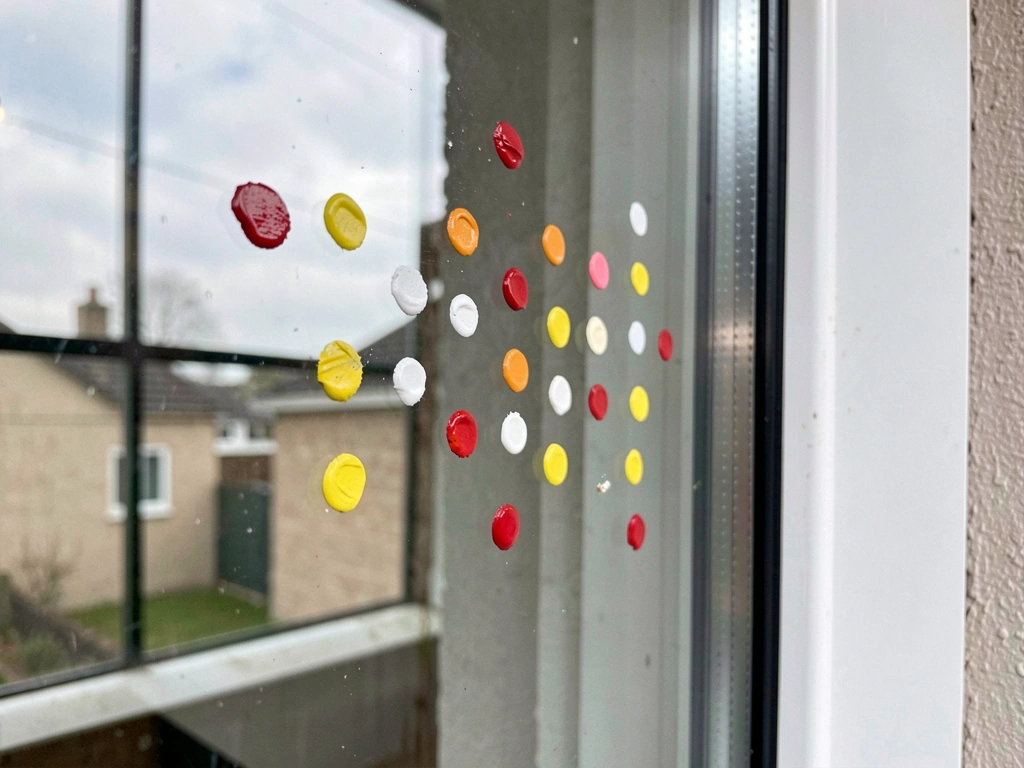
This is the single most important technical detail for any visual marker approach. The U.S. Fish and Wildlife Service specifies that markers on exterior glass must be spaced no more than 2 inches vertically and 2 inches horizontally. This 2-by-2-inch grid leaves no gap large enough for a bird to perceive as a flyable opening. Multiple independent bird-safe design authorities, including Safe Wings Canada and FLAP Canada, confirm the same blank" rel="noopener noreferrer">maximum spacing of 5 by 5 centimeters, which is the metric equivalent. If your markers are farther apart than this, birds will continue to fly into the unmarked areas.
Cover the full surface, not just part of it
A bird might avoid a sticker but fly directly into the 18 inches of bare glass next to it. Partial coverage is a very common mistake. Every treatment you apply needs to cover the entire hazard surface of the glass. This applies to decals, films, paint, and tape strips alike. If covering the full pane feels excessive, that's usually a sign that netting or a screen is the more practical long-term option for that window.
Apply to the outside of the glass
Interior treatments are better than nothing, but exterior application is meaningfully more effective. Birds perceive the exterior surface of the glass, and reflections occur on that surface. External markers, films, and screens work with what birds actually see, rather than trying to signal through it.
Timing your prevention efforts
Prioritize your prevention efforts for spring and fall migration. During April through June and August through November, birds are moving in large numbers, often at night, and are much more vulnerable. During these windows, add behavioral layers on top of any physical treatments: turn off nonessential lights after dark, shield exterior lights so they don't spill toward the glass, and keep blinds closed overnight.
Maintenance and replacement
Check exterior markers and films once or twice a year. UV-based decals are particularly prone to fading from sun exposure and will lose effectiveness over time. Replace them before they become invisible. High-quality adhesive films can survive regular window washing for years if they were applied correctly to begin with. Netting and screens should be inspected for tears or loose edges that could trap birds. Tempera paint treatments should be reapplied after heavy rain.
How to evaluate progress and adjust when birds still hit
The simplest monitoring method is a visual inspection of your windows each morning during migration season, especially in spring and fall. Look for feather imprints or smudges on the glass, called feather spots. These are left by oils and dust from a bird's feathers at the moment of impact and are often easier to find than the bird itself. If you're seeing new marks, your current treatment isn't working for that window.
For a more structured approach, do a daily check for seven consecutive days during a migration period. Note which windows show impact marks and when collisions seem to cluster (early morning is typically the highest-risk window based on research into temporal patterns). This tells you exactly which windows need additional treatment and whether your current coverage is working.
If birds are still hitting after you've applied markers, go back to basics and ask three questions: Are the markers on the exterior surface? Is the spacing 2 inches or less in both directions? Does the treatment cover the entire glass surface? If any of those answers are no, that's your problem. Fix the coverage before adding more products.
If collisions continue even with correct coverage, consider whether a behavioral issue (like territorial attacks) is involved, or whether interior lighting at night is attracting birds to that specific window. Add the behavioral layer: close blinds at night, eliminate interior light escaping through the glass, and shield any exterior lights aimed toward the window. You can also report strikes to tools like the Global Bird Collision Mapper to contribute to community data and track patterns over time.
Expect some improvement within the first few days of applying a correctly installed treatment. During migration season, any remaining collisions after two to three weeks of correct coverage are a signal to revisit your approach, not to give up.
DIY vs buying products: costs, pros/cons, and safety considerations
Both DIY and commercial options can work well. The choice mostly comes down to the size of the problem, how long you want the solution to last, and your budget.
| Approach | Cost Range | Durability | Pros | Cons | Safety Notes |
|---|---|---|---|---|---|
| Tempera paint (DIY) | Under $5 | Weeks (washes off) | Instant, cheap, non-toxic | Must be reapplied after rain; looks improvised | Non-toxic and safe for birds and glass |
| Ribbon or tape strips (DIY) | Under $10 | One season | Easy to install and remove | Can look messy; needs correct spacing | Use no sharp edges or clips that could snag birds |
| Adhesive dot/marker decals (commercial) | $10–$40 | Several years if applied correctly | Durable, low profile, effective | Must be applied to exterior; UV versions fade | Confirm product is non-toxic; buy from reputable brands |
| External bird-safe window film (commercial/professional) | $50–$200+ per window | 10–15+ years | Long-lasting, clean appearance, full coverage | Higher cost; professional install recommended for large panes | No sharp edges during installation |
| Exterior netting or screen (DIY or commercial) | $20–$100+ | Several years with maintenance | Physical buffer, no alteration to glass | Visible from inside; needs hardware mount | Use fine mesh; inspect regularly for tears that could trap birds |
| Bird-safe glass (replacement) | $200–$1,000+ per window | Permanent | Most effective long-term solution; zero maintenance | Only practical at time of window replacement | No additional safety concerns beyond standard glass installation |
For most homeowners dealing with one or two problem windows, a combination of commercial exterior decals (applied correctly to the outside surface at 2-inch spacing across the full pane) and behavioral changes like closing blinds at night will solve the problem at low cost. If you have a large picture window or a glass wall that's repeatedly causing strikes, a professional film application or exterior screen is worth the investment. DIY tempera paint is a completely legitimate bridge solution while you figure out the right long-term product. The important thing is starting now, especially if you're heading into migration season.
FAQ
Can I place window stickers only in the center of the glass if the window is large?
Use the same logic as other visual markers: any gap behaves like open sky. If you install markers on only part of the pane, birds can hit the adjacent unmarked area at full speed. For best results, cover the entire glass surface that birds perceive as habitat or threat, including edges where reflections look continuous.
Why do interior decals sometimes fail even when they seem visible from the inside?
For reflective windows, exterior-only visibility is critical. Interior markers are more likely to fail because birds are responding to the outdoor reflection layer on the exterior surface. If you must use interior products temporarily, prioritize them as a short bridge while you switch to an exterior application.
What happens if my decals or dots are spaced farther apart than recommended?
If the grid spacing is too wide, birds can thread through the “flyable” gaps. Stick to a maximum spacing of 2 inches (5 cm) both vertically and horizontally, and ensure the pattern truly covers the hazard surface rather than leaving bands of unmarked glass.
How can I tell if my window problem is territorial behavior versus random strikes?
Not all collisions are the same cause. Territorial attacks often look like repeated pecking or repeated direct approaches to the same spot, while one-off strikes are more random and often tied to time of day or lighting. If you see repeated behavior, add both exterior visual deterrents and night lighting controls, and consider that a bird may be targeting a specific reflection.
How long should it take before I see improvement after adding deterrents?
Do a quick retest by observing during peak risk periods, early morning and near dusk, for several days. If you installed correctly, you should see fewer new feather spots and imprints within the first several days. If marks continue at the same window after 2 to 3 weeks in migration season, re-check exterior placement, coverage completeness, and spacing, then adjust lighting.
Are DIY solutions like paint, tape, or temporary markers effective if I apply them carefully?
Yes, but only if the product is designed to be applied to the exterior and creates a durable, bird-visible pattern. “Weatherproof” does not automatically mean bird-visible. For DIY, follow the spacing and surface rules, and consider that UV-fading can make some designs effectively disappear over time.
What should I look for when choosing a mesh screen to prevent collisions?
Bird-safe screens should be tight enough to prevent birds from contacting the hard glass. Mount them with a small air gap so the bird hits the soft mesh rather than the pane, and inspect for loose edges or sharp hardware that could injure a bird.
Is covering the window with something temporary like cardboard or burlap a good long-term strategy?
Temporary covers can work immediately because they remove the reflective “open habitat” cue. However, don’t treat them as a permanent plan unless you can maintain them reliably through the vulnerable period, especially during migration. Use them as a stopgap while installing durable exterior deterrents.
What’s the most effective way to handle bird collisions caused by lights at night?
If you suspect night-related attraction, the fastest win is reducing light output aimed at the glass. Turn off nonessential interior lights, keep blinds closed overnight, and shield exterior fixtures so the beams do not spill toward windows.
My window still has strikes after applying markers. What troubleshooting steps should I take first?
If you keep seeing new marks, assume the issue is usually a technical coverage problem first, not a “harder bird” problem. Re-check that the treatment is on the exterior surface, that it is spaced at or below 2 inches in both directions, and that there are no uncovered zones along reflections or edges.
How should I monitor and record collisions so I know which windows need more work?
Do a quick morning visual scan during migration to find fresh feather spots and smudges, then track which windows show the most new marks. If collisions cluster on certain panes, upgrade coverage or add extra layers on those specific windows rather than changing everything at once.
If I add both a screen and decals, do the decals still need to meet the 2-inch spacing rule?
Yes. Even when you use multiple deterrents, you must still respect coverage and spacing for the visual marker layer. A screen or net can prevent impacts physically, but if you also add decals, ensure you still cover the full hazard surface and avoid leaving gaps between marker lines.
Next Article
How to Stop Birds From Flying Into a Window
Step-by-step fixes to stop birds hitting windows using safe deterrents, testing tips, and long-term prevention methods.