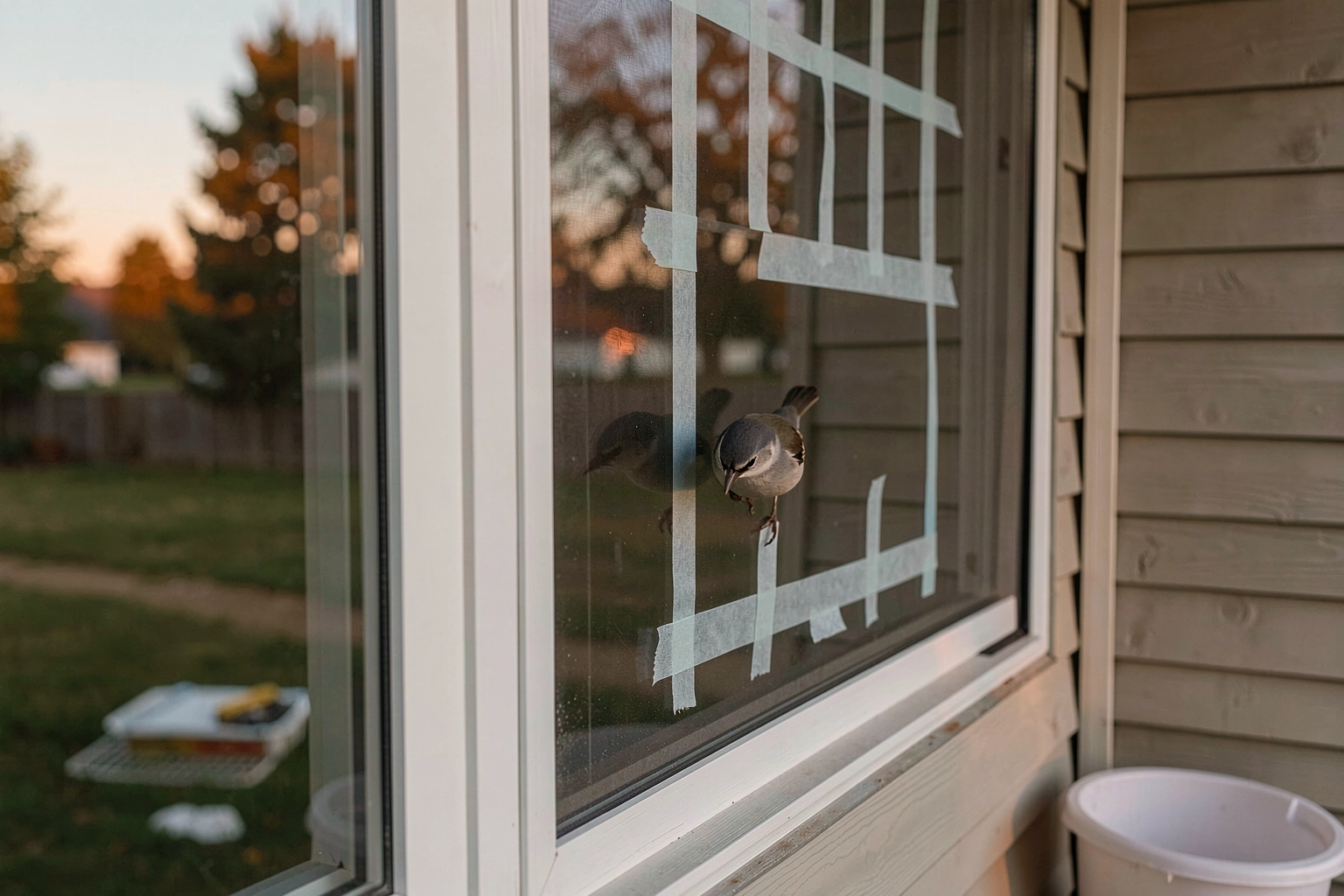
If a bird is pecking at your window right now, the fastest fix is to break up the reflection on the outside of the glass. That one change addresses the root cause in most cases and you can do it today with things you already have at home. But to keep it from coming back, you need to understand why it's happening and layer in a couple of longer-term changes. Here's exactly what to do.
How to Stop a Bird From Pecking at a Window Fast

Maya Carver
22 Mar 2026
Why birds peck at windows
There are three main reasons a bird ends up hammering on your window, and the reason matters because it changes which fix works best.
The most common one is territorial aggression triggered by a reflection. The bird sees its own image in the glass and reads it as a rival bird that has invaded its territory. It then attacks that "intruder" repeatedly, sometimes for weeks. This tends to happen most during breeding season (roughly spring through early summer) when birds are at peak territorial drive. Cardinals, robins, and mockingbirds are classic offenders, but nearly any species can do it.
The second reason is that birds simply don't register glass as a barrier. They may see a reflected tree line or open sky in the window and fly straight toward what looks like a clear passage. Pecking in this case is usually a side effect of repeated low-speed collisions rather than deliberate aggression.
The third, less obvious reason is that birds are attracted to the window surface itself, not the reflection. Some species peck at window putty, caulking, or weatherstripping for the minerals or insects they find there. If you notice the bird targeting the edges or frame rather than the center of the glass, this is likely what's going on.
Immediate ways to stop pecking today
Your goal right now is to disrupt the visual cue that's drawing the bird in. You want to change how the outside of the window looks so the reflection disappears or is broken up enough to stop triggering the territorial response. Do not put anything on the inside of the glass. Blinds, stickers, and tape on the inside face of the window do almost nothing to change what a bird sees from the outside during daylight.
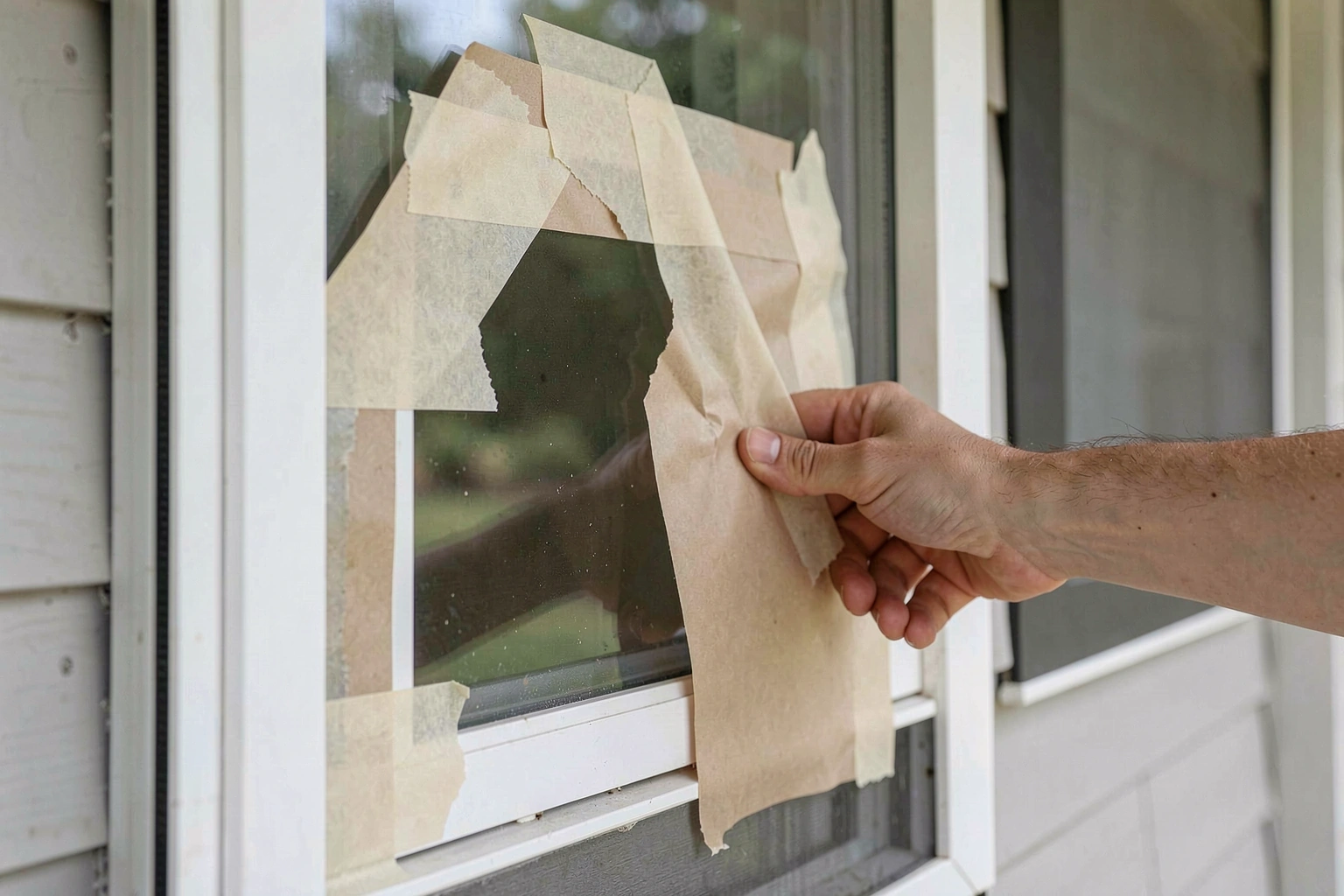
- Tape paper or cardboard to the outside of the window. Old newspaper, kraft paper, or even a trash bag temporarily works fine. It kills the reflection immediately and costs nothing. It's not pretty, but it works while you set up a better solution.
- Apply masking tape in a grid pattern on the exterior glass. Strips spaced about 2 inches apart horizontally and vertically break up the mirror effect and give the bird nothing consistent to attack.
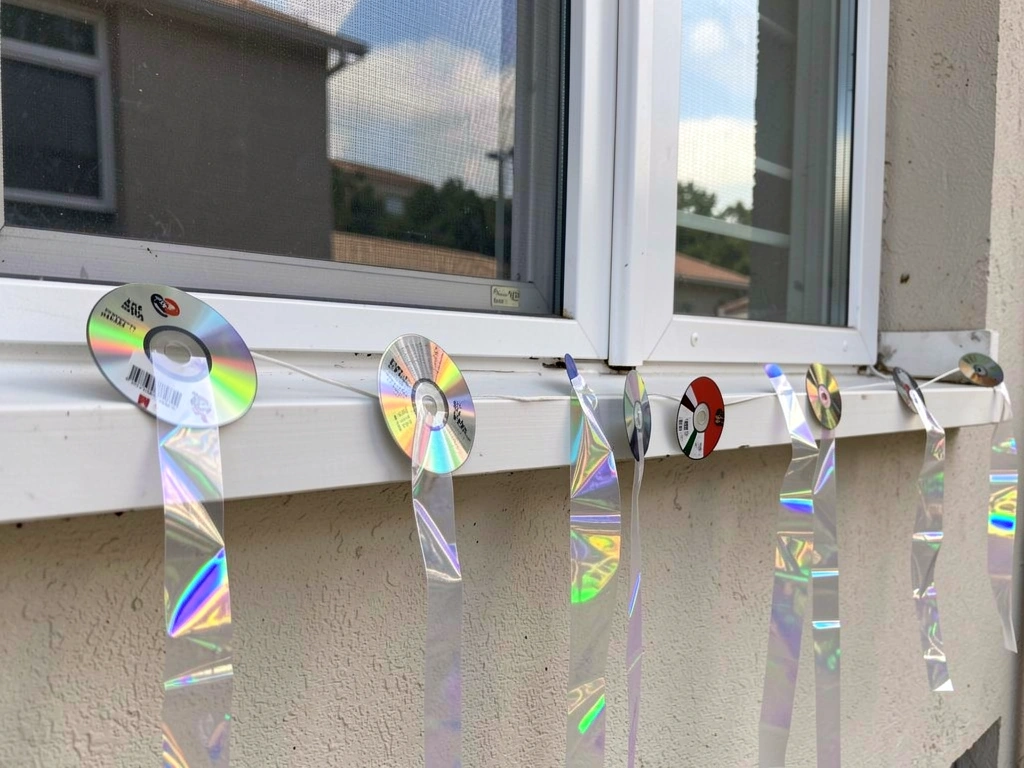
- Hang something moving on the outside. Old CDs on a string, strips of Mylar ribbon, or even a few hanging plastic bags create movement that breaks the reflection and startles the bird. Attach them so they dangle in front of the glass.
- Cover window putty or caulking with masking tape if the bird is pecking at the frame rather than the center of the glass. This directly removes the material that's attracting it.
- Close exterior shutters or pull down an exterior shade if you have them. Any physical barrier between the bird and the glass surface stops the behavior immediately.
These are stopgap measures, but several of them can hold for days or weeks while you put a more permanent solution in place. Don't skip this step just because it's temporary. Stopping the behavior quickly matters because the longer a bird repeats a pecking pattern, the more ingrained the habit becomes.
Window-proofing with visual and physical deterrents
Once you've stopped the immediate problem, the next step is making the window durably bird-safe. There are two categories: visual deterrents that change how the glass looks, and physical barriers that keep birds from reaching the glass at all.
Visual deterrents: decals, film, and patterns
Window decals are the most popular option, but they fail constantly because people don't apply enough of them. A single hawk silhouette in the center of a window does not work. Birds will simply fly through the open spaces on either side. To be effective, decals or any pattern on the glass must be blank" rel="noopener noreferrer">spaced no more than 2 to 4 inches apart across the entire window surface. blank" rel="noopener noreferrer">Audubon's guidance sets that 2 to 4 inch spacing rule, and the U.S. Fish and Wildlife Service's bird-safe glass standards are even tighter, specifying a maximum of 2 inches vertically and 2 inches horizontally for external patterns. A large picture window may need dozens of decals to meet that standard.
Frosted or patterned window film applied to the exterior surface works well and can cover large areas efficiently. Look for products designed specifically for bird collision prevention rather than generic privacy film. If you go with horizontal stripes, each stripe should be at least 1/4 inch wide and spaced no more than 2 inches apart. For a pattern with more flexibility, keep gaps no wider than 4 inches horizontally and 1 to 2 inches vertically.
UV-reflective decals marketed specifically to birds deserve a mention with a caution. The idea is that birds can see UV wavelengths humans can't, so the decals appear more visible to birds than to us. The problem is that UV decals fade over time and perform poorly in low-light conditions. They need regular inspection and replacement. They're not a bad option, but they're not a set-it-and-forget-it solution either.
Physical deterrents: screens, netting, and barriers
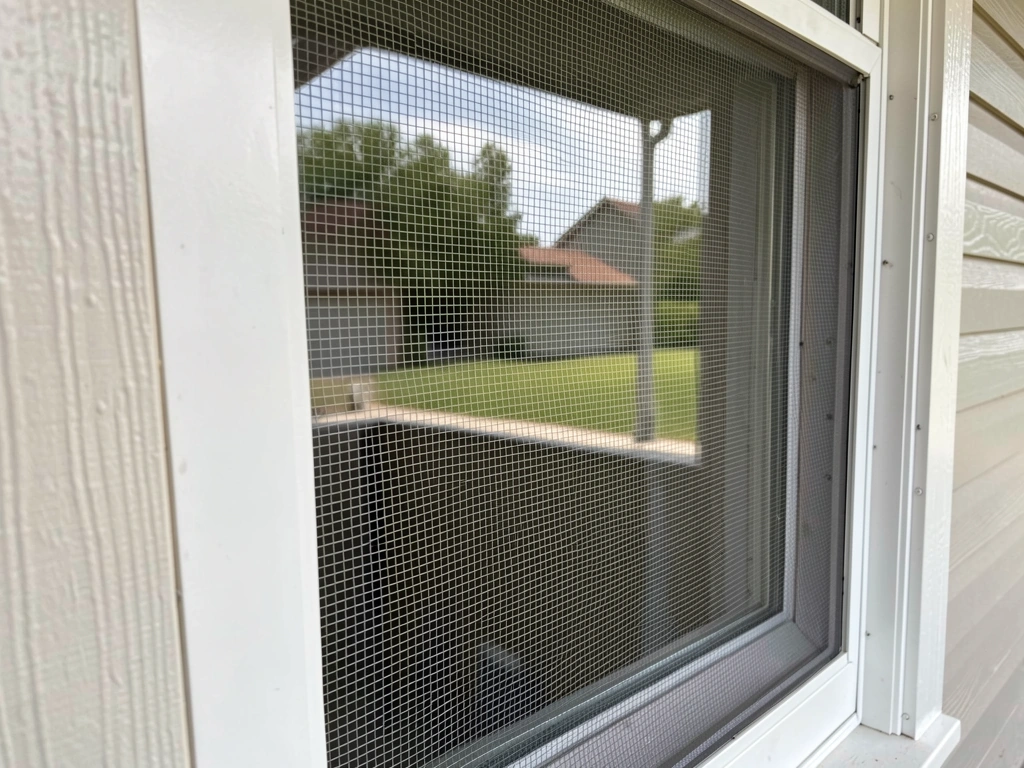
External insect screens are genuinely one of the best all-around solutions. They reduce window reflections significantly (because a mesh surface scatters light rather than creating a mirror) and physically cushion any bird that does reach the glass, preventing injury. If your windows already have exterior screens, make sure they're in place during pecking season. If they don't, it's worth considering adding them, particularly on problem windows.
Bird netting mounted a few inches in front of the glass creates a physical buffer zone. It's more visible than film or decals and works even on very large windows. This is a common solution on buildings and works just as well at home. The netting needs to be taut enough that a bird bouncing into it doesn't hit the glass behind it.
| Deterrent Type | Effectiveness | Ease of Installation | Cost | Durability |
|---|---|---|---|---|
| Window decals (closely spaced) | High if spaced correctly | Easy | Low | Moderate (check regularly) |
| Patterned window film (exterior) | High | Moderate | Low to moderate | Good |
| UV-reflective decals | Moderate | Easy | Low to moderate | Low (fades, needs replacement) |
| External insect screens | High | Moderate | Moderate | Excellent |
| Bird netting (in front of glass) | Very high | Moderate to hard | Moderate | Good |
| Temporary paper/tape coverage | High | Very easy | Minimal | Short-term only |
The recommendation: start with closely spaced exterior decals or patterned film for most windows. If that window keeps being a problem or it's a large picture window, add an exterior screen or netting. Combining both a visual deterrent and a physical barrier gives you the most reliable result.
Long-term fixes and habitat changes
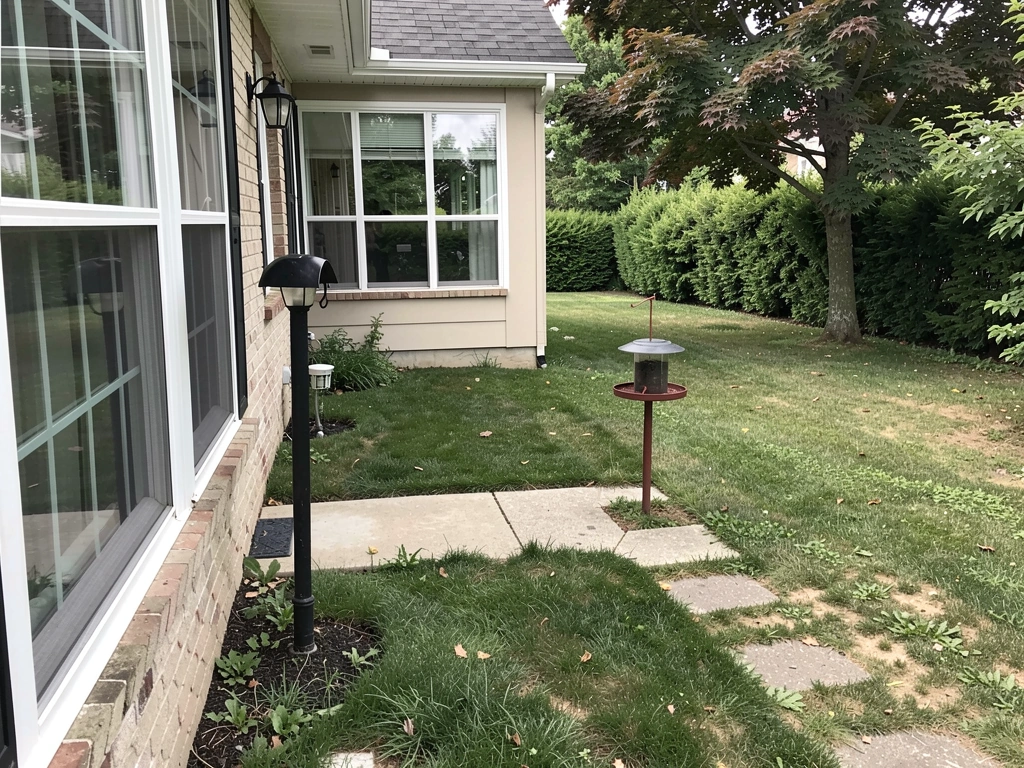
Deterrents on the glass solve the immediate problem, but some habits in the yard keep drawing birds close enough to the window that strikes and pecking stay likely. A few adjustments to your setup reduce the risk permanently.
Relocate feeders and birdbaths
If you have a bird feeder or birdbath near the problem window, move it. The rule from Audubon is simple: place feeders and birdbaths either within 3 feet of the window or more than 30 feet away. Within 3 feet, a bird launching from the feeder can't build up enough speed to injure itself if it hits the glass. Beyond 30 feet, there's enough distance for birds to recognize the window and maneuver around it. The danger zone is the middle range, roughly 4 to 30 feet out, where birds are flying fast enough to cause injury but close enough that a window fills their flight path. Homes with feeders in that zone have roughly double the collision risk.
Manage what the window reflects
If trees, shrubs, or open sky are visible in or reflected by the glass, birds will keep approaching. This is a sightline problem. Where possible, trim back plantings directly in front of problem windows so the reflected habitat is less appealing. You can also use window film that reduces reflectivity from the outside (a semi-opaque treatment) without significantly affecting your view from inside.
Reduce nighttime light
Interior and exterior lighting at night disorients migrating birds, pulls them toward windows, and significantly increases collision risk. The fix is straightforward: turn off nonessential interior lights at night, close blinds or curtains after dark, and direct any outdoor lights downward rather than letting them throw light into the sky. If you need security lighting, use motion-activated fixtures so they aren't on all night. Audubon's Lights Out program specifically recommends these steps during migration periods (spring and fall), but doing them year-round reduces risk consistently.
Check window putty and weatherstripping
If a bird keeps returning to peck at the edges of a window rather than the glass itself, the surface material is the draw. Covering old or exposed putty with fresh caulk or masking tape removes the attractant. Once the material isn't accessible, the bird has no reason to return to that spot.
What not to do
A few common responses to bird pecking cause more harm than they fix, either to the bird or to the effectiveness of your deterrent effort.
- Don't put deterrents only on the inside of the glass. Interior blinds, inside-facing tape, and decals applied to the inner surface don't change what a bird sees from outside during daylight. This is one of the most common mistakes and it means the money and effort go to waste.
- Don't use harmful repellents. Sticky substances, harsh chemicals, or anything designed to injure the bird are both inhumane and in many cases illegal under federal migratory bird protections. Stick to physical and visual deterrents.
- Don't try to scare the bird away with sudden noise or movement every time it appears. This is exhausting and doesn't work long term. The bird will simply return when the disturbance stops. Fix the underlying visual cue instead.
- Don't assume a single hawk decal will solve the problem. A single sticker or a few widely spaced decals are consistently ineffective. If your decals aren't spaced within 2 to 4 inches of each other across the whole window, you haven't actually fixed the problem yet.
- Don't leave an injured bird unattended. If a bird has struck the window hard and is stunned or grounded, don't assume it will recover on its own. Keep pets away, give it quiet space, and contact a local licensed wildlife rehabilitator if it doesn't recover within an hour or so.
When to escalate: identify the species, call a pro, and know the rules
Most window pecking problems resolve within one to two breeding seasons once you apply proper deterrents. But if you've covered the glass correctly, moved feeders, reduced nighttime light, and the bird keeps coming back, it's worth thinking about what you're actually dealing with before trying more extreme measures.
First, identify the species. Different birds have different behavioral drivers. A cardinal pecking from February through June is almost certainly responding to its reflection during breeding season. A woodpecker working the frame in fall might be looking for insects. A migratory warbler hitting the glass repeatedly is probably confused by a reflection of habitat or an interior light. Knowing what bird you have helps you match the solution. A clear photo from your phone is usually enough to identify the species using a birding app or local Audubon chapter.
Second, if the problem persists despite correct deterrent application, contact a local wildlife professional or your regional Audubon chapter. They can assess whether there's an unusual behavioral driver or a property-specific issue contributing to the problem. Licensed wildlife rehabilitators are also the right call for any bird that is injured as a result of a window strike.
Third, know the legal context. Nearly all wild birds in the United States are protected under the Migratory Bird Treaty Act. This means that harassing, harming, trapping, or relocating most species without a permit is a federal offense. This applies even when the bird is causing property damage. Everything in this guide stays within legal, humane deterrence, but if someone suggests trapping or otherwise handling the bird, check with your state wildlife agency first. The right answer is almost always to fix the window, not to interfere with the bird.
PIf you're still troubleshooting, work through this sequence before concluding a solution has failed: check that all deterrents are on the outside of the glass, verify your decal or pattern spacing is 2 to 4 inches or tighter across the full window, confirm pecking is still happening, and make sure interior lights are off or covered after dark. If pecking has stopped but birds still hit the glass, follow a dedicated checklist like how to stop bird from flying into window for collision-specific fixes. For collision-specific fixes, see how do you stop a bird from hitting your window as a next-step comparison to pecking-only deterrents. Most cases that seem stubborn turn out to have one of those four things not quite right.
FAQ
Do I need to put decals or film on the inside of the window to stop pecking?
No. For most window-pecking issues, changes must be made on the outside surface (or external screens). Interior stickers, blinds, or tape usually do little because the bird is responding to what it sees from outside in daylight.
What if the bird only pecks at the frame or edges, not the middle of the glass?
That pattern usually points to an attractant on the surface (window putty, old caulk, or weatherstripping). Replace or cover exposed putty and seal vulnerable spots (for example, with fresh exterior caulk), since visual deterrents alone often do not solve that specific behavior.
How can I tell if pecking is caused by reflection versus habitat confusion?
Territorial reflection attacks often show up as repeated, focused strikes at the same area and frequently peak in spring through early summer. Habitat confusion or collision-related behavior is more likely if the bird flies in repeatedly toward open sky or reflected trees, including at slower, “straight-line” attempts.
How close do decals need to be for a large picture window?
Spacing matters across the whole pane, not just the center. Use no more than 2 to 4 inches between marks for effective coverage, and for stricter bird-safe patterns aim for tighter spacing (up to 2 inches by 2 inches in both directions). A single small sticker won’t work on a large window because birds can navigate through gaps.
Is one hawk silhouette or one decal enough to stop the problem?
Usually not. Birds can pass through gaps around a single mark. Use a dense pattern that breaks up reflections or visibility throughout the entire window surface, so there is no “clear path” the bird can aim for.
What’s the easiest durable option if I want to cover a lot of glass quickly?
Exterior frosted or bird-focused patterned film applied to the outside surface is often the quickest way to treat large areas. If you use stripes or other line patterns, keep stripe width and spacing tight (for example, stripe gaps should not get wide enough to create a usable flight corridor).
Do UV-reflective decals work reliably?
They can help, but they are not set-and-forget. UV-specific decals tend to fade and perform worse in low light, so plan on inspecting and replacing them on a schedule instead of assuming they’ll work indefinitely.
Should I install an exterior screen or netting even if I already added decals?
If the same window keeps getting hit, yes, combining a visual deterrent with a physical barrier is more reliable. Exterior insect screens reduce reflections and cushion impacts, while netting creates a buffer zone in front of the glass if it is mounted taut enough.
Where should I move a bird feeder or birdbath if it’s near the problem window?
Place feeders and birdbaths either very close (within about 3 feet of the window) or far away (more than about 30 feet). The riskiest zone is the middle range, roughly 4 to 30 feet, where birds can build up enough speed to be injured but still treat the window as their flight path.
Does trimming nearby trees and shrubs actually help?
Yes, especially when the bird sees reflected habitat. Reducing direct lines of sight and reflected “tree line” cues can lower how often birds approach the window, particularly when paired with exterior film or decals.
What should I do about outdoor or interior lights at night?
Reduce light spill into the night sky and toward windows. Turn off nonessential interior lights after dark, close blinds or curtains, and aim outdoor fixtures downward. If you need security lighting, motion-activated fixtures reduce the time birds are disoriented near windows.
If I do everything correctly, how long until the bird stops returning?
Many cases improve within one to two breeding seasons once deterrents are correctly applied and remain outdoors. If the pecking continues beyond that, re-check that the pattern is on the outside, the spacing is dense enough across the full window, lighting is managed at night, and the bird is not targeting an attractant at the frame.
Is it okay to trap the bird or relocate it to stop the damage?
In most places, trapping, harming, or relocating wild birds without the right permits can violate federal protections. The safest next step is to intensify humane deterrence (window treatment, exterior barriers, lighting, and feeder placement) and consult a wildlife professional if the bird is injured.
When should I contact a wildlife professional or an Audubon chapter?
Contact them if pecking persists after correct exterior deterrents, spacing checks, nighttime light adjustments, and feeder relocation, or if you find an injured bird after strikes. A local expert can help determine whether an unusual behavioral driver is involved for your specific situation.
Next Article
Bird Pecking at Window: How to Stop It Fast and Safely
Stop bird pecking at windows fast with safe fixes inside and out, plus lasting solutions by season and time of day.