The fastest way to stop a bird from pecking at or hitting your window is to break up the reflection or visual confusion on the outside of the glass. That's the core fix. Everything else, whether it's adjusting your feeders, turning off lights at night, or adding long-term film, builds on that one principle: the bird needs to see the glass as a solid surface, not a rival or open flight path. Here's exactly how to do that, starting today.
Bird Pecking at Window: How to Stop It Fast and Safely
Maya Carver
22 Mar 2026
Why birds peck at windows in the first place
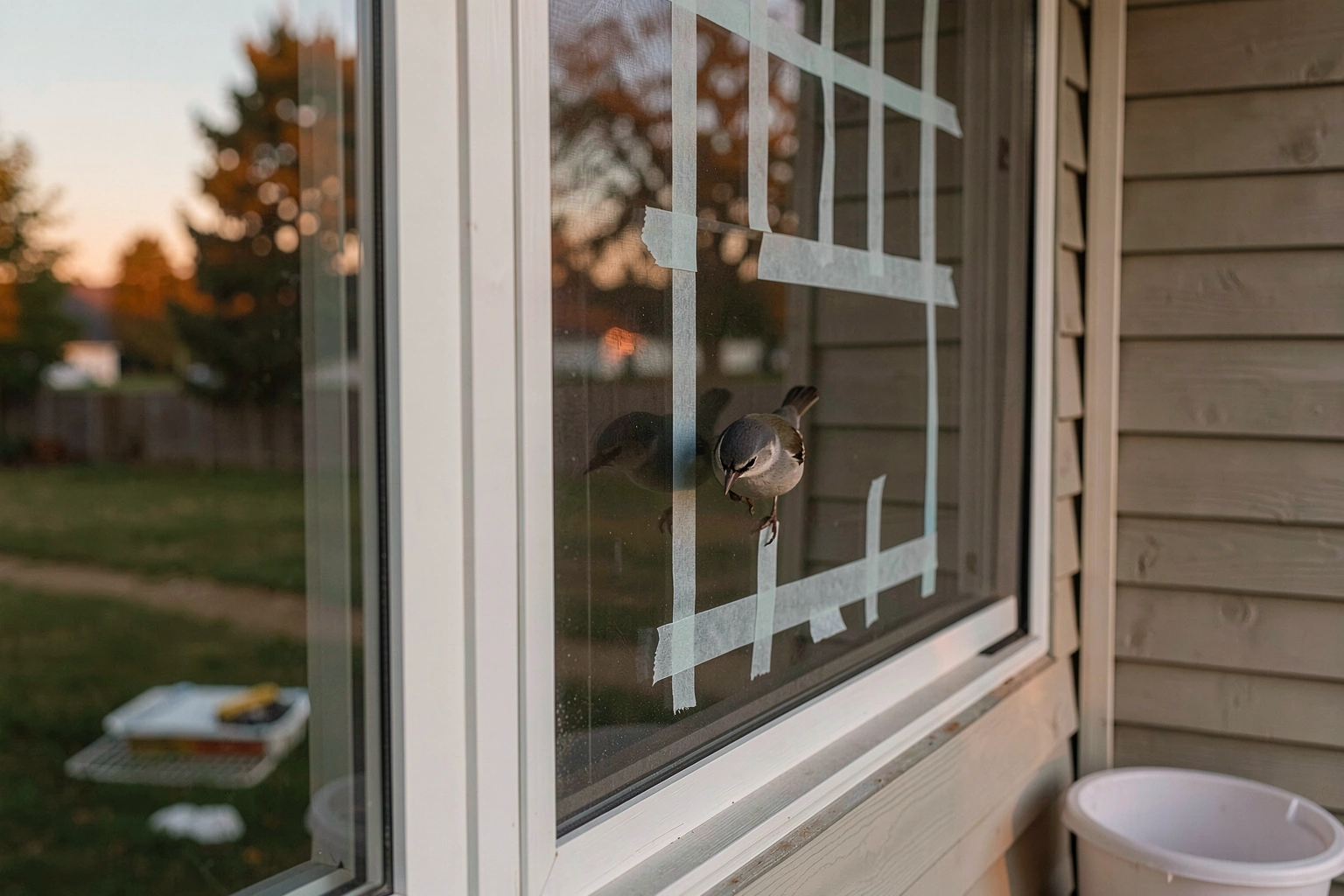
There are really two different behaviors that look similar but have different causes. The first is a territorial attack, where a bird (often a robin, cardinal, or mockingbird) sees its own reflection in the glass and thinks it's a rival. It pecks and flaps at the window trying to drive the intruder away. This tends to happen during breeding season, roughly late April through early August in most of North America, and it usually happens at the same window, same time of day, over and over.
The second behavior is collision, where a bird flies into a window because the glass looks like open sky or habitat. These tips are specifically aimed at how to prevent bird window collisions by reducing reflections and making the glass look solid. For collision cases, the same approach of breaking up reflections and making the glass look like a solid surface helps prevent birds from <a data-article-id="3C0AE4D7-24B3-4A82-88CE-F47196EB0300">flying into the window</a>. This happens because reflective or transparent glass makes birds think they can fly through or into the space beyond it. Studies confirm that what a bird sees in or through the glass, whether a reflected tree line or a view through to the other side of a room, is what causes the strike. These aren't acts of aggression; the bird genuinely cannot tell there's a solid surface there.
Nighttime lighting adds a third layer to the problem. Artificial lights can disorient birds during migration, attract them toward buildings, and increase collision risk, especially on foggy nights or when cloud ceilings are low. The combination of disorientation and reflective glass is particularly dangerous, which is why more window-strike admissions at wildlife rehab centers tend to spike in fall and winter migration seasons.
What you can do right now, today
The most important thing to know before you start: solutions placed on the inside of the window generally don't work during daylight. Closing blinds or putting decals on the interior surface has no meaningful deterrent effect when the bird is reacting to what it sees on the outer surface of the glass. Everything effective goes on the outside, or physically between the bird and the window.
Outside fixes you can put up today
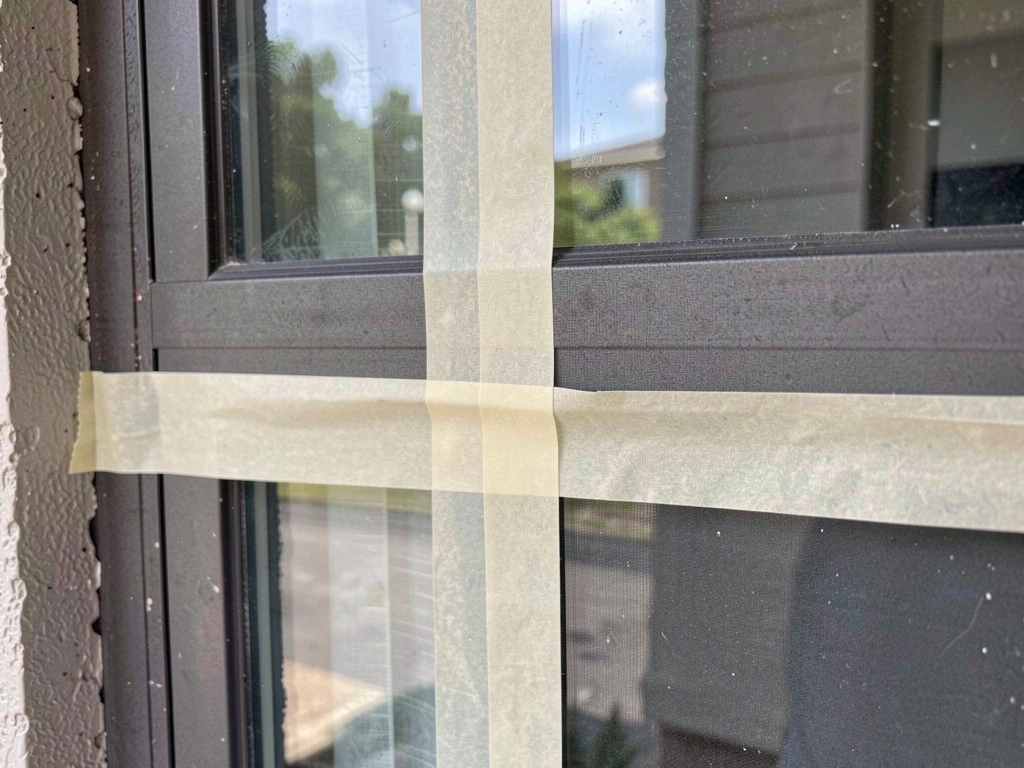
- Hang something on the outside of the glass. Strips of fabric, tape, rope, or even painter's tape applied in a grid pattern across the outer surface will break up the reflection. This doesn't have to be pretty; it just has to work while you set up something more permanent.
- Use the 2-inch rule. Whatever markers or tape you apply, space them no more than 2 inches apart vertically and horizontally. This comes directly from U.S. Fish and Wildlife Service guidance: if the gaps between markers are big enough for a bird to fly through, the bird will treat the gap as open space and go for it anyway.
- Cover the pane with a temporary screen or shade. An exterior roller shade, a piece of window screen, or even bubble wrap affixed to the outer glass physically blocks the reflection and the view. It's not elegant, but it works immediately.
- Move or hang objects directly in front of the problem window. Wind chimes, old CDs, or streamers hung close to the outside of the glass create visual movement that disrupts the reflection. Keep them within a foot or two of the glass so they actually interfere with what the bird sees.
For territorial pecking specifically
If the bird is clearly attacking its own reflection rather than colliding (you'll know because it returns repeatedly to the same spot, often at the same time of day, and acts agitated rather than stunned), the goal is to destroy the reflection. Covering the outside of that window section with a piece of cardboard, paper taped to the exterior, or any opaque material will stop the behavior at that spot. Covering the outside of that window section with a piece of cardboard, paper taped to the exterior, or any opaque material will stop the behavior at that spot, which is a quick tactic in the broader guide on how to stop a bird from pecking at a window. You may need to cover more area than you think; birds are persistent and will find the edge of the covered area and attack there instead.
Long-term solutions that actually hold up
Once the immediate problem is under control, it's worth putting in something durable. Here are the main options homeowners use, along with what to know about each.
| Solution | Where It Goes | Effectiveness | Best For | Notes |
|---|---|---|---|---|
| UV-rated window film (patterned) | Outside surface only | High when properly spaced | Collision prevention | Must be exterior-mounted; interior films had no benefit in controlled studies |
| Feather Friendly / BirdTape dots | Outside surface | High with 2x2 spacing | Collision and territorial issues | Follow the 2-inch grid rule strictly; gaps larger than 2 inches reduce effectiveness |
| Exterior window screen or netting | Mounted a few inches from the glass | Very high | Any window type, any behavior | Creates a physical buffer; birds bounce off netting instead of hitting glass |
| ABC-style decals (external) | Outside surface | Moderate to high | Collision prevention | Spacing matters; thin or widely spaced decals are often not enough on their own |
| Exterior shutters or shades | Outside, covering the pane | High | Any window type | Eliminates reflection entirely; most effective but also most intrusive |
| Tempera paint or chalk markers | Outside surface | Moderate | Temporary or rental situations | Washes off in rain; good for testing placement before committing to film |
The consistent thread across all research-backed guidance is that the treatment needs to go on the exterior surface and needs to cover the full hazard area with no large gaps. A few decorative decals scattered across a big window won't cut it. You need continuous coverage with no more than 2 inches between each element, both vertically and horizontally.
Netting: the option that's often underrated
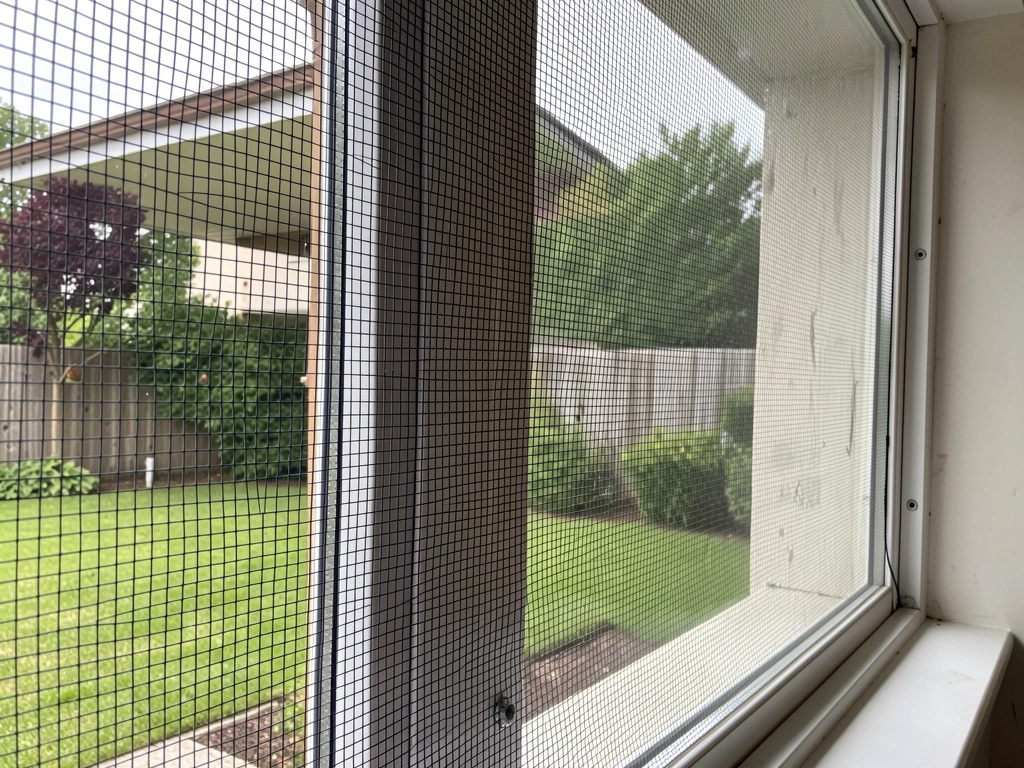
Bird netting or garden mesh stretched a few inches away from the glass surface is one of the most reliable long-term options, especially for large windows or persistent problem spots. The gap between the net and the glass is key: it lets birds bounce off the net safely rather than hitting the hard surface. It's not the most attractive option, but it works across all window types and all bird behaviors, whether territorial or collision-based.
Reducing what's drawing birds to that window
Fixing the window is the core solution, but adjusting your yard layout can reduce how often birds are near the glass in the first place, which lowers the overall collision risk.
Feeder and birdbath placement
The research-backed rule here is simple: place feeders and birdbaths either within 3 feet of a window or more than 30 feet away. At 3 feet, birds don't have enough room to build up a dangerous speed before hitting the glass if they do flush. At 30 feet or more, the window isn't in the immediate flight path. The dangerous zone is anywhere in between, where birds launch from a perch, accelerate, and hit the glass at full speed. If your feeder is currently sitting 10 to 20 feet from a problem window, moving it is one of the most impactful changes you can make.
Also avoid placing feeders or birdbaths directly in front of untreated windows. The activity draws more birds into proximity with hazardous glass. If you can't move the feeder, treating the adjacent windows should be your top priority.
Lighting changes that help at night
Artificial lighting at night disorients migrating birds, draws them toward buildings, and increases the chance they'll end up near your windows. The practical steps are straightforward: turn off nonessential interior and exterior lights from dusk to dawn during migration seasons (spring and fall), draw window shades or blinds at night to contain interior light, and if you do use exterior lighting, angle or shield it downward so it's not projecting upward or toward windows. The Audubon Society's Lights Out program is built around exactly this approach, and even partial participation makes a difference.
Troubleshooting when one method isn't working
If you've put something on the window and the bird is still hitting or pecking, here's how to diagnose the problem.
- Check your coverage gaps. The most common reason decals and tape fail is that the gaps between them are too large. Birds will find the unmarked area and fly through it. Go back and fill in any section where the spacing exceeds 2 inches in either direction.
- Check whether your fix is on the inside or outside. Interior films, blinds, and decals do not work during daylight. If your current solution is inside, you need to add something to the exterior surface.
- Identify the hot spot. Watch where specifically the bird is hitting or pecking. Sometimes it's only one pane or one corner that has a particular reflection angle, and that spot needs more coverage than the surrounding area.
- Look at the time of day. Territorial pecking often happens at a consistent time, tied to when the sun angle creates the strongest reflection. If the attacks happen in the morning, the east-facing side of that window may need more coverage. Afternoon attacks point to a west-facing reflection issue.
- Consider the species. Some birds, particularly northern mockingbirds and American robins, are exceptionally persistent about territorial attacks and may keep going even after partial coverage. Full coverage of the attacking section of glass is usually the only thing that works with these species.
- Think about seasonal timing. If it started in late spring, it's almost certainly territorial behavior during breeding season. These patterns often stop on their own by late summer, but they can last two to three months, which is a long time to wait without intervention.
If you've covered the exterior, used the correct spacing, moved your feeders, and the bird is still hitting the same window, the issue may be that the reflection or view-through is still present in part of the pane. Try covering the full window temporarily (cardboard, paper, exterior shade) to confirm whether the window is the actual hot spot, then narrow down which section needs treatment.
What not to do, and how to handle an injured bird
Things to avoid
Do not use glue traps anywhere near windows or on window surfaces. They cause severe injuries and suffering to birds (and other animals), and the harm they cause far outweighs any deterrent benefit. Wildlife rehabilitation centers regularly treat animals injured by glue traps, and this approach is both inhumane and counterproductive.
Do not attempt to chase, shoo, or physically handle a territorial bird repeatedly. It won't change the bird's behavior and can cause the bird unnecessary stress. Fix the window and remove the trigger. Don't use chemical repellents, sticky substances on windowsills, or anything that could coat a bird's feathers. If you're not sure whether a product is safe for birds, assume it isn't.
If a bird hits your window and goes down
A bird that hits a window and sits stunned on the ground may appear to recover but still have internal injuries that aren't visible. Head trauma and internal bleeding are common in window-strike victims and can cause a bird to die hours or days later even if it flies off initially. Don't assume it's fine because it flew away.
If a bird is on the ground and not moving or clearly disoriented, place it gently in a small cardboard box with air holes and keep it in a quiet, dark, warm place. Do not offer food or water. The bird needs professional assessment and, if injured, anti-inflammatory medication that only a licensed wildlife rehabilitator can provide. In most U.S. states it is illegal to keep or care for injured wildlife without a permit, so the right move is to contact a licensed wildlife rehabilitator or your local wildlife center as quickly as possible. The U.S. Fish and Wildlife Service recommends this as the correct next step regardless of how the bird looks. You can find your nearest licensed rehabilitator through your state wildlife agency or a national directory.
If you're seeing repeated strikes at the same window and birds are being injured consistently, that's also a signal to consult a professional bird-proofing service. They can assess the specific reflection angles, window attributes, and local bird activity to recommend a targeted solution, particularly if you have large windows or architectural glass that's especially difficult to treat with standard retail products.
FAQ
How can I tell if my bird is attacking its reflection or colliding with the glass?
Check whether the bird pecks at the same bright “spot” and returns within minutes, that pattern points to reflection aggression. If it darts, hits, and then flies off or tumbles, that pattern suggests collision. Timing can help too, territorial behavior often repeats during the same time window each day, while collisions can occur more randomly when birds are in flight.
I covered part of the window and it stopped, do I need to cover more?
If cardboard stops the behavior immediately, you still need to treat the full area that shows the reflection. Birds will attack the nearest uncovered edge, so overlap covers by several inches and test by watching for 30 to 60 minutes, then cover any new pecking zone.
Why didn’t exterior covering work the first time, even though it seemed reasonable?
Avoid common “inside-only” attempts like interior decals and closed blinds during daylight, because the bird is responding to the exterior view. If the bird still persists after you treated the outside, the likely cause is that part of the pane still shows sky or a reflective scene, so temporarily cover the entire affected window section to confirm the true hazard area.
What spacing or installation details matter most for mesh, netting, or other window coverings?
Use continuous coverage with tight gaps, the practical rule is no more than about 2 inches between sections. For mesh or netting, keep it installed a few inches off the glass and ensure it is taut, loose fabric can sag and still allow the bird to hit the pane.
What if I can’t move the feeder or birdbath anywhere else?
If you can’t move feeders, reduce the visual trigger by temporarily removing bird feeders for a few days while you apply the window treatment. This helps confirm the root problem, and it reduces repeated attract-and-approach behavior that otherwise keeps the bird searching the hazard area.
Can nighttime lighting changes fix daytime window pecking too?
Yes, but do it after you reduce the hazard visually. If the bird is hitting during daytime, lights won’t be the main fix. If you notice increased activity after dusk, turn off nonessential lights and shield exterior lights downward, then reassess during the next migration window.
Are chemical repellents, sticky strips, or spray deterrents okay to use?
Don’t use products or substances that could coat the bird, even if they claim to be safe. For example, sticky window treatments and “repellent” sprays can cause feather contamination or injury, the article recommends assuming products are unsafe unless specifically proven bird-safe.
What should I do if the bird hits the window and seems fine after a few minutes?
If a bird is stunned, move it to the dark and quiet and contact a licensed wildlife rehabilitator immediately. Even if the bird appears to recover and flies away, internal injuries can show up later, head trauma and internal bleeding are well-known causes of delayed death.
How should I handle a bird on the ground if it won’t fly away?
If you find an injured bird and you are unsure whether it is safe to handle, don’t repeatedly try to “catch it” yourself. Use a small box or towel only as a last step for moving it gently, then prioritize professional care, keeping the bird in a ventilated box with air holes and minimal stress.
What should I troubleshoot if the bird targets the same spot after I install a deterrent?
If the bird keeps targeting the same area despite treatment, confirm reflection angles by doing a temporary full-window cover and then peeling back coverage in sections. Also check for interior light sources near that pane at night, because view-through from adjacent rooms can recreate the hazard on part of the glass.
When is it worth calling a bird-proofing service instead of DIY?
A professional bird-proofing service is especially useful when you have large multi-pane glass, hard-to-reach exterior surfaces, or complex reflections from architecture. They can tailor a treatment map to your exact window layout, rather than relying on generic store-bought patterns that leave gaps.
If this keeps happening for days, does that change what I should do?
If you notice repeated strikes at one window across multiple days, treat it as a persistent hazard and escalate your response. Repeated collisions raise the chance of delayed injury, and the birds may also keep returning during the same season, so prompt, continuous exterior coverage matters more than waiting for a “one-off” event to stop.
Next Articles
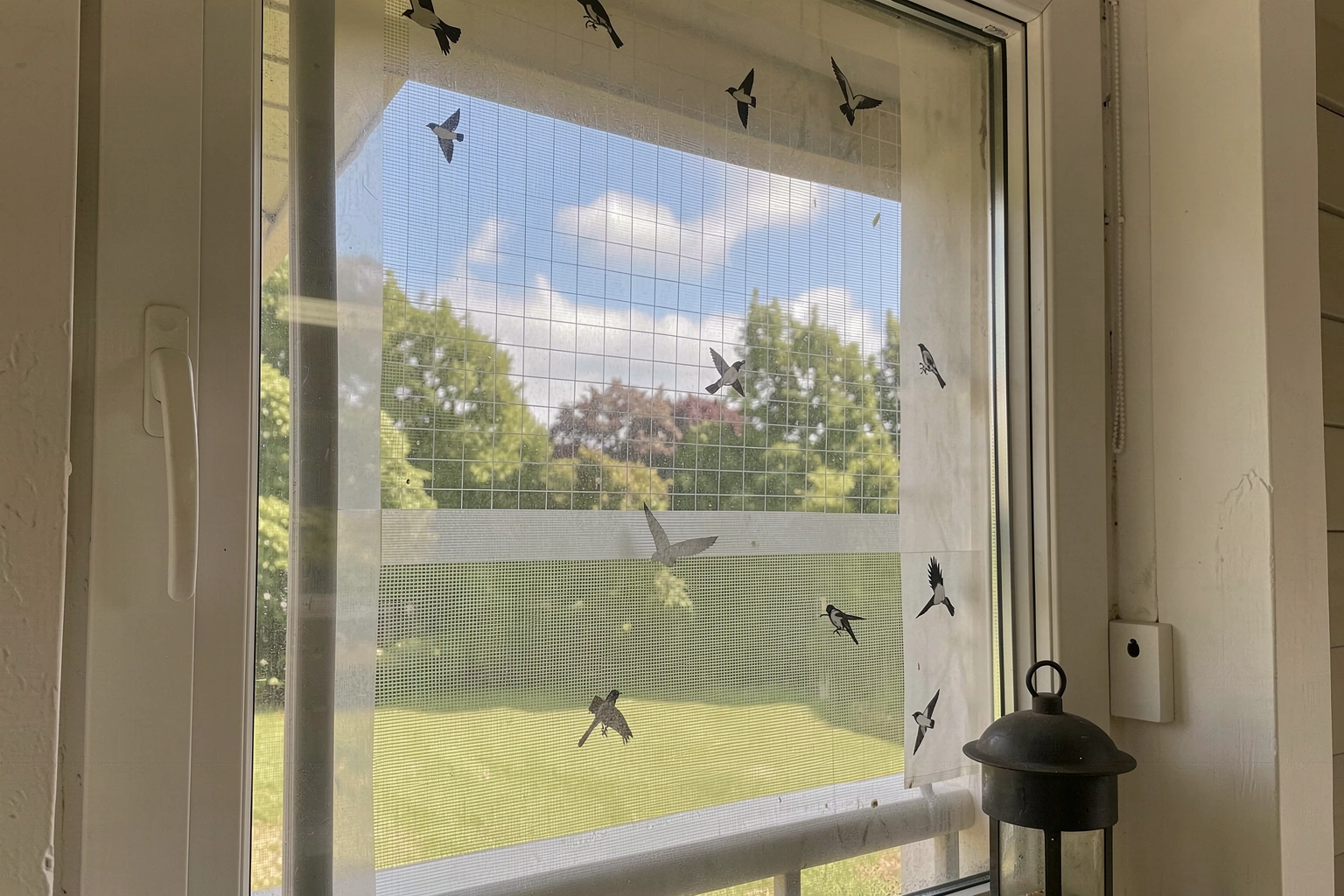
How Do You Stop a Bird From Hitting Your Window
Stop daily window strikes fast with clear deterrents, fixes for reflections, and long-term prevention steps for persiste
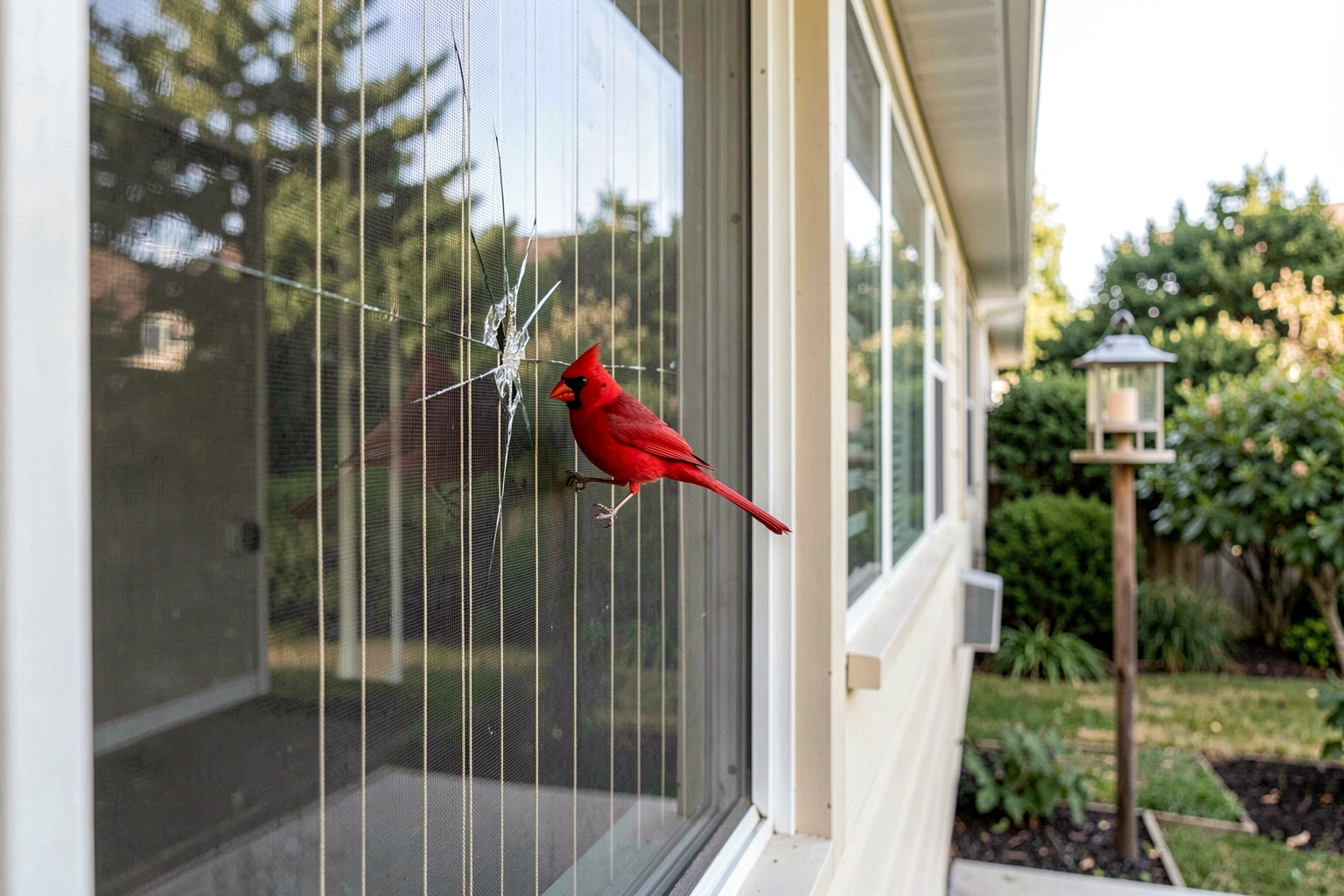
How to Stop a Red Bird From Hitting Your Window
Step-by-step fixes to stop red birds, especially cardinals, from hitting windows with quick and lasting deterrents.
How to Get a Bird Out of a Building Safely and Fast
Step-by-step safe methods to get a bird out fast, reduce stress, and seal entry points to prevent repeat visits.