If a bird just hit your window, here is what to do right now: don't touch it yet, keep pets and people away, and watch from a distance for up to 20 minutes. A stunned bird may recover on its own. If it doesn't stand up, fly off, or right itself within that window, carefully place it in a small cardboard box or paper bag and call a licensed wildlife rehabilitator. That's the core of it. Everything below walks you through each step in detail, tells you what injuries to look for, and shows you how to stop this from happening again.
Bird Window Strike What to Do: Triage and Prevention Guide
Maya Carver
29 May 2026
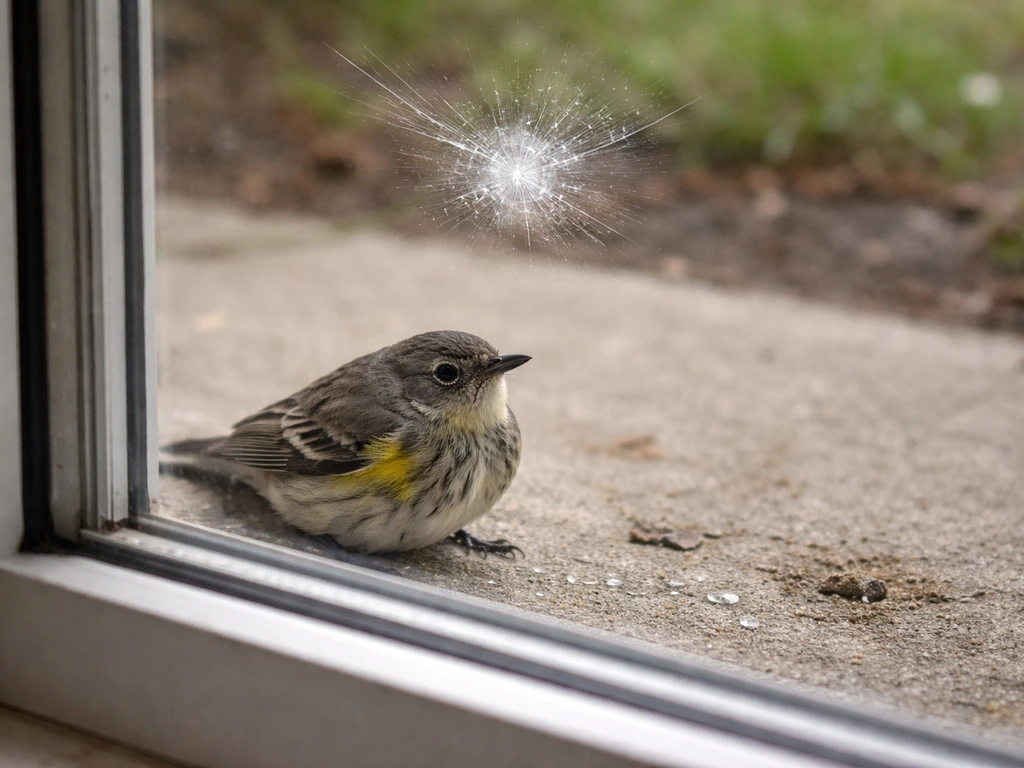
Quick emergency actions for a fresh window strike
The first few minutes matter most. If you ever need bird hit glass what to do guidance, follow these first steps before you decide whether to call rehab. Stay calm, move slowly, and keep noise down around the bird. Your job right now is to reduce stress, not to fix anything.
- Step back immediately. Give the bird space. Hovering over it causes additional stress that can make shock worse.
- Remove any nearby threats. Bring pets inside, ask bystanders to move back quietly.
- Watch from a distance of at least 10 feet for up to 20 minutes. Many birds that seem dead are simply stunned and will recover if left alone.
- If the bird is on a hard surface like concrete or an exposed deck where a cat could reach it, loosely drape a lightweight cloth over it from a distance to reduce stimulation, without restraining it.
- If it hasn't flown off after 20 minutes, or if you see clear injury signs (see the next section), move to containment.
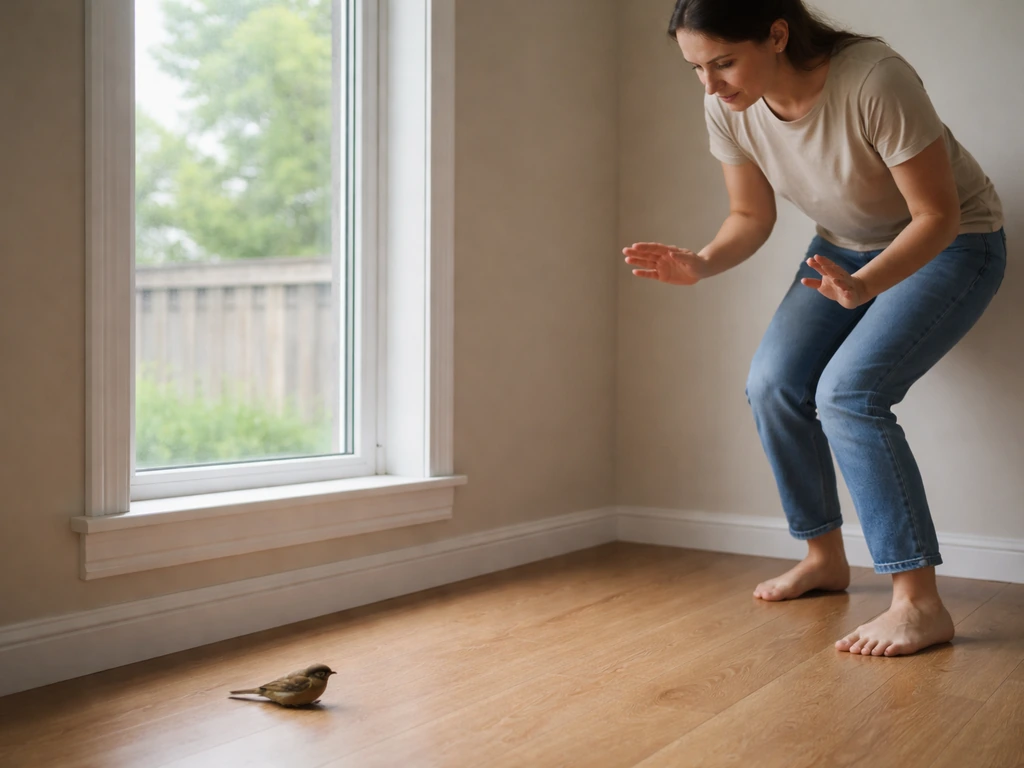
One scenario worth calling out: if the bird flew through an open window or door and is now inside your building, don't chase it. Close interior doors, open the window it came through as wide as possible, turn off interior lights, and let it find its way out. Chasing a bird inside a room causes panic and injuries. If it lands somewhere and won't move, then apply the containment steps below.
Assessing injury and deciding: release vs call rehab
Not every window-strike bird needs a rehabber. A bird that is sitting upright, blinking normally, gripping its perch or the ground, and responding to nearby movement with alertness is likely just stunned. Give it that 20-minute window and it will probably fly off on its own.
Call a wildlife rehabilitator right away if you see any of the following: WRSOS also notes injury and stress signs that can indicate a bird needs care, including blood, broken wing or limb, maggots present, and inability to stand injury and stress signs that indicate a bird needs care.
- Visible bleeding anywhere on the body
- A drooping or visibly broken wing or leg
- The bird is lying flat and cannot stand or right itself
- Head tilting to one side, circling, or loss of balance (neurological signs)
- Labored or open-mouthed breathing
- Eyes closed, partially closed, or unable to hold the head up
- Maggots or fly eggs present (indicates the bird has been down for hours or longer)
- Puncture wounds, especially if a cat was involved (cat bites cause internal infections even when the marks look small)
Internal injuries are common after window strikes and they are invisible from the outside. Even a bird that looks fine can have brain swelling or internal bleeding. When in doubt, call a rehabber anyway. They can talk you through an assessment over the phone in under two minutes. Recovery chances improve significantly when a window-collision victim gets to a rehabilitation facility quickly rather than sitting in a box at home for hours.
Humane containment and safe handling steps
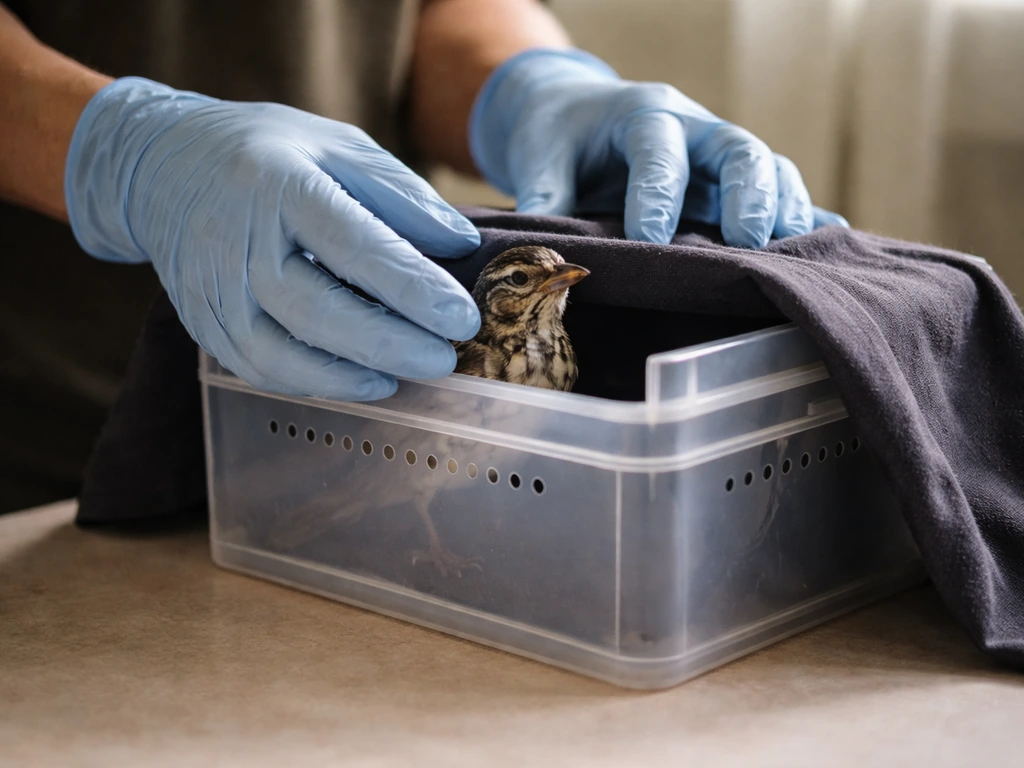
If the bird needs to be moved, the goal is to get it into a calm, dark, contained space with as little handling as possible. Here's the method that works.
- Put on gloves if you have them. Thin work gloves or disposable nitrile gloves are fine. This protects you and reduces scent transfer.
- Prepare the container first. Use a small cardboard box (shoebox size works well) or an unwaxed paper bag. Poke a few small air holes in the sides. Line the bottom with a paper towel or crumpled tissue so the bird can grip something.
- Approach slowly and crouch down. Cup both hands around the bird gently from above, not grabbing but enclosing. Most stunned birds won't resist much.
- Place the bird in the container without turning it upside down. Set it upright if possible.
- Close the lid or fold the bag over. Do not seal it airtight.
- Put the box in a dark, quiet room indoors, away from drafts, TV noise, other animals, and direct sunlight. A closet, bathroom, or quiet spare room works.
- Do not peek in repeatedly. Every time you open the box you add stress.
- Check after 30 to 60 minutes. If the bird is upright and active, take the box outside to a quiet area, open it on the ground, and let it leave on its own terms.
- If it is not improving or shows injury signs, contact a wildlife rehabilitator rather than continuing to hold it.
For raptors (hawks, owls, falcons), use a larger box, wear thick gloves or wrap your hands in a towel, and be especially careful of the talons. Raptors can inflict serious puncture wounds even when weakened. The same dark-box approach applies, but call a rehabber before attempting to handle a raptor if you can.
What not to do
Some of the most instinctive responses to a hurt bird can actually make things worse. Avoid all of these:
- Don't offer food or water. Forcing food or water into a stressed or injured bird can cause aspiration (water inhaled into the lungs), choking, or metabolic problems. This applies to all species, including raptors.
- Don't hold the bird in your open hand or let it 'rest' perched on you. It feels comforting but it keeps the bird in a high-stress state and can be actively harmful.
- Don't put it back outside right away if it just struck the window. A still-stunned bird outside is easy prey for cats, dogs, and other predators.
- Don't place the box in a sunny window or warm car for more than a few minutes. Overheating kills birds fast.
- Don't attempt to splint a broken wing yourself unless instructed by a rehabber over the phone. Improper splinting causes additional injury.
- Don't keep the bird overnight without calling a rehabber first. If it's nighttime and no local rescue is available, it's okay to keep the bird in a dark box until morning, but call or message a rehabber as early as possible.
- Don't assume it's fine because it looks okay. Window strikes cause internal injuries that aren't visible.
Immediate fixes for today
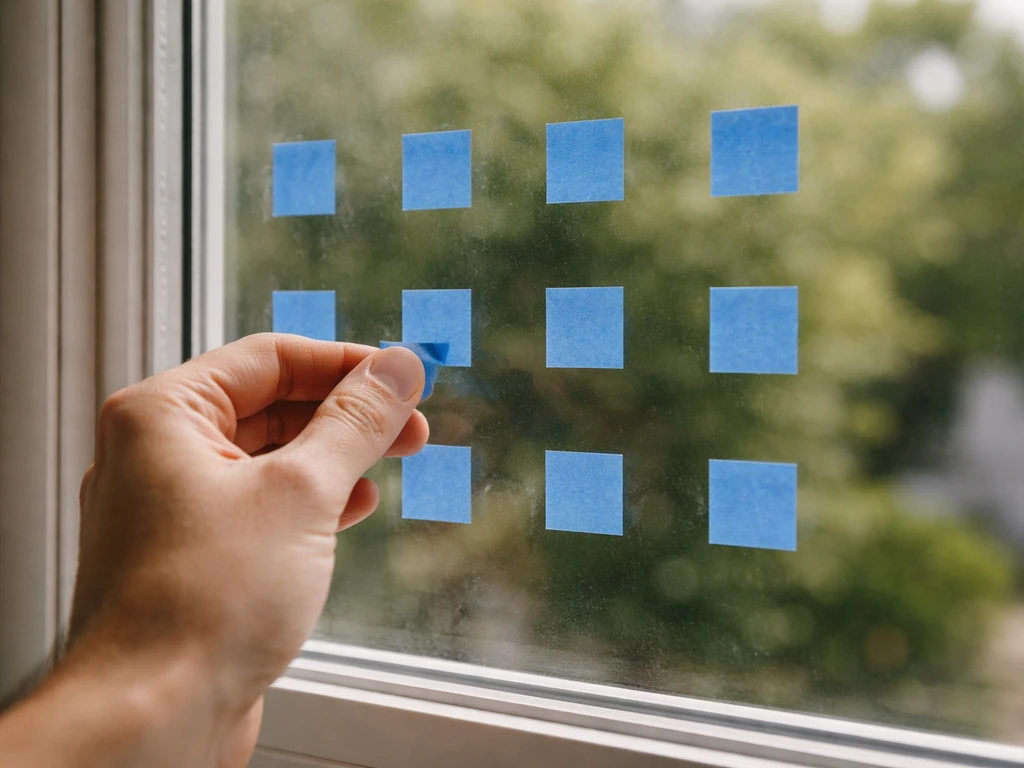
Once the immediate bird situation is handled, take a quick look at the window it hit and make a few changes today. These are fast, low-cost actions that reduce the risk of another strike while you plan a longer-term solution.
- Tape a grid of painters tape or masking tape on the outside of the glass in a 2-inch by 2-inch pattern. It looks basic but it works and it takes 10 minutes.
- Close blinds or curtains on the interior side of problem windows, especially during peak bird-activity hours (dawn and a couple hours around dusk).
- If the window is reflective because of surrounding vegetation, move any bird feeders that are within 30 feet of the window to either within 3 feet of the glass (too close to build up flight speed) or more than 30 feet away.
- Turn off interior lights at night when possible, especially in rooms with large glass panels. Lit windows attract birds at night and create dangerous reflective surfaces.
- If you have a window that a bird keeps targeting, temporarily cover it from the outside with window screen material, burlap, or shade cloth until you can install a better solution.
Long-term window-proofing options that actually reduce strikes
The core problem is that birds can't perceive glass as a barrier. They see a reflection of sky or trees and fly straight into it. Long-term solutions work by making the glass surface visible as a solid object. The most important rule: put your solution on the outside of the glass, not the inside. Patterns placed on the exterior are consistently more effective because they interrupt the reflection before birds commit to flying toward it.
Comparing your main options
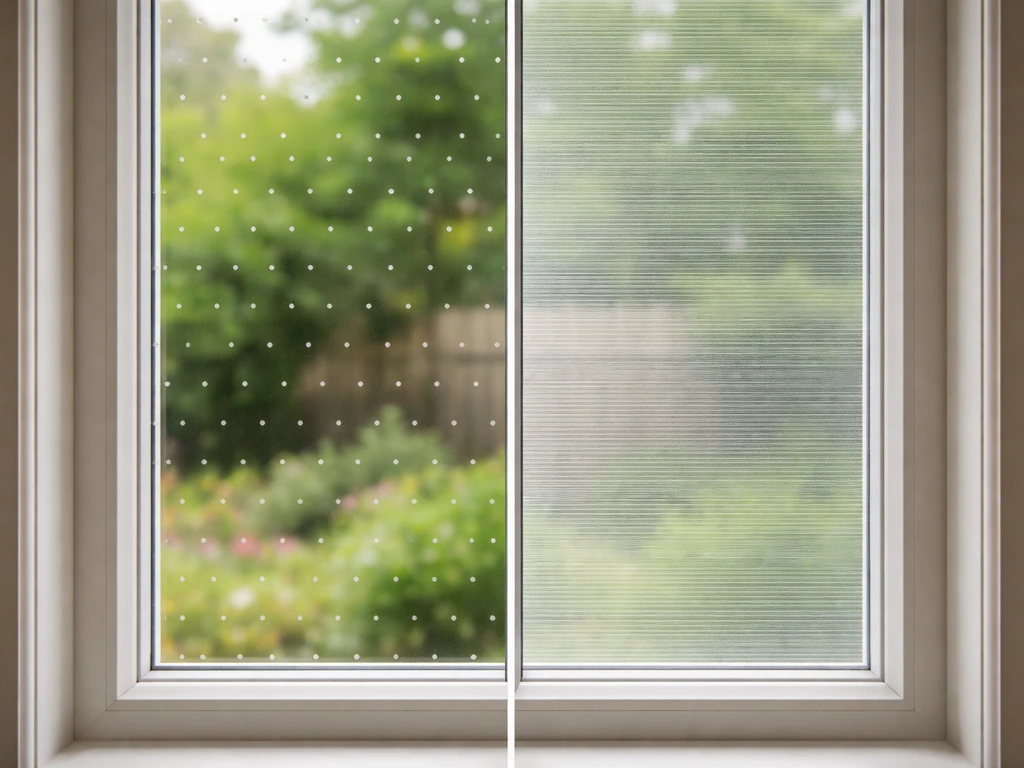
| Solution | Placement | Effectiveness | Cost | Appearance |
|---|---|---|---|---|
| Dot or stripe decals (spaced 2 inches apart) | Outside | High when properly spaced | Low ($10–$30) | Subtle or decorative |
| Window films (patterned/frosted) | Outside preferred | High | Medium ($50–$200+) | Can look professional |
| UV-reflective film (bird-safe) | Outside | High | Medium–High | Nearly invisible to humans |
| External screens or netting | Outside, over window | Very high | Medium ($30–$100) | Visible but functional |
| Tempera/chalk paint patterns | Outside | High when spaced correctly | Very low (under $5) | Visible, temporary |
| Interior blinds or curtains | Inside | Moderate (reduces reflection) | Low–Medium | Normal window treatment |
| Fritted or etched glass (new builds/replacements) | Built-in | Very high | High | Clean, professional |
Whatever method you choose, spacing is the non-negotiable part. Patterns must cover the entire glass surface with elements no more than 2 inches apart horizontally and vertically. A few random decals scattered on a large window do almost nothing. Birds need to read the whole pane as a solid obstacle, not fly through the gaps between a couple of stickers.
For facility managers dealing with large glass expanses, external screens or netting stretched a few inches out from the glass surface are among the most reliable retrofits. The gap between the net and the glass means birds bounce off the net rather than the hard glass, which also reduces injury severity for any birds that do make contact.
A few landscape and lighting adjustments also help significantly. Avoid placing bird feeders, bird baths, or dense plantings within the 3-to-30-foot danger zone from windows. Reduce interior lighting visible from outside at night, especially during spring and fall migration. If you have a large corner-window setup with a view-through effect (where birds can see sky or trees on the other side), covering one pane or breaking up the view with furniture or interior plants helps interrupt that flight path.
When to contact wildlife professionals and what the law says
In the United States, most birds are protected under the Migratory Bird Treaty Act (MBTA), which covers hundreds of native species. Under federal regulations (50 CFR §21.31), a private person who finds a sick, injured, or orphaned migratory bird is allowed to take it into temporary possession for the sole purpose of transporting it immediately to a permitted wildlife rehabilitator. You are not permitted to keep it, treat it yourself long-term, or release it into the wild without authorization. The practical takeaway: pick it up, contain it safely, and get it to a licensed rehabber as quickly as you can.
To find a permitted wildlife rehabilitator near you, try these resources:
- Animal Help Now (ahnow.org): GPS-based lookup, works on mobile
- The Humane Society's state-by-state wildlife rehabilitator directory
- Your state's fish and wildlife agency website (most have a 'find a rehabber' tool)
- Local wildlife center or Audubon chapter: a quick Google search for '[your city] wildlife rehabilitator' usually turns up a local contact fast
When you call, be ready to describe: the species if you know it (or just 'small songbird,' 'large hawk,' etc.), where it was found, how long ago the strike happened, and what symptoms you're seeing. This helps the rehabber triage over the phone and tell you whether to come in immediately or monitor a while longer.
A special note for raptors and other large birds: do not handle hawks, owls, or eagles without thick gloves and ideally a heavy towel. Their talons can cause serious puncture wounds even when the bird appears weak. Call a rehabber or your local animal control before attempting to contain a large raptor if you're unsure.
Seasonal planning checklist to prevent repeat strikes
Window strikes aren't evenly distributed throughout the year. They spike during spring migration (roughly late April through early June) and fall migration (late August through October) when billions of birds are moving through unfamiliar territory. Breeding season in late spring also sees increased strikes as territorial birds attack their own reflections. A simple seasonal checklist keeps you ahead of the problem.
Spring (April to June)
- Install or refresh exterior decals and film before migration peaks in late April
- Move bird feeders to safe distances (under 3 feet or over 30 feet from glass)
- Turn off non-essential interior lights between 11 PM and 6 AM during peak migration weeks
- Check window screens for gaps and re-secure any loose netting
- If a territorial bird is repeatedly hitting a specific window, cover or treat that pane first
Summer (July to August)
- Inspect all exterior decals and film for peeling or fading and replace as needed
- Trim back any fast-growing vegetation that has increased window reflection
- Check that any exterior netting or screens are still secured and undamaged
Fall (September to November)
- Re-treat high-risk windows before the fall migration peak in September
- Reduce or eliminate overnight lighting on large glass facades
- Keep feeders positioned correctly as migrating birds stop to refuel near your building
- Document any strikes (species, date, window location) to identify patterns for next year
Winter (December to March)
- Inspect window treatments after ice storms or heavy weather that can dislodge exterior solutions
- Review your strike log from the previous year and prioritize which windows to treat before spring
- Research longer-term upgrades (fritted glass, permanent screens) if strikes have been recurring
- Contact your local Audubon chapter or wildlife agency for any updated guidance on local species of concern
Keeping a simple strike log (even just a note on your phone with date, location, and species) is surprisingly useful. After one or two seasons you'll know exactly which windows are your worst offenders and can prioritize your prevention budget there first. A single high-traffic window that gets properly treated can account for a dramatic drop in overall strikes for the whole building.
FAQ
Should I open the curtains or turn off lights while the bird is still nearby?
Yes. If it appears awake but confused, turning off interior lights helps reduce glare and reflections, then you can keep only one light source on the side you want the bird to exit. Avoid bright flashlights or loud movement near the bird.
What if the bird is bleeding or has a visible wing droop right away?
Call a licensed wildlife rehabilitator immediately. Visible bleeding, inability to stand, or a wing that will not lift are red flags for internal and musculoskeletal injuries, even if the bird is still alert.
How long should I wait before deciding it is not just stunned?
Use the same 20-minute observation window, but start the timer when the environment is quiet and pets and people are away. If the bird cannot stand, fly off, or right itself within that period, contain it and contact rehab.
Can I put the bird back outside after I catch it in a box?
Do not release it. The safe, lawful approach is temporary containment and rapid transport to a permitted rehabilitator. Birds can look fine externally while still having internal injuries that worsen after release.
What is the safest way to pick up a bird if it is fully conscious but trapped?
Let it choose movement when possible, then use a small box or bag as a barrier rather than gripping it. If you must contain it, minimize handling time and keep the container dark, with ventilation holes, so it stays calm.
Is it okay to give water or food while waiting for the rehabber?
Avoid feeding or watering. Shock and head trauma can make swallowing unsafe, and giving food can delay proper care. Keep the bird warm and dark in the container until help arrives.
What if the bird hits a window multiple times in the same hour?
Treat it as an ongoing hazard, not a one-time incident. After the immediate bird situation is handled, prioritize covering or treating that specific pane today, and reduce night lighting and exterior attractants in the same area.
How can I tell the difference between a window strike victim and a bird that just landed normally?
Window strike victims usually show impaired balance, sluggish movement, disorientation, or a fluffed posture that does not resolve. Normal landings tend to involve steady footing, coordinated alert responses, and quick departure without needing containment.
What should I do if the bird is a nestling or appears orphaned near a window?
Contain it and contact a wildlife rehabilitator right away. Do not assume the parent has abandoned it, especially if it is within sight range of the original location, and avoid prolonged outdoor handling.
Are there special steps for dealing with a bird that is stuck in a garage or porch area?
Open the window or door it came through as wide as possible, then turn off interior lights inside the affected room and close other interior doors to funnel movement. Avoid chasing; use containment only if it cannot move after giving it a quiet path out.
What can I do if I cannot find a rehabilitator quickly?
Contact local animal control, an emergency veterinary hospital, or a wildlife hotline for guidance on interim containment and nearest options. In the meantime, keep the bird dark, ventilated, and low-stress, and do not attempt long-term care.
If the bird is small, can I just take it outside without calling?
Not if it shows any injury signs or seems unable to recover within the observation period. Internal injuries are hard to detect, so when in doubt, call a rehabilitator and follow their instructions.
Do I need to follow special handling precautions for owls or hawks?
Yes. For raptors and other large birds, avoid handling without thick gloves and ideally a heavy towel. If you are unsure, call rehabber or local animal control first, because talons can cause punctures even when the bird seems weak.
How can I prevent strikes on large building glass without replacing windows?
External retrofits tend to be most effective, such as screens or netting mounted with a small gap from the glass. Ensure the entire pane is covered by an effective barrier, and avoid relying on small decals that leave gaps birds can see through.
What spacing matters for patterns, and what goes wrong with partial coverage?
Keep pattern elements no more than about 2 inches apart horizontally and vertically across the whole pane. If coverage is spotty, birds can still read sections as open pathways and fly through the unpatterned areas.
Should bird feeders be moved immediately, and how far away from windows?
Yes, adjust the hazard zone right away. Reduce dense plantings and remove feeders or bird baths near windows, and keep them outside the 3-to-30-foot danger zone where possible to lower the number of approach flights.
What if the strike happened weeks ago, but the problem keeps repeating at the same window?
Use a seasonal and incident log to identify repeat offenders, then treat the same pane first. It is often more cost-effective to fix the highest-traffic window than to distribute small changes across many windows.
Next Articles
Bird Hit Glass What to Do: Triage, Rescue, and Prevention
Step-by-step care for birds after a glass strike, triage, when to call wildlife rehab, and prevention fixes.
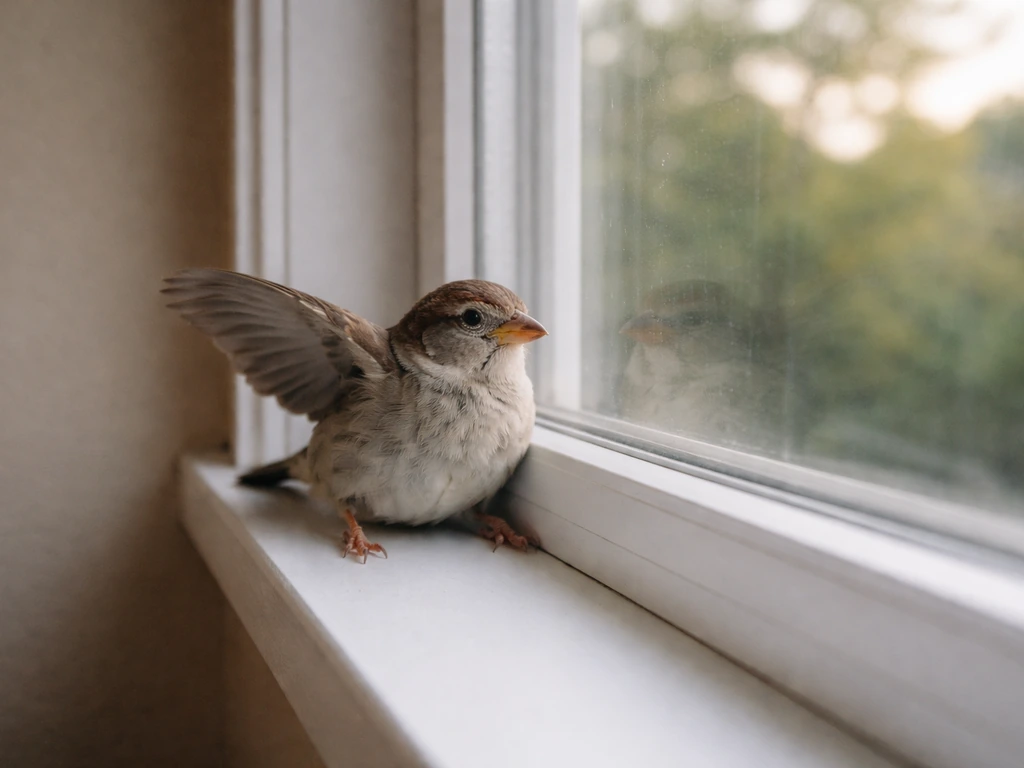
Bird Keeps Hitting Window: How to Stop It Fast and Safely
Stop a bird hitting windows fast with humane steps: reduce reflections, guide it out, manage a stunned bird, prevent rep
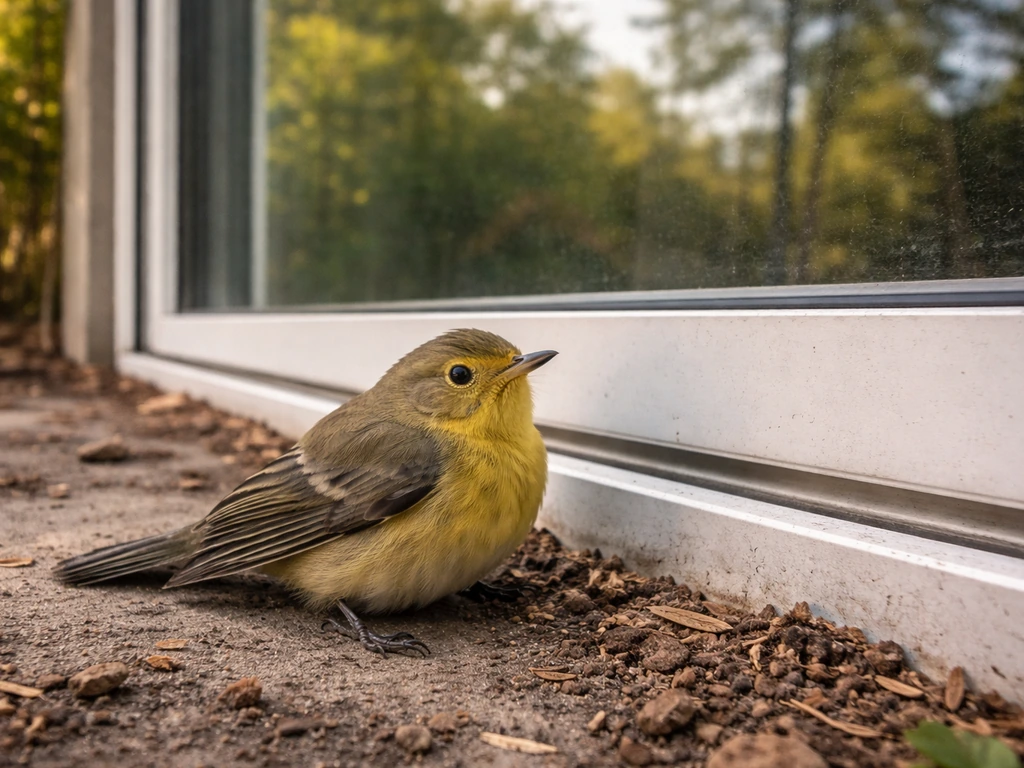
Bird Hit Window What Do I Do Step-by-Step Emergency Help
Step-by-step what to do when a bird hits a window: assess shock, safely recover, avoid mistakes, and prevent repeat coll