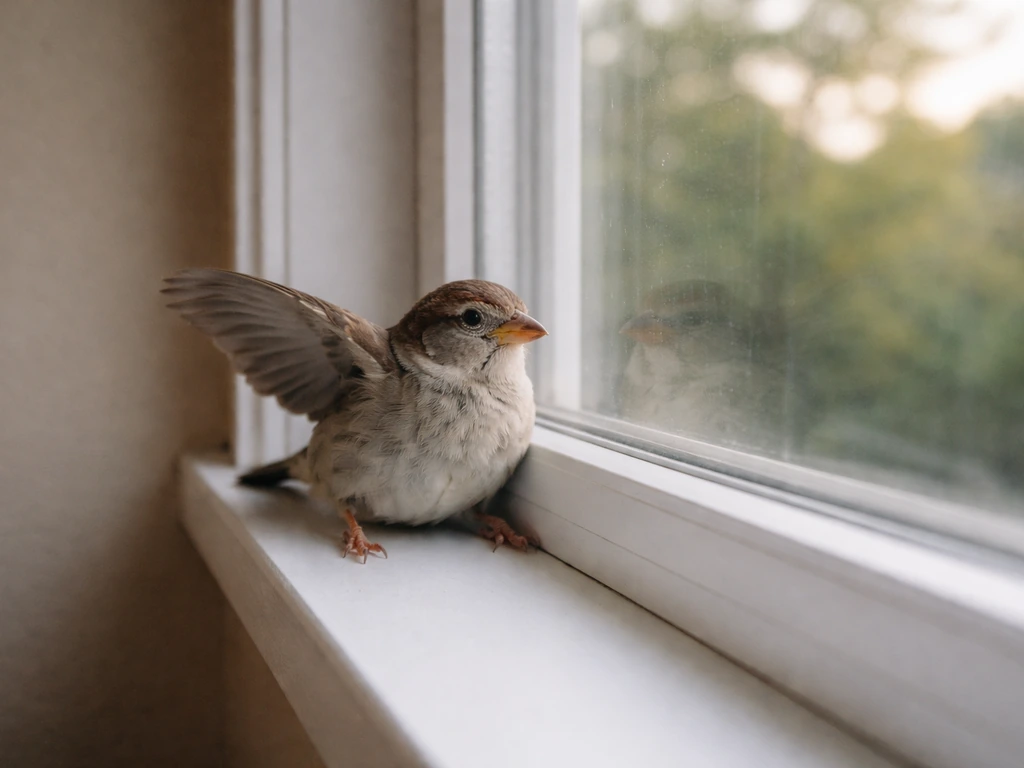
Pick up a shoebox, poke a few air holes in the lid, line it with a cloth or paper towel, and gently scoop the bird inside without squeezing it. Close the lid, put the box somewhere warm, dark, and quiet away from pets, and leave it alone for up to two hours. If the bird is alert and upright when you check, take it outside and open the box, it will likely fly off on its own. If it hasn't recovered by the two-hour mark, or if you see blood, a drooping wing, or labored breathing, it needs a wildlife rehabilitator or vet, not more waiting.
Bird Hit Glass What to Do: Triage, Rescue, and Prevention
Maya Carver
22 May 2026
First two minutes: control the scene
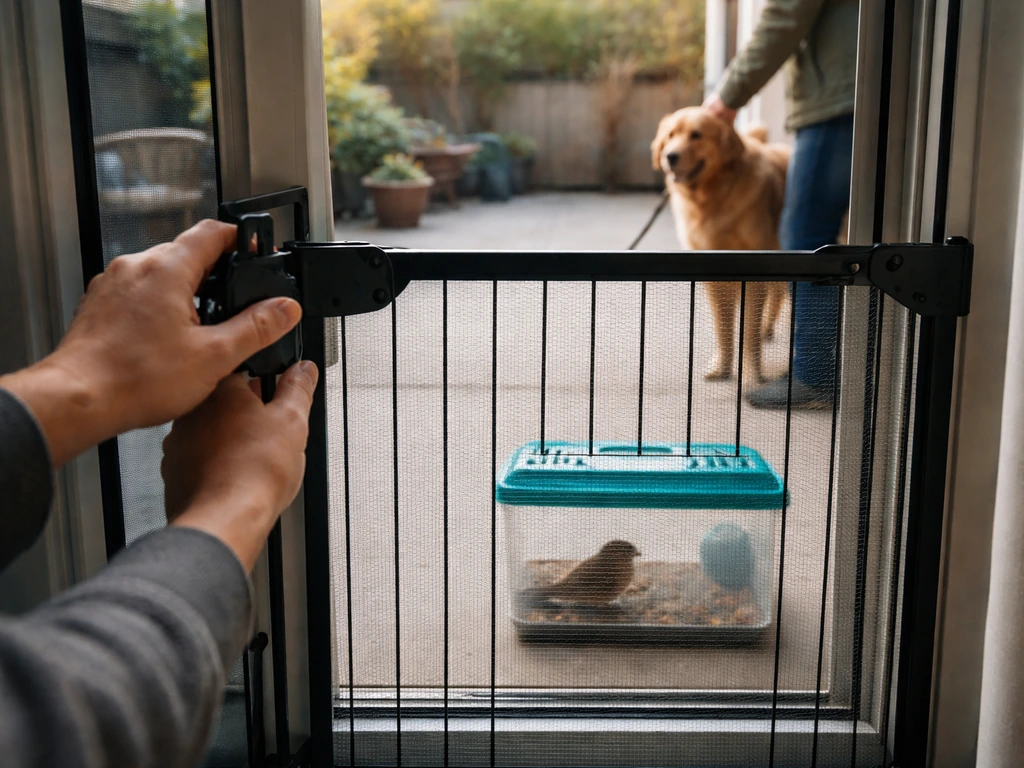
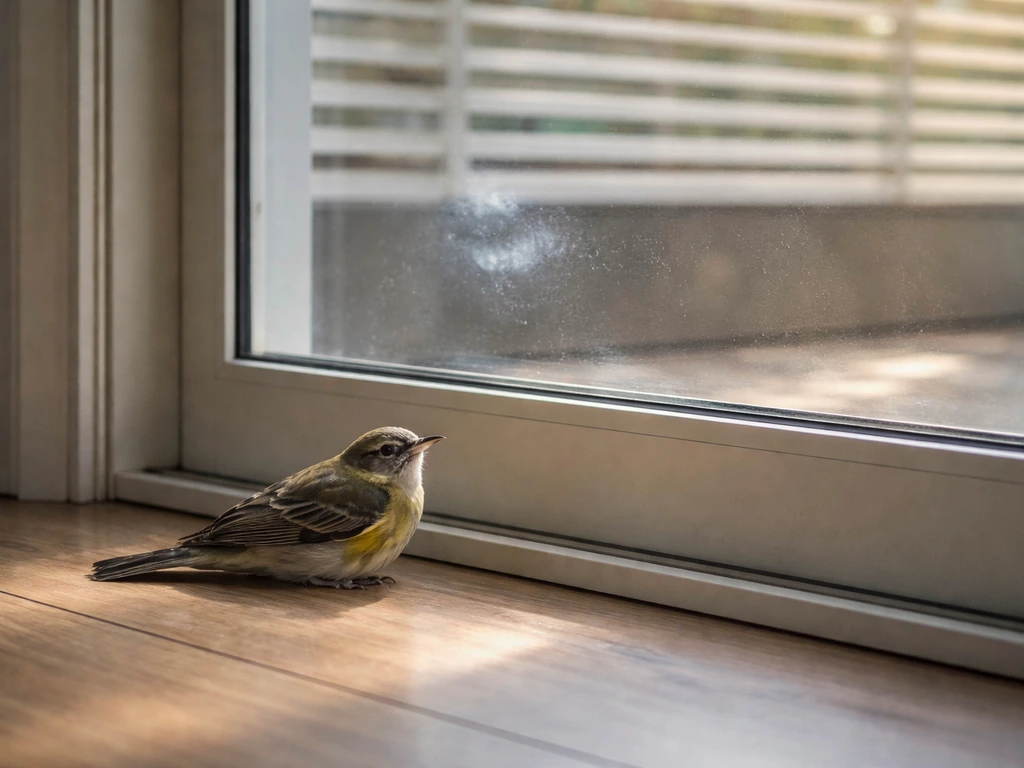
Before you touch the bird, take thirty seconds to make the area safe. A stunned bird on a patio, windowsill, or walkway is completely exposed to cats, dogs, hawks, and foot traffic. Your first job is to reduce those threats, not to examine the bird. If you are wondering what to do next after you make the area safe, see what to do if a bird hits your window for step-by-step guidance.
- Keep pets and bystanders back — ask someone to hold the dog or close a door.
- If the bird is on a hard surface with heavy foot traffic, place a cardboard box or bucket loosely over it right now to block predators while you gather supplies.
- Grab disposable gloves if you have them. Wild birds can carry salmonella and external parasites, so basic hand protection is smart even for a brief handling.
- Get your container ready before you pick the bird up: a shoebox, small cardboard box, or paper bag with air holes punched in it, lined with a cloth or folded paper towel.
- Work calmly and quietly. Noise and fast movements stress the bird further, which can make the outcome worse.
You do not need to rush the bird to a vet in the first two minutes. The priority right now is getting it into a safe, dark container so it can recover from the concussive shock without additional stress or predator exposure.
Triage: stunned, injured, or something worse?
Once the bird is contained, do a quick visual check before you close the lid. You're looking for two things: signs that it will likely recover on its own, and red flags that mean it needs professional care today.
Signs it's stunned but likely okay
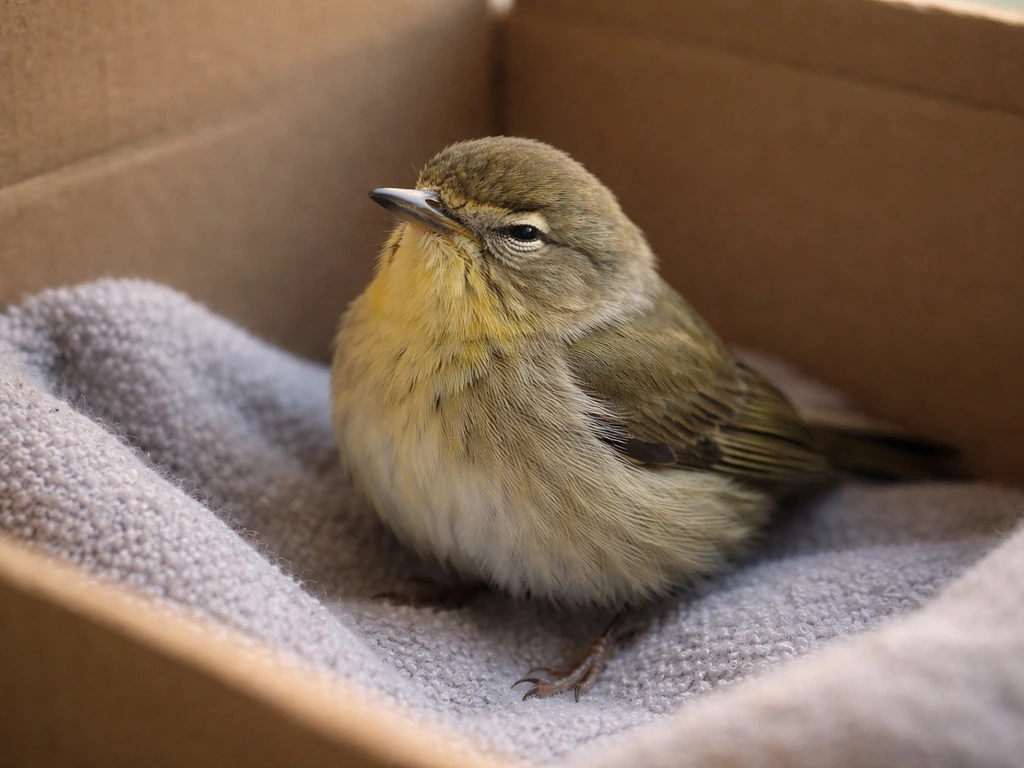
- Eyes are open or blinking
- Sitting upright or trying to right itself
- Reacts when you approach (tries to move away)
- No visible blood or obvious deformity
- Breathing appears regular, not labored or open-mouthed
A stunned bird is essentially concussed. It hit glass at speed, its brain needs a few minutes to reset, and darkness and quiet are exactly what help that happen. Most stunned birds recover within 20 to 30 minutes. Give it up to two hours.
Red flags that need a rehabber or vet today
- Visible blood on the feathers, beak, or around the eyes
- One or both wings drooping or held at an unnatural angle
- Head tilted to one side or the bird is spinning/circling (neurological sign)
- Open-mouth breathing or wheezing
- Bird is completely limp, eyes closed, unresponsive to touch
- Still not moving or responsive after two hours in the box
Here's the important part that many people miss: even a bird that looks fine after a window strike can have internal injuries. The Wildlife Center of Virginia specifically flags blank" rel="noopener noreferrer">intracranial hemorrhaging as a real risk in window-strike cases, the bird appears okay, you let it go, and it dies an hour later. When in doubt, call a rehabber even if the bird seems to be recovering.
Quick triage decision guide
| What you observe | What it means | What to do |
|---|---|---|
| Alert, upright, reacts to movement | Stunned — likely recoverable | Box it, wait up to 2 hours, release if fully alert |
| Limp but breathing, eyes partially open | Concussed — needs monitoring | Box it, call a rehabber to get advice while you wait |
| Bleeding, drooping wing, head tilt | Injured — needs medical care | Box it, call a rehabber or vet immediately |
| No movement, eyes closed, unresponsive | Critical or deceased | Call a rehabber; if deceased, check local disposal rules |
| Recovered but still in box after 2 hours | Possible internal injury | Transport to a wildlife rehabilitator today |
How to handle and house the bird safely
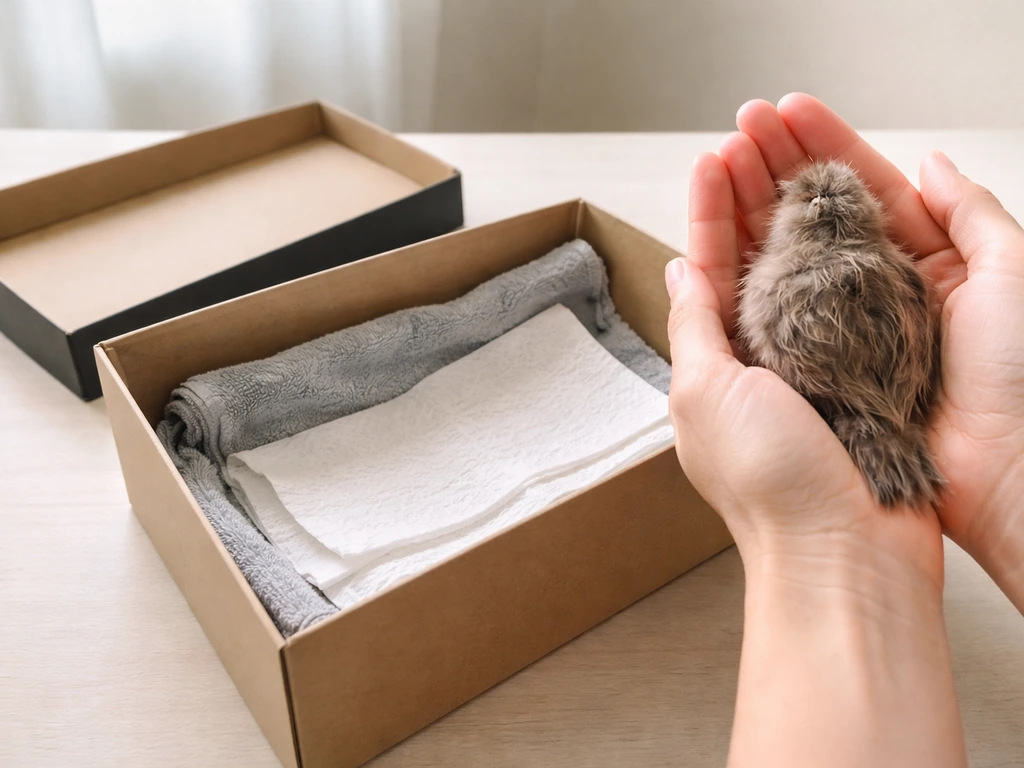
Handling a wild bird should be brief and minimal. The less time it spends in your hands, the better. Cup it gently with both hands, keeping the wings against the body so it can't flap and injure itself further. Do not squeeze. Lower it into the prepared box and close the lid immediately.
For temporary housing: a shoebox with a cloth or paper towel lining is ideal. The cloth gives the bird something to grip, which reduces stress. Punch or poke 6 to 10 small air holes in the lid. Do not use a glass tank or plastic tub with a solid lid, the bird needs airflow and needs to not be able to see you watching it. Darkness is genuinely therapeutic for a concussed bird.
Place the box in a warm room (around 70 to 75 degrees Fahrenheit is fine), away from the TV, kids, dogs, and direct sunlight. A quiet corner of a bathroom or a closet works well. Do not check on it every five minutes. Set a timer for 30 minutes, then check carefully by cracking the lid just enough to observe, not enough for the bird to escape.
When you check and the bird is alert and upright, take the box outside to a quiet spot away from windows and release it by opening the lid or tipping the box gently on its side. Do not toss the bird into the air. Let it choose when to leave.
Getting the right help fast
If the bird needs professional care, the fastest way to find a licensed wildlife rehabilitator near you is to search the Wildlife Rehabilitator Lookup at the National Wildlife Rehabilitators Association website or call your state's fish and wildlife agency. In the US, many areas also have a local Audubon Society chapter or bird rescue hotline that can direct you to the nearest rehab facility.
When you call, have this information ready: the species if you can identify it (or a description), exactly what happened, any injuries you can see, how long ago the strike occurred, and your location. The rehabber will tell you whether to transport the bird yourself or wait for pickup, and they may walk you through additional stabilization steps over the phone.
Timing matters. If you find the bird in the morning, most wildlife clinics have staff available. Evening or weekend strikes are harder, call anyway, because many rehab organizations have after-hours lines or answering services that can advise you. The Tufts Wildlife Clinic and the Wildlife Center of Virginia both have online resources, and your state or provincial wildlife agency can connect you to local licensed rehab contacts around the clock.
If you cannot reach a rehabber and the bird is clearly injured, a regular veterinarian can provide emergency stabilization even if they do not typically treat wildlife. Call ahead so they can prepare.
Things that feel helpful but actually cause harm
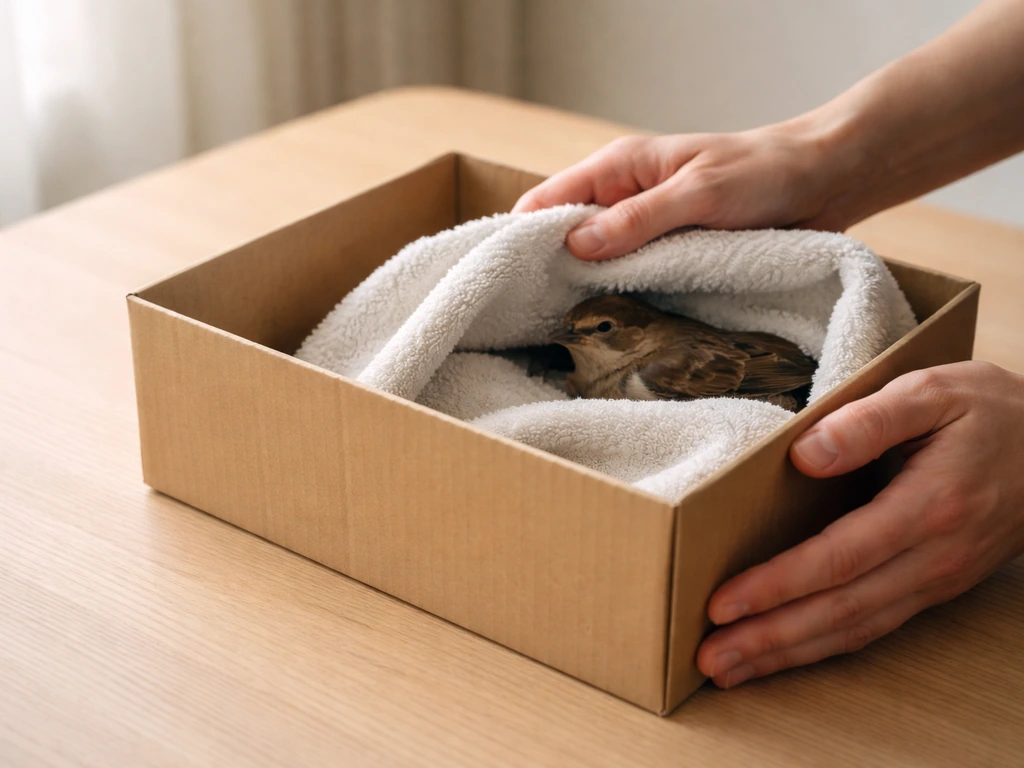
The instinct to nurture a hurt bird is natural, but several common responses make things significantly worse. Here is what to avoid:
- Do not give the bird water by dropper or syringe. A semi-conscious bird can inhale liquid directly into its lungs and drown. Even a fully alert bird should not be offered water this way.
- Do not offer food. You do not know what species it is, what it eats, or whether it can safely swallow in its current state. Feeding wild birds requires training and the right diet — the wrong food causes more harm than no food.
- Do not keep the lid off the box or check on it constantly. Every time you look, you spike the bird's stress hormones, which actively slows recovery.
- Do not place the bird in direct sunlight to 'warm it up.' Overheating a stunned bird is a real risk. Room temperature in a dark box is correct.
- Do not attempt to splint a broken wing, apply bandages, or do any other first aid beyond containment unless you are a trained rehabilitator. Incorrect handling of a fracture causes pain and can cut off circulation.
- Do not release a bird that hasn't fully recovered. A bird that cannot fly away strongly when the box is opened outside is not ready — it is vulnerable. Keep it in the box and call a rehabber.
- Do not wait more than two hours if the bird is not recovering. What looks like a mild stun can mask internal bleeding. The Tufts Wildlife Clinic is explicit: if the bird does not recover within a couple of hours, transport it to a wildlife rehabilitator or vet.
Quick fixes to stop the next bird strike
If a bird just hit your window, there is a reason it happened and there are things you can do today to reduce the risk of it happening again. Birds that keep hitting windows often can be helped with visible deterrents and safer building changes, not just one-time fixes. Birds hit glass because they see a reflection of sky or trees, or because they can see through the glass to another window on the other side of the room, making it look like a clear flythrough path. The fix is to break up that reflection or transparency.
Today-level solutions (under an hour, low cost)
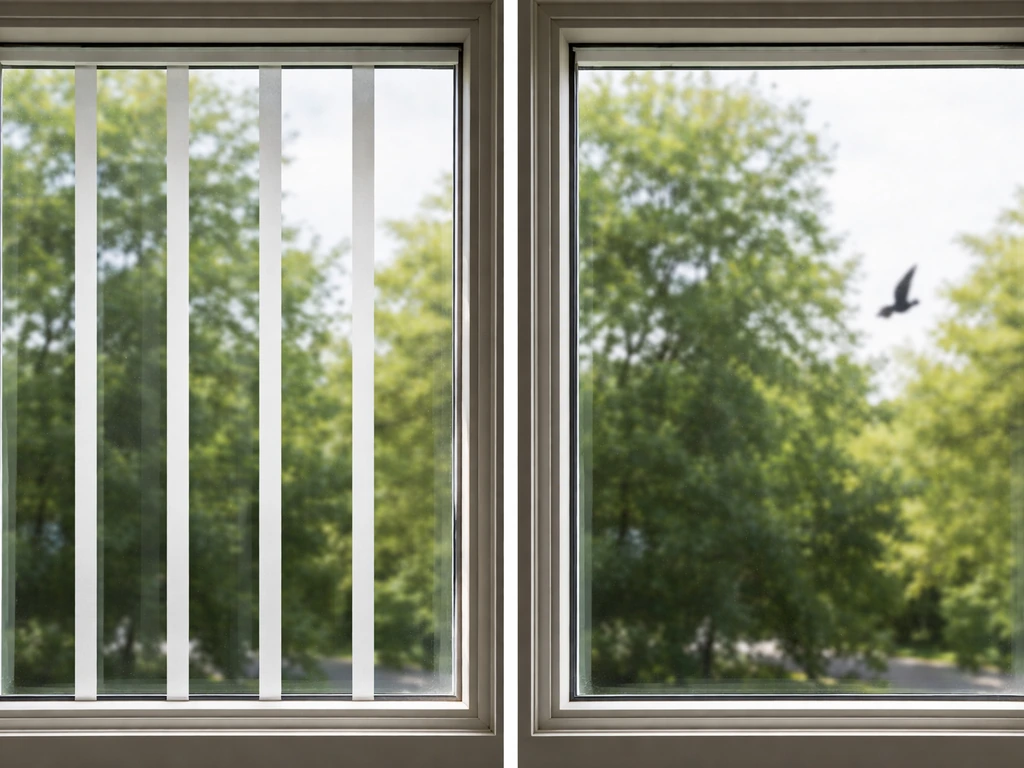
- Hang vertical tape strips on the outside of the glass, spaced about 4 inches apart. Parachute cord, ribbon, or even strips of tape work. The spacing matters — birds won't fly through a gap smaller than their body width.
- Apply window alert decals or UV-reflective stickers in a pattern across the glass. Note: a single eagle decal in the center does nothing — you need full coverage across the pane.
- Move a bird feeder that is within about 3 feet of the glass. Counterintuitively, feeders placed very close (within 3 feet) are safer than those placed at mid-range (5 to 30 feet) because birds don't build up dangerous speed in that short distance.
- Close blinds or curtains on the inside, especially during morning and evening when low-angle sunlight creates strong reflections.
- Temporarily attach bubble wrap to the outside of the pane — the visual texture breaks up the reflection enough to be effective while you source better materials.
Long-term window proofing: what actually works
Short-term tape strips work, but they need replacing. If a particular window is a repeat offender, invest in something more permanent. The most effective and visually clean solutions are external screens, patterned window film, and structural changes to eliminate the fly-through illusion.
The best permanent options compared
| Solution | Effectiveness | Cost range | Appearance impact | Best for |
|---|---|---|---|---|
| External insect screen (fine mesh) | Very high | Low to moderate | Minimal | Sliding doors, operable windows |
| Patterned window film (dots or lines) | High | Low to moderate | Low (barely visible from inside) | Fixed picture windows |
| Acopian BirdSavers / parachute cord curtain | Very high | Low | Visible but intentional | Large windows, outward-facing glass |
| Frosted or etched glass | High | High | Moderate | New construction or window replacement |
| One-way bird-safe glass (fritting) | Highest | Very high | Minimal | Facilities, new builds, large installations |
| CollidEscape film (opaque exterior, clear interior) | High | Moderate | Low from inside | Residences wanting clear interior view |
For most homeowners, patterned window film or an external cord curtain (Acopian BirdSavers) gives the best combination of effectiveness and cost. The pattern on the film needs to follow the 2-inch by 4-inch rule: elements no more than 2 inches apart vertically and 4 inches apart horizontally. That spacing is what prevents a bird from attempting to fly through the gap.
Seasonal scheduling for facility managers and homeowners
Window strikes peak during spring and fall migration (roughly March through May, and August through November in North America). Migrating birds are moving through unfamiliar territory at night or at dawn, exhausted, and not familiar with your building's glass. This is when temporary decals or tape strips need to be freshest and most visible, and when bird feeders should be positioned most carefully.
Run a twice-yearly check: once in late February before spring migration ramps up, and once in late July before the fall push. Walk around the building, look at each window from the outside at different times of day to see what birds see, and replace any faded or peeling deterrents. Facility managers should log strike locations and dates, if the same window keeps producing strikes, that is data pointing to a specific reflection or fly-through corridor that needs a targeted fix.
Lighting matters at night. Buildings that leave interior lights on during spring and fall migration draw night-migrating songbirds toward the structure and disoriented into glass. Participating in a 'Lights Out' program (many cities run these during peak migration weeks) can dramatically reduce nighttime strikes at commercial buildings.
Legal considerations and when to call a professional instead of doing it yourself
In the United States, almost all wild birds are protected under the Migratory Bird Treaty Act. It is illegal to keep a wild bird in your possession without a federal permit, even with good intentions. The two-hour window in the shoebox is legal as stabilization. Keeping the bird overnight without a permit, attempting ongoing care, or housing it long-term is not. This is not a technicality; it is also practically important, because wild birds in distress need specialized nutrition, housing, and medical assessment that unlicensed people cannot safely provide.
If you find a bird of prey (hawk, owl, falcon, eagle), the handling rules are stricter and the injury risk to you is higher. Large raptors have talons that can cause serious puncture wounds and grip strength that is genuinely dangerous. Contain them in a larger box using a towel to cover them first, and call a raptor-specific rehabilitator or your state wildlife agency directly. Do not attempt to hold or transport a large raptor without guidance.
Escalate to wildlife professionals in any of these situations: the bird is a raptor or large waterbird; it is visibly bleeding and not stabilizing; it has been in the box more than two hours without improvement; you find multiple birds at one location (which may indicate a systemic building or lighting problem requiring a facility assessment); or you are a facility manager dealing with recurring strikes at a commercial property, where documenting and addressing the issue may also carry liability implications.
For preventive work, you do not need a professional for most homeowner-level fixes, window film, screens, and cord curtains are straightforward DIY projects. Facility managers dealing with large glass facades, atriums, or buildings in known migration corridors may benefit from a bird-safe building audit, which certified wildlife consultants offer. These audits identify specific high-risk glass panels and recommend targeted retrofits based on species data and flight path analysis, which is more cost-effective than treating every pane of glass the same way.
FAQ
Can I give a bird water or food right after it hits the glass?
Yes, but only under the article’s timing and containment rules. Put it in the shoebox and keep it dark and quiet, then reassess at the two-hour mark. If it shows no improvement by then, has any red flags, or you can’t confidently tell its condition, switch to professional care rather than continuing to wait.
What’s the safest way to keep the bird warm if it is cold?
Don’t. While the box is supposed to be warm, steady warmth is safer than heat sources you can control poorly. Avoid heating pads, hot towels, or lamps that could overheat the bird or create a hot spot.
If the bird’s wing looks bent, should I straighten it before calling?
If you suspect a fracture or severe injury, do not try to straighten the bird’s body, wings, or neck. Instead, keep wings held against the body during a brief transfer, minimize handling time, and contact a rehabber or vet immediately for guidance on transport.
The bird seems alive but not improving, when should I stop waiting and call?
If the bird is actively bleeding, not breathing normally, or has major outward trauma, skip prolonged observation and contact professionals right away. The two-hour recovery window is for stunned birds, not for birds with clear severe injury signs.
Is it okay to set the bird loose in a quiet room if it wakes up?
A common mistake is leaving the bird loose indoors “to let it recover.” Keep pets away, place it in a covered container with airflow, and keep it isolated from people and commotion. Even an apparently alert bird can be grabbed by a cat quickly.
How often should I check the bird during the first couple of hours?
For the quick check, use a minimal “crack the lid just enough to look” approach. If it looks worse after you peek, close the lid immediately, avoid extended observation, and proceed based on the red-flag criteria (blood, drooping wing, labored breathing).
Do the same rules apply to all species, including owls and waterbirds?
If it hits a high-risk category like a raptor, large waterbird, or a bird that cannot stand, has uncontrolled bleeding, or is actively struggling to breathe, call immediately and do not attempt DIY transport on your own without guidance. For smaller songbirds, the article’s shoebox and two-hour reassessment approach applies.
What should I tell the rehabber if I cannot identify the species?
If you cannot identify the species, describe what you see (size relative to a hand, color pattern, beak shape, and where you found it) and provide the exact time and location of the strike. Rehabbers can still triage care decisions without a perfect species ID.
What should I do if I find multiple birds hit the same window?
Yes. If multiple birds are hitting the same window around similar times, treat it as a prevention emergency, not just a one-off rescue. Document locations and dates, because that pattern often points to reflection, transparency, or lighting that needs a targeted retrofit.
If I cannot reach a wildlife rehabber, what’s the next best option?
If it’s after the initial two-hour window and you cannot reach a rehabber, call a local vet emergency line and explain it is a wild bird stabilization request. Ask what they can do for triage, and confirm whether they want you to bring the bird immediately or keep it contained warm and quiet until seen.
Is it legal to keep the bird overnight until a rehabber can take it?
Don’t attempt to keep the bird overnight “to be safe.” The article’s guidance is a legal and welfare boundary, the two-hour stabilization period in a shoebox is the intended exception, long-term care or overnight holding can be illegal without a permit.
Next Article
Bird Keeps Hitting Window: How to Stop It Fast and Safely
Stop a bird hitting windows fast with humane steps: reduce reflections, guide it out, manage a stunned bird, prevent rep