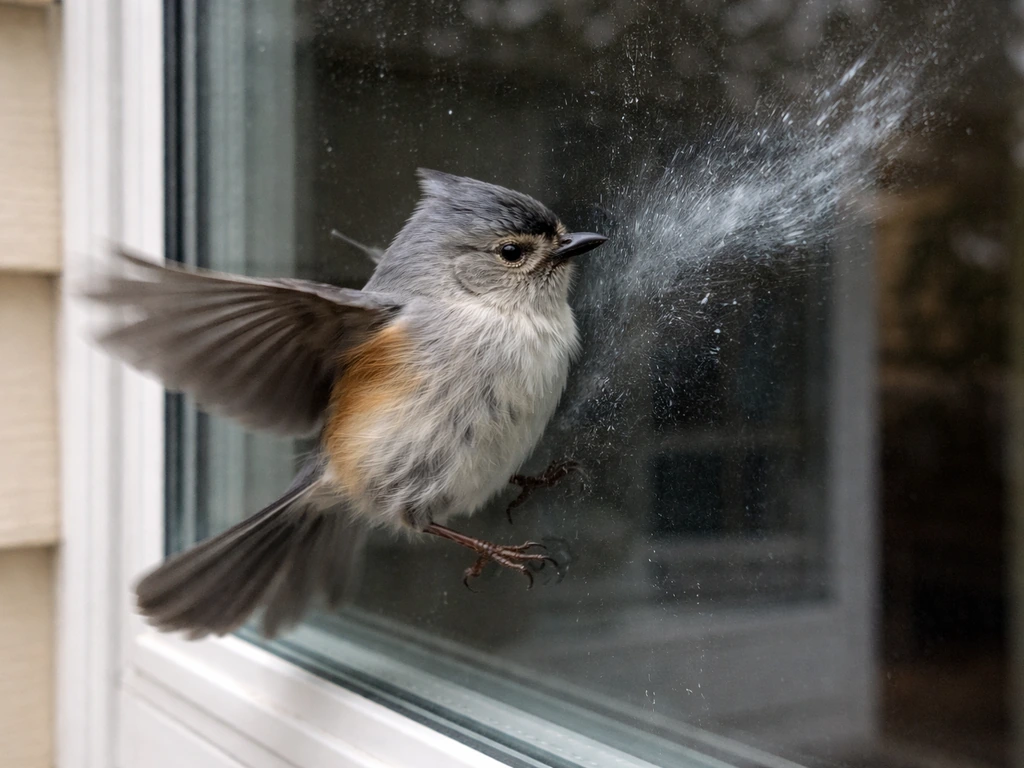
Put something on the outside of that window today. That one step will do more than anything else to stop a bird from repeatedly hitting the glass. Birds strike windows because the glass either blank" rel="noopener noreferrer">reflects outdoor scenery like a mirror or looks completely transparent, so the bird has no idea a solid barrier is there. Until you break that visual cue on the exterior surface, the bird will keep coming back and hitting the same pane.
Bird Keeps Hitting Window: How to Stop It Fast and Safely
Maya Carver
14 May 2026
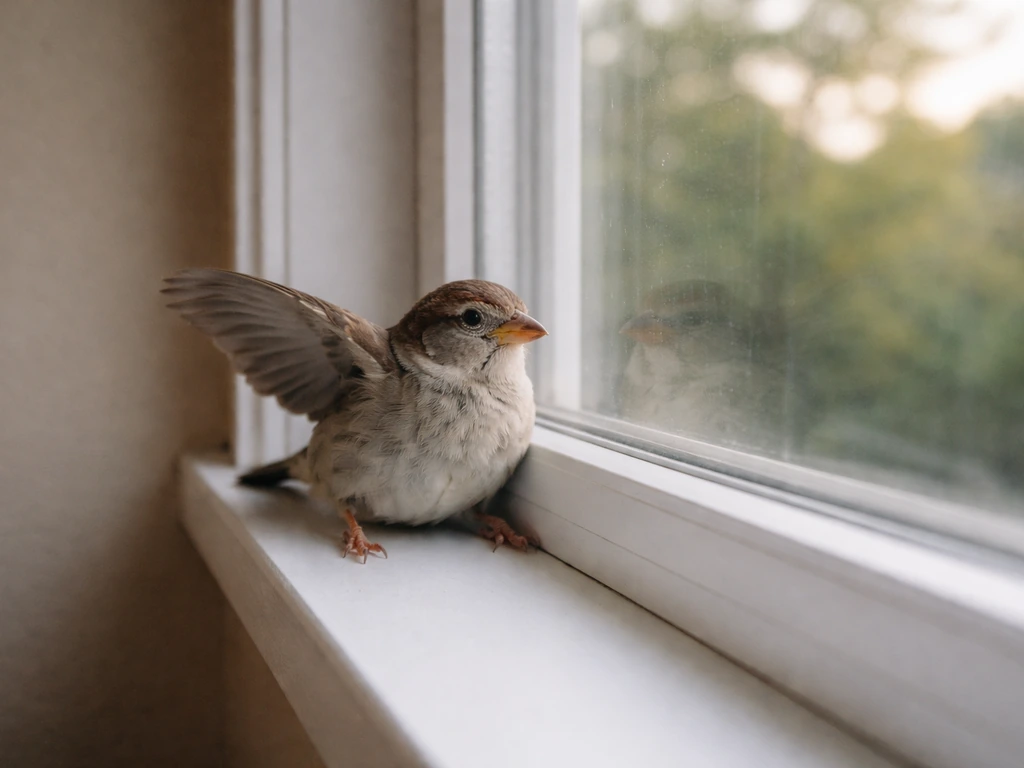
Why birds keep hitting the same window
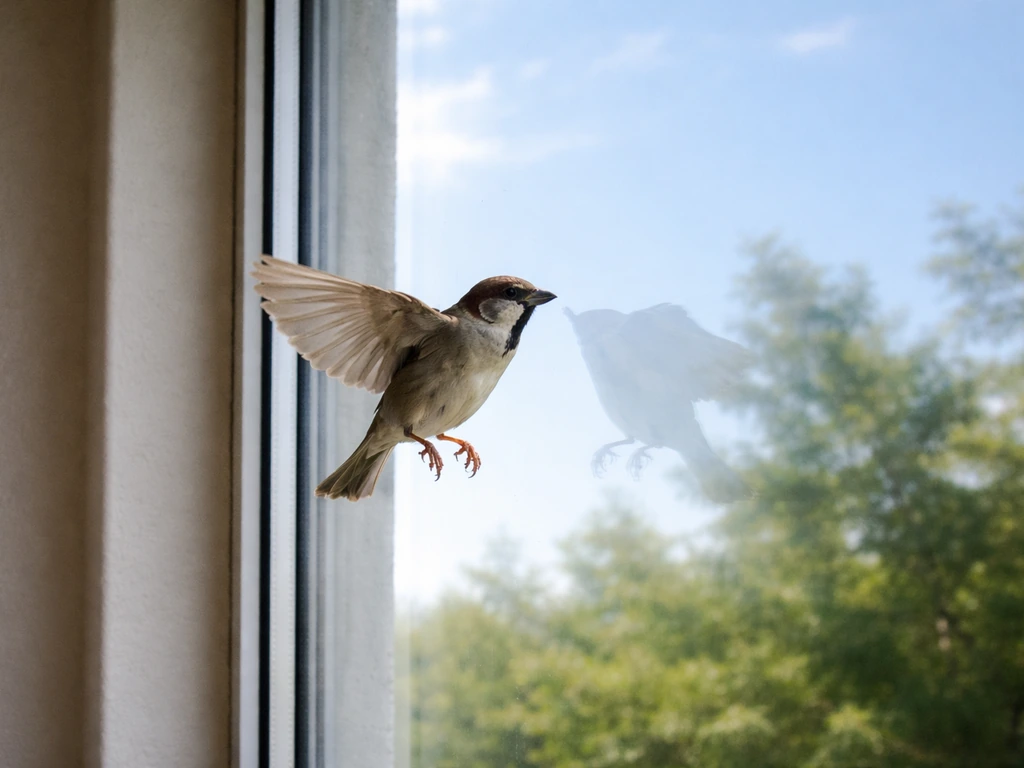
There are three main reasons a bird collides with glass, and understanding which one you're dealing with will help you pick the right fix fast.
- Reflection: The glass acts like a mirror, showing the bird a convincing image of trees, sky, or open space. The bird flies toward what looks like a clear flight path and hits the pane.
- Transparency: Windows, especially large ones or those that align with another window on the opposite wall, can look like an open pass-through. The bird sees what's on the other side and flies straight at it.
- Territorial behavior: During breeding season, a bird (most often a robin, cardinal, or mockingbird) sees its own reflection and mistakes it for a rival. It keeps returning to fight off the 'intruder,' ramming the glass repeatedly for days or even weeks.
The territorial scenario is worth flagging because it often looks more dramatic than a normal collision. The bird isn't stunned or confused the same way. It's deliberately charging the window, and it will do this every morning when the sun angle creates the sharpest reflection. Penn State Extension confirms this pattern is linked to breeding season and will taper off on its own once that period ends. But that doesn't mean you should wait it out. Every impact still carries injury risk for the bird.
Here's the critical thing the research makes clear: treatments placed only on the inside of a window are often invisible to the bird. The outdoor reflection hides anything behind the glass. That's why solutions need to be on or in front of the exterior surface to actually work.
Right now: immediate steps to stop repeat hits today
If you've just watched a bird slam into your window and you want to stop it from happening again in the next hour, here's what to do in order. After a bird hits glass, act quickly to prevent another strike today by adjusting visibility and giving the bird a safe recovery space if it is stunned bird hit glass what to do. After a bird hits a window, make the area safer first and then follow the steps in this guide for helping the bird and preventing repeat strikes bird hit window what do i do.
- Go outside and check whether the bird is on the ground below the window. If it is, skip to the injured bird section below before doing anything else.
- From outside, tape something to the glass surface immediately. A sheet of paper, newspaper, cardboard, or even a garbage bag taped directly to the exterior face of the window will break the reflection. It doesn't have to be pretty.
- If you can't get outside, close the blinds or curtains fully. This reduces the window's reflectivity from inside, which is only partially effective but better than nothing while you prepare an exterior fix.
- Turn off any interior lights near that window, especially at night during migration season. Light draws birds toward glass after dark.
- If the bird keeps returning and attacking the glass (territorial behavior), hang something that moves in front of the window on the outside, like a few strips of aluminum foil or an old CD on a string. Motion and shimmer disrupt the static reflection the bird is responding to.
- Do not try to shoo the bird away by banging on the glass. This may startle it into an additional collision.
What to do if the bird is stunned after a strike
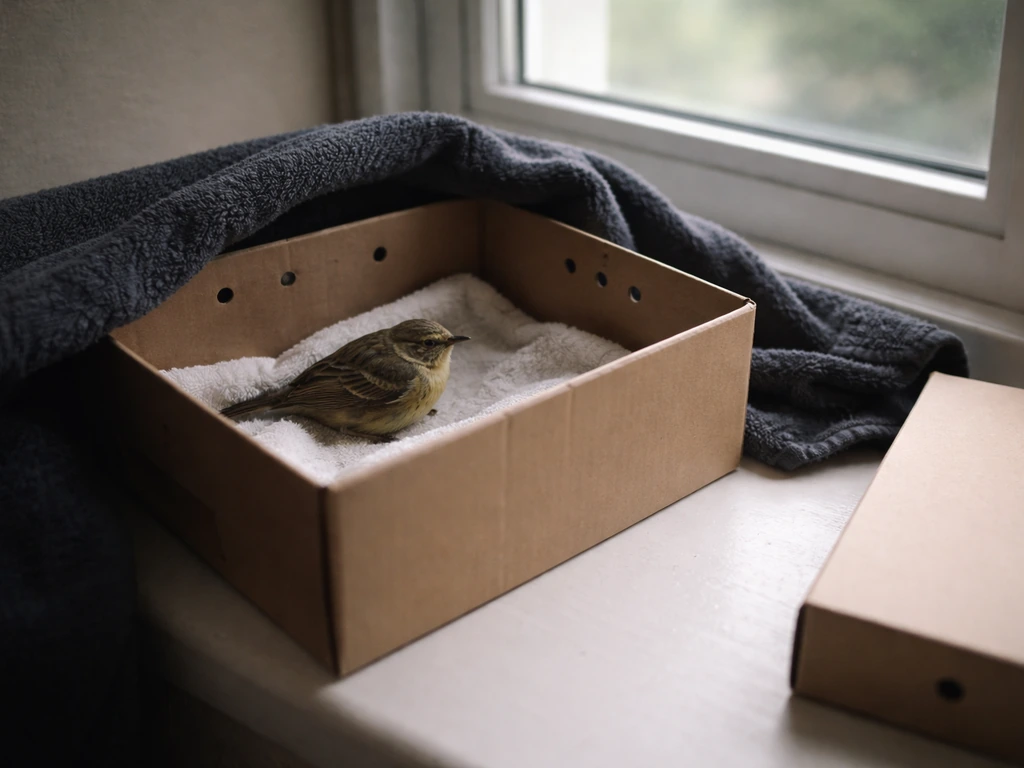
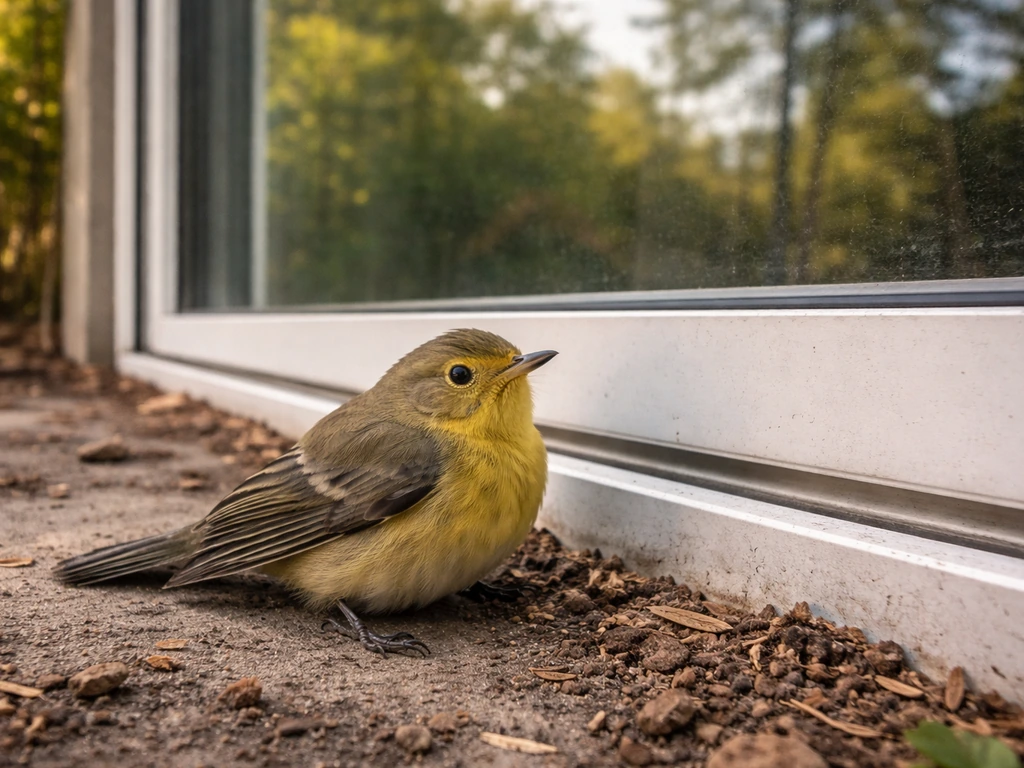
If you find a bird sitting dazed on the ground or a ledge, keep pets indoors and give it space first. Many birds recover from a mild concussion within 30 to 60 minutes if left undisturbed. If after that time it's still not flying normally, or if it's on its side, bleeding, or clearly in distress, it needs professional help.
To contain it safely: find a shoebox or unwaxed paper bag, poke a few small air holes in the top, line the bottom with a paper towel, and gently place the bird inside. Put the box in a warm, quiet room away from pets and people. Do not offer food or water and handle the bird as little as possible. If it hasn't recovered after a couple of hours, contact a licensed wildlife rehabilitator or veterinarian.
The Wildlife Center of Virginia, Tufts Wildlife Clinic, and Audubon all give the same guidance on this: a bird that looks like it flew away after a hit can still have internal injuries like brain hemorrhages, so don't assume it's fine just because it moved.
Temporary fixes you can put up today
These are the go-to options when you need something up fast. None of them require special tools, and all of them work by making the glass visible or disruptive to approaching birds.
Paper or cardboard on the outside
Tape paper, newspaper, or cardboard directly to the exterior surface. Cover the entire pane or at least the section where collisions are happening. This completely eliminates the reflection and is the fastest, most reliable temporary fix. It's ugly, but it works immediately. Use painter's tape so it comes off cleanly later.
Non-reflective cling film or cellophane
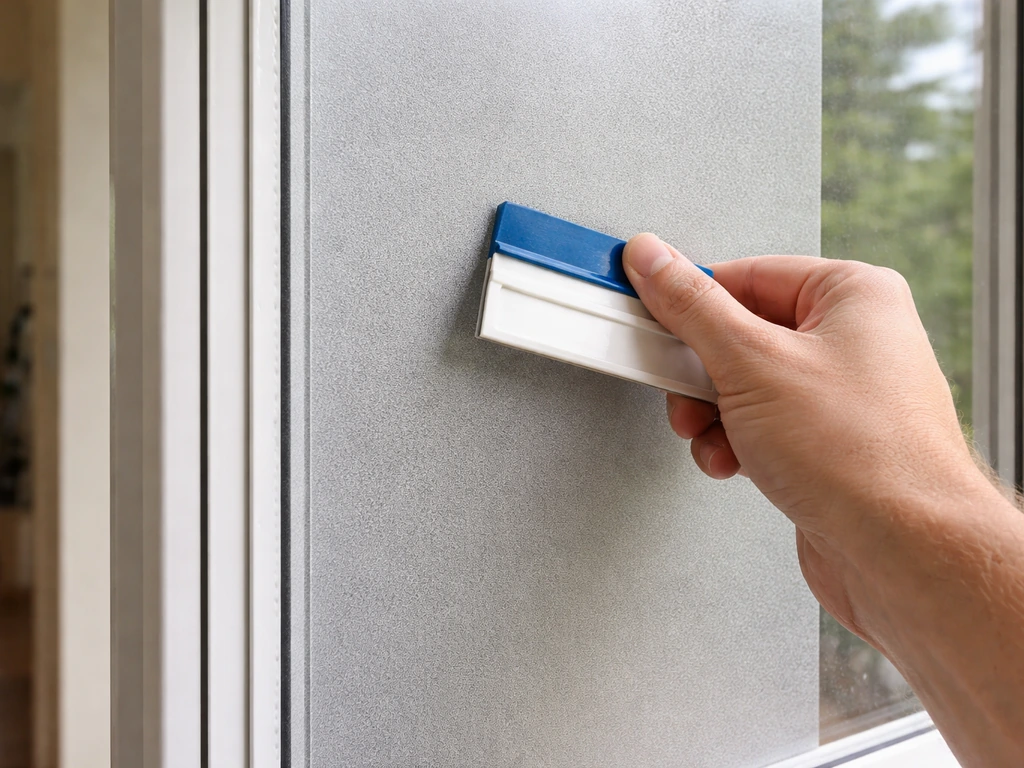
Cling film or non-reflective cellophane applied to the outside surface breaks the mirror effect without fully blocking your view. The British Trust for Ornithology recommends this specifically for cases where you want to maintain some visibility while addressing the reflection problem. Apply it to the full pane for best results.
Hanging strips in front of the window
Strips of shiny reflective plastic, surveyor's tape, or even old CDs hung a few inches apart and about 2 inches in front of the glass create a visual and physical deterrent. The movement and shimmer help, but spacing matters: strips need to be no more than 4 inches apart horizontally to prevent birds from attempting to fly between them. This is a good option for porches or overhangs where you can attach them to a rod or frame.
Adjust blinds and interior lighting
As an interior supplement (not a standalone fix), close blinds or curtains to reduce the window's mirror-like quality. Also turn off or dim bright interior lights, especially ones that would increase the contrast between inside and outside. This matters most at night during spring and fall migration when lit windows can disorient birds in flight.
Long-term window proofing that actually lasts
Temporary fixes buy you time, but you want something permanent. Here are the main long-term options, ranked roughly from easiest to most involved.
Decals and tape patterns (applied correctly)
Bird-safe decals work, but only when they're spaced correctly and placed on the outside of the glass. One or two hawk silhouettes on a large window will not prevent collisions. The American Bird Conservancy is blunt about this: markings must cover enough of the glass that gaps between them are too small for a bird to attempt to fly through. The USGS gives a specific spacing rule: a 2-inch by 2-inch grid. That means a dot, stripe, or mark every 2 inches in both directions across the pane. If you're using vertical tape strips, they should be no more than 4 inches apart. Apply everything to the exterior face of the glass.
Bird-safe window film
UV-patterned or frosted window films applied to the exterior surface are one of the most effective permanent treatments. Some films are nearly invisible to humans but contain patterns visible to birds, which perceive UV light differently than we do. These are more expensive than decals but cover the entire pane evenly and don't require the precise spacing work that manual decal application does. The USFWS recommends using medium-to-light colored patterns since dark markings can be harder to see when a window is reflecting a dark background.
Exterior screens and netting
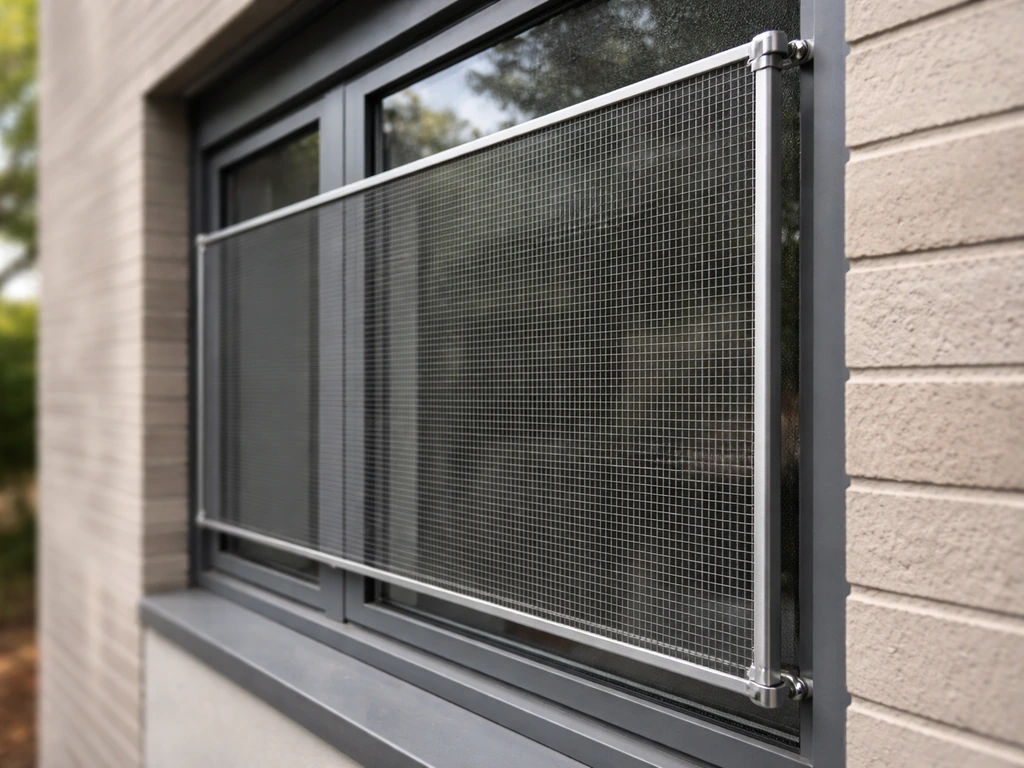
A taut netting or screen mounted a few inches in front of the glass is one of the most reliable solutions, especially for large windows or problem panes at facilities. The net acts as a physical buffer: if a bird flies into it, it bounces off without injury instead of hitting hard glass. Tufts recommends mounting netting on a frame so it's easier to install and remove seasonally. The gaps in the netting should be small enough that a bird can't push through and reach the glass.
Fritted glass (for new construction or replacement windows)
If you're replacing a window or building new, fritted glass with ceramic dots or lines baked into the surface is the gold standard. When designed per current spacing recommendations (2-inch grid or tighter), it makes glass perceptible to birds without significantly reducing your view. This is especially worth specifying for large picture windows, atrium walls, or any glass expanse that faces trees or a garden.
Habitat and lighting changes around the building
Think beyond the glass itself. Feeders placed within 3 feet of a window (so birds don't build up dangerous flight speed) or more than 30 feet away reduce collision risk. Shrubs and trees positioned so they're not reflected in problem windows also help. At night, especially during spring (March through May) and fall (August through November) migration seasons, turning off non-essential exterior and interior lighting dramatically cuts the number of birds drawn toward your building. Audubon's Lights Out program is built entirely around this principle and targets exactly those peak migration windows.
When the problem won't go away: troubleshooting stubborn cases
Most window strike problems resolve once you treat the glass correctly. But a few situations need a different approach.
| Situation | Likely cause | What to do |
|---|---|---|
| Bird hits the same window every morning | Sun angle creates a strong reflection at that time of day | Apply exterior treatment to that specific pane; cover the full surface, not just part of it |
| Bird keeps attacking the glass repeatedly over days | Territorial behavior; bird sees reflection as a rival | Cover or treat the outside of the window completely to remove the reflection; consider hanging a physical barrier in front |
| Treatments on the inside aren't working | Interior solutions are hidden by exterior reflections | Move all treatments to the exterior surface of the glass |
| Multiple windows in the building are problem areas | Building orientation or surrounding landscape creates reflections on several panes | Audit all windows facing vegetation or open sky; prioritize treating those that face east or west (strongest sun angles); consider exterior film for the whole facade |
| Bird won't leave a room after flying inside | Flew in through an open door or window, now panicking | Close interior doors, open the window or door to outside as wide as possible, dim interior lights, and give the bird time to find the exit; don't chase it |
| Collisions keep happening after decals were applied | Decals are spaced too far apart or placed only on the inside | Reapply on the exterior with a proper 2-inch grid spacing covering the full pane |
The territorial behavior case is the one that trips people up the most. The bird isn't injured or panicking; it's deliberately engaging. Covering just a portion of the window often doesn't work because the bird will shift to where the reflection is still visible. You need to eliminate the reflection from the entire pane it's using as a mirror. A completely covered or treated exterior surface is the only reliable fix. Penn State Extension confirms the behavior will stop on its own once breeding season ends, but treating the window is the right move both to stop current impacts and to prevent future collisions from birds that don't have the territorial motivation.
When to call a wildlife professional
Most window strike situations can be handled at home. But some require a licensed wildlife rehabilitator, veterinarian, or wildlife control professional. Here's a clear checklist for when to escalate.
Call a wildlife rehabilitator if:
- The bird is on its side, unable to stand, or has visible bleeding or a drooping wing
- The bird is still dazed or unresponsive after 2 hours in a dark, quiet container
- The bird appears to have flown away but you found it again on the ground nearby
- You're unsure whether the bird is recovering or declining and you don't want to guess
- The bird is a larger species (hawk, owl, heron) that requires specialized handling and containment
Call a wildlife professional or check legal requirements if:
- The bird involved is a raptor (hawk, falcon, eagle, owl), waterfowl, or any species you suspect might be federally protected under the Migratory Bird Treaty Act. Most songbirds are also protected. You generally cannot possess, relocate, or attempt to treat a protected species without a permit.
- Strikes are happening repeatedly to protected species at a commercial facility or multi-unit building, which may trigger reporting or mitigation obligations depending on your jurisdiction
- You're managing a facility and need a formal collision risk assessment and mitigation plan for compliance or insurance purposes
When you call, have this information ready: the species if you can identify it, when and where the strike happened, what the bird's current condition is (standing, dazed, unconscious), and whether you've contained it. The more specific you are, the faster the rehabilitator can advise you. To find a permitted wildlife rehabilitator near you, contact your state's fish and wildlife agency or search the National Wildlife Rehabilitators Association directory.
If you're dealing with the aftermath of a single collision rather than a repeat-strike problem, the sibling topics on this site covering what to do when a bird hits your window and how to help a stunned bird go deeper on immediate triage and recovery steps. This guide focuses on stopping the repeat behavior and protecting the window long-term, which is the issue most homeowners and facility managers face once the first strike has already happened.
FAQ
How long should I wait after taping or covering the window before I check if the bird keeps returning?
Recheck within 15 to 60 minutes. If the reflection cue is the cause, the bird usually stops targeting that pane immediately. If you still see repeats after the entire exterior portion is covered, try widening the covered area to adjacent panes or adding a second exterior layer (for example, tape plus a clear exterior film) so there are no reflection “escape routes” along the edges.
Do I need to cover every window in the house, or only the one the bird keeps hitting?
Start with the specific pane(s) where collisions are happening. The bird typically targets the reflection it can see from its flight path. However, if the bird is repeatedly hitting from a consistent direction, extend treatment to nearby panes in the same sightline, and check interior lights at night because they can make adjacent windows look equally “open.”
Can I use stickers or decals on the inside of the window instead of the outside?
Avoid inside placement if reflections are involved. Many interior-only treatments remain effectively “invisible” to birds because the outdoor reflection hides the marking. For the best results, apply decals, film, or any visual pattern to the exterior face of the glass (or use a true exterior product that is designed for exterior application).
What if the bird hits at night, but I do not want to darken the whole house?
Dim or turn off non-essential lights that create the inside to outside contrast, especially those aimed at the treated window. If you can’t eliminate all lighting, concentrate on reducing glare toward the problem pane, close the curtain on that side, and prioritize an exterior solution (exterior tape, exterior film, or a net) because nighttime reflection and migration behavior are harder to fix with interior-only changes.
Is it safe to throw bird deterrents up immediately, or should I first deal with a stunned bird?
Prioritize safety and triage first. If the bird is present and potentially stunned, keep pets away, minimize handling, and contain it in a quiet warm space as described. Once the bird is safe or you are sure it has recovered and moved on, switch to the exterior window deterrent so the collision does not repeat within minutes.
What if the bird keeps hitting even after I cover the glass once?
Two common causes are incomplete coverage and edge reflections. Make sure the treated material fully spans the pane where it targets, including corners and gaps around frames. Also check nearby surfaces like sliding doors or adjacent sidelights, since the bird may shift and “read” another reflective surface as the same open path.
Can I hang CDs or strips of reflective plastic, will they work permanently?
They can work as a short-term deterrent, but performance often drops once the motion or shimmer stops being noticeable (for example, in still air or when they sag). If you need a long-term fix, plan to upgrade to an exterior film, a properly spaced decal grid, or a net/screen once you confirm which panes are the problem.
What spacing mistake causes most decal failures?
The most frequent issue is placing too few marks or leaving large gaps between them. Use the intended spacing pattern, such as a 2-inch by 2-inch grid concept or, for vertical strips, keep them no more than about 4 inches apart. Also ensure the marks cover the relevant portion of the pane the bird actually approaches, not just a small decorative area.
How do I tell if it is a territorial “charging” situation versus normal reflection collisions?
Territorial behavior often looks like repeated deliberate runs, usually at specific times of day (commonly morning when reflections sharpen), and the bird may not act dazed afterward. In that case, partial or temporary solutions that cover only part of the glass often fail because the bird simply shifts to the remaining reflective area. Treat the exterior across the entire pane being used as the mirror.
When should I contact a wildlife rehabilitator instead of trying to manage it alone?
Contact a professional if the bird is bleeding, cannot stand or is on its side, shows clear distress after 30 to 60 minutes, or if you see repeated impacts and it looks unable to fly normally. Also escalate sooner if you are unsure whether the bird is actually okay after “walking off,” since internal injury can still be present.
What should I do with feeders near windows if I already have a collision problem?
If you want to reduce strike risk, relocate or adjust feeder placement so birds do not build flight speed next to the building, such as keeping feeders within about 3 feet of the window or moving them farther away (over roughly 30 feet). If moving isn’t possible, consider adding a physical barrier solution (netting or properly applied exterior film) first, then re-evaluate feeder distance.