When a bird hits your window, you have two jobs: help the bird right now, and make sure it doesn't happen again. This guide walks you through both, in order. The next few minutes matter most for the bird, so start there, then work through the prevention steps at whatever pace your situation allows.
What to Do If a Bird Hits Your Window: Step-by-Step
Maya Carver
20 Apr 2026
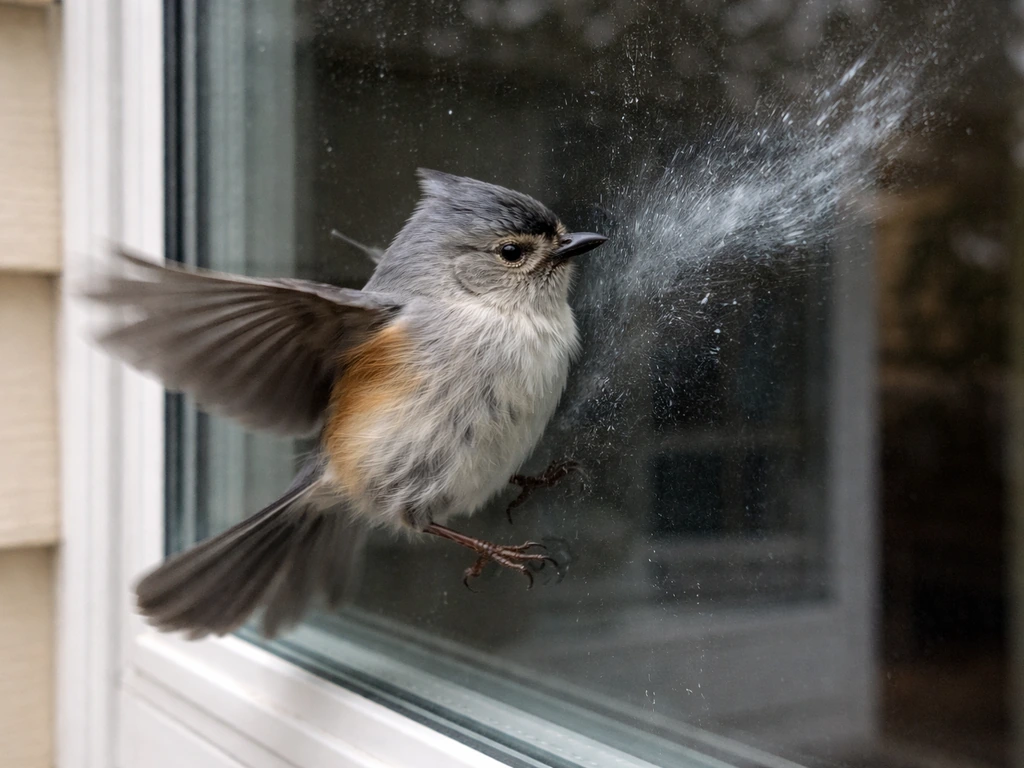
What to do in the first 5 minutes after a window strike
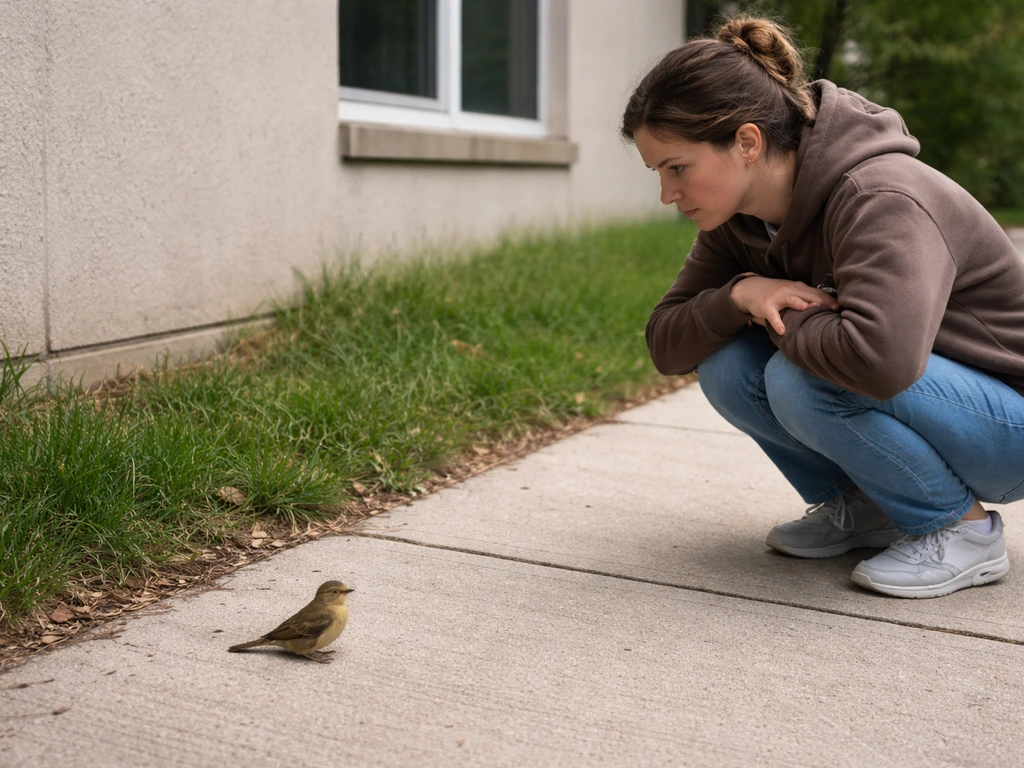
Before you do anything else, resist the urge to pick the bird up immediately and bring it inside. Your first move is to check the scene from a short distance. Is the bird upright? If you are wondering bird hit glass what to do, start by checking whether the bird is upright and breathing, then follow the right next steps based on what you see. If you are wondering bird window strike what to do, start by checking whether the bird is upright and breathing, then follow the right next steps based on what you see. Is it breathing? Are there cats, dogs, or other predators nearby? Answer those questions first, then act.
- Stay calm and approach slowly so you don't startle the bird into a second collision.
- Shoo away any pets or predators from the area immediately.
- If the bird is on an exposed surface (a deck, sidewalk, or windowsill), gently place a lightweight box or container over it to keep it contained and calm while you get ready.
- Wash your hands or put on thin gloves before handling the bird.
- Prepare a small cardboard box or paper bag with air holes punched in the lid.
- Close the blinds or curtains on the window that was struck to reduce reflections while you deal with the situation.
That last step, closing the blinds, serves double duty. It calms the immediate scene and starts breaking the reflection that caused the strike in the first place. It takes ten seconds and is worth doing right now.
How to handle the bird safely: stunned, injured, or ready to fly
Not every bird that hits a window needs the same response. The condition of the bird when you find it tells you what to do next. Here is how to read the situation and act accordingly.
Bird appears stunned but upright
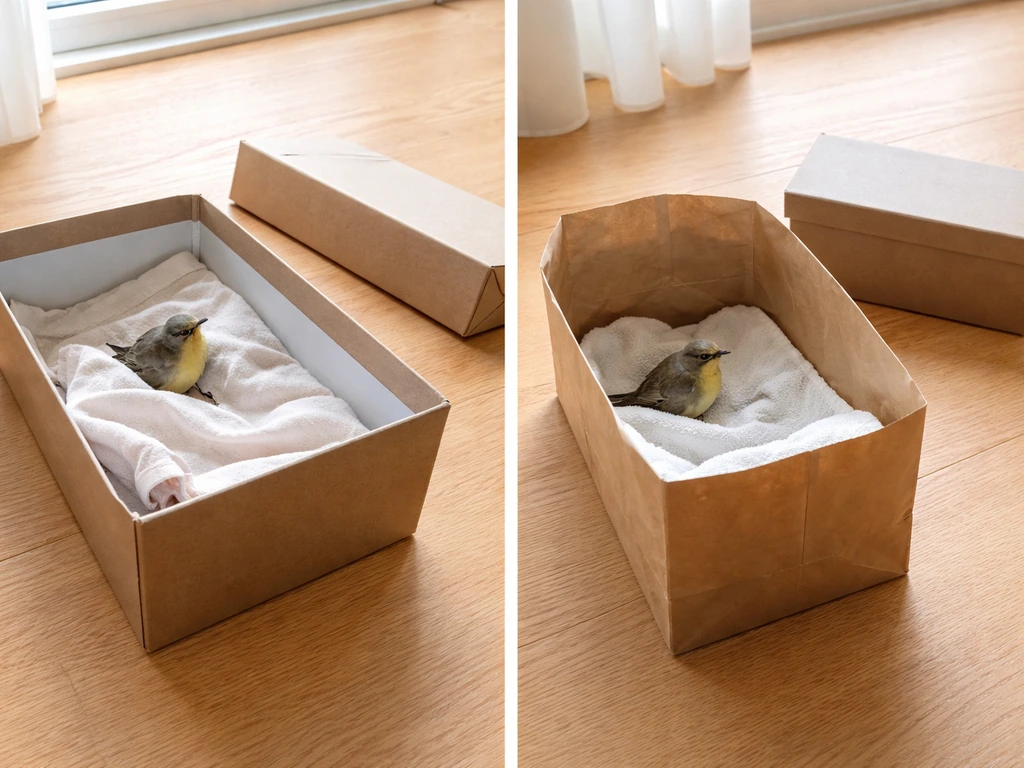
This is the most common scenario. The bird is sitting on the ground or a ledge, blinking, breathing, but not flying. Place it gently in a shoebox or paper bag with a lid and a few air holes. Keep it upright, in a dark, quiet room away from people, pets, and noise. Do not offer food or water. Most sources, including Audubon and the Canadian Wildlife Federation, recommend waiting about one hour. If the bird is alert and strong after that time, take it outside, open the box away from the window, and let it fly on its own terms.
Bird shows signs of serious injury
Some birds look fine on the outside but have internal injuries that worsen over the next few hours. Audubon notes window collisions can cause internal injuries that require care from a licensed wildlife rehabilitator, and advises against assuming a stunned bird is okay without checking for symptoms. The U.S. Fish and Wildlife Service specifically flags this: a bird can seem to recover initially and then decline. So even if the bird looks okay, watch it closely. Contact a licensed wildlife rehabilitator immediately if you see any of the following signs.
- Visible blood or open wounds
- A wing or leg drooping or held at an odd angle
- Head tilting to one side
- Not using its legs or unable to grip
- Gasping, labored breathing, or visible chest heaving
- Eyes squinting or not opening
- Still unable to fly after about one hour in a quiet, dark container
If any of these are present, do not wait for improvement. Keep the bird contained, dark, and quiet, and get it to a rehabilitator as fast as possible. Do not attempt to splint a wing, offer water with a dropper, or try any home treatment. Well-intentioned handling often causes more harm.
Bird flies away on its own
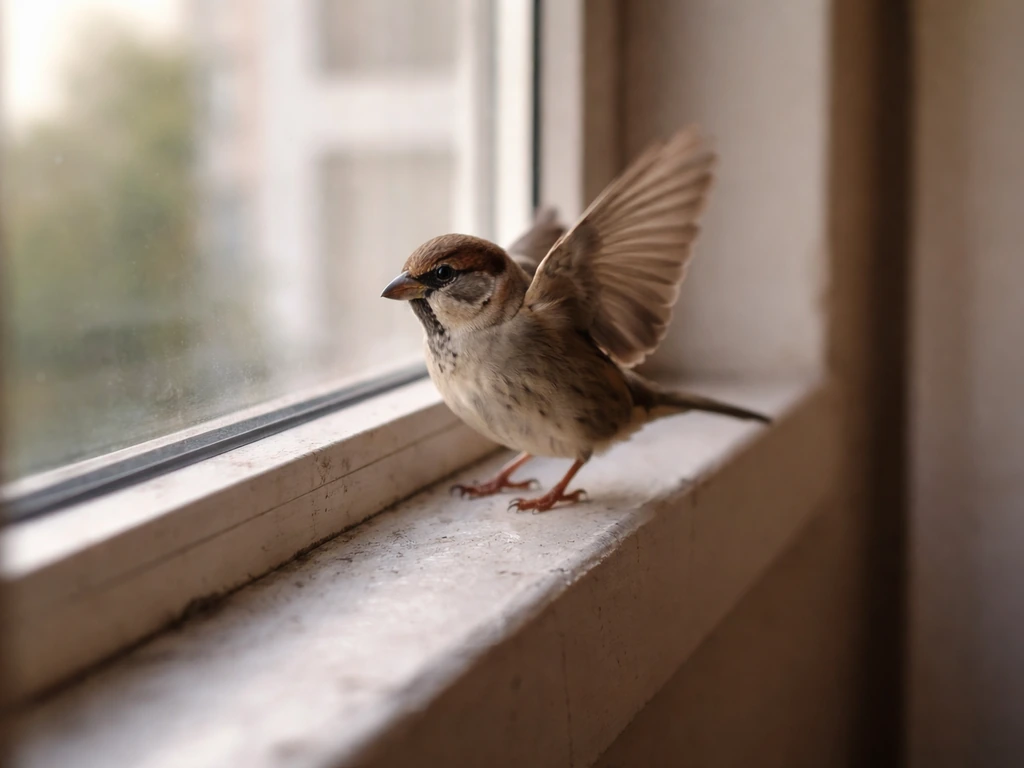
If the bird recovers quickly and flies off within a few minutes, that is a good sign, but it is not a guarantee that everything is fine. Internal injuries can still surface later. The best you can do at this point is note the species if you can identify it, then focus on fixing the window to prevent a repeat strike.
When a bird keeps hitting the same window: stop it today
Repeated strikes at the same window are common, especially in spring when territorial birds (think American Robins and Northern Cardinals) attack their own reflection thinking it is a rival. This is different from a random migration collision, and it calls for a slightly different response. The urgency is real: every additional strike is a potential injury. If you are wondering bird keeps hitting window how to stop, the key is to change what the bird sees from outside so it no longer mistakes its reflection for a rival.
The goal is to break the bird's access to its own reflection as fast as possible. Closing or partially closing the blinds from inside helps a little, but because reflections are on the outside surface of the glass, inside-only solutions have limited effect during daylight. You need to change what the bird sees from the outside.
- Tape a piece of paper, cardboard, or non-reflective film to the outside of the window in the area where the bird is hitting.
- Hang a loose piece of fabric, netting, or a window screen a few inches in front of the glass on the outside.
- Apply a dense pattern of painter's tape or removable whiteboard markers directly to the outside of the glass as a temporary measure.
- Move any outdoor bird feeders, baths, or plants away from that window so the bird has less reason to be there.
- If the attacks are territorial (spring, same bird returning), keep the outside surface as non-reflective as possible for at least two to three weeks until the breeding season behavior subsides.
The Avian Wildlife Center points out that this territorial window-striking behavior in spring increases the urgency of blocking the bird's view of the glass entirely. Partial coverage is often not enough. If the bird is injuring itself in repeated strikes, treat it the same as an impact victim and contact a rehabilitator if injuries appear.
Signs you need a wildlife professional and how to reach one
Knowing when to hand off to a professional is one of the most important parts of this process. If you are unsure what to do after a bird hits a window, contact a wildlife professional right away for guidance Knowing when to hand off to a professional. You are not equipped to treat internal bleeding, head trauma, or a broken wing at home, and neither is your vet unless they specialize in wildlife. A licensed wildlife rehabilitator is the right resource.
Contact a licensed wildlife rehabilitator if: the bird has any of the injury signs listed above, it has not recovered after one hour in a quiet container, it was caught by a cat even briefly (cat saliva carries bacteria that cause fatal infections in birds within hours), or you are unsure and want a professional opinion. Do not wait overnight hoping things improve.
To find help fast, search the National Wildlife Rehabilitators Association (NWRA) or Wildlife Rehabilitators Network directory online with your zip code. You can also call your state wildlife agency, a local Audubon chapter, or a veterinary clinic that handles wildlife. When you call, be ready to describe the species (or your best guess), what you observed, when the strike happened, and what condition the bird is in right now.
If you cannot transport the bird immediately, keep it in its dark, quiet container, away from pets, and maintain a stable room temperature. Do not offer food or water while you wait. This is not cruelty: it reduces stress and the risk of aspiration if the bird is injured internally.
Quick humane window changes and temporary deterrents you can do today
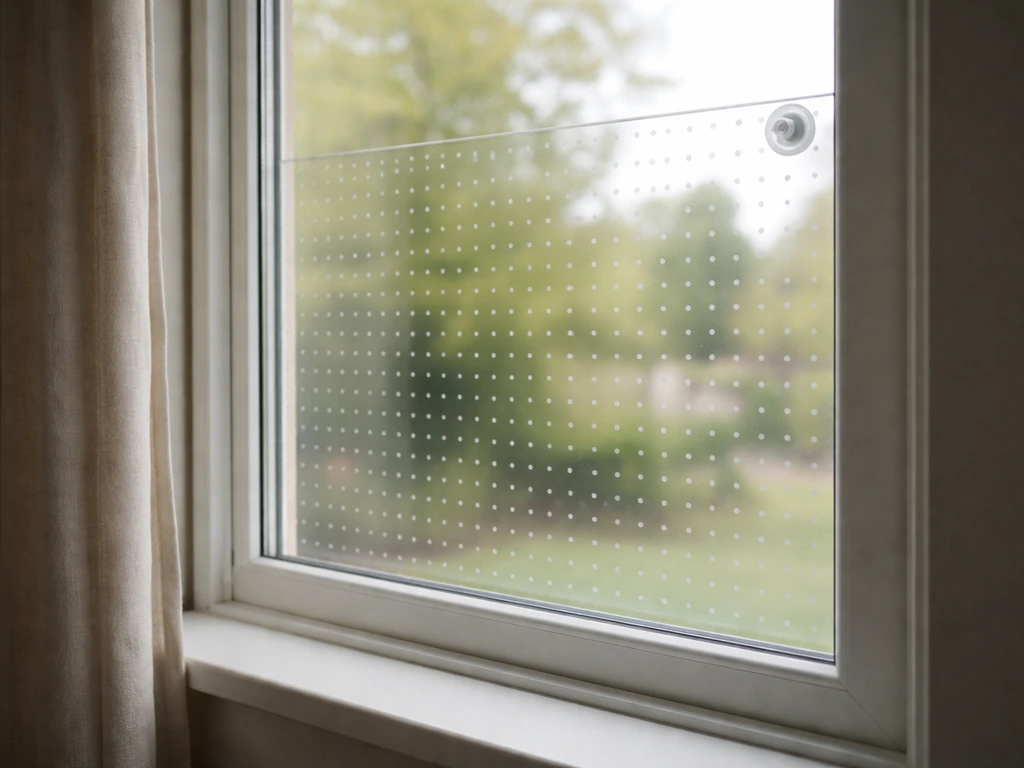
Once the immediate bird situation is handled, turn your attention to the window. The most important thing to understand is that deterrents placed on the inside of the glass generally do not work during the day. Birds are responding to reflections on the outside surface, so your treatment needs to be visible from outside.
The widely cited standard for visual markers comes from the U.S. Fish and Wildlife Service and the National Park Service: markers must be spaced no more than 2 inches apart vertically and horizontally to be effective. One or two hawk silhouette decals in the middle of a pane do nothing. A dense grid pattern covering the whole pane does. This is not a minor detail; it is the difference between a solution and a waste of time and money.
- Apply a grid of UV-reflective or opaque decals or tape to the outside of the glass in a 2-inch-by-2-inch pattern.
- Use tempera paint or window chalk on the outside surface to create a pattern birds can see.
- Hang external window screens or fine mesh netting at least 2 to 3 inches in front of the glass.
- Apply frosted or etched window film to the outside surface.
- Partially or fully close interior blinds as a temporary supplement (not a replacement for external treatment).
- Relocate bird feeders and baths to within 3 feet of the window (so birds can't build up speed) or more than 30 feet away (far enough that they approach from a different angle).
Any marker or decal must be at least 1/4 inch wide to be detectable, per FWS guidance. Transparent or barely visible window treatments placed inside do not meet this standard and should not be relied on as your primary fix.
Long-term bird-proofing by window type and season
Temporary fixes buy you time, but a permanent plan depends on your window type, the building layout, and the time of year. Here is how to think about it by situation.
Window type comparison and best long-term treatments
| Window Type | Main Risk Factor | Best Long-Term Solution | DIY or Professional? |
|---|---|---|---|
| Single or double-pane clear glass (residential) | Strong outside reflections of trees/sky | External adhesive UV film or etched film with 2-inch pattern coverage | DIY or professional install |
| Large picture windows | High reflection, large surface area increases strike probability | External window screen or netting, or full-pane bird-safe film | Professional recommended for large panes |
| Corner glass or glass near vegetation | Reflection plus proximity to perches | Dense external decals or frosted film plus vegetation relocation | DIY |
| Skylights | Birds see sky beneath, attempt to fly through | External mesh screen or netting over skylight | Professional (fall risk) |
| Glass doors (sliding or French) | Transparent passthrough confusion | Horizontal tape strips or door-length frosted film on outside | DIY |
| Commercial/office curtain wall glass | Large-scale mirrored exteriors during migration | Professional retrofit with bird-safe glass or external screens, coordinated with building manager | Professional and building management |
Seasonal planning notes
Spring (March through May) is the highest-risk season for two reasons: migratory birds are moving through in large numbers, and resident territorial birds are displaying. Territorial window-striking peaks from March through early June. If you have had any strikes, inspect and reinforce all window treatments before March each year.
Fall migration (August through November) brings a second spike, especially for windows near trees, shrubs, or water. During this period, keep interior lights off at night when possible. Light pollution from inside the home can disorient migrating birds flying at night, drawing them toward the building.
Winter is a good time to plan and install permanent treatments before the next high-risk season. Schedule a visual check of all your window films, screens, and decals once a year in late winter. Sun, weather, and cleaning can degrade adhesive films and tape over time, reducing their effectiveness.
A simple annual maintenance schedule
- February: Inspect all existing window films, decals, and screens for wear, peeling, or gaps in coverage. Replace anything that has degraded.
- March: Confirm all high-risk windows are treated before peak spring migration and breeding season begins.
- May to June: Monitor for any new territorial behavior (same bird, same window). Add external coverage if needed.
- August: Check treatments again before fall migration begins.
- November: Note any new strike locations during fall. Add treatments to newly identified problem windows before winter sets in.
- December to January: Research and order any upgraded products (UV-reflective film, permanent external screens) to be installed before spring.
Legal and safety considerations you should know
Most birds you are likely to encounter after a window strike are protected under the Migratory Bird Treaty Act (MBTA). This federal law covers more than 1,100 species of migratory birds and makes it illegal to take, kill, possess, sell, or transport them without a federal permit. 'Take' includes injury and death, not just intentional harm. That means if your window repeatedly kills birds, there is a legal dimension to the problem, especially for commercial buildings and property managers.
For homeowners, the practical implication is this: you cannot legally keep a wild injured bird beyond what is needed to stabilize and transfer it to a licensed rehabilitator. You also cannot attempt to treat it yourself in most jurisdictions. The moment you find an injured bird, your legal and ethical best move is the same: get it to a licensed professional as quickly as possible.
For facility managers and building owners, the stakes are higher. Federal rulings have affirmed that the MBTA can apply to incidental take, meaning unintentional bird deaths caused by building features like reflective glass. Proactive retrofits are not just ethical: they are a way to demonstrate good-faith compliance. Document your window treatment program, including products used, installation dates, and any strike incidents you observe.
On the building-occupant safety side: when treating upper-story windows or skylights, do not attempt exterior treatments without proper fall protection. Many window films and external screens need ladders or lift equipment to install safely. If the window is above the first floor, hire a professional or use interior-only treatments as a stopgap until proper exterior work can be done safely.
One more safety note: after a bird has hit your window, check the glass for cracks before you clean it. A bird strike can stress tempered or insulated glass panes, and a cracked pane should be assessed by a glazier before it is cleaned or touched. This is rare, but worth a 30-second look.
The bottom line is that window strikes are both an immediate animal welfare issue and a longer-term building management responsibility. Acting quickly for the bird, fixing the window correctly, and staying inside the law are all parts of the same response. Each step in this guide is designed to cover all three.
FAQ
What if the bird seems stunned but still looks alert, should I still wait an hour?
Yes. If the bird is not upright, is wheezing or gasping, has visible blood, or cannot maintain balance, treat it as potentially injured and contact a licensed wildlife rehabilitator right away rather than waiting the full hour.
Can I put the bird in a cage while I wait for help?
Don’t put it in a birdcage. Use a clean, ventilated shoebox or paper bag with lid (air holes), because cages can lead to flapping injuries and make it harder to keep the bird dark and quiet.
Is it okay to give water or food to a bird after a window hit?
If the bird is injured or you cannot be certain it will recover, do not offer water or food, and keep the container away from loud TVs, bright rooms, and pets. If it looks uninjured and flies off within minutes, you can release it outdoors at a safe distance from the window.
How should I handle the bird if I need to move it from under a ledge?
If you must move it, support the body so it stays upright, keep the movements slow, and stop if the bird struggles hard. Still, the priority is to get it to a rehabilitator if you suspect injury, since internal trauma can worsen even after a “good” first impression.
What’s the best way to stop repeat strikes at the same window?
For recurring strikes at the same pane, keep adjusting coverage until markers are visible from outside across the entire glass. Partial or small decals often leave gaps, especially for territorial species that repeatedly target the reflection.
Do I really need a full grid of decals, or will a couple of hawk stickers work?
Use a dense visual pattern that meets the spacing rule, typically no more than 2 inches apart vertically and horizontally. “One or two” decals may not break the bird’s perception of the glass during normal flight and approach angles.
What should I do if the bird hits the window again and again the same day?
If the bird keeps hitting the glass, assume the deterrent is not working well enough and escalate to rehabilitator guidance if injuries appear. Repeated self-battering can happen quickly during spring territorial behavior.
Why don’t inside window treatments always prevent strikes?
Yes, a lot of people get this wrong. Only the exterior-visible markers count as the effective “visual block,” because reflections that fool birds sit on the outside surface. Inside-only treatments are often too faint or poorly placed to break that reflection.
Should I clean the window right away after a bird strike?
Avoid cleaning the pane immediately if you notice a chip or crack. Check for cracks from a safe distance first, and if the glass is damaged, have a glazier assess it before you touch or clean the area.
What information should I gather before I call a wildlife rehabilitator?
Document timing and observations: approximate species (or best guess), where it hit, whether it was upright and breathing, and whether it recovered after about an hour. This helps the rehabilitator decide urgency and care needs quickly.
What if my cat only briefly batted the bird and it still seems fine?
If a cat touched or caught the bird, contact a rehabilitator immediately even if the bird looks okay, because bite or saliva contamination can lead to rapidly fatal infection in hours.
I can’t leave right now, how do I care for the bird until I can take it to help?
If the bird cannot be transported right away, keep it contained, dark, and quiet with stable room temperature, and avoid food and water. Also reduce handling, because stress can worsen breathing problems.
What if I cannot tell what species the bird is?
If you cannot identify it confidently, it’s still useful to describe size, color, and behavior (perching vs. flying) and note the location of the strike (near feeder, trees, or water). Species guesses help, but condition and timing matter most.
Next Articles
How to Get a Trapped Bird Out of Your House Safely
Humane, step-by-step guide to get a trapped bird out safely, handle injuries, and prevent future entry.
How to Get a Bird Out of Your House Reddit Guide
Step-by-step humane bird escape, DIY fixes, prevention tips, and when to call wildlife experts for indoor bird incidents
How to Help a Bird Get Out of a House Safely
Humane, safety-first steps to help a trapped bird exit your house, plus DIY escape tips, fixes, and prevention.