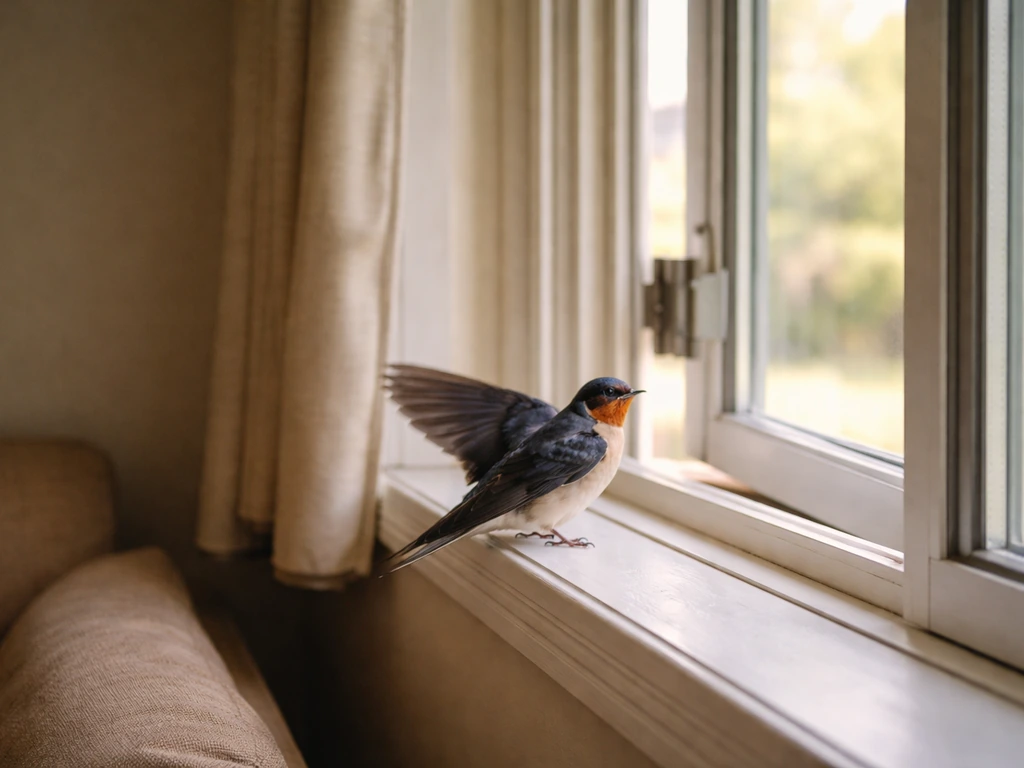
Open one exit (a door or single window to the outside), turn off every interior light, and then step back and give the bird space. San Diego Humane Society also recommends opening a window or patio door to the outside, turning off interior lights so the exit is the brightest option, then gently encouraging the bird toward the exit with a broom without harming it blank" rel="noopener noreferrer">Birds Stuck in Buildings. In most cases, a swallow or swallow-like bird will find that bright opening within a few minutes and fly out on its own. That one action solves the majority of cases without any chasing, grabbing, or stress on the bird or you.
Swallow Bird How to Get Rid of It Safely Today
Maya Carver
30 May 2026
Immediate safety steps when the bird won't leave
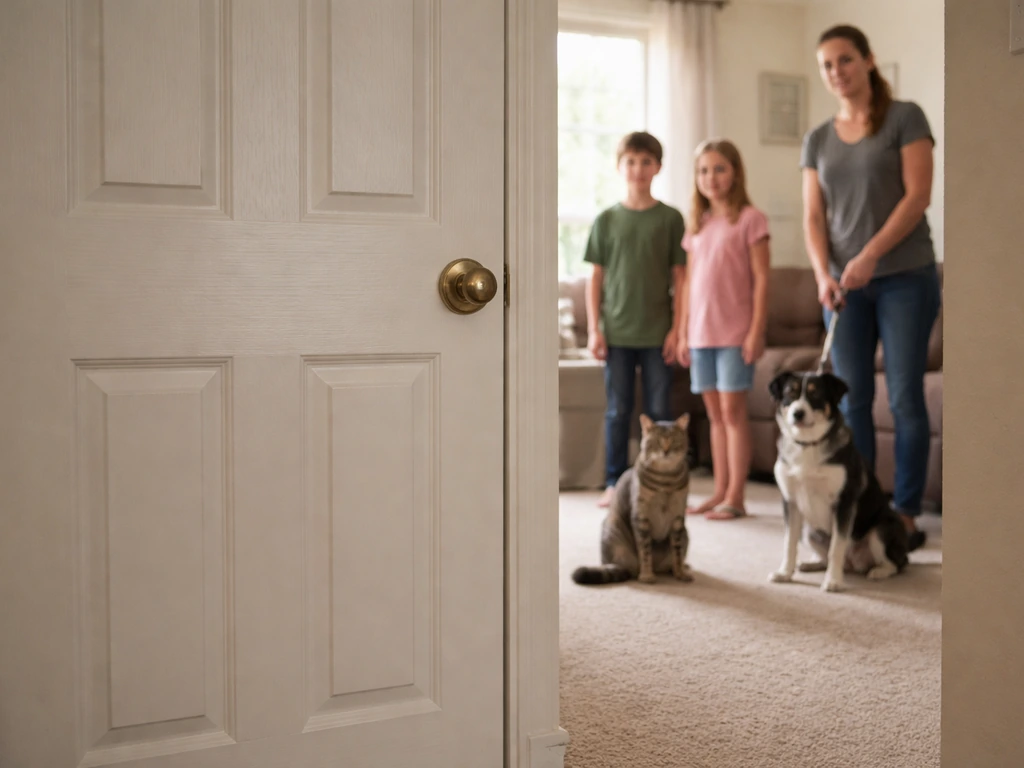
Before you do anything else, protect people and pets. Close off any rooms the bird hasn't reached so it can't fly deeper into the building, and get cats or dogs out of the area immediately. A panicking bird is fast, unpredictable, and can injure itself badly if it hits walls or windows repeatedly. Your job in the first five minutes is to slow things down, not catch the bird.
- Secure pets and keep children calm and at a distance.
- Close interior doors to limit the bird to one room or area.
- Open exactly one external exit (a door or single window leading outside).
- Turn off all interior lights so the outside opening is the brightest point in the room.
- Draw curtains or blinds over any closed windows so the bird doesn't keep flying at glass.
- Step back at least 10 feet and wait quietly for 5 to 10 minutes.
- If the bird is still stuck after 10 minutes, gently use a broom or a long, soft object to guide it toward the open exit — never to hit or corner it.
The light-and-one-exit method is the approach recommended by both the RSPCA and San Diego Humane Society, and it works because birds instinctively fly toward the brightest light. Remove competing light sources and the math becomes simple for the bird. Patience is genuinely the most important tool here.
Is it actually a swallow, and is it injured or healthy?
Correctly reading the situation before you act saves time and prevents harm. Run through this quick check before you try anything else.
Identifying a swallow
Barn swallows and cliff swallows are the species most commonly found in and around buildings in North America. Both have streamlined bodies, long pointed wings, and forked or notched tails. They are fast, acrobatic flyers and will typically keep moving even in an enclosed space. If the bird is moving constantly and looks physically capable, you are almost certainly dealing with a healthy bird that just needs an exit route.
Small birds that can be confused with swallows include swifts (very similar silhouette, but swifts almost never land on surfaces), house sparrows (chunkier, shorter wings), and purple martins (larger, darker). The removal method is essentially the same for all of them, but knowing the species matters later when you are dealing with nesting, legal protection, or calling a professional.
Healthy bird vs. injured bird
| Sign | Healthy bird | Injured bird |
|---|---|---|
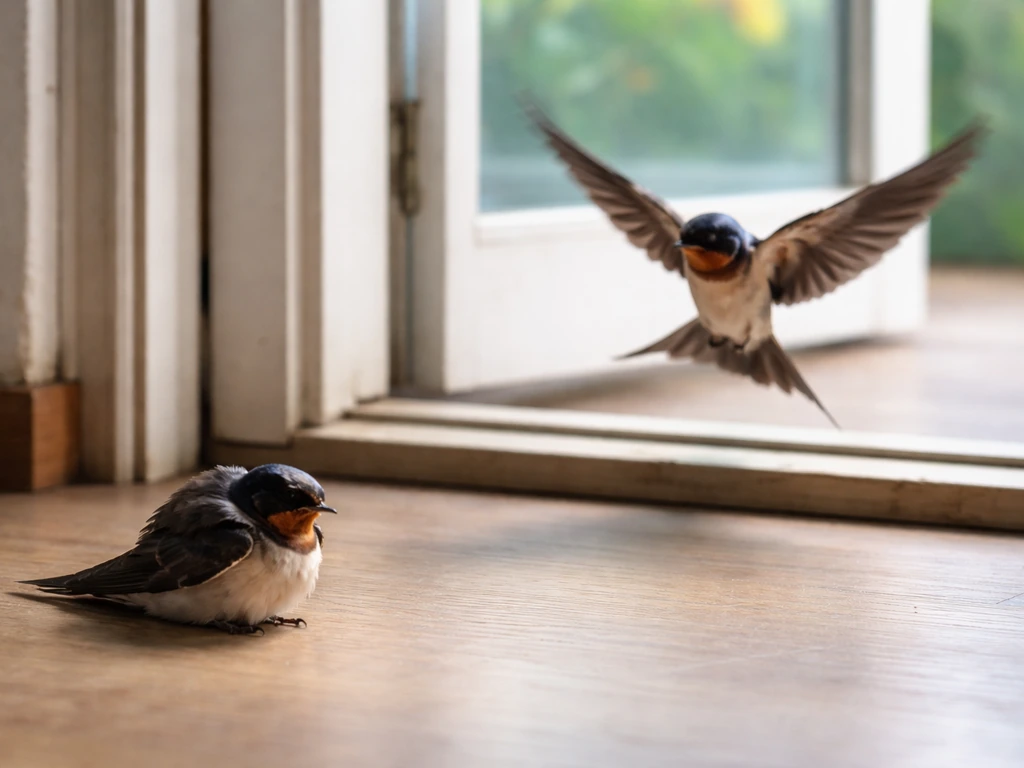
| Movement | Flying continuously, hitting walls or windows in panic | Sitting still on floor or low surface, unable to take off |
| Posture | Upright, alert, head tracking movement | Hunched, leaning, or lying on one side |
| Response to you | Flies away when you approach | Stays put or flutters weakly |
| Eyes | Bright and open | Closed, half-closed, or cloudy |
| Wings | Both held symmetrically | One wing drooping lower than the other |
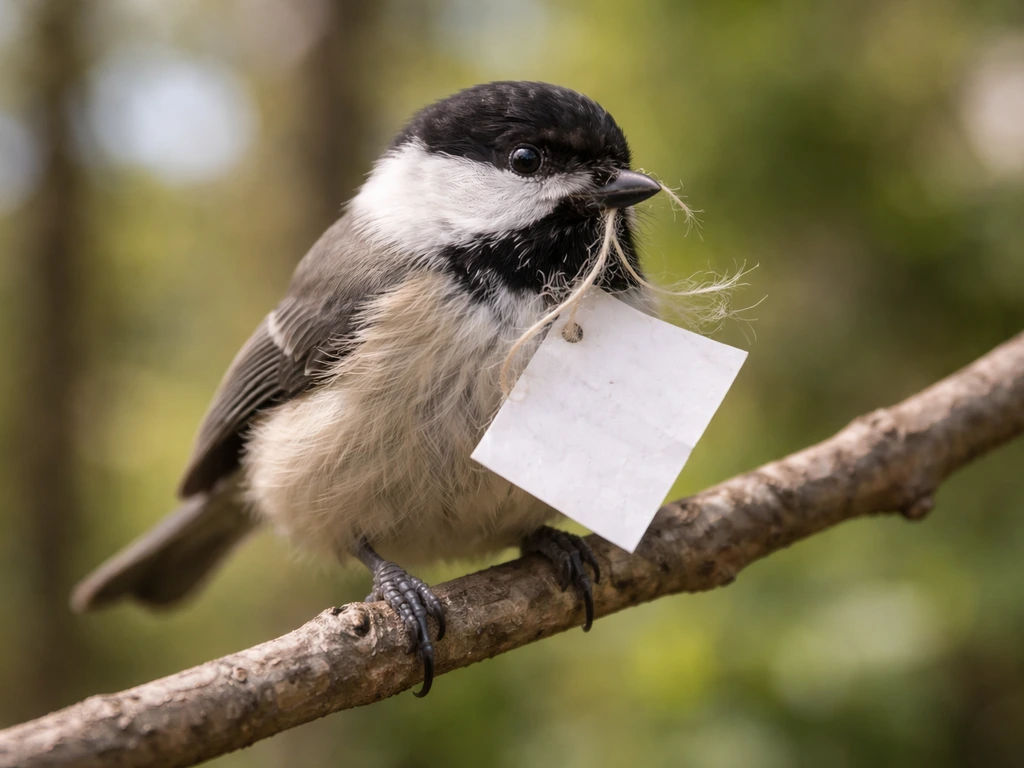
If the bird is flying and responsive, use the exit strategy below. If it looks injured, skip to the professional escalation section further down before you try to handle it. If you are trying to remove a card from a bird, pause and use the exit strategy instead to avoid injuring the bird remove card from bird. The RSPCA specifically warns against throwing a towel or blanket over an injured bird that is still flying, because this can worsen injuries. A bird on the ground that cannot fly is a different scenario and needs different handling.
How to get a swallow out of your building humanely
The door and window strategy is reliable, low-stress, and requires no equipment. Here is how to run it properly.
- Choose the exit closest to where the bird is currently flying. Ideally a door or large window on an external wall.
- Open it fully. Wide openings matter because a swallow in flight needs room to adjust its approach.
- Turn off every light in that room. If daylight is coming through the chosen exit, the room will naturally funnel the bird toward it.
- Cover all other windows with curtains, towels, or blinds. A swallow will repeatedly hit glass it can see through, so remove that temptation entirely.
- Leave the room if possible. Human presence keeps the bird anxious and in flight. The less stimulation, the faster it finds the exit.
- If you must stay in the room, crouch low and stay still against a wall.
- After 10 minutes, if the bird is still circling, use a broom held horizontal (not raised to strike) to gently sweep the air behind the bird, nudging it toward the open exit.
- Once the bird is out, close the exit immediately to prevent re-entry.
For larger spaces like warehouses, barns, or garages, open multiple exit doors on one side of the building and close any openings on the opposite side. Birds navigate by light gradient, so creating a bright wall of exits on one end and darkness on the other guides them efficiently. In a very large building with skylights, briefly turning on large overhead lights can actually work against you (the bird flies toward the skylights instead). In those cases, block the skylights temporarily with tarps or cardboard if safe to do so.
Cleanup after the bird leaves
Once the bird is out, do not skip the cleanup step. Swallow droppings can carry Salmonella and other pathogens, and dry droppings become airborne dust that can be inhaled. This is not a reason to panic, but it is a reason to clean properly.
What you need before you start
- Disposable gloves (nitrile preferred)
- An N95 or P100 respirator mask, especially if droppings are dry or disturbed
- Eye protection if droppings are on overhead surfaces
- Paper towels or disposable rags
- A disinfectant spray (diluted bleach at 1: 10 ratio works well, or an EPA-registered disinfectant)
- A plastic bag for waste disposal
Cleaning droppings, feathers, and odors
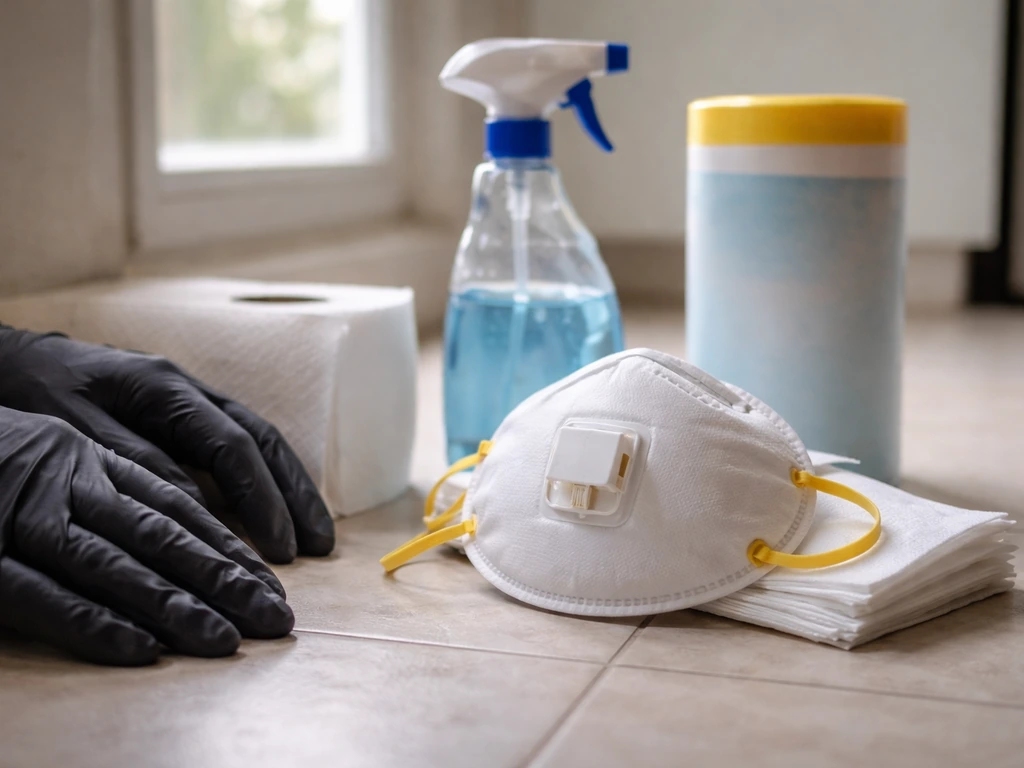
- Ventilate the area first: open windows and doors for at least 30 minutes before you start cleaning.
- Dampen dry droppings with water or disinfectant spray before wiping. Never dry-sweep or vacuum droppings, as this aerosolizes the particles.
- Wipe up droppings and feathers with damp paper towels and seal in a plastic bag immediately.
- Spray the surface with disinfectant and let it sit for the contact time listed on the label (usually 5 to 10 minutes).
- Wipe clean and allow to air dry.
- Wash your hands thoroughly even after removing gloves.
- Wash any clothing that had contact with the droppings separately in hot water.
For odor, the disinfectant treatment usually handles most of it. If a persistent musty or ammonia smell remains, an enzymatic odor neutralizer applied to the affected surface works better than masking sprays. Keep ventilation running for a few hours after cleaning. If droppings are embedded in fabric, upholstery, or carpet, enzymatic cleaners are your best option there too.
Stopping swallows from coming back
A one-time entry is usually just a gap in your building's envelope. Recurring entries or active nesting require a more systematic approach. The goal is to identify how the bird got in, seal it properly, and time your prevention work around the nesting season so you stay on the right side of federal wildlife law. To reduce the chance it returns, focus on preventing future entry points so you can get rid of bird legs safely over time how to get rid of bird legs.
Find the entry points
- Gaps under eaves and soffits, especially where wood has warped or pulled away from the fascia
- Unscreened vents (attic vents, ridge vents, dryer vents, bathroom exhaust vents)
- Open or damaged roof penetrations around pipes and wiring
- Gaps where walls meet roof beams in barns and outbuildings
- Doors and loading dock openings that are left propped open for extended periods
- Broken or missing window screens
Proofing and exclusion methods
| Entry type | Best fix | Notes |
|---|---|---|
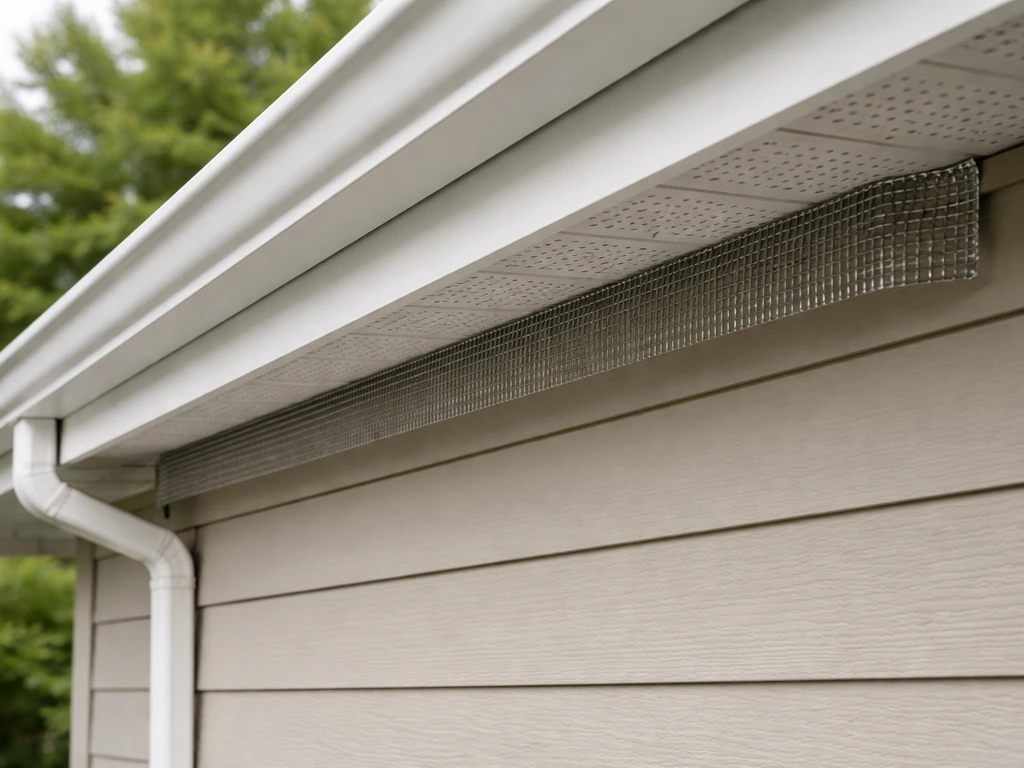
| Open vents | Hardware cloth (1/4 inch mesh) or commercial vent covers with built-in screens | Check all four sides of vent covers are sealed; birds find gaps at corners |
| Eave and soffit gaps | Polyurethane foam sealant for small gaps; aluminum flashing for larger gaps | Check annually as wood movement reopens old seals |
| Roof penetrations | Pipe boots and flashing properly caulked with exterior-grade caulk | Inspect after winter each year |
| Large openings (barns, warehouses) | Bird netting (19mm mesh) across door openings or the full interior of eaves | Netting must be taut; loose netting can trap birds |
| Rafters and ledges (nesting sites) | Physical bird slope strips or spikes on ledges, plus netting below rafters | Only install outside active nesting season |
Seasonal timing matters
Barn swallows typically arrive in the continental U.S. from late March through May and begin nesting almost immediately. Their eggs and chicks are protected under the Migratory Bird Treaty Act, which makes it illegal to destroy an active nest. This means your window for exclusion work is: late January through mid-March (before arrival), or after the breeding season ends in late August through September, once chicks have fledged. Installing netting or blocking entry points while a nest is active is illegal and also ineffective because the adults will simply build another nest nearby.
If you find an active nest mid-summer, the practical answer is to leave it alone, mark the location, and schedule your exclusion work for after September. Put a reminder on your calendar for February of the following year to get the proofing done before the birds return.
Simple annual maintenance schedule
| Month | Action |
|---|---|
| February | Inspect eaves, soffits, vents, and roof penetrations. Seal gaps and install screens before birds arrive. |
| March to April | Monitor for early arrivals. If nesting begins, document location and plan exclusion for after the season. |
| May to August | Leave active nests undisturbed. Note all nesting sites for fall action. |
| September to October | After fledging, remove old nests (use PPE), install physical deterrents on previous nesting ledges, and seal remaining entry points. |
| November to January | Final inspection after any storm damage. Repair gaps before the next spring season. |
When you need to call a professional
Most single-bird situations are genuinely DIY-friendly. But there are clear triggers that mean you should pick up the phone instead of handling it yourself.
- The bird is injured and on the ground: contact a licensed wildlife rehabilitator. Do not attempt to care for it at home. Search the National Wildlife Rehabilitators Association directory or call your state wildlife agency.
- There are multiple birds or a flock inside: a large group of swallows or swifts in a building is a serious situation and is hard to manage alone. A wildlife removal professional can set up one-way exclusion devices safely.
- There is an active nest with eggs or chicks: under the Migratory Bird Treaty Act, disturbing, moving, or destroying an active nest is a federal offense. Call a licensed wildlife professional or your local USDA Wildlife Services office for guidance.
- You cannot reach the entry point safely: if sealing requires working at height above 10 feet or inside a confined space, hire a professional rather than risk a fall.
- You suspect the bird entered through a chimney or fireplace flue: this is a different situation that may involve chimney swifts, which are also federally protected. A chimney professional and wildlife specialist should assess it together.
- The problem recurs despite sealing: a professional can do a full building audit to find entry points you may have missed.
When you call, have this information ready: the species if you know it, the location in the building, how many birds are involved, whether you have seen a nest, and how long the problem has been going on. The more specific you are, the faster they can help.
What not to do
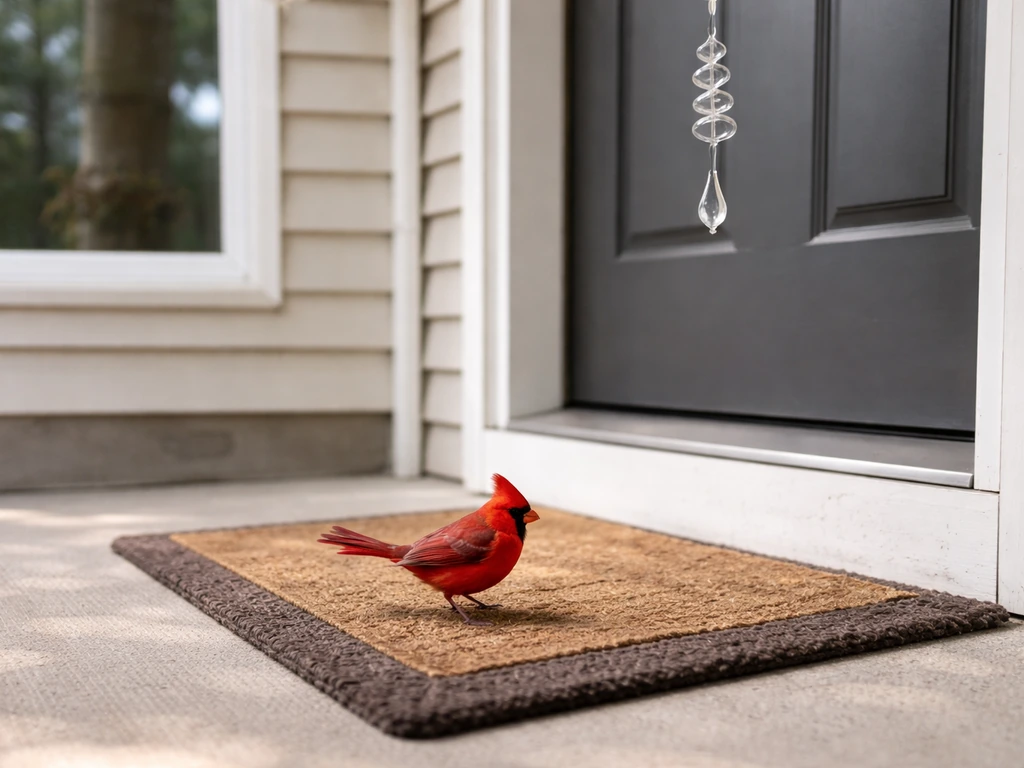
A few common mistakes can injure the bird, put you at risk, or land you in legal trouble. Avoid all of these. Avoid all of these, and if you meant a different issue like how to get rid of bird chest, follow the specific cleanup and prevention steps for that situation instead. If you want more detail on how to get rid of a cardinal bird safely, follow the removal and prevention steps for that species common mistakes.
- Do not use glue traps or sticky boards. These are inhumane, often illegal for birds, and cause severe injury.
- Do not use poisons. Poisoning migratory birds is a federal crime under the Migratory Bird Treaty Act, and secondary poisoning can harm pets and raptors.
- Do not try to catch a flying bird with your bare hands or by throwing a towel over it. This rarely works and frequently injures the bird.
- Do not seal entry points while a nest is active. You will trap adults out from eggs or chicks and violate federal law.
- Do not open multiple windows and doors at once hoping the bird will find one. Multiple exit options create confusion. The single-exit, dark-room method works far better.
- Do not use ultrasonic repellers indoors as a quick fix. Evidence for their effectiveness is weak and they will not solve an active entry problem.
- Do not handle any bird without gloves. Even a healthy bird can scratch or bite, and feces can transmit pathogens. The U.S. Fish and Wildlife Service emphasizes minimizing contact and following safe handling principles to reduce disease exposure.
- Do not assume a baby bird on the ground needs rescuing. Fledgling swallows sometimes land briefly during their first flights. If it looks feathered and healthy, leave it and keep cats indoors.
FAQ
What if the swallow bird keeps flying in circles and won’t leave after I open one exit?
Wait a few more minutes but keep lights off everywhere except the single open exit, then reduce traffic in the room. If you can see the bird choosing between multiple openings, close all but one doorway or window so there is a single bright route.
Is it safe to chase or use a net to get a swallow out faster?
Avoid chasing, grabbing, and netting. Healthy swallows are fast and acrobatic, and sudden movement increases the chance of repeated wall or window strikes. The low-stress exit strategy is the safer first step.
How do I tell the difference between a flying swallow that needs an exit and an injured bird I shouldn’t try to move?
If the bird is flying and can react to your presence, use the door and window method. If it is grounded, upright but immobile, bleeding, or shows obvious wing or leg problems, stop handling and switch to professional escalation immediately rather than trying to “help” it fly.
What if the bird goes into another room and I cannot tell where it is now?
Close doors to limit spread to one zone, then repeat the exit setup in that zone once you locate it. Keep at least one exterior exit route open there and keep pets out until the bird is confirmed outside.
Can I cover the bird with a towel or blanket while it is still moving to calm it?
Do not throw a towel or blanket over a flying bird. For an actively flying swallow, coverage can worsen injuries and makes collisions more likely. Use separation, lighting, and one clear exit instead.
Does turning on more lights help in a large building, or can it make things worse?
More light can backfire in spaces with skylights because the bird may fly toward the brightest overhead openings. In very large areas, target light only on the exit side, and temporarily block skylights with safe barriers if needed.
Once the bird is out, how soon should I clean the droppings and what’s the safest approach?
Clean soon, but do it when the area is clear of people and pets, and protect your breathing. Avoid dry sweeping, mist the area first to keep dust down, then disinfect and ensure ventilation runs for several hours.
If droppings are on a couch, carpet, or fabric, should I use the same cleaner as for hard floors?
Use enzymatic odor neutralizers on fabric and porous surfaces, because they work better when residue is embedded. Spot-test if possible, follow the dwell time on the label, and keep ventilation going while it dries.
What if the swallow keeps getting in again, even after I got it out once?
Recurring entries usually mean a repeat access gap, not just an accidental entry. Focus on sealing the entry points after the bird is gone, then plan the timing around nesting season so exclusion work does not interfere with active nesting.
When is it legal or illegal to do exclusion if there may be a nest?
Avoid blocking or netting while eggs or chicks are active, since many swallow species are protected during nesting. Plan exclusion for before arrival (late winter) or after the breeding season ends (late summer to early fall), and schedule proofing for the following year.
If I find a nest in mid-summer, what should I do right away?
Leave the nest alone, mark the location, and schedule exclusion after chicks have fledged. Put a reminder for proofing in the late-winter window so you can prevent the next season’s return without disrupting active birds.
What information should I gather before calling a wildlife or pest professional?
Note the species if you can, the exact spot in the building, how many birds you’ve seen, whether you’ve observed a nest or repeated entry, and how long it has been happening. That helps them choose the correct, legal method and timing for removal or exclusion.