If a bird is inside a room right now, the fastest safe approach is to darken the room, cover any windows that don't open, open one clear exit (a door or window to the outside), and then step back and give the bird space. Most healthy birds will find the light and fly out within minutes. Everything else in this guide builds on that core sequence, whether you're dealing with a bird that's flying in circles, sitting stunned on the floor, possibly injured, or nesting somewhere nearby.
How to Make a Room Bird Safe: Steps for Escape and Prevention
Maya Carver
2 Jun 2026
Quick triage: figure out what you're actually dealing with
Before you do anything, spend 30 seconds assessing the situation. The right steps depend heavily on what the bird is doing and how it got in. Ask yourself these questions:
- Is the bird actively flying, or is it sitting still on the floor or a surface?
- Did it just hit a window and seem dazed, or has it been inside for a while?
- Are there obvious signs of injury like bleeding, a drooping wing, or an inability to use its legs?
- Is it a small songbird, or a larger bird like a pigeon, hawk, or owl?
- Is there any sign of a nest, eggs, or chicks nearby (inside a vent, chimney, wall gap, or eave)?
A bird that is flying actively around the room is stressed but physically fine, and your main job is to help it exit without it injuring itself on windows or ceiling fans. A bird sitting quietly on the floor may just be stunned from a window strike and needs a few minutes to recover before it can fly again. A bird with visible injuries needs wildlife rehabilitation, not DIY handling. And if you're hearing chirping from a vent or seeing nest material in a gap near the room, you may have a nesting situation that has different (and legally important) rules.
Nesting nearby: a separate situation with legal implications
If a bird is nesting in or immediately adjacent to a room rather than trapped inside it, stop before you block anything. Most wild bird nests in North America are protected under the Migratory Bird Treaty Act (MBTA). Once eggs or chicks are present, it is a federal offense to disturb, move, or destroy the nest. You can seal entry points and do proofing work, but only after the nest is completely inactive and the birds have left for the season. If you're unsure whether a nest is active, contact a licensed wildlife rehabilitator or your local wildlife agency before proceeding.
Emergency make-safe: protect people, pets, and the bird first
The moment you know a bird is inside, do these things immediately before you try to help it exit. This protects everyone in the room, including the bird.
- Remove or secure pets. Dogs and cats can seriously injure or kill a bird in seconds. Get them out of the room and close the door behind them.
- Keep children calm and at a distance. A panicking bird can fly directly into a person's face. Ask kids to leave the room or stand very still against a wall.
- Turn off ceiling fans immediately. A bird flying in a panic will hit a moving fan blade.
- Do not chase or shout. Noise and sudden movement drive birds into walls and windows. Move slowly and speak quietly if you must speak at all.
- For larger birds (pigeons, hawks, owls), keep extra distance. Large birds can bite hard and their talons can break skin. Do not attempt to grab them barehanded.
- If the bird is in a fireplace, do not open the flue damper yet and do not light a fire. See the chimney-specific steps below.
How to help the bird exit: step-by-step setup
This is the sequence that works in the vast majority of cases. It uses the bird's own instincts, specifically its drive to fly toward light, to get it out safely without you having to touch it.
- Confine the bird to as small a space as possible and as close to an exit as you can manage. Close doors to adjacent rooms so the bird isn't bouncing between spaces. Multiple open rooms and several visible windows confuse birds and make escape harder.
- Cover every window that does not open. Use a blanket, towel, sheet, cardboard, or thick paper. This stops the bird from repeatedly flying at closed glass thinking it's an exit. Tape it in place if you need to.
- Turn off all indoor lights in the room.
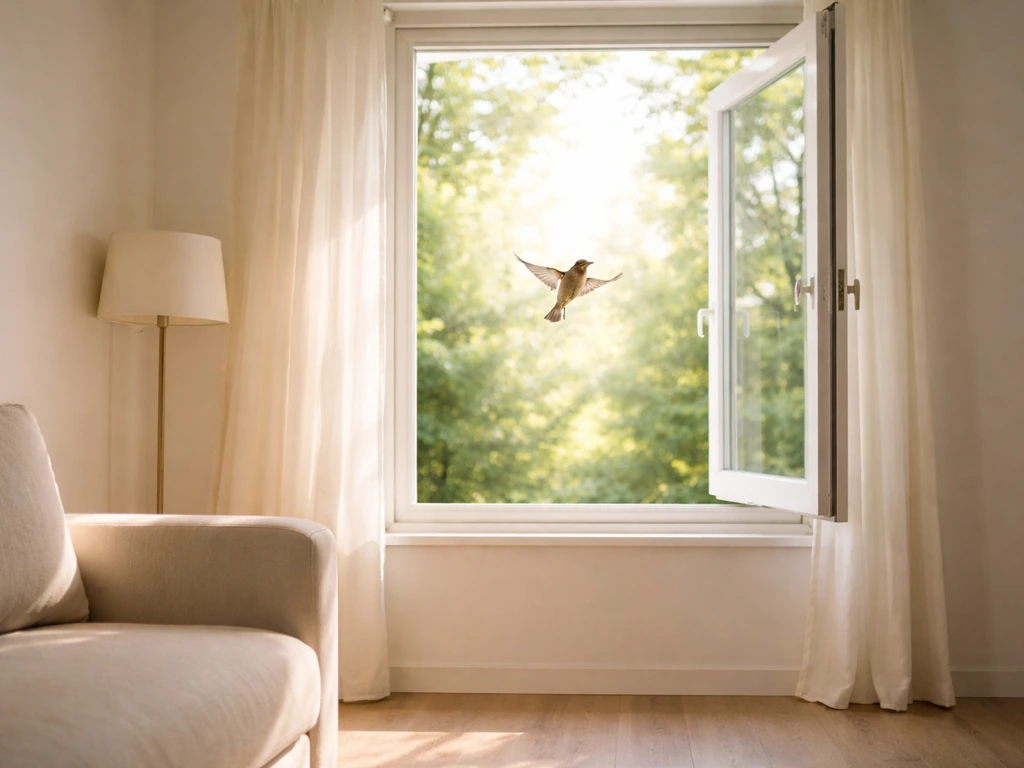
- Open one clear exit to the outside, ideally a door. If you only have windows, open one window fully and remove or push aside its screen.
- If the room has a chimney or fireplace, open the fireplace doors or curtain wide, make sure the damper is open, turn off room lights, and leave the room. The bird will often see the light outside and fly up and out.
- Leave the room completely and close yourself out. Give the bird at least 15 to 30 minutes of quiet. Birds that feel watched will not move toward an exit.
- Check back quietly. In most cases the bird will have found the light coming through the open exit and flown out. Close the door or window once it is gone.
Encouraging a reluctant bird toward the exit
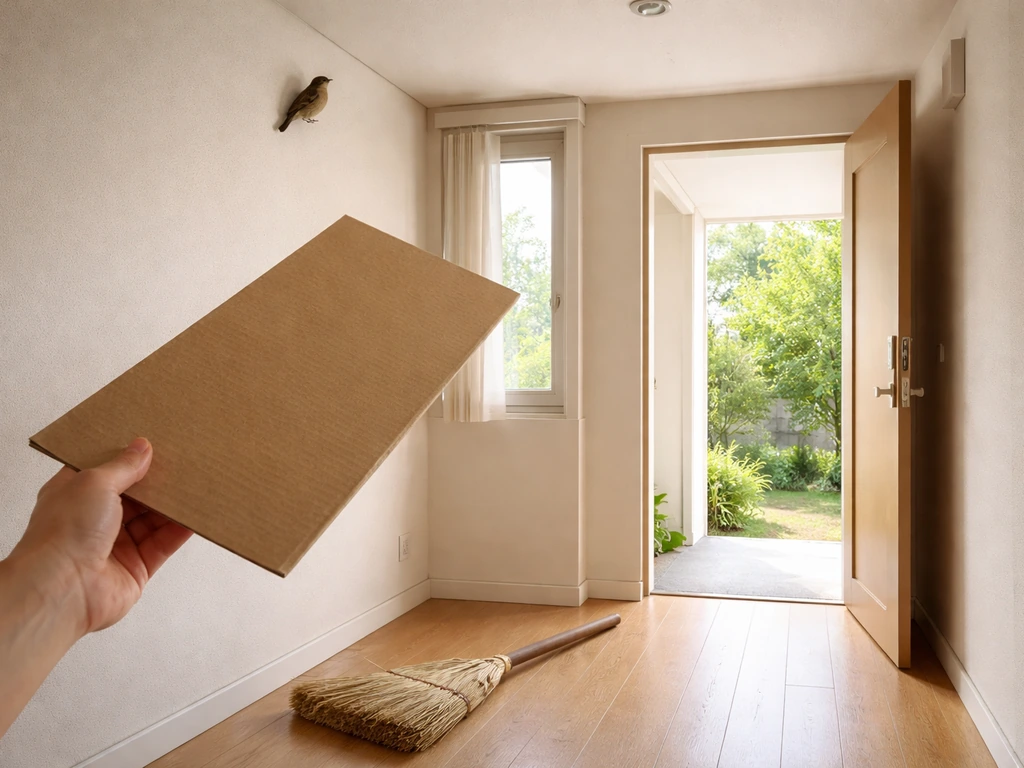
If the bird has not left after 30 minutes and is still flying or perched near the ceiling, you can gently encourage it. Move slowly and use a broom or a large piece of cardboard held flat to create a soft visual barrier behind the bird, guiding it toward the open exit. Do not swing or jab. The goal is to make the area behind the bird feel closed off so it naturally moves forward toward the light. Keep movements slow and deliberate.
If the bird won't leave: what to do based on what it's doing
Not every bird situation resolves with the open-door method. Here's how to handle the main scenarios you might run into.
Bird is sitting on the floor or a low surface and not flying
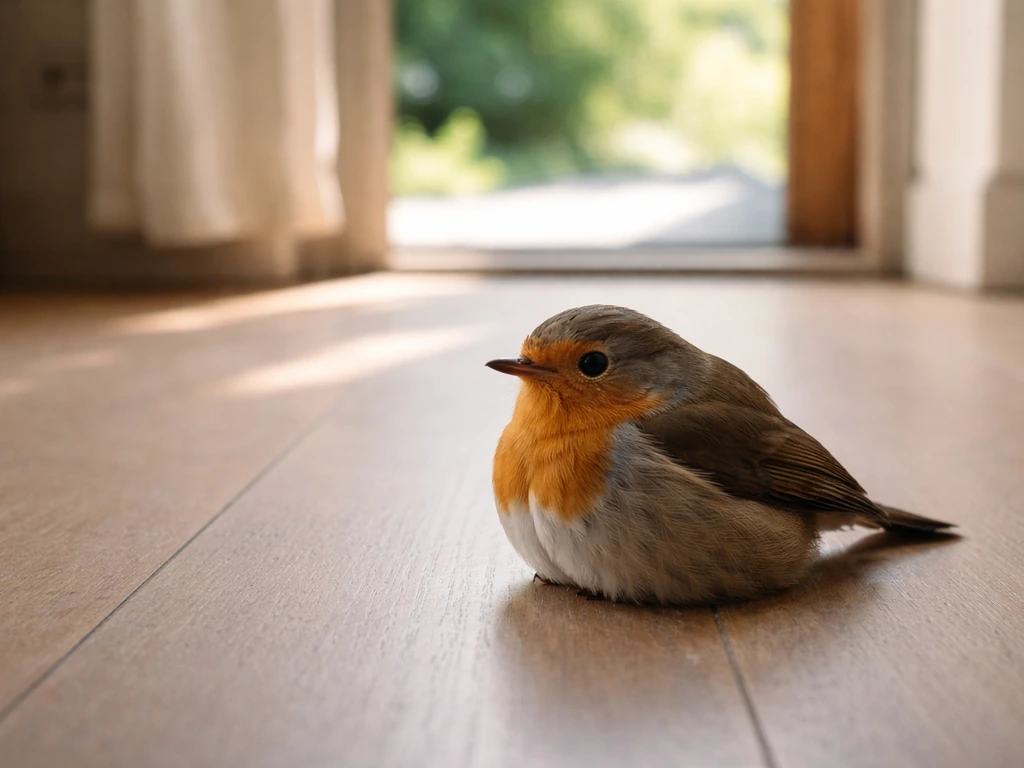
This is often a window-strike stun rather than a serious injury. The bird may just need 15 to 30 minutes to recover its senses before it can fly again. Leave it alone in a quiet room. If it recovers, it will fly toward the exit you've set up. If it hasn't moved after an hour, or if you see obvious injuries, treat it as an injured bird (see below).
Bird appears injured (bleeding, drooping wing, unable to stand)
Do not attempt to treat the bird yourself. Gently place a small cardboard box or container over it, slide a piece of cardboard underneath, and transfer it into a ventilated box. Put the box somewhere dark, quiet, and warm, away from children and pets. Do not talk to the bird, handle it unnecessarily, or offer food or water. Then call a licensed wildlife rehabilitator immediately. Stress alone can kill an injured bird, so minimal handling is essential.
Bird needs to be manually contained to be moved outside
If the bird is in an enclosed space like a fireplace and won't self-exit, a fine-mesh net such as a butterfly net can be used to gently capture it. Drape the net over the bird rather than swiping at it. Once it is in the net, wrap it loosely in a soft cloth to keep it calm and carry it outside. Release it at ground level in a sheltered spot away from direct sun. For larger birds with talons or strong beaks, wear thick gloves and consider calling for professional help instead.
What not to do under any circumstances
- Never use glue traps. Birds caught on glue traps suffer severe injuries and frequently do not survive. If you find a bird already stuck on a glue trap, cover the sticky areas with cloth, do not attempt to pull the bird free yourself, and bring the bird and trap together to a licensed wildlife rehabilitator or veterinarian.
- Never try to grab a bird barehanded unless you have no other option and the bird is clearly injured and not moving.
- Never give the bird food or water without guidance from a rehabilitator.
- Never place an injured bird on its back, as this position makes breathing harder for birds.
- Never leave a stunned bird outside on open ground where it is exposed to predators.
Room proofing: seal gaps, block entry points, and fix windows
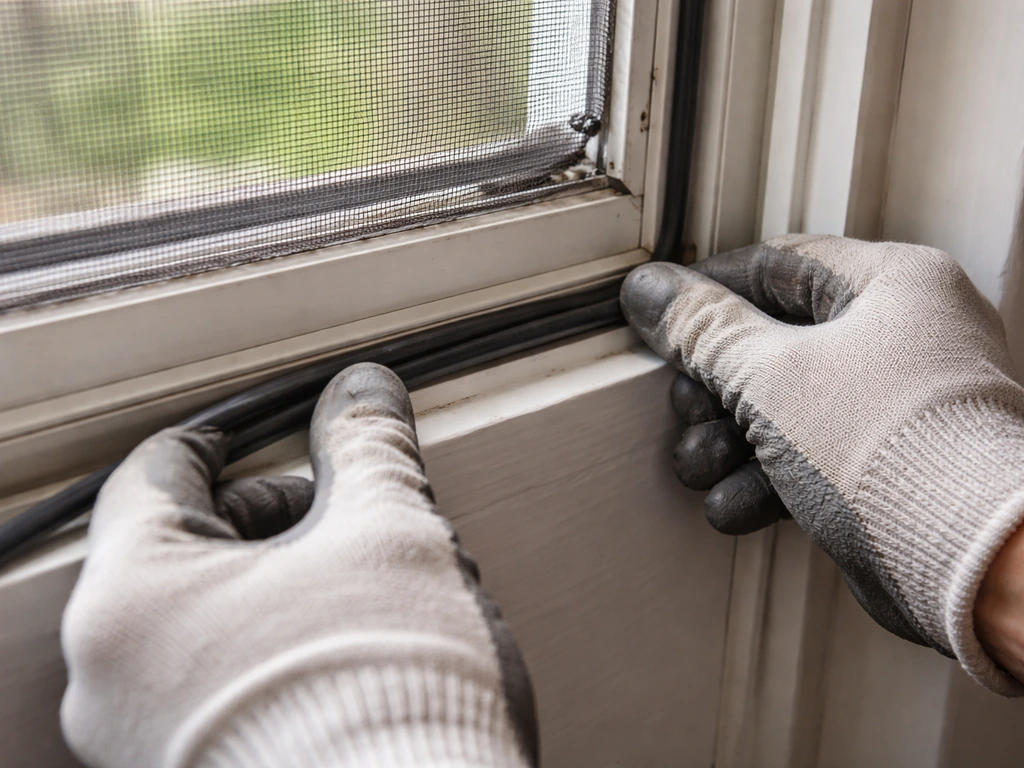
Once the immediate situation is resolved, your next job is making sure it doesn't happen again. A bird in a room almost always got in through a specific gap, and that gap needs to be closed. Work through this room-by-room inspection before the next nesting or migration season.
Find and seal entry points
- Check window screens for tears, gaps at the frame, or missing hardware. Even a small tear is large enough for a sparrow. Replace damaged screens and use spline to reseat loose ones.
- Inspect door sweeps and weatherstripping. A gap at the bottom of a door is a common entry point. Replace worn sweeps on exterior and garage doors.
- Check HVAC intakes, dryer vents, bathroom exhaust vents, and attic vents. These need secure covers or hardware cloth (half-inch mesh or finer) to block bird access while allowing airflow.
- Look at chimney openings. Uncapped chimneys are a frequent entry route. A stainless steel chimney cap keeps birds out and is a straightforward DIY install.
- Examine the roofline, soffits, and fascia boards. Rot, gaps at the eave line, and loose boards are all potential entry points. Seal with appropriate caulk or replace damaged boards.
- Check any gaps around pipes, cables, or conduits entering the building. Fill with expanding foam or hardware cloth backed by caulk.
Making windows safer
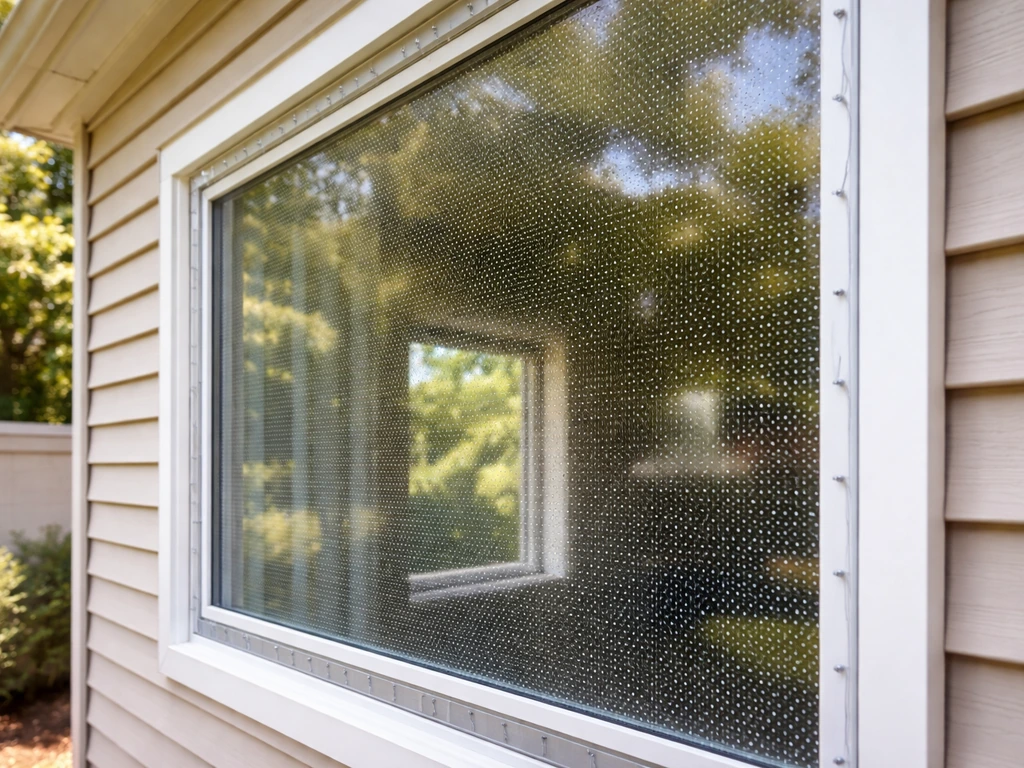
Windows are a major collision risk for birds both outside and inside. Glass that reflects sky or trees looks like open space to a bird. The most effective deterrents are patterns applied to the outside surface of the glass. The U.S. Fish and Wildlife Service recommends placing window decals in a grid pattern with elements no more than 2 inches apart horizontally and 4 inches apart vertically. Window film and external screens are also very effective because screens reduce reflections and physically signal to birds that the glass is a solid surface. Internal applications (stickers on the inside) are less effective but still better than nothing. Making windows bird safe is a topic detailed enough to deserve its own treatment, and the approach applies equally to exterior windows and skylights.
Garage, shed, and basement-specific checks
Garages and sheds are high-risk spaces because their large doors are frequently left open. Keep garage doors closed when not in active use. For basements, turn off all interior lights and open as many windows as possible to give a trapped bird a lit exit route. Cover any basement windows that don't open with cardboard or a blanket to prevent the bird from repeatedly targeting closed glass.
Long-term prevention: lighting, attractants, and seasonal planning
Proofing gaps is the mechanical side of prevention. The behavioral side means removing the things that draw birds toward your building in the first place, and timing your maintenance so it happens before birds take up residence.
Reduce attractants
- Move bird feeders and birdbaths at least 30 feet away from the building, or remove them from areas directly adjacent to entry points like doors and vented windows.
- Keep pet food indoors and clean up any outdoor food scraps that might attract birds or the insects and rodents that birds hunt.
- Remove standing water from gutters, AC drip pans, and flat roofs where birds drink or bathe.
- Store loose nesting material (pet fur, string, dry plant matter) in sealed containers or away from accessible eaves.
Lighting adjustments
Bright exterior lighting at night disorients migrating birds and draws them toward buildings. During peak migration periods (roughly March through May and August through October in North America), turn off or dim non-essential exterior lights. Use motion-activated lighting instead of lights that stay on all night. Inside, be aware that brightly lit rooms visible from outside at night can attract birds to windows, so close blinds after dark during migration season.
Seasonal maintenance schedule
| Season / Timing | Task |
|---|---|
| Late winter (Feb-Mar) | Inspect and repair all window screens, door sweeps, and vent covers before spring nesting begins |
| Early spring (Mar-Apr) | Install chimney caps; check roofline and soffit gaps; reduce exterior lighting during migration |
| Late spring (May-Jun) | Check for active nests before doing any sealing work; do not disturb if eggs or chicks are present |
| Summer (Jul-Aug) | After fledglings have left, seal any newly discovered entry points; clean gutters to remove nesting debris |
| Fall (Aug-Oct) | Reduce exterior lights during fall migration; re-inspect screens and weatherstripping before winter |
| Winter (Nov-Jan) | Plan and order materials for spring repairs; check chimney caps after heavy weather |
Pest control note for aviaries and mixed-use spaces
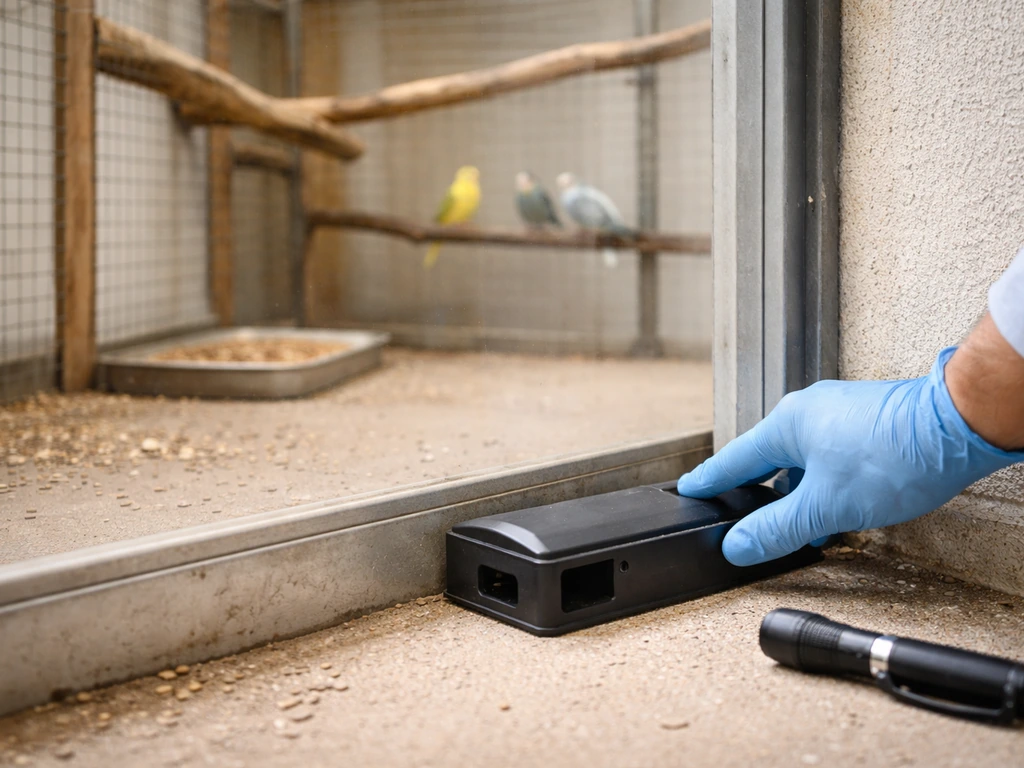
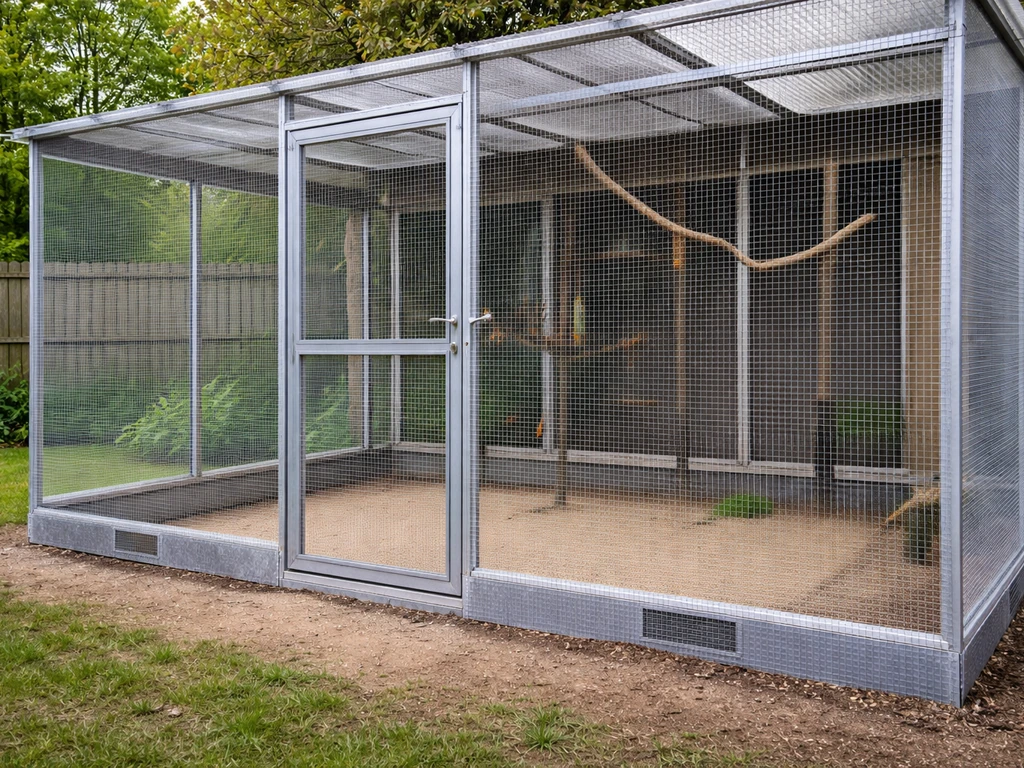
If you manage an aviary or an indoor space that houses pet birds, the prevention calculus shifts. You are not just keeping wild birds out but also keeping the space free of pests (mice, ants, insects) that can harm resident birds or contaminate their food. If ants are getting into your aviary, focus on removing attractants and sealing entry points around feeders, water lines, and food storage. If mice are getting into your bird aviary, focus on removing attractants, sealing entry points, and using aviary-safe trapping or pest control methods that won't put the birds at risk. The approaches for mouse-proofing and pest control in bird housing overlap with the gap-sealing steps above but have specific considerations worth addressing separately. To mouse proof a bird aviary, focus on sealing gaps, using tight-fitting vents, and securing feed so rodents do not find food or hiding spots mouse-proofing and pest control.
When to call wildlife professionals and what the law says
Most healthy wild birds can be safely encouraged out of a room by the methods above, without any professional help. But there are clear situations where you should stop DIY attempts and make a call.
Call a licensed wildlife rehabilitator if:
- The bird has visible injuries: bleeding, a wing it cannot fold or use, inability to stand, or labored breathing.
- The bird has been inside for more than a few hours and is becoming increasingly exhausted (birds can die from stress and exertion).
- The bird is a raptor (hawk, owl, falcon) or other large species you cannot safely handle.
- The bird is stuck on a glue trap.
- You have found chicks or eggs in a nest that is inside or attached to the building and you need to do urgent structural work.
Call animal control or a pest management professional if:
- You have a recurring entry problem and cannot locate or safely access the gap yourself (roofline, high soffit, chimney).
- There is a large roost of birds (starlings, pigeons, sparrows) actively using the building and the numbers make DIY proofing impractical.
- The entry point involves structural repair beyond basic sealing.
Know the law before you act
The Migratory Bird Treaty Act protects nearly all native North American bird species. This means you cannot legally trap, kill, move, or possess a migratory bird, its nest, eggs, or young without a federal permit. This applies even when the bird is inside your building. The practical implication: you can guide a bird out, but you cannot kill it, use glue traps on it, or seal off an active nest without legal risk. The Wildlife Center of Virginia also warns that birds stuck on glue traps may not survive or may arrive with grave injuries requiring euthanasia glue traps on it. House sparrows, European starlings, and rock pigeons (common pigeons) are not protected under the MBTA and can be managed more freely, but check your state and local regulations because additional protections may apply. When in doubt, contact your state wildlife agency or a licensed rehabilitator before taking any action that involves capturing or disturbing a bird.
When you call a wildlife rehabilitator, have this information ready: the species if you can identify it, where you found it, how long it has been in the building, and any visible injuries. This helps them advise you quickly and prioritize their response.
FAQ
How long should I wait before assuming the bird cannot find the exit on its own?
Try the darken-and-open-exit setup first, then reassess at 30 minutes. If it still stays aloft near the ceiling or keeps circling, you can gently guide it with a flat cardboard barrier. If there is no improvement after about an hour, treat it as potentially injured or trapped and contact a wildlife rehabilitator.
Is it safe to use a towel, blanket, or hands to catch the bird if it lands near me?
No. Avoid grabbing or swaddling it while it is awake and active, because sudden contact increases stress and can worsen injuries. If you must contain an injured bird, use a small ventilated box approach with minimal handling, or use a draped fine-mesh net only when you are specifically trying to capture for transfer.
What should I do with pets (cats, dogs, or other birds) while helping a room bird exit?
Keep all pets and other birds out of the room, and close doors to limit access. Even if the bird seems calm, predator behavior and loud movement can spike stress. For indoor bird species in your care, separate them in a different space so they are not exposed to wild bird contact.
Can I close the doors and windows after the bird leaves, or should I wait?
Wait until you are confident the bird is fully out and not just perched behind a curtain or within another room. Then close the exit you opened and begin proofing. A quick room-to-room check for the original entry gap helps prevent the bird from re-entering later.
Do I need to clean up nest material or block the gap right away if I see chirping from a vent?
If you suspect a nest is active or eggs or chicks may be present, do not block or remove anything immediately. Proofing is safest only after the nesting period ends and the area is confirmed inactive. If you are unsure, contact a licensed wildlife rehabilitator or your local wildlife agency first.
What if the bird is in a room with multiple possible exits, like French doors and several windows?
Pick one clear exit route that opens directly to the outside, keep the rest closed, and reduce reflections. Use a single strategy so the bird does not hesitate between competing light sources. Place yourself and any barriers so the bird has an unobstructed path to that one opening.
Should I turn off ceiling fans and close other doors before I start the escape steps?
Yes, turn off ceiling fans and anything that could strike the bird while it is moving. Close interior doors so the bird cannot accidentally enter another area with hazards, then focus on the single outside exit you are using.
Is there anything I should not do during the escape attempt?
Avoid chasing, waving arms, spraying anything, or covering the bird while it is flying. Do not offer food or water, because it can redirect attention away from the exit. Also avoid repeatedly turning lights on and off, because sudden changes can restart panic behavior.
What if the bird keeps hitting the same window after I open an outside door?
It may be mistaking reflections for open space. In the short term, reduce reflections by drawing curtains or covering the specific problematic windows. In the longer term, use external window deterrents such as decals in a tight grid or apply window film or external screens to prevent future strikes.
How can I tell whether a bird is stunned versus truly injured?
Stunned birds often sit quietly on the floor and then show improvement after a recovery period. If you see bleeding, obvious broken wings, difficulty breathing, or repeated collapse, treat it as injured and use minimal-handling transfer to a ventilated box followed by a call to a licensed rehabilitator.
Is the butterfly-net method always appropriate?
No. Use it only when self-exit fails in an enclosed space and you cannot safely guide the bird out using light and an open exit. For larger birds with strong beaks or talons, thick gloves may not be enough to make it safe, and professional help is often the better choice.
What information should I gather before calling a wildlife rehabilitator or wildlife agency?
Have the species if you can identify it, the exact location in your home, how long it has been inside, whether it is flying or just sitting, and any visible injuries. If possible, note whether you suspect a nesting area nearby, such as vent sounds or nest material.
Are all wild birds covered by the Migratory Bird Treaty Act, or are there exceptions?
Nearly all native North American wild bird species are protected, but a few common ones like house sparrows, European starlings, and rock pigeons are not protected under the MBTA. Even then, state and local rules can add restrictions, so check before taking actions that involve capture, harm, or disturbing nests.
Once the immediate danger is over, what is the fastest way to find the entry gap a bird used?
Do a room-by-room inspection of the likely route from the highest-risk areas, especially near vents, window frames, soffits, and any gaps around plumbing or dryer vents. Use a bright flashlight from the inside to look for daylight and compare with where you later apply deterrents and seal the gap.
How soon can I start prevention work after a bird event?
If it was a one-time trapped bird and you do not see nesting activity, you can start proofing immediately after the bird is confirmed gone. If you suspect any nest is present, wait until the area is completely inactive for the season, and verify with an expert if you are uncertain.