Mouse-proofing a bird aviary comes down to three things: blank" rel="noopener noreferrer">sealing every gap larger than 1/4 inch, eliminating the food and water that attract mice in the first place, and creating a buried barrier around the base so they can't tunnel in. If mice are already inside, you have a cleanup and containment job to do first before any long-term proofing will stick. If you need step-by-step help, the next section explains how to get rid of mice in a bird aviary starting with quick cleanup and containment. This guide walks you through both, in the right order.
How to Mouse Proof a Bird Aviary: Step-by-Step Plan
Maya Carver
12 May 2026
What to do today if you already see mice
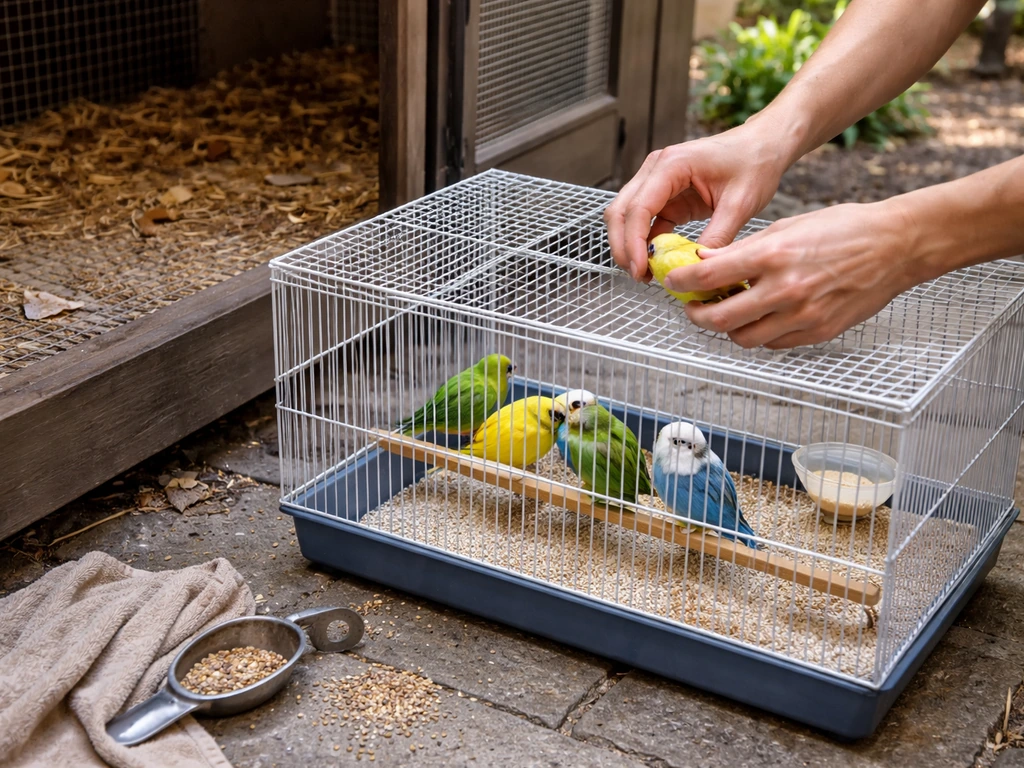
Don't wait on this one. Mice in an aviary expose your birds to stress, disease risk, and contaminated feed almost immediately. Here's your same-day action list.
- Move your birds to a temporary safe space if droppings or nesting material are found inside the flight or sleeping area. Even a short relocation removes them from ongoing stress and contamination.
- Pull all food and water immediately. Discard any feed, water, or treats that mice may have contacted. Do not try to salvage contaminated seed or pellets.
- Put on PPE before touching anything: disposable gloves, an N95 or P100 respirator mask, and eye protection. Do not skip the mask.
- Do NOT sweep or vacuum droppings, urine, or nesting material. Sweeping aerosolizes particles that can carry hantavirus. Instead, spray the affected area with a diluted bleach solution (1.5 cups of bleach per gallon of water) or an EPA-registered disinfectant and let it soak for at least 10 minutes before wiping up with paper towels.
- Bag all contaminated material in sealed plastic bags and dispose of it in an outdoor trash container.
- Wipe down perches, feeders, waterers, and any cage furnishings with the same disinfectant solution.
- Wash your hands thoroughly after removing gloves, and launder any clothing that may have contacted contaminated material.
- Temporarily store all bird feed in sealed, hard-sided containers (metal or thick polypropylene) to remove the food source while you work on exclusion.
If you find a large number of droppings, active nesting material, or signs of a significant infestation, consider calling a pest professional before re-introducing your birds. A heavy infestation may require trapping as a first step, and cleanup of heavily contaminated areas benefits from professional sanitation. See the escalation section at the end of this guide for more on that.
How mice get in: signs to look for and how to inspect
Mice can squeeze through any opening larger than 1/4 inch (about 6 mm), which is roughly the diameter of a pencil eraser. They can also gnaw through soft materials and dig under foundations. Before you seal anything, you need to know exactly where they're getting in.
Signs of mouse activity to find during your inspection
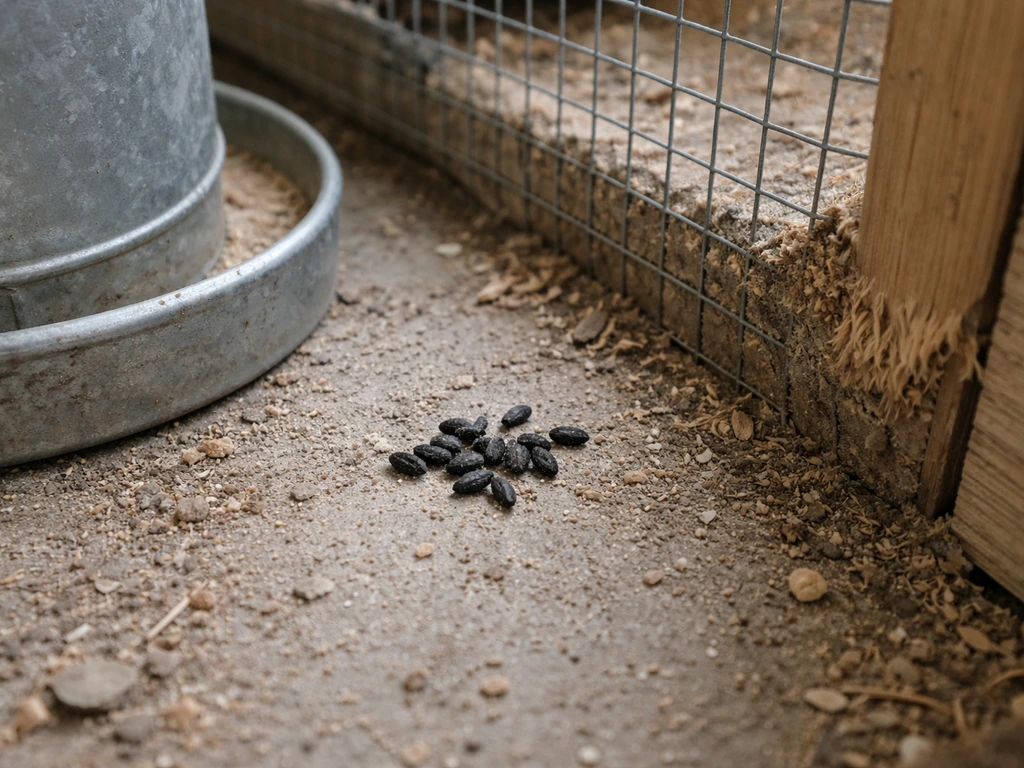
- Droppings: small, dark, rice-grain-sized pellets along walls, near feeders, in corners, or inside nesting boxes
- Gnaw marks: chewed wood framing, wire insulation, feeder edges, or cardboard food packaging
- Rub marks: oily, dark smears along walls or baseboards where mice travel repeatedly
- Footprints or tail drag marks in dusty areas near the aviary base
- Shredded nesting material (paper, feathers, fabric, plant material) tucked into corners or wall voids
- Urine stains or a strong ammonia smell
- Burrow entrances in soil around the aviary perimeter
Inspection checklist: where to look
- All four corners of the aviary frame at ground level
- Where wire mesh meets the wooden or metal frame (look for gaps, warping, or rust holes)
- Around all door frames and thresholds, especially the bottom gap
- Around any pipe, conduit, or electrical penetrations through walls or the floor
- Vent openings and access panels
- The full perimeter of the aviary base, inside and out, looking for burrow holes or disturbed soil
- Roofline and eave junctions if the aviary has a solid roof
- Feed storage areas near or attached to the aviary
Walk the perimeter at night with a flashlight if possible. Mice are most active after dark, and you may catch movement that makes entry points obvious. Use a flashlight from inside the aviary during daylight too: hold it against walls and look for pinpoints of outside light that reveal gaps.
Sealing and blocking entry points
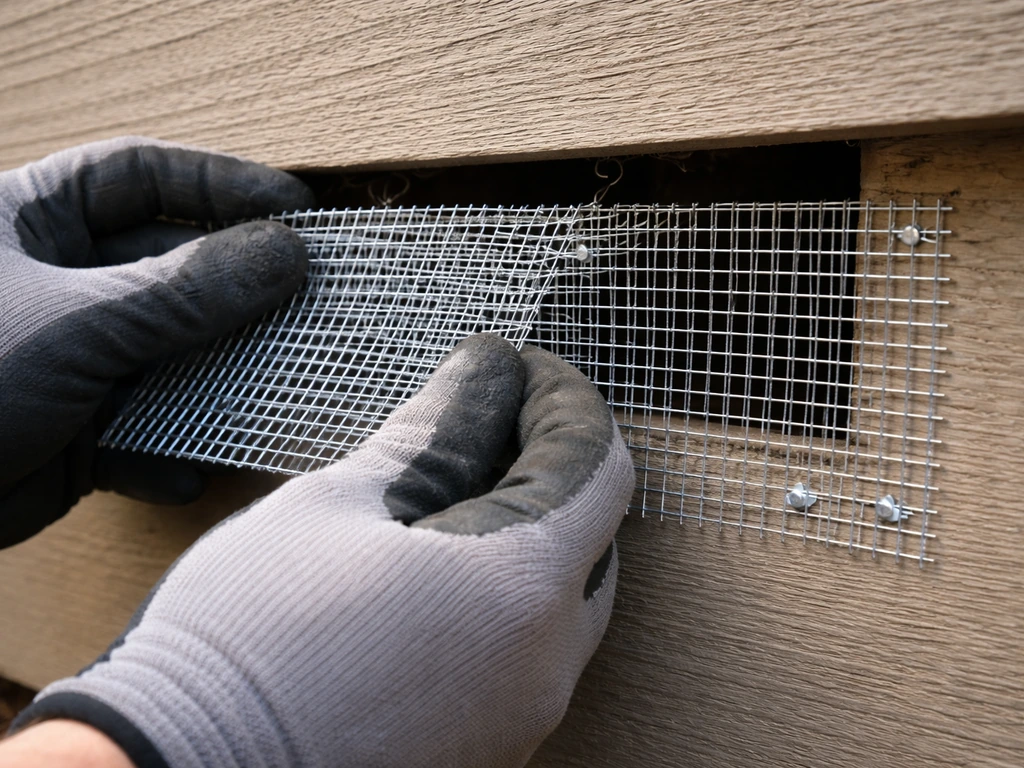
This is the core of the job. No amount of trapping or sanitation will solve a mouse problem if entry points stay open. Here's how to tackle each area.
The right materials to use
Hardware cloth is your primary tool. Use 19-gauge or heavier, with openings no larger than 1/4 x 1/4 inch (0.6 x 0.6 cm). Standard chicken wire does not work for mouse exclusion because the openings are far too large. Hardware cloth cuts cleanly with tin snips, bends to fit irregular surfaces, and mice cannot chew through it.
| Material | Use case | Mouse-proof? | Notes |
|---|---|---|---|
| 1/4-inch hardware cloth (19-gauge+) | Covering vents, gaps, wall patches, base wrap | Yes | Best general-purpose exclusion material |
| Chicken wire | General aviary mesh | No | Openings too large; mice pass through easily |
| Steel wool + caulk | Pipe penetrations and small gaps | Yes | Steel wool alone compresses; always seal with caulk on top |
| Concrete patching compound | Foundation cracks, floor gaps | Yes | Permanent; use for masonry or concrete bases |
| Expanding foam (standard) | Any gap | No | Mice chew through it; use only as a base under hardware cloth or caulk |
| Sheet metal flashing | Door thresholds, base perimeter | Yes | Durable; good for high-wear areas like door bottoms |
| Galvanized metal vent covers (1/4-inch mesh) | Ventilation openings | Yes | Maintains airflow while blocking rodents |
Gaps in the wire and framing
Cut a patch of 1/4-inch hardware cloth at least 2 inches larger than the gap on all sides. Overlap it onto the existing structure and fasten with staples, screws, or hog rings every 2 to 3 inches along the edge. If the gap is at a corner or seam, use bent hardware cloth so it wraps around both faces. For small holes in wood framing, stuff with steel wool first, then cover with hardware cloth and caulk the perimeter.
Doors and thresholds
The bottom of the aviary door is one of the most common entry points. The gap only needs to be 1/4 inch for a mouse to get through. Install a door sweep or a strip of galvanized sheet metal along the bottom of the door. Check that the door closes squarely with no gap at the sides or top. Self-closing hinges are worth adding if you have multiple people accessing the aviary, since an unlatched door left slightly ajar is an open invitation.
Vents and penetrations
Cover every ventilation opening with a galvanized metal vent cover fitted with 1/4-inch mesh. Plastic vent covers can be chewed through. For pipe and conduit penetrations, wrap the pipe with steel wool to fill the gap, then seal with exterior-grade caulk. If the pipe passes through a wood wall, cut a small piece of hardware cloth to fit around the pipe like a collar and screw it flat against the wall surface.
Flooring, bases, and stopping mice from burrowing in
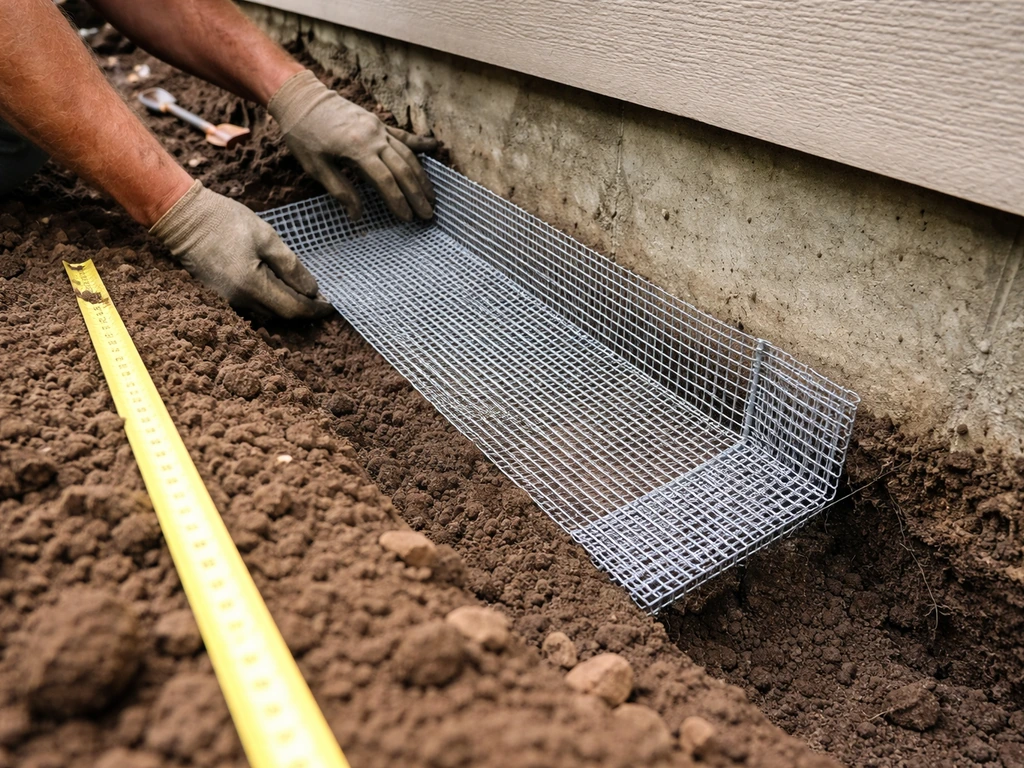
Above-ground sealing only solves half the problem. This same approach is what makes a room bird safe, because it removes the pathways mice use to reach your birds how to make a room bird safe. Mice are capable diggers and will burrow under an aviary base if there's no barrier. This is especially common at the corners of the structure.
The L-shaped apron method
The most effective anti-burrow strategy is an L-shaped hardware cloth apron buried around the entire perimeter of the aviary. Dig a trench about 12 inches deep and 12 inches wide around the outside of the base. Lay hardware cloth so it runs straight down 12 inches (the vertical leg) and then turns 90 degrees outward away from the aviary for another 12 inches (the horizontal leg). Backfill the trench. The horizontal leg stops burrowing because mice digging down hit the mesh and, instead of digging further out, give up. For a more thorough installation, go 18 to 24 inches deep on the vertical section.
Floor options inside the aviary
A concrete floor is the gold standard for mouse exclusion. Pour a 3- to 4-inch concrete slab with a turned-down edge that ties into the perimeter walls. If a full concrete slab isn't practical, a compacted gravel floor covered with a sheet of 1/4-inch hardware cloth (staked or weighted down) creates a strong deterrent. A bare dirt floor with no base barrier is the easiest thing for mice to breach and should be upgraded if you're dealing with repeat infestations.
Existing raised or wood-frame bases
If your aviary sits on a wooden frame or treated lumber base, check the entire base perimeter for gaps between the frame and the ground. Stuff large gaps with hardware cloth, then seal with exterior caulk or concrete patching compound. If the base sits directly on soil and the wood has any deterioration, consider adding a gravel skirt (at least 12 inches wide) around the outside to make the area less attractive for nesting.
Setting up bird care to stop attracting mice
Even a perfectly sealed aviary will face pressure from mice if it's broadcasting a food and water signal. This is the part most people underestimate. Rodent management always has to combine exclusion with sanitation and food control.
Feed management
- Store all bulk seed, pellets, and treats in metal containers with tight-fitting lids. Heavy-gauge galvanized trash cans or food-grade metal bins work well. Mice chew through plastic bags and thin plastic bins.
- Hang feeders at least 18 inches off the ground if possible, inside a fully enclosed section of the aviary.
- Use feeders with catch trays to prevent seed from falling to the floor. Spilled seed on the ground is a powerful attractant.
- Remove uneaten fresh food, fruit, and soft foods at the end of every day without exception.
- Do not leave food out overnight. Empty and remove feeders at dusk if mice are actively present.
Water management
- Use water dispensers rather than open dishes where possible to reduce spillage.
- Fix any dripping taps, leaking drinkers, or condensation issues promptly. Standing water and wet substrate are attractive to mice.
- Empty and dry water dishes overnight during active infestations.
Daily and weekly sanitation habits
- Sweep the aviary floor daily to remove seed husks, droppings, and feather debris that can shelter mice.
- Deep-clean the aviary floor and substrate weekly with an appropriate avian-safe disinfectant.
- Remove and replace nesting material regularly so there's no stockpile of soft material that mice can repurpose.
- Keep the outside perimeter of the aviary clear: remove woodpiles, overgrown vegetation, and debris piles within 3 feet of the structure. These are prime daytime shelters for mice.
Monitoring, maintenance, and your seasonal re-proofing plan
Exclusion isn't a one-time fix. Wire corrodes, wood warps, soil settles, and mice are persistent. A simple monitoring and maintenance routine will catch problems before they become infestations again.
Ongoing monitoring
- Place a thin layer of tracking powder, flour, or a tracking tile near the aviary base in a protected spot to detect footprints without risking bird contact. Check it every 2 to 3 days.
- Inspect the perimeter of the aviary base weekly for fresh burrow entrances or disturbed soil.
- Check all hardware cloth patches and door seals monthly for any new chew damage, rust holes, or loosened fasteners.
- Keep a simple log noting the date of each inspection and what you found. This helps you spot seasonal patterns and confirm that exclusion is working.
Seasonal maintenance schedule
| Season | Key tasks |
|---|---|
| Spring (March-May) | Full perimeter inspection after ground thaw; check for frost heave damage to buried apron; inspect for new burrow activity as mice become more active; re-caulk any cracked sealant from winter |
| Summer (June-August) | Check door seals and thresholds (wood swells and can warp); inspect ventilation covers for corrosion; maintain strict feed sanitation as bird activity increases |
| Autumn (September-November) | Most important season: mice seek warmth before winter. Full inspection of ALL entry points. Re-fasten any loose hardware cloth. Check base perimeter thoroughly. Remove nearby ground-level shelter like leaf piles and stacked wood. |
| Winter (December-February) | Inspect after storms or hard freezes for structural damage; maintain feed storage discipline; check for fresh tracks in snow around the aviary perimeter |
Autumn is the most critical inspection window. Mouse pressure increases sharply as temperatures drop, and any gap that has opened up over the summer becomes a target. Do your most thorough inspection in September or October before the main push begins.
When to call in professional help
DIY exclusion and sanitation handles most situations, but there are cases where you should escalate to a licensed pest management professional or wildlife specialist.
Situations that warrant professional help
- You've completed exclusion work and are still seeing fresh signs of mouse activity after two to three weeks
- You found a large infestation with extensive droppings, multiple nesting sites, or structural damage (this level of contamination is safest handled by professionals)
- A bird is showing signs of illness following rodent contact (consult an avian veterinarian, not a pest company, in this case)
- You're dealing with a large facility or multiple aviaries where DIY inspection is not practical
- You need help identifying entry points you cannot locate yourself
Trapping and rodenticide rules: what you need to know
If you choose to use traps or bait products as part of your management plan, there are important safety and legal points to keep in mind. Rodenticide bait products are regulated by the EPA, and many consumer products are required to be sold as enclosed bait stations that restrict access by children, pets, and non-target wildlife. Never place loose rodenticide bait in or near an aviary. Always use a tamper-resistant enclosed bait station, read the label completely before use, and follow all placement instructions. If you use any bait outdoors, place stations in locations where your birds absolutely cannot access them.
Anticoagulant rodenticides carry a secondary poisoning risk: a bird of prey or other predator that eats a poisoned mouse can be harmed. This is a real and documented problem, and it's one reason exclusion is always preferred over poison as a first-line strategy. If you are dealing with ants instead of mice, the approach is different, so review specific steps for how to get rid of ants in a bird aviary while keeping your birds safe how to get rid of ants in bird aviary. If raptors or owls are present in your area, this risk is especially relevant.
Snap traps placed inside a tamper-resistant box are a safer alternative near bird housing. Keep all traps completely inaccessible to your birds and check them at least daily. Local regulations on nuisance rodent control vary by state and municipality, so check with your local wildlife or agricultural extension office if you're unsure what methods are permitted in your area. This is especially relevant if you manage a facility rather than a private backyard aviary.
A note on protected species and local rules
House mice (Mus musculus) are not a protected species in the United States and can generally be trapped or excluded without a permit. However, if your exclusion or trapping work might affect other wildlife, including bats, birds nesting in or on your structure, or native rodent species in some jurisdictions, check your local rules first. Your county extension office or state wildlife agency can clarify what applies to your situation. If you're also managing issues with birds getting into buildings, those situations often do involve protected species and different legal rules entirely.
Keeping mice out of an aviary is a genuinely solvable problem when you approach it in the right order: immediate cleanup and containment first, then systematic exclusion, then ongoing monitoring. The combination of 1/4-inch hardware cloth, a buried perimeter apron, disciplined feed storage, and a seasonal inspection habit covers the vast majority of situations. If mice keep getting in even after that, a professional inspection will almost always find the gap you missed.
FAQ
Can I mouse proof a bird aviary from the outside without opening it up?
Yes, but only if you do it after you remove access paths and clean the area. A hardware-cloth exterior barrier is typically the same approach, but you must also block entry points like door bottoms and vent penetrations, otherwise mice will still find a way in even if the base is covered.
What if I only have small cracks and I want to seal them quickly?
Don’t rely on caulk or foam alone for gaps. Mice can gnaw and tear soft sealants, and many gaps reappear as wood warps. Use hardware cloth for openings, steel wool for larger voids before covering, then finish with exterior-grade caulk only as a secondary seal.
How do I confirm a gap is truly mouse-sized, even if it looks small?
For most aviaries, a 1/4 inch opening limit is the rule, but pay extra attention to corners, seams, and where two materials meet (wood to concrete, door to frame). If you find pinpoint light from outside when using a flashlight test, treat it as an entry point even if it looks tiny.
Is a door sweep enough, or do I need to check other door edges?
Check the door frame and hinges, not just the bottom. A door can have a tight bottom edge but still leak at the sides or top when it’s slightly out of alignment. After installing a sweep or metal strip, close the door and run your inspection for gaps at every edge, including when the door is under normal use and latch conditions.
Will the buried L-shaped apron still work if my yard is sloped?
If your aviary is on a slope, you may need a continuous buried apron that follows the grade and keeps the horizontal leg from breaking up at low spots. Uneven ground can create thin sections where mice can tunnel further than intended, so verify the apron depth and coverage around the entire perimeter, especially downhill.
Can I just stuff gaps with steel wool and skip the hardware cloth?
Steel wool should be used as a filler only for larger openings, then covered immediately with hardware cloth so it cannot be pulled out or chewed. If steel wool is exposed to inside airflow or birds can reach it, mice and birds could both be affected, so keep it fully enclosed and secured.
After sealing, what signs mean mice are still getting in?
Yes, because mice will target predictable “paths” where they can reach the base. Even if you’ve sealed everything above ground, you should inspect for disturbed soil, gnawed wood edges, or new burrow activity along the base perimeter after any weather event or seasonal change.
What’s the safest way to use traps or bait if mice are actively inside the aviary?
Birds should never have access to trap boxes or bait stations, even temporarily. For snap traps, place them inside tamper-resistant boxes positioned outside or in areas your birds cannot reach, then check daily. For any rodenticide, only use fully enclosed, tamper-resistant stations and follow the label exactly.
If I can’t pour concrete, what’s the best alternative floor setup?
A concrete slab is the most robust, but you can reduce risk with a gravel floor covered by hardware cloth and properly weighted or staked. The key difference is whether the mesh remains flat and secured over time, since settling or movement can create openings.
Should I start sealing while mice are still inside, or after cleanup?
Don’t start exclusion work while birds are still in a heavily contaminated area without a plan. If mice are active inside, the priority is removal and containment first, then cleanup and exclusion upgrades. Otherwise you can end up trapping debris, nesting material, and contamination into sealed cavities.
How often should I re-check mouse-proofing, and when?
Use a seasonal schedule, not just one inspection. Plan a thorough check in early fall (September or October), then do spot checks after storms and when temperatures shift, especially around the door, vents, and the base apron edges.
What if there are bats, nesting birds, or other wildlife using parts of the aviary structure?
Yes. If the aviary has protected nesting spaces, the exclusion timing matters. Avoid sealing while there may be active nesting or roosting, because closing gaps could trap wildlife. If you suspect bats, nesting birds, or other protected species, pause and consult local wildlife guidance before making structural changes.
Next Article
How to Make Windows Bird Safe: Step-by-Step Guide
Step-by-step plan to make windows bird safe: assess issues, stop collisions and nesting, install barriers, and verify re