If you have mice (or rats) in your bird aviary, the first thing to do right now is secure your birds' food and water so rodents can't access it, and move any traps or bait far away from areas your birds can reach. From there, you work through a short sequence: find where they're getting in, seal those gaps, set mechanical traps in the right spots, clean up what's attracting them, and put a simple prevention routine in place so it doesn't happen again. That's the whole playbook, and this guide walks you through every step.
How to Get Rid of Mice in a Bird Aviary Safely
Maya Carver
12 May 2026
Immediate bird-safety actions to take right now
Before you do anything else, protect your birds from the hazards rodents bring. Mice and rats carry diseases including Salmonella and Hantavirus, and your birds can be exposed through contaminated food, droppings in water dishes, and direct contact with rodents. Move fast on these steps today.
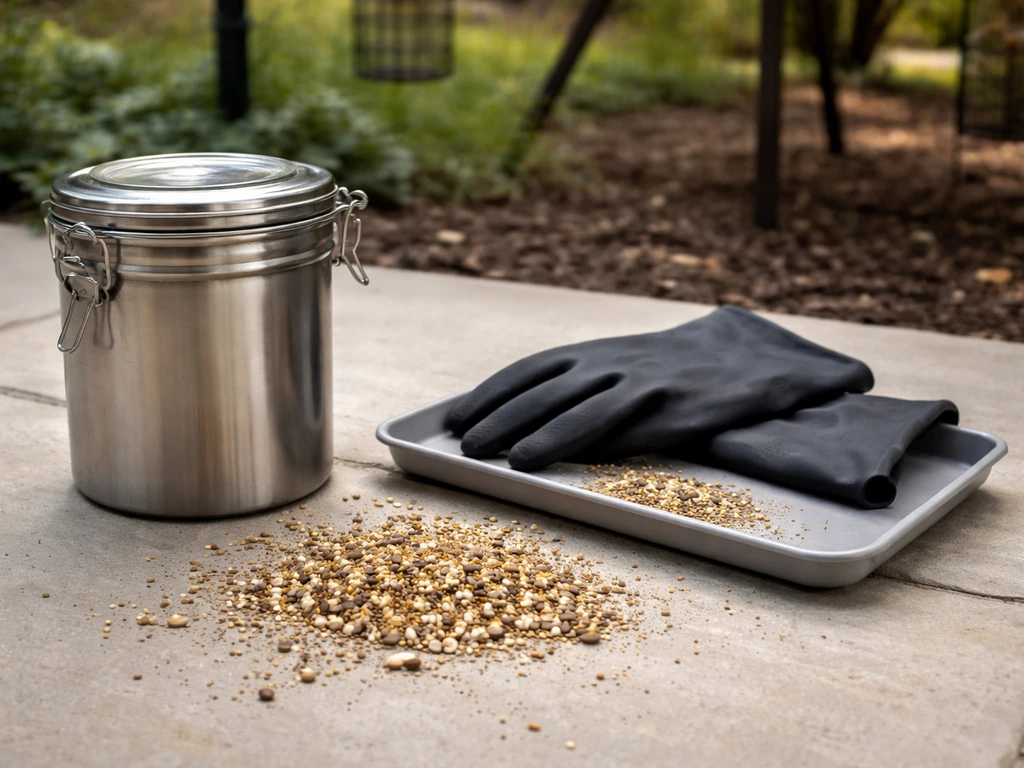
- Remove all open food immediately. Transfer birdseed, pellets, and any fresh food to sealed, rodent-proof metal or heavy-duty plastic containers. Don't leave food out overnight.
- Check water dishes and drinkers for droppings or contamination. Empty and disinfect them before refilling.
- Scan the aviary floor and perches for droppings, urine trails, or gnaw marks. Don't sweep or vacuum dry droppings — this aerosolizes particles. Spray first with a bleach solution (1 part bleach to 10 parts water) or an EPA-registered disinfectant, let it soak for at least 10 minutes, then wipe up with paper towels and dispose of in a sealed bag.
- Put on gloves and a mask (N95 if available) before handling anything contaminated. For large amounts of droppings or nesting material, also wear eye protection and a disposable coverall.
- Move birds to a clean, secure holding space if the infestation is heavy or if you find rodents actively in the aviary during the day (daytime activity often signals a large population).
- Remove any traps or bait products that are accessible to your birds, and hold off on placing new ones until you've read the bird-safe placement guidance below.
If you find a dead rodent, soak it thoroughly with disinfectant spray, let it sit for 10 minutes, then pick it up with a doubled plastic bag and seal it before disposal. Never pick up a dead rodent bare-handed. For large concentrations of droppings, nesting material, or multiple carcasses, especially in an enclosed, poorly ventilated space, consult a public health or pest management specialist before cleaning, because the Hantavirus risk in enclosed spaces is real. Before cleaning up rodent urine and droppings, CDC recommends ventilating indoor areas for 30 minutes.
Rats vs. mice: telling them apart and finding how they're getting in
Knowing what you're dealing with changes how you seal and trap, so it's worth a few minutes to identify the species. The differences matter practically.
| Feature | House Mouse | Rat (Norway or Roof) |
|---|---|---|
| Droppings | Rice-grain sized, pointed ends, up to 6mm | Larger, 12–20mm, capsule-shaped (Norway) or banana-shaped (Roof) |
| Entry gap size | Can squeeze through a gap as small as 6mm (the width of a pencil) | Need about 12–20mm depending on species; Roof rats are excellent climbers |
| Gnaw damage | Small, clean gnaw marks on soft materials | Larger gnaw marks; rats chew through wood, plastic, and even thin sheet metal |
| Runways | Fine smear marks and tiny footprints along baseboards and wire mesh | Wider grease smears, larger footprints, often along the perimeter or overhead if Roof rats |
| Burrowing | Rare | Norway rats burrow under slabs, concrete edges, and aviary footings |
| Activity time | Mostly nocturnal; daytime sightings = large population | Mostly nocturnal; daytime sightings also signal heavy infestation |
How to map entry points
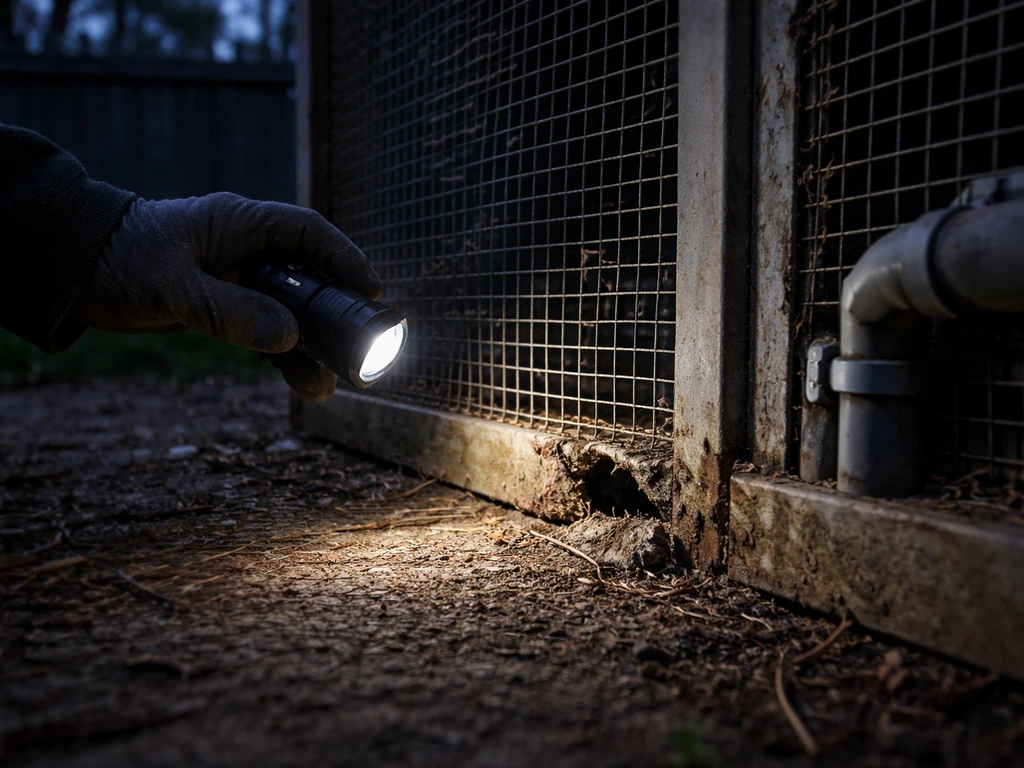
Walk the entire aviary perimeter at dusk with a flashlight. You're looking for gnaw marks around mesh edges, gaps where panels meet the frame, unsealed conduit or pipe penetrations, and any holes in the floor or foundation. Check inside along the base of walls for smear marks (the greasy rub from rodent fur) and droppings clusters, which tell you where they're traveling. Probe suspect gaps with a pen or pencil: if it fits, a mouse can use it. Mark every gap with tape or a chalk mark so you have a full picture before you start sealing.
Pay special attention to where utility lines, feeders, or water pipes enter the structure, corners where floor meets wall, and any area where wire mesh overlaps rather than fastens tightly. Roof rats are excellent climbers, so check where roof panels meet walls and any gap around ventilation openings above head height. Norway rats often burrow in from outside, so look for fresh soil disturbance along the base of exterior walls.
Remove what's attracting them: food, water, and nesting materials
Rodents come to an aviary for three things: food, water, and shelter. Remove any one of those and you make the space much less appealing. Remove all three and trapping becomes dramatically more effective because there's nothing competing with your bait.
- Store all bird food in sealed metal bins or rodent-proof containers with locking lids. Plastic bins without a metal lining are not rodent-proof long-term — rats especially will chew through them.
- Use no-waste feeders or catch trays under feeders and clean up spilled seed daily. Seed on the ground is the single biggest rodent attractant in most aviaries.
- Empty and clean water dishes every evening. Stagnant water in dishes or on the aviary floor is a reliable draw.
- Remove any loose nesting material: hay, straw, shredded paper, or fabric scraps that aren't actively in use. Store nesting materials in sealed containers and only put out what birds will use the same day.
- Clear vegetation, woodpiles, and debris within at least 1 meter (ideally 3 meters) of the aviary exterior. These are harborage sites that let rodents live close to their food source.
- Check under and around the aviary for burrows, compacted runways in grass, or nesting cavities. Fill burrows with gravel or compact soil and monitor for re-excavation.
Seal and exclude: closing gaps so they can't get back in
Exclusion is the most important long-term step, and it's worth doing well once rather than patching repeatedly. The goal is a physical barrier that rodents cannot chew through or squeeze past.
Materials that actually work
| Gap Type | Best Sealing Material | Notes |
|---|---|---|
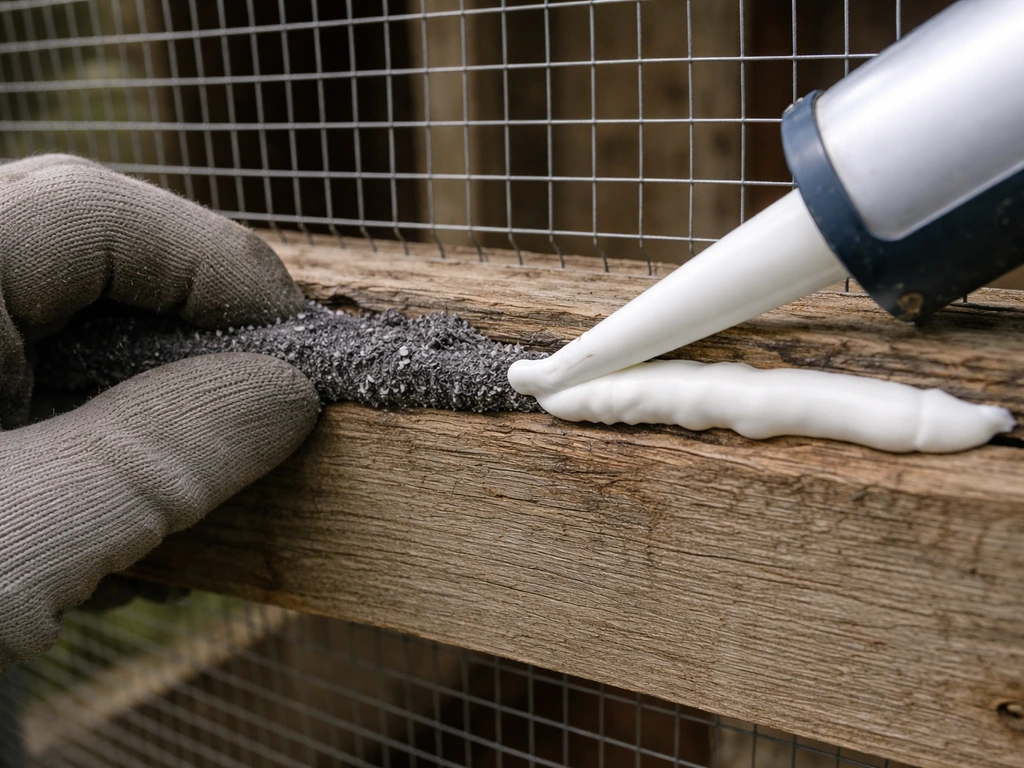
| Small gaps and cracks in wood or masonry (under 12mm) | Steel wool packed tightly, then covered with caulk or expanding foam | Steel wool alone will be pulled out over time; the caulk layer locks it in place |
| Larger holes and openings | Hardware cloth (welded wire mesh, 6mm or smaller openings) secured with screws or staples plus a bead of caulk at edges | Avoid chicken wire — the openings are too large and it's easy to deform |
| Gaps around pipes, conduit, and cables | Metal pipe collars or escutcheon plates sealed with caulk | Foam alone is not enough; rats chew through expanding foam easily |
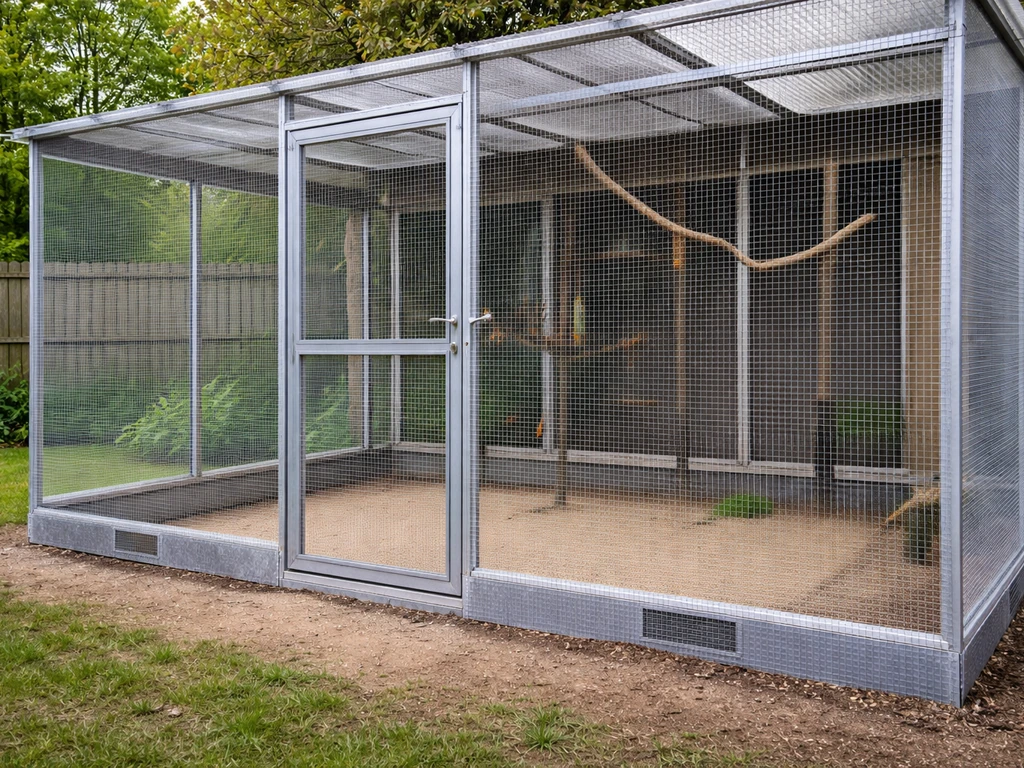
| Bottom edge of aviary walls or mesh panels | Metal kick plates or a concrete/paved apron extending 30cm outward | Prevents both gnawing through the base and burrowing underneath |
| Gaps at roof/wall junctions | Metal flashing or sealed ridge caps | Especially important for Roof rat entry routes |
After sealing, go back to your original gap map and check every marked spot. Give each repair a firm tug and a visual inspection. Then check again after 48 hours for fresh gnaw marks, which would indicate a rodent trying to re-open that entry point or working on a new one nearby.
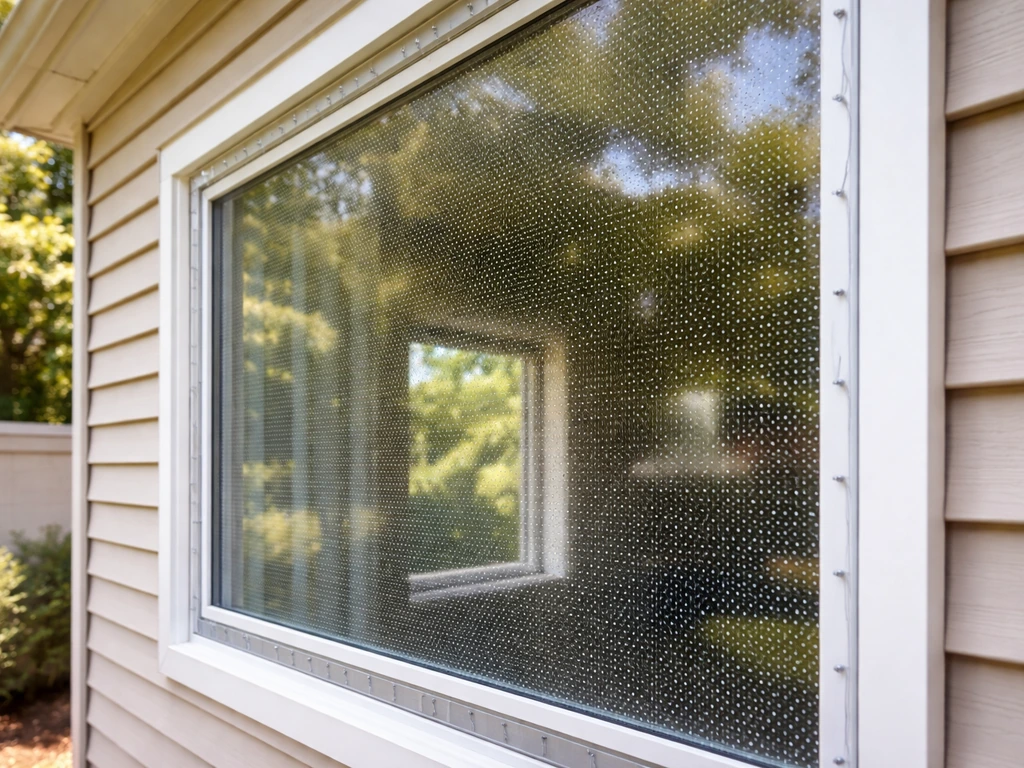
For a thorough, step-by-step proofing approach with materials lists and a room-by-room inspection method, see the related guide on how to mouse proof a bird aviary. This includes the same principles you can use to make windows bird safe, like sealing gaps and excluding entry points around frames and openings how to mouse proof a bird aviary.
Control methods that work safely around birds
The core rule here is simple: nothing that could harm your birds should be inside or immediately adjacent to the aviary. That rules out most rodenticide bait products for indoor use, and it means trap placement has to be deliberate. Here's what works and how to use each option safely.
Mechanical traps (your first choice)
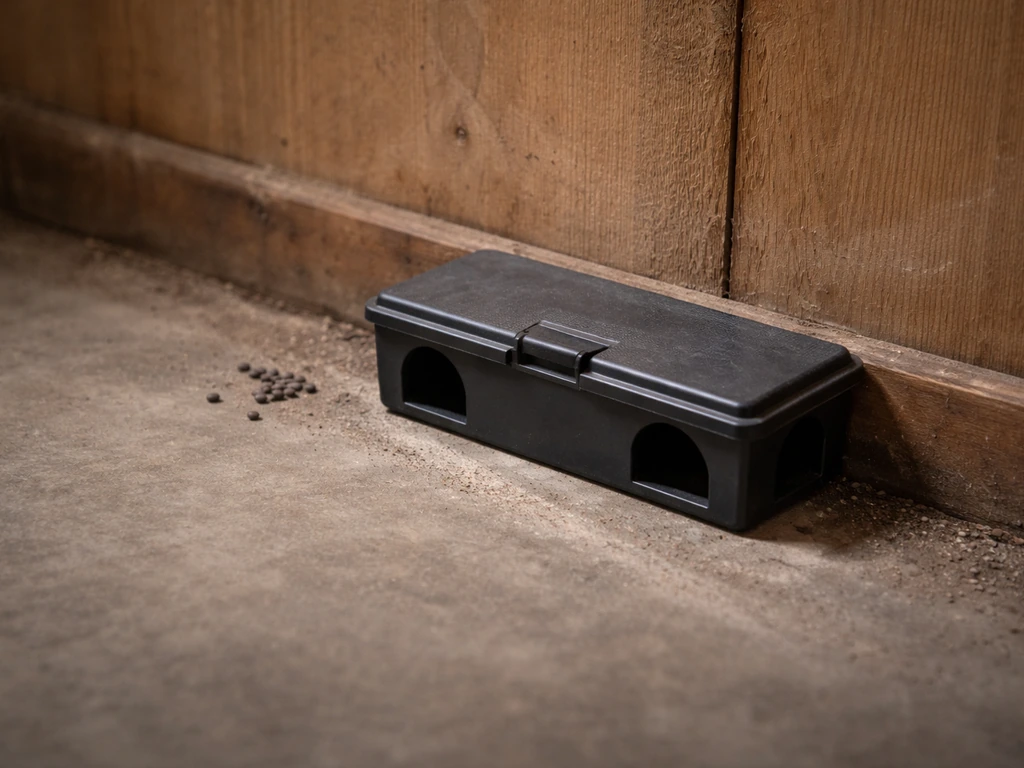
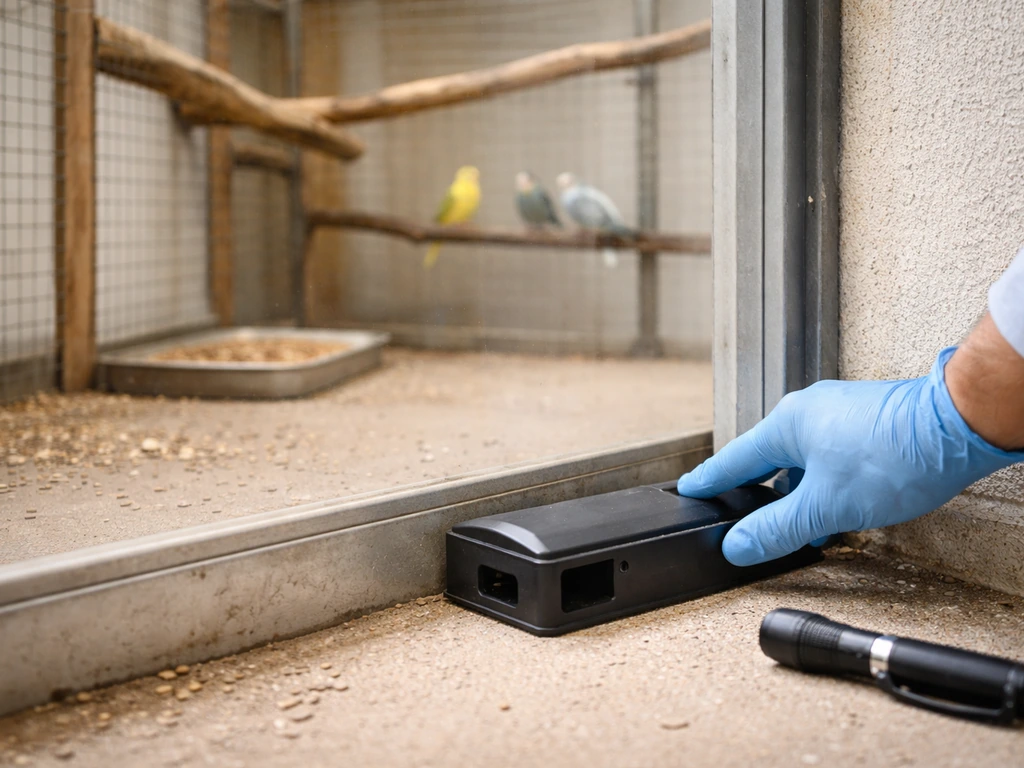
Snap traps are fast, effective, and leave no chemical residue. For mice, use standard snap traps; for rats, use larger rat snap traps. Place them inside a bait station box or a section of PVC pipe (about 10cm diameter for mice, 15cm for rats) so that the trap opening faces inward and birds cannot reach the trigger or snap mechanism. This is the most practical way to use snap traps in an active aviary setting. Bait with peanut butter, a small piece of chocolate, or nesting material like a cotton ball, these outperform cheese in most real-world conditions.
Set traps perpendicular to walls and runways, right where you found droppings or smear marks. Check and reset them every 24 hours. If you're catching rodents consistently, keep trapping until you have at least 7 consecutive days with no captures before assuming the population is cleared. For heavy infestations, you'll need multiple traps, one trap in a heavily trafficked spot is rarely enough.
Live traps (humane option)
Live catch traps work, but they require checking at least twice daily (morning and evening). A rodent left in a live trap can die from heat stress or dehydration in a matter of hours. Once caught, relocate the rodent at least 1 kilometer away from your property, ideally in a natural habitat far from other homes. Be aware that relocated rodents have low survival rates in unfamiliar territory, this is worth knowing if humane outcome is a priority for you.
Rodenticide baits: when, where, and how to use them without harming birds
Rodenticide baiting is the area where you need to be most careful in a bird aviary context. Second-generation anticoagulant rodenticides (brodifacoum, bromadiolone, difethialone) are extremely effective against rodents but are well-documented causes of secondary poisoning in birds of prey and other birds that eat poisoned rodents. If your aviary is near habitat used by raptors or if you keep birds of prey, avoid second-generation anticoagulants entirely.
If you choose to use bait, use first-generation anticoagulants (diphacinone, chlorophacinone) or acute rodenticides like zinc phosphide in exterior bait stations only, well outside the aviary perimeter. All bait must be placed inside tamper-resistant, lockable bait stations that are secured to the ground or a fixed structure so they can't be moved by birds or other animals. Never place loose bait anywhere accessible to your birds. Follow the product label exactly, it is a legal requirement, not a suggestion.
In most aviary situations, mechanical trapping combined with exclusion and sanitation is safer and effective enough that bait isn't needed. EPA notes that to reduce poisoning risk to wildlife and pets, consumer rodent bait products have product constraints and require consideration of secondary exposure. Reach for bait only when exclusion and trapping haven't resolved a persistent outdoor perimeter problem, and consider calling a licensed pest professional rather than handling it yourself.
What doesn't work (and what to skip)
- Ultrasonic repellers: no peer-reviewed evidence they reduce rodent populations in real-world settings.
- Glue boards: inhumane, unreliable, and a significant risk to birds — do not use inside or near the aviary.
- Open bait piles or unsecured bait blocks: illegal in most jurisdictions and directly dangerous to birds.
- Repellent sprays and essential oil products: temporary at best, not effective for established infestations.
Long-term prevention: keeping rodents out for good
Once you've cleared the current infestation, the goal is to never give rodents a reason to come back. This is mostly about habits and a basic inspection schedule rather than ongoing treatments.
Yard and perimeter management
- Keep grass and vegetation trimmed short within 3 meters of the aviary. Long grass is a travel corridor and shelter for rodents.
- Remove woodpiles, compost bins, and brush piles from the immediate aviary area, or store them in sealed, raised containers at least 3 meters away.
- If you have a bird feeding station in the yard, place it well away from the aviary and use a catch tray. Clean up spilled seed daily.
- Check the aviary foundation and perimeter monthly for new burrow attempts or gnaw marks.
- Consider a gravel border (at least 30cm wide) around the aviary base to deter burrowing and make it easier to spot fresh activity.
Seasonal timing to watch
Rodent pressure increases in autumn (typically September to November in the Northern Hemisphere) as wild food sources decline and temperatures drop. This is when mice in particular will push hard to find warm shelter. Do your most thorough annual inspection and re-sealing in late summer, before pressure peaks. Check again in early spring when winter nesting may have created new damage you didn't see over winter.
Monthly and annual maintenance checklist
| Task | Frequency |
|---|---|
| Check all sealed entry points for fresh gnaw marks or damage | Monthly |
| Inspect aviary perimeter for new burrows or runways | Monthly |
| Clean up seed spill and debris around feeders | Daily |
| Audit food storage containers for damage or gaps | Monthly |
| Full inspection and re-sealing of any new gaps | Annually (late summer) |
| Clear vegetation and debris from aviary perimeter | Every 1–2 months |
| Check bait station integrity and bait condition (if using exterior stations) | Monthly |
When to call in a professional
DIY works well for mild to moderate mouse problems when you catch them early. But there are situations where you should escalate quickly rather than continuing to work alone.
- You're seeing rodents during daylight hours, finding dozens of droppings daily, or catching multiple rodents every day in traps. This suggests a large population that mechanical trapping alone may not resolve quickly enough.
- You have rats, not mice. Rat infestations are harder to clear without professional-grade exclusion and, sometimes, bait program management.
- There is a large accumulation of droppings, nesting material, or carcasses in an enclosed, poorly ventilated part of the aviary. In this case, a pest professional or public health official should be consulted before cleaning to assess Hantavirus and other disease risks.
- You're dealing with a protected or legally regulated species. In some regions, certain rodent species or control methods are regulated. Check with your local wildlife or agriculture department if you're unsure.
- You've completed exclusion and trapping but activity continues after 2–3 weeks. This means either an entry point has been missed or the population source is off your property.
- You have a large commercial facility or multiple connected structures. Professional pest management companies have the tools and access to treat complex, multi-structure problems systematically.
When you call a pest control or wildlife professional, tell them: what species you believe you have, how long the problem has been going on, what DIY steps you've already taken, and the fact that you have live birds in the structure. A good professional will adapt their approach accordingly and should only use baiting methods that are safe for your birds. Ask specifically about their bait placement strategy and secondary poisoning risk before they start.
What to expect from professional treatment
A professional visit typically involves a full inspection, a written report of entry points and evidence, placement of tamper-resistant bait stations or traps, and a follow-up visit 1–2 weeks later to assess activity and adjust. Most residential mouse problems are resolved within 2–4 weeks with professional treatment combined with good exclusion. Rat infestations may take longer, particularly if burrowing is involved. Ask for a written scope of work and confirm what products will be used, where they'll be placed, and what precautions will be taken around your birds.
Dealing with other pest pressures in your aviary at the same time? The approach to ants follows a similarly bird-safe, sanitation-first logic and is worth reviewing alongside this guide. And if you're doing a full aviary safety audit, checking the structural setup of the space for general bird safety is a natural next step once the pest problem is under control.
FAQ
Can I use rodenticide inside the aviary if I keep it away from bird food and water?
In practice, it is risky even with “distance” because birds or other animals can still access bait stations if they are not fully tamper-resistant and secured. The article recommends avoiding second-generation anticoagulants around birds of prey and using any bait only in exterior, lockable stations placed well away from the aviary perimeter, with label instructions followed exactly.
What’s the safest way to place snap traps in an active aviary where birds might investigate everything?
Use bait station boxes or PVC pipe sections and orient the opening inward, so the bird cannot reach the trigger or snap mechanism. Also place traps perpendicular to walls and runways at the exact spots where droppings or smear marks were found, then reset every 24 hours.
How do I know if I should treat for mice or rats before sealing and trapping?
Species clues matter because entry and trapping scale differ. The guide suggests walking the perimeter at dusk and looking for gnaw marks, gap sizes you can test with a pencil or pen, and different patterns of activity (roof rats climbing to higher gaps, Norway rats burrowing from outside with fresh soil disturbance).
I found a lot of droppings, do I need to call a specialist immediately?
Yes, especially if you are dealing with heavy droppings, nesting material, multiple carcasses, or a poorly ventilated enclosed area. The article notes that Hantavirus risk increases in enclosed spaces, and it recommends consulting a public health or pest management specialist before cleaning in those circumstances.
Is it okay to clean droppings right after removing a dead mouse?
Do not rush the cleanup if you have a buildup or enclosed area. The article advises disinfecting dead rodents and not picking them up bare-handed, and it flags higher risk situations (many droppings, nesting debris, multiple carcasses, and poor ventilation) where specialist help is safer.
How long should I keep trapping after I stop seeing activity?
After catches stop, keep going until you reach at least 7 consecutive days with no captures. The guide also recommends checking and resetting traps every 24 hours to avoid delays in detecting whether the population is truly cleared.
If I catch a mouse in a live trap, can I release it somewhere on my property?
The guide recommends relocating at least 1 kilometer away from your property, ideally in a natural habitat far from other homes. It also notes relocated rodents often have low survival rates in unfamiliar territory, so plan humane outcomes carefully.
What if birds start damaging the traps or bait stations while I’m trying to control rodents?
Traps and bait stations should be placed in ways birds cannot reach the trigger or snap parts, using bait station boxes or fixed pipe sections. For bait, the article specifies tamper-resistant, lockable stations secured so they cannot be moved by birds or other animals.
Do rodents keep coming back because I sealed one hole, or because there are other entry points?
Usually it is because there are additional entry points nearby or the original repair can be reopened. The guide recommends making a gap map, checking every repaired spot with a tug and visual inspection, and then rechecking after 48 hours for fresh gnaw marks that indicate reopening or new nearby work.
When is the best time of year to re-seal and re-check my aviary for mice?
Rodent pressure often increases in autumn (about September to November in the Northern Hemisphere). The article suggests a thorough annual inspection and re-sealing in late summer before pressure peaks, then a second check in early spring for winter-created damage.
What should I tell a pest professional before they arrive?
Provide the suspected species, how long the problem has been going on, which DIY steps you already tried, and that you have live birds on site. The guide also advises asking about their bait placement strategy and secondary poisoning risk, and requesting a written scope of work including where products will be placed and what precautions will be used around your birds.