Most pet birds drop a new poop every 20 to 30 minutes, which adds up fast when your bird is out of the cage. You can't stop this entirely, but you can absolutely control where it lands, how often it surprises you, and how quickly you deal with it. The fix is a combination of setting up your space smarter, building a simple routine that gets your bird pooping on cue, and troubleshooting any underlying reasons the mess is worse than it should be.
How to Keep a Pet Bird From Pooping Everywhere
Maya Carver
2 May 2026
Why your bird is pooping everywhere (and how to read the pattern)
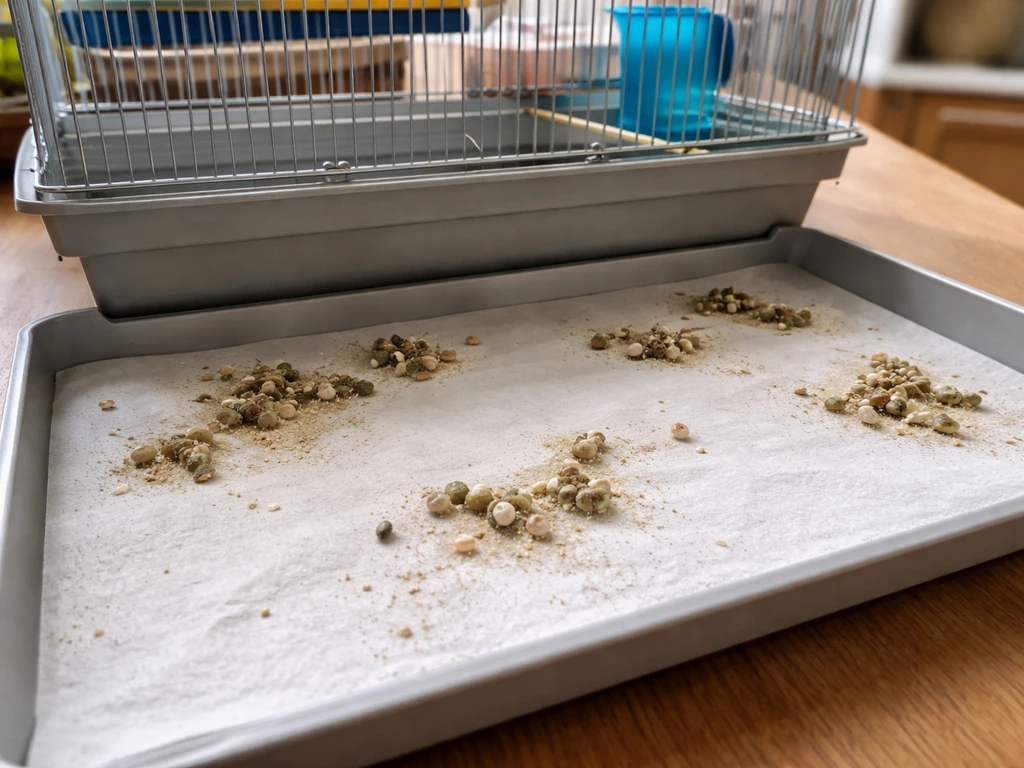
Before you can solve the problem, you need to spend a day or two actually watching your bird. Birds are creatures of habit, and their droppings follow a predictable rhythm tied to their perching spots, excitement levels, and daily routine. According to VCA Animal Hospitals, a healthy bird produces a dropping roughly every 20 to 30 minutes, so if you track when and where your bird is during those windows, you'll start seeing a clear pattern pretty quickly.
The heaviest concentration of droppings tends to cluster directly under a bird's favorite perch or roost spot. That's your anchor point. Once you know where your bird spends most of its time, you know exactly where to put protection and where to focus your training. Mark those spots on a simple hand-drawn floor map if it helps.
Common triggers that cause birds to poop more frequently or in scattered locations include:
- Excitement or sudden movement: birds often defecate immediately when startled, when you approach them, or when they're about to fly
- Stepping up or down: many birds release a dropping right before or after stepping onto your hand, which is a trainable moment
- Diet changes: switching from seed to pellets, adding high-water fruits, or increasing fresh food all change dropping volume and consistency
- Stress or fear: nervousness increases urine output around droppings, making the mess look worse and spread further
- Hormonal cycles: during breeding season, hormonally driven birds (especially females) may produce larger, less frequent droppings that are messier and harder to predict
- Being outside the cage for long periods without a poop station nearby
Keep a simple log for 48 hours: write down the time, the bird's location, and whether a dropping happened. You'll almost certainly find a repeatable rhythm, and that rhythm is what your training and setup plan will be built around.
Right now: immediate cleanup and containment steps
If you're dealing with droppings all over the floor, furniture, or perches today, here's what to do before anything else. Fresh droppings are always easier to clean than dried ones, so act quickly.
- Move your bird back to the cage or a safe, contained space before you start cleaning so it isn't exposed to fumes or stressed by your activity
- Scrape or blot fresh droppings with a dry paper towel first, then dampen a cloth with warm water and wipe the area clean
- For dried droppings, dampen the spot and let it soften for 30 to 60 seconds before scraping, which prevents scratching surfaces
- Use a bird-safe cleaner: plain warm water works for most surfaces; diluted dish soap is fine for sealed floors. Avoid bleach, ammonia, and any cleaner with strong fumes around your bird
- Air out the room completely before returning your bird. Even residual fumes from common household cleaners are hazardous to avian respiratory tracts, which are far more sensitive than ours
- Never mix vinegar with bleach or ammonia-based products, as this can produce chlorine gas, which is lethal to birds
- Wash your hands thoroughly after handling droppings, and consider wearing disposable gloves if you're doing a large cleanup
Once the immediate mess is handled, your next job is setting up the physical environment so future droppings land somewhere manageable instead of spreading across every surface.
Set up your space to catch and contain droppings
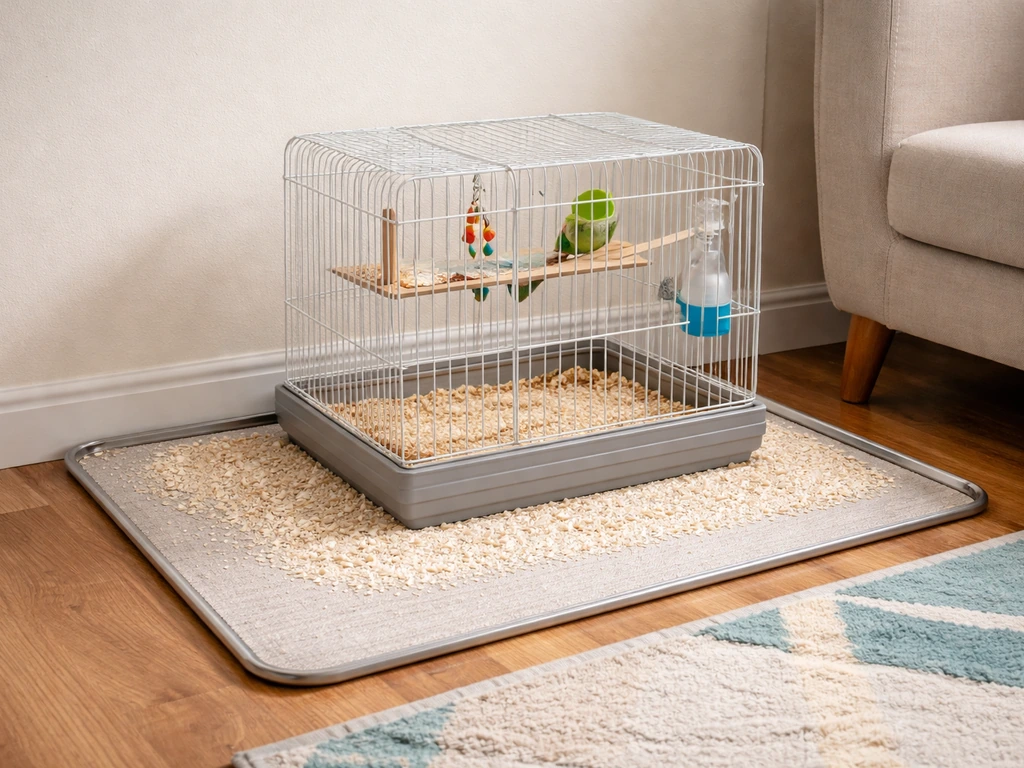
This is the single most effective change most bird owners can make today. A few strategic physical setups will cut your daily cleanup time dramatically, even before any training kicks in.
Floor and surface protection
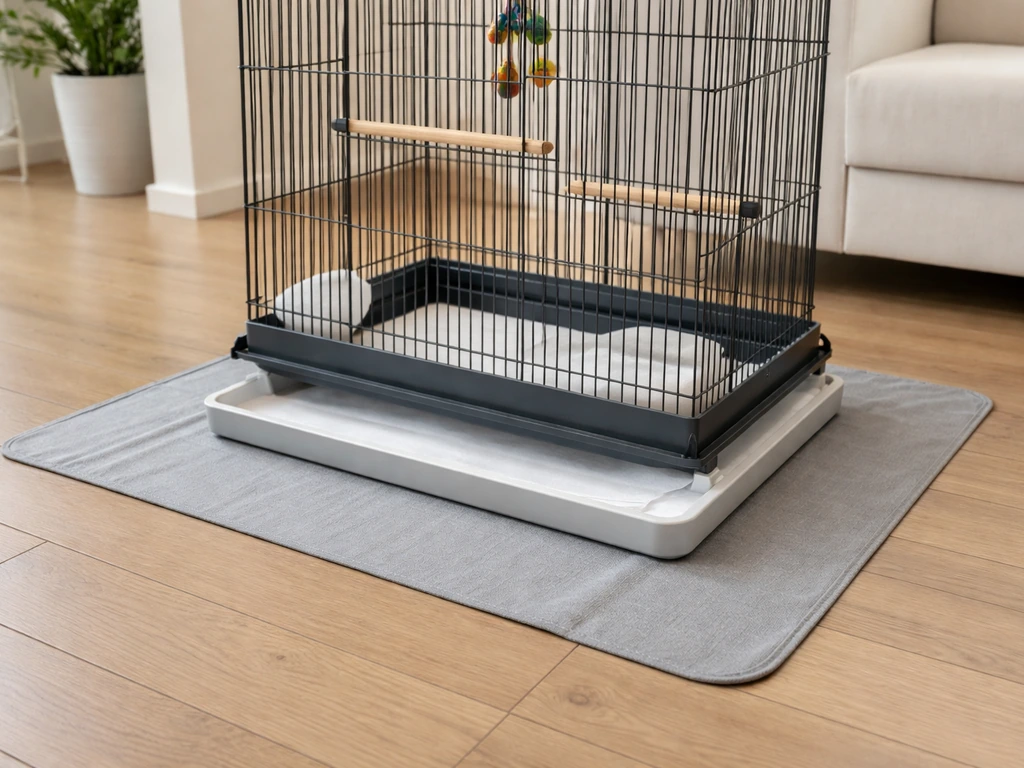
- Place a dedicated bird cage mat under the cage and any play stand. Products like the Drymate Bird Cage Mat are designed specifically to trap droppings, feathers, and food debris, and they're washable. Even a vinyl floor runner or an old shower curtain cut to size works well
- Use newspaper, puppy pads, or craft paper under perch areas for easy daily swap-outs instead of scrubbing floors
- Cover furniture your bird lands on with washable cotton throws or old towels that you can strip and toss in the wash
- Keep a small stack of pre-cut paper liners near every perch station so swapping them out takes under 30 seconds
Smart perch placement
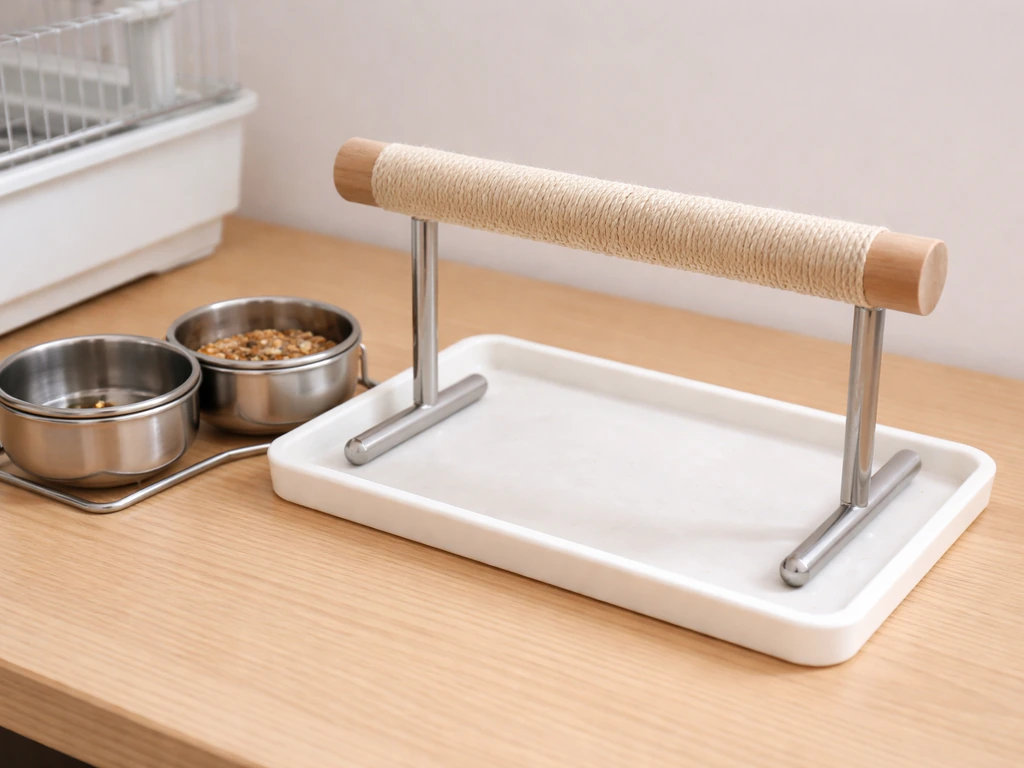
Where you put perches matters as much as what you put under them. A perch positioned directly above your bird's food or water bowl is a contamination problem waiting to happen. Keep all perches out of the line above feeding stations so droppings don't fall into food or water. Position the highest perches over your catchment area (the mat or paper), not over the couch or the carpet edge. Birds almost always prefer the highest perch available, so if you make the highest spot the one above your protection zone, you've solved half the problem passively.
Play stands and poop stations
If your bird spends significant time out of the cage, a dedicated play stand with a tray and liner underneath is essential. Treat the stand as the designated out-of-cage zone, and always have a protective layer directly below it. The goal is that 80 to 90 percent of out-of-cage droppings land on that mat or liner, which you swap out once or twice a day. Think of it the same way you'd think about placing a litter box for a cat: put it where the animal already wants to be, make it easy to access, and make cleanup as simple as possible.
Train your bird to poop on cue (it actually works)
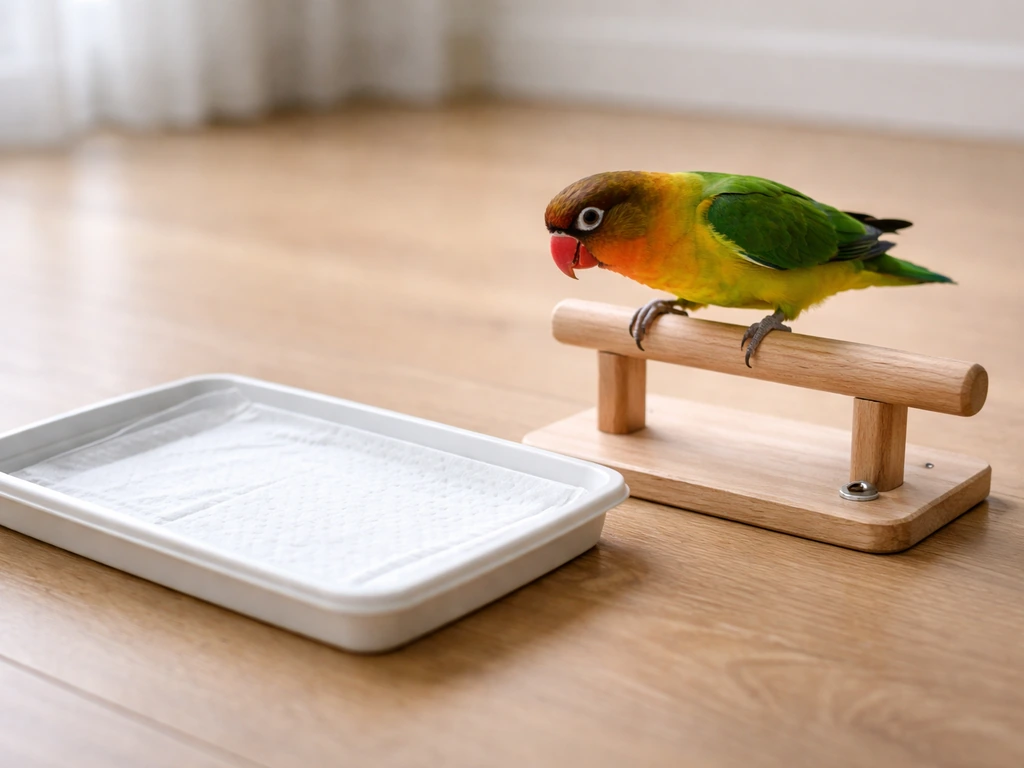
Yes, you can train most birds to poop in a designated spot or on a verbal cue. SpectrumCare notes that even when you train birds to use a designated potty spot, their true holding or control is limited compared with dogs and cats, so it helps to set realistic expectations. It takes consistency and patience, but many parrot owners report reliable results within a few weeks. The training builds on the natural pattern you already observed: your bird already poops at predictable intervals, so you're not teaching a new behavior from scratch, just associating it with a specific location and cue.
Step-by-step poop training routine
- Start by noting your bird's average poop interval from your 48-hour log. Most birds average 20 to 30 minutes, so set a mental (or phone) timer
- About one to two minutes before the expected interval, place your bird on the designated poop spot (a paper-lined perch, a stand tray, or a specific spot near the cage entrance)
- Use a consistent verbal cue the moment the bird poops, something short like 'go poop' or 'bombs away.' Say it calmly and immediately, every single time
- Reward immediately after the dropping with a small, high-value treat (a tiny piece of fruit or a favorite seed) and calm verbal praise
- Over time, start using the verbal cue before the expected poop, and move your bird to the designated spot on hearing it. The goal is that the bird learns to hold briefly and go on location
- If your bird poops off-station, say nothing, clean it up calmly, and reset the timer. Never scold, startle, or punish the bird for a miss. This creates stress that makes the problem worse
- Repeat the cycle every day. Most birds show clear improvement within two to four weeks of consistent practice
The technique borrows directly from target training principles used in avian behavior work: you're building a repeatable cue-behavior-reward loop. The key word is consistent. Skipping days or changing the cue word resets your progress, so build it into your daily routine the same way you'd build in feeding time.
Routine adjustments that reinforce the habit
- Always hold your bird over the designated poop spot before you pick it up for handling, and wait for a dropping before moving on
- Return your bird to the poop station regularly during free-roam time, especially after play or excitement
- Keep free-roam sessions shorter until training is reliable, then gradually extend them as the bird demonstrates consistent poop habits
- Use the same spot every time. Changing the location confuses the association you're building
Troubleshooting: when the mess is worse than normal
If your bird's droppings seem unusually frequent, watery, or widely scattered despite your setup, something specific is usually driving it. Use this section to diagnose before assuming it's a training problem.
| Cause | What you'll see | What to do |
|---|---|---|
| Stress or fear | More frequent droppings, larger watery component around the fecal portion, clinging to cage bars, feather fluffing | Identify and remove the stressor (loud noise, new pet, moved cage location, unpredictable schedule). Reduce handling time temporarily and approach slowly and calmly |
| Diet change | Color or consistency shift (e.g., purple droppings after berries, more liquid after high-water fruit). More droppings overall | Normal with food changes. Monitor for 48 to 72 hours. If it doesn't resolve or other symptoms appear, call your vet |
| Hormonal behavior | Larger, less frequent, very messy droppings, nesting behavior, aggression, regurgitation | Reduce daylight exposure (earlier bedtime can help reduce breeding hormone triggers). Remove nest boxes and nesting material. Consult your vet if severe |
| Health issue | Droppings with blood, lime-green color, pea-soup texture, black/tar-like feces, droppings staying abnormal beyond 24 hours, bird appears lethargic or fluffed | Contact an avian vet immediately. Do not wait |
| Overhydration or illness-related polyuria | Normal fecal portion but an unusually large ring of clear liquid around it | Check for illness. Excess watery urine around droppings that persists beyond a diet change is a vet-level concern |
One thing worth emphasizing: never punish your bird for pooping in the wrong place. PetMD notes that behaviors that look like stubbornness (including stress-related ones) are often driven by fear or anxiety, not defiance. Punishment creates stress, which ironically makes droppings more frequent and harder to manage. Calm, consistent positive reinforcement is the only reliable path here.
A long-term maintenance plan that actually holds up
Once your setup and training routine are working, the main job is keeping them consistent. Birds thrive on predictability, and your droppings management will stay effective as long as the daily rhythm stays intact.
Daily habits
- Swap cage liners and floor mats every morning before your bird's first out-of-cage time
- Run through the poop-on-cue routine at least once each morning and once each evening
- Wipe perches and play stand surfaces with a damp cloth once daily
- Check droppings appearance briefly each morning: this is your fastest early-warning system for health changes
Weekly and monthly tasks
- Wash cage mats and floor liners with hot water and a bird-safe detergent
- Deep-clean the cage tray and scrub any perches with a soft brush and warm water
- Reassess perch placement: birds' habits shift with the seasons, and a perch that worked in winter may need repositioning as daylight hours change in spring
- Clean walls and nearby surfaces near the cage or play stand monthly, since droppings spray further than most owners expect
Seasonal adjustments
Spring and early summer bring hormonal changes in most bird species, which often means messier, larger droppings and less predictable behavior. During this window, shorten daylight exposure by covering the cage an hour earlier in the evening. This is a well-established technique for reducing breeding-hormone-driven behaviors. If you notice nesting behaviors, remove any materials or enclosed spaces your bird might use as a nest. Restarting or reinforcing the poop-on-cue routine is also worth doing at the start of each spring, since the hormonal disruption can temporarily break an otherwise reliable habit.
Fall and winter are generally easier. Birds tend to be calmer, and droppings are more predictable. Use this period to lock in any training gains and build the habits you want in place before next spring's hormonal cycle kicks in.
When to call a vet, an avian behaviorist, or a bird-control pro
Most droppings management is a DIY job, but there are specific situations where you need professional help and where acting quickly matters.
Call your avian vet if:
- Droppings stay abnormal (color, consistency, volume) for more than 24 hours with no recent diet change to explain it
- You see blood in any form in the droppings (red, dark, or black/tarry)
- The dropping color is lime green or pea-soup consistency
- Your bird is straining to pass droppings or appears unable to produce waste
- Droppings changes are accompanied by fluffed feathers, lethargy, reduced appetite, weight loss, or labored breathing
- You suspect egg binding (female bird straining with no output, sitting on the cage floor, looking distressed)
Consider an avian behaviorist if:
- You've been consistent with poop training for four to six weeks with no improvement
- Your bird shows significant stress behaviors (feather destruction, aggression, screaming) that are making training impossible
- A rescue bird or newly adopted bird has trauma-related responses that basic routine changes aren't addressing
A note for facility managers or multi-bird households
If you're managing pet birds in a facility setting, or dealing with a large number of birds in a shared space, the individual training approach above still applies, but you may also need to think about physical barriers between bird zones and non-bird areas. Bird droppings in shared commercial or food-service spaces can have legal and health-code implications, so consult with both an avian professional and your local regulations before assuming a DIY fix is sufficient in those contexts.
It's also worth noting that managing where a pet bird goes in a building is a different challenge from managing wild birds on a porch, around vehicles, or in building eaves. If you also need to stop birds from landing on your car, focus on deterrents like visual blockers, covers, and consistent cleanup of droppings and food residue porch, around vehicles. You can use similar containment ideas to learn how to keep snakes out of bird house by blocking entry points and making the area around the house less attractive to snakes. If you're trying to keep birds off a porch, you can use humane deterrents and setup changes that guide where they land instead of just chasing them away how to keep bird off porch. If you're dealing with wild birds making a mess in or around your property rather than a pet bird specifically, those situations call for a completely different approach, including considerations around protected species laws and humane deterrents.
Safety and legal reminders
- Always move your bird out of the room before using any cleaning products, and return it only after the area is fully ventilated
- Never use bleach, ammonia, or aerosol sprays near your bird. Even fumes from products used in an adjacent room can be dangerous
- Do not mix cleaning products. Bleach combined with ammonia forms chlorine gas, which can kill birds rapidly
- Wear disposable gloves when doing deep-clean sessions involving accumulated droppings, especially if you have any immune concerns
The bottom line is that a bird pooping everywhere is almost always a solvable problem. Observe the pattern, protect the surfaces, train the routine, and troubleshoot any health or stress factors that are making the situation worse than it needs to be. Most owners see a real, noticeable improvement within a week of making consistent changes, and a well-trained bird with a smart setup can reduce your cleanup to a genuinely manageable daily task.
FAQ
How do I tell if the pooping is normal or a sign of illness?
Normal droppings are formed and consistent in frequency, but watery, very small pellets, foul odor, blood, or a sudden change in color or volume can indicate a health issue. If the pattern shifts quickly, stays worse despite setup changes, or your bird looks puffed up, lethargic, or is eating less, contact an avian vet rather than focusing only on training.
What should I do if my bird chooses a perch that I cannot cover or redirect?
If a “problem perch” is unavoidable, protect the area under it instead of trying to remove the perch immediately. Use a catchment mat, a fitted liner, or a perch-guard setup designed to funnel droppings downward, then build your cue routine to move the bird to a designated perch during out-of-cage sessions.
Can I use paper liners, washable mats, or bird-cage trays, and how often should I replace them?
Use liners or mats that you can change quickly, daily at minimum for out-of-cage zones. Swap more often if droppings are landing heavily or if humidity is high, because dried residue becomes harder to remove and can smell. Choose a tray liner that stays flat, so droppings land on the liner rather than bouncing onto nearby surfaces.
How do I train “poop on cue” if my bird poops before I can get to the mat?
Start by keeping the designated catchment area within immediate reach during the bird’s typical poop windows, then cue slightly earlier than the moment you usually see droppings. Many birds respond better to a consistent cue plus a set location transition, so practice frequently during peak times and gradually reduce how often you physically guide the bird.
Is it better to use a verbal cue or a physical cue?
Most owners get the best results with both, a consistent verbal cue plus a consistent location. The verbal cue becomes the trigger, while the physical cue helps the bird learn the association faster, especially during the first couple of weeks when timing is still being refined.
What’s the most common mistake that makes cleanup worse even with good setup?
Placing perches above or near feeding and water areas. Even if you have a mat under the play stand, birds often still choose high vantage points, so check the entire flight and landing route and ensure every favorite high perch is positioned over your protected zone.
Why does my bird poop more when I am watching or interacting with it?
Excitement and arousal can increase both frequency and scatter. Reduce “surprise” by keeping interaction predictable, offering attention for shorter blocks, and using the poop-on-cue routine right after those interaction windows, so the bird learns that the calm, designated spot follows active time.
Should I cover the cage for fewer hormonal issues, and does that affect lighting safety?
Covering earlier can reduce breeding-hormone-driven behavior for many birds, but only if the cover provides true darkness and proper airflow. Avoid covers that block ventilation or create hot spots, and use a consistent schedule so you do not create stress from irregular lighting.
What if my bird tries to make a nest and the pooping problem spikes?
Remove nesting materials or enclosed spaces that can trigger nesting, then immediately restart the poop-on-cue routine to re-establish the routine breakpoints. Keep the play stand and catchment area especially clean during this period, because birds often spend longer in one spot and droppings can accumulate faster.
How do I protect electronics, floors, and furniture during training without creating new mess?
Create “landing zones” first, then restrict access to unprotected surfaces during the learning period. Use removable barriers or baby gates to keep your bird out of high-risk areas, and place washable covers or tray systems over fragile items, so you avoid chasing droppings around with multiple quick fixes.
When should I involve a professional or switch from DIY training to professional help?
Get professional input if droppings appear abnormal (watery, bloody, severe color change), if your bird is losing weight or acting unwell, or if behavior does not improve after consistent setup and routine for several weeks. For shared or facility settings, involve an avian professional and local compliance guidance early, since health-code and access planning may be required.
Next Article
How to Keep Bird Off Car: Immediate Fixes and Prevention
Humane, safe steps to keep birds off your car now and prevent roosting, pecking, and nesting with cleanup and barriers.