The most effective way to keep birds off your porch combines removing what attracts them with physical deterrents that make landing uncomfortable and a thorough one-time cleanup that breaks the habit. You can get meaningful relief tonight with a few items you likely already have, and you can lock in a permanent fix over the next week or two with some inexpensive hardware and a couple of hours of work.
How to Keep Birds Off Your Porch: Humane, Fast Steps
Maya Carver
17 Apr 2026
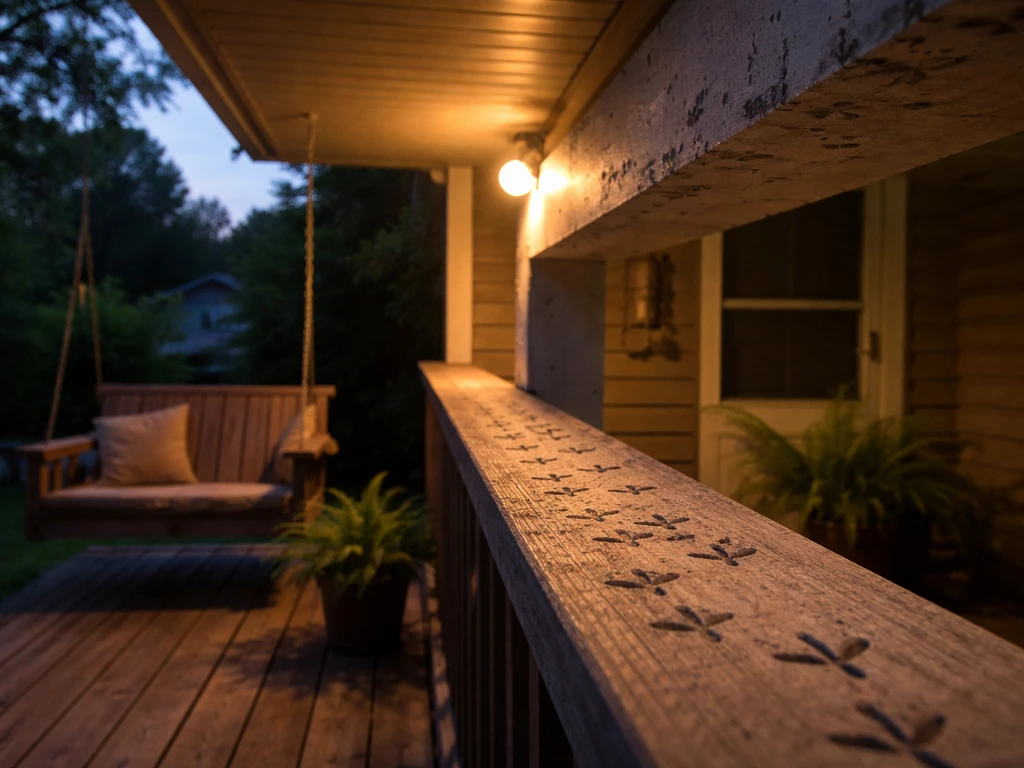
Quick response tonight to stop birds from roosting
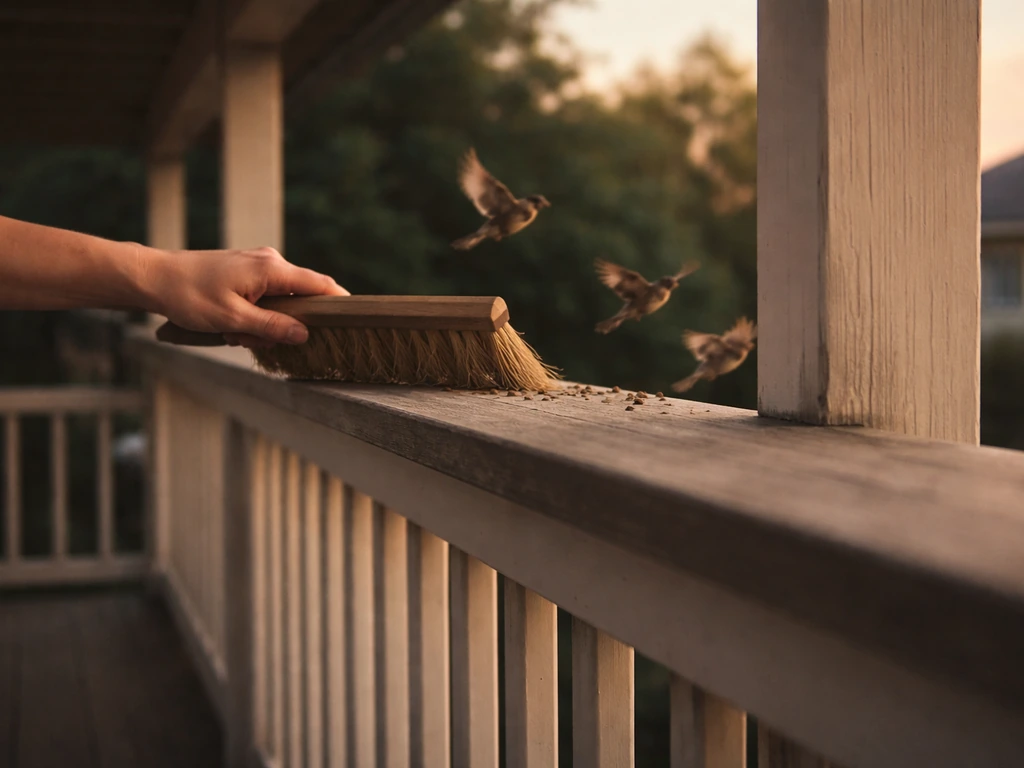
If birds are already settled on your railing, ceiling beams, or overhang ledge and you need them gone before morning, start with disruption, not cleanup. Cleanup comes later. Right now you want to break the comfort of the spot.
- Go out at dusk and physically disturb the roosting spot. Sweep railings, knock debris off ledges, and make noise. Birds rely on familiarity, so simply disturbing the location once is often enough to redirect them tonight.
- Hang old CDs, aluminum foil strips, or reflective mylar party streamers from the ceiling or overhang. Anything that catches light and moves will work for an immediate visual shock. Space them every 2 to 3 feet.
- Place a portable fan on a low setting facing the favorite roosting area. Moving air makes birds feel exposed and unsafe while roosting.
- If you have a wind chime, relocate it directly over the favorite perch. Sound plus movement is more effective than either alone.
- Cover any flat ledge, top rail, or ceiling beam with a strip of double-sided tape (painter's tape with a light adhesive on top works) or lay down a row of plastic forks tines-up. Both are temporary, cheap, and surprisingly effective overnight.
- Turn off or redirect any porch lights that are illuminating the area where birds roost. Lights attract insects, insects attract birds, especially in warmer months.
These overnight measures are not permanent fixes, but they interrupt the roosting pattern. Birds are creatures of habit and the goal tonight is to make your porch feel unreliable and uncomfortable before they settle in for good.
Identify the attractant: why birds are choosing your porch
Before you install anything, spend five minutes figuring out why your porch specifically is drawing them in. The fix only works when it addresses the real cause. Here are the most common reasons birds target porches.
- Sheltered roosting geometry: Covered porches with beams, ceiling fans off for the season, or horizontal rails at a comfortable height mimic tree branches and overhangs. Birds actively seek shelter from wind and predators.
- Nesting access points: Small gaps in soffits, behind porch lights, inside hanging planters, or under roof overhangs are prime nesting sites, especially in spring.
- Food and water nearby: A bird feeder within 30 feet, a pet food bowl left outside, standing water in a planter saucer, or a dripping spigot are all invitation cards.
- Insects: Porch lights left on overnight attract moths and beetles, which attract insect-eating birds at dawn and dusk.
- Dense plantings close to the porch: Shrubs and vines within a few feet of the porch edge give birds cover and a quick launch point. They treat it as part of their territory.
- Existing droppings: Once a spot has bird droppings on it, other birds recognize it as a safe roost. The smell and visual cue actively attracts more birds, so cleanup is not optional.
Do a quick walk-around in daylight. Look up at ceiling corners, check the tops of railings and ceiling fan blades, peek behind your porch light fixtures, and look into any open gaps in your soffit or fascia. Take a photo of what you find. It will help you match the right fix to the right problem.
Humane deterrents that work on porches
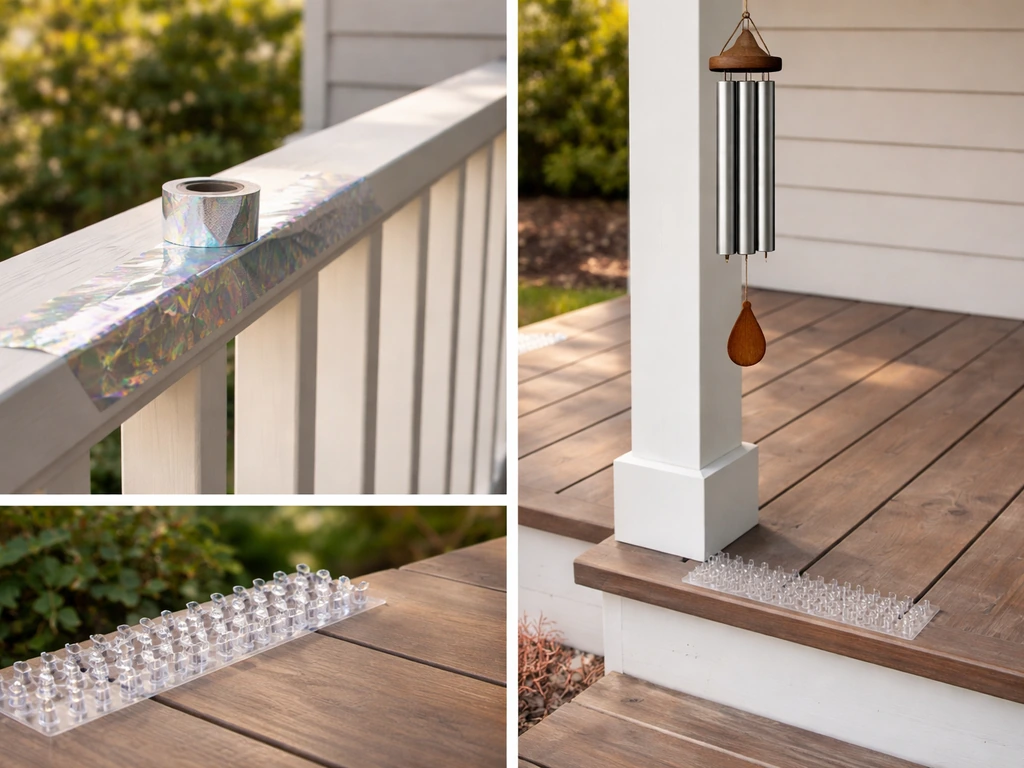
Effective porch deterrents fall into three categories: visual, sound, and physical. Using at least two types together gives you substantially better results than relying on one alone.
Visual deterrents
Reflective tape is one of the cheapest and most versatile tools here. Products like holographic scare tape (typically sold in 50-foot rolls, 2 inches wide) use a peel-and-stick adhesive that you can apply directly to railings, ceiling beams, or soffits. Cut it into 12 to 18-inch strips and let them hang or flutter. The key, just like with keeping birds off your car, is placement: the reflective surface needs to be angled where birds approach, not hidden in a corner. Poorly placed tape does almost nothing.
Predator decoys (plastic owls or hawk silhouettes) work short-term but lose effectiveness within a week or two unless you move them regularly. If you use one, reposition it every 3 to 4 days. Pair it with reflective elements for better results. Hanging a hawk or falcon silhouette from the ceiling near a problem rafter is more effective than placing a static owl on the railing.
Sound deterrents
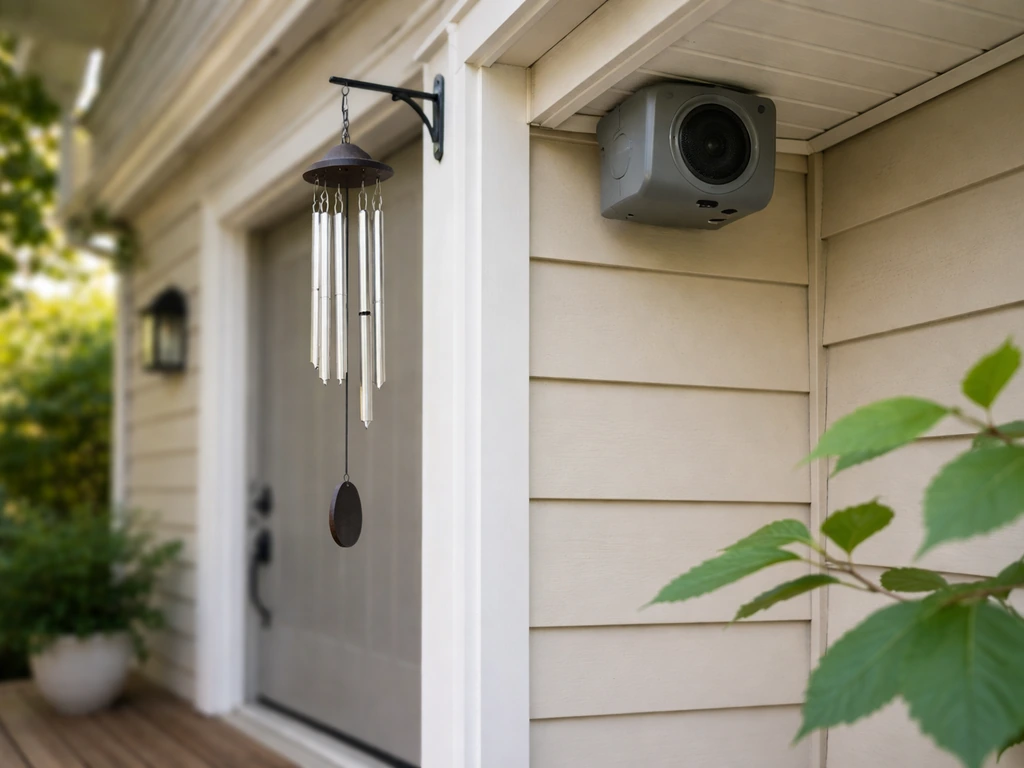
Wind chimes and ultrasonic bird repellers both have a place on porches. Wind chimes work best for everyday nuisance birds like sparrows, starlings, and pigeons because the irregular noise keeps them unsettled. Ultrasonic devices emit frequencies above human hearing that irritate birds; they are most effective in enclosed or semi-enclosed porch spaces where the sound concentrates. Look for a unit with a motion-activation feature so it fires when a bird actually approaches rather than running constantly, which birds can habituate to.
Physical barriers
For railings and ledges, bird spikes are the gold standard. They do not harm birds but make landing physically impossible. Plastic spikes are fine for most residential porches and come in strip sections you can cut to length and screw or glue down. For ceiling beams and overhead rafters, bird wire strung tightly along the top surface accomplishes the same thing. If you have an open gap behind a porch light or in a soffit where birds are trying to enter, a 1/2-inch hardware cloth cut to size and fastened with staples or screws is the most permanent fix.
Remove what's drawing them in: cleaning, food and water sources, and landscaping
Deterrents slow birds down, but removing the attractant stops them entirely. Work through this list and you will eliminate most of what is making your porch a target.
- Move any bird feeder at least 30 feet from the porch. If you want to keep feeding birds, relocate the feeder to the yard, not adjacent to your living space.
- Empty pet food bowls before dusk and bring them inside. A bowl of kibble left overnight is a reliable bird alarm clock.
- Empty standing water from planter saucers, the tops of furniture covers, and any low container that collects rainwater. Even a bottle cap of water can count.
- Trim shrubs and vines to keep them at least 4 to 5 feet away from the porch edge. Dense plantings right next to the porch give birds covered staging ground.
- Switch porch lights to motion-activated fixtures or use yellow bug-light bulbs, which attract far fewer insects than standard white or blue-toned LEDs.
- Clean up droppings immediately and thoroughly (see safety notes below). A porch with existing droppings is actively advertising itself as a safe spot to other birds.
On the cleaning front, do not underestimate the public health side of this. The CDC and NIOSH are clear that the best way to prevent histoplasmosis (a fungal lung infection carried in bird droppings) is to stop droppings from accumulating in the first place, not just to clean them up after the fact. That means consistent, ongoing deterrence is genuinely a health measure, not just an aesthetic preference. When you do clean up droppings, wear an N95 respirator, disposable gloves, and eye protection. Wet the droppings lightly with a dilute bleach-and-water solution (1 part bleach to 9 parts water) before sweeping or scraping to keep spores from becoming airborne.
DIY porch proofing plan: sealing gaps, blocking access, and safe installation steps
A one-weekend proofing project can make your porch essentially bird-proof for several years. Here is a step-by-step sequence to follow.
- Walk the perimeter of your porch and photograph every gap, crack, and open cavity larger than 1/2 inch. Pay close attention to where the porch ceiling meets the wall, the area behind porch light fixtures, open pipe penetrations, and any gap under the fascia or in the soffit.
- Seal small gaps (under 1 inch) with exterior-grade silicone caulk. For gaps between 1 and 3 inches, use hardware cloth cut to size and stapled or screwed into place, then caulk the edges.
- For open soffits or larger cavities, cut 1/2-inch galvanized hardware cloth panels to fit and fasten them with galvanized staples or self-tapping screws. This is the most durable long-term fix and resists weather and animals alike.
- Install bird spikes on the top surface of all horizontal railings and the tops of porch columns. Use outdoor-rated adhesive or stainless screws depending on your railing material. Ensure full coverage with no gaps larger than 2 to 3 inches between spike rows.
- For ceiling beams and overhead ledges, install 30-lb monofilament wire or stainless bird wire stretched tightly along the top surface. Attach it to small eye-hooks screwed into the beam at 4 to 6-inch intervals. Birds cannot grip or land on the wire.
- Hang two or three strips of reflective scare tape from the ceiling at the front edge of the porch overhang. Position them to flutter in the natural breeze path, which is usually the side facing the yard.
- Check all your installation points for sharp edges or protrusions that could injure birds or people. Sand or cover any exposed wire ends.
- Do a final walk-through with a flashlight after installation to spot any gaps you missed.
One important note if your porch borders a garden bed or has a birdhouse nearby: sealing gaps on your porch does not interfere with providing habitat elsewhere. If you want to keep birds in your yard but off your porch, that balance is absolutely achievable. Just be thoughtful about where you place any birdhouses and check out guidance on how to keep snakes out of a bird house if you decide to add one to your yard, because predator access is a real concern once birds are nesting.
Seasonal plan and nesting and legal safety guidance
Timing matters more than most people realize. If birds are already building a nest on your porch, the law may limit what you can do depending on the species involved. Most wild birds in the United States are protected under the Migratory Bird Treaty Act (MBTA), which makes it illegal to destroy an active nest that contains eggs or live chicks. The species does not have to be rare or endangered to receive this protection. Starlings, house sparrows, and feral pigeons are the main exceptions and are not protected under the MBTA, but virtually every other common porch bird (robins, wrens, swallows, finches) is fully protected.
The safest approach: act before nesting starts. The primary nesting season in most of the continental U.S. runs from late February through early August, with peak activity in March through June. If you can complete your proofing and deterrent installation before late February, you avoid the legal and ethical complications entirely. If you find an active nest with eggs or chicks already in it, stop work on that area and wait. Eggs typically hatch in 10 to 14 days and chicks fledge within 2 to 3 weeks of hatching. Once the nest is empty and abandoned, remove it, seal the gap, and install a deterrent so they cannot return to the same spot next year.
For ongoing prevention, follow this simple seasonal maintenance schedule.
| Season | Action |
|---|---|
| Late January / Early February | Inspect porch for new gaps and damage from winter. Complete any sealing or proofing work before nesting season begins. |
| March through June (nesting peak) | Do NOT disturb active nests with eggs or chicks. Add deterrents to areas without active nests. Check and tighten existing spike and wire installations. |
| July through August | Remove abandoned nests once confirmed empty. Seal entry points. Replace worn reflective tape strips. |
| September through November | Address roosting as birds shift from nesting to winter roost behavior. Check light fixtures and ceiling fan blades for accumulation. Add additional physical barriers if needed. |
| December through January | Light maintenance check. Replace any deterrents damaged by weather. Keep porch clear of debris that birds use for winter roosting. |
If you are dealing with birds that are actively trying to build a nest rather than just roosting, the approach is slightly different. There is a whole set of targeted techniques covered in this guide on how to stop a bird from building a nest that goes deeper into nest deterrence specifically, which is worth reading if nest-building is your main issue.
When to call a pro: signs you can't handle it yourself
Most porch bird problems are genuinely DIY-friendly, but there are situations where calling a licensed wildlife control professional or a biohazard remediation company is the right call. Do not try to handle the following scenarios on your own.
- Large droppings accumulation: If you have years of bird droppings built up under an overhang, on beams, or in a cavity, professional cleaning is warranted. The CDC specifically notes that large amounts of droppings should be handled by a company specializing in hazardous waste because the spore load can be dangerous even with basic PPE.
- Protected species actively nesting: If you have barn swallows, chimney swifts, or any species you cannot positively identify nesting on or in your porch structure, contact your state wildlife agency or a licensed wildlife rehabilitator before taking action. Misidentifying a protected bird and destroying its nest carries legal penalties.
- Structural access inside the porch ceiling or walls: If birds have gotten into a void inside your porch ceiling or wall cavity, sealing the gap requires confirming no birds are trapped inside first. A professional can use a camera scope and safely handle exclusion without entombing birds.
- Recurring infestation despite full proofing: If you have sealed everything, installed deterrents, and removed all attractants but birds keep returning within a week or two, there is likely an attractant or access point you are missing. A professional site inspection will identify it quickly.
- Bats sharing the roosting space: If you discover bats roosting alongside birds on your porch, stop all exclusion work immediately. Bats have separate and stricter legal protections, and exclusion during maternity season (typically May through August) is prohibited in most states.
When you call a wildlife control company, be ready to tell them the species if you know it, how long the birds have been present, what the roosting or nesting surface looks like, and whether you have spotted eggs or chicks. That information cuts the inspection time in half and helps them give you an accurate scope and quote on the first visit.
One last thing worth mentioning: if you have a pet bird and you are dealing with separate concerns about droppings or behavior indoors, that is a completely different problem set. There is useful guidance available on how to keep a pet bird from pooping everywhere that addresses indoor bird management specifically, which has nothing to do with porch deterrents but comes up surprisingly often when people are researching this topic.
FAQ
Do reflective tape or bird spikes work immediately, or do I need to wait after installing them?
Most physical deterrents (spikes, bird wire, hardware cloth) discourage landing right away, but you may still see a short period of “testing” from a few birds. Give the setup at least 24 to 72 hours after installation, then do a quick re-check of common landing spots like railing tops and the underside of overhangs to ensure the deterrent edges are continuous with no gaps birds can slip into.
What if birds keep landing on the porch light even after I add tape or wind chimes?
Porch lights create both an attraction and a perching route. Check for openings behind the fixture and along the soffit/fascia seam, then remove the “hang point” by either sealing gaps with hardware cloth or applying a deterrent strip directly to the mounting area where birds land, not just around the light. Also switch to a motion-activated or shielded fixture if practical, since fewer insects near the light can reduce bird interest.
Is ultrasonic repelling safe and effective if my porch is open to the outdoors?
Ultrasonic units typically work best when sound can reflect and concentrate, for example under a covered, semi-enclosed porch. In fully open areas, the sound often dissipates and birds may ignore it. If you try ultrasonic, choose a motion-activated model and pair it with a physical barrier (spikes or wire) at the landing surfaces for more reliable results.
How do I keep birds from returning after I remove the nest?
After a nest is confirmed empty and abandoned, seal the original access point immediately, then install a deterrent designed for that specific location (spikes on ledges, wire on overhead surfaces, or hardware cloth for entry gaps). The key is eliminating both the entry route and the landing surface, otherwise birds will often reuse the same high-value spot within the same season or next year.
Can I use glue, netting, or other DIY adhesives to stop birds from roosting?
Avoid methods that leave sticky residues or create entanglement risks. Birds can get harmed or stuck, and residue can also damage finishes or make future cleaning harder. Stick to proven physical deterrents designed for perches, like cut-to-length spikes or properly secured hardware cloth, and ensure everything is fastened so birds cannot pry it loose.
What should I do if I find droppings under birds but I cannot identify the exact entry point?
Treat it like a roosting “corridor” problem. Start by mapping where birds are landing and tracing upward, inspect soffit seams, gaps around vents, and the underside corners near railings or beams. If you cannot find the source quickly, use temporary disruption measures (tape strips hung at approach angles) while you do a second pass in daylight and take photos to compare areas that receive consistent perching.
How often should I refresh reflective tape or reposition decoy items?
Reflective tape generally holds up well through typical outdoor exposure, but weathering and sun fade can reduce its effectiveness over time. Check monthly during peak activity, and replace any strips that look dull or are lifting. Predator decoys lose effectiveness faster, so if you use them, reposition about every 3 to 4 days and pair them with reflective elements so birds are not learning a single static cue.
Are there any bird species I should not use deterrents on if a nest is present?
If you find an active nest with eggs or chicks, pause work on that area and do not attempt to remove or destroy the nest yourself. The safer approach is to wait until it is empty and abandoned, then seal the gap and install deterrents so they cannot return. For species covered by protections, handling the active portion incorrectly can create legal risk, even if your intent is humane deterrence.
What is the safest way to clean droppings if I see heavy buildup on my porch?
Before you sweep or scrape, lightly wet droppings with a dilute bleach-and-water solution to reduce airborne spores, then use an N95 respirator, disposable gloves, and eye protection. Work in small sections, avoid aggressive dry sweeping, and dispose of debris carefully. If buildup is extensive or you cannot safely control dust, consider professional cleanup because the health risk rises with aerosolization.
Will birdhouses nearby increase the chance of birds roosting on my porch?
Birdhouses can attract the species you want, but they can also create a “nesting and scouting” pattern that encourages birds to use nearby ledges or beams. If you place birdhouses, keep them at a thoughtful distance and watch for repeated landing on your porch surfaces. Also consider predator access pathways, because predators can exploit gaps that also serve birds’ routes to your porch.