The fastest way to stop birds from pecking or roosting on your car is to remove what's attracting them and put a physical barrier between the bird and the car. A car cover solves the problem immediately. Pair that with a visual deterrent nearby (a reflective tape strip, a predator decoy, or a motion-activated sprinkler) and you'll break the habit before it gets worse. Everything below gives you the step-by-step for today and a longer-term plan so you're not back in this situation next spring.
How to Keep Bird Off Car: Immediate Fixes and Prevention

Maya Carver
26 Apr 2026
If a bird is actively attacking or pecking your car right now
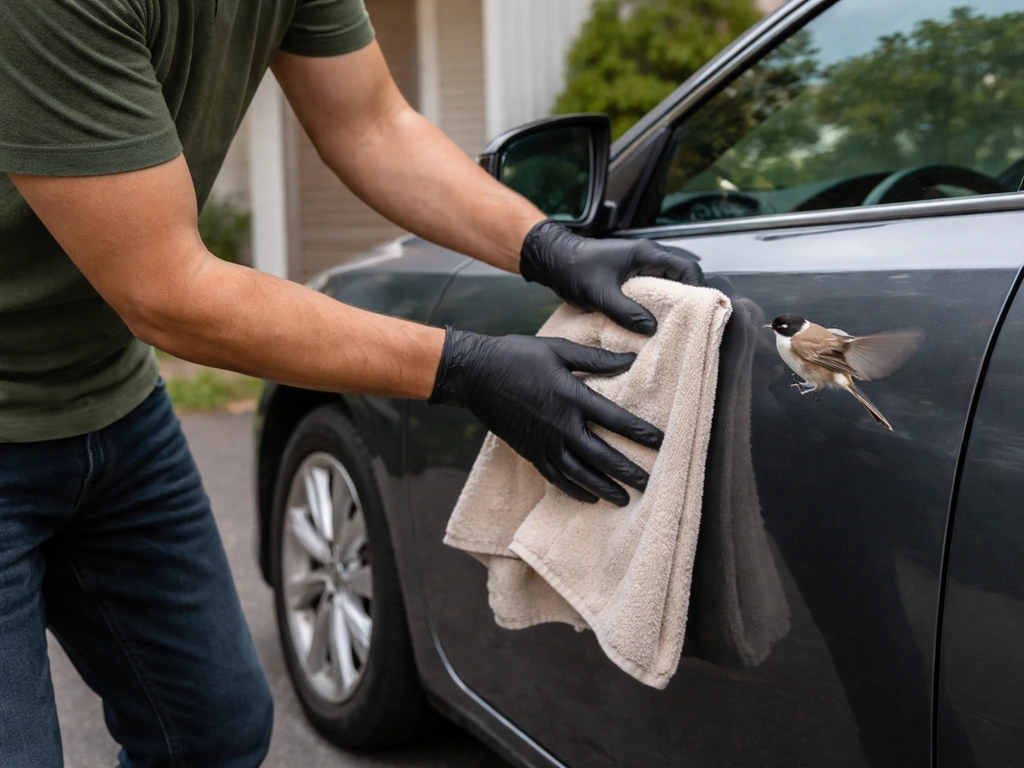
A bird pecking or dive-bombing a car is almost always a territorial response, not random aggression. During spring breeding season (roughly March through July in most of the U.S.), birds like robins and cardinals see their own reflection in a shiny car door or mirror and treat it as a rival. They will keep coming back to the same spot every single day until nesting is over, the reflection changes, or you break the cycle.
Here's what to do right now, in order:
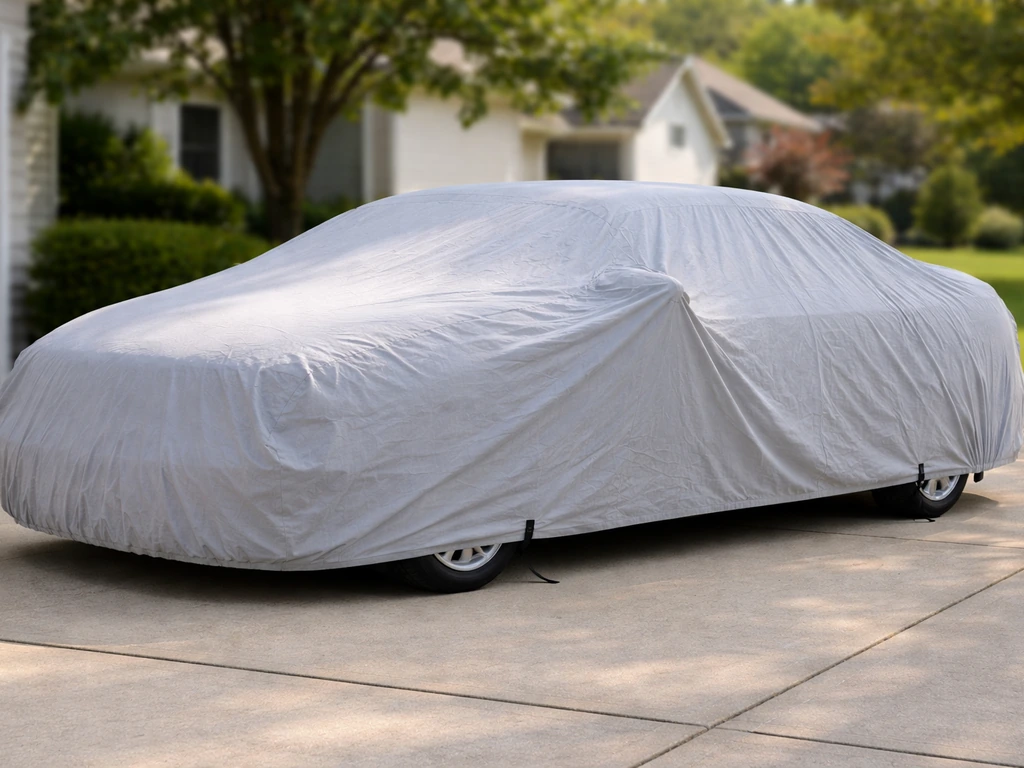
- Cover the attacked surface. Use a car cover, a folded towel over the side mirror, or dark window shade film over the door panel. Eliminating the reflection is the single most effective emergency fix.
- Move the car if you can. Even shifting it 20 feet or parking on the other side of the driveway breaks the bird's territorial map.
- Put a visual deterrent at eye level near the parking spot. A hanging reflective strip, a plastic owl with a bobbing head, or a Mylar balloon works as an immediate shock tactic.
- Don't chase or harm the bird. Beyond being ineffective, most attacking birds are protected under the Migratory Bird Treaty Act (MBTA), which makes it illegal to pursue, capture, or kill them.
The attacking behavior almost always stops on its own when nesting season ends. Your goal right now is just to protect the car's finish until then.
Humane deterrents you can set up today
Deterrents fall into three categories: visual, sound, and motion. The catch is that birds habituate to almost anything within a few days if it doesn't move or change. That's the number-one reason people say deterrents stopped working. The solution is rotation and variety, not buying a more expensive device.
Visual deterrents
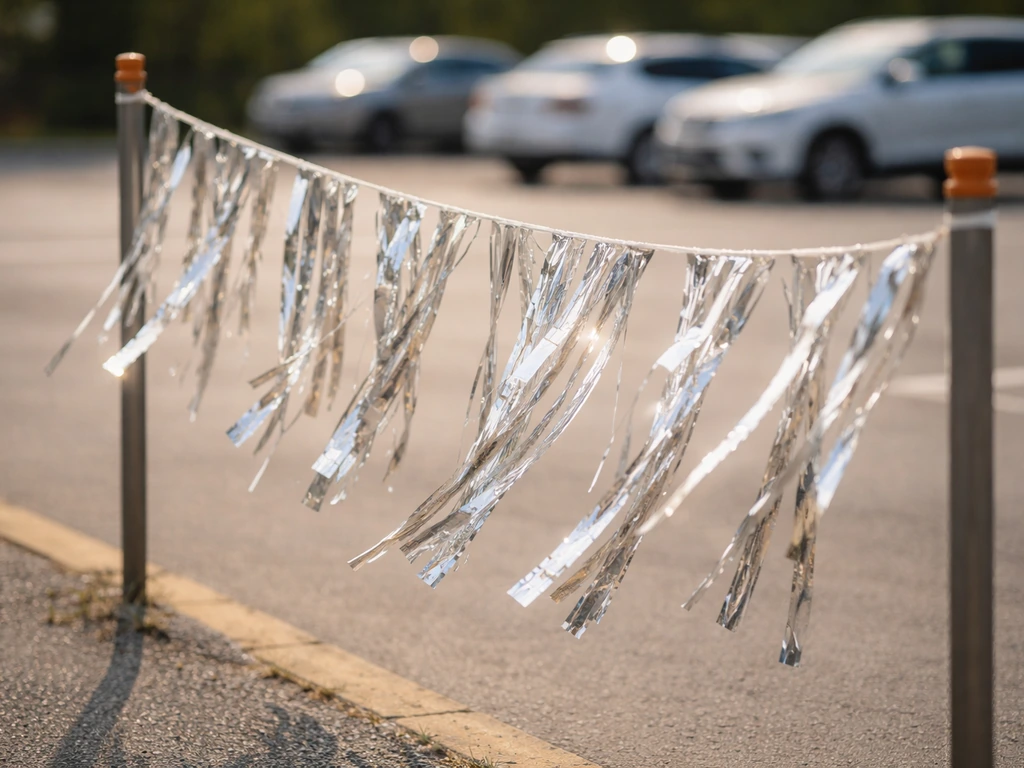
- Reflective tape (Mylar): Hang strips near the parking area so they flutter and flash. Works fast but can lose effectiveness in a week if the bird figures out it's not a threat. Also check regularly since broken strips can become entanglement hazards for birds.
- Predator decoys: Plastic hawks or owls with a weighted base that sways in the breeze are more effective than static ones. Move them every two to three days so the bird doesn't learn they're fake.
- Laser deterrents: A laser aimed near (not at) roosting birds mimics a predator's moving eye and can scatter birds from a specific spot. Effectiveness depends on the species, the ambient light, and the beam contrast. Best used at dawn or dusk. Not practical as a hands-free solution unless you use an automated laser device.
- Flash tape and reflective pinwheels: Cheap, easy, and work well in open areas where wind keeps them moving. Attach to a fence post or stake near your parking spot.
Sound deterrents
Recorded distress calls and predator calls (hawk screeches, etc.) are more effective than ultrasonic devices. Multiple peer-reviewed studies have found no reliable evidence that ultrasonic repellers affect bird behavior at all. Birds don't process ultrasonic frequencies the way rodents do. Stick with audible distress-call speakers that you can trigger when birds show up, or motion-activated units that broadcast automatically. High-frequency, high-amplitude audible sounds (within the human hearing range) show the best deterrence results in current research, but even these work better as part of a rotating strategy.
Motion deterrents
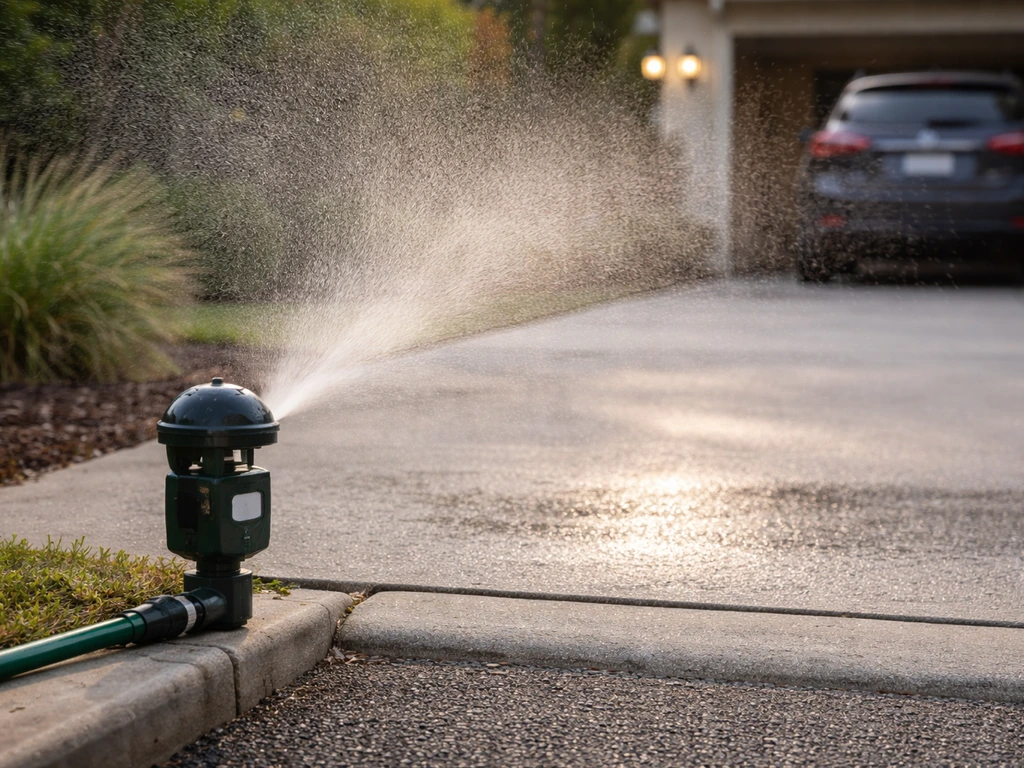
- Motion-activated sprinklers: Highly effective for birds roosting or walking on and around a car. They startle without harm and the unpredictability slows habituation.
- Wind-powered spinners and pinwheels: Low-tech but surprisingly reliable when placed close to the car and allowed to move freely.
- Scarecrow-style figures with moving parts: Arms that spin or flutter in the breeze outperform static decoys significantly.
Physical barriers that won't damage your car
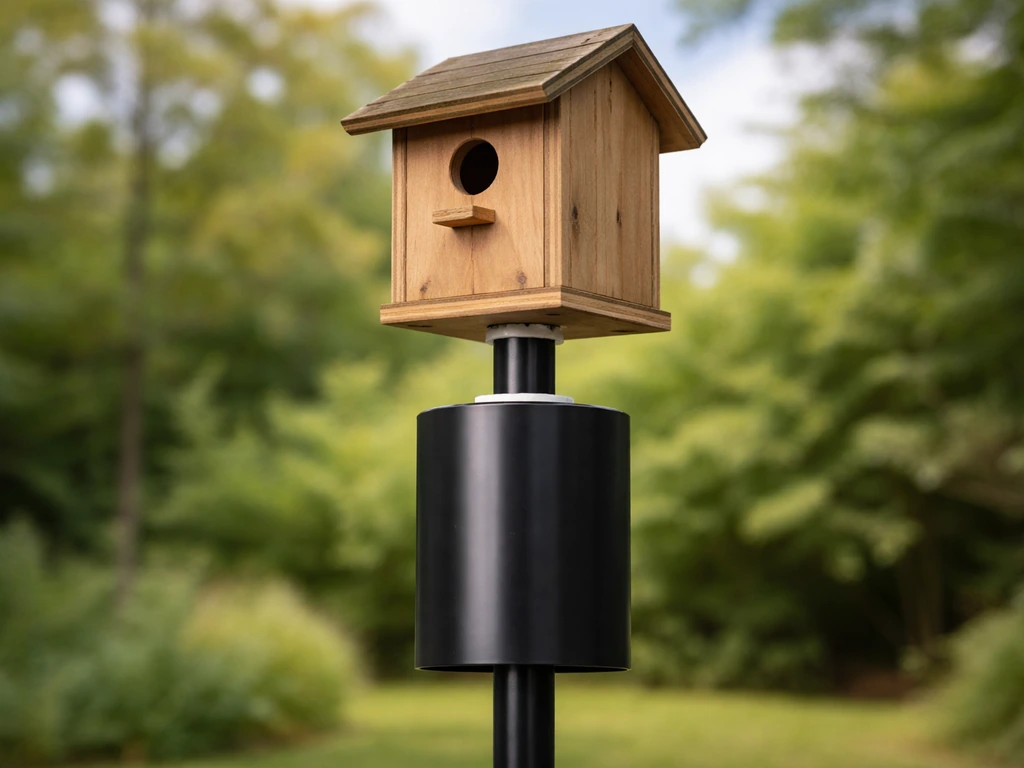
If you deal with persistent roosting, a physical barrier is more reliable than any deterrent because it removes access entirely rather than hoping to scare the bird away. If you have the same issue with snakes near bird houses, use exclusion tactics like tighter entrances and keep the surrounding area free of hiding spots snakes out of bird houses.
Car covers
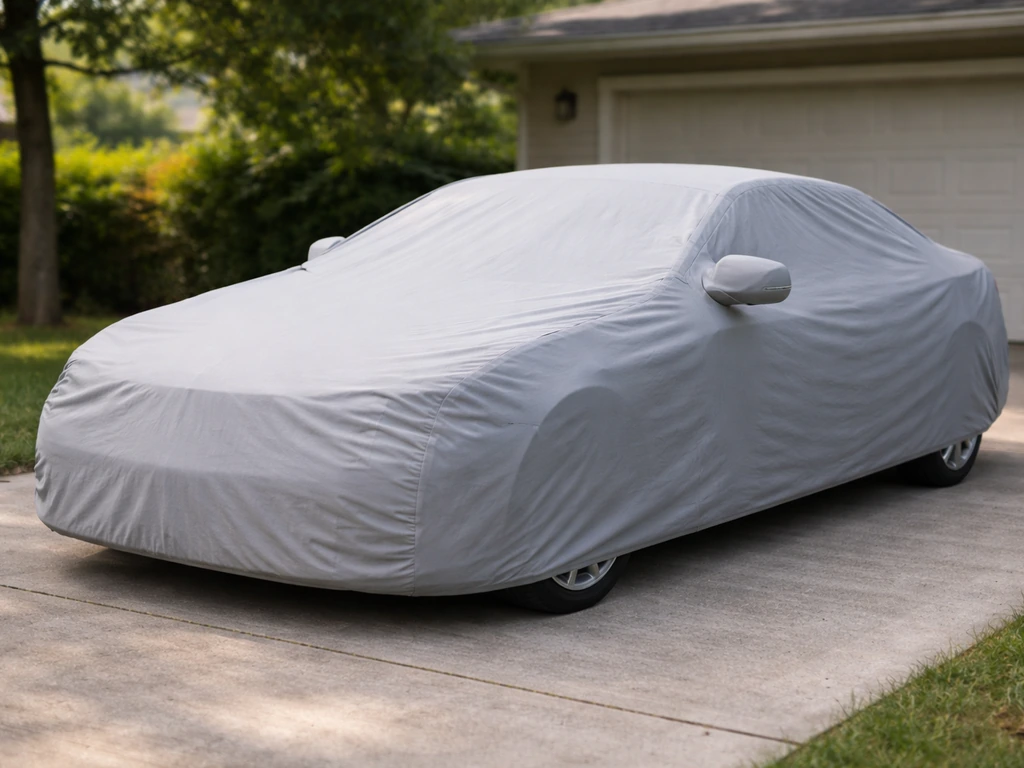
A fitted car cover is the most effective single tool for this problem. It eliminates the reflective surface that triggers territorial pecking, protects the paint from droppings, and gives birds nothing interesting to stand on. If you park outside regularly, a breathable, weather-resistant cover is worth the investment. For daily-use vehicles, even a basic cover applied when the car sits for more than a few hours breaks the bird's routine quickly.
Mirror covers and window shades
When a bird is targeting a specific side mirror (very common with cardinals and robins), a simple fabric mirror cover blocks the reflection and stops the behavior almost immediately. These are inexpensive and available at most auto stores. Similarly, interior windshield shades reduce the reflection from inside the glass and can help when a bird is pecking the windshield.
Netting for carports and open garages
If birds are roosting in the rafters or eaves of a carport or open garage above your car, exclusion netting installed along the ceiling or open sides blocks access. University extension guidance is clear that netting is one of the most reliable methods for preventing roosting in sheltered structures. Use heavy-duty polypropylene bird netting with openings no larger than 3/4 inch for sparrows, or 1-1/8 inch for starlings and pigeons. Make sure it's taut with no gaps at the edges.
Bird spikes on nearby ledges
If birds are roosting on a fence rail, ledge, or roofline directly above your parking spot and dropping onto the car, spikes on those surfaces prevent landing. Plastic or stainless steel spikes are both humane and effective on flat or curved ledges. Be aware that persistent pigeons can pack debris between the spikes and build nests on top of them over time, so check periodically. Angled boards or wire coils are alternatives when spikes aren't practical.
Why birds keep coming back: what you need to clean up
Birds return to the same spots for three reasons: food, shelter, and habit. If you remove the deterrents without addressing those root causes, the birds come back within days. Here's what to look at.
Remove food and water sources
- Move bird feeders at least 30 feet away from your parking area. Any feeder near the car is an anchor point that draws birds in repeatedly.
- Cover or relocate birdbaths within 20 to 30 feet of the parking spot.
- Pick up fallen fruit, seeds, or food scraps near the parking area. Even a few crumbs or berries keep birds circling.
- Keep garbage containers sealed tightly. Open bins near a carport are a major attractant.
Clean up droppings safely
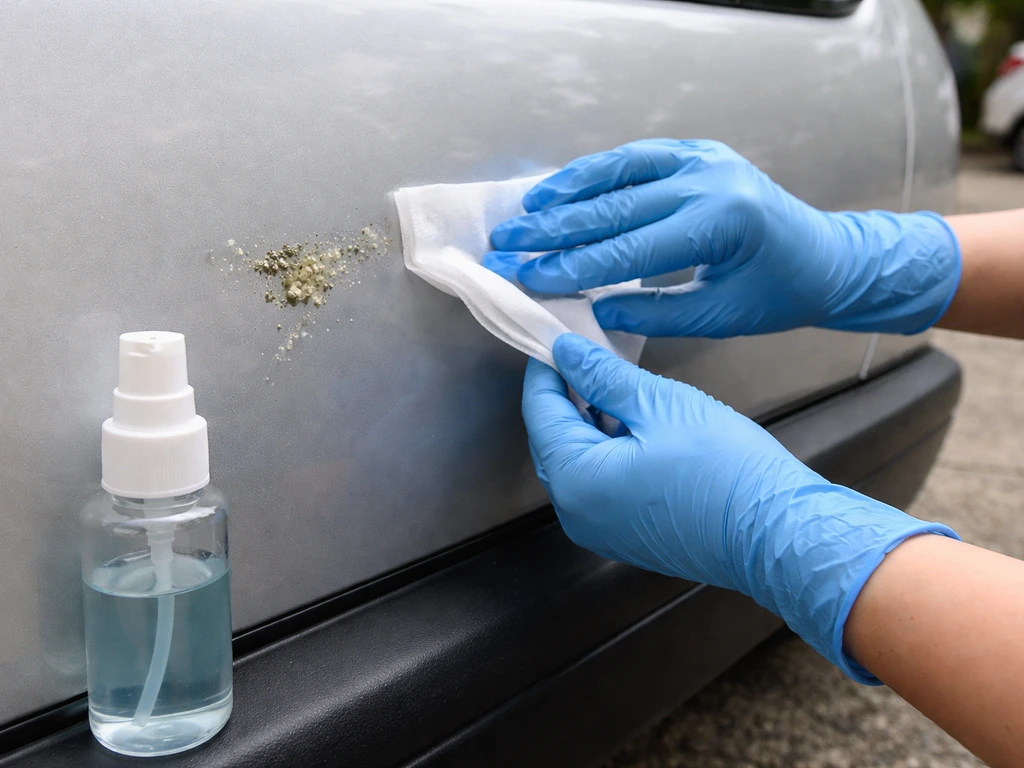
Droppings themselves are an attractant. Birds use other birds' presence as a safety signal and will land where they see evidence of previous roosting. Clean droppings off the car and surrounding surfaces regularly. If you have a pet bird, the same idea applies: keep the bird’s preferred perching spots limited and clean, and set up safe catch surfaces so droppings are contained keep pet birds from pooping everywhere (how to) (reference).
Use proper protection when cleaning up accumulations of droppings, especially large ones. The CDC and NIOSH are specific about this: don't disturb dry droppings without a respirator (at minimum an N95) because dried droppings can carry Histoplasma fungal spores and other pathogens that become airborne as dust. Wet the surface first before wiping to suppress dust. Wear disposable gloves and don't handle droppings with bare hands. For large accumulations under a roosting area, wear eye protection and a properly fitting N95 or better respirator. Replace the respirator if it gets wet, dirty, or the straps lose their seal.
Remove roost appeal from nearby structures
- Trim back overhanging branches that give birds a staging perch directly above the car.
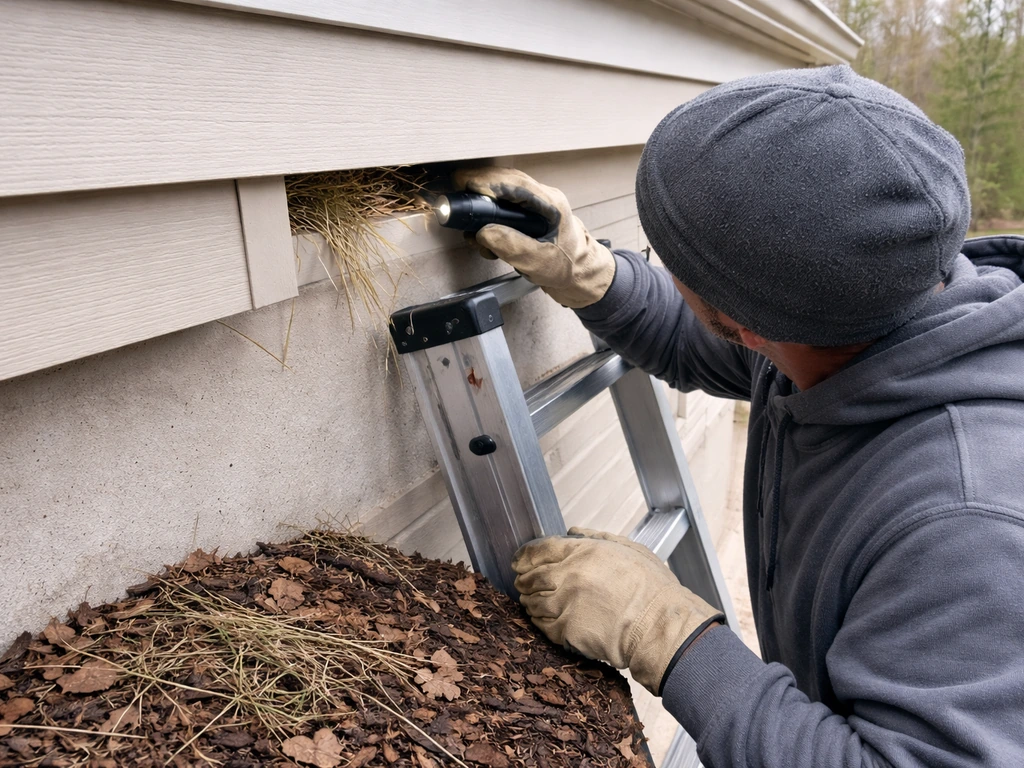
- Block access to eaves, vents, and gaps in carport rooflines so birds can't nest above the parking area.
- Remove old nests after nesting season ends (typically fall, after fledglings have left). Vacant nests invite re-use next season.
Troubleshooting: match the deterrent to the behavior
Not all bird problems on a car are the same. The right fix depends on what the bird is actually doing and why. Use this as a decision guide.
| What you're seeing | Likely cause | Best immediate fix | Best long-term fix |
|---|---|---|---|
| Single bird pecking at mirror or door repeatedly, spring/summer | Territorial: attacking own reflection | Cover the mirror or affected surface; move the car | Mirror covers, car cover, remove reflection sources |
| Flock roosting on the car or carport overnight | Communal night roosting, usually fall/winter | Distress call speaker + motion sprinkler | Netting in carport, remove perch points above parking area |
| Bird droppings on car every morning, no direct sighting | Overhead roosting on ledge, eave, or wire above the spot | Move the car; place spike strip on overhead ledge | Spikes or netting on roosting surface, trim branches |
| Bird building nest in or under car (engine bay, wheel wells) | Seeking enclosed shelter, often spring | Gently discourage and remove incomplete nest material immediately (check local rules for active nests) | Seal gaps, park in closed garage, check under hood regularly in spring |
| Bird repeatedly landing on roof/hood, walking around | Hunting insects on warm surface, or curiosity | Motion-activated sprinkler; reflective tape nearby | Car cover when parked, remove insect attractants near the spot |
| Multiple species, intermittent, near feeder or fruit tree | Food attractant nearby | Move feeder or food source 30+ feet away | Relocate feeders permanently, clean up fallen fruit |
The biggest troubleshooting mistake people make is buying a single deterrent and expecting it to work indefinitely. Birds are smart and they habituate fast. A 2024 Scientific Reports synthesis across field studies notes that bird-deterrent effectiveness can decline over time as birds habituate and learn habituate fast. Rotating between two or three methods every few days, especially during peak problem seasons, is more effective than any single device used continuously.
Long-term proofing for the parking area and surrounding buildings
If you're dealing with recurring seasonal problems, one-off fixes aren't enough. You need to make the entire parking area and nearby structure less attractive as a roosting or nesting zone. This is especially true for facility managers dealing with larger flocks or multi-vehicle lots.
Structural changes to the parking area
- Install netting along carport ceilings and open sides to block access to rafters and overhead perches.
- Apply bird spikes or angled ledge guards to all horizontal surfaces above parking spots: beams, ledges, signs, pipe runs.
- Seal any gaps or openings in eaves, soffits, or wall vents larger than 1/4 inch. Birds will find and use every gap as a potential nesting site.
- Use physical slope modifications on flat ledges (angled boards at 45 degrees or more) to prevent landing on surfaces where spikes aren't practical.
- Consider anti-roosting wire or coil systems on fence tops and overhead wires directly above parking spaces.
Seasonal planning calendar
Bird problems follow a predictable cycle. If you do the right things at the right time, you mostly stay ahead of the problem rather than reacting to it.
| Season | What to expect | What to do |
|---|---|---|
| Late winter / early spring (Feb–Mar) | Territorial birds begin scouting; early nesters arrive | Install mirror covers, deploy visual deterrents, check netting for winter damage |
| Spring (Apr–Jun) | Peak territorial pecking, nesting attempts at their highest | Use car cover consistently, rotate deterrents weekly, monitor for nest-building on/near car |
| Summer (Jul–Aug) | Fledglings active; territorial behavior winds down | Continue car cover use, remove any completed nests after birds have left (verify fledglings are gone) |
| Fall (Sep–Nov) | Large flocks forming for communal roosting; flock pressure increases | Add sound deterrents and motion sprinklers, seal any new gaps found in structures |
| Winter (Dec–Jan) | Roosting flocks at largest, especially under sheltered structures | Confirm netting is intact and secure, continue rotating deterrents for persistent flocks |
Building inspection checklist (do this twice a year)
- Walk the entire roofline and carport structure and note any droppings, feathers, or nest material that signals active roosting.
- Check all netting for tears, sagging, or gaps at attachment points.
- Inspect spike strips for debris accumulation (pigeons can nest on top of clogged spikes).
- Look for new gaps in soffits, vents, or wall penetrations.
- Remove any accessible food sources: open dumpsters, uncovered compost, fruit trees with dropped fruit nearby.
Legal rules, safety notes, and when to call a professional
Know which birds are protected
Almost every wild bird you're likely to encounter is protected under the Migratory Bird Treaty Act. The MBTA makes it illegal to pursue, capture, kill, or possess migratory birds, and also covers their nests and eggs. This is not a technicality. It means you cannot legally destroy an active nest with eggs or chicks in it, and you cannot trap or harm birds without a federal permit.
The only common exceptions are non-native species: European starlings, house sparrows, and feral pigeons (rock doves) are not protected under the MBTA, so their nests can be removed and they can be managed more aggressively. If you're unsure what species you're dealing with, contact your state wildlife agency before taking any action beyond deterrence.
Safe cleanup requirements
For small amounts of droppings (a few spots on the car), gloves and a wet wipe are fine. For larger cleanups, especially under a carport or roost area where droppings have accumulated, the health risk goes up significantly. Dried bird droppings can contain Histoplasma capsulatum, the fungus that causes histoplasmosis, as well as pathogens associated with avian influenza. The best prevention, as CDC and NIOSH guidance makes clear, is to prevent accumulation in the first place.
When you do have to clean up a large area, wet the surfaces before disturbing them, wear disposable gloves, and use a properly fitting N95 respirator at minimum. Eye protection is recommended when the area is enclosed or overhead. Bag the material and dispose of it in a sealed container.
When to stop DIY and call a wildlife professional
Most single-bird problems around a car are manageable on your own. But there are situations where you need a licensed Wildlife Control Agent:
- A flock of 20 or more birds is roosting on or around the building and DIY deterrents have failed after two weeks.
- You've found an active nest with eggs or chicks in or under the vehicle and need advice on legal options.
- Birds are entering the building through gaps and roosting inside a structure (not just the parking area).
- There is a large accumulation of droppings in an enclosed space like a carport ceiling or attic above a garage.
- You suspect a protected species is nesting on the property and you need to understand your legal obligations before acting.
- Recurring seasonal infestations despite having followed all the DIY steps above.
When you call, be ready to describe the species (or your best guess), the number of birds, how long the problem has been happening, where exactly they're roosting or nesting, and what you've already tried. That information helps the professional come prepared and saves you time and money. State wildlife agencies like North Carolina Wildlife explicitly recommend licensed Wildlife Control Agents for property damage situations, and they can advise on legal removal options that aren't available to homeowners acting alone.
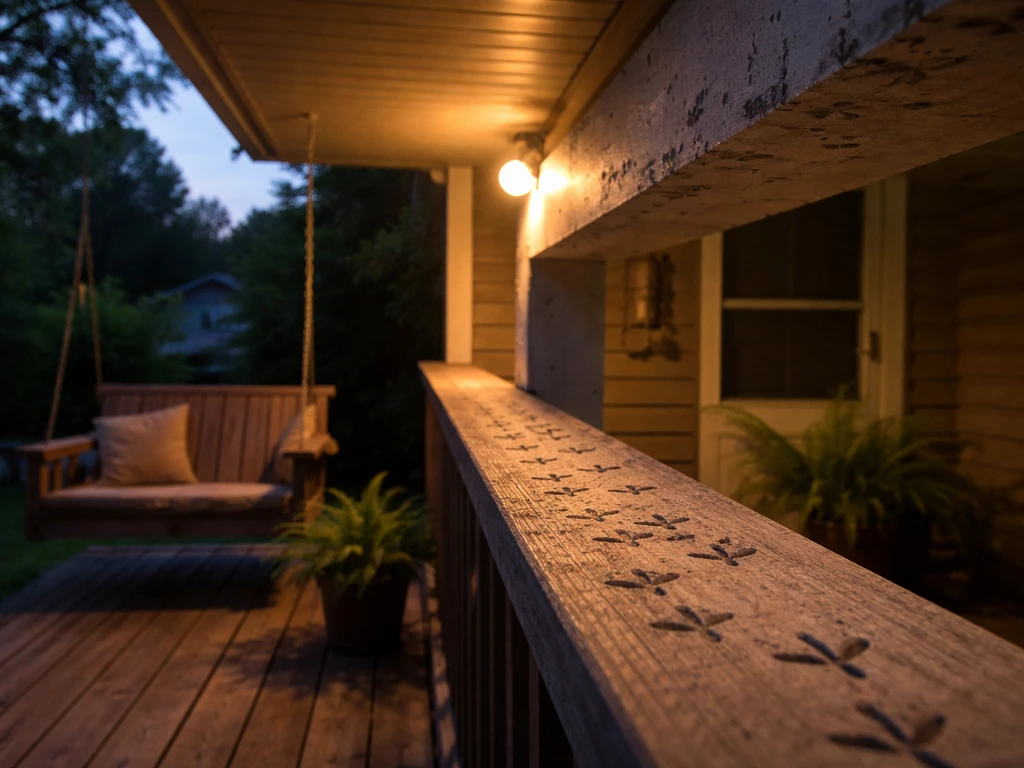
If the bird problem has spread beyond the car to your porch, eaves, or outbuildings, the same deterrent and exclusion principles apply across the property. Addressing the car in isolation while leaving a nearby roosting site untouched will slow your progress significantly, so think about the whole area when you're planning your long-term fix.
FAQ
Can I stop birds from targeting my car with one quick change instead of multiple steps?
Yes, but do it strategically. If you remove reflective triggers (mirror and shiny panels) and then add a cover, you can stop the behavior within the same week. If you only rely on temporary scares, birds often return after habituation (especially when the car is still in the same spot).
How often should I rotate or change deterrents so birds don’t habituate?
Freeze the schedule, not just the device. Check your deterrents every 2 to 3 days during peak season and rotate positions (for example, move tape strips to a different window or swap from motion sprinkler to distress calls). If you don’t see new motion or variation, birds will learn the pattern.
Do predator decoys work long-term, or will birds get used to them?
Avoid static “predator” props unless they move. Many decoys only work for a day or two because birds learn they are harmless. Use motion-activated units or place decoys in combination with barriers (like a mirror cover or car cover) for consistent results.
My car mirror gets attacked every day. What’s the fastest way to stop that specific behavior?
For mirror targeting, start with the simplest option, a fabric mirror cover, because it blocks the reflection that triggers territorial behavior. If the windshield is also being pecked, add an interior shade and then cover the car when it sits for more than a few hours.
What’s the best approach for using recorded bird distress calls without annoying neighbors?
If you use sound, keep volume effective and timing unpredictable. Use distress or predator call playback or motion-activated speakers so the bird hears it only when it shows up, not all day every day. Continuous noise can lead to neighborhood complaints and reduced effectiveness after habituation.
Will a car cover work if it’s not a perfect fit or if it flaps in wind?
Car covers help most when they fit snugly and stay on whenever the car is left. A cover that shifts or leaves uncovered reflective patches can still trigger return visits. Choose a breathable, weather-resistant cover to protect the finish and reduce condensation that can worsen grime.
How do I tell if birds are pecking for food instead of territorial reasons?
Yes. If birds are pecking because of food, like insects attracted to the car or residue, clean the area first and remove attractants. Check for spilled bird feed near parking, uncovered trash, and accessible water sources, then combine cleanup with a barrier or cover.
Is it safe to clean bird droppings myself, and what’s the biggest safety mistake to avoid?
Cleaning droppings is usually fine for small spots, but avoid dry brushing. Wet the area first to suppress dust, wear gloves, and use eye protection if cleaning overhead or in enclosed spaces. For larger accumulations, use a properly fitting N95 respirator or better.
Why do birds keep coming back even after I clean the car and add a deterrent?
If you suspect the birds are using your parking area as a repeated shelter spot, treat the whole access route, not only the car. Look for ledges, nearby roofs, fence rails, and open garage eaves, then use barriers like netting or exclusion where they enter and land.
Are ultrasonic bird repellers worth it for keeping birds off a car?
Some devices are unlikely to work reliably. Ultrasonic repellers generally have no dependable effect on birds, and static visual items often lose effectiveness quickly. For more reliable results, use physical exclusion where feasible, and rotate between audible and motion-based methods.
When is exclusion netting or spikes the right choice compared with deterrents?
If birds are roosting above the parking spot, blocking access is more effective than trying to scare them off repeatedly. Netting should be taut with small enough openings for the bird type, and spikes should be installed so birds cannot land, not just perch on the edge.
When should I stop DIY deterrents and call a licensed wildlife control agent?
In general, you should contact a licensed wildlife control agent when birds are nesting with active eggs or chicks, when the roosting area is large, or when exclusion requires modifications at height (like eaves or roofs). Professionals can also help you identify protected species and ensure actions are legal.
What information should I gather before trying a long-term plan or contacting help?
Start by documenting the pattern for 3 to 7 days, including species guess, exact spots (mirror, hood, roofline), and timing (morning arrival, midday roosting, evening return). Then you can match the likely cause to the right fix (reflection, access, shelter, or habit) instead of trial-and-error.