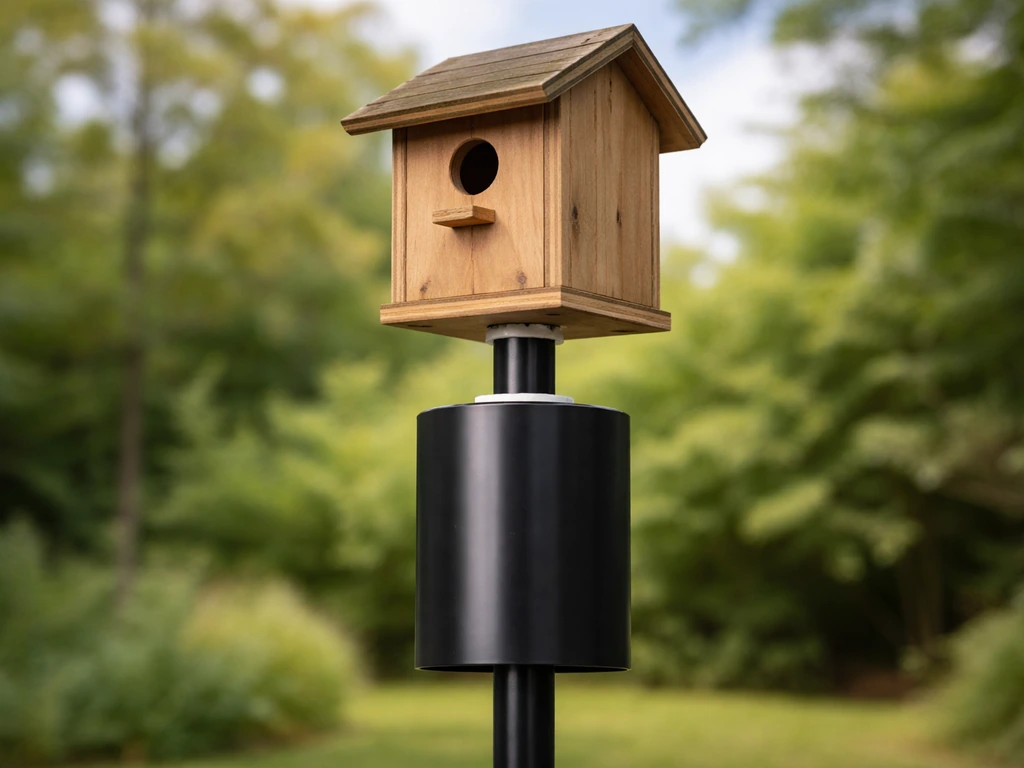
Keep snakes out of bird houses by mounting the box on a smooth metal pole at least 5 feet off the ground, adding blank" rel="noopener noreferrer">a cone or stovepipe baffle directly below the box, clearing all jump paths like nearby branches or fences, and sealing any gaps in the box itself with hardware cloth or wood filler. Those four steps handle the vast majority of snake intrusions. Everything else in this guide builds on that foundation, whether you're dealing with a snake right now or planning ahead for the season.
How to Keep Snakes Out of Bird Houses: Quick Fixes & Proofing
Maya Carver
24 Apr 2026
Snake at your bird house right now? Do this first
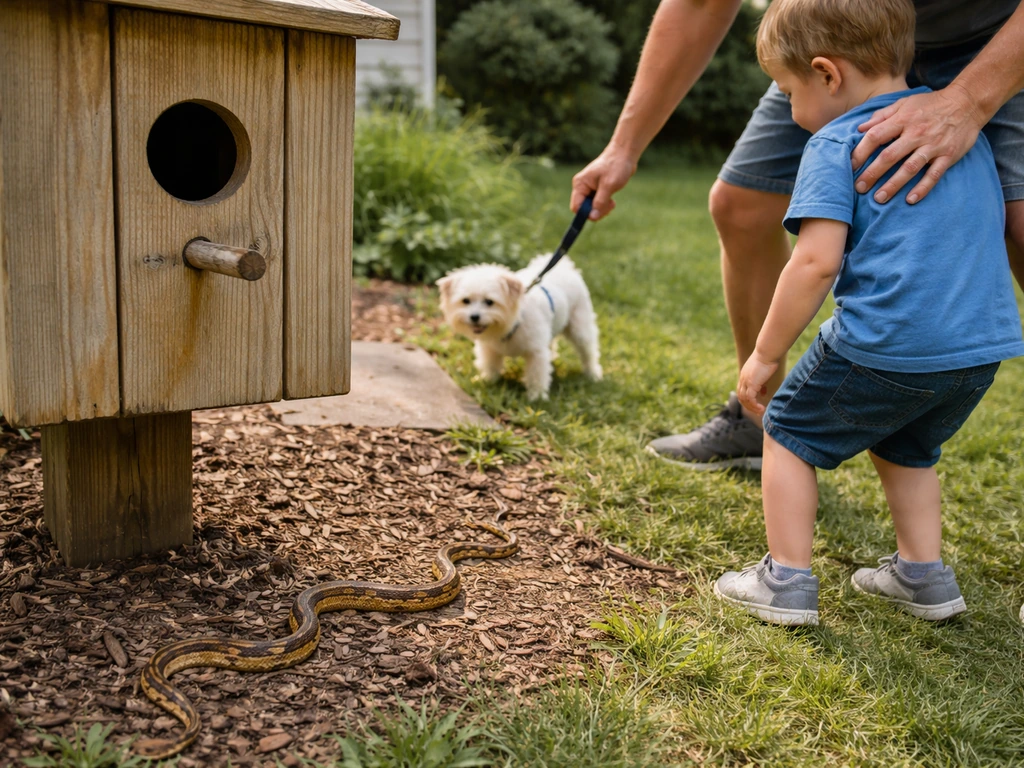
If you spot a snake near or inside your bird house, slow down before doing anything else. The instinct to grab a stick and poke at it is understandable, but it dramatically increases your bite risk and stresses the animal unnecessarily. Here's the right sequence:
- Clear the area: Get children and pets inside immediately. Keep a distance of at least 10 to 15 feet from the snake.
- Identify if it's venomous: Most snakes at bird houses are nonvenomous black racers, rat snakes, or corn snakes, but never assume. If you can't positively ID it as nonvenomous, treat it as potentially dangerous.
- Do not handle it yourself: Even a nonvenomous bite can break the skin and require medical attention. If a bite happens, do not cut the wound or try to suck out venom. Go to an emergency room.
- Let it leave on its own: A snake that hasn't found food yet will usually move on within an hour or two. If it's inside the box, keep people away and monitor from a safe distance.
- Call a wildlife professional if it stays or is venomous: Local animal control, a wildlife rehabilitator, or a licensed nuisance wildlife control operator can remove it safely. Have the location, approximate size, and coloring ready when you call.
- Document and then fix the access point: Once the snake is gone, note exactly how it got there (pole type, nearby branches, gap in the box) so you can address it immediately.
One thing worth saying plainly: discharging a firearm or using any lethal method in a residential area to deal with a snake is dangerous and, in many areas, unnecessary. It also may violate local ordinances. Focus on exclusion and removal, not elimination.
Why snakes keep showing up at bird houses
Snakes don't visit bird houses by accident. They're following a reliable food signal: eggs and nestlings are an easy, nutritious meal, and birds nesting in an accessible box advertise their location through sound and movement. Beyond the food reward, bird houses often sit in spots that also suit snakes perfectly: in or near brushy areas, attached to wooden fence posts or tree trunks, with debris piles or tall grass nearby that provide daytime cover.
The habitat around your bird house matters as much as the box itself. A bird house on a smooth pole in a mowed, open yard is far less likely to attract snakes than one zip-tied to a fence post at the edge of a wood pile. Snakes are attracted to hiding places, foraging opportunities, and proximity to food. Your job is to remove or interrupt as many of those attractants as possible.
- Eggs and nestlings are easy, calorie-dense prey for climbing snakes
- Wooden posts and tree trunks give snakes perfect grip for climbing
- Nearby brush piles, leaf litter, and tall grass provide daytime shelter
- Rodents attracted to spilled seed near a bird house bring snakes looking for that prey first
- Low-mounted boxes (under 4 feet) require almost no climbing ability to reach
How to snake-proof your bird house: DIY steps
Snake-proofing is a layered job. No single fix is foolproof on its own, but combine good placement, the right mounting hardware, a proper baffle, and a tight box and you've made your bird house genuinely difficult for most snakes to reach.
Step 1: Fix the habitat around the box
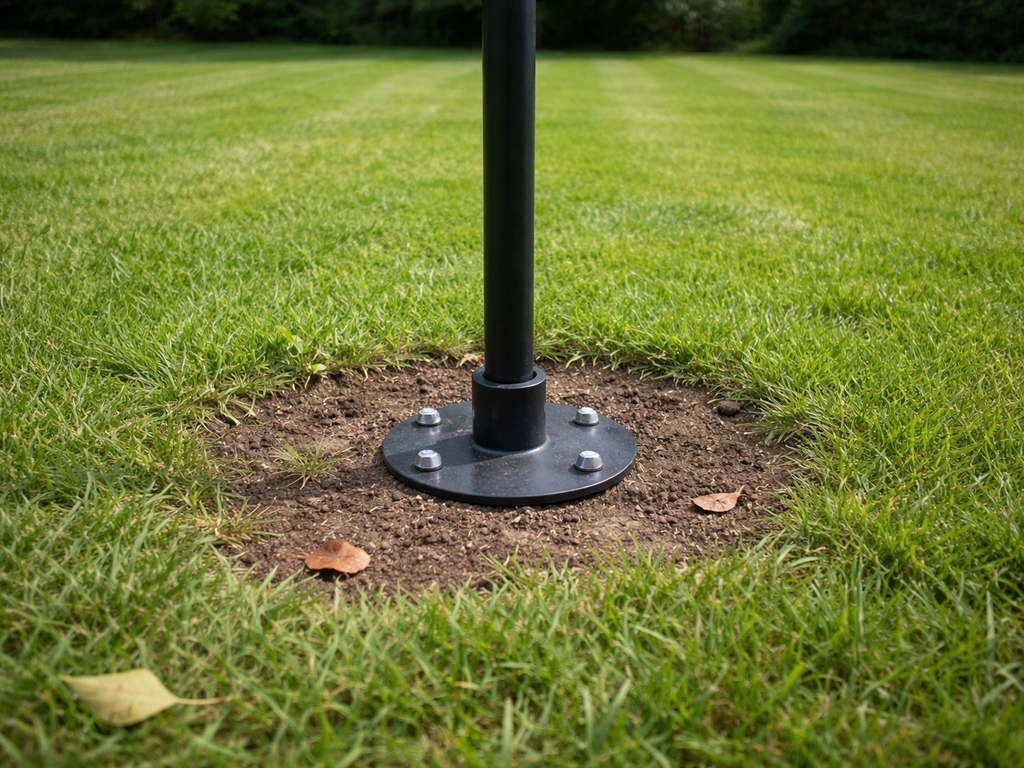
Before touching the box itself, look at the 20-foot radius around it. Mow closely around the pole base. Remove any debris piles, wood stacks, or dense ground cover within that zone. If you have a bird feeder nearby with seed spill, clean it up regularly since spilled seed draws mice, and mice draw snakes. These habitat changes reduce the baseline attractiveness of the whole area, not just the box.
Step 2: Move the box to the right pole
If your bird house is currently on a wooden fence post, a tree trunk, or a rough wooden stake, move it. These surfaces give snakes excellent grip and make all other deterrents harder to rely on. A smooth metal conduit or EMT pipe (1 to 1.5 inches in diameter) is the gold standard. Snakes struggle to get purchase on the smooth surface, especially when the pole is also away from any other climbable structure. Mount the box so the entrance hole is at least 5 to 6 feet off the ground.
Step 3: Add a baffle below the box
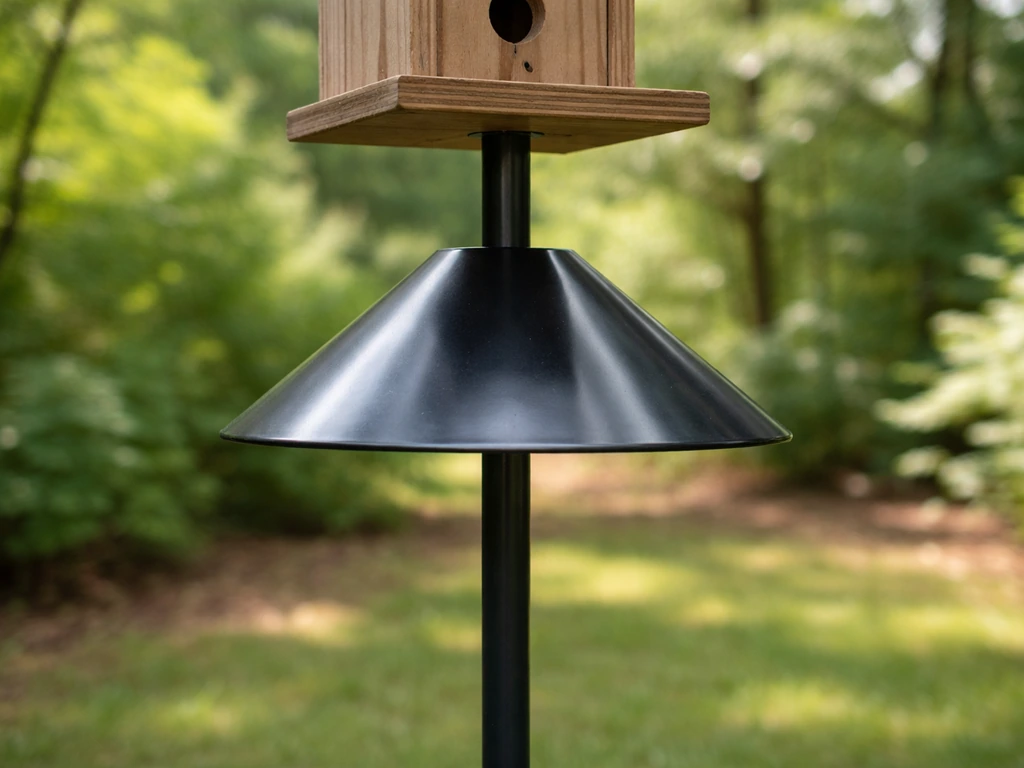
A baffle is a physical barrier mounted on the pole below the box that snakes (and other predators like raccoons) cannot get past.
The Oklahoma Department of Wildlife Conservation notes that the most effective predator guards appear to be either pole wrappings or circular baffles around the pole, and it also describes using a smooth metal or plastic cone that umbrellas downward away from the pole A baffle is a physical barrier mounted on the pole below the box that snakes (and other predators like raccoons) cannot get past. .
Two styles work well for snakes specifically: A 2023 review of predator-proofing nest boxes also describes baffles as passive barriers placed below a nest box, typically using stovepipe or cone designs to prevent climbing predators from reaching the nest Two styles work well for snakes specifically:.
- Stovepipe baffle: A 24-inch section of smooth metal stovepipe (6-inch diameter) mounted loosely around the pole so it tilts when weight is applied. Snakes trying to climb past it fall off because the pipe rotates and provides no stable footing.
- Cone baffle: A wide-diameter smooth metal cone mounted below the box, angled downward. The snake climbs up, hits the underside of the cone, and can't get over the lip.
Install the baffle at least 18 inches below the box floor and at least 18 to 24 inches above the ground. The Tennessee Wildlife Resources Agency is clear that if you cannot physically attach a predator guard to the mounting system, you should not use that mounting location at all. No baffle means no real protection.
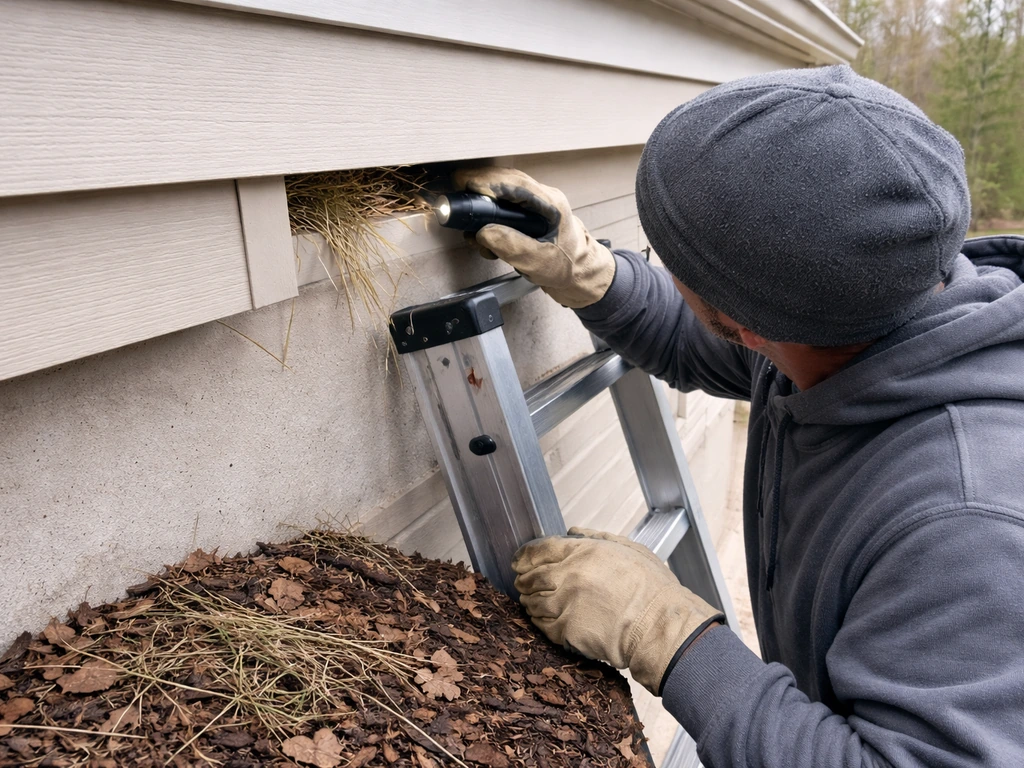
Step 4: Seal the box itself
A properly built bird house with a correctly sized entrance hole and a snug-fitting roof gives snakes very little to work with, but older or homemade boxes often have gaps. Check and fix these:
- Entrance hole: Make sure the hole is the correct diameter for your target species (1.5 inches for bluebirds, 1.125 inches for wrens, etc.) and that the edges are smooth with no cracks. A snake can exploit a cracked or rough hole edge over time.
- Roof seams and corner joints: Fill any gaps wider than 1/4 inch with exterior wood filler or cover from the outside with a strip of galvanized hardware cloth (1/4-inch mesh) secured with screws, not staples.
- Floor gaps: Check the floor-to-wall joint. Older boxes sometimes have a warped floor that creates a gap. Re-fasten with exterior screws or replace the floor entirely.
- Ventilation holes: These should be located near the top of the box sides, sized at 1/4 inch or smaller, and positioned so nothing can use them as an entry route.
Before doing any permanent sealing, confirm the box is empty. An easy check: stuff a loose piece of paper or a paper towel into any gap and wait 24 hours. If it's disturbed or pushed out, something may still be using that space. Seal only when you're sure the box is unoccupied.
Step 5: Eliminate jump paths
A snake doesn't have to climb your pole if it can drop onto the box from a nearby branch or reach it from an adjacent fence. This is one of the most common reasons baffles fail. Stand next to your bird house and look for any branch, wire, roof overhang, or fence rail within 5 feet horizontally of the box. Trim branches, reposition the pole away from fences, and avoid mounting boxes on or next to structures. If a nearby tree is unavoidable, the baffle becomes even more critical but still may not be enough.
Exclusion design details: getting the hardware right
The materials you choose for sealing and exclusion matter as much as the technique. Here's a quick comparison of the main options:
| Material | Best use | Durability | Notes |
|---|---|---|---|
| Galvanized hardware cloth (1/4-inch mesh) | Sealing gaps, reinforcing entrance holes, ventilation covers | High (10+ years outdoors) | Shapes easily, attach with screws not staples for lasting hold |
| Smooth metal conduit or EMT pipe | Pole/mounting | Very high | Snakes cannot grip smooth metal; avoid PVC which warms and can warp |
| Metal stovepipe (6-inch diameter) | Stovepipe baffle | High | Must hang loosely so it rotates under weight |
| Galvanized sheet metal cone | Cone baffle | High | Minimum 18-inch diameter; larger is better |
| Exterior wood filler | Small gap sealing in wooden box | Medium (re-check annually) | Sand smooth after curing; cracks can return in freeze-thaw cycles |
| Polypropylene netting | Not recommended for snake exclusion | Variable | Snakes can push through or get tangled; use hardware cloth instead |
A note on the entrance hole extender: some commercial products advertise a tube that extends the entrance hole outward (sold as a 'Bird Guardian' style insert). These work well against raccoons and some mammals but are explicitly not effective against snakes, which can navigate tube structures without difficulty. Don't rely on them as snake protection.
When attaching hardware cloth to a wooden box, use 1/2-inch exterior-grade screws rather than staples. Staples pull out over one or two winters and leave gaps that are worse than no patch at all. Pre-cut your hardware cloth patch about 1 inch larger than the gap on all sides, fold the edges over, and screw through the folded edge into solid wood.
Humane, safety-first deterrents: what actually works (and what to skip)
The deterrent market for snakes is full of products that don't hold up in real-world use. Here's an honest breakdown of what has legitimate value versus what's mostly wishful thinking.
What actually helps
- Habitat modification: Removing brush piles, mowing closely, and eliminating debris around the mounting pole is the single most evidence-supported deterrent. It makes the whole area less attractive to snakes before they even reach your box.
- Smooth metal poles plus baffles: This combination is the most reliable physical deterrent for snakes specifically.
- Keeping the area around the pole clear: Don't let weeds or tall grass grow at the base of the mounting pole. Snakes use ground cover to approach undetected.
- Relocating problem boxes: If your current box location has unavoidable jump paths (a mature tree, an adjacent building), moving the box 20 to 30 feet to an open area on a proper pole is often the most practical fix.
- Regular monitoring: Checking the box every few days during nesting season lets you catch a snake visit early, before eggs or nestlings are lost.
What to skip or avoid
- Mothballs or naphthalene products: Toxic to pets, children, and wildlife; no reliable evidence they deter snakes at bird house distances; illegal to use as wildlife repellents in many states.
- Cinnamon oil, clove oil, or sulfur powders: Anecdotally popular but field performance around bird houses is weak, especially after rain.
- Sticky traps: These capture and kill indiscriminately, including beneficial snakes, small birds, and other wildlife. Inhumane and counterproductive.
- Killing or relocating snakes yourself: Most snake species, including many black snakes, may be protected under state law. Killing a protected species without a permit is illegal. Relocation by untrained people often results in animal death or just moves the problem.
- Noise or vibration devices: Snakes detect vibration through the ground, not through air; pole-mounted vibration devices have no demonstrated effect on climbing snakes.
The most effective overall approach combines physical exclusion (pole, baffle, sealed box) with habitat modification (clearing the surrounding area). Relying on repellents alone, without fixing the physical access, never produces lasting results.
Black snakes and other common climbers: behavior-aware tips
When people say 'black snake,' they usually mean one of two species: the black rat snake (also called the eastern rat snake) or the black racer. Both are excellent climbers, both are nonvenomous, and both are major predators of bird nests. Understanding how each behaves helps you time your checks and troubleshoot failed deterrents.
Black racer
The black racer is a daytime hunter, active during daylight hours, and prefers open grassy areas or forest edges adjacent to open ground. It's fast (up to 8 to 10 mph when fleeing) and tends to bolt rather than hold its position when approached. If you're seeing snake activity at your bird house during mid-morning or early afternoon, a racer is the likely culprit. The good news is that racers, while fast and agile, are more deterred by smooth-pole-plus-baffle setups than rat snakes because they rely more on speed than on methodical climbing.
Black rat snake (eastern rat snake)
Rat snakes are the more persistent and methodical climbers of the two. They're powerful constrictors, excellent at navigating textured surfaces, and quite capable of squeezing through gaps that look impossibly small. They're also partly crepuscular (active at dawn and dusk) in warm months, so you may not see one even if it visits regularly. Rat snakes are the main reason the stovepipe baffle design was developed for nest boxes: the loose, rotating pipe interrupts their methodical, grip-and-pull climbing style.
Tips for both species
- Both species will use nearby trees, fences, or structures as launch points to bypass your pole baffle. Eliminate these paths first.
- Check your boxes more frequently during late spring and early summer when nestlings are present and most vulnerable.
- Both species are beneficial for rodent control in your yard. The goal is exclusion from the bird house, not elimination from your property.
- Neither species is venomous, but both can and will bite when handled. Respect the animal and focus on physical exclusion rather than direct confrontation.
- If your baffle seems to be failing, first check for jump paths before assuming the baffle design is at fault.
Other common local species that visit bird houses include corn snakes (southeastern and mid-Atlantic US) and gopher snakes (western US). The same exclusion principles apply to all of them: smooth poles, quality baffles, no jump paths, sealed boxes.
Long-term plan: seasonal checks, maintenance schedule, and when to call for help
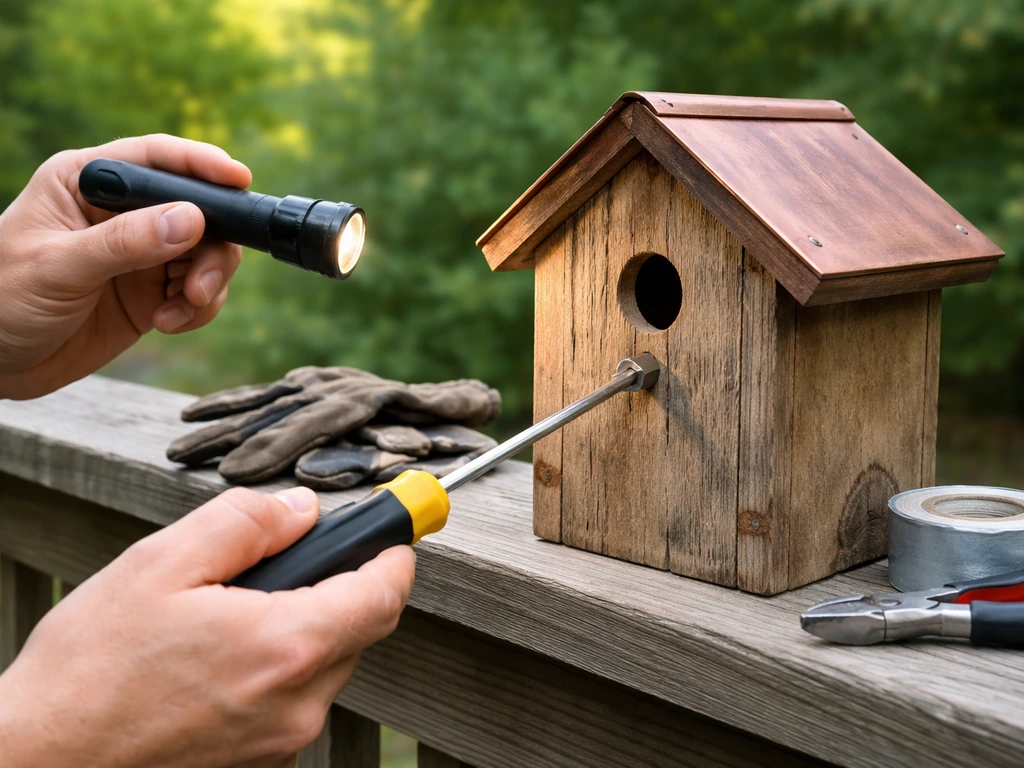
Snake-proofing a bird house isn't a one-and-done project. If you are dealing with a pet bird that poops everywhere, the key is to reduce mess by adjusting where it perches and setting up easy-to-clean surfaces. Boxes warp, poles shift, baffles loosen, and vegetation grows back. A simple seasonal routine catches problems before they become losses.
Annual maintenance checklist
- Early spring (before nesting begins): Inspect the box exterior for new cracks, warped boards, or gaps; tighten all screws; re-apply wood filler to any new cracks; confirm the baffle is securely attached and rotates or pivots freely; check that the pole is still vertical and the base hasn't shifted.
- Early spring: Clear the 20-foot zone around the pole: mow closely, remove any new brush or debris that accumulated over winter.
- Early spring: Trim any branches that have grown within 5 feet of the box since last season.
- During nesting season (spring through midsummer): Check the box every 3 to 5 days; look for signs of disturbance (scattered nesting material, missing eggs); inspect the baffle for mud, debris, or damage.
- After each major storm: Clear new debris from around the pole immediately; check that the baffle wasn't dislodged by wind; inspect the box roof for new water intrusion gaps.
- Late fall (after nesting ends): Remove old nesting material (reduces parasites and mice nesting over winter); do a full hardware inspection; make any replacements or repairs before winter.
- Late fall: Note any new structures, fences, or significant plant growth near the box that will need addressing next spring.
When DIY isn't enough: calling wildlife professionals
Most snake-related bird house problems are solvable with the steps above. But some situations genuinely call for a professional, and there's no shame in recognizing when you're past the DIY threshold.
- You can't identify the snake and aren't certain it's nonvenomous
- The snake is inside the box and won't leave on its own after several hours
- You're dealing with repeated visits despite having a proper pole, baffle, and cleared jump paths (this suggests an unusual access path you haven't identified)
- The snake is a species protected under state or federal law (your state wildlife agency website can confirm this)
- Anyone has been bitten or is at risk of being bitten
- The bird house is at height (on a building or elevated structure) and accessing it safely requires a ladder above 6 feet
When you call, give the dispatcher the snake's approximate size and coloring, your location, whether it's inside or outside the box, and whether you have children or pets in the area. A licensed nuisance wildlife control operator or your state wildlife agency's non-emergency line can usually advise or dispatch someone quickly. In most cases, if the snake is nonvenomous and not trapped, they'll guide you through letting it leave on its own rather than sending someone out.
A note on protected species
Many snake species enjoy state-level protection, and some (like certain kingsnakes) are protected across most of their range. Before taking any action beyond exclusion and habitat modification, check your state wildlife agency's list of protected reptiles. Killing a protected species without a permit can result in significant fines. This is one more reason the exclusion-first approach is the right one: it solves your problem without creating a legal one.
If you're also dealing with birds causing problems in other parts of your property, like nesting in spots you'd rather they avoid or landing on your car or porch, many of the same habitat-modification and exclusion principles apply there too. If you’re dealing with birds landing on your car, the same exclusion and habitat-modification ideas can help you learn how to keep bird off car.
By focusing on the same habitat-modification and exclusion ideas, you can also learn how to keep bird off porch without relying on unsafe or ineffective tricks car or porch. The foundation is always the same: understand what's attracting the animal, remove or interrupt that attractant, and use physical exclusion as the primary tool.
If your goal is to stop a bird from building a nest, the same focus on removing attractants and using safe exclusion tactics can help you prevent nesting in the first place.
FAQ
How often should I inspect a snake-proof bird house, even after I’ve installed a baffle and sealed gaps?
Keep the box empty before you seal anything, then re-check after storms or heavy wind. Look for disturbed paper test material or new scratch marks around the entrance, because a baffle that was tight in dry weather can loosen slightly once the pole shifts.
Do snake repellents work if my bird house is already mounted correctly?
No. Many snake-deterrent products rely on taste or smell and rarely stop a snake that can physically access the box. Treat repellents as optional extras, and only after the pole, baffle, and sealed box are correct.
Can I hang bird feeders or other items near the pole without ruining the snake-proofing?
Treat it as a separate safety issue. Exclusion setups that rely on a smooth metal pole and baffle help prevent many nest predators, but if you also use the pole for other structures (like hanging feeders or ropes), those can create new climb paths that cancel out the protection.
What’s the safest way to anchor the pole so it doesn’t create a climb path for snakes?
If you must secure the pole to the ground, avoid attaching it to rough wood boards, rocks, or fence rails that create a climbing ladder. A good rule is to keep any climbable surface from being within about 5 feet horizontally of the box and baffle zone.
What should I do if my mounting hardware won’t let me attach the baffle securely?
Choose a baffle style and mounting method you can physically secure. If the baffle cannot be firmly attached to the mounting system, the barrier may drift and snakes can use the movement or the gap at the edges to bypass it.
What materials hold up best for sealing gaps and attaching hardware cloth outdoors?
Use exterior-rated materials for outdoor seasons. Hardware cloth should be screwed into solid wood with corrosion-resistant screws, and sealed areas should be monitored because wood filler can crack as temperatures cycle.
How can I tell which snake is likely visiting so I can adjust the proofing plan?
Watch for activity timing and location patterns. Mid-morning to early afternoon sightings often point to black racers, while repeated visits at dawn and dusk can indicate rat snakes, which are more likely to exploit small textured grips and fixed-approach routes.
If I already saw a snake at the bird house, what’s the next checklist item to prevent a repeat visit?
Do not assume a snake is gone just because you removed it once. Snakes may return to the same food signal, especially if birds are actively nesting. After any removal or eviction, immediately check for new gaps, loose screws, and any branch or fence changes that may have created fresh access routes.
What should I do differently if the snake might be a protected species?
Yes, even if you don’t see it. If your region has protected species, check your state or local wildlife agency rules before taking action beyond exclusion. If you need help, report the snake’s approximate size and coloring and whether it’s inside the box.
Can I adjust the bird house while birds are nesting, or do I need to wait?
If you find the box is occupied or a nest is active, prioritize exclusion without disturbing the animals more than necessary. Remove climbing access and maintain the baffle, then schedule any sealing or repairs when the box is confirmed empty so you don’t trap an animal.
What if there are trees or fences near the bird house that I can’t remove?
If there is an overhang, nearby branch, or fence rail within about 5 feet of the entrance, assume it can enable a drop or side approach. Either trim that element, relocate the pole away from structures, or upgrade to a baffle setup that leaves no reachable edge around the box opening.