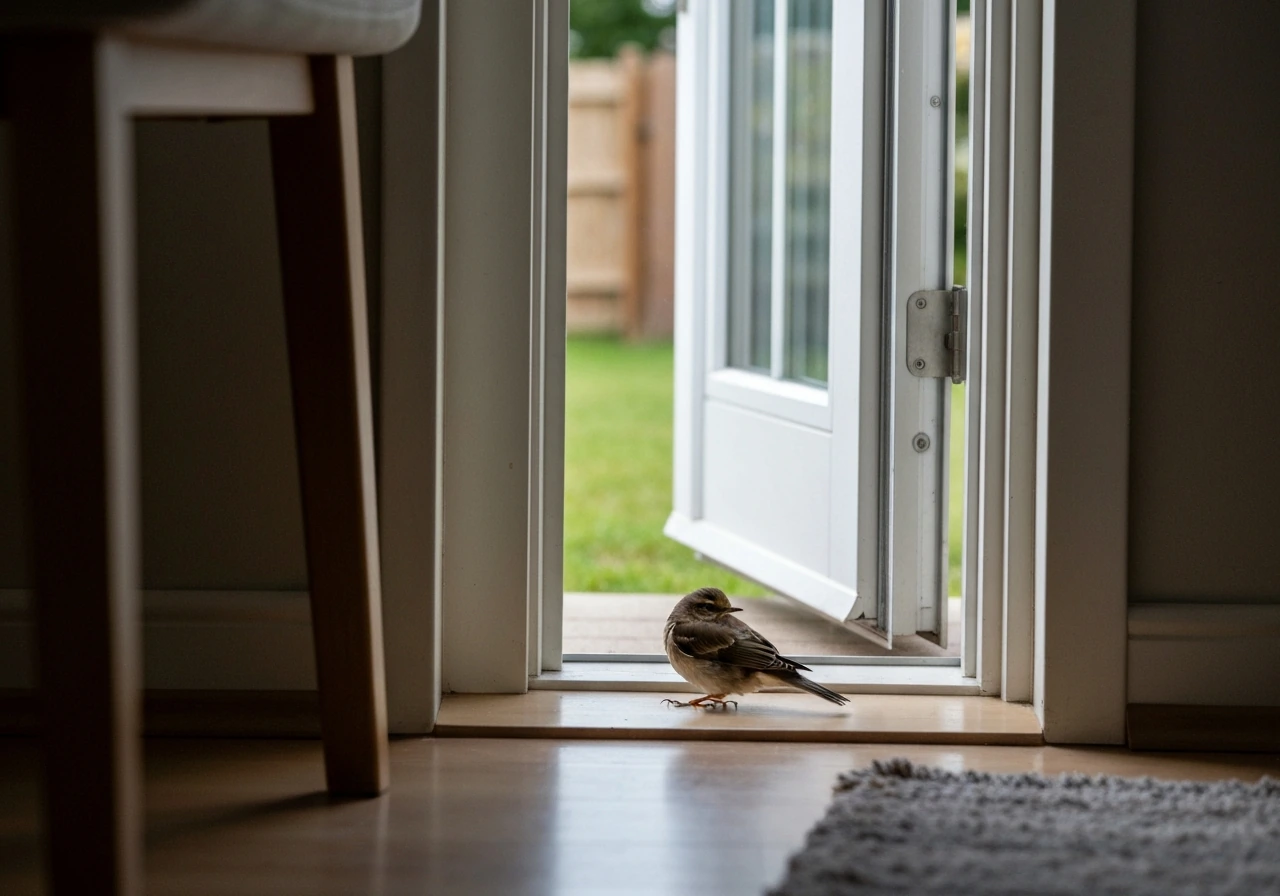
Quick answer: can you stop a bird from building a nest?
Yes, you can stop a bird from building a nest, but only if you act early and know the legal limits. The window is narrow: once eggs are present, many birds are protected under the U.S. Migratory Bird Treaty Act (MBTA), and disturbing or removing the nest can carry serious federal penalties. Before that point, removing early nest material, combined with targeted deterrents, is legal, humane, and genuinely effective. If a nest is already active (eggs or chicks present), your only legal move in most cases is to wait out the nesting cycle and then proof the site so it never happens again.
The short decision rule: no eggs yet? Act now. Eggs or chicks present? Stop, leave it alone, and plan your prevention work for after the birds fledge. The sections below walk you through both scenarios step by step.
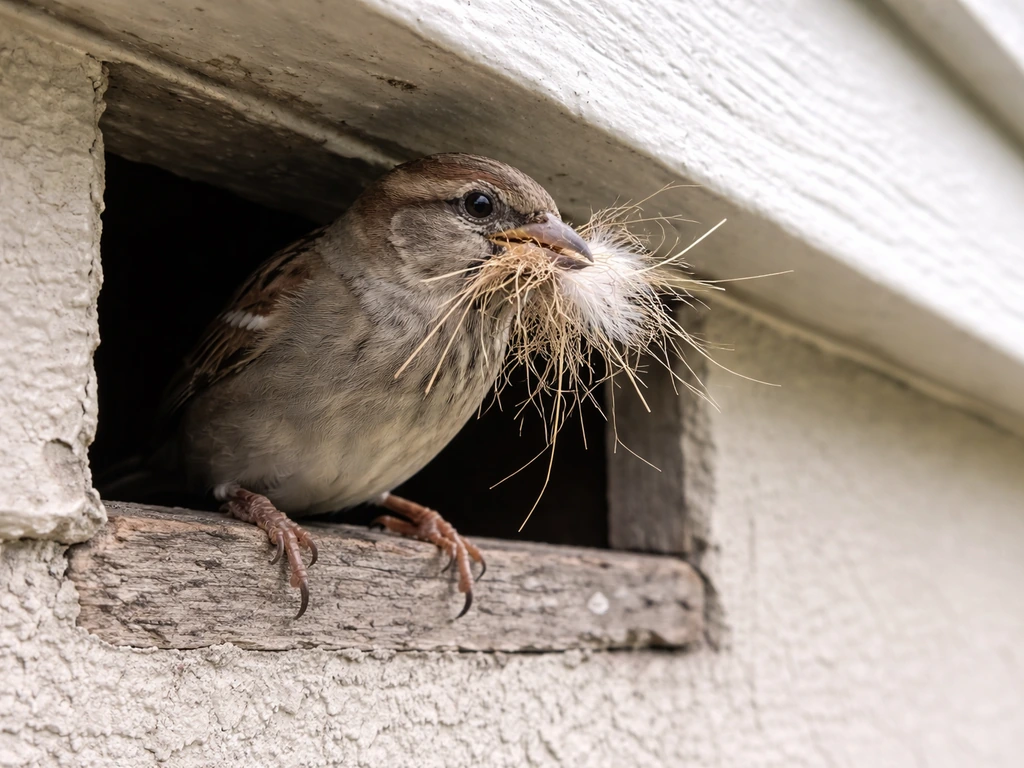
If you spotted a bird gathering straw, twigs, or fluff in or on your building this morning, here is exactly what to do right now. Speed matters because birds can build a full nest in as little as two to five days, and once eggs are laid, your options vanish legally.
- Check for eggs or chicks before touching anything. Look carefully at the nest cup. If you see eggs, stop and skip to the legal/professional section below.
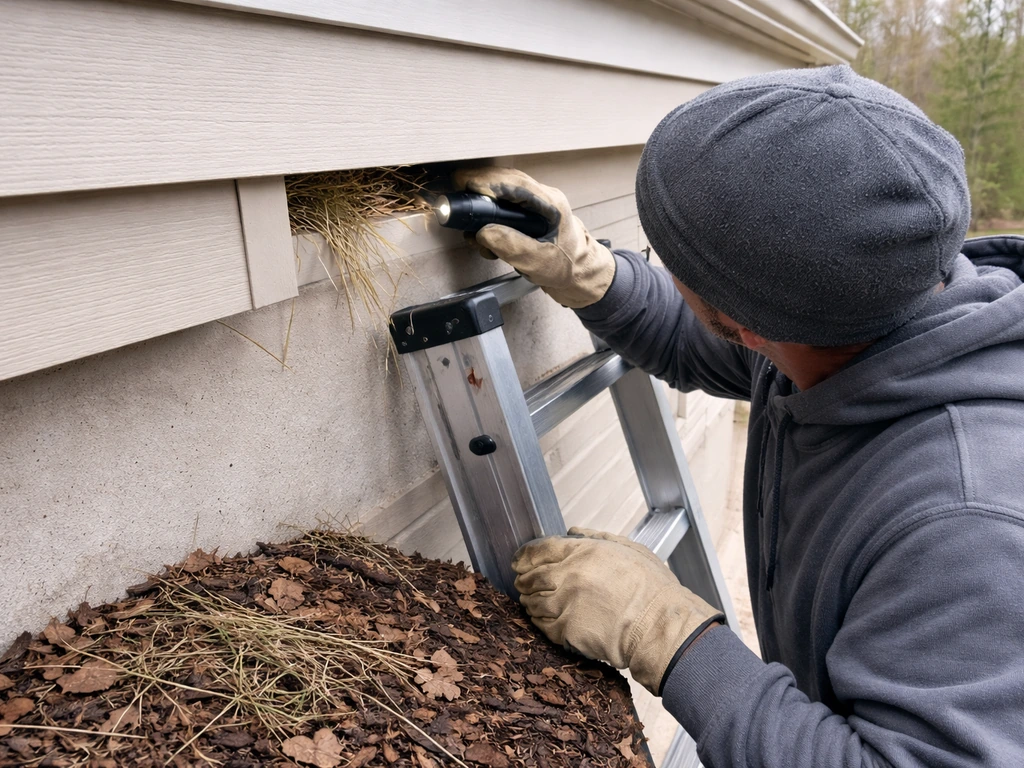
- Put on gloves and a dust mask before handling any nest material. Bird nests can harbor mites, parasites, and dried droppings.
- Remove any loose nest material. Sticks, grass, and fluff that have not yet been woven into a cup can be removed and disposed of in a sealed bag.
- Clean the surface. Wipe down the area with a diluted bleach solution (1 part bleach to 10 parts water) to remove scent markers that draw the bird back.
- Block the spot immediately. Place a physical deterrent (netting, spikes, or foam filler for gaps) before the bird returns, ideally within the same hour.
- Monitor for 48 hours. Check the site morning and evening. If the bird starts rebuilding, repeat removal and reinforce the barrier.
A word on safety: if the location requires a ladder or rooftop access, do not rush. A fall is far more serious than a bird nest. Use a stable ladder on level ground, have a second person steady it, and wear non-slip footwear. Never lean or overreach from a ladder to grab nest material.
Find the nest attractors: access points, materials, and food/water sources
Birds do not pick a spot randomly. They are looking for shelter from weather and predators, proximity to food and water, and structural features that give the nest something to sit on or in. Before you can stop them long-term, you need to figure out what is making your building attractive in the first place.
Common access points and nesting structures
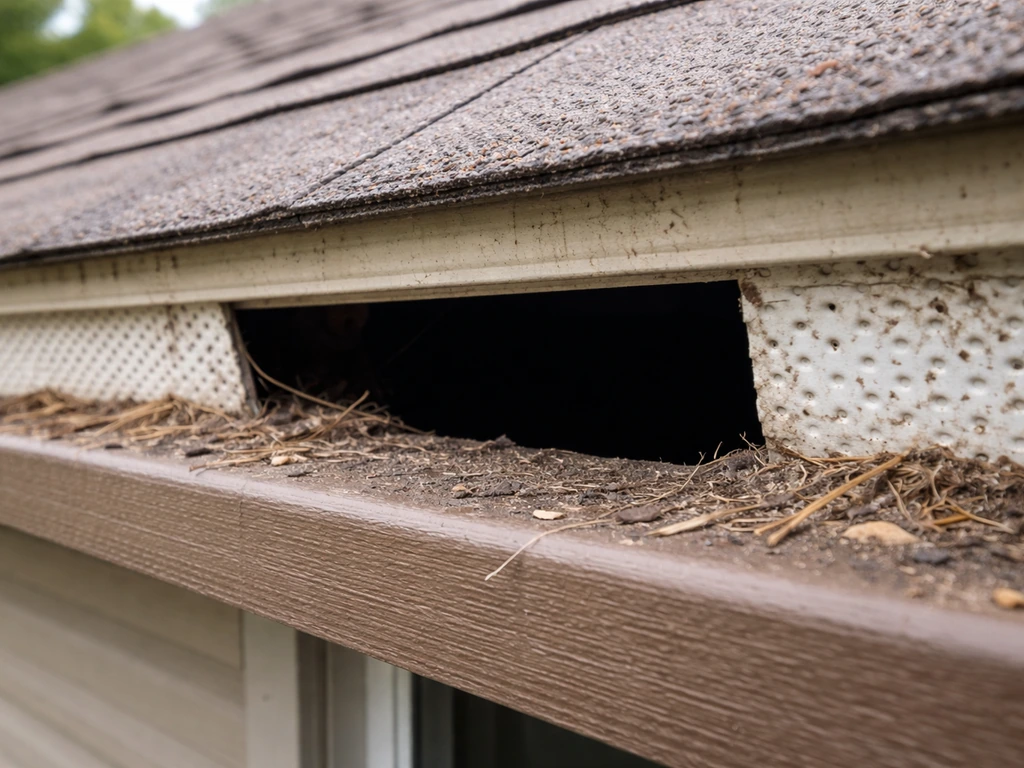
- Open vents and exhaust ports (dryer vents, bathroom fans, soffit vents) with no screening
- Gaps between roof tiles, fascia boards, and soffits
- Open eaves and rafters on patios, porches, or carports
- Downspout openings and gutters filled with leaf debris
- Ledges, window air conditioning units, and decorative molding
- Flat or slightly recessed surfaces under security cameras or light fixtures
- Pipes, conduit, and utility boxes mounted on exterior walls
Materials that attract birds to the yard
Birds are excellent at sourcing nest materials, and your property may be supplying them. Long grass, loose mulch, pet hair left outside, string or twine, shredded paper near recycling bins, and plant fibers from ornamental grasses are all prime nesting material. Cutting back overgrown vegetation close to the building, picking up loose debris, and keeping the yard tidy reduces the local supply and makes your site less appealing.
Food and water sources nearby
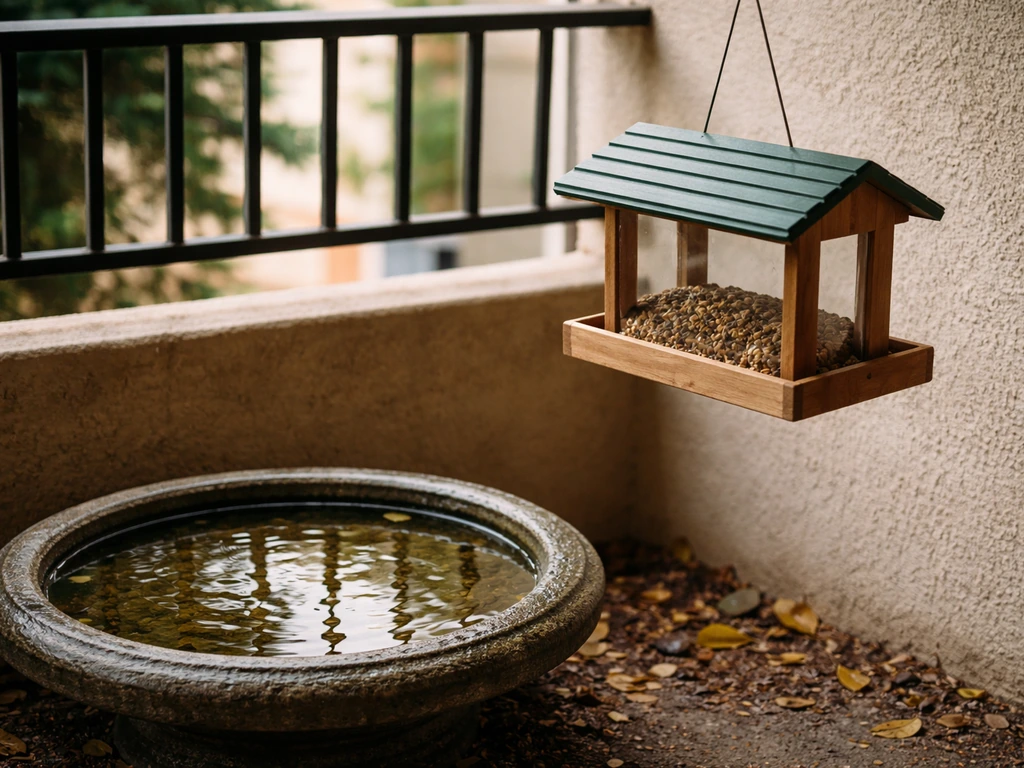
Bird feeders within 20 to 30 feet of the building are a major attractant. So are birdbaths, standing water in gutters, pet food left outside, and open compost bins. If you have a feeder or bath specifically placed for enjoyment, consider relocating it to the far end of your yard, away from the roofline, to redirect nesting interest. This is closely related to the broader challenge of keeping birds off porches and other outdoor structures. If you need a practical checklist for keeping birds from landing and nesting on your porch, use the deterrent and exclusion steps below keeping birds off porches.
Humane deterrents that work short-term (visual, sound, barriers)
No single deterrent works forever on every species, but the right combination buys you enough time to implement permanent exclusion. Here is how each type performs in practice.
| Deterrent type | Best for | Effectiveness | Key limitations |
|---|
| Reflective tape / Mylar strips | Open ledges, eaves, window sills | Good short-term (days to weeks) | Birds habituate; must be moved regularly |
| Predator decoys (owls, hawks) | Open areas, rooftops | Moderate short-term | Birds learn quickly if decoy never moves; rotate and reposition every 2-3 days |
| Bird spikes (stainless or polycarbonate) | Ledges, beams, parapet walls | Very good; long-lasting | Requires installation on every viable surface |
| Bird netting (heavy-duty UV-resistant) | Eaves, balconies, large open areas | Excellent; most reliable barrier | Installation requires care to seal all edges |
| Ultrasonic sound devices | Enclosed spaces (attics, garages) | Mixed; species-dependent | Limited range; less effective outdoors |
| Liquid repellent sprays (non-toxic gel or taste) | Flat surfaces, ledges | Moderate; needs reapplication | Washes off in rain; can trap small birds if over-applied |
| Wind chimes / noise makers | Small targeted areas | Low to moderate | Birds habituate quickly; best combined with other methods |
The most effective short-term strategy is layering: combine a physical barrier with a visual deterrent. For example, install spikes on a ledge and hang reflective tape nearby. Movement is key for visual deterrents. A static owl decoy will be ignored within a week by most urban birds. Tie a reflective object nearby or place the decoy on a wobble mount so it shifts with the breeze.
For vents and openings, a temporary solution is hardware cloth (half-inch galvanized wire mesh) cut to size and secured with staples or zip ties. It is not as clean as a permanent vent cover, but it works immediately while you source the right replacement.
Long-term prevention: seal, repair, and exclusion-proof the building
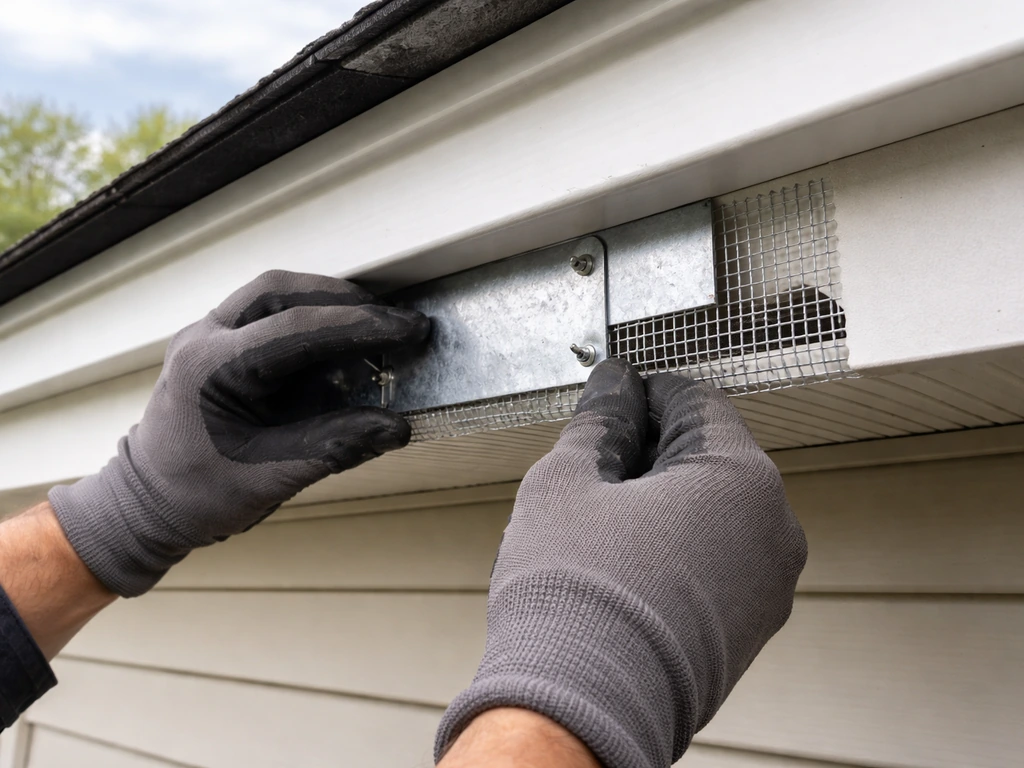
Deterrents buy time. Exclusion is what actually solves the problem. The goal here is to close every gap and ledge that a bird could use as a nesting platform or entry point, so the building is structurally unattractive no matter what species shows up next spring.
Sealing and structural repairs
- Inspect the roofline, soffits, fascia, and eaves every fall (October is ideal before spring nesting season) for gaps larger than half an inch.
- Seal small gaps with paintable exterior caulk or copper mesh stuffed in before caulking. Steel wool compresses and rusts; use copper mesh instead.
- Replace damaged or missing vent covers with purpose-built vent guards that include fine wire mesh screens. Make sure the mesh is at least half-inch gauge so it blocks small birds like sparrows and starlings.
- Repair loose or lifted roof tiles, missing fascia boards, and open ridge caps. These are prime starling and sparrow entry points.
- Install gutter guards to eliminate leaf debris buildup, which some species (robins, sparrows) will use as a ready-made nest base.
- Caulk around pipe penetrations, cable entry points, and utility boxes on exterior walls.
Physical exclusion products for ledges and open structures
- Stainless steel bird spikes on ledges, beams, and parapet edges (space according to manufacturer spec for the target bird size)
- Bird netting stretched tightly under eaves or across balcony ceilings and secured at all edges with no gaps (leave no gap larger than 1 inch for small birds)
- Electric track systems (low-voltage deterrent strips) for historic or ornamental ledges where spikes would cause damage
- Slope inserts (plastic or metal wedge strips) mounted on flat ledges at 45 degrees or steeper to eliminate resting platforms
- Wire tension systems strung 2 to 3 inches above a ledge to make landing uncomfortable without harming birds
Seasonal planning for facility managers
The best time to do exclusion work is late fall through early winter (November to February in most of the U.S.), after migratory and resident birds have finished nesting and before spring breeding season begins. All About Birds (Cornell Lab) notes that many migratory songbirds return to the same local area and often the same territory each spring, even after traveling thousands of miles migratory and resident birds have finished nesting. Schedule a building envelope inspection every October and a follow-up repair walk in February so any gaps found in fall are closed before the first scouts arrive. Document every repair with photos so you have a record for future reference and for any insurance or compliance purposes.
Troubleshooting when birds return
If you have already tried deterrents and the birds are back within days or weeks, something in your approach needs adjusting. These same prevention and exclusion principles in our guide on how to keep bird off car can also help stop repeat nesting near vehicle areas. Here are the most common failure points and what to change.
| Problem | Likely cause | What to change |
|---|
| Bird rebuilds in the exact same spot | Scent markers not removed after nest removal | Re-clean with diluted bleach; install a physical barrier before bird returns |
| Deterrent worked for a week, then stopped | Bird habituated to static visual or sound device | Rotate decoy position every 2-3 days; add a second deterrent type |
| New nest location appeared nearby | Excluded from one spot but adjacent gap is open | Conduct a full-perimeter inspection; close all gaps, not just the one you noticed |
| Starlings or sparrows enter through vents | Vent cover mesh too large (over 1 inch) or damaged | Replace with purpose-built vent guard with half-inch mesh |
| Birds return every spring despite previous removal | Seasonal site fidelity — birds return to the same breeding site year after year | Exclusion must be permanent; deterrents alone will not overcome strong site fidelity |
| Deterrent gel washed away or ineffective | Product applied too thin or rain removed it | Reapply after rain; combine with a physical deterrent for wet climates |
| Wrong species identification | Deterrent selected for a different species (e.g., spike spacing too wide for small sparrows) | Identify the species correctly; adjust product specs to match bird size and behavior |
Species identification is often the overlooked step. A spike system designed to deter pigeons (larger spacing) will not stop a house sparrow or a wren. Take a clear photo of the bird and compare it to a field guide or a wildlife ID app before buying hardware. Getting this right the first time saves you two or three failed deterrent attempts.
When to call a wildlife professional, and what the law actually says
The legal situation in plain language
Under the U.S. Migratory Bird Treaty Act (MBTA), most native songbirds and migratory birds, including their active nests and eggs, are federally protected. Disturbing, damaging, or destroying an active nest is a federal offense that can carry significant fines. The U.S. Fish and Wildlife Service defines a nest as active from the moment the first egg is laid until the fledged young are no longer dependent on the nest. That means 'the parents aren't around right now' does not make a nest inactive. If there are eggs or dependent chicks, that nest is protected. A permit is typically required to disturb an active nest of a protected species, and private homeowners almost never hold one.
Not all birds are covered equally. House sparrows (Passer domesticus), European starlings (Sturnus vulgaris), and feral rock pigeons (Columba livia) are non-native, invasive species not protected under the MBTA. Their nests and eggs can be legally removed at any stage. However, native songbirds such as robins, swallows, wrens, and finches are protected. If you are not 100 percent sure of the species, treat the nest as protected until you can confirm otherwise.
When to stop DIY and call a professional
- You have found an active nest (eggs or chicks present) of a protected species and cannot safely avoid the area
- The nesting site is inside a wall cavity, attic, or chimney and you cannot confirm the nest status without opening the structure
- The bird involved is a raptor (hawk, owl, falcon), waterfowl, or any species you cannot positively identify as non-native
- You are managing a commercial or multi-family property where liability for illegal nest removal is a serious concern
- DIY deterrents have failed repeatedly and the infestation involves large flocks (starlings, pigeons, or blackbirds in the hundreds)
When you call a nuisance wildlife control operator or a certified bird control specialist, give them the bird species (or your best description), the location on the building, whether eggs or chicks are present, and how long the nest has been there. That information lets them advise you quickly on legal options and realistic timelines. Your state wildlife agency can also point you to licensed operators and confirm local rules that may be stricter than the federal baseline. The U.S. Fish & Wildlife Service explains that the Migratory Bird Treaty Act protections for active nests can require coordination with appropriate authorities and permits Your state wildlife agency can also point you to licensed operators.
Seasonal timing at a glance
| Time of year | What birds are doing | What you can legally do (protected species) |
|---|
| November to February | Non-nesting; site scouting begins late Feb in warmer regions | Full exclusion and repair work; best window for permanent proofing |
| March to April | Early nesters (robins, doves) begin; most species scouting and starting nests | Remove nest material before eggs appear; install deterrents immediately |
| May to July | Peak nesting season for most U.S. species | Do not disturb active nests of protected species; monitor for fledging |
| August to October | Late nesters finishing up; most fledglings independent by September | Inspect and seal after fledglings leave; plan fall repair schedule |
The bottom line on timing: the earlier in the season you act, the more options you have. A few minutes spent checking eaves and vents in February or March, before a single twig is placed, is worth far more than months of waiting out a protected nesting cycle. If you’re dealing with droppings as much as nesting, the same deterrent and exclusion steps help you keep a pet bird from pooping everywhere. Build that early-spring walkthrough into your annual maintenance calendar and most of these problems simply never start.