Most bird problems around buildings fall into one of three categories: birds that got inside, birds roosting or nesting on the exterior, or birds that keep returning despite your attempts to deter them. In all three cases, the fix follows the same order: stop active harm first, remove the birds humanely, seal the entry or attraction point, then change whatever drew them there in the first place. Skip any of those steps and the problem comes back.
Bird Problem Solving Guide: Triage, Deterrence, Proofing
Maya Carver
15 May 2026
Fast triage: figure out exactly what you're dealing with

Before you do anything else, spend five minutes identifying the specific situation. The right fix for a starling stuck in a warehouse is completely different from the fix for pigeons roosting on a roof ledge or sparrows nesting in a soffit. If your issue is birds on or near your roof, follow a roof-specific bird-proofing process to stop them from returning roof ledge. Getting this wrong wastes time and can create legal problems.
Walk the building perimeter and interior and ask yourself these questions: Is the bird inside the building or outside? Is there an active nest with eggs or chicks? Is the bird visibly injured or distressed? Are there droppings accumulating (health risk)? Are there entry points that could allow more birds in? Is there any sign of damage to wiring, insulation, vents, or roofing?
Droppings are the most immediate health hazard to flag. Bird and bat droppings in soil or on building surfaces can harbor Histoplasma, the fungus that causes histoplasmosis, a serious lung infection you get by breathing in spores. Pigeon droppings can also carry Cryptococcus. If you see a heavy accumulation, do not sweep or dry-vacuum it. That kicks spores into the air. Flag that area, keep people away, and read the cleanup guidance further down before anyone touches it.
Other hazards to document during triage: droppings or nesting material blocking HVAC vents or air intakes (fire and airflow risk), birds near electrical equipment, guano buildup on walkways creating slip hazards, and any indication that birds have been roosting for a long time (which usually means heavier contamination).
| Situation | Immediate Risk Level | First Action |
|---|---|---|
| Bird trapped inside building | Moderate (stress injury, droppings) | Open exits, dim interior lights, guide out |
| Active nest with chicks in vent/soffit | Low-moderate (do not disturb) | Document, wait for fledging if safe to do so |
| Heavy droppings accumulation | High (histoplasmosis, slip hazard) | Restrict access, PPE before any cleaning |
| Bird entering through open gap repeatedly | Moderate (ongoing entry) | Temporary block, then permanent seal |
| Roosting flock on roof or ledge | Moderate (noise, droppings, damage) | Assess deterrent options, no active season nesting |
Quick emergency actions to stop entry and reduce risk right now
If a bird is inside, your first goal is to give it a clear, unobstructed way out. Open the largest exit available, like a loading bay door, large window, or exterior door. Then close off interior doors to keep the bird in one zone. Dim the interior lights and, if possible, make the outside brighter by opening blinds or doors opposite the bird. Birds instinctively move toward light. Don't chase the bird, it will panic and injure itself. Give it 20 to 30 minutes in a calm, guided environment before trying anything more hands-on.
If the bird isn't finding the exit on its own, you can gently herd it using a large piece of cardboard held at arm's length to guide it toward the opening. Avoid grabbing a wild bird with bare hands unless it is clearly injured and you have no other option. If you do need to handle it, wear gloves and use a light cloth or towel. Wash your hands thoroughly afterward.
Once the bird is out, immediately block the entry point with a temporary fix: stuff a gap with hardware cloth, staple a piece of screen over a broken vent, or close and latch a damaged access panel. NWCO’s exclusion training emphasizes that when sealing roof vents or screens, you must secure components tightly (such as sealing screws) so wildlife cannot enter through gaps seal the gap immediately after. This is a placeholder, not a permanent repair, but it stops more birds from coming in while you plan the proper fix.
For droppings cleanup in an emergency, wet the surface first with water or a dilute disinfectant spray before touching anything. The CDC advises against dry sweeping or vacuuming bird droppings because it aerosolizes contaminated dust. Use an industrial vacuum with a high-efficiency (HEPA) filter if one is available, or use damp paper towels and bag them immediately. Wear an N95 respirator or better, disposable gloves, and eye protection any time you are disturbing old droppings.
DIY humane deterrents for common scenarios
Birds roosting on ledges, window sills, and roof edges
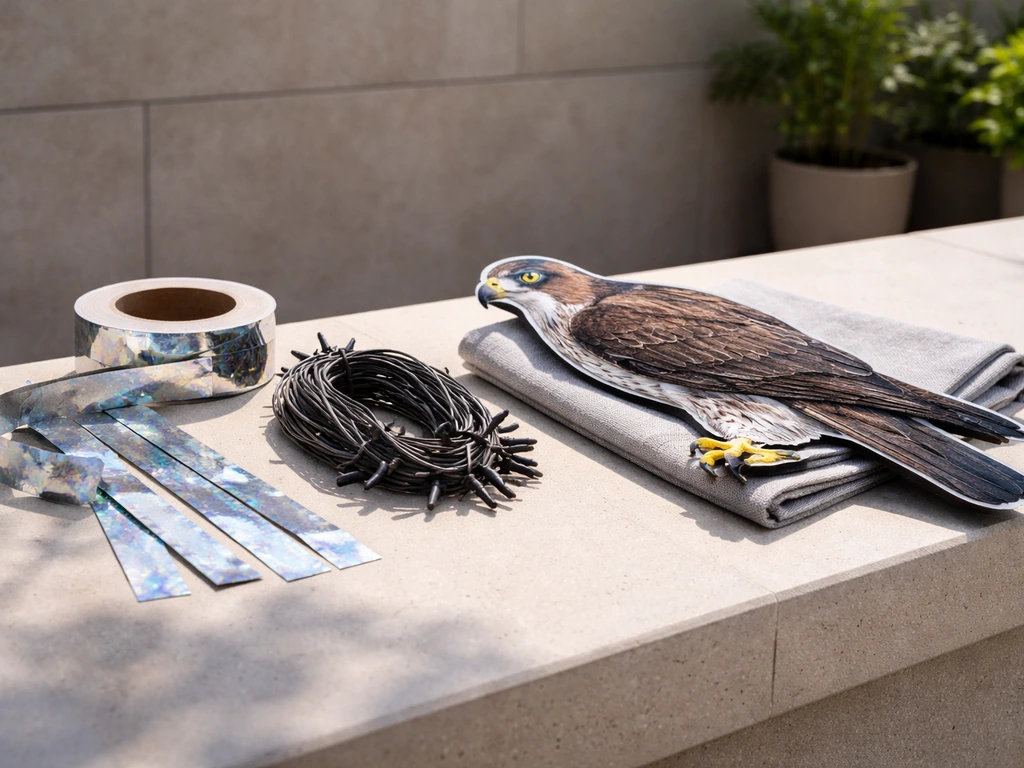
Physical deterrents work far better than visual scare tactics. Plastic owls, hawk silhouettes, and reflective tape have their limits because birds habituate quickly, often within a few days. If you use them at all, move them regularly. What actually works long-term on ledges is physical exclusion: bird spikes (stainless steel or UV-resistant plastic), slope/angle systems that prevent landing, or tension wire systems that make landing unstable. Install spikes flush to the surface with no gaps a bird can squeeze through on either side. If birds are repeatedly landing on roof edges, bird spikes are usually the long-term solution for preventing that stop bird spikes on roof edges.
For window collisions, which are a separate but related problem, place deterrent markings on the exterior surface of glass. If you are specifically trying to bird proof windows, focus on exterior, glass-safe markings rather than relying on visual scares place deterrent markings. Patterns with roughly 2-inch spacing across the whole pane are far more effective than a single decal in the center. Hawk silhouettes alone placed on otherwise clear glass do not work well because birds do not read them as a solid barrier.
Birds nesting in vents, soffits, and roof gaps
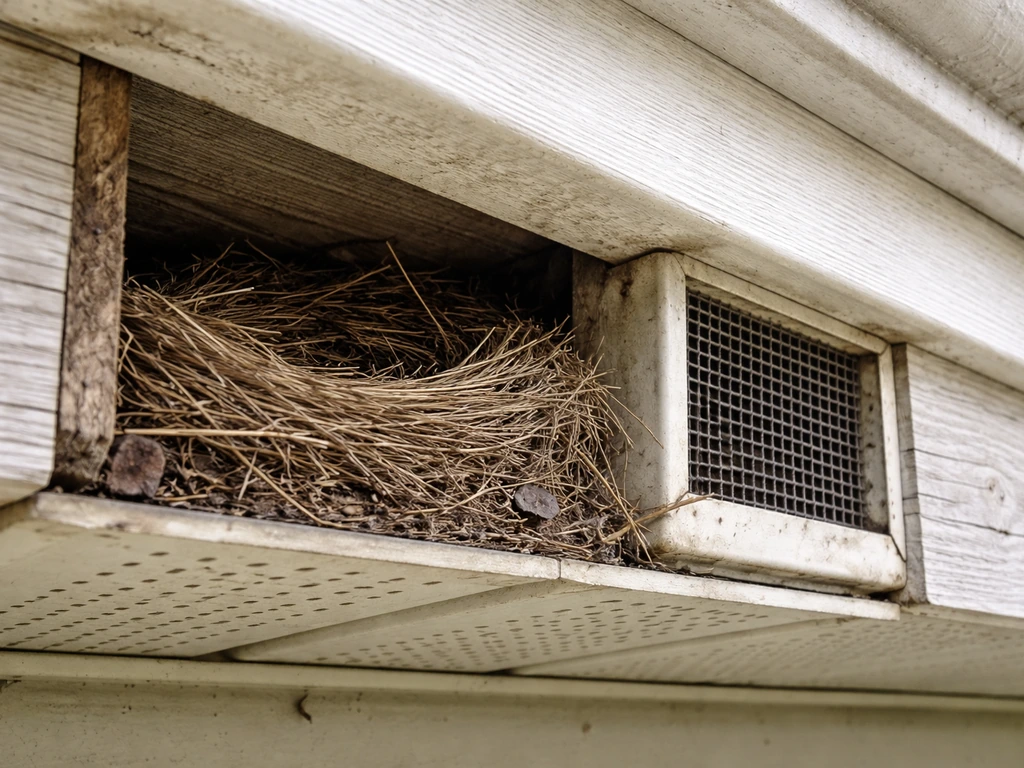
This is the most legally sensitive situation. Many common species, including house sparrows and European starlings, are not protected under the Migratory Bird Treaty Act and can be removed. But many others are protected, and removing or disturbing an active nest with eggs or chicks without a permit can result in federal violations. If you are not certain of the species, photograph it and look it up before doing anything.
If the nest is inactive (no eggs, no chicks, no adult returning repeatedly), you can remove nesting material and seal the entry point. If there is an active nest, the most humane and often the legally safest approach is to wait until the young have fledged, then seal the gap immediately after. The U.S. Fish and Wildlife Service notes permits for nest removal are typically issued only when there is an immediate human health or safety concern.
Birds repeatedly entering a specific gap or vent
A one-way exclusion door is one of the most effective and humane tools for this situation. You attach it over the entry point so the bird can exit normally but cannot re-enter. Leave it in place for at least seven days after you confirm the last bird has left, and extend that to 10 or more days during cold or rainy stretches when birds may shelter longer. Once you are confident the space is empty, remove the one-way door and permanently seal the gap. Do not seal it while birds may still be inside.
One practical verification method: lightly stuff the entry with a loose wad of newspaper or sprinkle talcum powder near the opening. If it stays undisturbed for several days, the space is likely empty and safe to seal permanently.
One important note on netting: bird netting can be highly effective for large open areas like barns or roof spaces, but it must be installed correctly and inspected regularly. If you are considering netting for a large area, read the guidance on bird-proofing barns and roofs separately, as those situations have their own considerations. Improperly installed or sagging netting can trap birds inside, which is both inhumane and potentially illegal for protected species. If you are considering netting for a large area, read the guidance on bird-proofing barns and roofs separately, as those situations have their own considerations. If you have a Bird Buddy solar roof and need it removed, the safest approach is to handle it as a roof-proofing and exclusion task so you do not trap or disturb birds nesting nearby bird-proofing barns and roofs.
Step-by-step exclusion and proofing: sealing the building properly
Exclusion is the most permanent solution to any bird problem. Done right, it removes the option of entry entirely rather than just discouraging it. Here is how to approach it systematically. If you want step-by-step guidance, see our full walkthrough on how to bird proof a room.
- Do a full building inspection from ground level and, if safe, from a ladder or roof. Look for gaps at soffits, fascia boards, ridge caps, around vents and pipes, open eaves, damaged or missing mortar, and any space larger than half an inch.
- Photograph every gap, damaged vent cover, and open penetration. This gives you a repair list and documentation if the problem returns.
- Prioritize active entry points first. Any gap with fresh droppings, feathers, or noise behind it is being used right now.
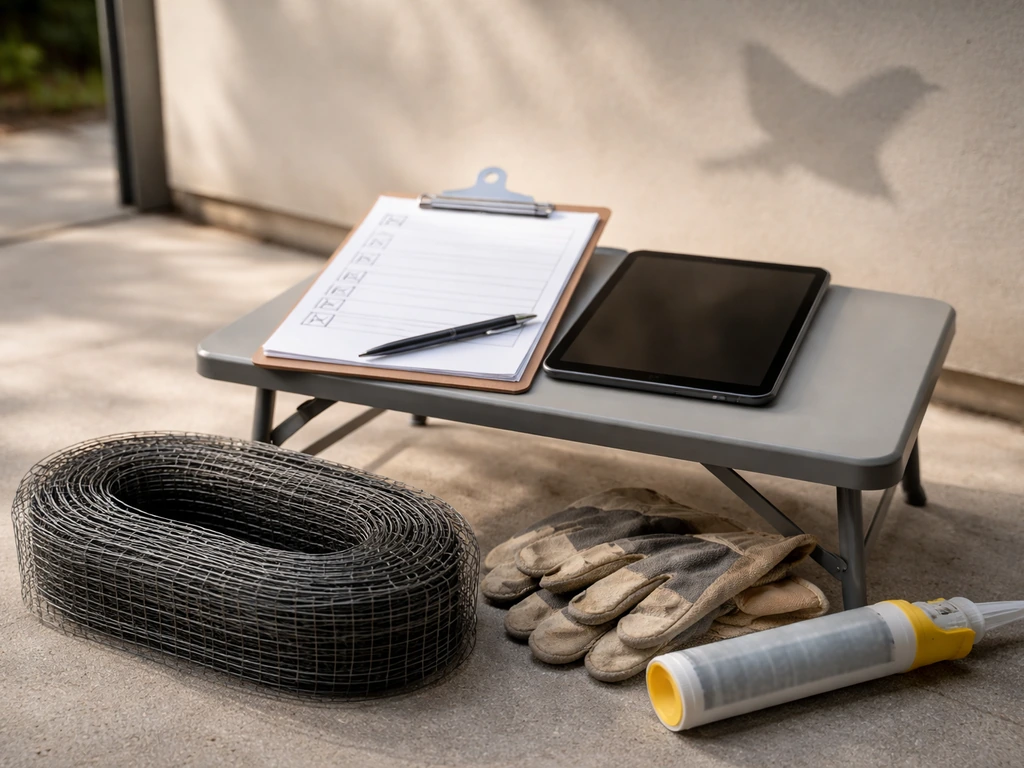
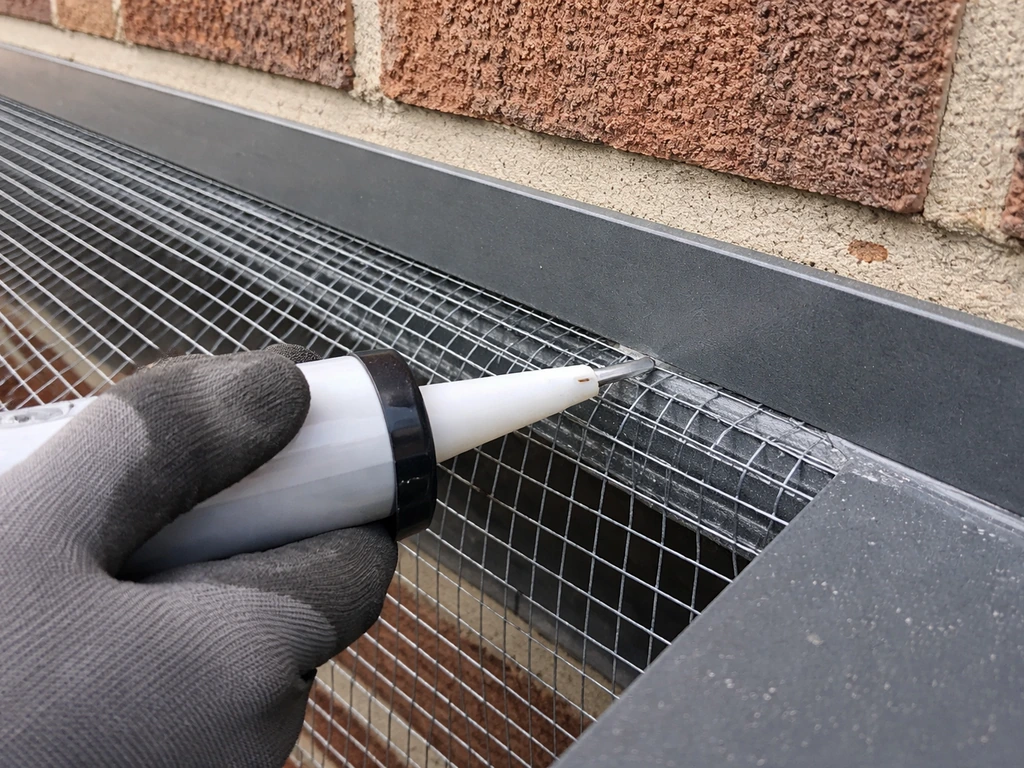
- For small gaps (up to 1 inch), use hardware cloth (1/4-inch galvanized mesh) or expanding foam rated for exterior use. For vents, replace damaged covers with heavy-gauge metal vent covers with integrated screens.
- When installing vent screens or covers on roofs, make sure fasteners are sealed with exterior caulk or roofing sealant. An unsealed screw hole is another entry point for both birds and water.
- For soffits and eaves, check that soffit panels are fully seated and that there are no gaps at the corners. Damaged or warped panels should be replaced, not patched with tape.
- After sealing, attach the one-way door concept in reverse: confirm no new activity for 10 to 14 days before calling the job done.
- Reinspect after the first heavy rain or wind event. Water and weather can open gaps you thought were sealed.
Fall hazard note: any work above single-story height should use proper fall protection. Roof and ladder work causes serious injuries every year. If you are not comfortable working at height, this is a task to outsource to a professional pest control or wildlife proofing company.
Habitat fixes: take away what's attracting them
Deterrents and exclusion work much better when you also eliminate the reasons birds want to be there in the first place. Birds are attracted to three things: food, water, and shelter. Remove access to all three and the location becomes far less appealing.
- Food sources: secure dumpster lids, use bins with weighted or locking covers, eliminate exposed grain or pet food near building entries, and clean up spilled seed around bird feeders or relocate feeders well away from the building.
- Water sources: fix dripping pipes and leaky gutters, address standing water on flat roofs and in low spots, empty and clean birdbaths near the building if you want to reduce bird activity in that zone.
- Nesting shelter: trim back overhanging tree branches within 10 feet of the roofline, remove unused equipment or pallets stored against the building where birds can nest underneath, and clear out leaf litter and debris piles from corners and recesses.
- Ledge appeal: slope or cover flat ledges with angled boards or commercially available slope systems to prevent comfortable perching.
- Accumulated droppings (which attract more birds): once safely cleaned and the area is decontaminated, there is less scent and marking to draw other birds to the same site.
One thing worth mentioning about bird feeders specifically: if you enjoy feeding birds in your yard but have a bird problem at the building, consider moving the feeder at least 30 feet from any structure. That keeps the activity away from vulnerable entry points while still supporting the birds you want to watch.
Seasonal prevention plan and long-term monitoring
Bird problems are not random. They follow predictable seasonal patterns, and if you build your maintenance schedule around those patterns, you can catch vulnerabilities before birds exploit them.
| Season | What Birds Are Doing | What You Should Check and Do |
|---|---|---|
| Late winter (Feb-Mar) | Scouting nesting sites, early arrivals | Full building inspection before nesting begins; seal any gaps found over winter |
| Spring (Apr-Jun) | Active nesting, eggs, chicks | Do not disturb active nests of protected species; monitor sealed entry points for new attempts; install deterrents on unoccupied ledges |
| Summer (Jul-Aug) | Fledging, juveniles dispersing | Once nests empty, remove nesting material and seal those entry points immediately |
| Fall (Sep-Oct) | Flocking, roosting in larger groups | Best time for proofing; birds are mobile, not nesting; install spikes, netting, and screens before winter |
| Winter (Nov-Jan) | Seeking warmth and shelter | Check HVAC vents and attic access points; inspect after storms for new gaps; monitor for any sign of entry |
Set a calendar reminder for a quick 15-minute perimeter walk-around in late February and again in late September every year. Those two check-ins catch the vast majority of problems before they become expensive. After any significant storm, add a quick roof and soffit check to your list. For a bird problem on roof ledges or soffits, include this roof check after storms to spot new droppings or entry points early.
For facility managers overseeing larger buildings, consider keeping a simple log: date of inspection, any gaps or damage found, repairs made, and any bird activity noted. This makes it much easier to spot patterns (the same vent getting damaged every spring, for example) and to document due diligence if there are ever health or liability questions related to bird droppings.
When to call wildlife professionals (and what the law requires)
There are situations where DIY is not the right call, either because the job requires professional equipment, because the species involved is legally protected, or because the health risk is beyond what a homeowner should handle without training.
Escalate to a professional when:
- You cannot identify the species and the nest appears active (protected species rules apply by default until you know otherwise)
- There is a large accumulation of droppings (more than a shoebox volume) in a confined or enclosed space, which presents a real histoplasmosis risk requiring proper industrial cleanup procedures
- Birds are inside an occupied living space and you cannot safely guide them out or locate the entry point
- The entry point is on a steep roof or requires access to height beyond what you can safely manage
- The same problem has returned two or more times after your attempts to fix it (there is a gap you are missing)
- You suspect an injured raptor, owl, heron, or any obviously wild bird that is a protected migratory species
- A large flock is roosting and the volume of droppings is accumulating faster than it can be safely managed
The legal picture, simplified
Under federal regulation (50 CFR 21.14), you are permitted to remove a migratory bird from inside a residence or business without a permit only under specific humane conditions: the bird's presence is preventing normal use of the space, or the bird risks injury if left trapped. You cannot simply trap and relocate protected birds at will. Any exclusion device you install must be monitored regularly and maintained so birds cannot become trapped inside. Leaving a bird sealed into a space is a violation, not just an ethical problem.
Glue traps are not a legal or humane option for birds. Federal law, multiple state regulations, and basic animal welfare guidance all treat glue traps as unacceptably harmful for wild birds. Do not use them.
When you call a wildlife control professional, give them: the species if you know it, the location of the problem (inside vs. outside, which part of the building), whether there is an active nest, how long the problem has been going on, and what you have already tried. That information lets them come prepared and saves time on the first visit.
Look for professionals who are licensed wildlife control operators in your state, are familiar with migratory bird regulations, and who explicitly describe their methods as humane. Ask specifically whether they use one-way exclusion devices, whether they check for young before sealing, and how they handle droppings cleanup. Those questions will tell you quickly whether they know what they are doing.
Your next steps at a glance
- Identify the specific problem: species (if possible), location, active nesting yes/no, droppings volume, and entry points.
- Handle any immediate hazards: restrict access to heavy droppings areas, use PPE before cleanup, guide trapped birds out safely.
- Block active entry points with a temporary fix today, then plan the permanent seal.
- Check for active nests before sealing anything permanently. If a nest is active and the species is protected, wait for fledging.
- Install physical deterrents (spikes, slope covers, wire systems) on ledges and surfaces where birds are roosting but not nesting.
- Remove food, water, and shelter attractants from the building perimeter.
- Schedule your full permanent exclusion work for fall if spring nesting has started and you need to wait.
- Set two annual inspection reminders: late February and late September.
- If in doubt about the species, the legality, or the health risk, call a licensed wildlife control professional before proceeding.
FAQ
What should I do if I find a dead bird inside or near an HVAC intake?
If you find a bird dead on-site, do not treat it like regular debris. Wear eye protection and gloves, avoid breaking up feathers or drying material, and dampen the area before pickup. If it is in a high-traffic interior area or you suspect widespread contamination, use trained help because handling dense contamination increases exposure risk.
The birds stopped for a day, then came back, does that mean my deterrents worked and the job is done?
Not necessarily. Birds often return because the original attractant remains (food, water, shelter) or because a tiny gap still lets one bird in. The fastest way to tell is to re-check for the exact entry point and compare activity timing with your recent changes, then prioritize sealing any new damage found after storms.
What if I dim lights and open a door but I still cannot get the bird out?
No. Lightening the interior and opening an exit helps most for a bird that is already loose inside, but it can fail if the bird is trapped behind a wall, in a duct, or in a small inaccessible cavity. If you hear repeated scratching or see droppings near a vent but cannot locate the bird, switch to locating the likely cavity and use an exclusion or professional inspection instead of repeated herding.
When is droppings cleanup a DIY job versus something I should outsource?
If droppings are only fresh and light, damp cleanup may be manageable, but if there is heavy buildup, unknown age, or droppings on porous materials (ceiling tiles, insulation, soil), treat it as a higher-risk cleanup. The key decision aid is whether you can stop aerosolization, contain waste, and fully remove contaminated material without disturbing old layers.
How can I reliably confirm the birds are gone before permanently sealing a gap?
Use a verification approach that matches how confident you are that birds are out. Lightly stuffing the entry with newspaper or talcum powder helps, but if you cannot observe the area reliably, you may need a professional to set and monitor a one-way exclusion while confirming no ongoing nest activity.
Should I put deterrents on the inside of the window to stop birds from hitting it?
Covering windows from the inside is usually not enough for collisions because the bird is approaching from outside and still sees an inviting reflection or clear view. For collisions, prioritize exterior, glass-safe markings and spacing across the full pane, and address nearby attractants like feeding, bright landscaping lights, or reflective surfaces.
Can I install a one-way exclusion door while I suspect there is an active nest nearby?
One-way exclusion requires a bird-free exit path and no access to the bird inside. Do not install it until you have removed the risk that a bird is still inside and will be trapped, for example after active nesting ends. If there is any chance of active eggs or chicks, wait for fledging and use the right exclusion approach rather than sealing immediately.
If I keep a bird feeder, how do I prevent it from causing building entry problems?
Yes, feed timing and placement matter. If you keep a feeder, moving it at least 30 feet from the building helps, but you also want to prevent water accumulation (bird baths, puddles) near entry points and reduce sheltered roosting spots close to doors and ledges.
Why do plastic decoys and reflective tape stop working within days, and what should I do instead?
Change management is the real solution. Visual scare tactics can habituate quickly, so schedule a shift: move deterrents frequently in the short term, then implement physical exclusion like spikes, slope systems, or tension wire where landing occurs. Also document what you changed and when to see which measure actually reduces landings.
I keep seeing new droppings, but I never see the bird, what does that usually indicate?
It is a bad sign, but not always a current “inside” situation. Repeated fresh droppings near a vent or wall joint can mean repeated entry, nesting activity, or both. Re-triage by checking entry points and looking for nesting material in cavities, then escalate to exclusion only after you confirm what is actually happening.
What are the main reasons to call a wildlife control professional instead of handling it myself?
Yes, certain situations should trigger professional help even if you are comfortable with basic exterior work. If birds are in a high, confined space, there is heavy contamination on HVAC-related surfaces, or you need roof work above single-story height, the fall risk and cleanup complexity can outweigh DIY benefits.
Are there common installation mistakes that make exclusion or netting harmful or ineffective?
Yes. If you use barriers near windows, vents, or soffits, ensure there are no seams a bird can squeeze through and avoid blocking airflow unintentionally. For netting, the critical decision is correct installation and regular inspection, sagging areas can trap birds and create legal and welfare problems.