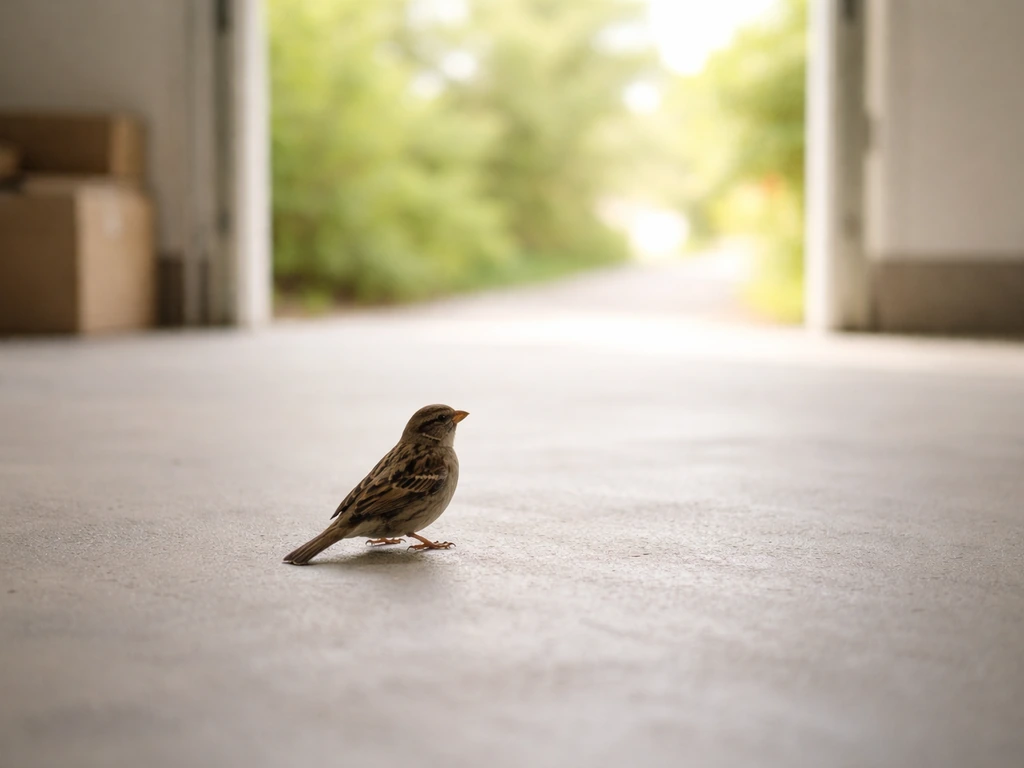
Turn off your garage lights, block any windows that don't open, and open the main garage door fully. That single change makes the open door the brightest spot in the space, and most birds will fly straight toward it within a few minutes. If that doesn't work on its own, the steps below will walk you through everything from setting up the ideal escape route to using sound and visual cues to nudge a stubborn bird out safely.
How to Lure a Bird Out of Your Garage Safely and Humanely
Maya Carver
6 May 2026
First things first: what to do right now
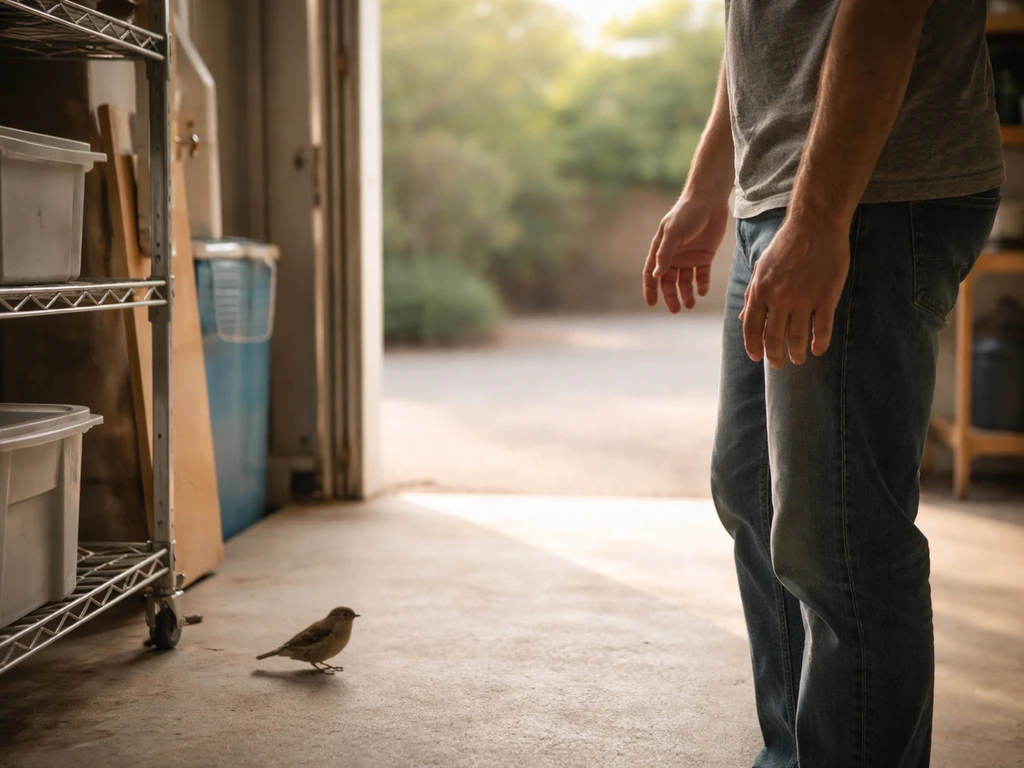
Before you try anything else, take a breath and slow down. A panicked person makes a panicked bird, and a panicked bird crashes into walls, fans, and shelving. Here's your immediate checklist the moment you find a bird in your garage.
- Stay calm and move slowly. Sudden movements chase the bird deeper into the garage rather than toward the exit.
- Clear the path. Move any bikes, boxes, or tools that block a straight line from where the bird is to the open garage door.
- Turn off all interior lights, including overhead fluorescents and any work lights.
- If you have a ceiling fan running, turn it off immediately before the bird flies into the blades.
- Close any door connecting the garage to the house so the bird can't get further inside your home.
- Cover any fixed windows (ones that don't open) with a tarp, cardboard, or a thick cloth so the bird doesn't mistake them for an exit and fly into the glass.
- Open the main garage door fully, all the way up, to create the largest and brightest exit point possible.
- Step back and give it 10 to 15 minutes. Many birds find their own way out once this setup is in place.
The legal side matters here too. Under U.S. federal law (50 CFR § 21.14), blank" rel="noopener noreferrer">you're allowed to humanely remove a migratory bird from a building without a permit when the bird is trapped and may become injured or when its presence is preventing normal use of the building. The U.S. Fish & Wildlife Service explains that this authorization covers situations where birds in buildings prevent normal use of the building, create health or safety risks, damage property, or become trapped and risk injury blank" rel="noopener noreferrer">50 CFR § 21.14 (authorization—birds in buildings). That covers the vast majority of garage situations. However, bald eagles, golden eagles, and any species listed as federally endangered or threatened require additional authorization, so if you're looking at an unusual bird you don't recognize, hold off on physical intervention and call a wildlife professional first.
Setting up the perfect escape route
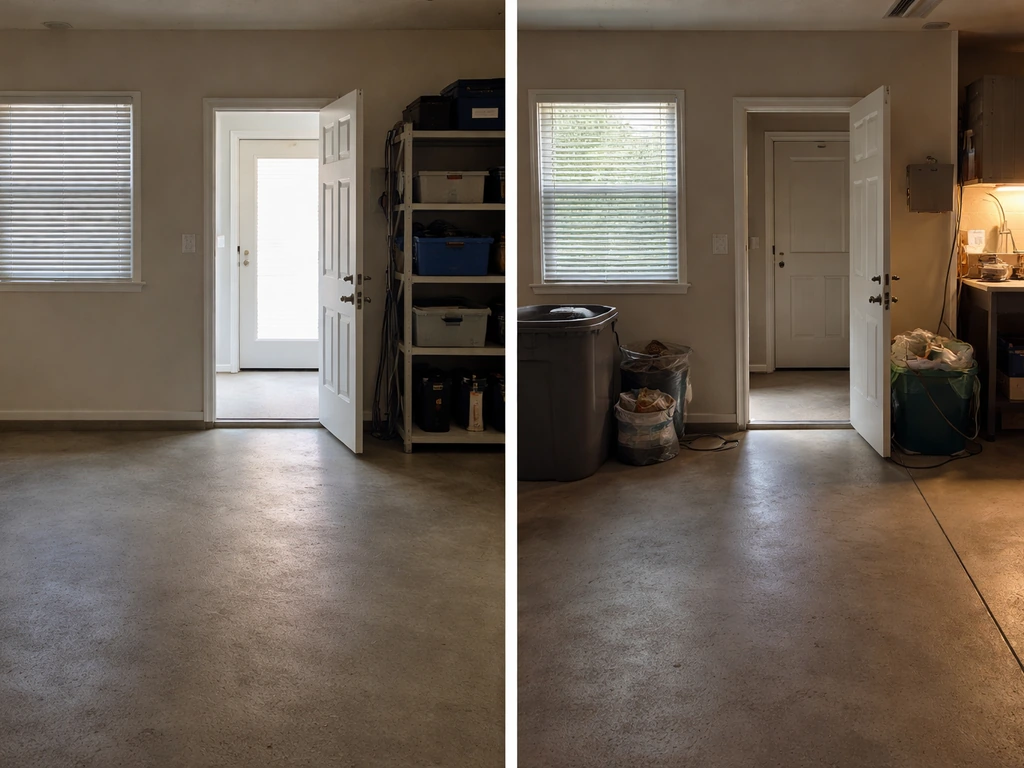
Birds navigate by light. They move toward the brightest spot they can see, which is almost always the sky. Your job is to make the open garage door that brightest spot and eliminate every other competing light source that might confuse the bird or pull it in the wrong direction.
- One exit only: open just the main garage door or one exterior window. Multiple openings create confusion and the bird may circle endlessly between them.
- Darken everything else: cover skylights, block fixed windows with cardboard or thick fabric, and turn off all artificial lights inside the garage.
- Remove screens from any window you want the bird to use as an exit. A screen looks solid enough to stop a bird in flight.
- If your garage is attached to the house, keep the interior door closed and sealed the entire time.
Timing also matters. Daytime, especially morning, is the best window because natural daylight flooding through the open door is far more compelling than artificial light at night. That said, some birds (owls and other nocturnal species) won't leave until after dark, so if you've confirmed it's a night bird, you may need to leave the door cracked open after sunset and check again in the morning.
How to lure the bird out with light, sound, and positioning
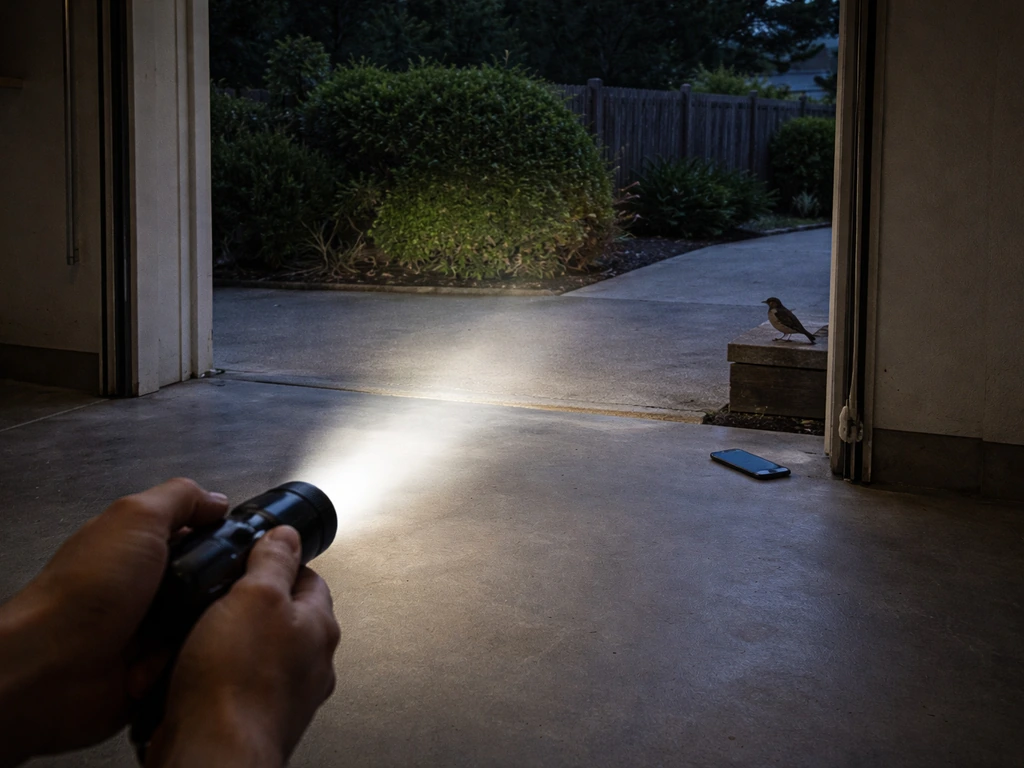
If the bird hasn't left on its own after 15 or 20 minutes with the escape route set up, you can add some gentle encouragement. The goal is always to guide, not chase.
The flag technique for birds stuck high up
If the bird has landed in the rafters and isn't coming down, tie or tape a bright white or brightly colored cloth to the end of a long stick or broom handle. Wave it slowly and gently from the far end of the garage toward the open door. Don't jab at the bird. The motion of the flag at a distance encourages the bird to fly lower and outward. Keep your movements fluid and in the direction you want the bird to travel.
Using your arms or a soft barrier to guide
For birds that have landed on a lower shelf or the floor, you can slowly extend your arms wide (like wings) and walk toward the bird from behind to guide it toward the exit. Never make contact with the bird unless it's visibly injured. Wildlife Illinois advises using arms or a broom to move a bird downward from a curtain rod or high fixture without touching it, which is exactly the right approach here too.
Sound cues
Soft, calm sounds from outside the garage door can help orient a bird toward the exit. A bird call or recording of the same species played quietly from just outside the opening can trigger a natural response to fly toward its own kind. Keep the volume low. Loud noises stress the bird and push it toward erratic flight, which increases the risk of injury.
Placement: where to stand and where not to stand
Position yourself between the bird and the back wall of the garage, never between the bird and the open door. You want to be the gentle pressure that moves the bird forward, not the obstacle that traps it. Keep at least 6 to 10 feet between you and the bird whenever possible, and move only when it's perched and calm, not when it's actively flying.
When things aren't working: troubleshooting common problems
| Problem | Most Likely Cause | What to Do |
|---|---|---|
| Bird won't leave after 30+ minutes | Competing light sources or the escape route isn't clear enough | Recheck all windows are covered, all interior lights are off, and the door is fully open. Remove any screens. Wait another 15 minutes. |
| Bird keeps flying back in after exiting | An attractant (food, nesting material, or light) is drawing it back | Remove food, open containers, or trash inside the garage. Check for an existing nest above the door or in rafters. |
| Bird is stuck behind shelving or in a corner | Clutter blocking its flight path | Slowly move items away from the corner to open a flight path. Use the flag technique from a distance. |
| Bird is flying in circles and hitting walls | Panicked state; too many light sources confusing it | Stop all movement. Stand still. Let it settle, then re-darken the space and re-establish the single exit. |
| Bird is sitting still and not moving at all | Exhaustion or injury | Do not approach. Give it 30 minutes of undisturbed rest. If it still hasn't moved, treat it as an injured bird and contact a wildlife rehabilitator. |
| Bird re-enters garage repeatedly over days | A gap or opening is being used as a regular entry point, possibly near a nest | Inspect the roofline, eave vents, gaps around the door frame, and any utility penetrations. See the prevention section below. |
One thing that trips people up: opening multiple doors or windows to 'give the bird more options.' It sounds logical but it doesn't work. Multiple openings create competing light sources and the bird ends up cycling between them. One exit, one light source. Keep it simple.
Safety hazards to watch out for while you work
Most garage bird incidents are low risk, but there are a handful of genuinely dangerous situations worth knowing about before you start.
- Ceiling fans: turn them off the moment you know a bird is inside. A bird flying into a spinning fan blade is a serious injury risk for both you and the bird.
- Open flames and pilot lights: if you have a gas water heater or furnace with an open pilot light in your garage, the bird can fly into it. Turn off any appliances with exposed flames if it's safe to do so.
- Chemicals and open containers: birds can land in open paint cans, solvent containers, or pesticide buckets. Cover or seal any open containers before the bird gets near them.
- Glass hazards: if the bird hits a window or glass door hard and you need to pick it up, wear gloves. A disoriented bird can scratch and bite reflexively. Beyond that, glass shards from a broken pane are a cut risk.
- Ladder safety: don't climb a ladder to reach a bird in the rafters. You can't control where a startled bird flies, and a bird suddenly launching at your face is not the moment you want to be standing on a step ladder.
- Disease exposure: most healthy birds pose minimal disease risk, but birds that appear sick or have been in the garage for days may carry pathogens. Wash your hands after any interaction and avoid touching your face.
- Droppings: fresh bird droppings can carry Histoplasma (a fungal pathogen). If you're cleaning up after a bird has been in your garage for an extended time, wear a mask and gloves.
After it's out: how to bird-proof your garage
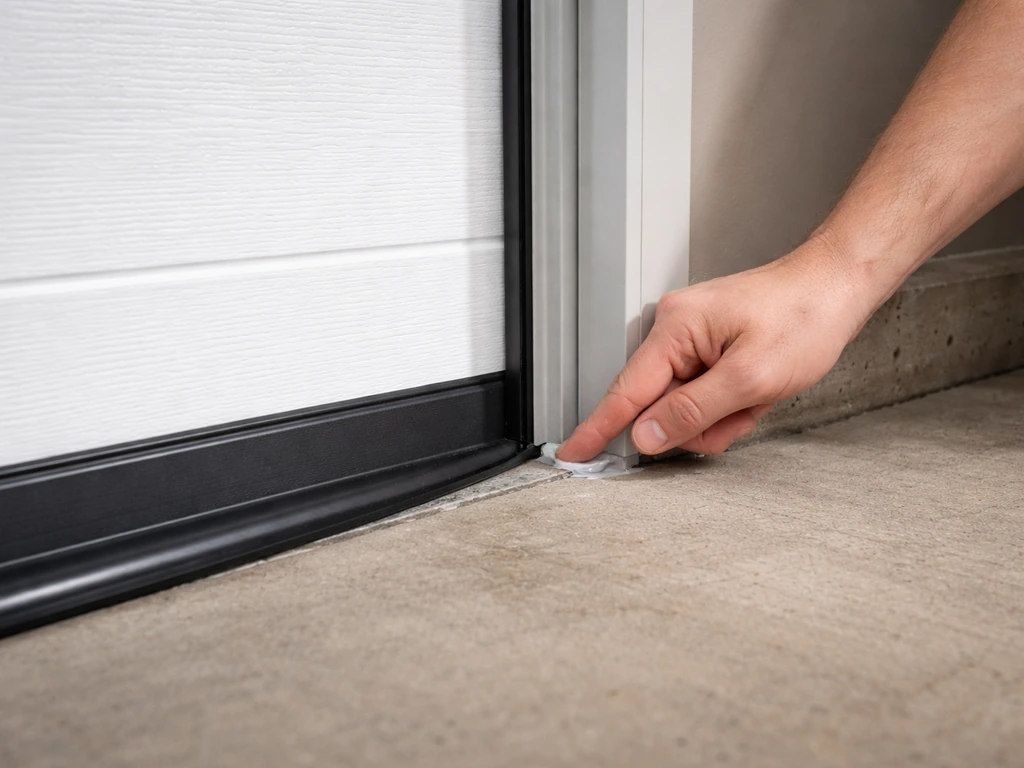
Getting the bird out is the easy part. Once the bird is out, keep it from getting back in by sealing entry points and using bird-proofing steps in your garage bird-proof your garage. Making sure it (and others like it) don't come back is where most homeowners drop the ball. After you get the bird out, focus on bird-proofing and long-term prevention so you can keep bird(s) out of your garage for good keep bird out of your garage. Here's a practical proofing plan you can work through in an afternoon.
Find and seal all entry points
Birds can squeeze through surprisingly small gaps. A house sparrow, for example, can fit through a gap as small as 1.5 inches. Walk the perimeter of your garage, inside and out, and look for the following:
- Gaps between the garage door and the door frame, especially at the top corners
- Deteriorated or missing weatherstripping along the bottom and sides of the garage door
- Unscreened eave vents, soffit vents, or ridge vents
- Gaps around utility penetrations (electrical conduit, water pipes, cable entry points)
- Damaged fascia boards or rotted wood near the roofline
- Open gaps where the roof meets the wall (common in older detached garages)
Seal small gaps with hardware cloth (1/4-inch mesh is ideal for bird exclusion), caulk, or expanding foam for non-entry-point gaps. For vents, install vent covers with built-in mesh screens rated for bird exclusion. Replace any weatherstripping that has gaps, tears, or compression failure.
Use a one-way door for active entry points
If a bird has been using the same gap repeatedly and may already have a nest nearby, seal the gap with a one-way door device rather than blocking it completely. A one-way door lets the bird exit but prevents reentry. Once you've confirmed the bird is out (watch for 24 to 48 hours and look for no further activity), remove the one-way door and permanently seal the opening. This approach is also used for bats and other wildlife and is one of the more reliable exclusion methods available.
Remove attractants
- Store all pet food, birdseed, and grain in sealed hard-sided containers (not bags).
- Remove or relocate birdbaths and feeders away from the garage entirely.
- Clean up any spilled seed or food debris from garage floors and shelving.
- Reduce insect populations near the garage (insects attract insect-eating birds, which then wander inside).
Nest timing and the law
If a bird has been entering your garage regularly, check carefully for a nest before sealing anything. Under federal law, active nests with eggs or young birds cannot be disturbed for most native species. If you find a nest with eggs or chicks, you must wait until the young have fledged before sealing the entry. If the bird is just beginning to carry nesting material and hasn't yet laid eggs, you can block the entry and redirect it. When in doubt, call a wildlife professional before acting.
A simple seasonal maintenance schedule
| Season | Task |
|---|---|
| Early spring (March-April) | Inspect all eave vents, soffit vents, and roofline gaps before nesting season begins. Replace weatherstripping on garage doors. |
| Late spring (May-June) | Check for new nests forming above or near the garage door. Monitor one-way devices if installed. |
| Late summer (August-September) | Re-inspect exterior gaps after summer heat causes wood and caulk to expand and contract. Look for new openings. |
| Fall (October-November) | Seal any gaps found before overwintering birds begin seeking warm shelter. Check door bottom seals. |
When to stop DIY and call a wildlife professional
Most single-bird garage incidents are easy to handle on your own. But there are specific situations where calling a licensed wildlife rehabilitator or wildlife control professional is the right call, and in some cases the only legal one.
- The bird appears injured: it's on the floor, can't fly, or has a visibly drooping wing. Injured birds need professional care, not DIY handling.
- You've found an active nest with eggs or chicks inside the garage. Don't touch it and don't seal the entry until a professional can advise you.
- You believe the bird is a bald eagle, golden eagle, or a species you don't recognize that might be on the federal threatened or endangered list. These require additional federal authorization before removal.
- The bird is aggressive and dive-bombing or attacking. This is unusual but can happen with some species during nesting season.
- The same bird (or birds) keep returning despite your exclusion efforts, suggesting a structural gap you haven't found or a nest you're unaware of.
- You're dealing with a large flock rather than a single bird. Group exclusions have more complex legal and logistical requirements.
- The bird has been trapped for more than a day and shows signs of heat stress, dehydration, or extreme lethargy.
When you call, have this information ready: the species if you know it, how long the bird has been inside, whether you've seen a nest or eggs, and whether the bird appears injured. That gives the professional what they need to respond quickly and appropriately.
If hummingbirds specifically keep getting trapped, that's a different challenge because they respond to different visual cues and are far more vulnerable to exhaustion. Similarly, getting a bird out overnight when you can't stay to monitor the situation requires a slightly adjusted approach. Those scenarios are worth a closer look on their own.
FAQ
What if the bird won’t leave after it seems to be “choosing” the exit?
If the bird keeps landing near the door but never commits to flying out, switch from attracting to guiding. Keep one exit as the brightest route (one open door, no extra lights or open windows), and stand back slightly so the bird is not between you and the door. Then use a slow “flag” motion from a distance if it’s perched high, or arms-out guidance from behind if it’s lower. Avoid waving from right next to the bird, that can make it freeze or dart into shelves.
Can I use garage lights or a flashlight to lure the bird out?
Yes, but do it carefully. Wait for a clear period when the bird is perched and not flying, then turn on only the lights that help the open door look like the brightest spot (for example, turn off interior lights and only rely on the natural light from outside the open door). If you must use artificial light, keep it steady and low intensity, and avoid shining spotlights directly at the bird, which can cause rapid, erratic movement.
Is it ever okay to grab the bird to get it out quickly?
Don’t try to catch it to “finish the job,” unless it’s injured and you cannot safely wait for it to exit. Even healthy birds can break feathers or injure themselves when handled. If the bird is not leaving after 20 minutes with the escape route set up, escalate by using the distant cloth-on-stick approach (for high perches) or slow arms-out guidance (for low perches), then call a wildlife professional if it still won’t go.
What should I do if I can’t stay in the garage and monitor the bird?
If you have to leave the house, the safest default is to keep the escape route simple and unobstructed until you can return. Open the main door fully or keep it cracked (especially if you suspect nocturnal behavior), remove competing lights inside, and secure the area so kids and pets cannot enter the garage. If you can’t monitor, prioritize prevention and call a wildlife professional, particularly for species that tend to exhaust themselves.
How do I know when the situation is more than just “luring” and needs help?
If the bird is injured or behaving abnormally (lying on the floor, heavy breathing, unable to perch, visible blood, one-sided weakness), stop luring efforts and focus on safety and contact plans. Keep pets away, reduce movement and noise, and contact a wildlife rehabilitator or wildlife control professional. Some species are protected, and injured birds may require specialized handling.
What if the bird comes back after I get it out?
If the bird reappears the same night or within a day, it usually means an entry point was not closed or a gap was reopened. Do the bird-proofing only after the bird has fully left, then seal entry points using hardware cloth or proper vent screens, and replace failed weatherstripping. If you’re unsure whether the bird is still active inside (for example, sounds at dawn), wait and confirm for 24 to 48 hours.
What’s the best way to handle it if I accidentally startled the bird and it’s flying wildly?
For noisy, fast interactions: stop and reset. Loud, frantic attempts often cause a bird to “bounce” between surfaces. Turn off competing interior lights, keep the door as the single bright exit, and give the bird a few minutes of quiet. If it’s high in rafters, use the slow cloth flag from a distance rather than repeated attempts near the bird.
I think there may be a nest in the garage, what should I do before sealing gaps?
If you notice a bird entering a specific gap repeatedly, check for nest activity before sealing. If there are eggs or young birds, you generally must wait until fledging before excluding. If you see only nesting material with no eggs yet, you may be able to block and redirect, but when in doubt, call a wildlife professional to avoid harming protected wildlife.
Does using bird calls or recordings always work, and what if I’m not sure of the species?
Playback can help if you match the species and keep it very quiet, but it’s not a universal fix. If you cannot confidently identify the species, skip recordings and rely on the brightest-exit lighting method and gentle visual guidance instead. When in doubt, incorrect calls can increase stress and keep the bird from exiting.
How is luring different for hummingbirds, especially if they seem tired?
For hummingbirds, the main issue is exhaustion, so you should shorten how long you let it remain trapped. Keep the exit visually obvious (open door, reduce competing lights), use calm guidance without chasing, and call a wildlife professional sooner rather than waiting 15 to 20 minutes if it seems weak or overly spent. If you can’t monitor, don’t leave it for long periods.
What’s the best approach for getting a bird out when it happened overnight?
For nighttime trapping, the goal is to preserve the exit as the clear route. Leave the door cracked if you can’t safely keep it fully open, minimize indoor lights that create competing bright spots, and check in the morning. If the bird is not moving toward the exit overnight or you can’t monitor at all, contact a professional rather than repeatedly opening doors at night.
Next Articles
How to Get a Bird Out of Your Garage Overnight
Humane step-by-step plan to get a bird out of a garage overnight safely, then seal entry points and prevent return.
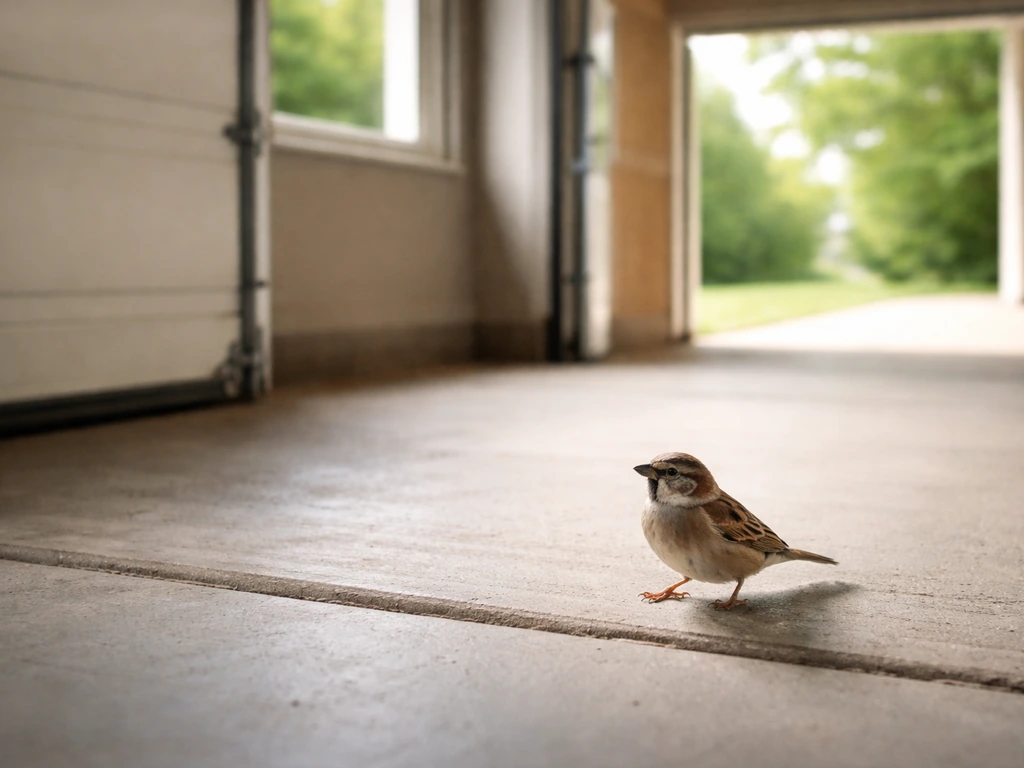
How to Keep Birds Out of a Garage: Humane Steps
Humane, step-by-step way to keep birds out of your garage with quick removal, sealing, and lasting deterrents.
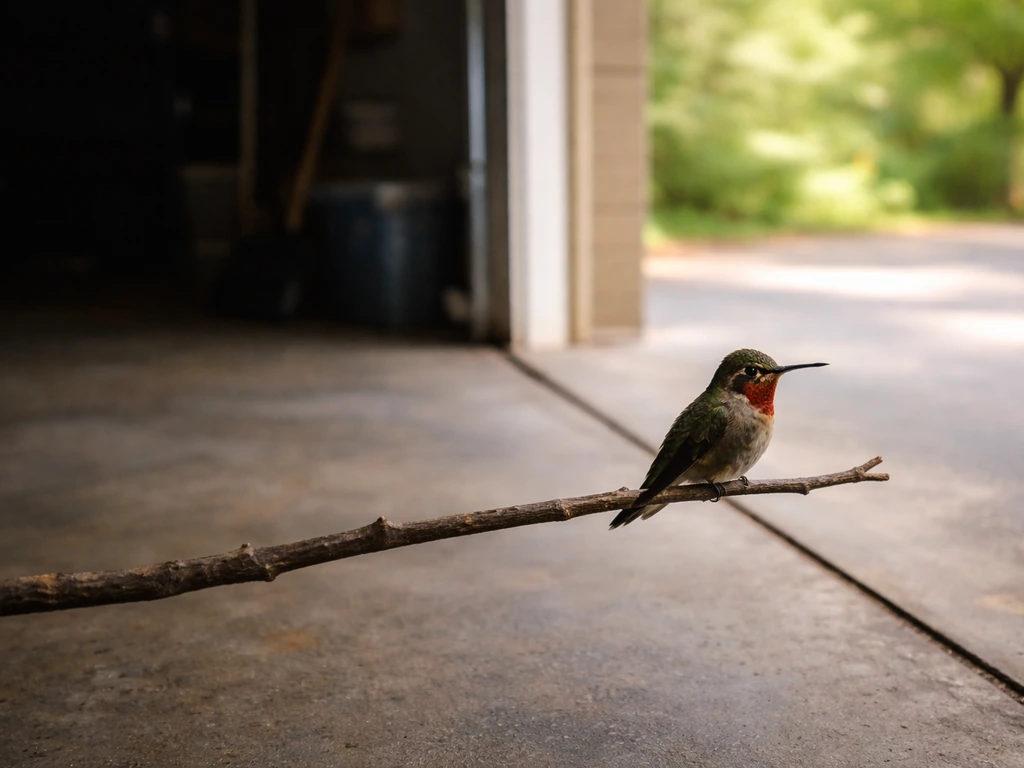
Hummingbird Stuck in Garage: Safe Escape, Help, and Prevention
Calm step-by-step rescue for a hummingbird stuck in a garage, plus DIY troubleshooting, humane care, and prevention tips