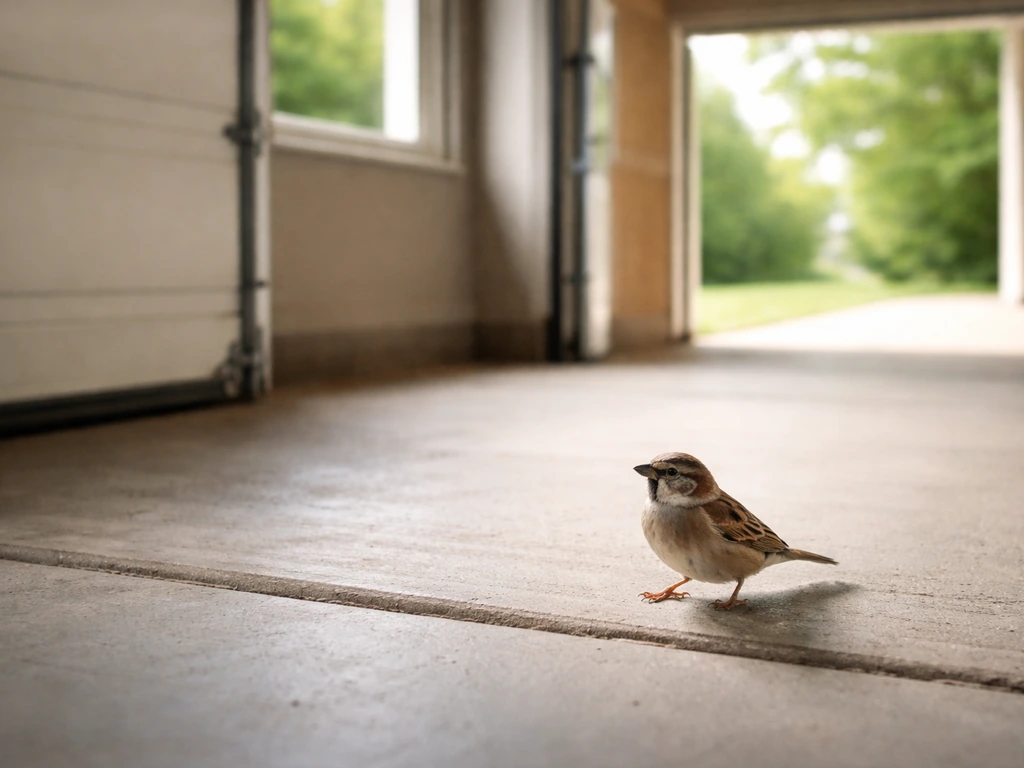
If a bird is trapped in your garage right now, the fastest and most humane approach is to open one large exit door, block every other light source inside so the only visible light is coming from outside, then quietly step back and give the bird time to find its way out on its own. If you need a clear, step-by-step plan for how to lure a bird out of your garage, use the one-way exit method and remove competing lights. That single-exit, single-light method is the most reliable technique available, it works at night, and you can set it up in under five minutes.
How to Get a Bird Out of Your Garage Overnight
Maya Carver
28 Apr 2026
Immediate overnight actions: keep yourself and the bird safe first
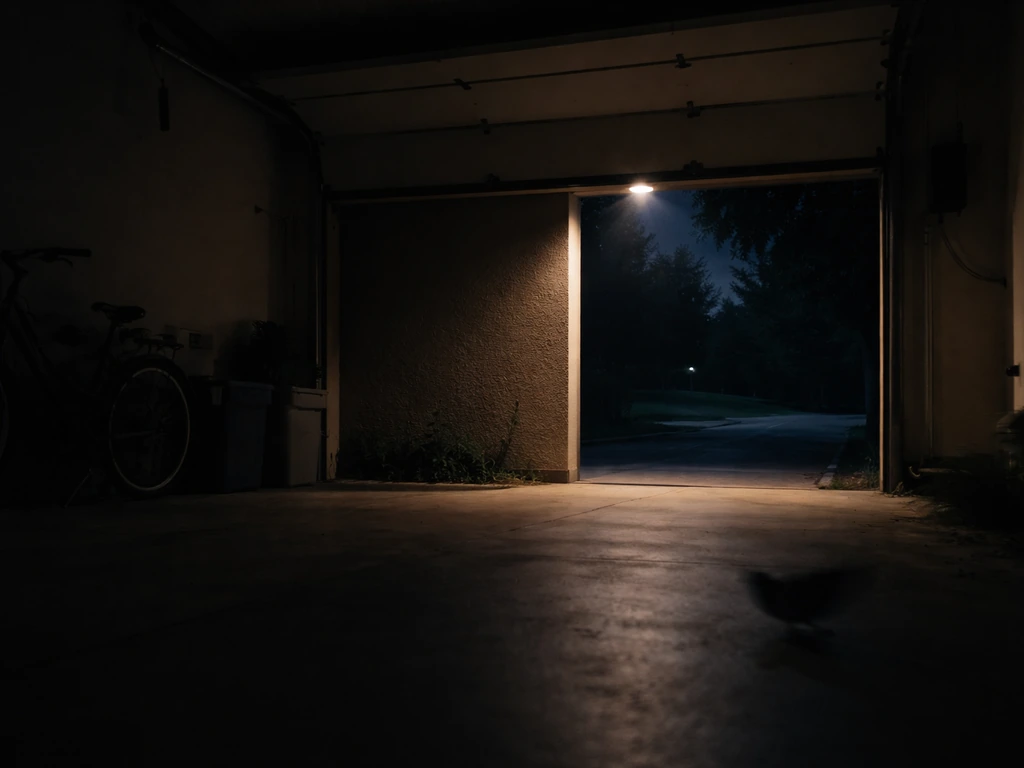
Before you do anything else, take a breath. A panicked bird thrashing around a garage at night is stressful for you both, but chasing it or turning on every light will make things worse, not better. Your first priority is reducing risk to both parties.
- Turn off all interior garage lights. Bright overhead lighting disorients birds and makes them fly toward fixtures rather than exits.
- Do not try to catch the bird by hand unless it is clearly injured and grounded. Healthy birds in flight can injure themselves on shelving, tools, or car mirrors when cornered.
- Keep pets and children out of the garage and close the interior door to your house. This protects your household and removes distractions that spook the bird.
- If you need to be in the space, wear safety glasses or goggles (a scared bird can accidentally fly into your face) and avoid sudden movements or loud sounds.
- If there is visible droppings contamination on surfaces, avoid stirring up dust. If you need to work near it, put on an N95 respirator before entering. The CDC and OSHA both flag dried bird droppings as a respiratory risk because of potential exposure to biological material in fine particles.
The bird will almost certainly be perched somewhere high: a rafter, a shelf edge, or the top of a cabinet. It is not attacking you. It is exhausted and scared. The calmer the environment, the faster it will leave.
The one-way exit method: how to guide the bird out tonight
This is the RSPCA-recommended approach and the one that consistently works best, even after dark. The core principle is simple: give the bird one obvious bright exit and eliminate every other competing light source so there is no confusion about which way leads outside.
- Choose your exit point. The main garage door is ideal because it is large and positioned low enough that the bird can fly straight out. If you only have a side personnel door, that works too, but fully open it.
- Block every other light source inside the garage. Turn off all overhead lights. If there are windows, cover them with a blanket, thick towel, cardboard, or a sheet so the bird does not mistake glass for an exit and collide with it. The Wisconsin Humane Society specifically recommends this step because window strikes are one of the most common injuries during entrapment.
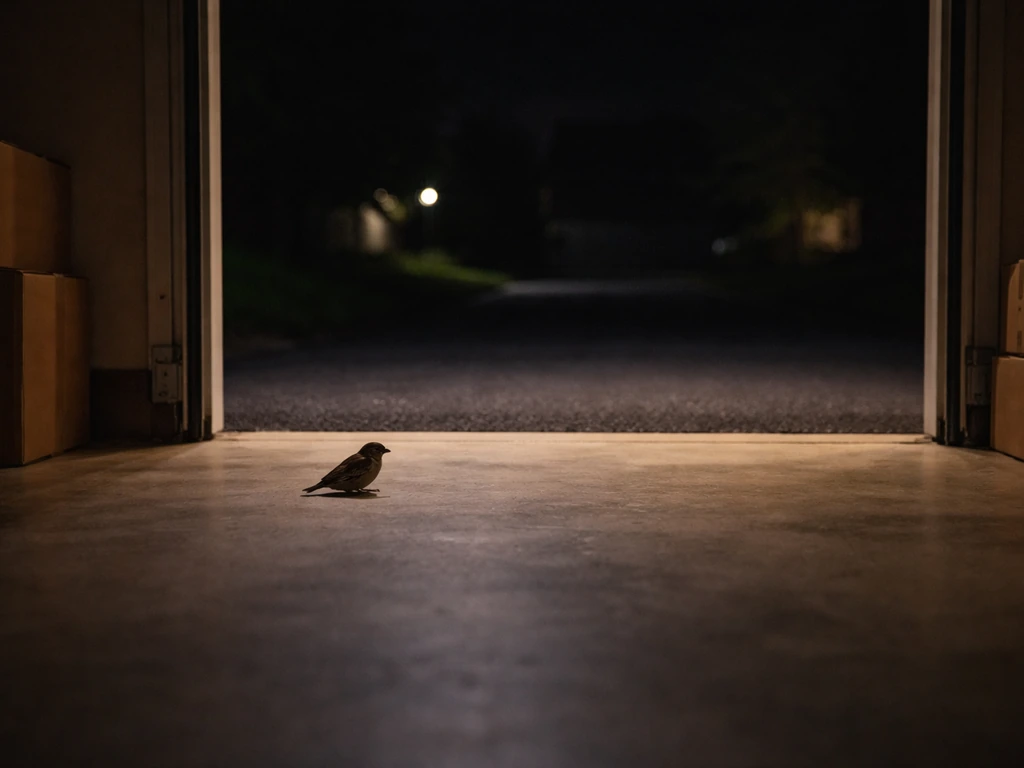
- Leave the single exit open and allow exterior light (moonlight, a porch light, dawn glow) to be the only visible light in the space. At night, even a modest exterior light level is enough contrast against a completely dark interior.
- Leave the garage. Completely. Go inside, wait at least 20 to 30 minutes, then return quietly to check. Most birds will have left on their own during this time.
- If it is the middle of the night and completely dark outside, position a single flashlight or work light at the exit threshold pointing outward, not inward, so the beam is visible from inside as a beacon. Do not flood the interior with light.
The key mistake people make is opening multiple doors and windows at once, thinking more exits help. They do not. Multiple openings create multiple competing light signals and the bird often just ricochets between them. One exit, one light source, human out of the space.
What to do if the bird still won't leave
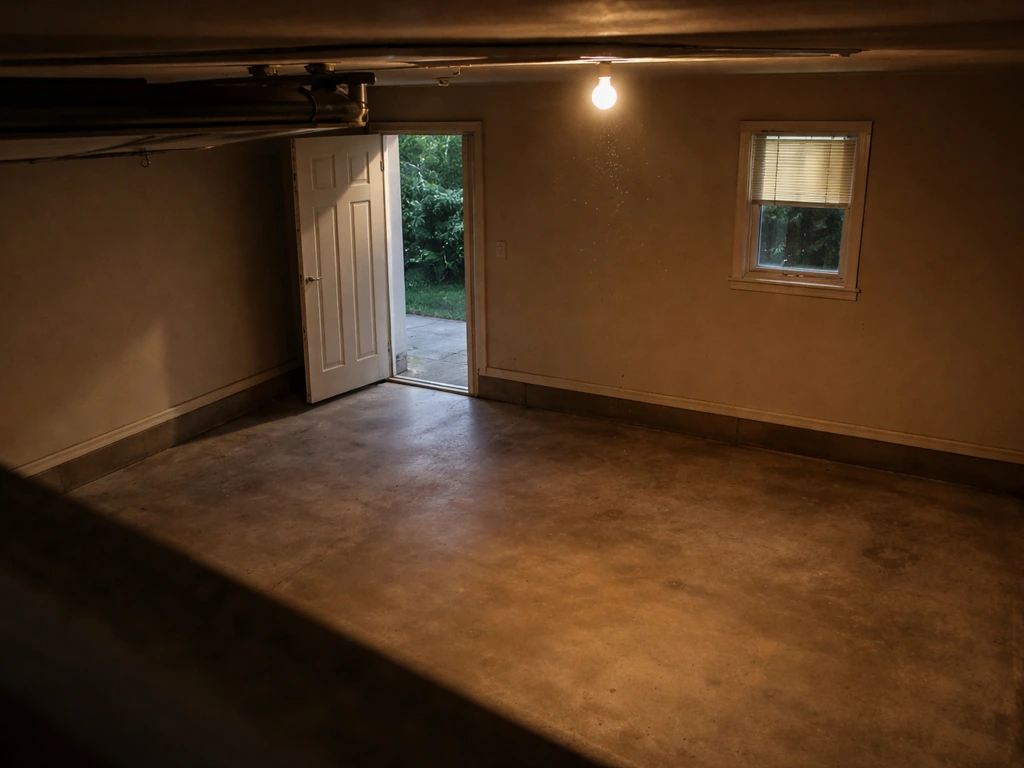
Some birds, especially smaller species like sparrows or wrens, will hunker down on a rafter all night and not move regardless of what you do. That is okay. Here is how to troubleshoot a stubborn situation.
Check your light setup
Go back inside and look at the garage from the bird's perspective, which is from ceiling height looking down and outward. Are any windows still glowing? Is there a gap under the interior door letting light in from the house? Any competing light source will confuse the bird's navigation. Cover or block anything you missed, then leave again for another 30 minutes.
Repeat at dawn
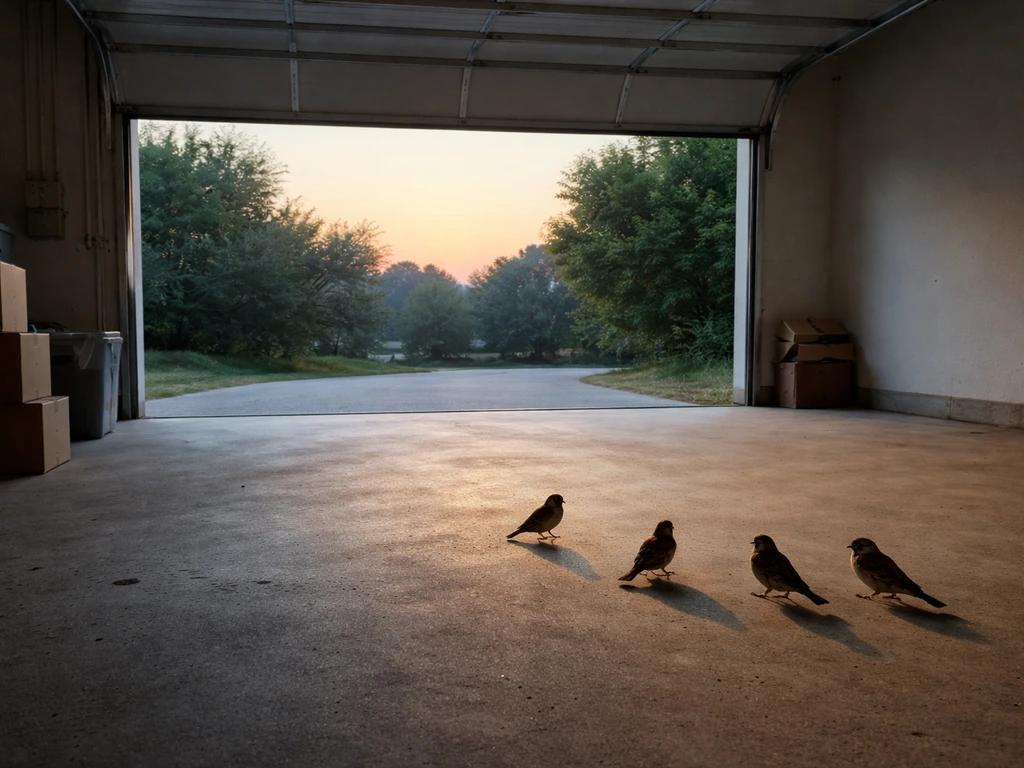
Dawn is your best ally. Birds are hardwired to respond to natural light, and the gradual brightening at sunrise is far more effective than any artificial light setup. Open the main garage door fully at first light, step away, and most birds will fly out within 10 to 15 minutes. If the bird has been in the garage overnight, it will almost certainly leave at dawn without any further intervention.
Gentle directional encouragement
If the bird is still present mid-morning and the exit is open, you can gently encourage movement by slowly entering the space and walking toward the bird's perch from the opposite side of the exit. Move slowly and quietly, arms at your sides. The goal is to make it mildly uncomfortable to stay perched where it is, not to chase it. Never flap a towel or shout, as that causes erratic flight and collision risk.
Using a one-way door for persistent cases
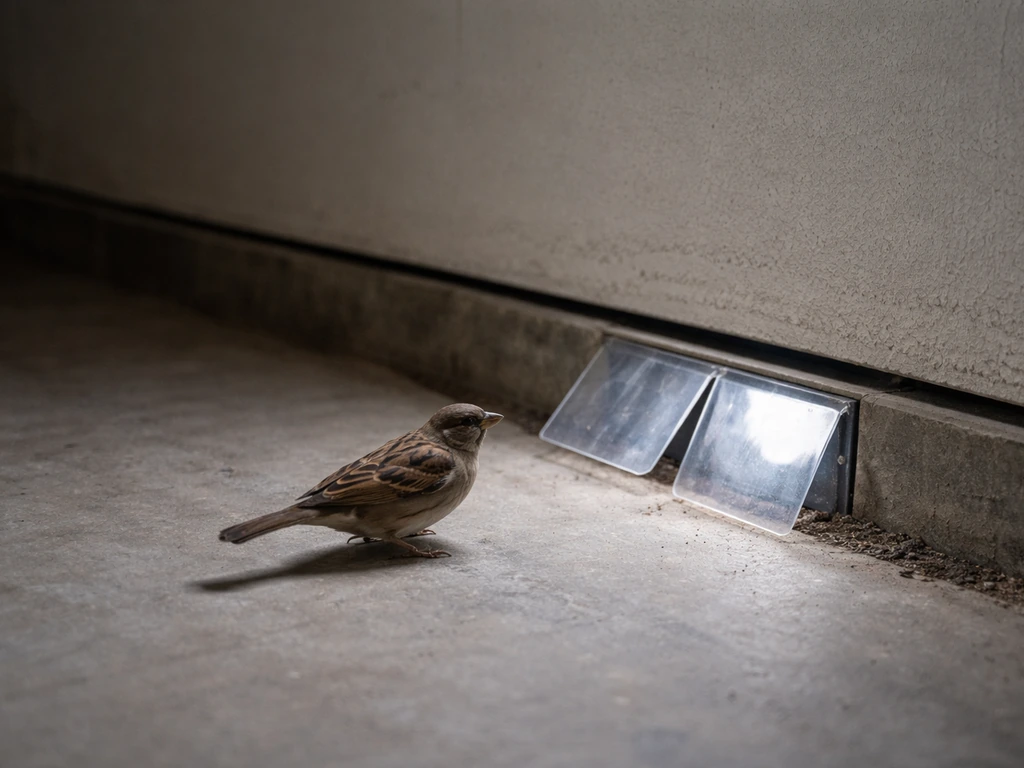
If you have a bird that keeps returning to a particular spot inside the garage (or you suspect there may be more than one), Washington's Department of Fish and Wildlife recommends using a visual verification method combined with a one-way exclusion approach: confirm the bird has actually exited before you close the garage back up, rather than assuming it left. You can do this by doing a slow, methodical scan of every rafter, shelf, and corner with a flashlight before closing up for the night.
Find out how the bird got in
Once the bird is out (or while you are waiting at dawn), take a few minutes to do a systematic check of how it entered. Fixing the entry point is just as important as getting the bird out, because if you leave the gap open, you will be back here again next week.
Common entry points to inspect
- Garage door gaps: Check the sides and top of the main door for gaps wider than half an inch. Many garage doors have worn or missing weatherstripping that creates easy entry points.
- Eaves and roofline: Look for gaps where the soffit meets the wall, missing fascia boards, or any opening at roof level. Birds, especially sparrows and starlings, exploit these constantly.
- Vents: Foundation vents, roof vents, and gable vents are prime entry points. Check whether screens are intact, torn, or missing entirely.
- Damaged or missing door sweeps: The gap under a side door is one of the most overlooked entry points, especially for small birds.
- Holes around pipes and conduit: Utility penetrations through garage walls are often poorly sealed, leaving gaps that birds and other wildlife use freely.
- Open windows: If you have a garage window that is left cracked or has a damaged screen, that is likely the culprit.
Do your inspection in daylight if possible. Stand inside the garage with the main door closed and the lights off. Your eyes will quickly show you where daylight is leaking in, and those light spots are your entry points. Mark each one with masking tape so you can address them systematically.
Cleanup steps after the bird is out
Once the garage is confirmed clear, take care of any mess before you forget about it. blank" rel="noopener noreferrer">Bird droppings can harbor Histoplasma capsulatum (a fungal pathogen) and other biological material, so treat cleanup with basic precaution rather than alarm. OSHA recommends using respiratory protection when dealing with biological hazards like bird droppings during workplace cleanup and similar tasks blank" rel="noopener noreferrer">Bird droppings can harbor Histoplasma capsulatum (a fungal pathogen) and other biological material.
- Put on an N95 respirator, disposable gloves, and old clothes before cleaning. This is not overkill. Dried droppings are the main risk because they become airborne dust when disturbed.
- Do not dry-sweep or vacuum droppings. Lightly mist the area with water and a small amount of household disinfectant first to keep particles from becoming airborne.
- Use paper towels or disposable cloths to wipe up the misted droppings. Bag and discard immediately.
- Disinfect the affected surfaces with a diluted bleach solution (1 part bleach to 9 parts water) or a household disinfectant rated for biological contamination.
- Wash your hands thoroughly after removing gloves, and launder any clothing worn during cleanup.
- Check for any feathers, nest material, or food debris that could attract the bird back or bring in other wildlife.
If the bird was a hummingbird, keep in mind that hummingbirds are particularly fragile and stress out quickly in enclosed spaces. A hummingbird stuck in a garage is a more urgent situation than most other species and warrants faster action. If you think a humming bird stuck in your garage needs urgent help, consider following the same one-way exit approach and be ready to escalate if it appears injured or unusually distressed humming bird stuck in a garage. The same exit method applies, but do not wait it out for hours if the bird appears distressed or is hovering erratically.
Long-term prevention: seal up, screen off, and reduce attractants
Getting the bird out is the easy part. Keeping birds from getting back in takes a little more planning, but most of it is straightforward DIY work you can knock out in a weekend. To learn the most effective ways to keep bird out of garage, focus on sealing gaps and installing screens where birds can enter.
Sealing and exclusion
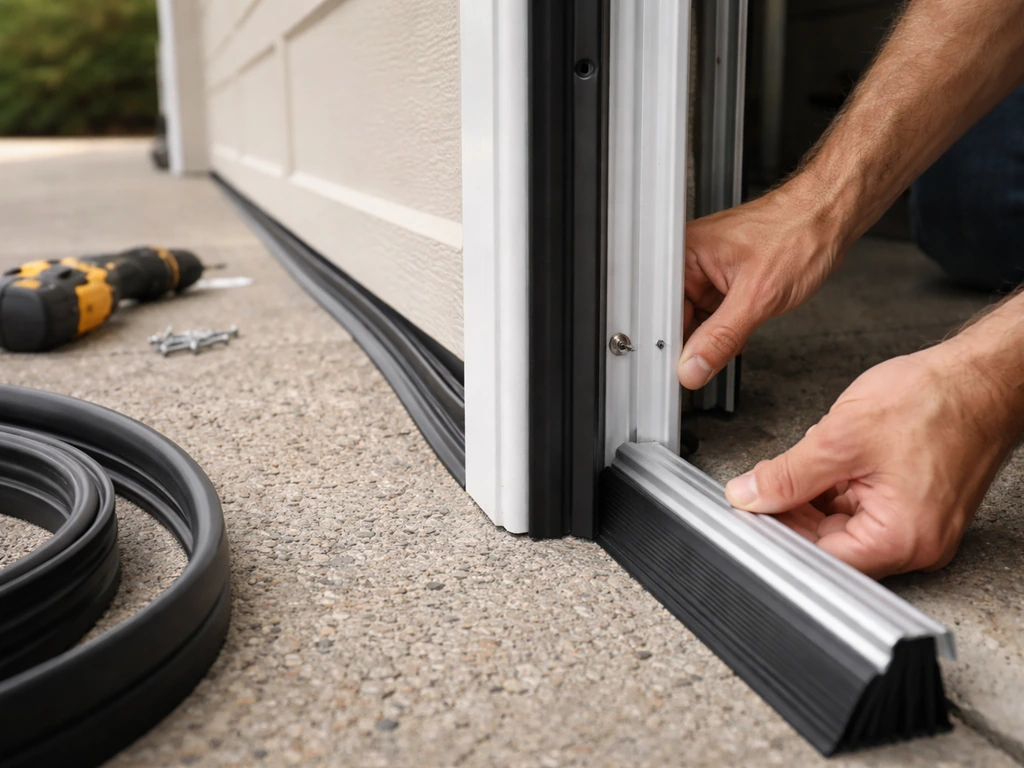
- Replace or repair weatherstripping on all garage doors, including the side and top seals on the main door.
- Install or replace door sweeps on all personnel doors. Use a heavy-duty rubber sweep rated for exterior doors.
- Cover all vents (foundation, gable, roof) with a quarter-inch galvanized hardware cloth. Standard window screen is not adequate because birds can push through it or tear it.
- Seal gaps around utility penetrations with expanding foam or hardware cloth backed by foam. Check these annually because foam alone can crack and shrink over time.
- Repair any damaged soffit, fascia, or roofline areas. Even a small gap is sufficient for a sparrow or starling.
- If you have roof vents or ridge vents, inspect them in spring before nesting season (typically March through May in most of the US) and again in early fall.
Reducing attractants
- Store bird seed, pet food, and grain in sealed metal or heavy plastic containers. Open bags or buckets of seed inside a garage are an obvious draw.
- Remove water sources like drip trays, leaky pipes, or standing water on garage floors.
- If you have outdoor plants growing near the garage entrance, trim them back so they do not provide a perching or nesting site right at the door.
- Avoid leaving the garage door open for extended periods, especially in spring and summer when birds are actively scouting nesting sites.
A simple seasonal maintenance schedule
| Season | Task |
|---|---|
| Late winter (February) | Inspect all vents and eave gaps before nesting season begins |
| Spring (March to May) | Check weatherstripping and door sweeps; reseal any utility penetrations |
| Summer (June to August) | Monitor for signs of nesting activity near roofline and vents |
| Fall (September to October) | Do a full perimeter check before birds seek overwintering shelter |
| Winter (November to January) | Ensure garage door seals are intact; check for any storm damage to soffit or fascia |
When to call a wildlife professional
DIY methods handle the vast majority of trapped-bird situations, but there are specific circumstances where you should stop and make a call instead of continuing to troubleshoot on your own.
- The bird is injured: If it is grounded, not flying, holding a wing at an odd angle, or visibly bleeding, contact a licensed wildlife rehabilitator in your area rather than attempting to handle it yourself. Handling injured birds incorrectly can worsen injuries.
- You suspect a nest: If you hear multiple birds, see nest material, or find eggs or chicks inside the garage, do not attempt exclusion. Many nesting bird species are protected under the Migratory Bird Treaty Act and disturbing an active nest is a federal offense. Call a wildlife professional who can advise on legal next steps.
- The species may be protected: Raptors (owls, hawks), swallows, and most songbirds are protected under federal or state law. If you are unsure what species you are dealing with, err on the side of caution and call animal control or a wildlife hotline for guidance before doing anything.
- DIY exclusion has failed more than twice: If you have sealed the obvious entry points and the same bird (or birds) keep getting back in, there is a gap you are missing. A professional exclusion contractor can do a thermal or physical inspection to find entry points that are genuinely difficult to spot.
- You cannot safely access the entry points: If gaps are in a roofline, high soffit area, or anywhere that requires ladder work beyond your comfort level, hire someone rather than risk a fall.
When you call, be ready to describe the species if you know it, how long the bird has been in the structure, any visible signs of nesting or injury, and what entry point you suspect. That information helps the professional respond with the right tools and approach from the start.
For most homeowners, a single bird in a garage overnight is a one-time nuisance that resolves itself by morning with the right light setup. But if this is becoming a recurring problem, the prevention steps above and knowing when to escalate will save you a lot of repeated stress. Getting birds out is usually easy. Keeping them out is the part worth investing real time in.
FAQ
Is it okay to leave the garage door open overnight after I set up the one-way exit method?
Usually yes if it is safe for your property and pets, but avoid leaving other lights on inside. Also consider weather and security, and if you cannot keep the door open all night, be ready to reopen it at dawn for the bird to exit when daylight increases.
What if I can’t open a “single large exit door” because it’s blocked or unsafe?
Choose the brightest, most direct route to the outside you can access, and use the same logic: one open exit and darkened interior. Block or turn off every other interior light, and avoid creating multiple bright windows or cracks that point in different directions.
Should I put food out to lure the bird while I’m trying to get it out overnight?
Not typically. Food can pull the bird deeper into the garage or encourage it to hop between surfaces, and it may create multiple targets that compete with the exit. The overnight plan works best by removing competing light, not by adding attractions.
My garage has a lot of windows, do I need to cover them all?
If the windows remain bright or reflective from inside, they can confuse the bird even if the main door is open. Cover or darken any window or area that still looks “outside-bright” to the bird’s view from ceiling height.
How do I know if the bird is truly gone before I close up at night?
Do a slow, methodical check before closing: look along each rafter and shelf line from the inside with a flashlight, and listen for movement. If you only do a quick glance, you may miss a perched bird that drops down after you shut the door.
What should I do if there are droppings, feathers, or nesting materials after the bird leaves?
Treat the cleanup as potentially contaminated. Wear disposable gloves, avoid dry sweeping, and dampen debris before removing it. If you notice active nesting materials or heavy contamination, consider professional help for safe disposal.
Can I use a fan or sprinkler to move the bird out overnight?
Avoid it. Air blasts and sudden wetting increase panic and can lead to collisions. Stick to quiet, low-stress methods, one exit, and controlled lighting, and only escalate in the daytime if the bird does not leave.
What if the bird keeps landing back on the same perch right after I open the exit?
The exit is still not the obvious route. Recheck for any competing light leaks, such as a glowing window, a lit hallway, or light under the interior door. Give it another 30 minutes after removing competing lights, then try the dawn approach.
How long should I wait overnight before assuming the bird won’t leave by morning?
If the one-way exit and light reduction are set up correctly, most birds leave at dawn or within roughly 10 to 15 minutes after sunrise. If it is still inside mid-morning with the exit open, switch to the gentle daytime encouragement method and then reassess entry points.
Is a baby bird or nestling handled differently than an adult bird?
Yes, because nestlings may be less mobile and may not respond to lighting. If you find signs of a nest, multiple birds, or a bird that cannot perch or fly, the safest next step is to contact a wildlife professional rather than relying on the overnight method alone.
When is it urgent to get help for a hummingbird in the garage?
Escalate quickly if it appears injured, is hovering erratically, cannot perch normally, or shows signs of severe distress. Hummingbirds can be more fragile, so don’t wait hours if behavior seems abnormal, and still apply the one-way exit setup as you prepare to act.
After I fix the entry point, do I need to re-check the garage the next night?
Yes, at least once. Do a daylight inspection with lights off and the door closed to locate all daylight leaks, then seal them. Before your first full night after repairs, do a quick evening scan to confirm no new light gaps or open routes remain.
Next Article
How to Keep Birds Out of a Garage: Humane Steps
Humane, step-by-step way to keep birds out of your garage with quick removal, sealing, and lasting deterrents.