A bird trapped in your garage is a fixable problem, and the fix is simpler than most people expect: darken the space, open one clear exit to the outside, and give the bird time to find its way out. That is the core method, and it works the vast majority of the time. The rest of this guide walks you through every step in order, from the moment you spot the bird to making sure it never happens again.
How Do I Get a Bird Out of My Garage Safely

Maya Carver
18 Apr 2026
First: figure out what you're actually dealing with
Before you do anything else, take 60 seconds to assess the situation. How you handle a healthy adult bird that just flew in this morning is very different from how you handle an injured bird, a baby that fell from a nest, or a bird that has been roosting inside for weeks. Getting this wrong wastes time and can harm the animal.
Look for these four things before you touch anything:
- Is the bird flying or hopping around actively? Good. That means it's probably healthy and the standard lights-out exit method will work.
- Is the bird sitting still, breathing hard, bleeding, or holding a wing at an odd angle? That's an injury. Do not attempt extended DIY handling. Scroll down to the 'when to call a pro' section now.
- Do you see a nest with eggs or baby birds (nestlings) anywhere in the garage? If yes, do not disturb it. This changes your entire approach and may involve legal considerations.
- Is the bird a large raptor like a hawk or owl? Do not try to capture it yourself. Contact animal control or a wildlife rehabilitation center immediately.
If you find a baby bird on the floor and there is no obvious parent around, resist the urge to feed it or give it water. Improper feeding, even with well-meaning food choices, can cause aspiration (food in the lungs) and kill the bird. Keep it warm if needed by placing a heated rice sock or hand warmer wrapped in a towel next to it, and get it to a licensed wildlife rehabilitator as quickly as you can.
Quick-response steps to get a healthy bird out
For a healthy adult bird that simply flew in and is now panicking, this is your action plan. Work through these steps in order and stay calm throughout. Sudden movements and noise are the biggest reasons this process fails.
- Remove immediate hazards. Before opening anything, move pets and children out of the garage. Cover or close off sharp tools, open containers, and anything the bird could collide with or get tangled in. Check that your garage door opener won't accidentally activate.
- Turn off all interior lights. Every light in the garage should be off. This includes overhead fixtures, work lights, and any powered displays. If you have skylights, cover or block them so the only visible light is coming from your chosen exit.
- Open one clear exterior exit. Your main garage door is usually the best option because it's large and gives the bird an obvious route. Open it fully. If the main door opens to a brightly lit area, even better. Avoid opening multiple doors or windows at once, because that confuses the bird and makes it harder to guide it toward one point.
- Close off the rest of the garage interior. Shut any doors that lead into the house or other rooms. You want the bird confined to a small area with only one clear way out. The smaller the area, the faster this works.
- Leave. Walk away, go inside, and give the bird at least 30 to 60 minutes to find the exit on its own. Hovering nearby makes the bird more stressed and less likely to move toward the opening. Birds navigate by light, and a dark garage with one bright exit door is a strong enough cue to pull most birds out quickly.
This lights-out plus single-exit approach is the method recommended by wildlife organizations including the Humane Rescue Alliance, San Diego Humane Society, and Columbus Audubon. It works because birds move toward light instinctively. You're not chasing the bird out. You're making the exit the most attractive option in the space.
Managing a bird that's been trapped for a while
If the bird has been in your garage overnight or longer, or if you're dealing with a bird that keeps avoiding the exit, you need a slightly more deliberate setup. The core method stays the same, but you layer in a few extra controls.
Timing matters more than most people realize. Birds are calmer and more responsive early in the morning, right around sunrise. If you have any flexibility in when you attempt the removal, plan it for first light. The bird will be less fatigued, less panicked, and more naturally inclined to fly toward daylight. If the bird won't leave overnight, the detailed steps for managing that specific situation are worth reviewing separately.
For the one-way exit setup, here's how to tighten your approach:
- Block all windows and skylights with cardboard, tarps, or closed blinds. The exit door or a single open window should be the only source of natural light in the space.
- If your garage has a side door, consider using that instead of the main overhead door if it opens toward brighter outdoor light. A bird in a corner of the garage will fly toward the brightest point it can see.
- Keep pets, children, and unnecessary people completely out of the garage and away from the open door during the attempt. One person managing the process is ideal.
- If the bird still isn't moving after a full hour, move slowly to a position behind the bird (from its perspective, between it and the back wall) and use a large towel or bedsheet held out wide to very gently guide it toward the open door. Do not rush, do not wave the towel aggressively, and do not corner the bird.
What not to do (seriously)
People cause more problems by panicking or reaching for the wrong tools. Here's what to avoid: Glue traps and glue boards can cause severe injuries to wildlife, so get help from a wildlife professional instead of trying DIY removal The Dangers of Glue Traps.
- Do not chase the bird around the garage. Running at a bird spikes its stress, causes it to fly erratically, and dramatically increases the risk of injury from collisions with walls, shelving, or tools.
- Do not use glue traps or sticky boards. Glue traps cause severe injuries. Many birds caught on them do not survive. If you find a bird stuck to a glue trap, do not try to pull it free yourself. Contact a licensed wildlife rehabilitator or vet immediately.
- Do not use brooms, hoses, or loud noises to force the bird toward the exit. These methods panic the animal and make the situation worse.
- Do not try to hand-capture a large bird like a hawk, owl, or heron without protective gloves and professional guidance. Talons and beaks can cause serious injury.
- Do not feed or water the bird while it's trapped, especially if it's a baby bird. Even well-intentioned feeding can cause serious harm.
- Do not seal any entry points while the bird is still inside. This seems obvious once you say it out loud, but it's worth repeating. Check thoroughly before you close anything up.
- Do not attempt to climb into tight or elevated spaces to retrieve a bird if there's any fall risk. Your safety matters first.
If the bird still won't leave
If you've run through the steps above and the bird has had three or more hours with a clear, dark-interior, lit-exterior exit and still hasn't left, something else may be going on. Here's how to troubleshoot:
| What you're seeing | Likely cause | What to do next |
|---|---|---|
| Bird keeps flying to the same corner or back wall | Other light sources are competing with the exit | Block all windows, skylights, and gaps completely. Only the exit should show daylight. |
| Bird is perched and not moving much | Exhaustion or mild stress response | Leave it completely alone for another hour. A resting bird often recovers and finds the exit on its own. |
| Bird seems unable to fly or is flying in circles | Possible injury or disorientation | Stop DIY attempts. Call a wildlife rehabilitator. |
| Bird keeps returning inside after exiting | Nest or food source is attracting it back | Check the garage for nesting material, food, or standing water. Remove attractants before the next attempt. |
| Bird is too large to handle safely | Raptor, heron, or other large species | Do not attempt capture. Contact animal control or a wildlife rehabilitation center. |
If after several hours and multiple attempts the bird genuinely cannot or will not leave, stop. Prolonged DIY handling causes additional stress and increases injury risk for both you and the bird. At that point, calling a wildlife rescue organization is the right move, not an admission of failure. If you’re dealing with a humming bird stuck in your garage, move carefully and plan for a safer exit route humming bird stuck in garage. If you’re unsure what to do to get the bird to leave on its own, follow the steps in how to lure a bird out of your garage.
Sealing up so this doesn't happen again
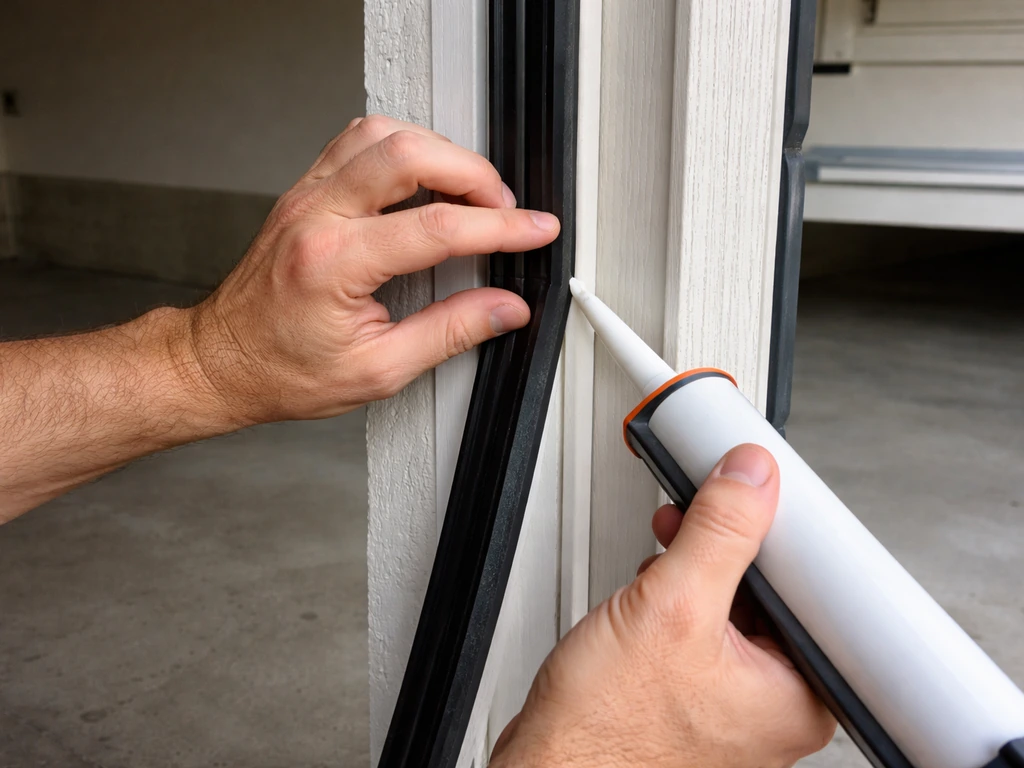
Once the bird is out, give yourself 15 minutes to do a prevention walkthrough before you close up. Garages are almost always preventable entry points. Birds get in through surprisingly small gaps, and fixing them is usually cheap and fast. If you want a lasting solution, learn how to keep bird out of garage by sealing entry points and setting up deterrents where they actually help.
Find and seal entry points
Walk the perimeter of your garage, inside and out, looking for any gap wider than about half an inch. Common problem spots include gaps along the garage door frame and weatherstripping, unscreened vents in the eaves or soffits, gaps where utility lines or pipes enter the wall, and any rotted or missing trim boards. Seal these with hardware cloth (a fine metal mesh), foam backer rod, caulk for very small gaps, or purpose-made vent covers with tight screens. Do this work before nesting season in your area, which typically starts in late winter to early spring, because once a bird establishes a nest, your options become much more limited.
Adjust what's attracting birds in the first place
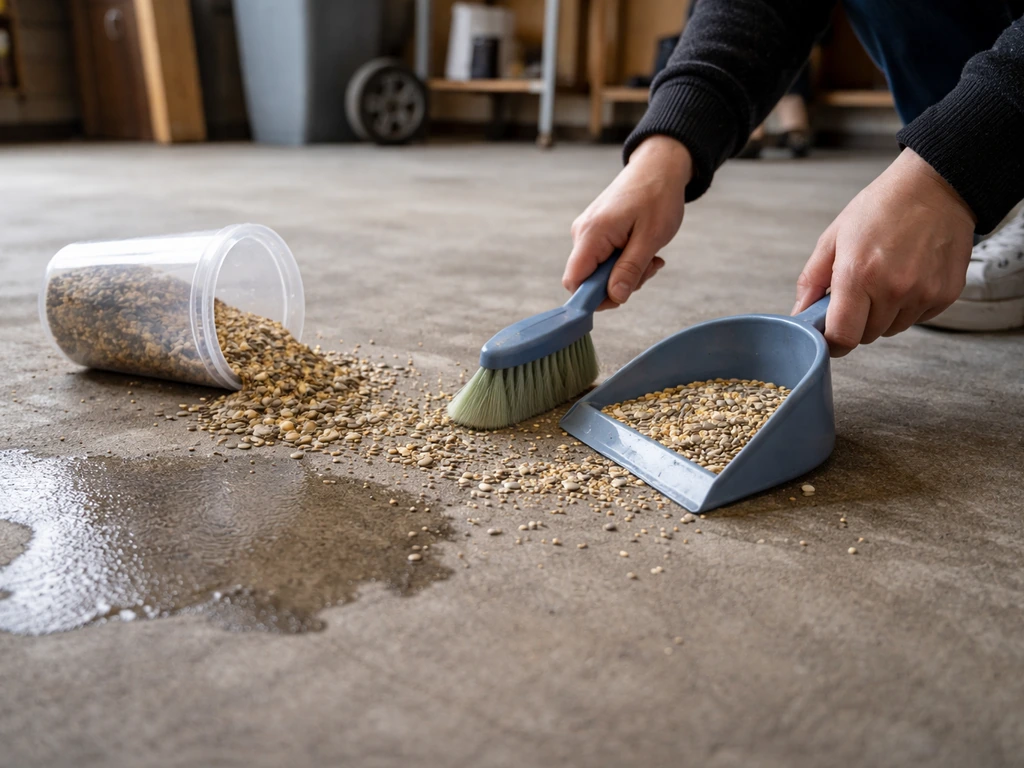
- Remove birdseed, pet food, and any open food containers from the garage entirely.
- Eliminate standing water. Even a small puddle from a dripping hose or condensation pan is enough to attract birds regularly.
- Clear out old nesting material promptly after the season ends, outside of active nesting periods.
- If you keep the garage door open for long periods, consider installing a bird-deterrent screen or mesh curtain that blocks entry without blocking airflow.
Add deterrents where they actually help
Visual deterrents like reflective tape, predator decoys (owl or hawk silhouettes), and hanging CDs can reduce bird interest near entry points, but they work best when combined with physical exclusion. Deterrents alone rarely solve a persistent problem. If birds are repeatedly drawn to your garage by roosting habits, consider motion-activated lights or sound deterrents aimed at the exterior entry area. Keep in mind that birds habituate to static deterrents over time, so rotating them helps.
Build a simple garage door habit
The most common reason birds get into garages is simple: the door stays open for hours while someone is working or unloading. If you need ventilation, a door screen or mesh panel keeps airflow while blocking birds. If you work in the garage regularly, make it a habit to close the door when you step away, even briefly. Birds can enter and become disoriented in under a minute.
When to call a wildlife professional (and what the law says)
Some situations are beyond DIY handling, and recognizing them quickly saves the bird's life and protects you legally.
Call a wildlife rehabilitator or animal control if:
- The bird is visibly injured: bleeding, broken limb, unable to fly, or in obvious distress.
- The bird is a large raptor (hawk, owl, eagle, osprey) or other large species you cannot safely handle.
- You find an active nest with eggs or baby birds. Do not disturb it. Get professional guidance before doing anything.
- The bird has been trapped for more than three hours and all standard methods have failed.
- You cannot safely access the area where the bird is trapped without a fall risk or other hazard.
- The same bird or type of bird keeps re-entering despite your prevention efforts, which may signal a roosting colony or structural issue needing professional exclusion.
The legal side you need to know
Most songbirds in the United States are protected under the Migratory Bird Treaty Act. This means you cannot legally disturb, harm, relocate, or destroy active nests with eggs or live young without a federal permit. Wisconsin Humane Society also advises that [protected nests and young should not be disturbed](https://www. wihumane.
org/resource/wildlife-in-my-garage-or-shed/). This applies to very common birds, not just rare ones. If you discover an active nest in your garage, the safest and legally correct approach is to leave it alone until the nesting cycle is complete (typically four to six weeks) and then seal the entry point after the birds have left. If the location is genuinely unsafe, contact your state wildlife agency or a licensed wildlife rehabilitator for guidance on what options exist in your area.
When you call for help, be ready to describe the species if you can identify it, the bird's condition, where exactly it is in the garage, how long it's been there, and what you've already tried. The more information you give the rehabber or wildlife officer up front, the faster they can help.
FAQ
What should I do first if I notice a bird in my garage but I am not sure if it is injured?
Start by identifying whether it can perch and flap normally. If it is actively moving and reacts to light, treat it like a healthy adult and use the darken-and-open-one-exit approach. If it is lying on the floor, dragging an wing, or seems unable to fly, switch immediately to injured-bird handling, keep it contained and warm, and contact a licensed wildlife rehabilitator rather than trying to “lure” it around.
How long should I wait before trying something else if the bird will not leave?
Give the bird at least a few hours with one clear exit, interior dark, and exterior lit, since birds often take time to commit to the flight path. If it has had around three or more hours under those conditions and still will not leave, treat it as a troubleshooting situation and be ready to call for help rather than repeating the same steps indefinitely.
Is it okay to chase the bird with a broom or net?
No. Chasing, grabbing, or using nets increases the risk of collisions and fractures, and it can cause panic that keeps the bird from using the exit you are providing. Use calm movement, minimize noise, and let the bird choose the open route by making it the easiest option.
Should I turn on all the lights in the garage to help it find the door?
Usually the opposite. Turning on everything inside reduces the contrast birds rely on. Instead, darken the garage interior as much as practical, then ensure the single exit area to the outdoors is well lit so the bird has a clear light gradient to orient toward.
What if the garage door is the exit but it is not safe to open fully?
If you cannot safely open the full garage door, create an alternate single exit window or door opening to the outside that is fully unobstructed. The key is one clear path, not multiple partially blocked routes. If you can only create a partial opening, keep the rest of the space dark so the bird can still commit to the available exit.
Can I open windows or doors besides the main exit to increase airflow?
Avoid opening multiple exits at once. More than one opening can confuse the bird and pull it toward the wrong exit, especially if lighting differs between openings. If you need airflow, use a door screen or mesh panel to ventilate while keeping only one fully accessible exit route.
What is the safest way to handle the bird if it lands outside the exit but then flies back in?
Do not rush to block it with your hands. Keep the exit unobstructed and let it leave on its own. If it repeatedly returns, refine the setup by ensuring the interior is darker than the exit area and remove any additional bird-attracting light sources near the garage door until it commits to the outdoor flight.
How do I keep the bird from injuring itself if it is flying into walls or the ceiling?
Reduce hazards by turning off or covering reflective or high-gloss lights near the exit and keeping sudden movement and loud sounds to a minimum. You can also close off adjacent indoor areas so the bird stays in one controlled space while you maintain the single-exit setup.
Is it safe to give water or food to a trapped adult bird in my garage?
In most cases, do not. The priority is to get it out using the correct lighting and exit approach. Offering food can distract the bird, increase stress, and for some species create health risks if the diet is incorrect.
What if the bird is a baby or fledgling and I cannot find the parents immediately?
Do not feed or water it. Keep it warm and stable, place it in a safe, low-stress area, and contact a licensed wildlife rehabilitator as quickly as possible. If it appears feathered and injured, treatment still depends on condition, so waiting to “see if it improves” without professional guidance can cost valuable time.
When should I stop DIY attempts and call for help?
Stop if you have had several hours with a clear, dark-interior and lit-exterior single exit, and the bird will not leave, or if the bird shows signs of injury or exhaustion. Also stop immediately if you start reaching for tools or the bird appears to be colliding repeatedly, since prolonged handling increases injury risk for both of you and the bird.
Does the law apply if the nest is inside my garage and it seems abandoned?
It can. Many species are protected even if they are common, and nests with eggs or live young generally cannot be disturbed or destroyed without a federal permit. If you are unsure whether a nest is active, treat it as active, wait until the nesting cycle is complete, then seal the entry point after the birds have left.
How can I seal entry points without trapping birds inside the garage?
Inspect and prepare seals only after the bird situation is resolved, ideally after you confirm the birds are out. Then seal gaps using appropriate materials like hardware cloth for wider openings, foam backer rod or caulk for smaller gaps, and tight-fitting vent covers. Plan sealing before your area’s nesting season starts, since sealing during an active nest can be both dangerous and illegal.