The safest way to keep birds out of your garage is a two-part approach: get any bird already inside out first using light and a single clear exit, then seal every entry point with hardware cloth, weatherstripping, and door sweeps before birds have a reason to return. Deterrents help, but physical exclusion is what actually solves the problem long-term. Here is exactly how to do both. Here is exactly how to lure a bird out of your garage safely and then keep it from coming back. Follow the one-clear-exit, bright-light approach to get the bird out safely overnight, then seal and proof the entry points right after get a bird out of your garage overnight.
How to Keep Birds Out of a Garage: Humane Steps

Maya Carver
22 Apr 2026
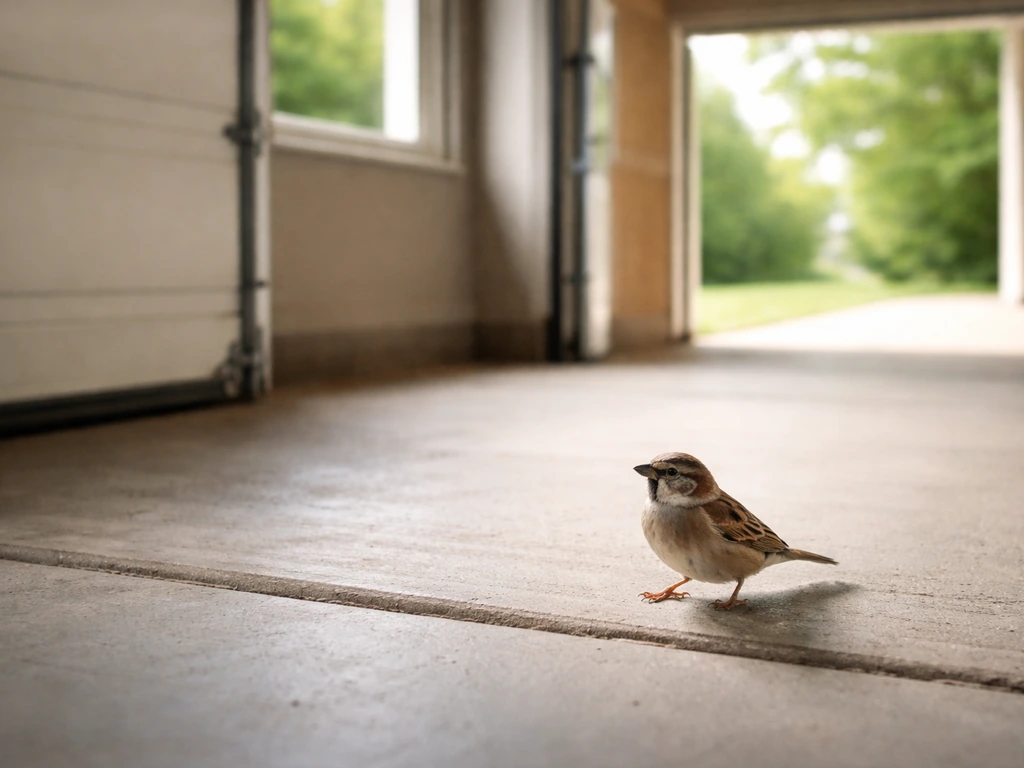
If a bird is already inside your garage right now
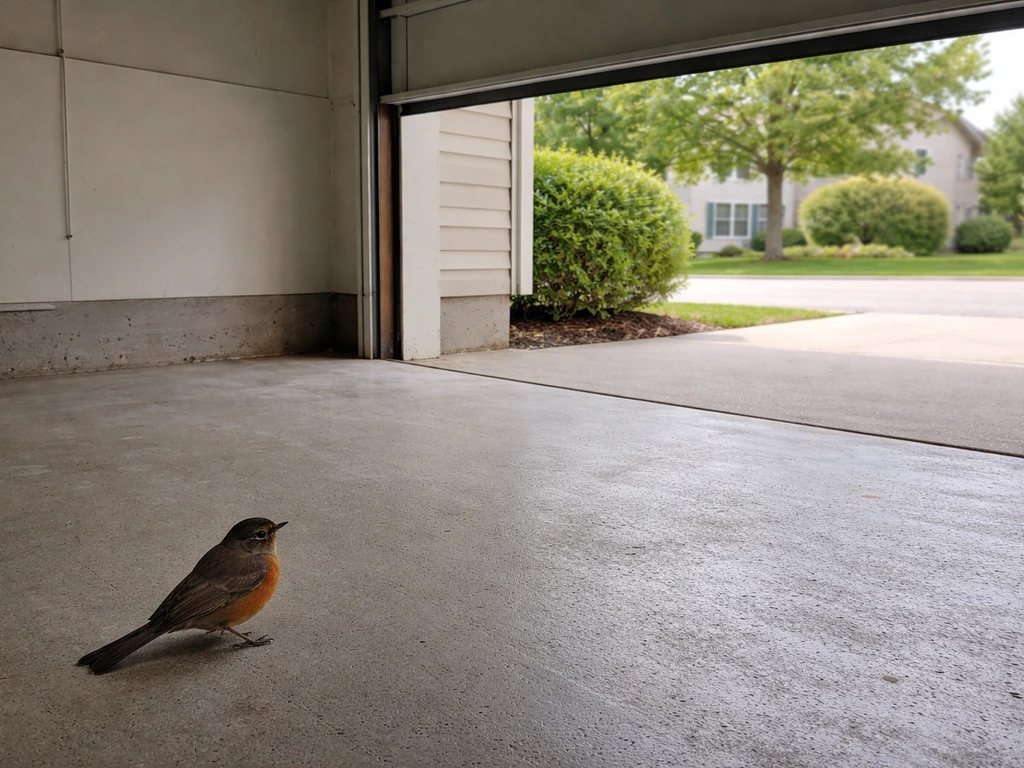
Stay calm and move slowly. A panicked bird thrashing around in a garage can injure itself badly, so the goal is to make leaving feel easy and obvious. The method that works most reliably is simple: give the bird exactly one clear exit and make that exit the brightest spot in the space.
- Open your main garage door fully, or open a single exterior door or window that leads directly outside.
- Close or cover every other opening, including interior doors into the house, side windows, and any skylights. Draw curtains or hang a towel over closed windows so the bird is not drawn toward dead-end glass.
- Turn off all interior lights so the open exit becomes the brightest point in the garage. Natural daylight does the work here.
- Back away from the exit and give the bird space, ideally leaving the garage entirely for 10 to 15 minutes.
- If the bird is grounded and cannot fly, confine it gently to a small area using a cardboard box or laundry basket, then place it as close as possible to the open exit so it can walk or hop out on its own.
Resist the urge to chase or shoo the bird directly. Waving your arms raises its stress level and sends it flying higher into rafters where it gets trapped again. The single-exit, bright-light method works because birds instinctively move toward light. Once it is out, close the exit immediately so it cannot fly back in while you assess the situation.
If you are dealing with a hummingbird specifically, the approach is slightly different because hummingbirds are attracted to red and fly very high. The same single-bright-exit rule applies, but you may need to guide them lower by blocking upper light sources first. Swallows and bats require their own handling considerations, which are covered in the troubleshooting section below.
Find every way birds are getting in
Before you buy a single deterrent, do a proper inspection. Most garage bird problems are entirely predictable once you know where to look. Common entry points fall into a few categories:
- Garage door gaps: the gap between the bottom of the door and the floor (especially on older doors where the rubber sweep has cracked or warped), and the side gaps where the door meets the vertical frame.
- Roof vents and soffit vents: unscreened or torn-screen vents are among the top nesting sites for sparrows, starlings, and starling-sized birds.
- Eaves and fascia gaps: anywhere the roofline meets the wall, especially on older construction where wood has shrunk or rotted.
- Broken or missing window screens.
- Gaps around pipes, conduit, or cables that pass through exterior walls.
- The gap at the top of the garage door where the panels meet the header when the door is closed.
- Ridge vents and gable-end vents without adequate screening.
Do your inspection twice: once from the outside looking for daylight gaps, and once from inside the dark garage with the door closed. Any pinhole of daylight you see from the inside is a potential entry point. Mark each one with painter's tape or a quick photo on your phone before you start repairs.
What to use for sealing
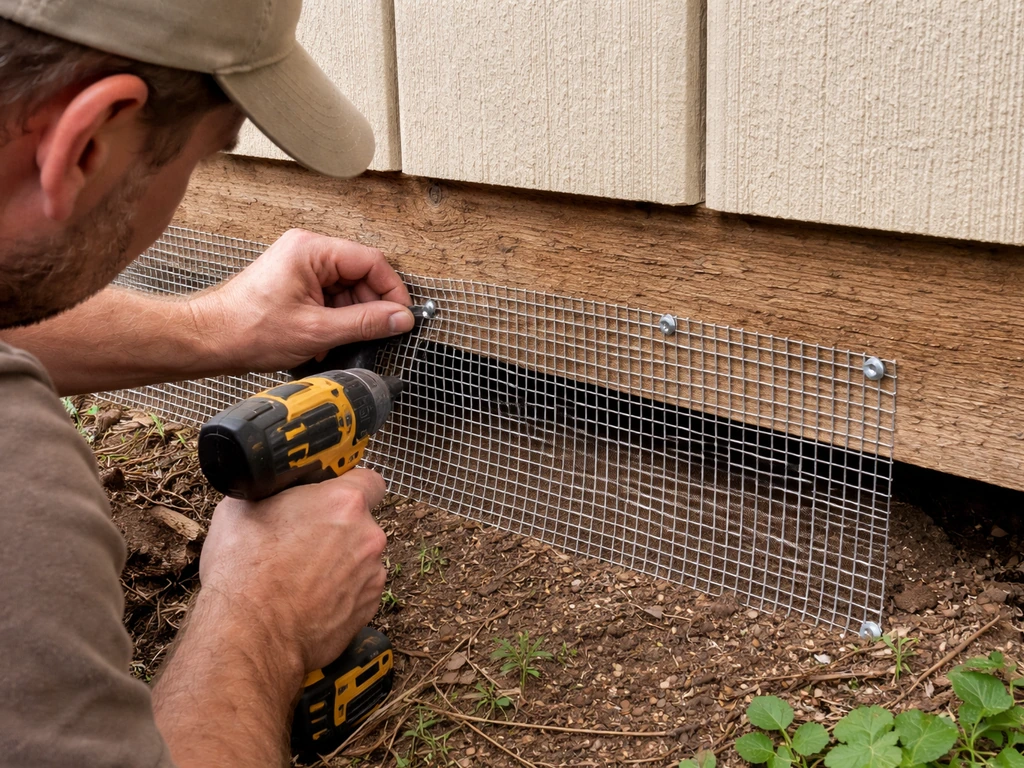
For most openings, hardware cloth is your best material. Use 19-gauge wire mesh with half-inch by half-inch (1.3 cm x 1.3 cm) openings. That size excludes sparrows, starlings, pigeons, and most common garage-invading species while still allowing air flow through vents. Cut it slightly oversized, fold the edges back, and fasten with screws and washers rather than staples, which work loose over time. For door gaps, a new rubber door sweep on the bottom seal and foam weatherstripping on the sides handles most situations for under $20. Larger structural gaps in fascia or soffits should be filled with wood and caulked, then painted to match, since mesh alone on a rotted board will not hold.
Remove what is attracting birds in the first place
Birds do not wander into garages randomly. Something is drawing them there, and if you do not remove it, birds will keep finding ways back in even after you seal the obvious gaps. Work through this list before or alongside your sealing work.
- Food sources: pet food stored in open bags, birdseed, uncovered compost, or grain (common in garages attached to hobby farms or workshops). Move anything edible into sealed containers.
- Water: standing water in buckets, trays under potted plants, or puddles near drains. Birds drinking from these sources will treat the area as safe habitat.
- Nesting materials: loose insulation, string, straw, cardboard scraps, and fabric attract nesting birds. Keep the garage tidy and store loose materials in bins.
- Existing nests: if a nest is already present and is inactive (no eggs, no young, no active building), remove it promptly. Active nests are a different situation, covered in the legal section below.
- Roosting ledges: open shelving, pipes near the ceiling, and exposed rafters give birds comfortable perches. Adding physical barriers (slanted boards, wire strips) to these surfaces removes the invitation.
- Bright interior lighting left on at night: this attracts insects, which attracts insect-eating birds. Use motion-sensor lighting instead of leaving garage lights on.
Deterrents that actually help (and how to use them right)
Deterrents are a support tool, not a primary solution. Used alone, they rarely stop determined birds for long because birds habituate to static, unchanging threats. Used alongside physical exclusion, they can reinforce the message that your garage is an unpleasant place to hang around. The key is combining multiple types of deterrents and rotating or adjusting them so birds do not get used to them.
Visual deterrents

Reflective tape, old CDs hung on strings, and commercially made bird-scare balloons all work by creating unpredictable light movement that unsettles birds. Hang them near entry points and perching areas, and move them every week or two. Plastic owls and hawk decoys can help for a short time but are well-documented for causing habituation within days if left stationary. If you use a decoy, move it to a different position every few days and combine it with at least one other deterrent type.
Sound deterrents
Ultrasonic devices marketed for garages have mixed real-world results, particularly for pigeons and sparrows which are less sensitive to high-frequency sound than rodents. Distress call devices that broadcast actual bird alarm calls are more effective, especially for starlings, crows, and pigeons, but they can also disturb unrelated wildlife and neighbors, so use them selectively and only during daylight hours.
Physical deterrent surfaces
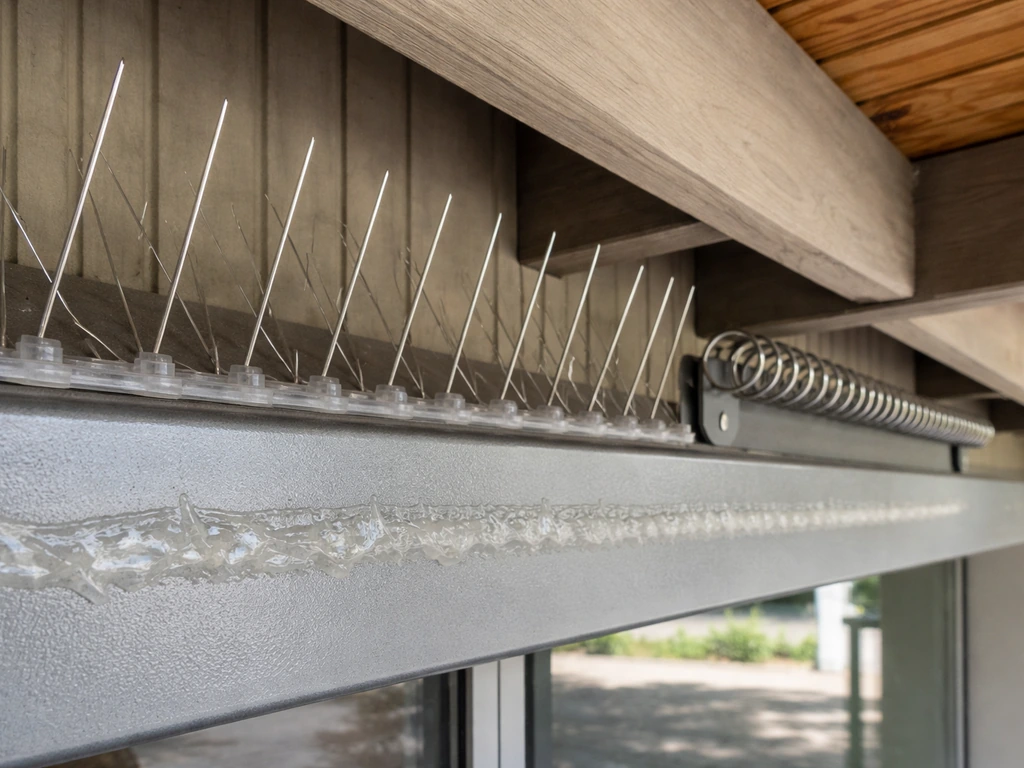
Bird gel (a sticky, transparent repellent applied to ledges), stainless steel spike strips, and coiled wire on rafters and beams make landing and roosting uncomfortable. These work well for pigeons and starlings on flat ledges. Avoid cheap plastic spike products, which degrade quickly and can trap feathers in ways that harm birds.
A note on netting
Bird exclusion netting can be effective for blocking off large open areas like exposed rafters, but it must be installed with zero gaps and inspected regularly. Improperly installed netting is genuinely dangerous: birds that get inside loose or sagging netting can become trapped and die. If you use netting, check it every month and repair any damage immediately.
Your long-term proofing checklist
Run through this checklist once to complete your initial proofing, then use it as your annual maintenance inspection, ideally in late winter before nesting season begins.
- Inspect and replace the garage door bottom sweep if cracked, compressed flat, or missing entirely.
- Check side weatherstripping on all garage doors and replace if light is visible when the door is closed.
- Fit all soffit and roof vents with 19-gauge, half-inch hardware cloth secured with screws, not staples.
- Screen all gable-end vents with the same mesh.
- Inspect all fascia boards and replace any that are rotted or have gaps; caulk and paint after repair.
- Seal any pipe, conduit, or cable penetrations through exterior walls with expanding foam or caulk, then cover with a metal collar.
- Remove all existing inactive nests from the garage interior.
- Check and replace any window screens with tears or holes larger than half an inch.
- Install slanted boards or anti-perch wire strips on horizontal pipes, beams, and ledges inside the garage.
- Store all birdseed, pet food, and compostable material in sealed, lidded containers.
- Switch interior lighting to motion-sensor fixtures to eliminate overnight insect attraction.
- Place two or more complementary deterrents (reflective tape plus a distress call device, for example) near known entry points, and plan to rotate them monthly.
- Schedule a re-inspection for early February each year before spring nesting activity resumes.
Seasonal plan: spring nesting vs. fall and winter roosting
Bird pressure on your garage changes through the year, and your response needs to match the season. The stakes are highest in spring and the problem is most persistent in fall and winter.
| Season | What birds are doing | Your priority action | Key caution |
|---|---|---|---|
| Late winter (Jan–Feb) | Scouting nesting sites before breeding begins | Complete all sealing and exclusion work now, before nesting starts | Easiest and least legally complicated time to act |
| Spring (Mar–May) | Active nest building, egg laying, raising young | Do not disturb active nests; focus on deterrents at non-nest entry points | Active nests of most species are legally protected; do not remove |
| Summer (Jun–Aug) | Fledglings leaving nests; second broods possible | Monitor for fledglings grounded near the garage; keep doors closed | Young birds on the ground are not necessarily injured; give them space |
| Fall (Sep–Nov) | Migratory species moving through; starlings and pigeons flocking | Add or refresh deterrents; patch any gaps that appeared over summer | Flocking birds can overwhelm deterrents quickly; act fast if numbers grow |
| Winter (Dec–Feb) | Roosting in sheltered spaces for warmth | Seal any gaps birds are using as overnight roosts | One-way doors work well for evicting roosting birds in winter; leave in place for 7 or more days |
The single most important timing decision is doing your exclusion work before March. Once a bird begins building a nest inside your garage, your legal options narrow significantly (see the legal notes below), and you are stuck managing the situation rather than preventing it. Late January through mid-February is the ideal window for the annual proofing checklist above.
When things are not working: troubleshooting and when to call a pro
Birds keep getting back in after you have sealed up
If birds are still getting in after you have done the sealing work, there is almost always a gap you missed. Do the dark-garage daylight test again. Pay close attention to the gap between the garage door panels and the header at the top of the door, which is easy to overlook. Also check where the garage door tracks attach to the wall, and look for any area where the siding meets the foundation.
Deterrents stopped working
Habituation is the most common reason deterrents fail. Birds are intelligent and they figure out quickly that the plastic owl has not moved in three weeks and poses no real threat. Rotate visual deterrents weekly, combine at least two deterrent types at once, and add unpredictability wherever you can (a mylar strip that moves in the breeze is better than a static one).
You have found an active nest
Stop work immediately and assess the situation carefully. In the United States, the Migratory Bird Treaty Act makes it unlawful to take, possess, or destroy the nest or eggs of any migratory bird species. In the UK, the Wildlife and Countryside Act 1981 similarly protects nesting birds from intentional disturbance. Canada's migratory bird guidelines note that nests may only be removed when they do not contain a migratory bird or viable egg. If the nest is inside the garage structure (in a rafter, behind a soffit, or on a shelf), and it contains eggs or live young, leave it alone until the birds have fledged and left on their own. Then remove the nest and seal the entry point immediately after. If you are uncertain whether a nest is active, a wildlife rehabilitator or pest control professional with bird experience can advise you.
You are dealing with bats, raptors, or a species you cannot identify
Bats are not birds, but they end up in garages for the same reasons and require a different approach entirely. All bat species in North America are protected, and many are listed as threatened. A one-way exclusion device is the correct tool for bats, but eviction must not happen during maternity season (typically May through August, when young are present) or you will trap dependent pups inside. If you find a raptor (hawk, falcon, owl) in your garage, do not attempt to handle it. Raptors have talons capable of causing serious injury and are fully protected. Call your state or provincial wildlife agency or a licensed wildlife rehabilitator. The same applies to any bird you cannot confidently identify.
When to stop DIY and call a wildlife professional
Some situations are genuinely beyond the scope of a weekend fix. Call a licensed wildlife control professional or wildlife rehabilitator when:
- There is an active nest with eggs or young inside the garage, especially if the species is protected or unidentifiable.
- You have a bat colony using the garage as a roost.
- The infestation involves large numbers of pigeons, starlings, or crows and DIY deterrents have failed over multiple weeks.
- The exclusion work requires ladder access above single-story height, work on a steep roof, or repair of structural damage.
- A bird appears injured or disoriented and cannot be safely guided out on its own.
- You are a facility manager responsible for a commercial or multi-unit property where bird activity may trigger health code or liability concerns.
When you call, have this information ready: the species if you know it, how long the problem has been happening, where you think they are entering, whether you have seen a nest, and what you have already tried. That saves time and helps the professional give you an accurate assessment on the first visit.
For most single-family garage situations involving common species like sparrows, pigeons, or starlings, the combination of a thorough seal-up, attractant removal, and a couple of well-maintained deterrents is enough to solve the problem permanently. The work takes a few hours and the materials cost well under $100. The key is doing it before nesting season, not after.
FAQ
I got the bird out, should I leave the exit open for a while?
If you close the exit immediately after the bird leaves, you still need to secure the entry points right away. Otherwise the bird can circle and re-enter through the same gap (especially if there is an open vent or a garage door bottom seal gap). Do the outside and dark-garage daylight checks before applying any deterrents.
Can I use my regular garage lights or a fan to get the bird out faster?
Yes, but in a limited way. Use bright light to guide it toward the door or a single window opening you plan to use, then close that opening right after it exits. Avoid blocking multiple routes, and do not use loud sounds or direct chasing, which increases panic and the chance of getting trapped in rafters.
Where are the most common sneaky entry gaps people miss in garages?
A “daylight gap” might be hiding in places you cannot see from the driveway, like the area where trim meets the siding, cable or wire penetrations, or the space around service doors and man-door hinges. Mark every visible pinhole from inside with painter’s tape, then re-check after any work, because repairs can shift as screws are tightened.
Should I apply bird gel or spikes before I seal openings?
Do not put sticky gels or spike products directly where the bird can be trapped behind mesh or netting. If you are using exclusion mesh or netting, proof the path first, then seal. For ledge products, apply only to flat roosting surfaces and avoid surfaces near ventilation openings where birds could wedge themselves.
What if I find eggs or a nest in the garage after I already started repairs?
If there is active nesting with eggs or live young, removal and many exclusion steps become legally risky and practically dangerous because you can trap birds inside. The safest approach is to wait until the young have fledged and then seal the entry point immediately after. When unsure, contact a wildlife rehabilitator or bird-experienced pest professional.
After sealing, birds still come back, how do I diagnose the gap faster?
If the bird is repeatedly entering, focus on predictability of access. Re-run the dark-garage daylight test with the door closed, then inspect the garage door perimeter (top header area, sides, and especially where the tracks attach). Also check for gaps around utility lines (plumbing vent pipes, electrical conduit) since these are often overlooked.
Do reflective tape or CDs still work in winter if there is less wind?
For deterrents that rely on motion (reflective tape or CD-style strings), weather changes matter. Wind or sun patterns can make the movement inconsistent, so hang and re-angle them near entry points so they move with normal airflow, not only during strong gusts. Reposition weekly or every few weeks so the visual cue stays unpredictable.
The bird is staying inside, how can I make the exit more obvious?
If a bird lands on an area but does not leave, the issue is usually that the exit is not clearly the brightest or easiest route, or there is more than one exit option it can follow into dark corners. Confirm you have one clear exit, close or block other openings, and place the light so it creates a obvious “escape” spot rather than evenly lighting the whole garage.
Is bird exclusion netting a safer option than hardware cloth for garages?
For netting, safety depends on fit and maintenance. Any sagging or looseness can trap a bird, and birds can exploit gaps by squeezing into seams. If you cannot inspect and repair regularly, netting is often not the best long-term solution. If you do use it, plan on monthly checks and immediate fixes.
Are ultrasonic or distress-call devices good alternatives to sealing?
Yes, but use it carefully because timing and species matter. Ultrasonic devices tend to be less reliable for some birds, and distress call systems can affect neighbors and other wildlife, so limit daytime use and avoid blanket deployment. If you are seeing repeated entries, prioritize sealing and only use deterrents as reinforcement while you fix the access point.
If it turns out to be bats, can I use the same one-way exit lighting method?
For bats, exclusion must be done with a one-way method during the correct season. Eviction should not happen during maternity period (often May through August in many regions), and all bat species in North America are protected. If you suspect bats, do not use the bird methods, get a wildlife professional.
Next Articles
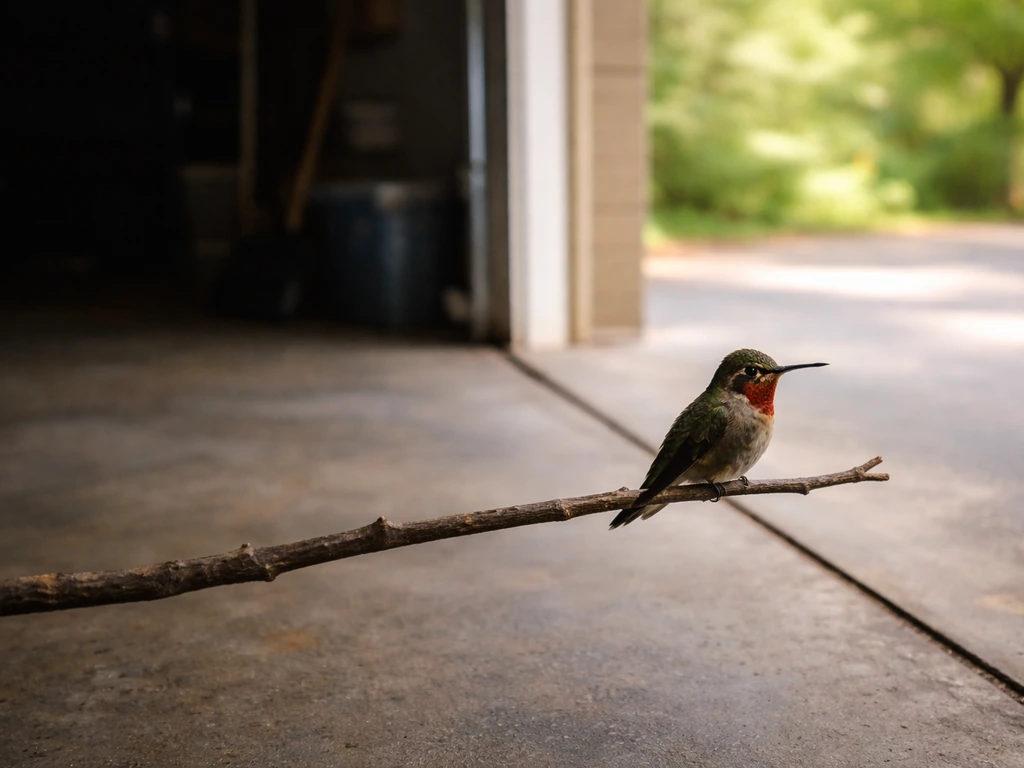
Hummingbird Stuck in Garage: Safe Escape, Help, and Prevention
Calm step-by-step rescue for a hummingbird stuck in a garage, plus DIY troubleshooting, humane care, and prevention tips
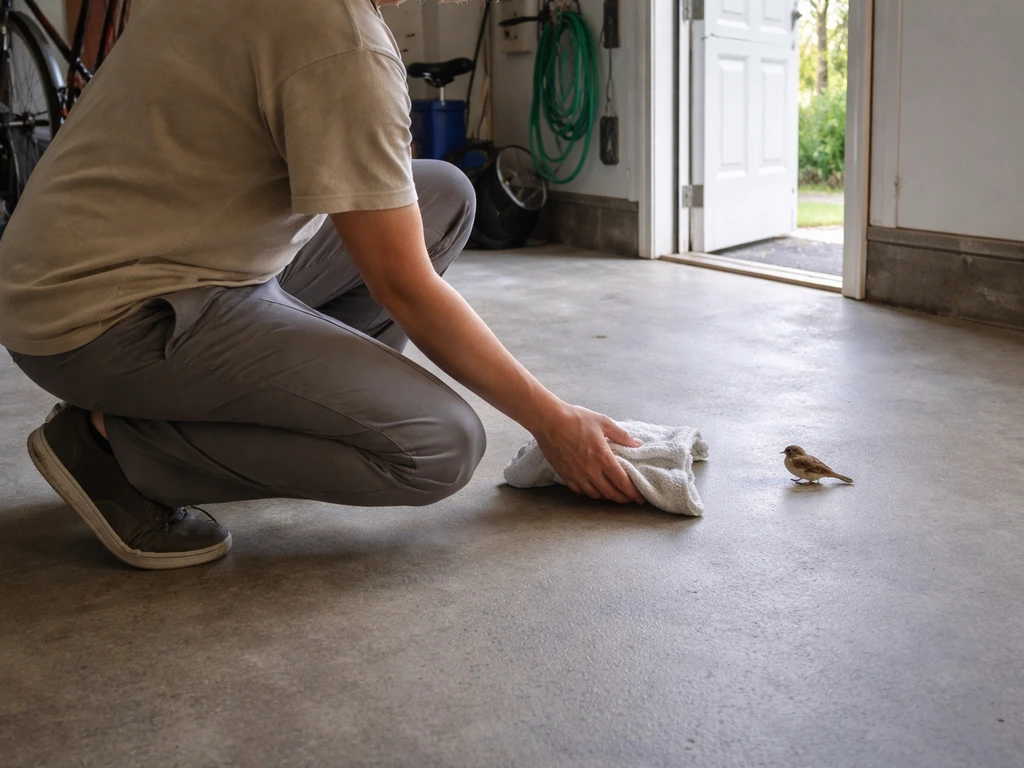
How Do I Get a Bird Out of My Garage Safely
Humane step-by-step guide to get a trapped bird out safely, what to avoid, and how to seal garage entry points.
How to Get a Trapped Bird Out of Your House Safely
Humane, step-by-step guide to get a trapped bird out safely, handle injuries, and prevent future entry.