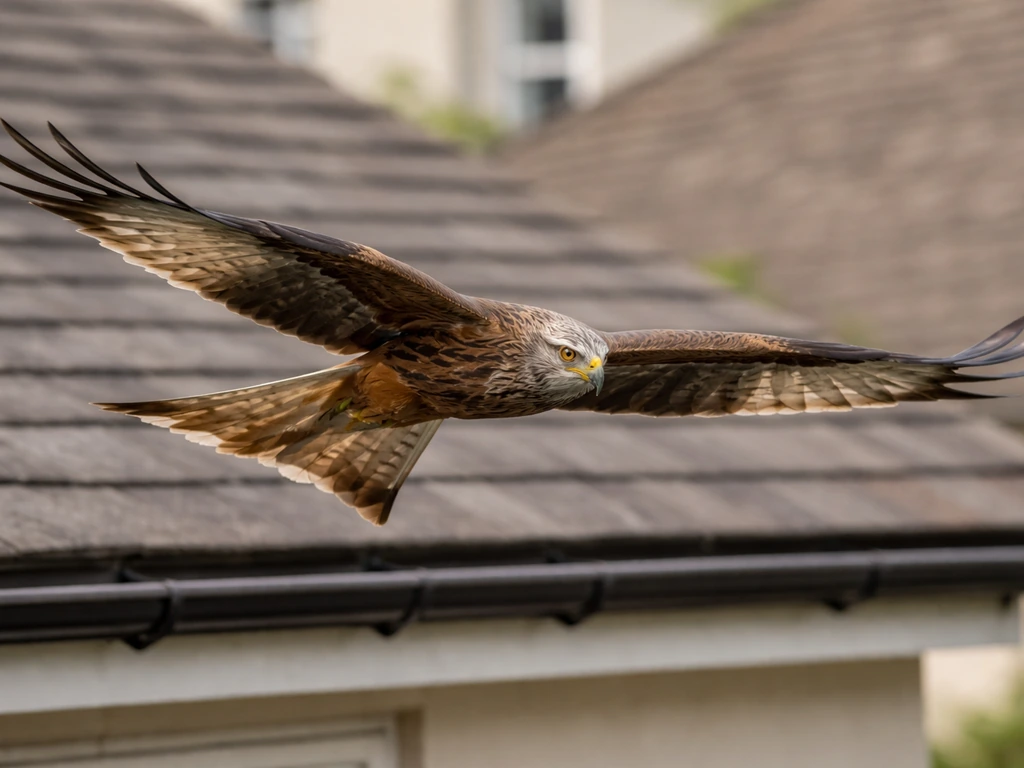
If a koel is waking you up at 4am with its relentless ascending call, or you keep spotting a glossy black bird loitering in your garden trees, you can deal with it humanely and effectively using a combination of fast deterrents, attractant removal, and physical exclusion. The key steps are: confirm it's actually a koel, cut off whatever is drawing it to your property, apply deterrents to its favourite spots, and use netting or spikes to permanently deny it access to roosting and entry points. If there's an active nest with eggs or chicks involved, stop and call a wildlife professional before you do anything else.
How to Get Rid of a Koel Bird Safely Step by Step
Maya Carver
9 Jun 2026
Is it actually a koel? Quick ID checklist
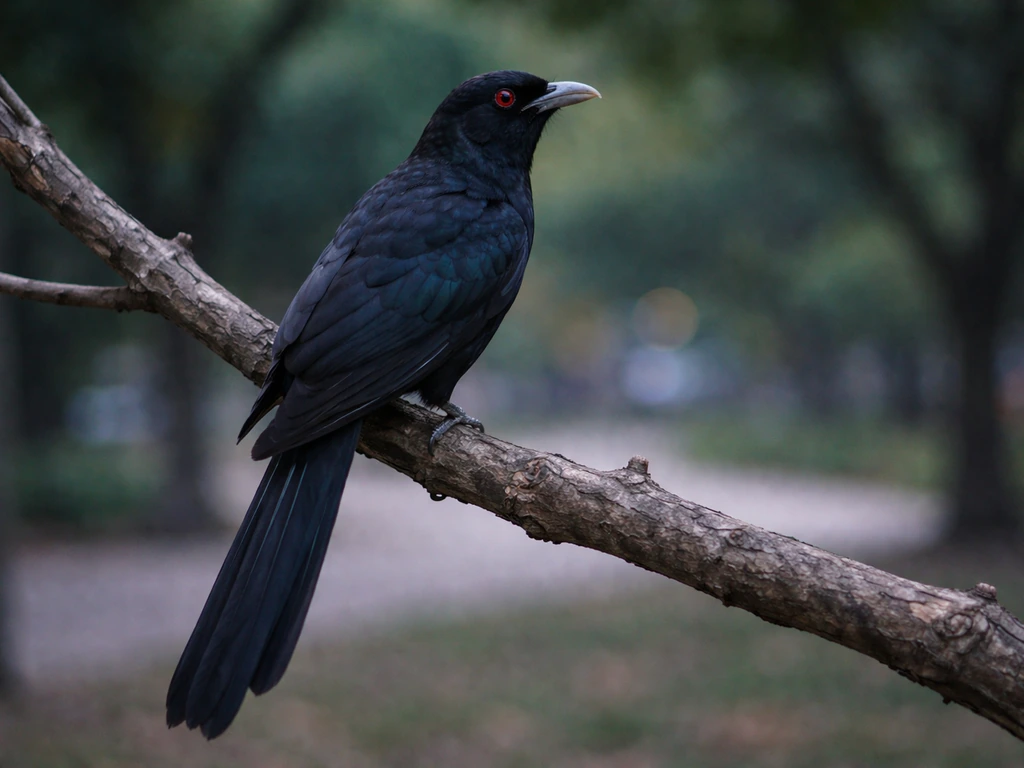
Before you spend money and time on deterrents, make sure you're dealing with a koel and not a different black bird. Misidentification is genuinely common, especially in urban areas where crows, common mynas, grackles, and koels can all be seen in similar spots. If you are dealing with grackles instead of koels, the same idea applies: identify the bird correctly and then remove the food and shelter that keep bringing it back grackle bird.
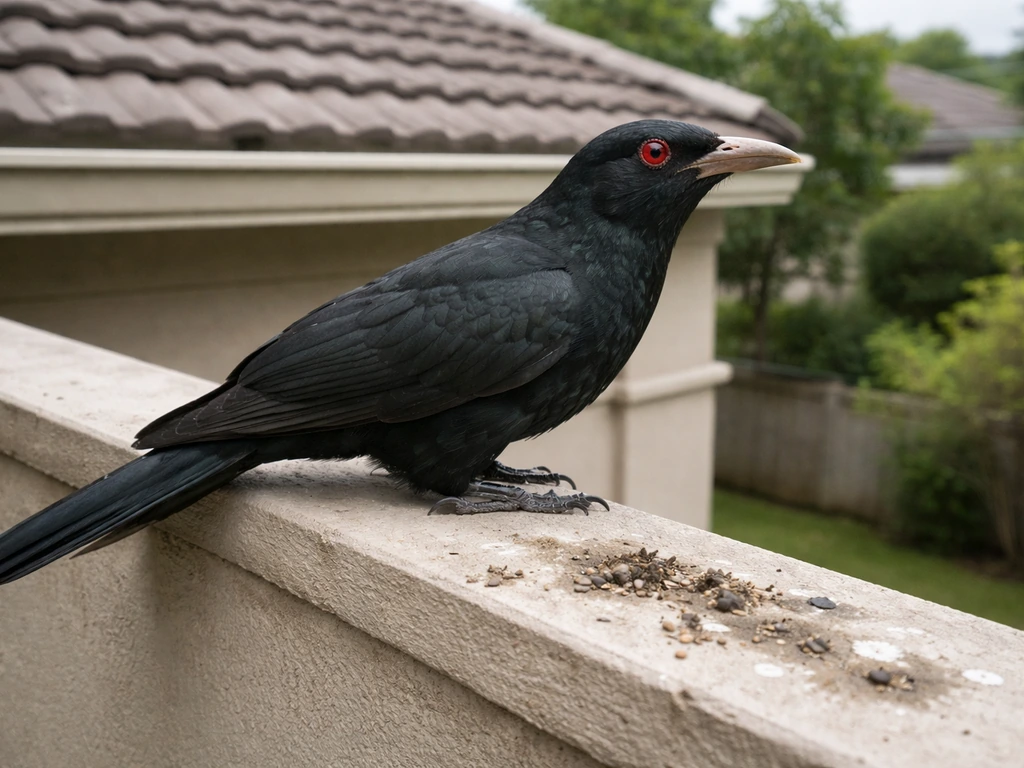
The Asian koel (Eudynamys scolopaceus) has a few very specific traits that set it apart. The male is glossy bluish-black all over with a faint blue-green or purple sheen in direct sunlight. Its bill is apple-green to lime-green and noticeably stout, and its eyes are a vivid red. It has a long tail and a crow-like silhouette, which causes the confusion, but no crow has that combination of green bill and red eye. The female looks completely different: she's brown with white dots on the wings, streaking on the head and throat, and patterned underparts. Immature birds look similar to females.
The call is the most reliable giveaway. During the breeding season (typically spring through summer), the male produces a loud, repetitive ascending whistle that rises in pitch, often starting before dawn and continuing into the evening. It calls in bouts and will repeat the sequence dozens of times without stopping. No other common urban bird sounds quite like it. If the noise is what's driving you crazy, this call pattern alone is nearly diagnostic.
Koels prefer light woodland, forest edges, parks, and gardens with mature trees. A habitat ecology study on Asian koels in agroecosystems also reports field-observed feeding and roosting in human-modified landscapes, consistent with their preference for these urban-adjacent green cover habitats prefer light woodland, forest edges, parks, and gardens with mature trees. Near buildings, look for them perched high in fruit-bearing trees, dense canopy cover, or roosting in sheltered eaves and ledges. They also turn up wherever their brood-parasite host birds (like common mynas) are nesting, since koels lay their eggs in other birds' nests rather than building their own.
| Feature | Asian Koel (Male) | Common Crow | Common Myna | Common Grackle (N. America) |
|---|---|---|---|---|
| Plumage | Glossy bluish-black with sheen | Flat black | Black head, brown body, white wing patches | Iridescent black, head colour differs from body |
| Bill colour | Apple-green / lime-green | Black | Yellow | Black |
| Eye colour | Red | Dark brown/black | Yellow ring around eye | Pale yellow |
| Tail length | Long | Medium | Short | Long, keeled |
| Signature behaviour | Repeated ascending whistle call | Cawing | Mimicry, strutting | Loud chatter, flocking |
Immediate safe response: what to do right now
Your first priority is safety for people and pets, not chasing the bird away. Koels are not aggressive to humans, but accumulated droppings anywhere birds roost are a real health concern. Bird droppings can contain fungal spores that cause histoplasmosis, and general contamination risk is present wherever droppings build up. CDC notes that hantavirus can spread when you are exposed to contaminated rodent droppings, urine, or nesting materials, so use safe handling and cleanup practices to protect yourself droppings can spread hantavirus. Do not sweep or blow dry droppings without protection.
- Keep children and pets away from areas directly below roost sites until the area is cleaned.
- If you need to clean up droppings today, wear an N95 or P100 respirator, disposable gloves, and eye protection. Dampen the area first with water or a disinfectant solution before wiping or scraping to avoid aerosolising spores.
- Remove any food sources in the immediate area: fallen fruit, exposed pet food, open compost bins, or bird feeders.
- If you've been feeding wild birds intentionally, stop for now. Seed feeders and fruit feeders are a direct attractant.
- Check whether the bird is roosting in an enclosed space like a roof cavity, vent, or eave. If it's inside, do not seal the entry point yet. Sealing a bird inside creates a much worse problem.
- Note where the bird goes at dusk and where it calls from at dawn. You'll need this for targeting deterrents.
DIY deterrents that work fast
Quick deterrents won't permanently solve the problem on their own, but they can interrupt the bird's habit and buy you time while you put longer-term exclusion in place. If you also want a fuller step-by-step on how to get rid of a crane bird, follow the same “deterrence first, then permanent exclusion” logic described here. The most effective approach combines more than one method at the same time.
Visual deterrents
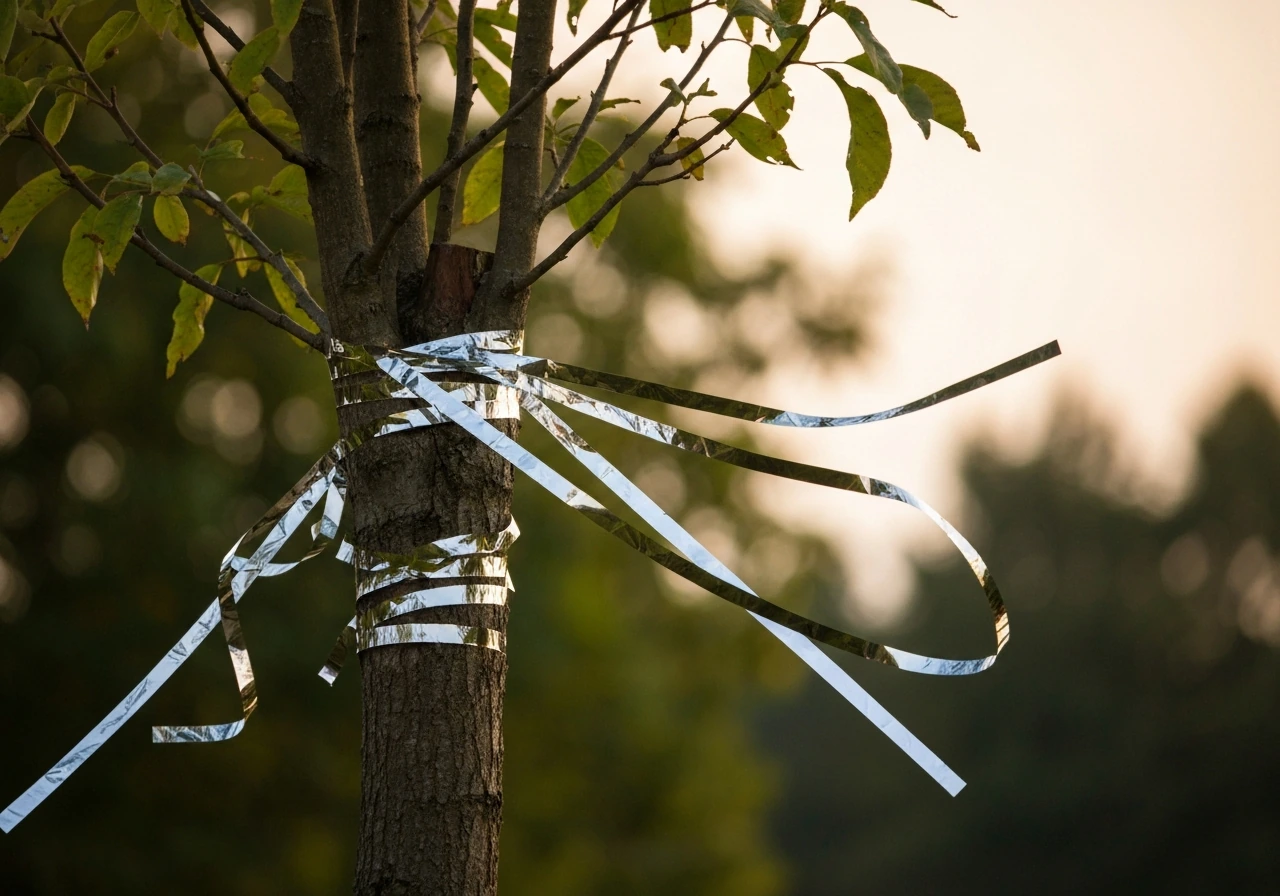
Reflective bird scare tape is one of the fastest and cheapest options. Hang strips so they can flap and spin freely in the breeze, the movement and flash are what unsettle the bird, not the tape lying flat. Hang it in and around the tree or structure the koel is favouring. Reflective pinwheels or old CDs strung on a line work on the same principle. These tend to lose effectiveness after a few weeks as the bird habituates, so combine them with attractant removal for better results.
Auditory deterrents
Predator call playback devices (broadcasting hawk or falcon calls) can startle koels away from a roost site temporarily. Play them at dawn when the koel is most active, and move the speaker every few days so the bird doesn't get used to it coming from one fixed spot. Ultrasonic devices have mixed evidence behind them and are not a reliable standalone solution.
Motion-activated deterrents
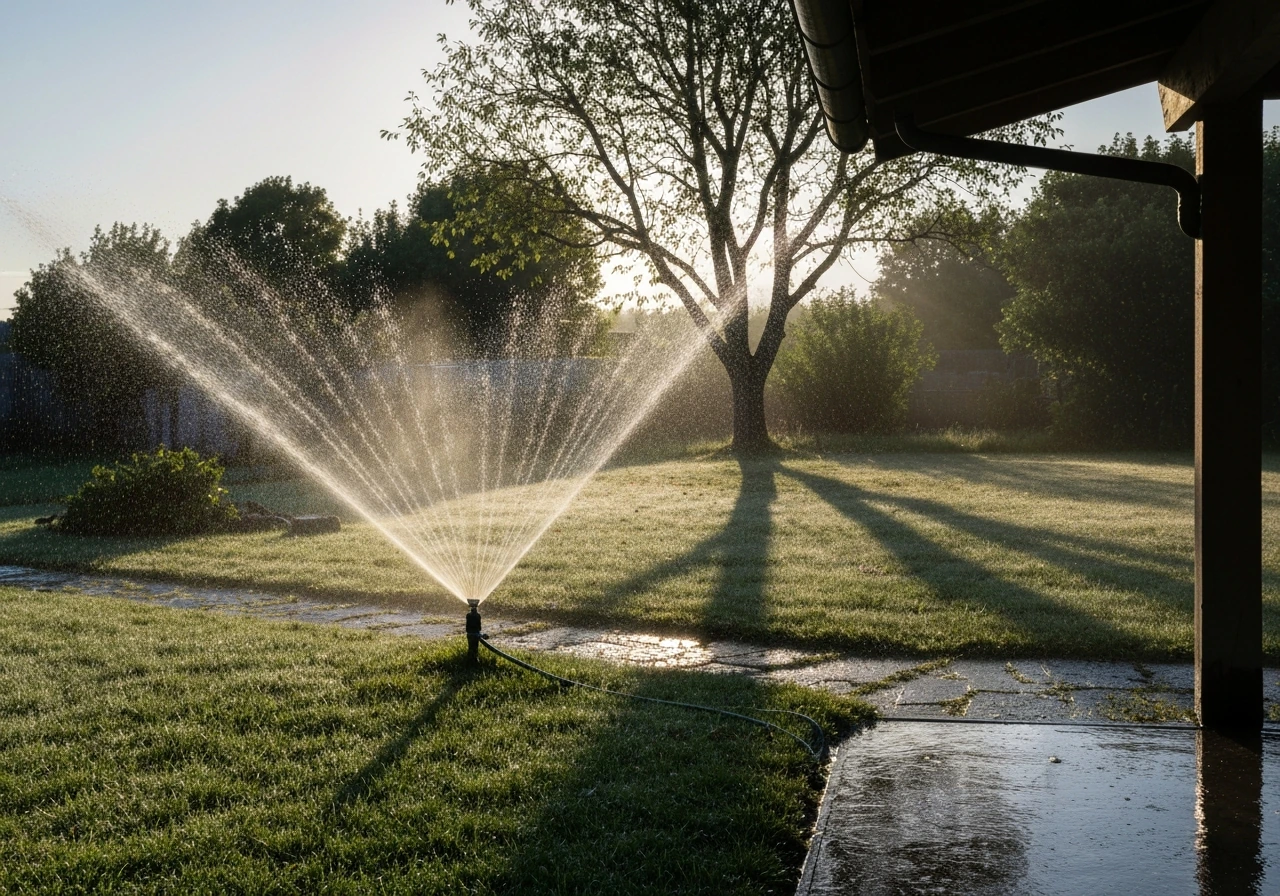
Motion-activated sprinkler systems aimed at a roost tree or garden area can be surprisingly effective. Koels are not especially bold and a sudden burst of water at dawn disrupts their routine. Position the sensor to cover the approach path or the favoured perch. Similarly, motion-activated lights in covered roost spots (eaves, overhangs) disturb birds that rely on darkness for shelter.
Light deterrents
If the koel is roosting in a sheltered, shadowy spot like an eave or carport roof, a solar-powered LED light or a reflective Mylar balloon in that spot can make the area feel exposed and inhospitable. These work best indoors or in semi-enclosed spaces rather than open trees.
One important note: if the calling is your main problem and the bird is roosting in a large tree on or near your property, deterrents in the tree itself may have limited effect. Koels will simply move to the next suitable tree and carry on calling. In that case, removing attractants and making your specific building less hospitable is more practical than trying to silence a bird in a garden tree.
Exclusion and proofing: the permanent fix
Deterrents delay. Exclusion solves. Physical barriers that deny the bird access to roosting, roosting, and entry points are the only truly long-term solution, and they work just as well against koels as they do against any other pest bird. This is where you invest your main effort.
Inspect the building first
Walk the perimeter and check rooflines, eaves, vents, gaps under solar panels, and any ledges or overhangs where a bird could settle. Note where droppings have accumulated (this shows you the actual perch and roost sites). Check whether any gaps lead into roof cavities or wall voids. Do this inspection before any exclusion work, and confirm no birds or nests are currently inside the space before you seal anything.
Anti-roosting spikes
Bird spikes are the right tool when koels are landing and roosting on flat ledges, roof ridges, gutters, or window sills. They work by removing the flat surface the bird needs to land comfortably. Spikes are not designed to harm the bird and won't injure them when installed correctly. Fix them firmly along any horizontal surface that shows droppings or feather evidence. They're maintenance-free once in place and rated as a long-term humane solution. Use them where birds are landing but not nesting.
Bird netting
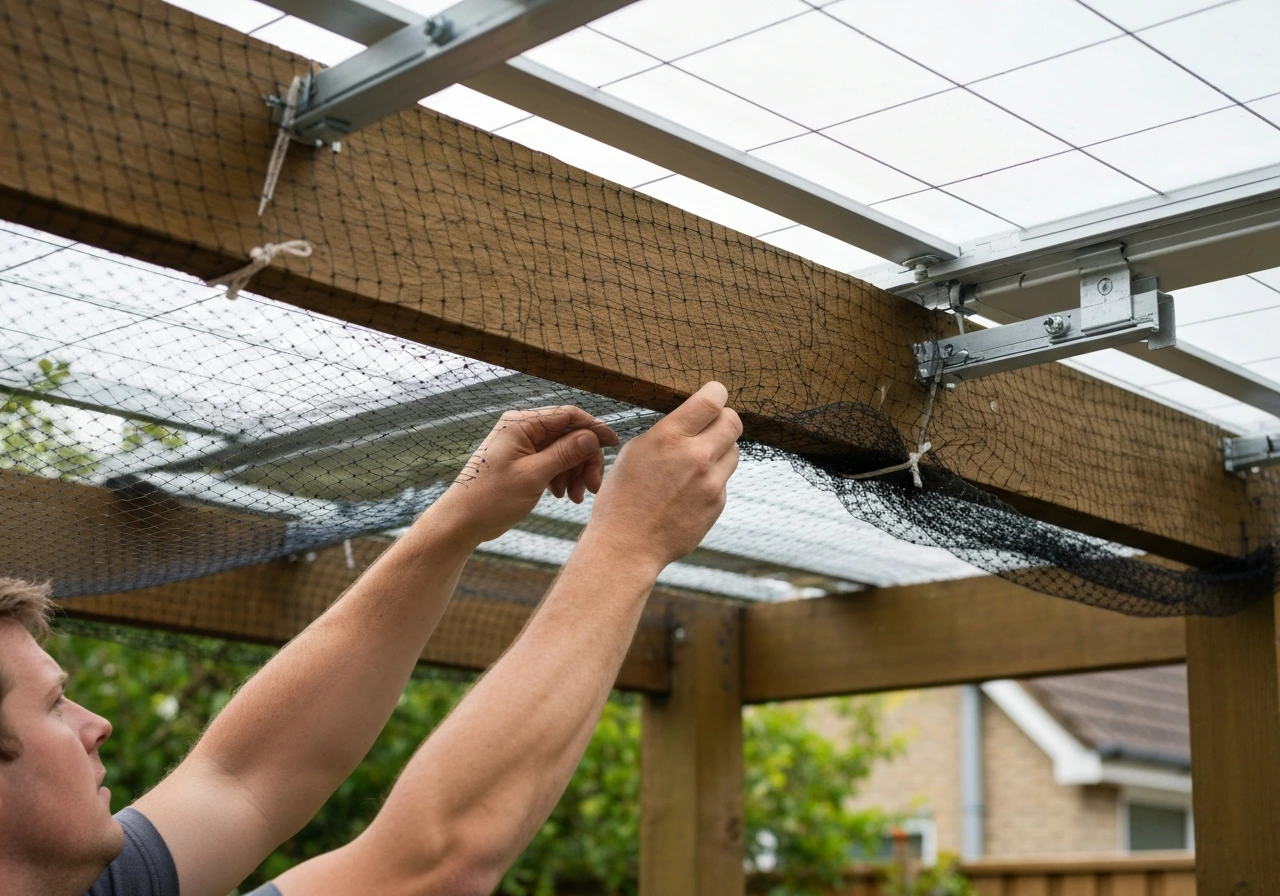
Netting is the better choice when the bird is accessing a more complex area: a pergola, the gap under solar panels, a fruit tree, or an area where spikes can't physically cover the space. Net over fruit trees to deny a food source, or install netting over eave gaps and recessed areas to block access entirely. Local council and USDA guidance both list bird netting as among the most proven and least intrusive exclusion methods. If there's an active nest in the area, netting is generally preferred over spikes because it blocks the space without targeting a specific perch point.
Seal gaps and entry points
Any gap larger than roughly 25mm in eaves, fascia boards, roof vents, or under roof tiles is a potential entry point. Use wire mesh, foam sealant, or purpose-made vent covers to close these off. Always confirm a bird is not currently inside before sealing. If a koel has been roosting inside and you seal the entry, you either trap it inside (an animal welfare and hygiene problem) or it forces its way out and damages the seal. Check at midday when birds are typically away from roosts, then seal.
Managing nests: stop before you touch anything
This is the most important legal and safety point in this entire guide. Under legislation like the US Migratory Bird Treaty Act, and equivalent protections in many other countries, it is illegal to destroy an active nest containing eggs or dependent chicks. If you find a nest with eggs or young birds, do not touch it, do not remove it, and do not seal the entry point. Mark the location and call a licensed wildlife professional or your local wildlife authority immediately. The USFWS is clear: nest removal permits are only issued for human health and safety concerns, and without a permit, removing an active nest exposes you to legal liability.
Remember, koels are brood parasites. They don't build nests. If you find a nest with unusual eggs in it (koels lay eggs that broadly mimic the host species), the nest technically belongs to the host bird (often a myna or crow), and the same legal protections apply. Don't assume a nest is fair game because the koel is using it.
Cut off what's drawing it in: habitat and attractant control
Koels come to an area for food, shelter, and proximity to host birds' nests. Remove those three things and you make your property significantly less attractive, regardless of what deterrents you use.
Food sources
- Net or harvest fruit trees before fruit fully ripens. Koels feed on fruit, seeds, and insects, and a productive fruiting tree is a major draw.
- Remove bird feeders, or at minimum switch to seed types koels don't favour (they prefer fruit and large berries over small dry seed).
- Keep compost bins fully sealed with lids.
- Clean up fallen fruit from the ground promptly, especially figs, mulberries, and other soft fruits.
- Don't leave pet food outside.
Water
Bird baths and ornamental ponds are minor attractants. If you have a serious koel problem, temporarily remove bird baths or move them to a less accessible location. Blocked gutters holding standing water are also a draw worth clearing.
Cover and landscaping
Koels favour dense canopy cover adjacent to buildings. If you have large trees with very thick canopy directly against your building, consider selective pruning to reduce the shelter value. This doesn't mean removing the tree, just thinning the canopy so the area feels more exposed. Dense ivy, climbing plants on walls, and thick hedge rows along building edges can all provide roost shelter. Trim these back from the building facade by at least 30-40cm.
Also consider the host-bird angle: koels gravitate toward areas where common mynas or crows are nesting, because that's where they lay their eggs. If you have a persistent myna problem near the building, addressing that at the same time will reduce koel pressure too. Similarly, if you're already dealing with other black bird species around your property, the exclusion and proofing steps here overlap considerably with approaches for those situations.
When to call a wildlife professional (and when DIY is fine)
Most koel problems can be handled with the DIY steps above. If you’re wondering how to get rid of a kite bird, the same exclusion and habitat steps used for koels usually apply. But there are specific situations where you need to stop, put the tools down, and get a professional involved.
| Situation | DIY appropriate? | Action |
|---|---|---|
| Koel roosting on external ledges, no nest | Yes | Install spikes or netting, remove attractants |
| Koel calling from nearby trees, no roosting on building | Yes | Remove food sources, apply deterrents near building |
| Koel entering roof cavity or eave void, no nest found inside | Yes, with care | Confirm bird is out, then seal entry point with mesh |
| Active nest with eggs found (host nest or otherwise) | No | Stop all work, contact licensed wildlife authority |
| Chicks or dependent young present | No | Stop all work, contact wildlife professional immediately |
| Large droppings accumulation (bucket-scale or more) | Caution | Hire professional cleanup with appropriate PPE; consult public health guidance |
| Repeated return after multiple DIY attempts | Partial | Call a pest/wildlife professional for site assessment |
| Koel protected under local law and causing a health or safety risk | No | Contact wildlife authority for permitted intervention |
When you call a wildlife professional, be ready to tell them: the species you believe is involved, the location and behaviour (roosting, nesting, calling), how long it's been happening, what DIY steps you've already tried, and whether you've seen any nest or eggs. The more specific you are, the faster they can help.
A note on legal protection: in many countries and territories, koels are protected under migratory bird legislation or equivalent national wildlife laws. This doesn't mean you can't exclude them from your building. It means you can't kill, trap, or deliberately harm them, and you cannot remove or destroy active nests containing eggs or chicks without a permit. Exclusion, deterrence, and habitat modification are legal everywhere. When in doubt about the rules in your specific jurisdiction, check with your local wildlife authority before acting.
Stopping koels from coming back: the long-term plan
The breeding season is when koel problems peak. Males start calling to mark territory and attract mates, which also signals that they're actively scouting for host nests (like myna or crow nests on or near your building). Outside of breeding season, koel pressure drops significantly. Use the quieter months to do your proofing work so you're ready before the next season starts.
Seasonal timing checklist
- Late dry season / autumn (before breeding starts): Inspect all roof edges, eaves, vents, and ledges. Seal any gaps. Install spikes on known perch points. Net fruit trees. This is your ideal window.
- Early breeding season (first calls heard): Activate motion deterrents and hang reflective tape immediately. Confirm no nests have formed in the intervening period before any exclusion work.
- Peak breeding season (koels calling daily): Avoid any physical disturbance of trees, eaves, or rooflines without checking for active nests first. Focus on deterrents and attractant removal only.
- Post-breeding season: Remove reflective and audio deterrents (to reset the bird's habituation). Do a full droppings cleanup with proper PPE. Inspect and repair any exclusion hardware that's been damaged.
- Year-round: Keep fruit trees netted or harvested promptly, keep outdoor food secured, and maintain clearance between dense vegetation and building surfaces.
Facility manager checklist
For commercial or multi-unit buildings, the same principles apply but at a larger scale. Document roost and entry points with photos as part of your building maintenance records. Schedule a bird proofing inspection every spring before breeding season. Brief cleaning staff on PPE requirements for any droppings cleanup. Keep the contact details of a licensed wildlife handler on file for the inevitable nest situation. Physical exclusion (netting and spikes) is your most cost-effective long-term spend because it removes the problem permanently rather than requiring repeated seasonal intervention.
If you stay consistent with the proofing and attractant removal, a koel that can't find food, shelter, or a host nest near your building will move on. They're not especially persistent once their needs aren't being met. The birds that return year after year are almost always finding something on your property worth returning for. Take that away, and your problem is solved.
FAQ
How can I tell if a black bird calling at dawn is definitely a koel and not a common myna or crow?
Use the call pattern first (a repetitive ascending whistle that runs in long bouts, often starting before dawn). Then cross-check field marks: the koel’s distinctive apple-green to lime-green stout bill and vivid red eyes (males), or the female’s brown body with wing dots and streaked head and throat. If the call doesn’t match that rising, repeating sequence, treat it as a different species and adjust your exclusion accordingly.
My bird is calling from a big tree, and I only have access to the garden. Will deterrents still work?
Often only partially. If the bird is roosting in a large tree on or near your property, it can simply switch trees and continue calling. Focus on making your specific roosting and entry spots less hospitable (remove shelter, block building gaps, reduce attractants), and use short-term deterrents mainly to reduce how often it visits your immediate area.
Is it safe to clean up droppings after installing spikes or netting?
Yes, but only after you’ve ensured the bird is excluded and not currently roosting inside a cavity. Use PPE (at minimum gloves and an appropriate mask), avoid dry sweeping or blowing, and dampen droppings before removal to reduce airborne particles. Cleaning is also a chance to confirm which perches were active, since droppings show the true landing and roost points.
Can I use ultrasonic repellents or apps to stop koels from calling?
Ultrasonic devices have mixed evidence and should not be treated as a standalone fix. If sound is the main issue, pair timing-based deterrents (like dawn-focused playback) with permanent exclusion of roost and entry points, because koels will often return if food or nesting opportunities remain.
Do I need to wait until the bird stops calling before installing netting or spikes?
You should inspect and install in a way that prevents trapping. Check that there are no birds or nests inside any covered area before sealing gaps, and do an additional check around midday when birds are typically away from roosts. If you cover an active access point while a bird is still inside, you risk trapping it and creating a worse hygiene and welfare problem.
What’s the risk if I seal an entry point while the koel or a host bird is still inside the space?
You can create two problems: animal welfare issues if the bird cannot exit, and property damage if it forces its way out. The guide’s safe approach is to verify the space is empty before sealing, then inspect at a time when birds are less likely to be present (midday is a good rule of thumb).
If I find a nest, the eggs look unusual. What should I do if I suspect it’s a koel brood-parasite situation?
Assume all active nests are protected, even if the nest looks odd. Koels lay eggs that can mimic the host species’ eggs, so the nest belongs to the host bird and is still legally and ethically protected. Mark the location and contact a licensed wildlife professional instead of attempting removal or sealing.
Will predator call playback harm koels or just scare them away?
It’s intended to be a temporary startle, but koels may habituate if the speaker location stays the same. Use it as short-term disruption (for example, at dawn), then change the speaker position every few days and prioritize exclusion so the bird cannot return to roost or feed.
What’s the best first-proofing checklist for excluding koels from a house or balcony?
Walk the perimeter and focus on horizontal landing surfaces (gutters, roof ridges, ledges, window sills) and potential access gaps (eaves, fascia boards, roof vents, under solar panel edges, and any recessed areas). Look for droppings and feather evidence to map exact perch and roost points, then choose spikes for flat perches and netting for complex areas.
How do I choose between spikes and netting when I’m not sure where the bird is landing?
If you can clearly identify a specific flat landing or roosting surface with droppings, spikes are usually the right tool. If the bird accesses a larger or irregular space (fruit trees, pergolas, recessed gaps, areas where spikes cannot physically cover the entry paths), use netting to deny access broadly. Netting is also often preferred when there’s nesting activity risk because it blocks the space without targeting a single perch.
What’s the right way to block gaps, and what size gap actually matters?
Treat small openings as real access points, especially around eaves, fascia, roof vents, and under roof tiles. A practical rule in the guide is that gaps larger than about 25 mm can be entry routes. Use purpose-made vent covers, wire mesh, or appropriate sealant, and only after confirming nothing is currently inside.
I’m seeing repeated visits and calls only during certain months. Should I plan exclusion around breeding season?
Yes. Koels peak during the breeding season because males call to mark territory and they scout host nests nearby. Do the proofing and habitat changes in the quieter months so exclusions are already in place when calling ramps up, reducing how often the bird needs to return to your property.
For a multi-unit building, what documentation or maintenance routine helps prevent recurring koel problems?
Take photos of identified roost points, droppings hotspots, and entry gaps, and store them as part of seasonal building maintenance records. Schedule bird-proofing inspections before breeding season, brief relevant staff on PPE for any droppings cleanup, and keep the contact details of a licensed wildlife handler ready for any active nest situation.
If I remove bird baths and clear standing water, will that solve the issue by itself?
It can reduce attractants, but it rarely solves the problem alone if roosting and entry points remain. Koels are drawn by food, shelter, and proximity to host nesting sites. Combine attractant removal (temporarily moving baths, clearing blocked gutters) with physical exclusion so the bird cannot keep using the same safe spots.
Next Article
How to Get Rid of Kite Bird: Safe Removal and Prevention
Humane, safe steps to remove kite birds, block roosts, clean attractants, and prevent returns with checks and timing.