You can discourage a crane bird from hanging around your property today using a combination of habitat changes, visual deterrents, and exclusion barriers, but before you do anything, you need to confirm what species you're dealing with, because cranes are protected under federal law and some are critically endangered. USDA APHIS Wildlife Services’ blank" rel="noopener noreferrer">Wildlife Damage Management Technical Series also includes species-specific technical resources for cranes. If what you really mean is a kite bird, the removal approach is different, so verify the species before using any deterrents cranes. Harassing or disturbing them the wrong way can land you in serious legal trouble. The good news is that most crane conflicts around homes and buildings are solvable without permits, as long as you use non-harmful deterrents and stay away from active nests.
How to Get Rid of a Crane Bird: Humane Steps to Stop It

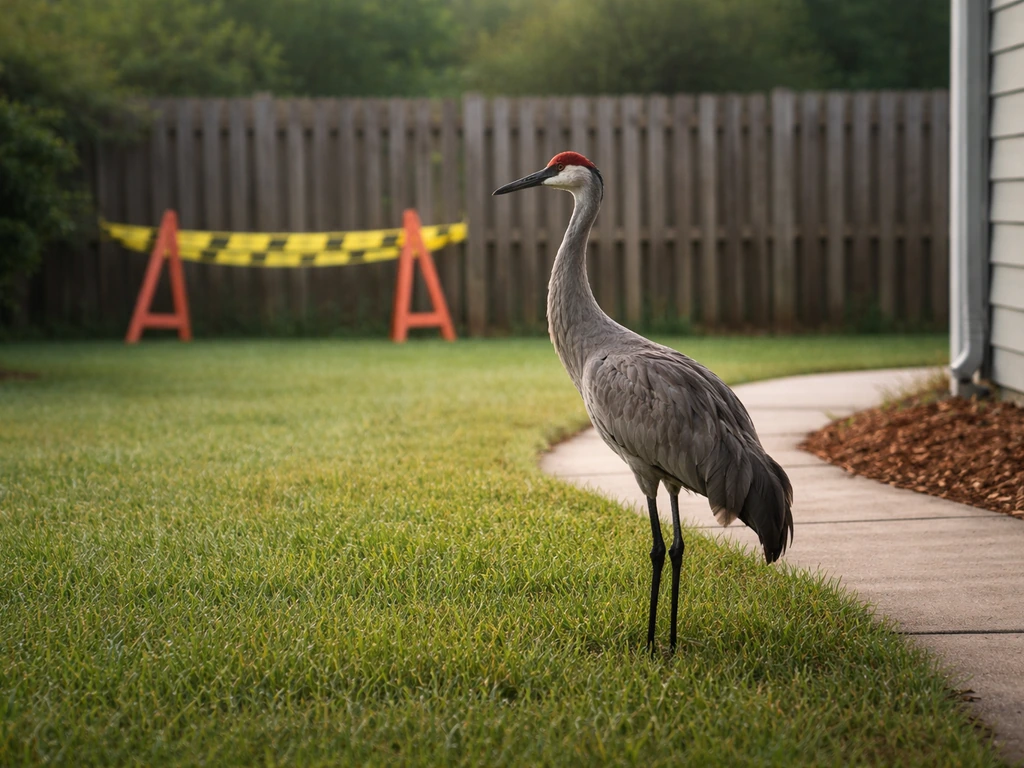
First: Confirm What You're Actually Looking At
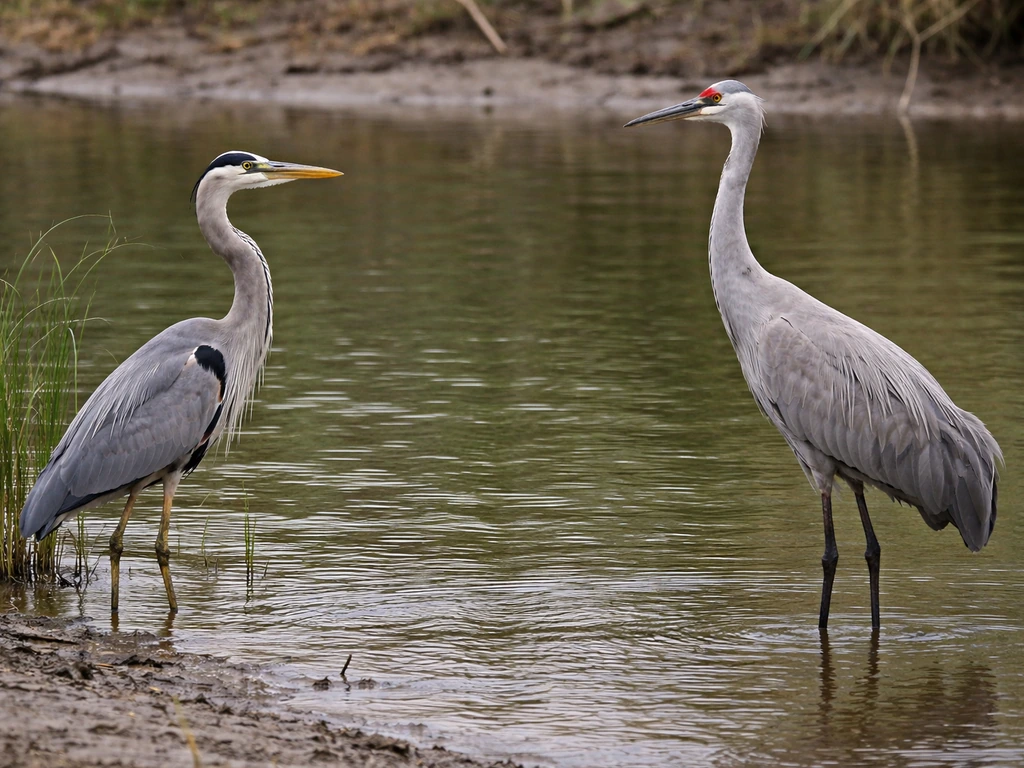
The most common misidentification mistake people make is calling a Great Blue Heron a crane. They're completely different species and require different responses. The Pennsylvania Game Commission explicitly flags this confusion, and it matters because the management approaches aren't identical. Here's how to tell them apart quickly.
| Feature | Sandhill Crane | Great Blue Heron | Whooping Crane |
|---|---|---|---|
| Plumage | Gray body, red/bare forehead patch | Blue-gray with black stripe on head, white face | Mostly white with black wingtips |
| Neck in flight | Neck stretched straight out | Neck folded back in an S-curve | Neck stretched straight out |
| Size | Large (around 4 ft tall, 5 ft wingspan) | Large (similar height, but slimmer) | Very large (5 ft tall, 7.5 ft wingspan) |
| Bill | Stout, pointed, dark | Long, yellow-orange dagger bill | Long, dark bill |
| Call | Loud rattling bugle/gargle | Deep, hoarse croak | Loud, trumpet-like call |
| Juveniles | Brownish, less contrasted | Similar to adults | Tan-rusty patches on white body |
If you're seeing a white bird with black wingtips, stop everything and contact your local U.S. Fish and Wildlife Service office before attempting any deterrent. That is almost certainly a whooping crane, which is one of the rarest birds in North America and has its own strict protection framework. Sandhill cranes are gray with that distinctive red forehead patch, and they're far more common, especially during spring and fall migration across the central U.S. Both species fly with necks fully extended, which is the fastest way to rule out a heron at a glance.
Why Is the Crane There?
Cranes show up around buildings for predictable reasons. They're foraging birds that feed on grains, insects, small vertebrates, and plant matter in open areas. Properties with irrigated lawns, ponds, golf courses, retention basins, agricultural fields nearby, or open grassy areas are magnets. They also visit during migration as resting stopovers, which means the bird may simply move on within a day or two on its own. If you're seeing one repeatedly, or a group returning daily, that's a feeding or roosting habit that won't self-correct without intervention.
Immediate Safety Steps (Do These First)
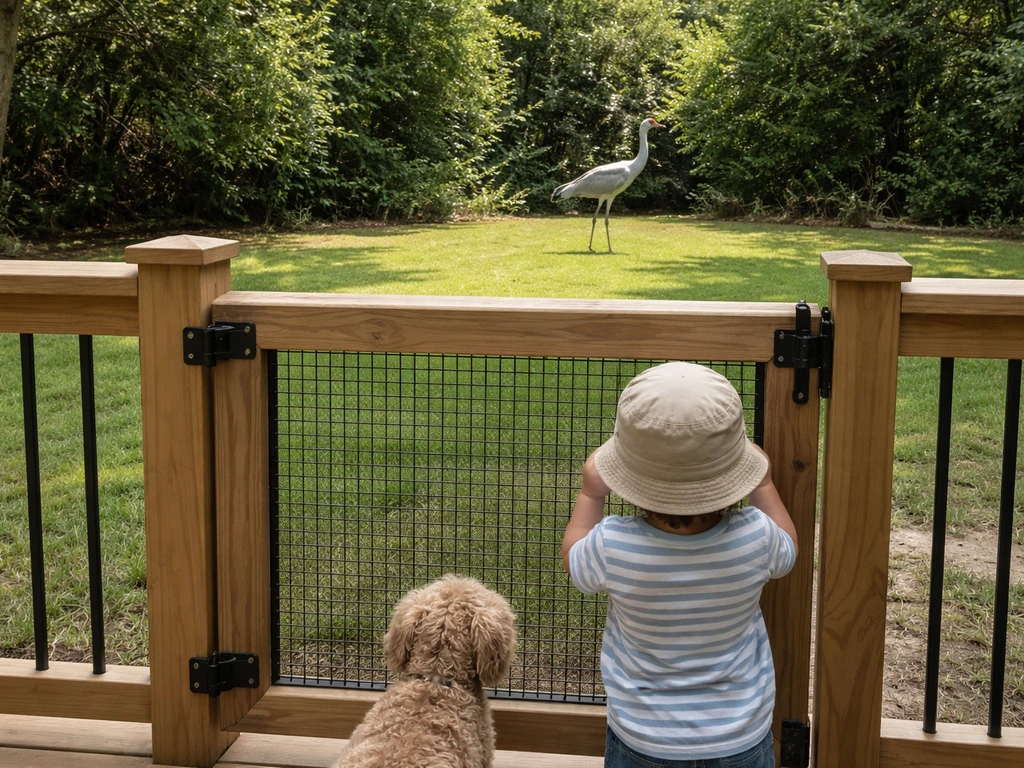
Cranes are not typically aggressive toward people, but they are large birds with pointed bills and powerful legs. During nesting season, a defending bird can strike hard enough to cause injury. Keep people and pets at a minimum of 30 to 50 feet away until you've assessed the situation. If the bird has already entered a building through an open bay door, loading dock, or similar large opening, do not chase or corner it. Open as many exit points as possible, dim interior lights if you can, and let the bird find its own way out. Chasing a large bird in an enclosed space risks injuring both the bird and people.
- Keep children and pets indoors or at a distance until the bird leaves or is deterred
- Do not approach an active nest; note its location and keep a buffer of at least 50 feet
- If cranes are entering a building, open exit doors wide and reduce interior noise and movement
- Clean up any droppings using gloves, a mask, and a disinfectant spray; bird droppings can carry pathogens, so don't handle them bare-handed
- Document the bird's behavior, location, and approximate arrival/departure times for 2 to 3 days before investing in permanent deterrents
Deterrents You Can Put in Place Today
These are the fastest-acting, lowest-effort steps. None of them require permits and none harm the bird. The goal here is to make the property feel unsafe or unattractive enough that the crane chooses to forage or rest somewhere else.
Visual and Sensory Deterrents
- Mylar flash tape or reflective ribbon: Hang strips along fence lines, near ponds, or across garden areas. Movement and reflected light unsettle large wading birds.
- Predator decoys: A realistic coyote or dog decoy placed near a pond or lawn can deter cranes temporarily, but move it every day or two or the birds habituate quickly.
- Motion-activated sprinklers: These are highly effective for open lawn and pond-edge areas. Cranes don't like surprise water jets and will avoid zones where they trigger consistently.
- Noise devices: Propane cannons, distress call speakers, or even a motion-activated alarm can disrupt crane comfort. Check local noise ordinances before deploying cannons in residential zones.
- Human presence simulation: Cranes are wary of humans. Scarecrow-style silhouettes, especially ones that move in the wind, add to the effect.
Habitat Modifications That Work Fast
The Virginia Cooperative Extension's wildlife damage management guidance makes this point clearly: reducing available food, water, and shelter is the most durable deterrent you have. If you remove what the crane is coming for, it stops coming. For most residential situations, that means letting grass grow slightly longer in open areas (cranes prefer short, open turf where they can see predators coming), temporarily draining or covering ornamental ponds, and stopping any supplemental feeding of wildlife in the area. If cranes are foraging on a recently seeded lawn or garden, cover those areas with temporary bird netting immediately.
Step-by-Step DIY Exclusion and Proofing
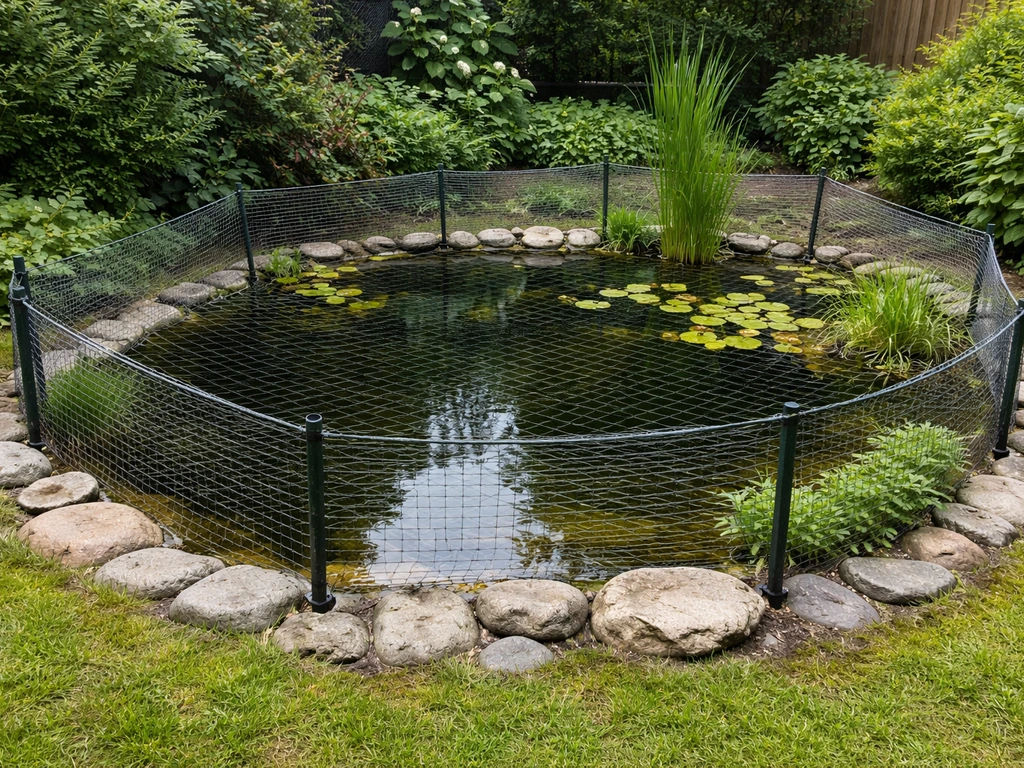
If the crane is regularly accessing specific areas, like a pond, a garden bed, an open courtyard, or a building entry, you need physical exclusion to get consistent results. Deterrents wear off. Physical barriers don't.
Pond and Water Feature Exclusion
- Measure the perimeter of the pond or water feature you want to protect.
- Install a low fence (2 to 3 feet tall) of plastic mesh or wire fencing around the edge. Cranes are waders, not strong jumpers, so a low barrier is often sufficient if it's tight to the ground.
- If fencing the full pond isn't practical, string monofilament fishing line or metal wire in a grid pattern 6 to 12 inches above the water surface using posts around the pond edge. Space strands 1 to 2 feet apart. Cranes won't land where they can't safely walk in, and the lines disrupt their landing approach.
- Alternatively, drape bird netting directly over the water feature. Per APHIS guidance, net edges must extend to the ground so birds cannot walk underneath the barrier.
- Check barriers weekly and after storms for gaps, sagging, or debris that creates new entry points.
Garden and Lawn Area Exclusion
- For garden beds or newly seeded areas, lay bird netting directly over the surface and secure the edges with landscape staples or weighted stakes. Leave no gap at the perimeter.
- For larger open lawn areas, post-and-wire systems (steel posts with wire strands strung between them at varying heights) create a physical barrier that makes landing and walking uncomfortable for large birds like cranes.
- Increase ground vegetation texture where possible. Cranes strongly prefer short, flat turf. Let border areas grow to 8 to 12 inches to break up the open sightlines they need.
- Remove any grain, seed, or food waste from the area. If you have birdfeeders, move them or remove them temporarily.
Building Access Points and Structures
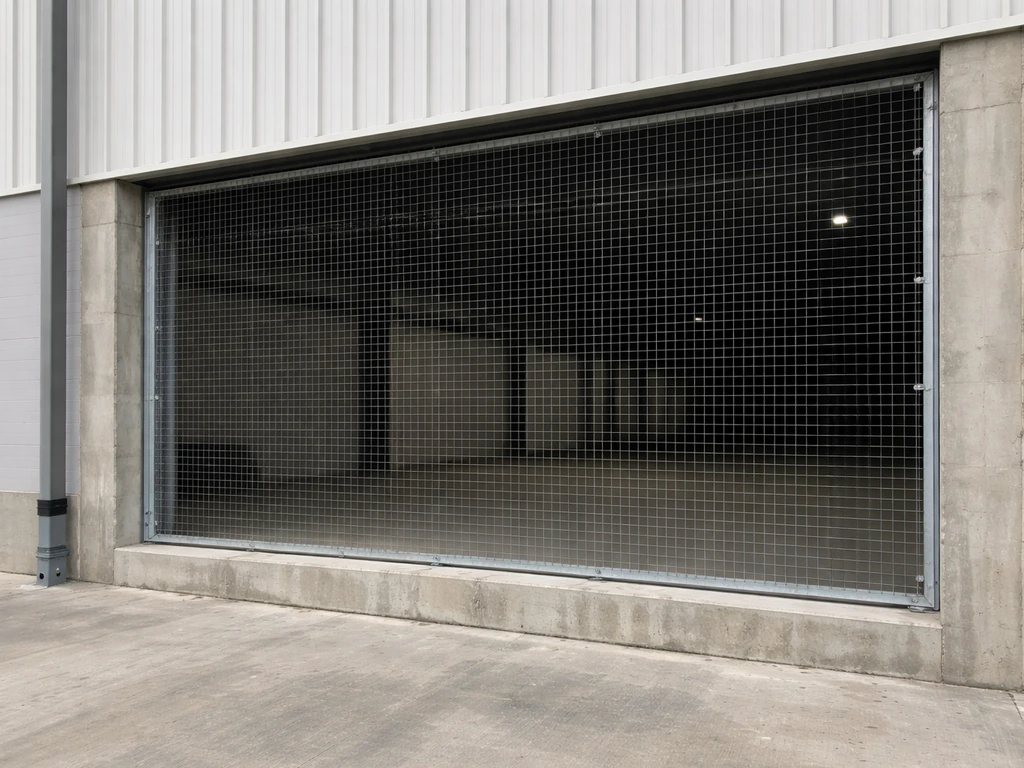
Cranes don't typically try to enter enclosed buildings, but they do roost and forage near loading docks, open warehouses, and large commercial structures with wide access points. If you're a facility manager dealing with cranes accessing open bays or flat roof areas, here's the approach.
- Identify every opening larger than 6 inches at ground or accessible roof level. Large birds like cranes won't squeeze through tight gaps, but they will walk through open doors and wide vents.
- Install heavy-gauge bird netting (minimum 50mm mesh for large birds) over any openings that need to remain ventilated but bird-free. Secure edges tightly with tension wire and fasteners; per wildlife control operator training guidance, the fit details matter and any gap can undermine the entire installation.
- For open loading dock doors that can't be kept closed during operations, consider strip curtains or an inward-angled overhang above the door that disrupts landing approach.
- Check flat rooftop areas for standing water, which attracts wading birds. Improve drainage and consider anti-roosting spikes or angled wire systems on ledges and parapets cranes are using as staging areas.
- Seal any screw penetrations or gaps in screening with appropriate exterior sealant to prevent weathering from creating new entry points over time.
What's Humane and What Gets You in Legal Trouble
Cranes in the U.S., including sandhill cranes, are protected under the Migratory Bird Treaty Act (16 U.S.C. 703-712). This is federal law, not a suggestion. The U.S. Fish and Wildlife Service is explicit that causing injury or death to a protected bird through harassment constitutes a "take" under the MBTA, which is prohibited without federal authorization. That means certain actions that might seem minor, like chasing a bird repeatedly, using contact repellents that cause distress, or destroying an active nest, are illegal.
What You Should Never Do
- Do not shoot, trap, or poison cranes under any circumstances without a federal depredation permit
- Do not destroy or disturb an active nest with eggs or chicks; this is a federal offense under the MBTA
- Do not use sticky or contact repellents that can coat feathers and impair the bird's ability to fly or regulate temperature
- Do not use pyrotechnics (like shell crackers) near nesting birds; disturbing nesting birds counts as harassment
- Do not repeatedly chase or herd a crane, especially if it appears to be protecting a nest nearby
- Do not attempt to capture or relocate the bird yourself without proper training and permits
What Is Legal and Humane
- Physical exclusion barriers (fencing, netting, wire grids) that prevent access without contacting the bird
- Visual deterrents like reflective tape, decoys, and scarecrows
- Motion-activated sprinklers and noise devices used at a reasonable distance from nesting areas
- Habitat modification (reducing food, water, and shelter attractants)
- Hazing with flags, paddles, or noise at a safe distance from nests, directed at non-nesting birds
If you discover a nest after deterrents are in place, stop all hazing activity near that location immediately. The USFWS depredation FAQ confirms that almost all native U.S. birds and their active nests are protected, and the permit process for any management activity around an active nest requires coordination with federal authorities.
Your Long-Term Prevention Plan
Deterrents without a maintenance plan fail. Cranes are intelligent birds with strong site fidelity, meaning they return to locations where they've successfully fed or roosted before. A one-time intervention won't hold unless the underlying attractants are removed and barriers are kept in good condition.
Seasonal Timing
Sandhill crane activity follows a predictable calendar. Spring migration (March through May) and fall migration (September through November) bring the highest numbers of transient birds, especially in the central flyway states. Florida populations may be year-round residents. Breeding season generally runs from March through August, which is when nesting protections are most relevant and when you must be most cautious about deterrent methods. Plan your major exclusion installations before spring migration starts, not in response to it.
Annual Maintenance Checklist
- February: Inspect all netting, fencing, and wire installations before spring migration. Repair any weather damage, loose edges, or corroded fasteners.
- March to May: Increase monitoring frequency. Check deterrents weekly. Move decoys and reflective elements every few days to prevent habituation.
- June to August: If nesting is confirmed on or near the property, establish and maintain a clear buffer zone. Do not disturb. Document nest location and monitor from a distance.
- September to November: Reinspect exclusion systems as fall migration increases crane presence. Add temporary deterrents near ponds and feeding areas if needed.
- December to January: Assess what worked and what didn't over the past year. Budget for any upgrades to physical exclusion before the next spring cycle.
Monitoring Tips
Keep a simple log of when cranes appear, how many, what time of day, and where on the property they're focused. Two to three weeks of data tells you whether you're dealing with transient migration birds (who will leave on their own), established feeders with a daily habit, or a nesting pair. That distinction completely changes your strategy. Transient birds rarely need active intervention beyond temporary deterrents. Established feeders need habitat modification plus exclusion. Nesting pairs require a professional consultation before you do anything else.
When to Call in Wildlife Professionals
Some crane situations go beyond what DIY exclusion can solve, and trying to push through them without professional help can make things worse or expose you to legal liability. The USDA APHIS Wildlife Services has a dedicated technical series for crane damage management and maintains a Nonlethal Initiative specifically designed to help balance human and wildlife needs. These resources back up what licensed wildlife control operators do in the field.
Call a licensed wildlife control operator (NWCO), your local USDA APHIS Wildlife Services office, or your state wildlife agency if any of the following are true.
- You've confirmed or strongly suspect a whooping crane: this is a federally endangered species requiring immediate USFWS coordination
- You've found an active nest on or immediately adjacent to your property and need to do construction, maintenance, or exclusion work nearby
- The crane is injured, appears sick, or is behaving erratically (circling, unable to fly, unresponsive to approach)
- A flock of 10 or more cranes is causing damage to crops, turf, or infrastructure and basic deterrents have failed after two to three weeks
- You believe you need a federal depredation permit to manage the situation; only USFWS can issue these, and a wildlife professional can help you navigate the application
- Building exclusion involves work at height, confined spaces, or electrical hazard areas where a general contractor or certified wildlife proofer should be involved
When you call, have ready: the species (or your best identification), the number of birds, how long they've been present, what damage or concern is occurring, what deterrents you've already tried, and whether you've observed any nesting behavior. This speeds up the professional's assessment significantly.
Quick Decision Guide: What to Do Right Now
| Situation | Immediate Action | Next Step |
|---|---|---|
| Single crane, passing through, no damage | Leave it alone; it will likely move on in 1 to 2 days | No action needed unless it returns repeatedly |
| Crane foraging on lawn or garden daily | Deploy motion sprinkler and reflective tape today | Modify habitat (grass length, remove food sources); install netting if needed |
| Cranes at a pond or water feature | String monofilament grid over water or install low perimeter fence | Add visual deterrents; improve drainage to reduce standing water appeal |
| Crane has entered a building | Open exit doors; reduce noise; do not chase | Identify and seal entry points after bird exits; install netting |
| Active nest found on property | Establish a 50-foot buffer; stop all hazing near that location | Contact state wildlife agency or USFWS for guidance before doing anything else |
| White crane with black wingtips observed | Do not approach or deter; document with photos | Call USFWS immediately; this may be a whooping crane |
| Flock causing significant damage, deterrents failing | Contact USDA APHIS Wildlife Services or a licensed NWCO | Request professional assessment; explore permit options if needed |
Unlike dealing with smaller, faster birds, working around cranes rewards patience and observation over reactive measures. Most crane conflicts near homes and facilities resolve within a migration season if you remove the attractants and hold the exclusion barriers in good shape. Grackles have different habits than cranes, so the best removal approach is to target their specific food and roosting attractants with humane deterrents. The legal framework exists to protect these birds, and working with it, rather than around it, is both the right approach and the one that actually gets lasting results. If you’re instead dealing with a koel bird, the safest next step is to target its preferred food and nesting areas with non-harmful deterrents. If you meant a bird in Granny and you want to clear it out safely, start by confirming what species it is and then use humane, non-harmful deterrents how to get rid of the bird in granny.
FAQ
What should I do if I’m not sure whether the bird is a crane or a Great Blue Heron?
Use a “stop and verify” approach first. If you can, take a close photo from a safe distance or record a short video, then compare neck posture (cranes keep it fully extended), body color (sandhills show a red forehead patch), and wing pattern (whooping cranes are typically white with dark wingtips). Until you confirm, avoid chase behaviors and any nest searching or disturbance.
Can I use motion sprinklers or bright lights to scare cranes away?
Often yes, as long as they are non-contact and you avoid repeated harassment. The key is placement and persistence, since cranes may habituate quickly if the scare source turns off or is only used once. If the crane keeps returning to the same spot daily, pair any lights or sprinklers with habitat changes and ensure the area is physically protected afterward.
Is it ever okay to relocate a crane by yourself (for example, pushing it off the property)?
No. Attempting to drive or corner a crane is one of the common paths to accidental injury and potential legal “take” issues under federal law. If the bird is in an enclosed area or has entered through an open bay, focus on creating exits and letting it leave, then transition to exclusion and attractant removal rather than trying to move it yourself.
How long should I wait after removing food and water before installing exclusion barriers?
If the crane has established a daily routine, exclusion should usually go in immediately or within days, not weeks. Habitat changes help, but cranes show site fidelity, so removing attractants without a maintained barrier can lead to quick relapses. If you suspect nesting, pause and involve a professional before doing any installation that could disturb a nest.
What’s the safest way to handle a crane inside a building or warehouse?
Open multiple exit routes to the outside, reduce interior light where possible, and keep people and pets far back. Do not herd the bird toward corners or narrow doors. If the crane appears injured or cannot exit on its own, contact a licensed wildlife control operator or your state wildlife agency right away.
Does covering a pond or draining it count as harming the crane or its nest?
It generally does not, but timing matters. Avoid any actions that could disrupt an active nest nearby, and keep operations away from nesting season if you are seeing breeding behavior. Use gradual changes when practical (for example, cover or partially drain rather than sudden disruption) to reduce the chance of stressing birds that may be nearby.
Will netting or fences stop cranes permanently, and how do I prevent gaps?
They can provide consistent results when they are continuous and maintained, since cranes are intelligent and will exploit weak points. Inspect for sagging, torn mesh, or vegetation that creates openings under barriers. Recheck after storms and during growth season, and ensure doors, loading docks, and roof access points stay secured when cranes are likely present.
What information should I collect before calling a professional?
Record dates, times, and specific locations used (foraging spot, roosting edge, building entry points). Note how many cranes, whether you’ve seen a nest, and what attractants are present (open turf, pond edges, seeded areas, insects). Also list what deterrents you tried and when, because it helps determine whether the birds are transient, established feeders, or nesting.
How can I tell whether the cranes are just passing through during migration?
Look for patterns over 2 to 3 weeks. Transient birds typically appear and disappear within a short window and do not return to the exact same roosting and foraging points daily. Established feeders show repeat visits to the same features, and nesting pairs show sustained presence with behaviors like repeated area defense or consistent use of a particular nest site.
What should I avoid doing because of legal risk or safety risk?
Avoid chasing, cornering, or repeatedly attempting to drive the bird away once it’s on your property. Do not destroy or disturb suspected nests, and be cautious with any method that causes distress, contact, or injury. If you find clear signs of an active nest, stop hazing immediately and coordinate with the appropriate wildlife authority or a licensed operator.
If I still see cranes after deterrents, does that mean the method failed?
Not necessarily. Cranes may test the area after deterrents are installed, especially if attractants are still available. Confirm that the attractants are truly removed (food sources, short turf for foraging, standing water edges) and that barriers are maintained. If the same spot continues to be used daily, upgrade to exclusion for that exact access route rather than adding more temporary scares.
How to Get Rid of the Bird in Granny Safely
Quick, safe in-game steps to remove the Granny bird, with emergency actions, fixes for respawns, and prevention tips.