To stop birds from hitting or nesting around your windows, you need to make the glass visible as a solid barrier, seal any physical gaps around the frame, and remove anything attracting birds to that spot in the first place. The most effective fix for strike prevention is applying exterior window markers or film spaced no more than 2 inches apart across the entire glass surface. For nesting on ledges and gaps, physical exclusion with mesh, spikes, or sealed framing is the right call. Both problems are solvable with the right approach, and most homeowners can handle them without professional help unless protected species are involved.
How to Bird Proof Windows: DIY Steps and Long-Term Fixes

Maya Carver
1 May 2026
Quick response: what to do right now
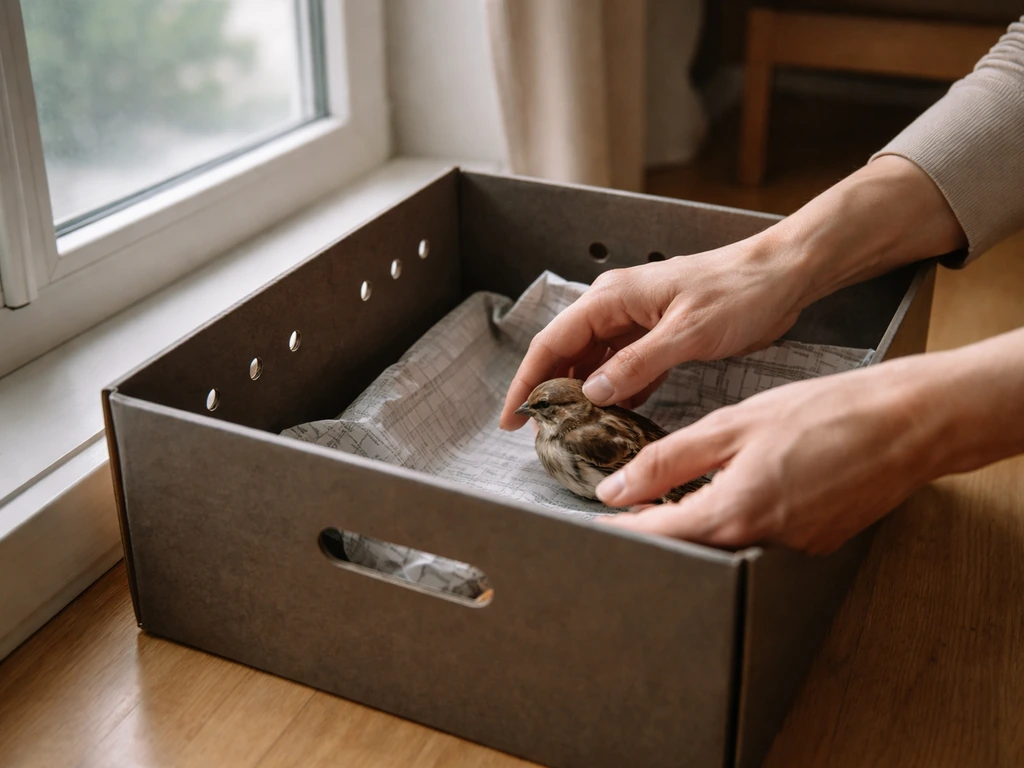
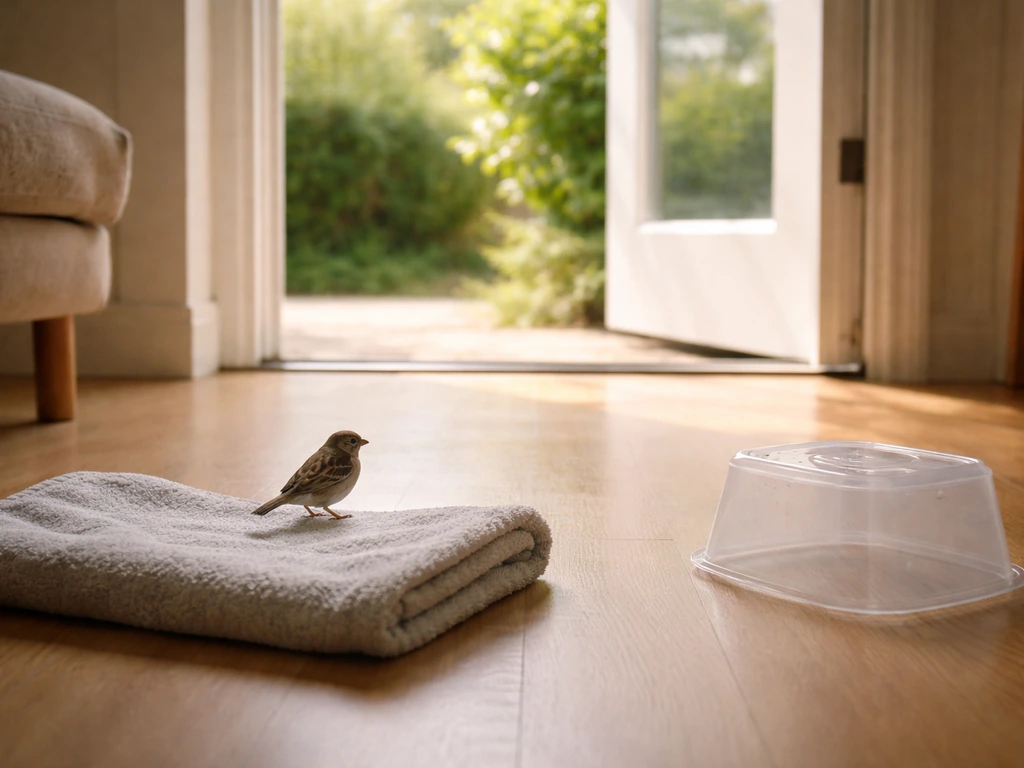
If a bird just hit your window, act quickly but calmly. Don't pick it up immediately and try to force it to fly. Instead, place it in a quiet, dark, ventilated box lined with newspaper or a soft cloth, keep it somewhere warm and undisturbed, and watch it for 15 to 30 minutes. Many birds are just stunned and will recover on their own. If it's not improving, or if you see obvious injuries like bleeding or a drooping wing, call your nearest wildlife rehabilitation center. Don't try to feed or water it.
While the bird is recovering, address the window immediately so it doesn't happen again within the hour. The fastest temporary fix is to tape paper, cardboard, or a paper bag to the inside of the glass from floor to ceiling. It's not pretty, but it removes the reflection and transparency that caused the strike. You can upgrade to a proper solution within a day or two once the emergency is handled.
- Box the bird: use a shoebox lined with newspaper, a paper towel, or a cotton T-shirt
- Keep it dark, quiet, and away from pets and kids
- Check every 15 minutes, but don't handle it more than necessary
- Call a wildlife rehabber if there are visible injuries or no improvement after 30 minutes
- Tape paper or cardboard to the inside of the problem window right away
- If you have a bird feeder within 30 feet of the window, move it farther away or take it down temporarily
That last point about feeders matters more than most people think. Feeders placed close to windows dramatically increase strike risk because birds are moving quickly between feeding and cover. Moving the feeder either within 3 feet of the glass (so birds can't build up dangerous speed) or beyond 30 feet away is a research-backed way to reduce repeat strikes at that specific window.
Find the problem first: behavior, entry points, and window types
Before you buy any product or start any DIY work, spend a few minutes figuring out what's actually happening. The fix for a bird repeatedly slamming into a reflective window is different from the fix for pigeons nesting on a window ledge or sparrows squeezing through a gap in the frame caulking. Getting the diagnosis right saves you time and money.
Strike-related behavior
Birds hit windows for two main reasons. The most common is that they see a reflection of sky, trees, or open space and simply don't register the glass as a solid object. This is especially likely on large windows, floor-to-ceiling glass, or windows that face vegetation. Bird problem solving starts with identifying whether strikes are driven by reflections or by another behavior so you can choose the right deterrent. The second reason is territorial aggression, where a bird (most often a male robin, cardinal, or mockingbird in spring) sees its own reflection and attacks it. This kind of repeated tapping or hitting is most intense from March through June but can happen year-round. Look for smudge marks, feathers, or wing prints on the glass to identify your strike-prone windows.
Nesting and roosting behavior
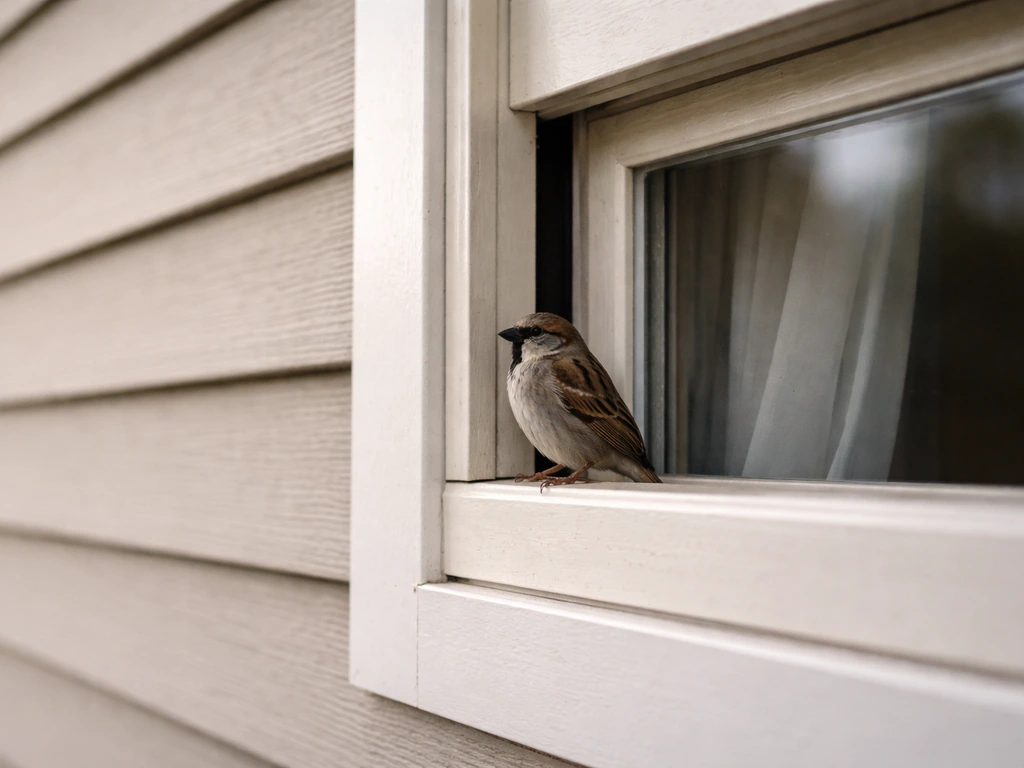
If birds are congregating on or around your window rather than flying into it, you're dealing with a different problem. Roofline bird problems often come down to the same two goals: preventing strikes and blocking access to ledges or nesting spots bird problem on roof. Check the ledge width (pigeons and sparrows both love anything wider than about 2 inches), gaps in the caulking around the frame, weep holes at the base of the window frame that may have been left open, and any decorative features or recessed areas above the window that could shelter a nest. Also look for droppings streaking down below the window as a sign of roosting activity.
Window types and their risk profile
| Window Type | Main Risk | Priority Fix |
|---|---|---|
| Large picture or floor-to-ceiling windows | High strike risk due to wide reflective surface | Exterior markers/film across full pane |
| Double-hung or casement windows with deep frames | Nesting in frame recesses or gaps | Seal gaps, install mesh over weep holes |
| Sliding glass doors treated as windows | Collision and entry point | Markers plus door screen |
| Window AC units with gaps around frame | Entry point for birds and other wildlife | Foam backer rod and exterior caulk seal |
| Skylights | Strike risk from above; nesting on surrounding frame | Exterior screen or decal pattern |
Short-term deterrents you can use today
These options can be put in place within hours using materials you may already have or can pick up at a hardware store. They won't all look great, but they buy you time while you plan a permanent fix.
Visual deterrents (collision prevention)
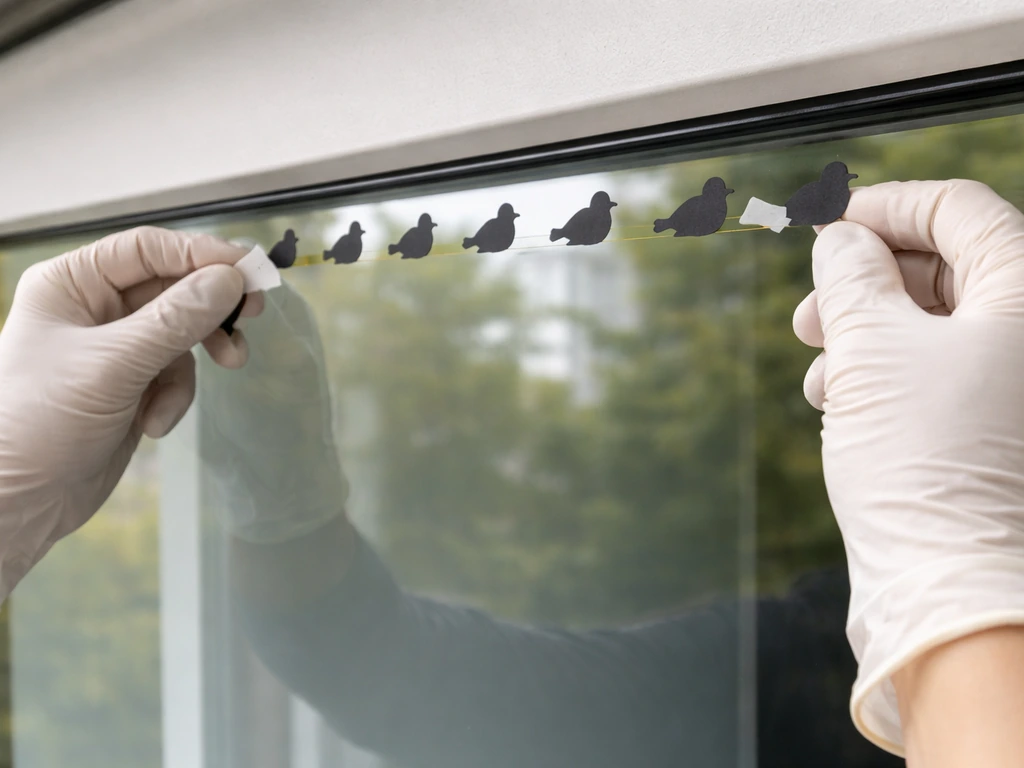
The single most important rule here is coverage and spacing. One hawk silhouette sticker in the center of a window does almost nothing because birds will fly through the visible open space around it. The glass needs to signal its full surface as a barrier. Temporary options include applying soap or tempera paint in a grid pattern on the outside of the glass, using painter's tape in a horizontal stripe pattern spaced about 2 inches apart, or hanging netting or shade cloth on the outside of the window a few inches away from the surface. All of these are reversible and can be in place the same day.
For territorial reflection attackers, the fastest fix is to break up the reflection on the outside. Hanging strips of mylar tape, old CDs, or even hanging a piece of cloth over the outside of the window from a curtain rod can disrupt the mirror effect enough to stop the behavior within a day or two. Remove bird feeders and birdbaths within 15 to 20 feet of the window at the same time. If your Bird Buddy solar roof is the part you need to remove or replace, follow the manufacturer steps and ensure the unit is fully powered down first solar roof on Bird Buddy.
Temporary physical barriers for ledges and gaps
If birds are landing on a ledge and you need an immediate deterrent, loosely draped bird netting (even a piece of plastic garden mesh secured with clips) over the ledge area will disrupt roosting. Foam backer rod pushed into frame gaps and weep holes is a same-day fix that prevents small birds from squeezing through while you wait to apply proper caulk or a permanent seal. Just make sure weep holes are not completely blocked with a solid material since they exist for moisture drainage. Use mesh inserts designed for weep holes instead.
DIY bird proofing: gaps, ledges, and window openings
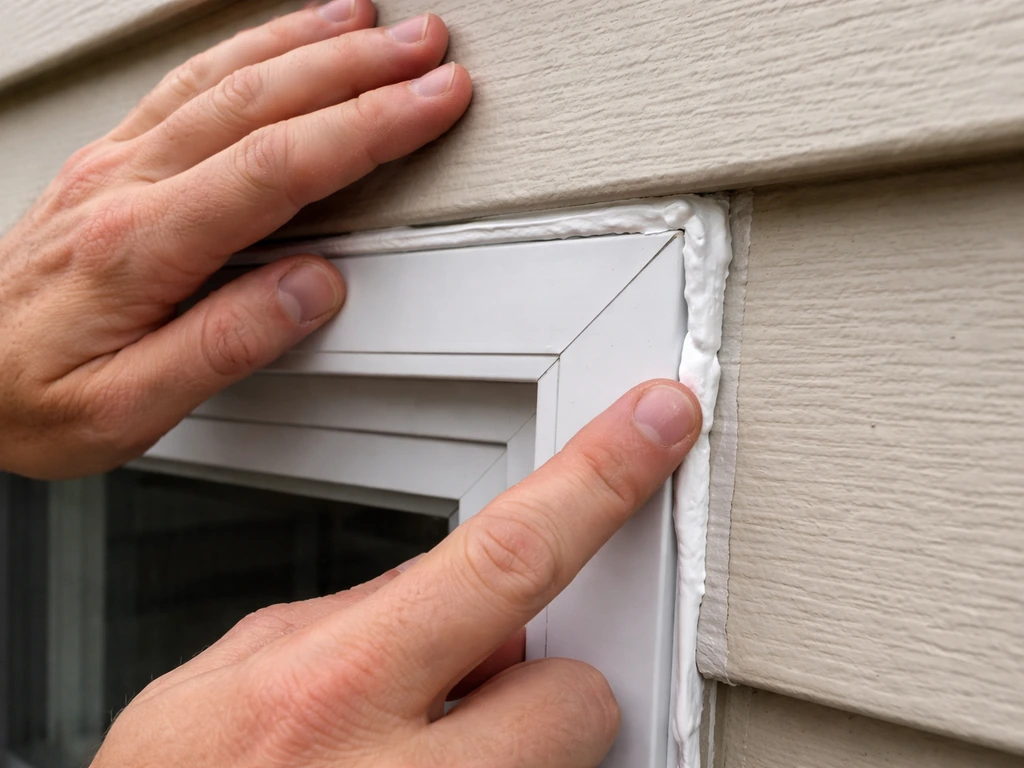
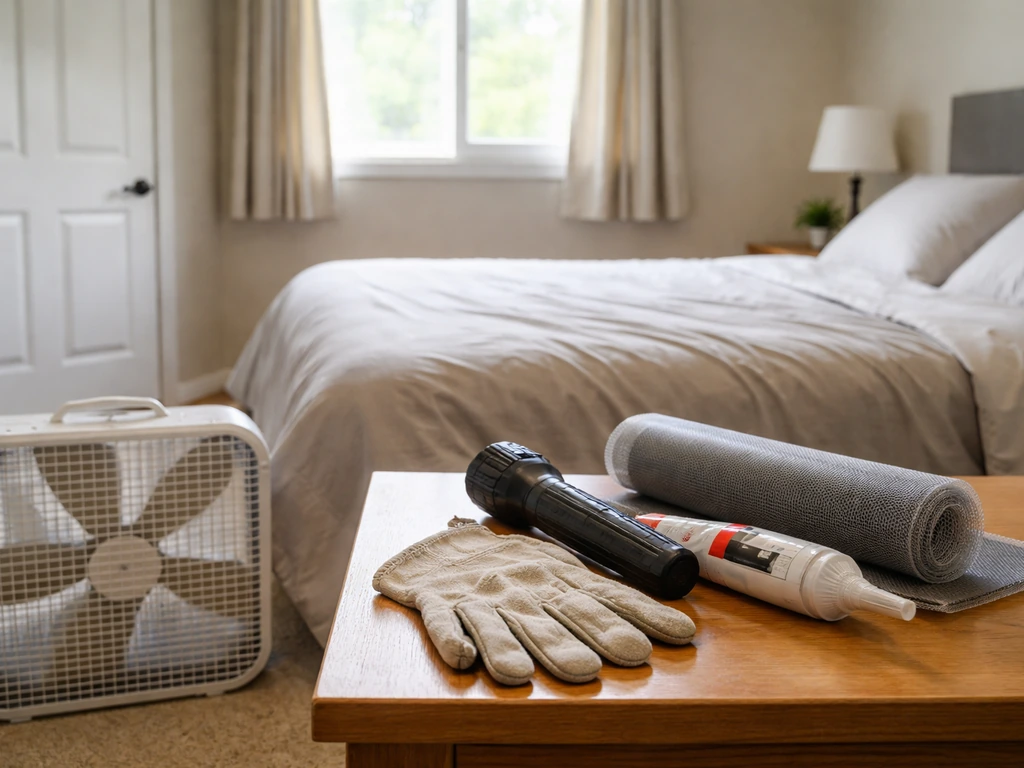
Once you've handled the immediate situation, it's time to physically proof the window and surrounding area. If you want a full, step-by-step approach, follow the guidance in this guide for how to bird proof a room. Most of this work doesn't require special tools beyond a caulk gun, scissors, and a ladder if needed. Always work from the inside when possible, use a stable ladder with a spotter for anything above single-story, and wear gloves when handling old caulk or droppings.
Sealing gaps around window frames
- Inspect the entire perimeter of the window frame from the outside, pressing lightly along the caulk bead to find any soft, cracked, or missing sections
- Remove old, damaged caulk with a putty knife or caulk removal tool
- Clean the surface with a damp cloth and let it dry fully
- Apply a continuous bead of exterior-grade silicone or polyurethane caulk along all frame edges, pressing it firmly into any gaps
- Smooth the bead with a wet finger or caulk tool and allow to cure for 24 hours before exposing to rain
- For weep holes at the base of the frame, install proprietary weep hole covers or small mesh screens, not solid plugs, to maintain drainage while blocking bird entry
Exclusion for ledges and recessed window areas
For ledges where birds roost or nest, bird spikes are a legitimate humane option. They don't injure birds; they simply prevent landing. Choose stainless steel spikes over plastic for durability, and install them with exterior construction adhesive or stainless screws along the full length of the ledge with no gap at either end. Leave no untreated section or birds will cluster right at the boundary. For recessed window frames with a deeper shelf, quarter-inch or half-inch hardware cloth bent into a sloped 45-degree angle and fastened to the back of the recess removes the flat landing platform entirely.
Window AC unit gaps
The accordion-style side panels on window AC units are a notorious entry point for sparrows, starlings, and even squirrels. If birds are getting through here, push closed-cell foam backer rod into the gaps between the accordion panel and the window frame, then cover the entire side gap with a piece of hardware cloth cut to fit and secured with staples or zip ties. This is a quick but effective seal that also improves your AC unit's efficiency.
Permanent upgrades worth doing once
If you've had repeated bird problems at the same windows, or if you're renovating or replacing windows anyway, permanent solutions are worth the investment. These work better, look better, and don't need constant re-application.
Bird-safe window films and exterior markers
Professionally installed UV-reflective films (like Feather Friendly or ABC BirdTape) are one of the most effective permanent solutions for collision prevention. These products are applied to the exterior surface of the glass in a pattern spaced no more than 2 inches apart both horizontally and vertically. This spacing is critical: wider gaps leave openings that birds will still try to fly through. UV-reflective products are nearly invisible to the human eye from inside the home but appear as a high-contrast pattern to birds, whose vision includes the UV spectrum.
Standard decorative window films applied only to the interior surface are significantly less effective because they don't change the exterior reflection that birds see. Always confirm a product is rated for exterior installation and install it on the outside surface if at all possible. For large commercial glazing or windows that are difficult to access, this is a job worth hiring a professional glazer or bird-proofing company for.
External screens and netting
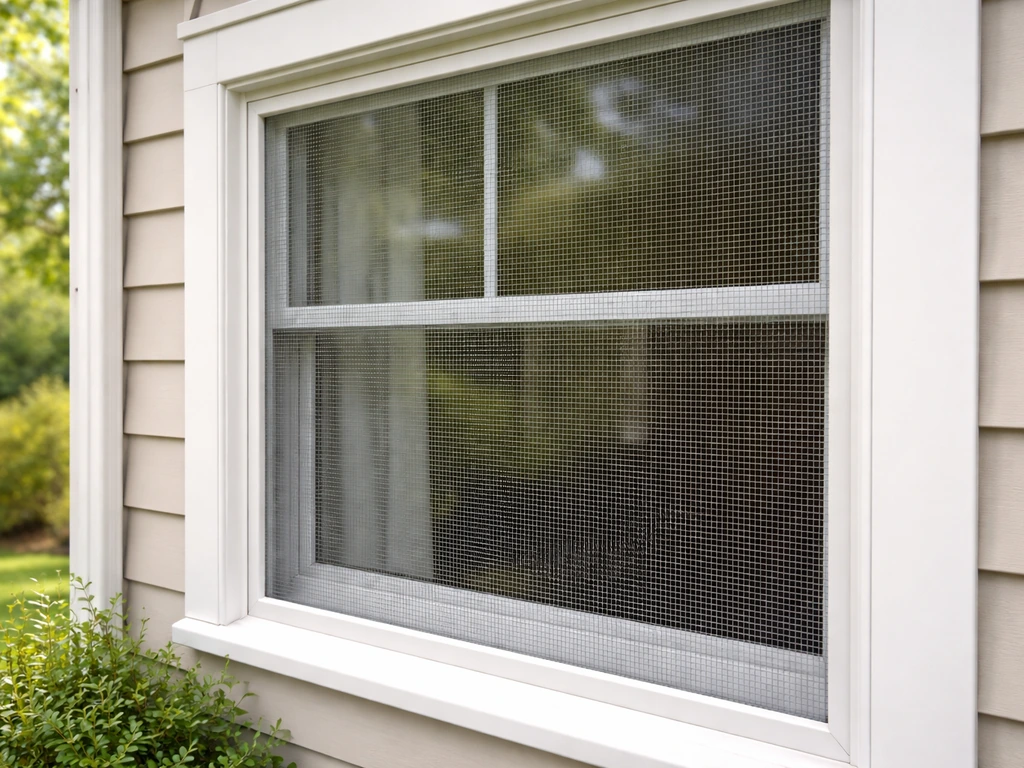
A properly fitted external insect screen does double duty as a bird collision deterrent because it interrupts the reflection, makes the barrier visible, and absorbs any accidental impact rather than injuring the bird. For nesting and roosting prevention on larger windows, ledges, or recessed architectural features, 3/4-inch knotted polyethylene netting installed 2 to 4 inches away from the surface (so birds can't reach through and still access the area) is the standard professional approach and is humane and highly durable.
Architectural modifications
If you're replacing windows, look for options with etched, frosted, or patterned glass, or request fritted glass with a ceramic dot pattern baked into the surface. These are essentially maintenance-free. Sloping window ledge caps (metal or PVC slope inserts that change a flat ledge to a 45-degree angle) permanently eliminate nesting and roosting spots without any ongoing upkeep. These can often be installed by a general contractor or a capable DIYer with basic metalworking tools.
Comparing permanent solutions at a glance
| Solution | Best For | DIY Friendly? | Approximate Lifespan |
|---|---|---|---|
| Exterior UV marker film (e.g., Feather Friendly) | Collision prevention on any glass | Yes, with care | 5 to 10 years |
| External insect screen | Collision prevention and partial nesting deterrent | Yes | 10 to 15 years with maintenance |
| 3/4-inch bird exclusion netting | Nesting, roosting, ledge exclusion | Moderate | 5 to 10 years |
| Stainless steel bird spikes | Ledge and sill roosting prevention | Yes | 15 to 20 years |
| Sloped ledge cap insert | Permanent ledge exclusion | Moderate | 20+ years |
| Fritted or etched glass (window replacement) | Collision prevention, long-term value | No (professional install) | Lifetime of window |
Maintenance, seasonal planning, and when birds keep coming back
Bird proofing isn't fully set-and-forget. A seasonal check schedule catches small problems before they turn into a full nesting situation or a damaged deterrent that's no longer working. For a barn, use the same audit and seasonal check ideas, then tailor exclusions and visual deterrents to the barn openings birds target.
Seasonal planning calendar
- Late February to early March: inspect all window ledges, frames, and gaps before spring nesting season begins; replace any failed caulk, fix damaged netting or spikes, and reapply any exterior film that has lifted at the edges
- April to June: monitor for new nest-building activity weekly; territorial reflection attacks are most intense during this window
- August to October: migration season brings elevated collision risk for many species; check and clean any exterior markers or films that have become dirty or degraded
- November to January: lower pressure period, but ideal time for installations, window replacement projects, or adding architectural modifications before spring
Troubleshooting when birds keep returning
If you've applied deterrents and birds are still hitting or targeting the same window, the most common mistake is inadequate coverage. Go back and check whether your marker or film pattern has any gaps wider than 2 inches. Birds interpret any apparently open space as a flyable gap, so even a 3-inch uncovered section can funnel birds toward that exact spot. Extend your pattern to the full window surface with no large bare areas.
For nesting on ledges, check the ends of your spike or netting installation. Birds consistently crowd right at the edges of any treated area. Adding a few extra inches of coverage past the treated zone on both ends usually resolves this. If a bird is showing up every single day to attack its reflection in a specific window, it's a territorial behavior loop that often breaks on its own once breeding season ends. In the meantime, covering or disrupting the exterior surface of that specific window is the fastest resolution. If the behavior is happening in fall or winter, it may indicate an unusually persistent individual and covering the outside surface until the behavior stops (usually within a week) is effective.
For facility managers dealing with multiple windows across a building, a systematic audit is the right first step. Walk the building perimeter at first light when strikes are most likely to occur, note which windows show smudge marks or feather prints, and prioritize treatments on those specific panes first before doing a full-building retrofit.
Safety, legal rules, and when to call a professional
Before you remove a nest from a window ledge or frame, stop and look carefully at what you're dealing with. In the United States, the Migratory Bird Treaty Act (MBTA) makes it illegal to destroy, move, or possess the nests, eggs, or young of protected migratory birds without a federal permit. This applies to the vast majority of songbirds you're likely to encounter around windows, including sparrows, robins, swallows, and warblers. In Canada, the Migratory Birds Regulations 2022 similarly protect active nests. The practical rule is simple: if the nest has eggs or live chicks in it, do not touch it. Wait until the brood has fledged and the nest is definitively abandoned before removing it or blocking the site.
If the nest is on an active building entry or exit point, is causing a documented health or safety hazard, or involves a species like European starlings or house sparrows (which are non-native and not protected under the MBTA in the U.S.), you have more flexibility. When in doubt, call your state or provincial wildlife agency before taking action. Eagles and their nests are separately protected under the Bald and Golden Eagle Protection Act and require specialist handling regardless of the situation.
Personal safety matters too. Working at height on ladders to install spikes, netting, or caulk carries real fall risk. Use a properly rated ladder, work with a second person as a spotter for anything above ground floor, and wear gloves when handling dried bird droppings, which can carry histoplasmosis and other respiratory hazards. A dust mask or N95 respirator is worthwhile if you're cleaning up any significant accumulation.
When to stop DIY and call a wildlife professional
- You've found a bird that hit a window and isn't recovering after 30 to 45 minutes, or has visible injuries
- There's an active nest with eggs or chicks in a location that requires immediate work (contact a wildlife rehabilitator or your state wildlife agency to discuss options)
- You suspect a protected species like a swallow, swift, or eagle is nesting in or around your window frame
- Droppings accumulation is extensive and you need a professional cleaning and disinfection before proofing
- You manage a commercial building with multiple floors and need a comprehensive strike audit and retrofit plan
- Previous DIY deterrents have repeatedly failed and the bird problem is causing property damage or health concerns
When you do call a wildlife professional or bird control company, give them as much detail as possible: which windows are affected, what species you're seeing, how long the problem has been occurring, and what you've already tried. That information helps them scope the job accurately and recommend the right solution without unnecessary upselling. For window-strike victims specifically, look up your nearest licensed wildlife rehabilitator in advance so you're not searching in a hurry during an emergency.
Bird proofing windows overlaps closely with broader building bird control topics. If you're dealing with birds on your roof, ledges above window level, or inside a structure, the principles here connect to the wider challenge of keeping birds off the whole building envelope. The same audit approach, exclusion logic, and seasonal planning apply across all of those areas.
FAQ
Do I need to apply bird-proof window film to the inside or the outside?
Yes, but only if it changes what birds see from the outside. Interior-only films typically reduce glare for people, not reflections that birds use to navigate. For strike prevention, prioritize an exterior-rated UV reflective or collision film applied to the outside surface.
I installed markers or tape, but birds still hit the same window. What should I troubleshoot first?
Start with exterior visibility and full coverage. Check whether any treated pattern leaves gaps wider than about 2 inches, especially near window mullions, corners, and edges. Then verify the deterrent is on the exterior surface for reflection-driven strikes, since interior barriers alone often fail.
How can I tell if the birds are attacking reflections versus trying to nest on the ledge?
Don’t assume every visit is a strike problem. If you see repeated taps or smudged “wing print” areas on the glass, it’s often reflection aggression. If birds are landing, strutting, or leaving droppings on the sill, focus on ledge access, weep holes, and nesting surfaces rather than more glass markers.
When can I remove temporary paper/cardboard or taped deterrents after I apply a permanent fix?
In many cases, tape and temporary exterior deterrents can be removed once you switch to a permanent solution, usually within days. If birds are actively nesting, only remove barriers after the nest is fully abandoned, and keep temporary coverage in place to avoid creating new access routes.
Will sealing gaps and weep holes stop birds, or can it trap water?
Yes, but avoid blocking moisture drainage. If you use foam backer rod or sealant around frame gaps, do not fill weep holes with solid material. Instead, use weep-hole mesh inserts or install a designed weep cover so water can still exit.
What’s the most common mistake with UV reflective films or window markers?
For strikes driven by reflections, align the pattern across the entire pane and make sure the spacing rule is met in both directions. If you notice a single bare “lane” through the film or sticker, birds will funnel into it and keep hitting that same area.
Can I just hang netting or mesh to stop birds from landing temporarily, or does it need to be permanent?
If birds are landing on the sill, a loose draped mesh can reduce landing immediately, but it must cover the whole roosting or ledge zone and be secured so it does not sag and create a new platform. For a lasting fix, pair mesh or spikes with sealing of the frame gaps that allow entry.
How close can I place a bird feeder to a window without increasing strikes?
Yes, and the placement matters. Move feeders and birdbaths away from the window plane. If you cannot remove them, keep them more than roughly 30 feet from the window when possible, or place them within about 3 feet so birds do not build up approach speed toward that pane.
Besides feeders, what other nearby features can make window strikes worse?
Carving out the “source of attraction” means managing what birds use as cover. Reduce dense plants that sit within a short flight path of the window, trim growth that visually aligns birds with the glass, and avoid placing perches near the window that give birds a launching point.
What should I do if I find a nest near the window but I need to block the area?
If you suspect a nest is active, do not disturb it. The practical rule is, if eggs or live chicks are present, wait. If you must address immediate danger or access, contact your wildlife agency or a licensed professional for guidance before blocking or removing anything.
What’s the safest way to handle a bird that hit my window, and when should I call help?
If a bird hits your window repeatedly, prioritize minimizing harm while you confirm the cause. Use the calm recovery steps (dark, ventilated container, warm and undisturbed, monitor for 15 to 30 minutes), and call a wildlife rehabilitator if there are visible injuries or the bird does not improve.
Birds keep attacking along the edges of my treated area. How do I fix that?
If birds are returning every day in a specific spot, coverage gaps and the treated zone edges are frequent culprits. Extend treatments a few inches beyond the last treated boundary on both ends, and verify corners and around trim are not leaving untreated “funnels.”
For a house with many windows, should I treat every window immediately or focus on specific ones?
Yes, and it can be targeted. Many window strike problems are localized to particular elevations where birds use the same flight line. For multi-window buildings, prioritize the panes with smudges or repeated impact marks at first light, then expand coverage systematically.
How do I bird-proof windows that are hard to access, like around an accordion AC unit?
If you’re working near an AC unit’s accordion panels, sealing the side gap can stop entry. Push in closed-cell foam backer rod to fill the accordion-to-frame space, then cover the entire side opening with hardware cloth secured firmly so birds cannot pry or squeeze through.
What if it happens in fall or winter, and birds keep returning to the same window?
Some birds are persistent individuals, especially outside peak nesting season. In those cases, covering the outside reflection source with a temporary exterior solution while you implement the permanent film often works within about a week, as long as coverage remains consistent.