To reduce bird noise around your building today, start by figuring out whether the birds are roosting, actively nesting, or just passing through. If there's an active nest with eggs or chicks, your options are limited right now by law, and the most practical move is to wait it out (most songbird nest cycles wrap up in about four weeks). If they're roosting without a nest, you can begin exclusion work immediately: block access points, install deterrents on ledge and roof surfaces, and reduce whatever is attracting them to the spot. That combination gets you faster results than any noise-masking trick.
How to Reduce Bird Noise: Humane Proofing Steps

Maya Carver
14 May 2026
What to do right now when the noise is loud
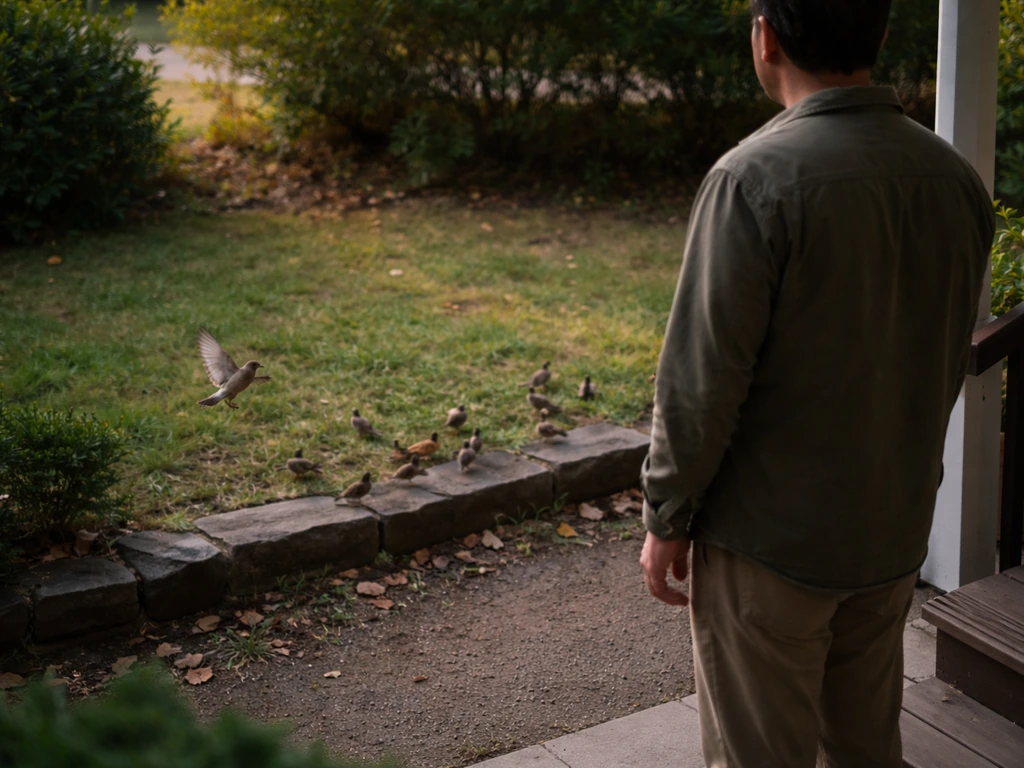
If you're in the middle of a noisy bird situation and need it quieter today, here's the fastest path forward. First, resist the urge to chase, shoo, or repeatedly disturb the birds. Canada’s guidance also recommends using non-intrusive prevention measures during periods when migratory birds are likely nesting and avoiding actions that increase disturbance, including loud noise emissions avoid actions that increase disturbance. Constant disruption from humans often does little more than stress the birds and annoy you. Instead, take 10 minutes to observe from a distance and answer a few quick questions before you touch anything.
- Stand back and watch for two to three minutes. Are you seeing adults flying in and out repeatedly, or are they just perched?
- Listen for the specific type of noise: alarm calls, fledgling begging calls, territorial song, or general flock chatter.
- Check whether there are obviously young birds (fluffy, short-tailed, or staying very still) in or near the noise source.
- If young birds are present or you can see a nest, do not disturb the area. Reduce foot traffic, avoid slamming nearby doors, and postpone any construction or outdoor projects in that zone until the cycle is complete.
- If no nest or young are present, you can move straight to deterrent and exclusion steps.
For immediate relief from noise indoors, the simplest same-day fix is adding a layer of sound dampening at the window or wall closest to the birds: a cellular shade, heavy curtain, or even a temporary acoustic panel cuts transmission noticeably. This buys you comfort while you work on the real solution outside. If blocking out bird noise from inside the building is your primary concern, that's a topic worth exploring in depth on its own.
Figure out exactly what bird and where the noise is coming from
Getting the species right changes everything. A house sparrow colony nesting in your soffit vents is a very different problem from a single mockingbird singing from your chimney cap at 3 a.m. Take five minutes with a free app like Merlin Bird ID: record or describe the call, note the size and coloring of the bird, and you'll usually have a positive ID within a couple of minutes. Knowing the species tells you immediately whether it's federally protected (virtually all wild birds in the U.S. and Canada are under the Migratory Bird Treaty Act or similar legislation), whether it's likely to be nesting or just perching, and what deterrents have the best track record against it.
Next, locate the actual source of the activity. Walk the perimeter of the building and look for these common hotspots:
- Soffit and fascia gaps where birds enter wall cavities or attic spaces
- Roof vents, ridge vents, and gable vents without intact screens
- HVAC exhaust and dryer vent hoods (especially popular with starlings and house sparrows)
- Flat roof sections, parapet ledges, or HVAC equipment platforms where pigeons or gulls roost
- Dense shrubs, ivy on walls, or trees within two to three meters of the building used as staging areas
- Accessible water sources like flat roof drainage puddles or ornamental features
Mark every hotspot on a simple sketch of the building footprint. This becomes your working checklist for exclusion. If you can hear birds inside walls or between roof layers but can't see the entry point, that's a situation to escalate to a wildlife professional rather than probe blindly.
How to safely stop birds from roosting or nesting (exclusion basics)
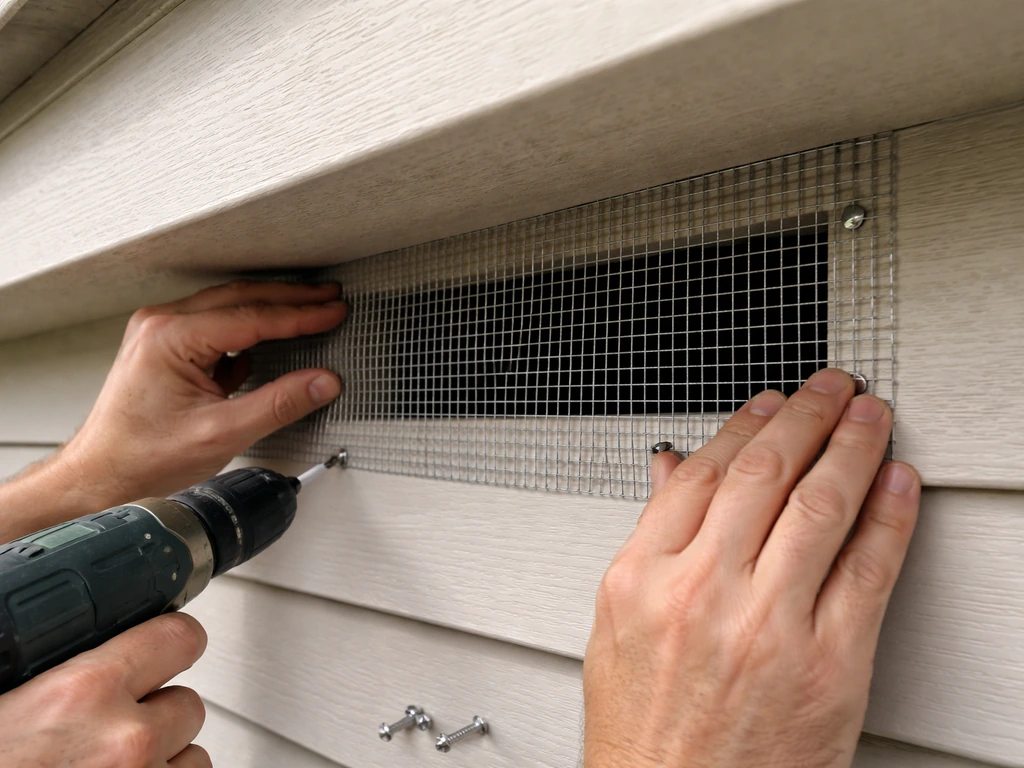
Exclusion is the gold standard for reducing bird noise because it addresses the root cause: the birds no longer have access to the spot they're using. The critical rule before you seal anything is to confirm no birds or chicks are inside the space. Sealing birds in is illegal for protected species, dangerous for the birds, and will cause a much worse problem (odor, noise, and potential health hazards) within days.
- Monitor the entry point for two to three days before doing any work. Note the times birds enter and exit. If you consistently see adults flying out but not returning with food, the space is likely being used for roosting only, not active nesting.
- If you're confident no birds are inside, install a one-way exit device: a simple funnel or cone of light screening fitted over the hole, pointed outward, lets birds exit but not re-enter.
- Leave the one-way device in place for at least seven days, longer in cool or rainy weather when birds may be less active. Check for scratching or disturbance on the outside surface of the device, which indicates the bird has tried to get back in but cannot.
- After the seven-day minimum and once you're sure no bird can be trapped inside, remove the one-way device and permanently seal the opening with the appropriate material for that surface.
For sealing materials, match the material to the gap. Hardware cloth (19-gauge, half-inch mesh) works for most vent and gap situations. Foam backer rod plus paintable exterior caulk handles smaller cracks under trim boards. Sheet metal flashing handles gaps around chimney bases and roof transitions. Avoid using expanding spray foam alone on bird entry points; birds can chew through it quickly.
DIY noise and deterrent tactics that don't harm birds
If exclusion isn't immediately possible (because of an active nest, access difficulty, or pending landlord approval), several deterrent approaches can reduce how much birds use a specific spot without harming them. The key word is "reduce:" no deterrent on the market guarantees 100% removal, but the right combination applied consistently works well. Once you choose an approach, you can use the same principles to remove bird sounds from audio by reducing the bird source and using appropriate processing on the recording.
Physical deterrents on surfaces
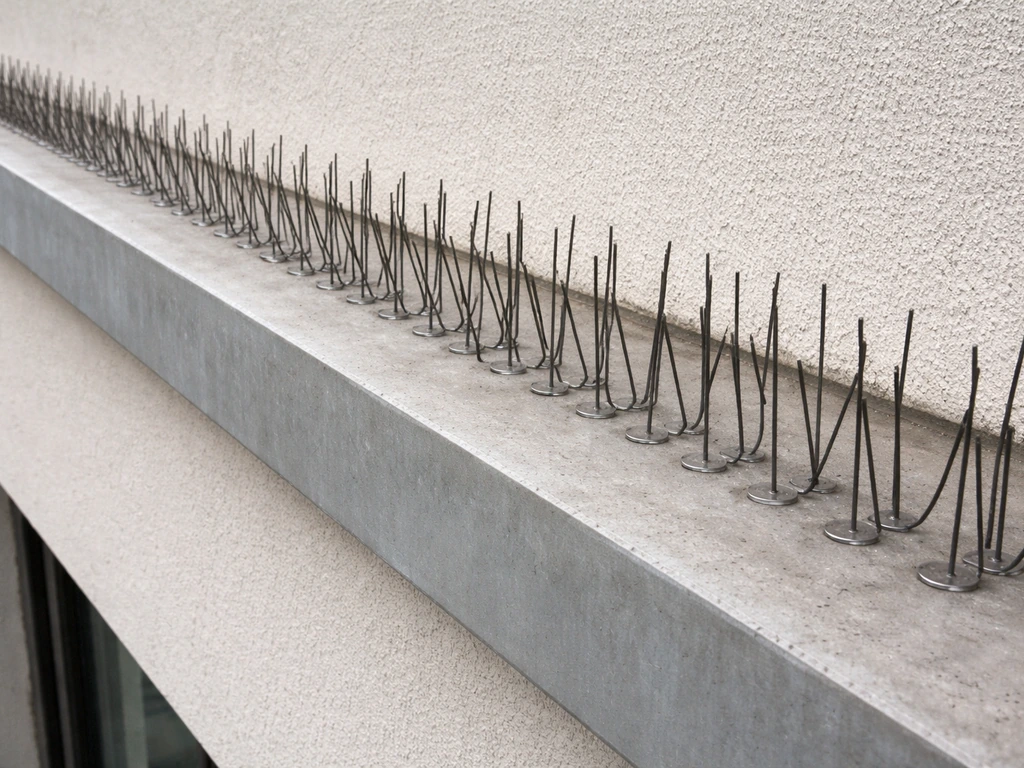
- Bird spikes on ledges, pipes, and parapet walls: effective for pigeons, starlings, and gulls that need a flat surface to land. Install them so there are no gaps wider than two inches. Stainless steel lasts longer than plastic in harsh weather.
- Bird slope panels (angled plastic inserts): fitted into 90-degree ledge angles under eaves or on window sills so birds can't get a footing.
- Shock track systems: thin electrified strips that deliver a mild conditioning shock when birds land. More expensive but works on difficult surfaces like signage and ornamental stonework where spikes don't attach cleanly.
- Netting: for large open areas like loading docks, courtyards, or under bridges. Polyethylene knotted netting (50mm mesh for pigeons, 28mm for smaller birds) attached to a tensioned cable frame.
Sensory deterrents
- Reflective tape or holographic bird diverters: cheap and fast to install; work best in open sunny areas. Birds habituate quickly if nothing changes, so rotate or reposition them every few weeks.
- Predator decoys (owls, hawks): same habituation problem. They work briefly if moved regularly and especially if combined with other deterrents.
- Ultrasonic devices: the research on these for birds is genuinely weak. Birds hear in different frequency ranges than the ultrasonic units typically sold for residential use, so I'd skip them.
- Sound deterrents (distress calls and predator calls): automated speakers playing species-specific distress calls can be effective for roost dispersal in open areas like parking lots or flat roofs. The key is to use them at the right time (when birds are arriving, not after they've settled), and they work best as part of an exclusion plan rather than as a standalone fix.
If you're dealing with a single noisy bird like a mockingbird or robin singing outside a bedroom window at night, exclusion isn't the answer. The bird is using your tree or shrub as a singing post. Your practical options are to mask the noise indoors or, where safe and legal, remove or heavily prune the specific perch site. Getting rid of a single noisy bird is its own topic with some specific approaches worth knowing.
Long-term building proofing: your prevention checklist
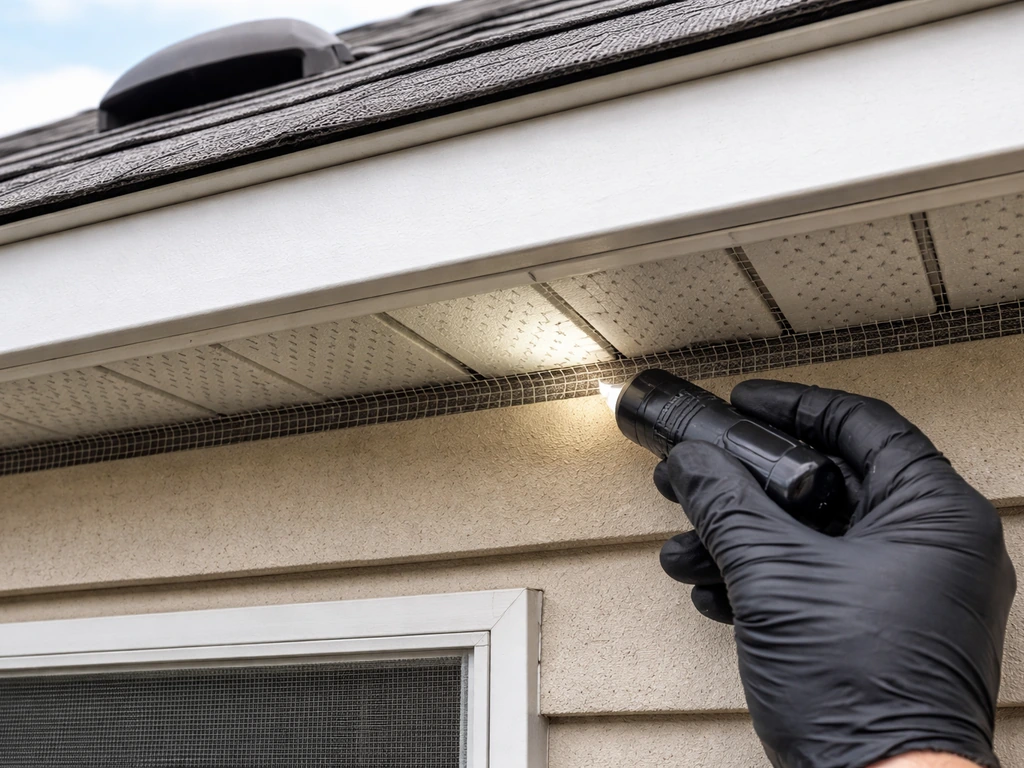
The buildings that have the fewest bird problems over the long term are the ones where owners did a thorough proofing job once and then maintain it. This doesn't need to be expensive; most of it is just sealing and screening the spots birds exploit. Go through this checklist once a year, ideally in late winter before the nesting season starts.
Sealing and structural fixes
- Inspect all roof vents and replace or repair any with damaged, missing, or torn screening
- Check soffit panels for gaps, holes, or loose sections and re-secure or replace
- Seal gaps around pipes, conduit, and cables where they enter the building
- Inspect chimney caps and ensure mesh sides are intact
- Check dryer and HVAC exhaust hoods; replace any with broken flapper valves
- Look at the junction of any addition roofline or dormer for open gaps in flashing
Surface and ledge management
- Install bird spikes or slope panels on any ledge or projection you found birds using
- For flat roofs with HVAC equipment, add wire grid frameworks or netting over preferred roosting platforms
- Apply bird wire systems (tensioned stainless wire on posts) to open beam or rafter areas under covered parking or walkways
Landscape and attractant management
- Prune trees and large shrubs so branches don't overhang or touch the roofline
- Remove or trim dense ivy or climbing plants from building walls
- Eliminate standing water on flat roofs by improving drainage or using rooftop ballast that doesn't hold puddles
- If bird feeders or water features are near the building, move them at least 10 meters away or remove them entirely
- Manage dumpster lids and outdoor food waste tightly, particularly if gulls or corvids are the problem
Seasonal timing: when to act and when to hold off
Timing your exclusion and proofing work around bird activity cycles is both the smart and the legal approach. The general rule in North America is that the primary nesting window runs from roughly April through August for most species, though this varies by latitude and species. Early spring migrants can begin nesting in March; some corvids and raptors in February. Late summer can still see active second clutches from many songbirds.
| Period | What's happening | Best actions |
|---|---|---|
| Late January to March | Pre-nesting; birds scouting and establishing territories | Ideal window for full exclusion and proofing work before nesting begins |
| April to August | Primary nesting season for most species | Avoid sealing entry points if nesting activity is present; use deterrents; complete interior work away from nest sites |
| September to October | Post-breeding; fledglings independent; migratory species moving through | Good secondary window for exclusion and repairs after confirming no active nests |
| November to January | Winter roosting; no active nesting for most species | Excellent time for full proofing, installing spikes/netting, and planning spring work |
The late winter window (late January through March) is your single best opportunity each year. Birds are actively scouting nest sites but haven't yet committed. If you close off the entry points before eggs are laid, you eliminate the problem before it starts and avoid any legal complications. If you missed that window and it's now mid-spring or summer, focus on deterrents for existing active areas and save the sealing work for fall.
For facility managers overseeing larger buildings, build a simple annual calendar: inspection and proofing in February, a spot-check walk-around in September, and a maintenance pass on spikes, netting, and screening in November. That three-visit-per-year schedule keeps most buildings essentially bird-problem-free.
Legal notes, safety reminders, and when to call a professional
The legal situation in plain terms
In the United States, virtually every wild bird species is protected under the Migratory Bird Treaty Act. In Canada, the Migratory Birds Convention Act applies similarly. What this means practically: you cannot intentionally harm, capture, or kill protected birds, and you cannot disturb an active nest (one with eggs or live young) without a federal permit. There are limited exceptions for a small list of non-native, non-protected species (European starlings, house sparrows, and rock pigeons are the main three in the U.S.), but when in doubt, treat every bird as protected. Fines for violations are significant. If you're in any doubt about a species or situation, contact your state or provincial wildlife agency before doing anything irreversible.
Safety when working at height or near birds
- Always use an OSHA-compliant ladder and wear non-slip footwear when accessing roofs or high soffits
- Wear N95 or P100 respirator and disposable gloves when cleaning up bird droppings; dried droppings can contain Histoplasma and Cryptococcus fungal spores
- Wear safety glasses when working near active roost sites where birds may swoop defensively
- Never work on roofs during wet or icy conditions
- If accessing a flat commercial roof, confirm fall protection requirements with your facility's safety officer before starting
When to stop DIY and call a wildlife professional
Most bird noise problems at a single entry point on a residential building are well within DIY range. But there are clear situations where calling a licensed wildlife control operator or wildlife rehabilitator is the right call. Audubon also advises minimizing harm and contacting a wildlife rehabilitator or other wildlife professional if a nest is in an inconvenient place, rather than interfering directly calling a licensed wildlife control operator or wildlife rehabilitator. Don't try to handle these yourself:
- You can hear birds inside walls, between floor layers, or deep in a roof cavity and cannot locate the entry point from outside
- There is an active nest with eggs or chicks in a location that's genuinely dangerous (directly above an electrical panel, inside ductwork, or in a spot causing an immediate structural hazard)
- You have a large flock roosting situation involving dozens or hundreds of birds, especially herons, egrets, or gulls at a commercial facility
- A bird is found inside the occupied part of the building and cannot exit on its own
- You suspect the birds may be nesting inside a protected area of a historic building where exclusion requires structural work
- Any health emergency is suspected: multiple dead birds found at the site, or anyone in the building develops respiratory symptoms linked to the infestation
When you call a professional, have this information ready: the species if you know it, how long the problem has been present, where on the building the activity is concentrated, and whether you've observed eggs or chicks. A good wildlife operator will assess whether an active nest is present before doing any exclusion work, verify the one-way exit is working before permanently sealing, and provide documentation of the work done, which matters if you ever need to show compliance with wildlife regulations.
FAQ
What should I do if I think birds are inside a wall but I cannot find the entry point?
If you suspect birds are inside a wall, soffit, or between roof layers, do not seal over the hole. Instead, confirm there is no nest activity by checking for entry traffic at different times of day (morning and late afternoon) and looking for telltale signs like droppings, nesting material, or repeated carrying behavior. If you cannot visually confirm where birds go, treat it as a call-a-professional situation because sealing can trap birds inside and create a rapid, worse odor and noise problem.
Why does adding curtains or acoustic panels not fully solve the bird noise problem?
Noise-masking helps comfort, but it will not stop the root behavior. For best results, use indoor sound dampening only as a temporary bridge while you correct the source outside. If the birds are roosting overnight, prioritize reducing access to the roost and removing attractants first, then consider additional indoor treatments (like sealing window gaps) the same day you do proofing.
Is it helpful to chase birds away from the building to stop the noise quickly?
Chasing, shooing, or repeated disturbances often increase problem use because it forces birds to relocate and resettle nearby, which can keep the activity going for longer. If you need immediate relief, switch to passive noise reduction (stay put, observe for 10 minutes, then address the access point or indoor transmission). For safety, avoid using high-pressure water, throwing objects, or climbing where you might startle birds into flights near glass.
What’s the most common mistake people make when doing bird exclusion?
For an exclusion job, you should not just “close gaps,” you need to ensure birds can leave and cannot re-enter. A common mistake is sealing both sides of an opening (especially around vents) without confirming exit pathways are working. A professional approach is to install one-way measures first, monitor that birds have exited, and only then permanently seal with the correct material matched to the gap size.
How do I know whether a deterrent is working if I use it for only a day or two?
No single deterrent guarantees 100% removal, but you can judge effectiveness by whether bird activity decreases over several days, not after one application. If you change deterrents too frequently, you lose the signal on what’s working. Pick an approach, apply it consistently in the correct spots (ledge/roof edge/chimney base), and recheck after 3 to 7 days for reduced roosting or singing.
If it’s already mid-spring, should I still do sealing and screening?
Mid-spring and summer usually means active nesting is possible, so you generally should shift to non-permanent deterrents until the nesting cycle ends, rather than sealing entry points. The late winter window (late January through March) is ideal because birds are scouting but may not have eggs yet. If you missed that window, save sealing for fall and focus on reducing use of the specific perching or roosting spot during active periods.
How does identifying the species change what I should do first?
Your “species ID” affects both legal risk and the best tactic. As a practical rule, if you see eggs or chicks, assume it is legally protected and stop all sealing. If it’s a resident cavity nester, it likely uses vents or soffits repeatedly, so exclusion will be more effective than one-off deterrents. If it’s a single bird using a chimney cap or a branch-level perch, deterrents and perch-site changes can be more targeted and faster than full building proofing.
What’s the quickest way to locate the specific entry or roosting hotspots?
If you share the building with vents, soffits, or chimneys, start your checks where birds repeatedly land or travel. Look for hotspots like vents, gaps at trim boards, roof transitions, and around chimney bases, then confirm inside-wall noise by matching timing to outdoor entry traffic. Marking hotspots on a building sketch helps prevent missed gaps, especially in multi-entry structures where birds may shift to the closest alternative after partial proofing.
When should I stop DIY and hire a licensed wildlife control operator?
DIY is reasonable for many residential entry points, but get help if you cannot confirm whether a nest is active, if the birds are accessing hard-to-reach areas (tall roofs, deep chimneys), or if you hear sounds inside walls without clear access. Professionals also have the practical gear and compliance process to verify exit routes and handle one-way measures safely before sealing.
What if the noise is from a single bird perching nearby, not from a vent or roof gap?
If you plan to remove a perch tree or heavily prune, do it with the same timing mindset as exclusion. Avoid pruning during active nesting if you can see or suspect nests, and expect regrowth or re-selection of a nearby perch if you do not also reduce access to alternative landing spots. For night singers near bedrooms, reducing nearby perching opportunities can improve results even if you keep indoor sound controls running temporarily.
Should I clean droppings or nesting material before I do exclusion work?
If you find bird droppings or nesting material in a work area, avoid dry sweeping, because it can aerosolize dust and allergens. Let the area settle and use appropriate cleanup methods (dampening before removal) and protective gear as needed. Treat any cleanup as separate from exclusion, because cleaning alone may not remove the original attraction or entry access that keeps the noise coming back.
What can I do today that improves the situation without creating legal or safety risk?
If you want a “same-day” plan, combine one-day indoor comfort measures with quick outdoor assessment. Indoors, install a heavy curtain or cellular shade on the nearest window and seal obvious window/wall gaps where air leaks. Outdoors, take a perimeter observation pass to identify the hotspot, then plan proofing for the safest time window (or professional help if nesting seems active).
Next Articles
How to Block Out Bird Noise: Humane, Step-by-Step Fixes
Humane, step-by-step plan to stop chirping by finding entry roosts, sealing gaps, removing attractants, and reducing ind
How to Get Rid of a Noisy Bird: Safe Steps That Work
Safe steps to stop a noisy bird today, reduce attractants, secure entry points, and prevent nesting long term.
How to Get a Trapped Bird Out of Your House Safely
Humane, step-by-step guide to get a trapped bird out safely, handle injuries, and prevent future entry.