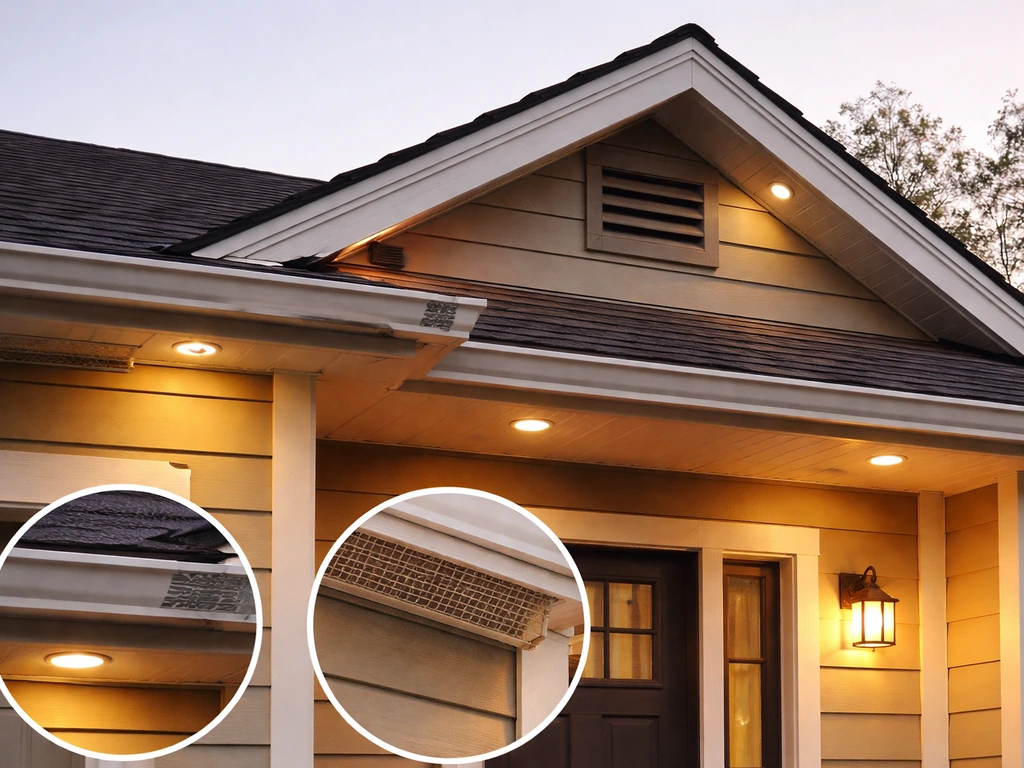
To block out bird noise, you need to do two things at once: stop the birds from roosting or nesting in the spots that are causing the sound, and reduce how much of that sound reaches you indoors. Start by locating exactly where the birds are active, then use physical exclusion (mesh, vent guards, one-way doors, spikes) to remove their access to those spots.
How to Block Out Bird Noise: Humane, Step-by-Step Fixes

Maya Carver
12 May 2026
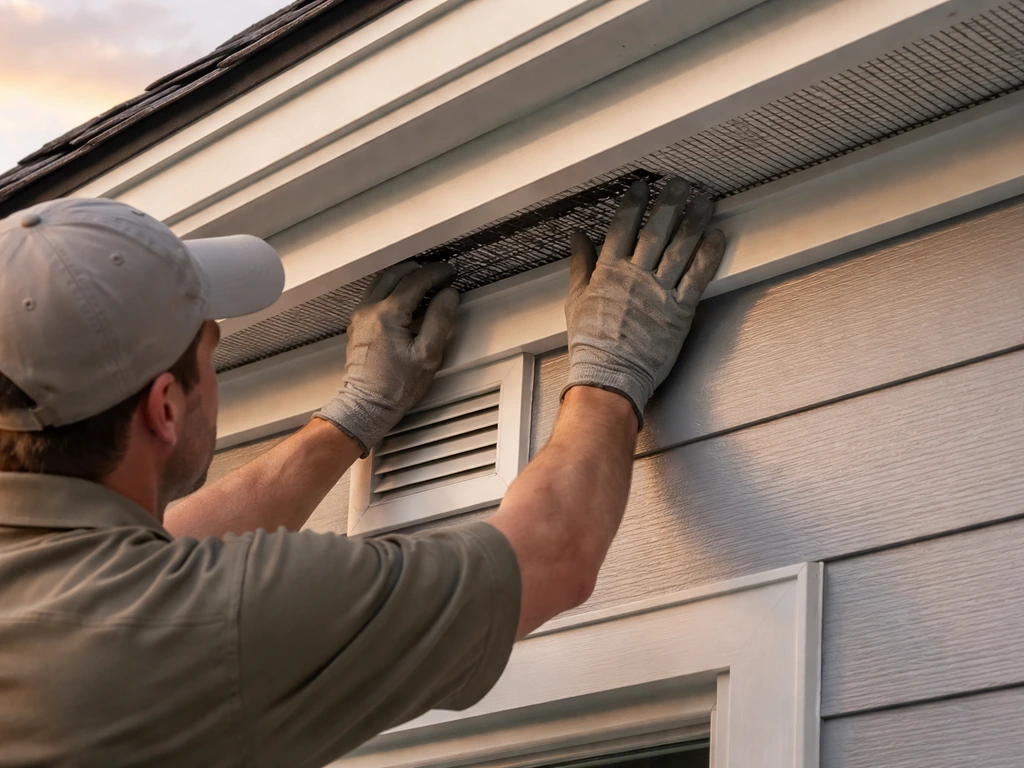
At the same time, seal gaps around windows, doors, and vents to cut sound transmission into your building. Most people can handle both steps themselves for common situations like eaves, ledges, and roof vents. Escalate to a wildlife professional if birds are actively nesting, if you suspect a protected species, or if you need attic access.
Find the noise source and bird activity pattern
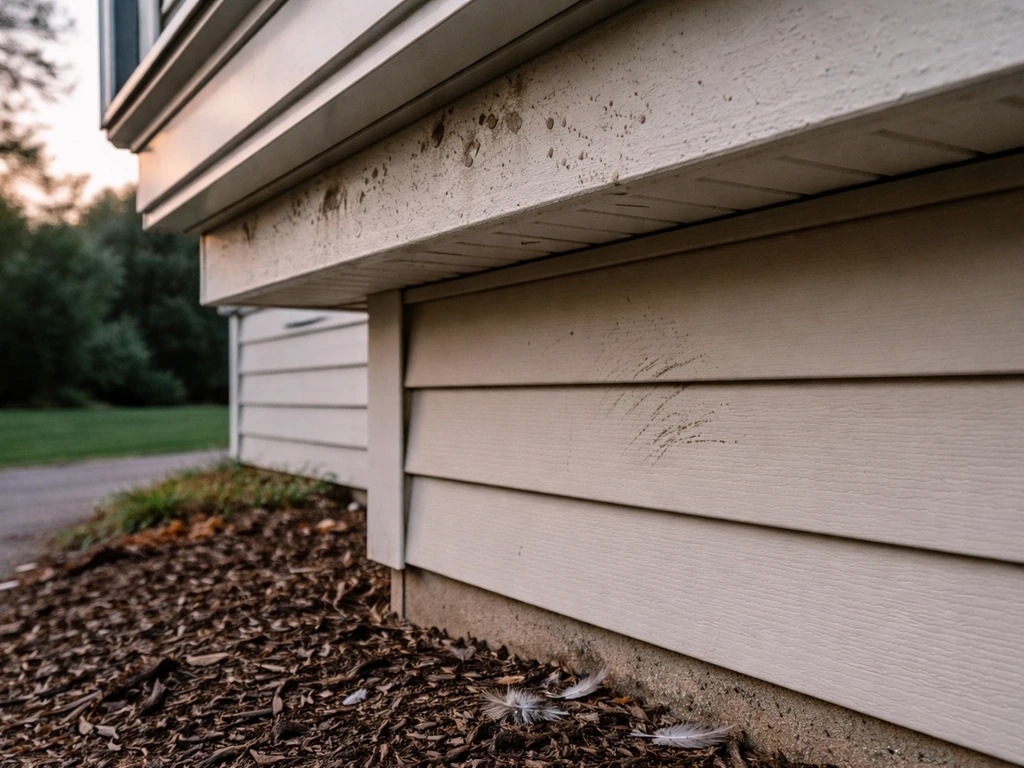
Before you buy anything or climb a ladder, spend a few minutes figuring out exactly where the noise is coming from and when it peaks. A lot of homeowners waste money treating the wrong spot. Walk the perimeter of your building early morning and at dusk, since those are the busiest periods for most species. Listen for whether the sound is coming from above (roof, attic, ridge), at face height (window ledges, AC units, wall vents), or from vegetation near the building.
Look for these physical signs to confirm the active roost or nesting spot: feathers, droppings concentrated in one area, nest material poking out of gaps or vents, worn or dirty surfaces around entry holes, and obvious congregating behavior. Take note of how many birds you see, what species they appear to be, and whether you can spot eggs or juveniles. That last point matters a lot from a legal standpoint, which is covered below.
Map your findings simply. A quick sketch of your roofline with marked hotspots is enough. Note whether the noise pattern is constant (active roosting colony), seasonal (spring nesting, fall migration staging), or tied to a specific time of day. That pattern tells you whether you're dealing with a permanent resident problem or a temporary one, and it shapes your response.
- Check at dawn and dusk for peak activity
- Look for droppings, feathers, and nest material at the base of walls, on sills, and around vent covers
- Listen from inside: noise loudest near a specific vent, window, or wall section points to a nearby roost
- Note species if possible: house sparrows, starlings, pigeons, and starlings favor different spots and have different legal considerations
- Check if nesting is active (eggs or chicks present) before doing anything else
Immediate quick-response deterrence and safety steps
If you need relief today while you plan the longer fix, there are a few things you can do right now that are safe and legal. The goal at this stage is to make the area less attractive and interrupt the habit, not to trap or harm birds. Keep in mind that deterrents work best when you keep changing them up. The U.S. Fish and Wildlife Service specifically notes that deterrent equipment often needs to be moved daily to prevent birds from habituating to it.
- Remove food attractants immediately: pick up fallen birdseed, move pet food bowls inside, secure compost and garbage lids, and clear standing water
- Hang reflective tape or predator decoys (owls, hawks) near the active roost point, and move them every day or two so birds don't get used to them
- Use a motion-activated sprinkler on areas you can reach safely from the ground
- If birds are congregating on a ledge you can reach safely, place temporary physical deterrents like commercially available spike strips or wire coils to interrupt landing
- Do not use sticky deterrents near active nests or where birds could become trapped
- STOP all hazing and deterrence activity immediately if you find eggs or chicks in a nest. Once the first egg is laid, deterrence must stop to avoid violating federal nesting protections
Safety note before you do anything at height: use a stable ladder on level ground, have a second person hold it, and wear gloves and an N95 mask when working near any area with bird droppings. Dried droppings can carry histoplasma and other pathogens. Do not work on a roof without proper fall protection.
Humane exclusion: seal gaps, block roost and entry points
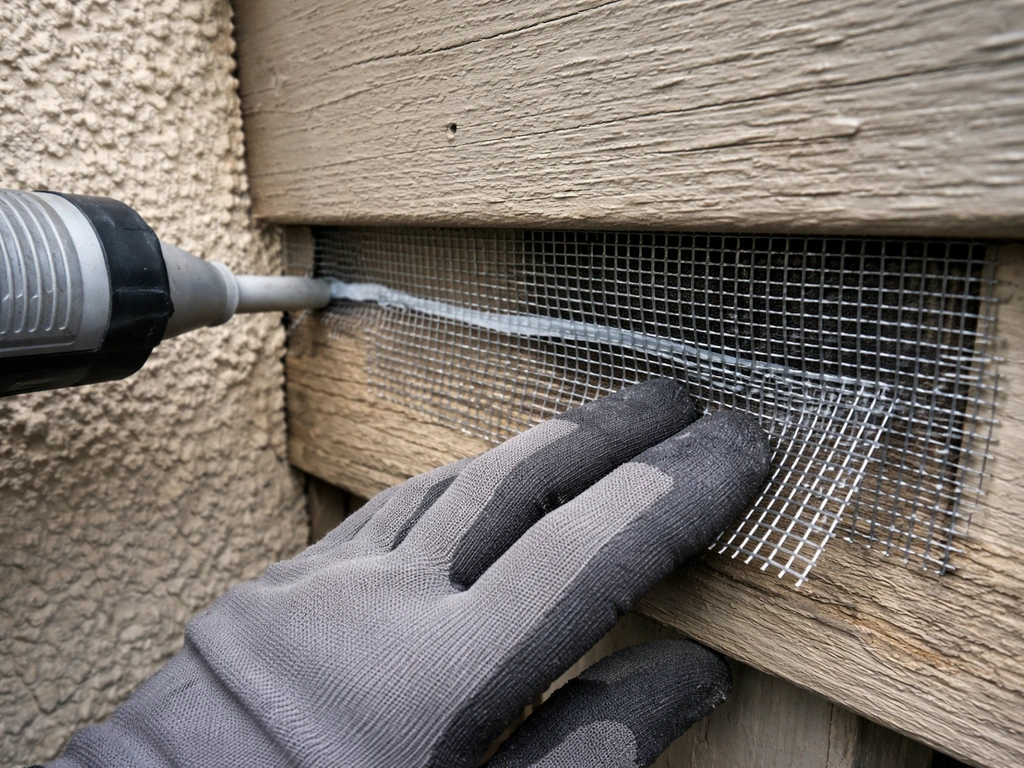
Physical exclusion is the most effective long-term method for blocking out bird noise at the source. If birds can't get into a space or land on a surface, they stop making noise there. The key tools are exclusion netting, vent guards, gap-sealing materials, anti-perch spikes, and one-way exclusion doors for situations where birds are already inside a space.
Netting and mesh
UV-stabilized high-density polyethylene (HDPE) bird netting is the standard for blocking access to eaves, open rafters, and under solar panels. It comes in different mesh sizes depending on the species you're targeting: smaller mesh for house sparrows and starlings, larger mesh for pigeons. Install it taut with no gaps at the edges, since birds will find and exploit even small openings. Always remove any accumulated droppings before installation and follow proper disposal procedures for bird waste.
Anti-perch devices
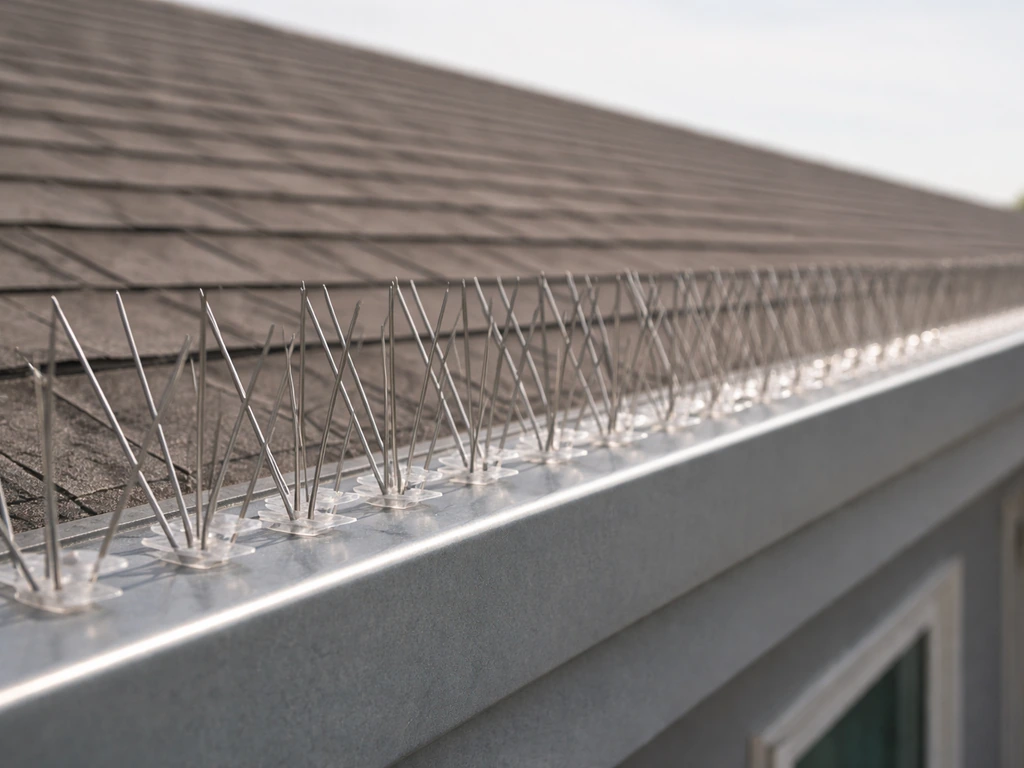
Stainless steel spikes or post-and-wire systems work well on ledges, sills, rooflines, and any flat surface where birds land before entering a void. They don't harm birds. They just make the surface uncomfortable to land on. Apply them to the full length of a ledge with no gaps, otherwise birds will use the gap.
One-way exclusion doors
If birds are already inside a void (attic, wall cavity, eave box), a one-way door lets them exit but not re-enter. Both Maine's Department of Inland Fisheries and Wildlife and Washington's Department of Fish and Wildlife recommend leaving the one-way door in place for at least seven days, and longer during cold or rainy weather when birds may be less active. After that period, verify the space is empty before sealing. Maine's guidance suggests low-tech verification methods like placing wadded newspaper or talcum powder near the opening to detect any remaining movement. Once you're confident the space is clear, remove the one-way door and immediately seal the exit permanently.
Do not use a one-way door if there is an active nest with eggs or chicks inside. Doing so could trap juveniles or cut off parent birds from dependent young, which violates federal protections under the Migratory Bird Treaty Act.
Reduce sound transmission inside (windows, doors, vents, insulation)
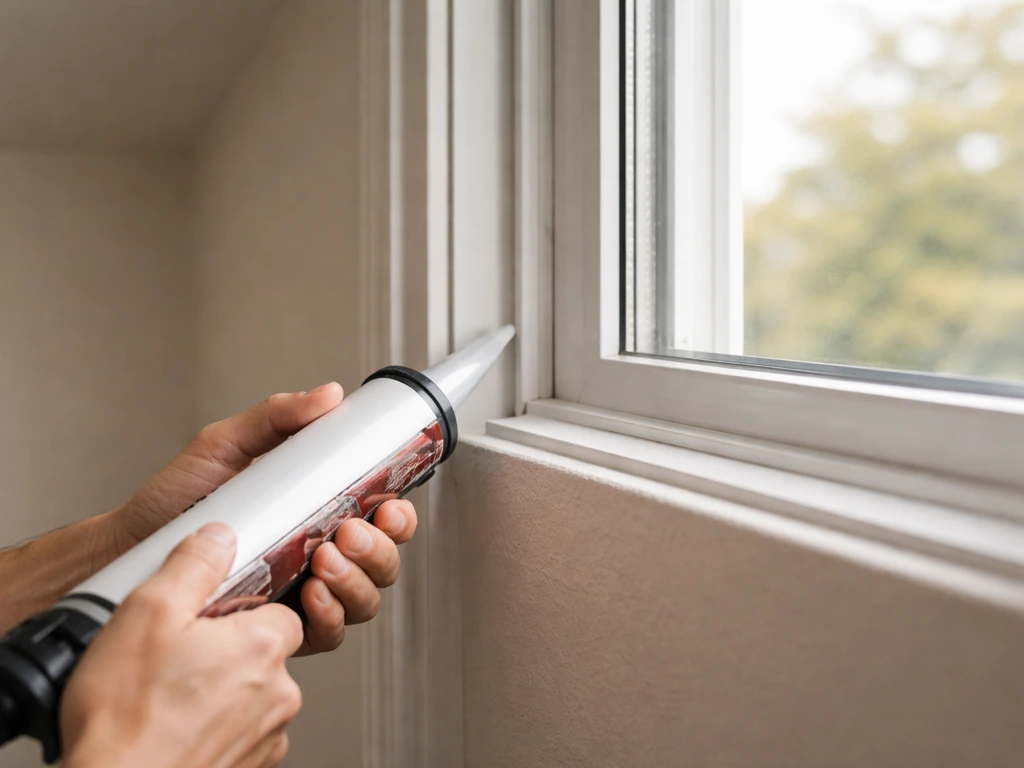
Even after you exclude birds from the immediate building envelope, sound from birds in nearby trees, on neighboring structures, or in transitional areas can still carry inside. Once you remove the birds from the sound sources, the remaining audio should get noticeably cleaner, making it easier to remove bird sounds from audio recordings exclude birds from the immediate building envelope. These are building envelope improvements that cut how much of that sound reaches your living or working space. They also happen to improve energy efficiency, so they're worth doing regardless.
Windows
Single-pane windows transmit a lot of sound. Adding a secondary interior window panel (sometimes called a window insert) creates an air gap that significantly reduces noise transmission. If replacement isn't practical, acoustic window film adds some mass. Make sure all window frame gaps are sealed with acoustic or silicone caulk, since a small gap transfers far more sound than the glass itself.
Doors
Gaps around and under exterior doors are a major sound pathway. Adding a storm door with proper weather stripping around all four edges makes a real difference. Door sweeps on the bottom threshold close the most common gap. Check that the door frame itself is sealed to the wall with caulk, since many older homes have gaps there that are invisible until you look closely.
Vents and ducts
Ventilation pathways are often overlooked as sound transmission routes. A duct well or duct silencer insert can be fitted inside an existing vent run to absorb sound without blocking airflow. For bathroom and kitchen exhaust vents, make sure the exterior damper closes fully when not in use. A flapping or stuck-open damper is both a sound pathway and a potential bird entry point.
Adding mass and insulation
Mass blocks sound. If you have an attic ceiling that's lightly insulated, adding blown-in insulation above the ceiling drywall does double duty: it reduces heat loss and dampens sound from above. Acoustic curtains (dense, heavy-fabric curtains hung close to the window with as much overlap as possible at the sides) can drop perceived indoor noise noticeably for rooms facing active roost areas. White noise machines or fans can help mask residual sound, but treat them as a supportive layer, not the main fix.
Targeted fixes by common location
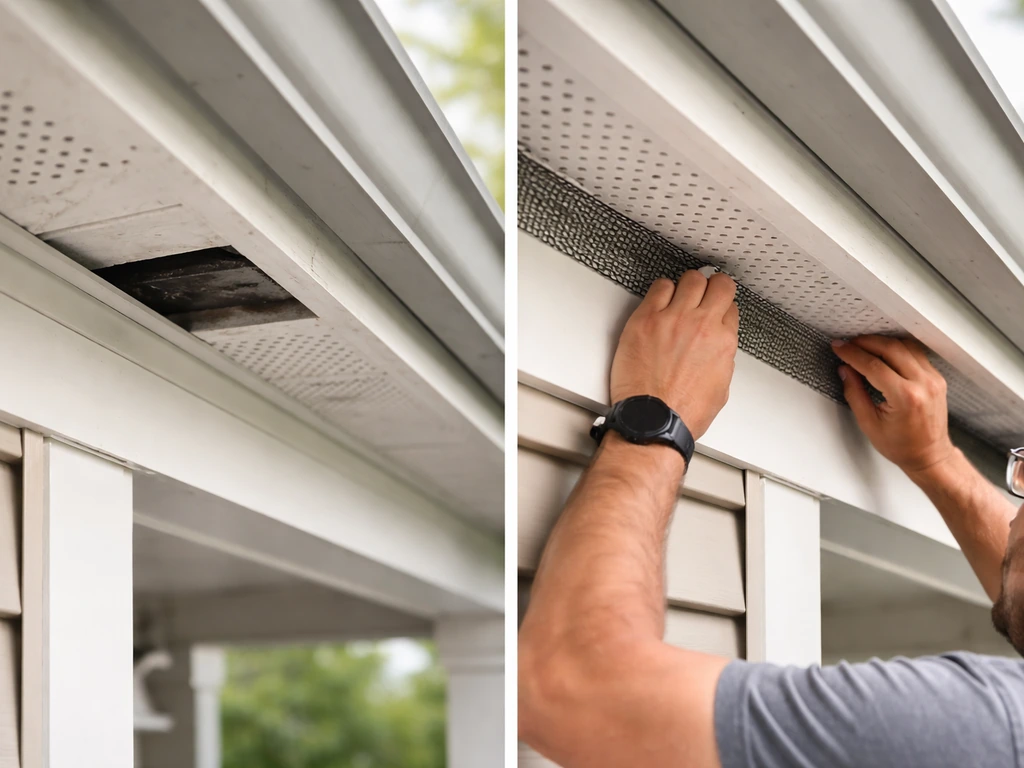
Bird noise problems tend to cluster around a handful of building spots. If you need a faster way to reduce the bird sounds, the first steps usually focus on making the roosting and entry spots less accessible. Here's what to do at each one.
| Location | Common birds | Recommended fix | Notes |
|---|---|---|---|
| Eaves and soffits | House sparrows, starlings, swallows | Install HDPE exclusion netting or solid soffit panels; seal all gaps larger than 0.5 inches | Check for active nests first; use one-way door if birds are already inside |
| Roof vents (box, turtle, ridge) | Starlings, sparrows | Install galvanized or galvannealed steel vent guards with appropriate mesh size over the vent cover | Vent guards are available in sizes matched to common vent types; mesh must allow airflow |
| HVAC units and rooftop equipment | Pigeons, starlings | Use spike strips on flat surfaces and ledges around units; install wire mesh barriers on any open gaps in equipment housings | Do not block HVAC intake or exhaust; work with an HVAC tech if access is difficult |
| Attic (entry via gap or damaged area) | Starlings, sparrows, pigeons | Locate all entry points; use one-way door for 7+ days to exclude residents, then seal permanently with hardware cloth or metal flashing | Verify space is empty before final seal; hire a pro if attic access is unsafe or species is uncertain |
| Window ledges and sills | Pigeons, house sparrows | Install stainless steel spikes or post-and-wire ledge deterrents along full ledge length | Leave no gaps; seal the ledge-to-wall joint with caulk after installing deterrents |
| Chimneys | Chimney swifts (federally protected), starlings | Install a UL-listed chimney cap with mesh sides for most species; do NOT cap during swift nesting season (spring/summer) | Chimney swifts are protected under the MBTA; consult a wildlife professional before any chimney work in spring or summer |
Seasonal prevention plan and long-term proofing
Bird problems are predictable by season. If you get ahead of them on a simple annual schedule, you avoid both the noise and the damage that roosting and nesting birds cause to building materials and insulation.
Late winter (February to early March)
This is your most important window. Do a full building inspection and complete all exclusion work before migratory birds return and before resident species like house sparrows and starlings begin nesting. Walk every roofline, check every vent cover, probe every soffit, and seal anything you find. It's far easier and legally simpler to seal a gap in February than to deal with an active nest in May.
Spring (March to June)
Nesting season is active. Stop all hazing and exclusion work on any spot where you find an active nest with eggs or young. Monitor new entry points that appear. This is the season to document what species are nesting where so you can plan exclusion work for late summer. Do not skip this documentation step: it determines what permits you may need.
Late summer (July to September)
Most nesting activity winds down by mid-to-late summer. This is the second best window for exclusion work after winter. Juveniles have fledged, nests are abandoned, and you can safely seal entry points and install physical deterrents without disturbing active broods.
Fall (October to November)
Migratory species stage and roost in large numbers during fall. Hazing and habitat modification (removing food and water sources, trimming roost trees) can reduce fall congregation. Check and refresh all deterrents installed earlier in the year, since spikes can fill with debris and netting can develop gaps after a season.
Simple annual maintenance checklist
- February: Full building inspection, seal all gaps, replace damaged vent covers, refresh or install netting and spikes
- April: Monitor for nesting activity; document species and locations; stop hazing at any active nest
- August: Post-nesting exclusion work; seal newly found entry points; clean up droppings with proper PPE
- October: Check all deterrents; remove food and water attractants; trim back vegetation touching the building
- Ongoing: Move any temporary visual deterrents daily or every other day to prevent habituation
When to escalate to wildlife pros, and what the law says
Most common-species problems (pigeons, house sparrows, European starlings) can be handled by homeowners using the methods above. But there are situations where you need a licensed wildlife professional, and a few where the law requires it.
Call a wildlife professional if
- You find an active nest with eggs or chicks anywhere in your exclusion area
- You're not sure what species you're dealing with and want to rule out a protected migratory bird
- The entry point requires attic access, roof work, or structural repair beyond basic DIY
- You have a large colony (dozens of birds) that needs coordinated exclusion and cleanup
- Previous exclusion attempts haven't worked and you need a professional assessment
The legal framework you need to know
The Migratory Bird Treaty Act (MBTA) is the key federal law. It prohibits the 'take' of protected migratory birds without prior authorization, and 'take' includes killing, capturing, and disturbing nests. Maryland DNR and other state wildlife agencies are clear that this applies even in nuisance situations: you cannot legally disturb a native bird's active nest without a permit. The U.
S. Fish and Wildlife Service memorandum on nest activity under the Migratory Bird Treaty Act defines a nest as active from the first egg being laid until fledged young are no longer dependent on the nest [active nest](https://www. fws. gov/sites/default/files/documents/Nest%20Memo_6.
12. 18_final. pdf). House sparrows and European starlings are not protected under the MBTA (they are non-native invasive species), but the vast majority of songbirds, swifts, swallows, and colonial nesters are.
When in doubt, assume protection applies and verify before acting.
For problem species that are protected but causing significant damage, a Migratory Bird Depredation Permit from USDA APHIS and coordination with your state wildlife agency may be required before taking any control action. USDA APHIS notes this specifically for species like blackbirds and other protected birds not covered by general depredation orders. A licensed nuisance wildlife control operator will handle the permit process and know exactly what's legal in your state.
What to tell the professional when you call
- Where exactly you're seeing or hearing activity (specific location on the building)
- What species you think are involved and how many birds approximately
- Whether you have found an active nest and whether eggs or chicks are visible
- What you've already tried
- Whether there are any droppings or structural damage to be assessed
- The time of year and how long the problem has been occurring
If your primary concern is the sound inside your home rather than the birds themselves, the noise-reduction improvements covered above (window sealing, door weatherstripping, vent silencers, added insulation) can be tackled independently of bird management. They complement the exclusion work but don't require any wildlife permits or professional wildlife involvement. Those are standard building improvements you can start on today. USDA APHIS Wildlife Services advises blank" rel="noopener noreferrer">not to feed wildlife because it can create disease and public health concerns, cause animals to gather in large numbers, and increase the risk to both wildlife and people.
FAQ
Will bird deterrents like shiny objects or audio recordings work long-term for bird noise?
They may reduce noise temporarily, but birds often habituate if the deterrent stays in the same spot. For best results, rotate or reposition deterrents frequently and treat them as a short-term interrupt, not a replacement for exclusion (netting, spikes, sealing entry gaps).
What’s the safest way to confirm whether birds are nesting before I seal a gap?
Use non-destructive checks from the ground or from safe access points, look for fresh droppings, nest material, and active entry behavior, then avoid sealing if you see eggs, chicks, or obvious active incubation. If you must investigate deeper access like attic voids, consider a licensed wildlife professional rather than forcing entry during nesting season.
How do I handle an attic or wall void if I’m not sure a nest is active?
Do not install a one-way exit door if you suspect eggs or young are inside. Instead, confirm activity first using safe, low-tech indicators (for example, monitoring entry/exit timing from outside) and document observations for species identification. If uncertainty remains, pause exclusion and consult a pro.
Can I block noise by trimming nearby trees or removing perches instead of sealing the building?
Trimming vegetation and removing food or water can reduce congregation, which lowers noise, but it usually doesn’t solve the root cause if birds already use your structure for roosting or nesting. Plan on exclusion and sealing as the durable step, and keep any hazing methods consistent with wildlife season guidance.
How can I tell whether the sound is coming from above, vents, or nearby structures?
Do a targeted listening walk at the times birds are most active, then stand at different elevations and locations, such as directly under rooflines, at windows at face height, and near exterior vents. If the loudest point shifts when you change your position, the source is likely tied to a building feature rather than only nearby trees.
Are acoustic curtains or white noise machines allowed if birds are nesting and I want immediate quiet?
Yes, these are typically fine as supportive noise control, because they do not interfere with birds. Just remember they mask residual sound and do not prevent re-entry, so you still need to schedule exclusion at the correct time window.
What if the birds keep returning after I install netting or spikes?
Common causes are gaps at edges, loose seams, debris that bridges spikes, and unsealed adjacent openings that provide alternate entry. Re-check for small access points after installation, then inspect again after heavy weather or seasonal changes, since netting can loosen and gaps can reappear.
How do I dispose of bird droppings safely before installing exclusion materials?
Treat droppings as potentially contaminated, wear protective equipment (at minimum an N95 mask and gloves), avoid dry sweeping, and wet-clean when possible to limit aerosolization. Bag waste carefully and follow local disposal rules, then clean the area so you can install netting or sealants on a stable, contaminant-free surface.
Do door sweeps and storm doors solve bird noise from vents or eaves too?
They help with sounds that enter through the door area, but they won’t address bird-made noise pathways in rooflines, soffits, or vent cavities. For whole-system reduction, combine door and window sealing with vent pathway control and exclusion at the actual bird entry and roost locations.
Can birds use the same entry hole in different seasons, and how does that affect timing?
Yes. Some species reuse or shift to nearby openings as seasons change, which means exclusion work should be completed during the appropriate window (before migratory return and before resident nesting starts, or after nesting winds down). Even if you stop the noise now, leave planning for next seasonal entry points so birds do not move to alternative gaps.
Is it illegal to disturb a nuisance bird nest if the birds are causing damage?
For protected migratory birds, yes. Many state agencies and the federal Migratory Bird Treaty Act treat disturbing an active nest as prohibited without authorization. Even if the species is causing noise or damage, you generally should not interfere with active eggs or chicks unless you have the required permits and follow a legal process.
Do I need a permit to handle invasive non-native birds like house sparrows or starlings?
They are generally treated differently from protected native birds, but requirements can still vary by state and by the specific actions you plan to take. For exclusion work, many basic building methods are usually feasible, but if you intend control beyond exclusion, confirm local rules before acting.
When should I hire a licensed wildlife professional instead of DIY exclusion?
Consider hiring help if birds are actively nesting in hard-to-access spaces, if you need attic entry or roof work, if you can’t identify the species confidently, if there is evidence of protected species, or if permits or specialized control methods may be needed. A pro can also verify whether a one-way exit approach is appropriate for the situation.
After I reduce bird access, how long until the bird noise improves inside?
It depends on whether you removed the active sound sources and how quickly the birds move off. In many cases, you’ll notice a reduction soon after exclusion is installed correctly, but some species may linger while exploring nearby alternatives. Re-check within the first week for new entry points, and inspect after weather events that could loosen materials.
What’s the best order of operations if I need to improve indoor sound and block bird access?
Do exclusions first at the actual bird hotspots, then follow with building envelope noise upgrades (window sealing, vent silencers, door weatherstripping, insulation). This order prevents you from paying for indoor noise reduction while the birds still produce the dominant sound at the source.
Next Article
How to Get Rid of a Noisy Bird: Safe Steps That Work
Safe steps to stop a noisy bird today, reduce attractants, secure entry points, and prevent nesting long term.