To stop a noisy bird fast, you need to do three things in order: figure out exactly where the bird is and why it's there, remove whatever is attracting it or giving it a reason to stay, and then use humane deterrents to make the spot less appealing. If the usual deterrents, exclusion, and cleanup do not quiet the area, you can also use targeted strategies to address persistent bird noise use humane deterrents. If there's an active nest with eggs or chicks, your legal options are limited and you'll need a professional. But in most cases, a combination of habitat changes, exclusion, and targeted deterrents will quiet things down within a few days.
How to Get Rid of a Noisy Bird: Safe Steps That Work
Maya Carver
11 May 2026
Quick identification: where is the noise coming from?
Before you do anything else, spend five minutes pinpointing the source. Walk the perimeter of the building early in the morning, when birds are most vocal, and listen carefully. The noise often sounds like it's coming from one direction when it's actually reflecting off a wall or roof surface. Get close enough to visually confirm the bird's location.
Once you've narrowed it down to a zone, identify the species. This matters more than it sounds, because some birds are legally protected and the rules about what you can do are different. The Cornell Lab's BirdNET app lets you record a few seconds of bird sound and returns instant ID suggestions. Merlin Bird ID's Sound ID feature works in real time, showing you who's singing as you hold up your phone. Both are free and genuinely useful. Knowing the species tells you whether you're dealing with a migratory bird protected under the Migratory Bird Treaty Act, a common non-native pest species like a European starling or house sparrow, or something else entirely.
While you're out there, also note these things:
- Is there a visible nest? Is it active (eggs or chicks inside)?
- What is the bird doing: roosting, defending territory, foraging, or calling for a mate?
- What time of day is it loudest? Dawn and dusk activity usually means territorial singing or mating calls.
- Is there a food source nearby: open trash, a bird feeder, standing water, or insect-rich landscaping?
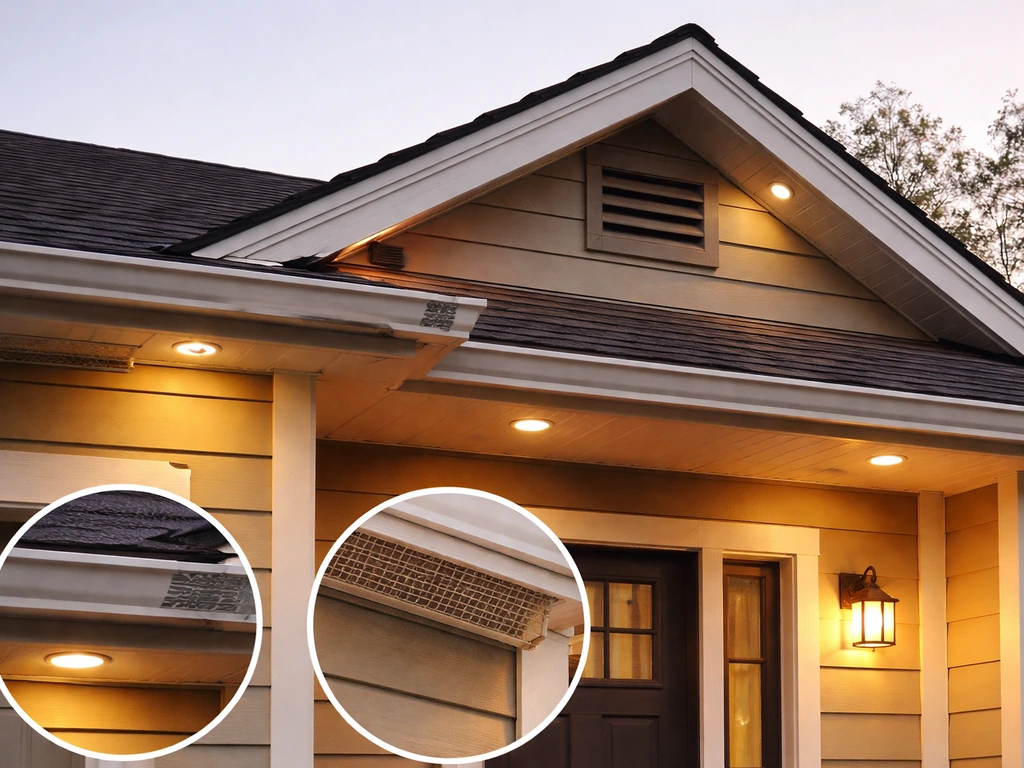
- Are there obvious entry points into the building: gaps in soffits, broken vents, open eaves?
Write down or photograph everything you find. This information will guide every decision below and is exactly what a wildlife professional will ask for if you need to escalate.
Immediate calm actions you can do today
Don't rush to buy anything yet. The most effective immediate steps are free and take less than an hour. The goal right now is to reduce the bird's motivation to be in that spot, not to scare it off with gimmicks. Some people also look into how to reduce bird noise more broadly after they calm the current situation.
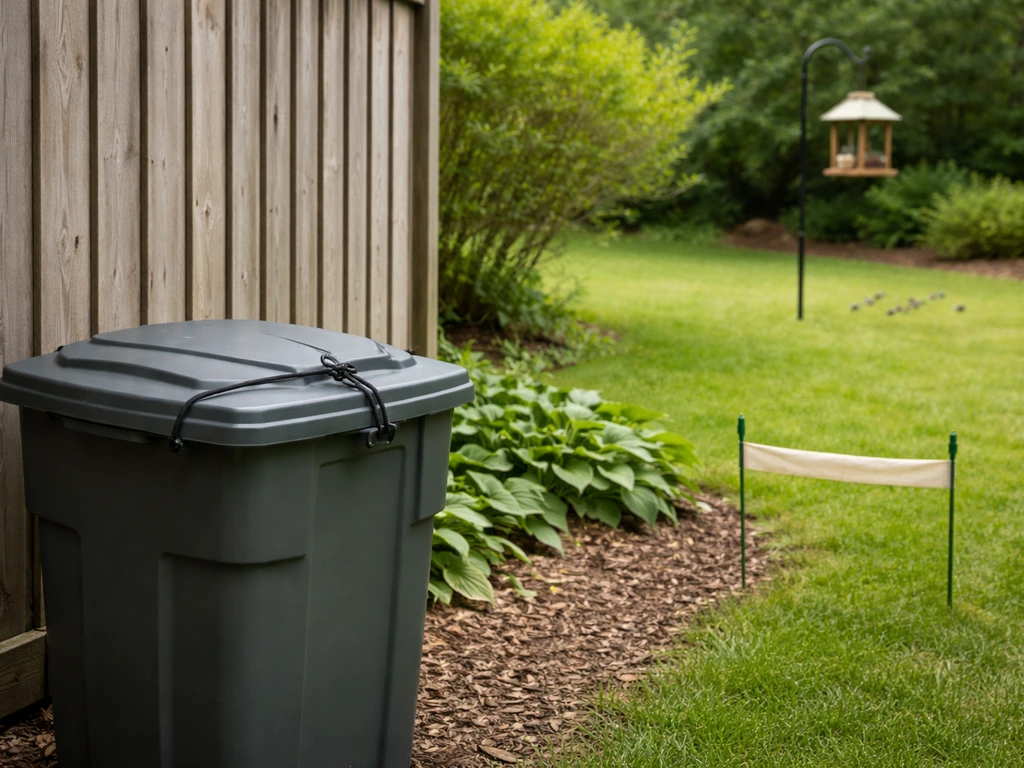
- Remove food attractants: bring in bird feeders near the problem area, secure trash lids, and clean up any spilled seed or food scraps.
- Eliminate standing water nearby: bird baths, clogged gutters, and puddles near A/C units are all draws.
- Block easy perching spots temporarily: place physical objects (plastic bags weighted at corners, or even folded cardboard) on ledges, sills, or flat roof edges where the bird is landing and calling from.
- Close off any open cavities or gaps you can safely reach from the ground: a temporarily stuffed cloth or hardware cloth patch is fine for now while you plan a permanent fix.
- Reduce indoor noise amplification: if the bird is outside a bedroom window, a white noise machine or fan inside buys you immediate relief while you address the root problem.
One important safety note for today: if there is any droppings accumulation under the roosting spot, do not sweep or blow it dry. Bird droppings can carry Histoplasma fungal spores, and the CDC specifically warns that disturbing or creating dust from dried droppings increases your exposure risk. Wet the area down with a dilute water-and-soap solution before any cleanup, wear an N95 mask and gloves, and dispose of waste in sealed bags. For large accumulations, stop and hire a professional remediation service.
Humane deterrents that actually work (and ones that don't)
There's a lot of noise in the market about bird deterrents. Let's be direct about what research supports and what's a waste of money.
Deterrents worth using
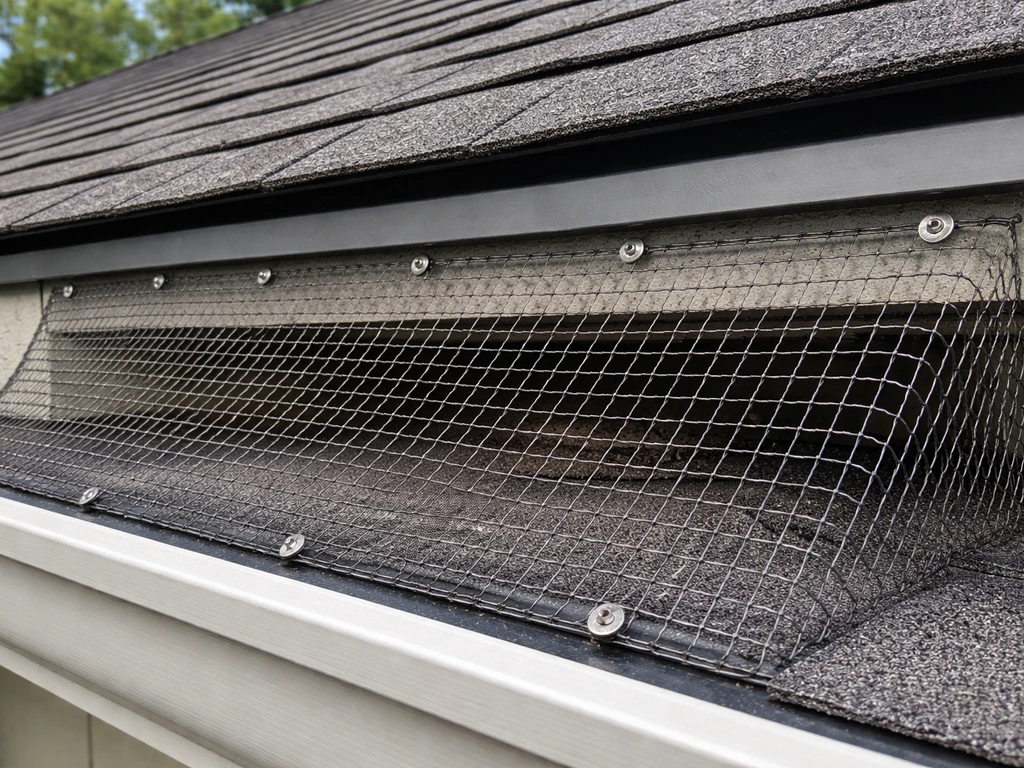
- Physical exclusion netting: the single most effective long-term deterrent according to the U.S. Fish and Wildlife Service. Properly installed netting over roosting or nesting areas blocks access entirely. It must be sized correctly for the target species and installed without gaps that could trap birds inside.
- Bird spikes and wire systems: effective on flat ledges and sill edges for larger birds like pigeons and gulls. They don't harm the bird, they just make landing uncomfortable. Install on every ledge in the problem zone, not just one.
- Reflective tape or holographic tape: works well in localized, enclosed spaces like a specific window or small rooftop area. Hang in strips that move freely in the wind. Effectiveness drops if the bird habituates over a week or two, so combine with other methods.
- Predator decoys: owl or hawk silhouettes can create initial displacement. Move them every two to three days or the birds adapt quickly. More effective as part of a system than on their own.
- Habitat modification: removing or trimming dense shrubs near the building, cutting back tree branches that overhang rooflines, and reducing ground cover that shelters insects all make the area less attractive for nesting and foraging birds long-term.
Deterrents that don't work
Skip ultrasonic and sonic pest repeller devices. The University of Arizona Cooperative Extension states they have not been shown to be effective in scientific studies, and research from the National Wildlife Research Center found that ultrasonic devices produced zero change in pigeon activity over a 20-day test period. They're not worth the money.
A note on noise-based deterrents
Propane cannons and distress call systems are used in agricultural settings but are generally inappropriate for residential or commercial building use. They create their own noise problem, can violate local ordinances, and birds habituate quickly. If you're considering anything in this category, check local noise ordinances first and consult a wildlife professional before purchasing.
Exclusion and cleanup: fixing entry points and removing attractants
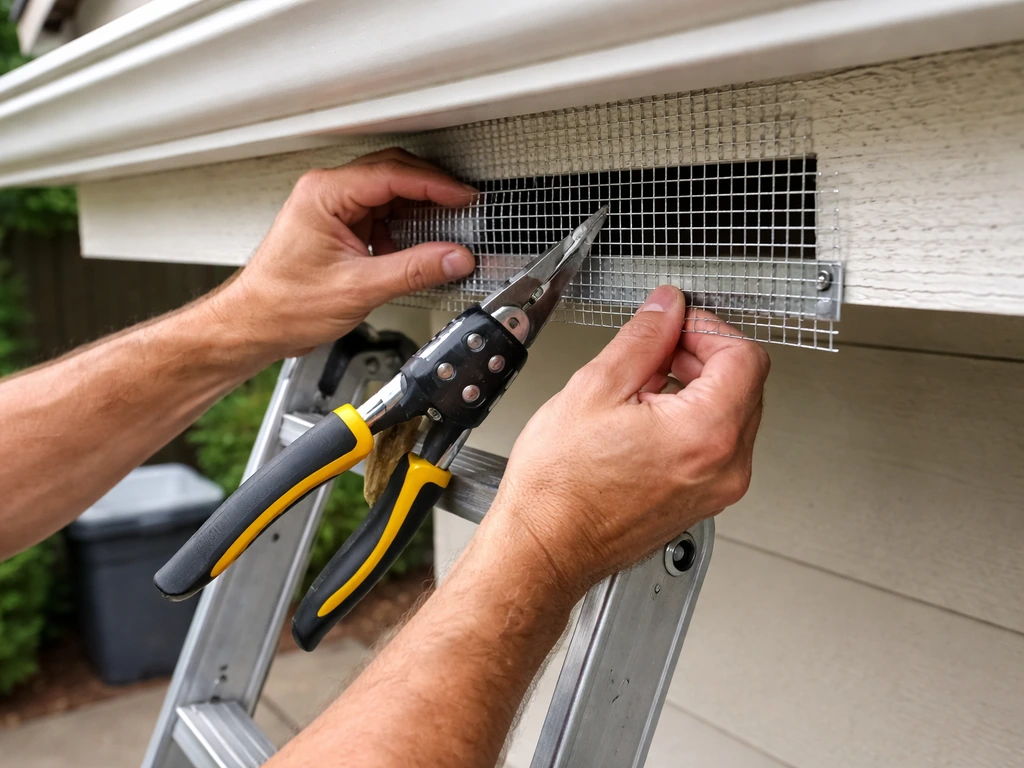
Once you've confirmed the bird isn't nesting inside the building (check thoroughly first), it's time to permanently close off access points. This is the step most people skip, and it's why the bird comes back the following season.
Common entry and roosting points to check
- Soffits and fascia gaps where boards have warped or separated
- Broken or missing roof vent covers and attic vents without screening
- Open eaves at the roofline
- Gaps around HVAC penetrations and exhaust vents
- Chimneys without caps
- Damaged siding or woodpecker holes that have been abandoned and are now used by starlings or sparrows
For each gap, use hardware cloth (half-inch galvanized mesh) cut to size and stapled or screwed into place. Foam sealant alone is not enough for birds, they can tear through it. For chimney and vent openings, use purpose-made metal chimney caps and louvered vent covers with integrated screening. Check that any installed netting doesn't leave gaps larger than the target species can fit through.
Cleaning up safely after eviction
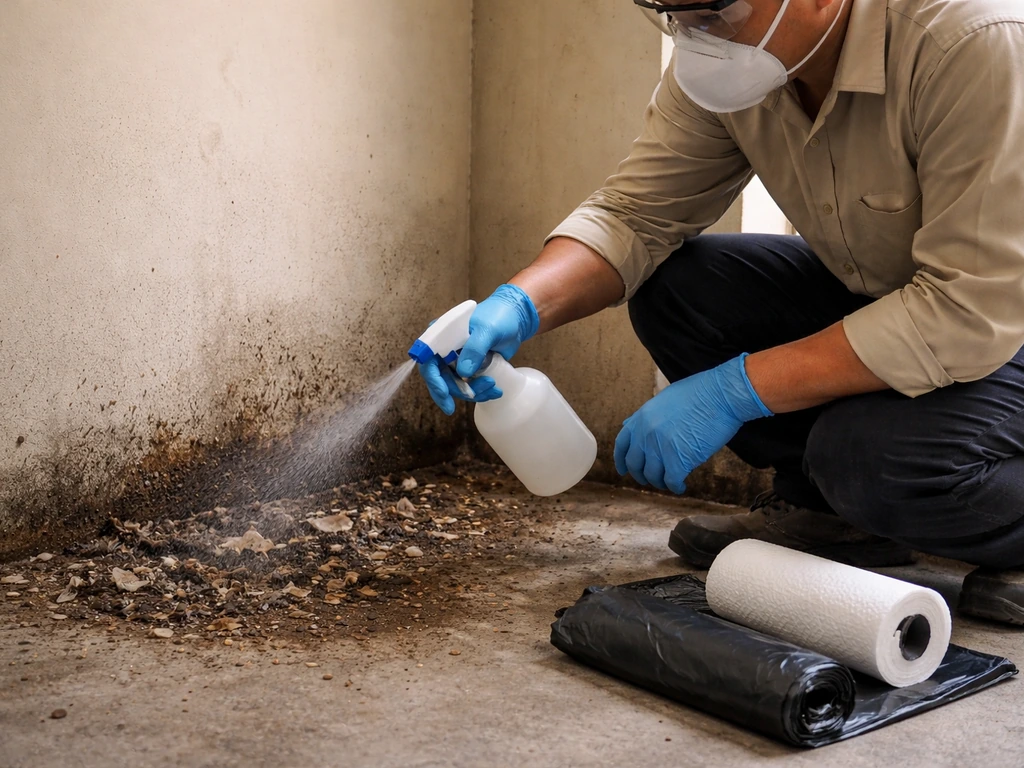
Once birds have left a roost area, cleanup is important for health and to prevent re-attracting birds. Wear an N95 or P100 respirator, safety glasses, and disposable gloves. Wet the area thoroughly before disturbing any droppings. Remove nesting material in sealed plastic bags. Scrub surfaces with soap and water until visibly clean, then disinfect with an EPA-approved disinfectant that lists influenza A on its label, following manufacturer directions. The CDC recommends this approach for cleaning areas with bird waste. Do not use compressed air to blow out debris.
Prevention and seasonal planning to stop re-nesting
Most bird noise problems are seasonal. Birds return to the same nesting and roosting sites year after year because those locations worked for them before. The most efficient time to bird-proof a building is late fall through early winter, after birds have left for the season and before they scout for new nesting sites in late winter and early spring.
| Season | Bird Behavior | Best Action |
|---|---|---|
| Late fall (Oct-Nov) | Most birds have finished nesting and are moving to winter roosts | Ideal window for exclusion repairs, netting installation, and entry point sealing |
| Winter (Dec-Feb) | Reduced activity; some species roost in large groups | Inspect and complete any remaining proofing; install chimney caps and vent covers |
| Early spring (Mar-Apr) | Scout birds return and begin selecting nest sites | Final walkthrough before nesting begins; add deterrents to ledges and problem areas now |
| Active nesting season (Apr-Aug) | Nests may be occupied with eggs or chicks | Do not disturb active nests; use professional help if exclusion is needed |
| Late summer (Aug-Sep) | Fledglings leave nests; activity decreases | Address any new entry points found during summer before birds return next year |
Set a calendar reminder every October to do a building walkthrough specifically for bird proofing. Walk the roofline, check all vents and soffits, look for new damage from woodpeckers or deteriorating materials, and inspect any netting or spikes installed previously. Deterrents degrade in UV light and weather, and a gap that forms over one winter is all a starling or sparrow needs to claim a new spot.
Landscaping matters too. Dense ivy on walls, ornamental grasses that go uncut through winter, and fruiting trees or shrubs near the building all function as habitat incentives. Prune trees away from rooflines by at least three feet, replace dense ground cover with mulch or gravel around the building perimeter, and delay planting berry-producing shrubs close to the structure if bird pressure is a recurring issue.
If you're also dealing with noise coming through windows and walls rather than the source of the bird itself, strategies for blocking out bird noise from inside the building are a separate but complementary problem worth addressing alongside the deterrence work.
When to call a wildlife professional (and the legal side you need to know)
There are situations where calling a licensed wildlife control professional isn't just a good idea, it's legally required. The Migratory Bird Treaty Act covers most wild bird species in the U.S. and makes it illegal to harm, kill, or disturb active nests with eggs or dependent young without a federal permit. That includes nests of species as common as robins, sparrows, swallows, and crows. If you find an active nest at your problem site, do not remove it, seal the opening, or install exclusion materials over it while it's occupied.
The U.S. Fish and Wildlife Service is clear: destroying a migratory bird nest that has eggs or chicks, or when young are still dependent on the nest, is illegal. Under the Migratory Bird Treaty Act, it is illegal to destroy a migratory bird nest that contains eggs or chicks (or when young are still dependent on the nest) without a valid permit or authorization destroy a migratory bird nest that has eggs or chicks. Nest removal permits are typically only issued when the nest presents a direct human health or safety risk. Even getting too close to a rookery or colony nesting site can cause young birds to leave prematurely, which constitutes harm under the MBTA.
Call a professional when:
- There is an active nest with eggs or chicks at the problem site and the noise or access issue cannot wait for the nest to become naturally inactive
- You've identified the species as a protected migratory bird and are unsure of your legal options
- The bird is inside the building (in an attic, wall cavity, or HVAC system) and you cannot safely confirm the space is clear before sealing
- There is a large accumulation of droppings requiring professional remediation
- You're dealing with a large colony or flock (pigeons, starlings, swallows) rather than a single bird
- Your own DIY deterrents have failed after two to three weeks and the bird has simply shifted to a nearby location
When you call, have this information ready: the species if you've identified it, whether there is an active nest and what stage it's at, the exact location on the building, how long the problem has been occurring, and what you've already tried. A good wildlife control professional will provide a written plan that includes humane methods, a timeline tied to nesting season, and clarity on any permits needed. Avoid any company that offers to immediately remove or destroy a nest without first assessing whether it's legally protected.
If the core issue is that bird sounds are penetrating into your living or working space even after the birds are gone or deterred, that's a different problem with its own set of solutions around acoustic insulation and window sealing, not deterrence. And if you're working with audio recordings that contain bird noise you want to eliminate from a production or recording, that's an entirely separate technical challenge involving audio editing software rather than anything on the building itself. If your goal is to reduce or remove bird sounds from a recording, you will want to use audio editing and noise-reduction tools designed for that kind of cleanup audio recordings that contain bird noise you want to eliminate.
FAQ
How long should I wait after starting deterrents before I decide they are not working?
Give exclusion and deterrents at least 3 to 7 days, because birds may linger initially due to nearby food and visual cues. If you still see droppings or fresh nesting material after a week, re-check access points and confirm the species, because some birds are more persistent and require tighter screening or removal of a specific attractant.
What if I cannot clearly identify the bird species?
Treat it as potentially protected until proven otherwise. Avoid removing nests or sealing over active areas, and focus on locating the roost and blocking access points only when the area is confirmed unoccupied. If identification is uncertain, use recording apps again from multiple angles or schedule a wildlife professional visit for a definitive ID.
Is it safe to hose down droppings immediately to clean up faster?
It is safer than sweeping or blowing, but do it with controls. Wet thoroughly with a dilute water and soap solution, avoid high-pressure aerosolizing, and use an N95 or P100 respirator, eye protection, and gloves. If the accumulation is large, consider professional remediation rather than aggressive on-site cleaning.
Can I use netting or spikes while a bird is actively nesting?
No. Do not install exclusion materials over an active nest with eggs or chicks. Instead, pause exclusion, let the nesting cycle complete, and then close off the area using screened gaps sized correctly for the species.
What gap size should I block if I do not know the species?
Use a conservative approach: smaller mesh and fully sealed edges. Hardware cloth at half-inch galvanized mesh is a common baseline in this process, but pay extra attention to corners, trim gaps, and around pipes where birds can squeeze through even when the main opening seems blocked.
What are the most common reasons birds come back after “proofing” is done?
Most returns happen because exclusion was incomplete, birds can still access via a hidden gap (soffit cracks, vent seams, roofline penetrations), or deterrents degraded and left openings over the winter. Another frequent cause is leaving an attractant behind, like fruiting plants or standing water near the roost site.
Do I need to remove all nesting material, or is wiping it off enough?
Remove it. Loose nesting material can keep attracting the same birds and can also increase contamination risk. Seal debris in plastic bags, scrub to visible cleanliness, then disinfect using an EPA-approved product that matches the label instructions and relevant pathogen guidance.
Can I scare the bird away with lights or sudden activity?
Brief activity may push birds short-term, but it often fails for repeat roosting sites and can create stress, especially if nesting is occurring. Instead of relying on momentary scares, focus on removing the reasons to stay (food and shelter cues) and installing physical barriers once the area is confirmed unoccupied.
Are ultrasonic, sonic, or propane “noise” devices ever worth it for residential buildings?
Usually no. Ultrasonic and sonic devices have not shown consistent effectiveness in scientific tests, and propane cannons or distress-call systems can create a new noise problem, may violate local noise ordinances, and birds can habituate quickly. If you consider any of these, check local rules and consult a wildlife professional first.
When should I call a licensed wildlife control professional instead of trying DIY?
Call promptly if you find an active nest, if droppings are extensive enough to require remediation, or if you cannot confirm access points and a physical fix is unclear. The professional can also assess permitting needs and provide a written plan tied to the nesting season, which reduces legal and repeat-issue risk.
Can window or wall noise reduction be done before I remove the bird?
Yes, but do it as a separate layer. You can reduce sound transmission inside with sealing and acoustic insulation while you address the source outside, but do not assume interior soundproofing will solve the underlying attractant or access-point issue that brings birds back.
What should I document before contacting a wildlife professional?
Record the species if possible, note whether nesting is active and the stage, mark the exact building locations (vents, soffits, roof penetrations), estimate how long the issue has been going on, and list what you already tried. If you can, include photos of droppings and any entry points, this speeds up a proper, legal plan.
Next Articles
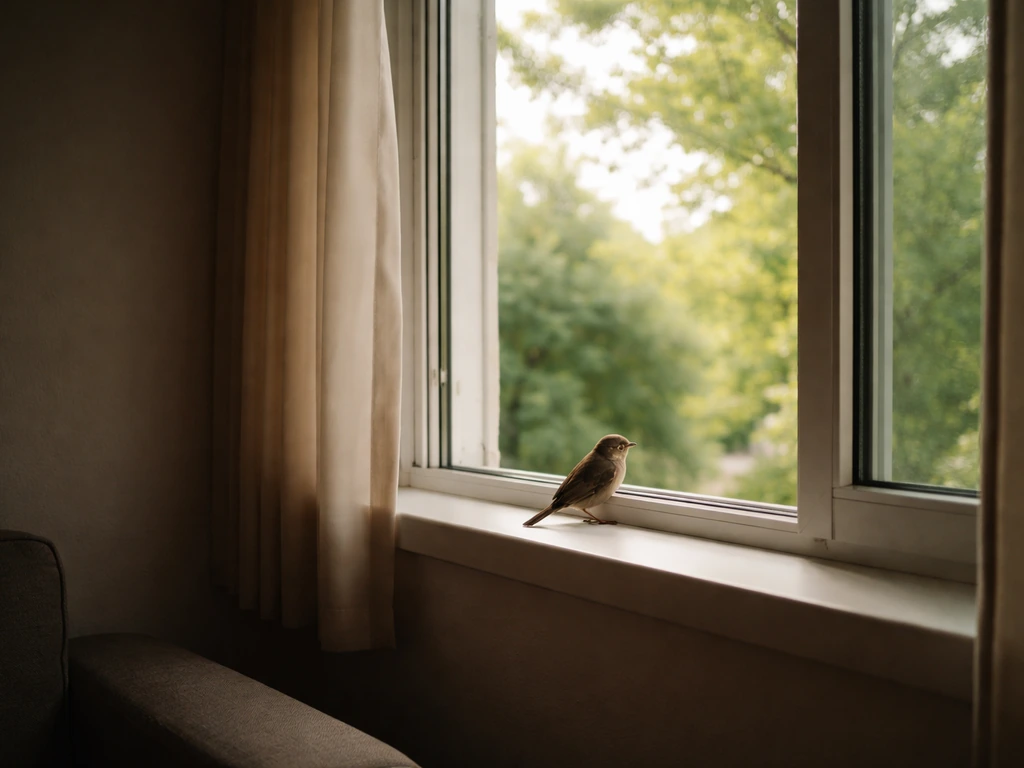
How to Get a Trapped Bird Out of Your House Safely
Humane, step-by-step guide to get a trapped bird out safely, handle injuries, and prevent future entry.
How to Get a Bird Out of Your House Reddit Guide
Step-by-step humane bird escape, DIY fixes, prevention tips, and when to call wildlife experts for indoor bird incidents
How to Help a Bird Get Out of a House Safely
Humane, safety-first steps to help a trapped bird exit your house, plus DIY escape tips, fixes, and prevention.