To stop a bird from pecking your house right now, go outside and clap, wave your arms, or spray water near (not at) the bird to move it away. Then hang reflective tape, mylar streamers, or old CDs in the affected area before the bird returns, ideally within the hour. That buys you time. Long-term, you need to figure out exactly why the bird is targeting that spot, then use a combination of physical exclusion and deterrents to make the spot permanently unappealing. When birds attack repeatedly, the fastest way to regain control is to combine immediate interruption with humane exclusion and repair so the target spot stays unattractive stop bird attacks. One method alone rarely works, and birds can habituate to almost anything if you don't mix up your approach. If you are also dealing with a biting behavior on your body, the same deterrent idea of combining methods and rotating them can help combine physical exclusion and deterrents.
How to Stop Bird From Pecking House: Humane Steps
Quick stop actions for active pecking
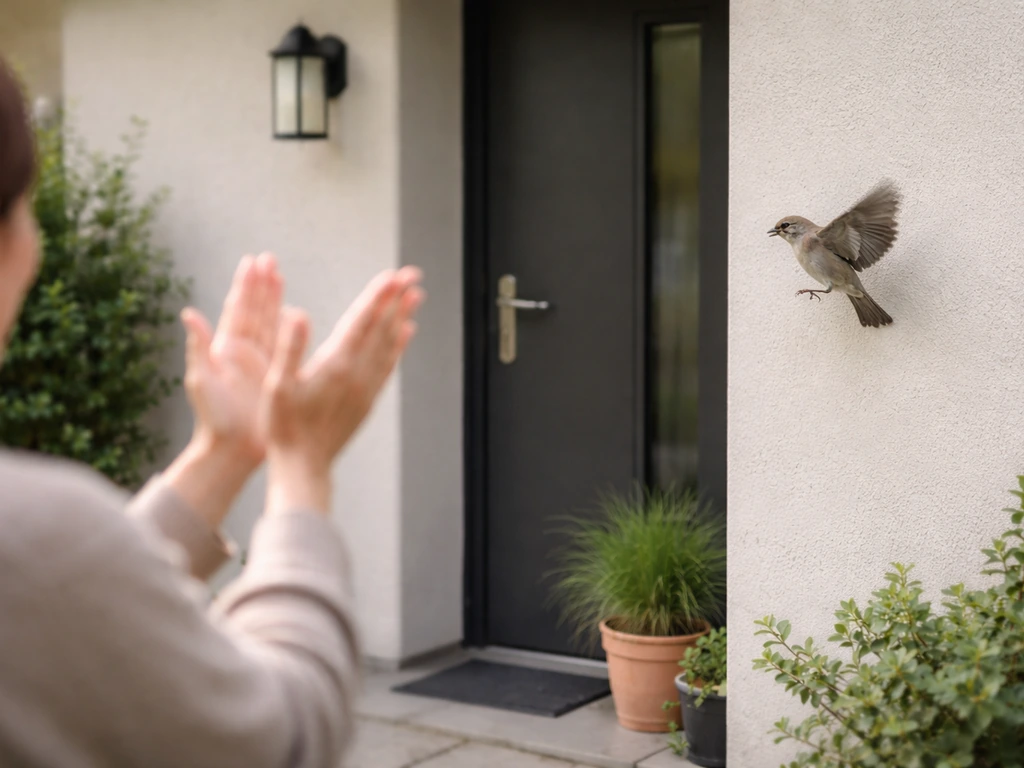
If the bird is pecking right now, your first job is to interrupt the behavior without harming the bird. If a bird is attacking you, use safe, non-contact deterrents and follow the steps in this guide to stop the pecking quickly and prevent it from returning stop a bird from attacking you. Most birds are protected under the Migratory Bird Treaty Act, so anything that injures or kills them, even accidentally, is a federal violation. Keep it simple and non-contact.
- Go outside and make noise: clap, call out, or use a whistle. The sudden human presence alone usually sends the bird off immediately.
- Spray water in the bird's direction with a hose (aim near the spot, not directly at the bird) to startle it without harm.
- Hang something shiny within the next 30 minutes: reflective tape, mylar streamers, or even strips of aluminum foil fluttering in the breeze at the problem location.
- If a window is being pecked, place a piece of paper or cardboard on the outside of the glass temporarily to break the reflection.
- Do not use sticky substances, poison, or loud pyrotechnics. These are either harmful to birds, illegal without permits, or likely to escalate the problem.
These steps won't solve the problem permanently, but they interrupt the pecking habit before it becomes ingrained. Birds that return to the same spot repeatedly are harder to redirect, so acting fast matters.
Identify the bird behavior and pecking target
Before you install anything, spend five minutes observing the bird and inspecting the damage. The 'why' completely changes the fix. A woodpecker hammering cedar siding at dawn needs a different solution than a house sparrow tugging at soffit material, or a robin repeatedly flying into a window.
Common pecking scenarios and what they mean
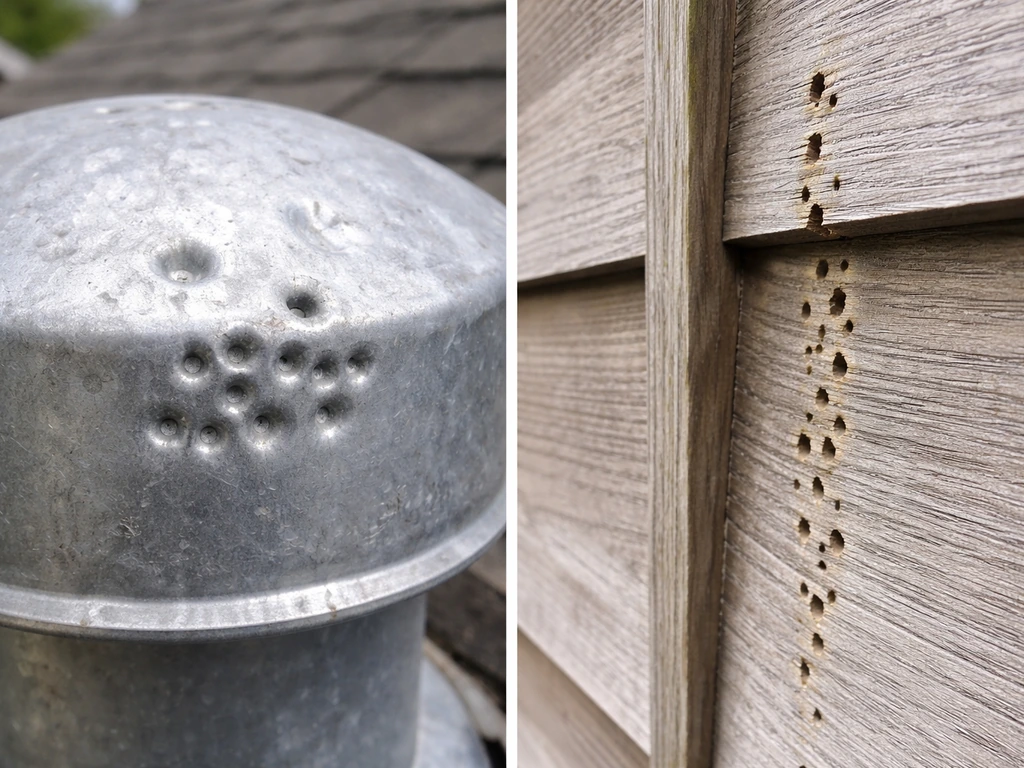
| Symptom | Likely Bird | Likely Reason | Priority Fix |
|---|---|---|---|
| Rapid drumming on metal (vent cap, flashing, gutters) | Woodpecker | Territorial signaling, not feeding | Muffle the surface, add visual deterrents |
| Deep round holes in wood siding or trim | Woodpecker | Foraging for insects inside the wood | Pest inspection + exclusion netting or hardware cloth |
| Rows of small shallow holes in siding | Woodpecker (sapsucker) | Feeding on sap | Tree wrap / siding repair + deterrents |
| Pecking/picking at soffit, vent, or eave gaps | House sparrow, starling | Trying to enter and nest | Seal all gaps with hardware cloth or caulk |
| Bird flying into window repeatedly | Robin, cardinal, sparrow | Attacking own reflection | Break the reflection from outside |
| Pecking at window caulk or screen | Sparrow, finch | Material for nesting or curiosity | Replace caulk, add window deterrent strips |
Look closely at the damage pattern. Holes in a grid or line suggest sapsucker feeding. A single ragged cavity that gets bigger over days is foraging for insects, often meaning you have a wood-boring pest problem inside the wall. Drumming with no visible damage almost always means a woodpecker is using your house as a resonating territory signal, especially in early spring. Knowing this distinction tells you exactly where to spend your money and effort. If the issue is a bird attacking its own reflection in a window, that's more closely related to territorial behavior and is addressed in detail for window scenarios elsewhere on this site.
Safer humane deterrents: what works and where to put it
Cornell Lab's research on woodpecker deterrents found that nothing works all the time, but streamers and visual deterrents showed the most consistent results. The key insight from both Cornell and USDA APHIS research is this: use a combination of methods and rotate them. Birds habituate to static deterrents quickly, sometimes within a week or two. If you hang one owl decoy and leave it in place for a month, the birds stop caring about it.
Visual deterrents
- Reflective mylar streamers or flash tape: hang them so they move in the wind at the exact pecking location, not several feet away. Movement is the key.
- Predator eye balloons (large inflatable balls with eye patterns): effective short-term, but must be moved every few days to prevent habituation.
- Owl or hawk decoys: only useful if they can move (hanging or on a swivel). A static decoy becomes part of the scenery within days.
- Old CDs or DVDs on a string: cheap and effective when they spin and catch light. Replace or reposition every 1 to 2 weeks.
Sound deterrents
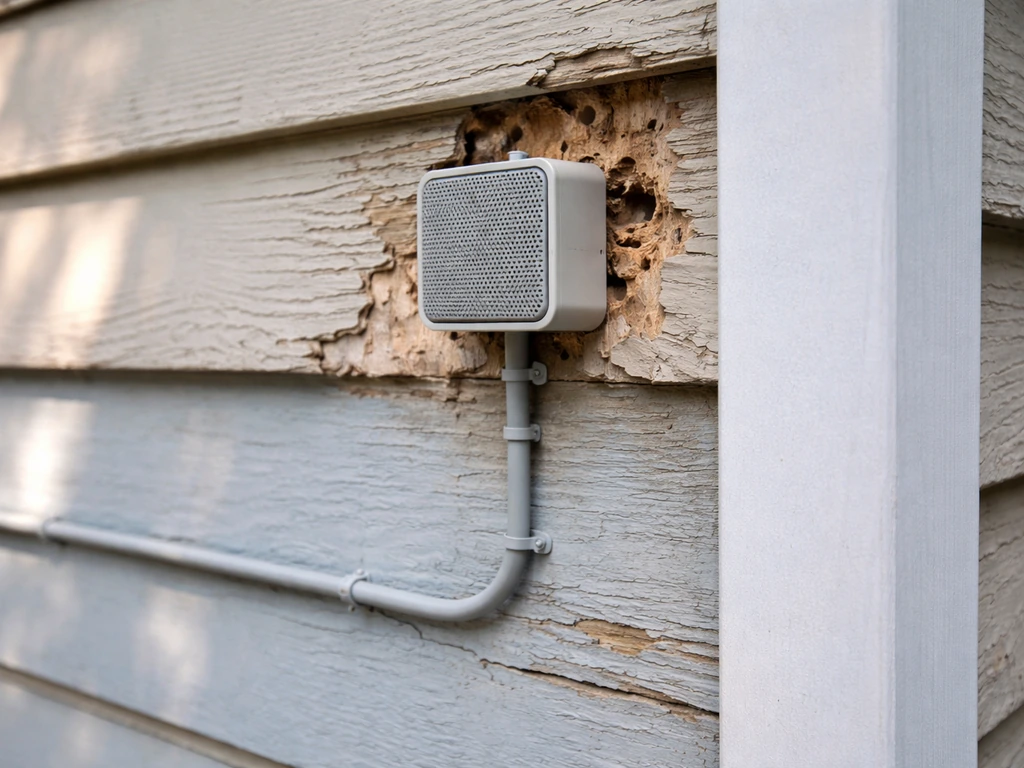
Recorded predator calls and distress calls can work in the short term but are among the fastest methods to lose effectiveness. Ultrasonic repellers are even less reliable: research consistently shows birds habituate to ultrasonic devices quickly, and many bird species can't meaningfully perceive ultrasonic frequencies anyway. Wind chimes are similarly unreliable for the same reason. If you want to use sound, use it in rotation with visual deterrents and only during the active pecking window (usually early morning). Never rely on sound as your only method.
Physical deterrents and netting
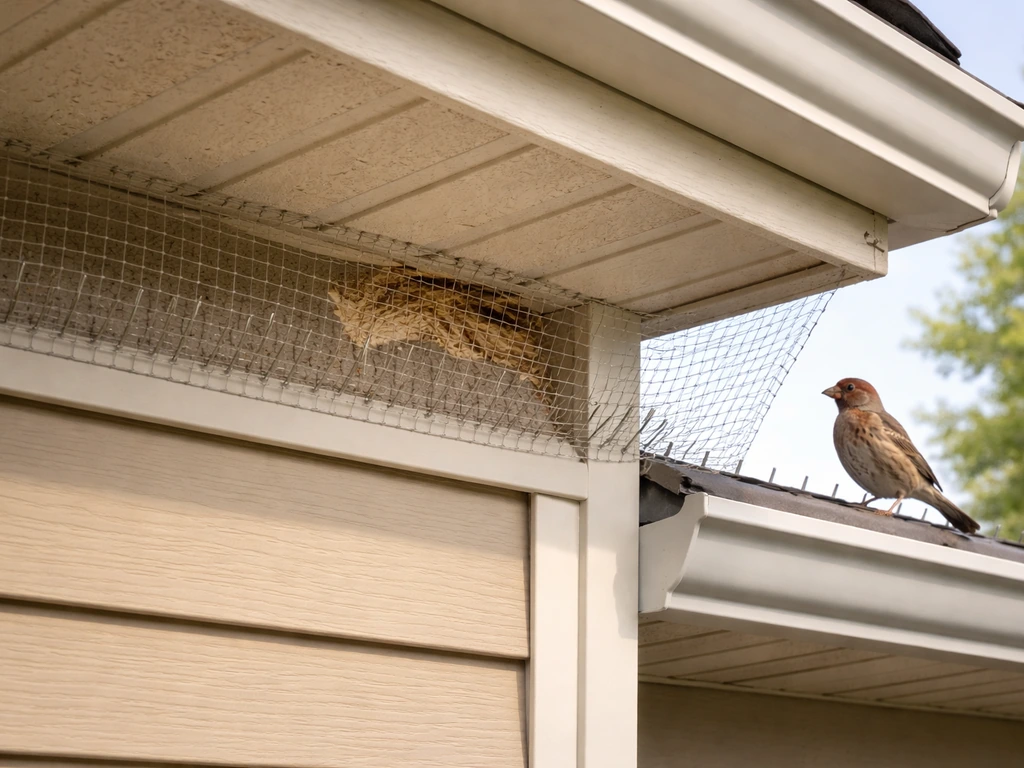
blank" rel="noopener noreferrer">Physical barriers are the most durable solution. For woodpecker damage on siding, Cornell recommends installing netting that is taut and held at least 3 inches away from the surface so birds cannot reach through and peck. Use 3/4-inch mesh netting for most applications, which is the standard size recommended in UC ANR and USDA exclusion guidance. UC ANR’s Bird Hazing Manual also discusses exclusion deterrents such as netting (held away from the surface) to disperse birds and prevent pecking without harming them blank" rel="noopener noreferrer">netting for most applications. Bird spikes work well on flat ledges, gutters, and window sills where birds land before pecking. Avoid placing spikes on surfaces where small birds can nest between the tines.
Placement tips that actually make a difference
- Cover the exact damaged area first, then extend coverage 1 to 2 feet on each side. Birds often shift slightly and resume pecking nearby.
- Mount deterrents at the level of the damage, not just overhead. A decoy three feet above the pecking spot is less effective than one right beside it.
- Rotate visual deterrents weekly. Swap positions, swap types, change the color if possible.
- Combine at least two different deterrent types at the same location from the start.
Exclusion and repair: seal access points and remove attractants
Deterrents manage the symptom. Exclusion and repair eliminate the reason the bird is there in the first place. This is the step most homeowners skip, and it's why their deterrents stop working after a few weeks.
Inspect for insect infestations in the wood
If you have a woodpecker drilling into your siding or trim, there is a real chance you have carpenter ants, wood-boring beetles, or termites inside. The woodpecker found them before you did. Tap around the damaged area: hollow sounds indicate decay or tunneling. Call a pest inspector if you suspect an infestation. Getting rid of the insect problem eliminates the food source, which is the single most effective way to stop foraging woodpecker damage permanently.
Seal gaps and entry points
House sparrows and starlings target gaps in soffits, loose vent covers, and openings under eaves because they are looking for nesting sites. Inspect your roofline, vents, and eaves every spring before nesting season begins. Cover open vents with 1/2-inch or 3/4-inch hardware cloth secured with screws, not staples. Fill small gaps with exterior-grade caulk or copper mesh stuffed into the opening before caulking over it. Do not use foam sealant alone in exposed areas, since birds (and rodents) will chew through it. To keep birds from chewing wood in the long run, focus on removing what draws them and sealing up any access points they can exploit keep birds from chewing wood permanently.
Remove attractants from the structure
- Repair any rotted or soft wood immediately. Rotting wood hosts insects and is easier for birds to excavate.
- Remove or relocate bird feeders that sit within 10 feet of the house. Feeders draw birds in and increase the chance of exploratory pecking.
- Clear gutters of leaf debris and standing water, which attract insects and drinking opportunities.
- Trim back branches that hang over or touch the roofline, removing easy landing and launch points for persistent peckers.
- If you have existing woodpecker cavities, fill them with wood putty or expandable wood epoxy, then paint over them. An open hole is an invitation to inspect further.
Prevention plan by season
Bird pecking behavior follows predictable seasonal patterns. Matching your maintenance schedule to these patterns lets you get ahead of the problem instead of reacting to it.
| Season | Typical Bird Behavior | What to Do |
|---|---|---|
| Late Winter / Early Spring (Feb–April) | Woodpeckers begin territorial drumming; sparrows and starlings scout nesting sites | Install visual deterrents before drumming starts; inspect and seal all eave and vent gaps before birds attempt to nest |
| Late Spring / Summer (May–July) | Active nesting; birds aggressively defend territory; fledglings may peck exploratorily | Do not disturb active nests (legal protection applies); focus on gaps and entry points that are not yet occupied; document damage for repair after fledglings leave |
| Fall (Aug–Oct) | Migration brings new species; birds seek food and shelter for winter; exploratory pecking increases | Repair all summer damage now; inspect and reinforce exclusion hardware; remove food attractants |
| Winter (Nov–Jan) | Resident birds forage more aggressively; woodpeckers may target siding for insects or suet feeders nearby | Keep feeders away from the house; check that all exclusion mesh is intact after wind and ice |
The most important window is late winter to early spring. Getting deterrents and exclusion work done in February or early March, before territorial and nesting behavior ramps up, is far easier than trying to dislodge a committed bird in April. Set a calendar reminder now for February of next year.
Troubleshooting: why deterrents fail and how to fix it
If you've put up deterrents and the bird is still pecking, run through this checklist before spending more money.
- Check placement. Is the deterrent at the exact spot of damage, or just near it? Birds are surprisingly specific about their target area.
- Check for movement. Static visual deterrents lose effectiveness within days. If your tape or decoy isn't moving with the breeze, reposition or add a wind-catching element.
- Check the rotation schedule. If you have not moved or swapped your deterrent in more than 7 to 10 days, the bird has likely habituated to it. Change it now.
- Add a second deterrent type. If you're using only visual deterrents, add an intermittent sound element (like a motion-activated device). If you're using only sound, add reflective movement.
- Look for a secondary attractant. If the bird returns persistently despite deterrents, it's usually because there's an insect colony, soft wood, or open cavity you haven't found yet.
- Consider netting as a hard barrier. If you've rotated deterrents for two weeks with no improvement, physical exclusion netting mounted 3 inches from the surface is the next step.
- Recheck all nearby entry gaps. Sparrows and starlings that are being deterred from one spot often shift to a nearby soffit gap or vent cover.
Habituation is the biggest reason deterrent programs fail. A single owl decoy, a string of CDs, or a wind chime that stays in the same spot for weeks will simply become part of the bird's landscape. USDA APHIS guidance is explicit on this: using combinations of deterrents and rotating them is the only reliable long-term strategy. Budget time for weekly walkarounds, not just a one-time installation.
Legal and humane notes, and when to call a pro
Almost every bird you will encounter pecking your house is protected under the Migratory Bird Treaty Act (16 U.S.C. 703-712), which is the federal law implementing four international treaties covering migratory bird species. Woodpeckers, sparrows, starlings (with some nuance for non-native species), robins, and many others fall under this protection. Under the MBTA, any action that results in injury or death of a protected bird, even if unintentional, qualifies as a 'take' and is prohibited. This means no glue traps, no netting that could entangle birds, no poison, and no shooting.
What is legal: exclusion, physical barriers, visual and audio deterrents, habitat modification, and passive hazing (noise, water spray). What requires a federal depredation permit: live trapping and relocation of most protected species, or any lethal control. Contact your state wildlife agency or USDA APHIS Wildlife Services for permit guidance if you believe your situation requires escalation beyond standard deterrents.
Call a licensed wildlife control professional or contact USDA APHIS Wildlife Services if any of these apply to your situation:
- You have confirmed structural damage to siding, eaves, or framing and are not sure of the full extent of the problem.
- You suspect an active insect infestation inside the wall that is attracting the bird.
- An active nest with eggs or chicks is present inside a building cavity. Disturbing it yourself may violate the MBTA.
- You have tried deterrents and exclusion for more than 3 to 4 weeks with no improvement.
- The pecking involves a large flock or multiple species, not a single persistent bird.
- You are managing a commercial property or multi-unit building where fall hazards or scaffolding are required to reach the damage.
When you call, have the following ready: photos of the damage, your best identification of the bird species, how long the problem has been happening, and what deterrents you have already tried. This saves time and helps the professional jump straight to a solution. For issues specifically involving birds pecking wood on or inside the structure (fences, decks, structural beams), the guidance on how to stop a bird from chewing wood covers material-specific approaches in more depth. If your problem is specifically about a bird biting or chewing wood, that guide walks through the material-specific deterrents and exclusion steps how to stop a bird from chewing wood.
FAQ
How long should I try clapping, waving, or water spray before I switch to installing deterrents?
Interruptive actions usually help only for the immediate moment, so plan to transition to visual deterrents and exclusion the same day you confirm the target spot. If the bird returns within 24 to 48 hours, treat that as evidence the lure is persistent (a gap, an insect source, or territorial signaling) and prioritize a physical barrier or repair rather than repeating only “scare” tactics.
What if multiple birds keep pecking different spots on the same day?
That often means one attracting factor is present, like accessible nesting cavities under eaves or repeated window collisions, rather than a single “bird problem.” Do a full perimeter check (roofline, vents, soffit gaps, and window faces) and fix the common access points or reflective surfaces, then rotate deterrents only in the active zones.
Are there safe ways to keep birds away from windows without harming them?
Yes. Focus on exclusion and visual changes, such as covering or screening the reflective pane and installing netting or barriers where birds can reach. If the issue is “territory” pecking at the same window, reduce perceived reflection during the day using exterior-placed visual film or temporary coverings until permanent modifications are installed.
Can I use bird spikes or netting near vents and eaves if I do not know the exact species?
You can use them, but placement matters. Spikes should be on landing ledges where birds can’t nest between tines, and netting must be installed taut and held off the surface so birds cannot reach through. If you find active nesting materials or eggs, pause exclusion and contact a wildlife professional, since removing active nests can be illegal for protected species.
What should I do if the bird keeps pecking after I put up reflective tape and streamers?
First, confirm you addressed the real “why” by matching damage and location, not just adding more visuals. Then rotate your deterrents weekly within the active pecking zone, and add a physical barrier if the bird is pecking at wood, gaps, vents, or siding seams. If sound is used, keep it limited to early morning and never rely on sound alone.
How can I tell whether the bird is pecking for food versus pecking for territory?
Food targeting often leaves feeding damage that grows or expands (for example, a cavity enlarging over days) and may correlate with nearby wood deterioration. Territory signaling often shows repeated pecking with minimal visible material loss, sometimes strongest in early spring. This distinction guides whether you should call a pest inspector (food/insects) or focus on barriers and reflective reduction (territory/window).
Is it ever appropriate to trap or relocate the bird yourself?
Usually not. Live trapping and relocation of most protected birds requires the right federal and state authorizations. Also, relocation without fixing the access point or food source often results in the same damage returning from a different bird, so exclusion and repair should come first.
Can I use foam sealant or caulk to close gaps where sparrows or starlings enter?
You can, but avoid sealing the wrong material. Small gaps can be filled with exterior-grade caulk or copper mesh, and vents should be covered with hardware cloth secured with screws. Foam sealant alone in exposed areas is prone to chewing, so use it only as part of a system that includes robust barriers like mesh or cloth where birds can reach.
Will putting deterrents on “day one” stop the damage permanently?
Not reliably. Birds habituate when deterrents remain static, and they will keep pecking if an access point or insect food source remains. For long-term results, combine rotation of visual and non-contact methods with exclusion and repair so the target spot stays unattractive.
When should I call a professional or wildlife agency instead of continuing DIY deterrents?
Call for help if you suspect an active nesting site in vents or eaves, the bird is still pecking intensely after you rotate deterrents weekly and install barriers, or there is significant structural damage suggesting insects or decay. Have photos, species ID if you can get it, how long it has been happening, and every deterrent tried ready before you contact them.
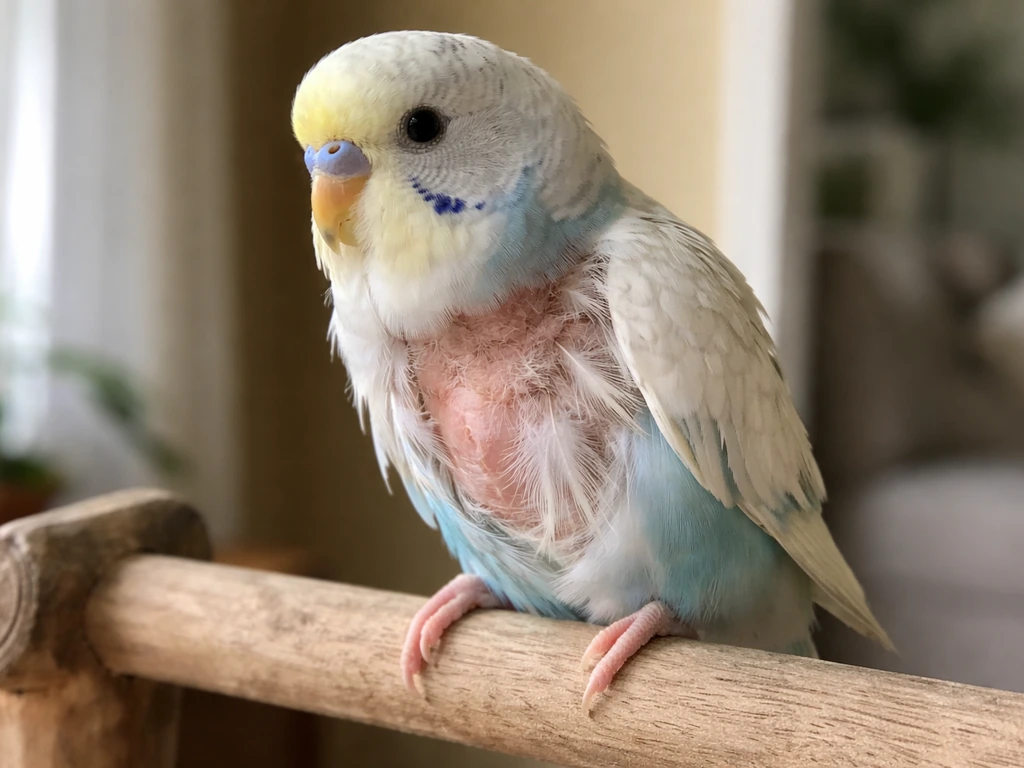
Step-by-step plan to stop feather plucking fast with safe fixes, enrichment, and medical checks plus when to call a vet
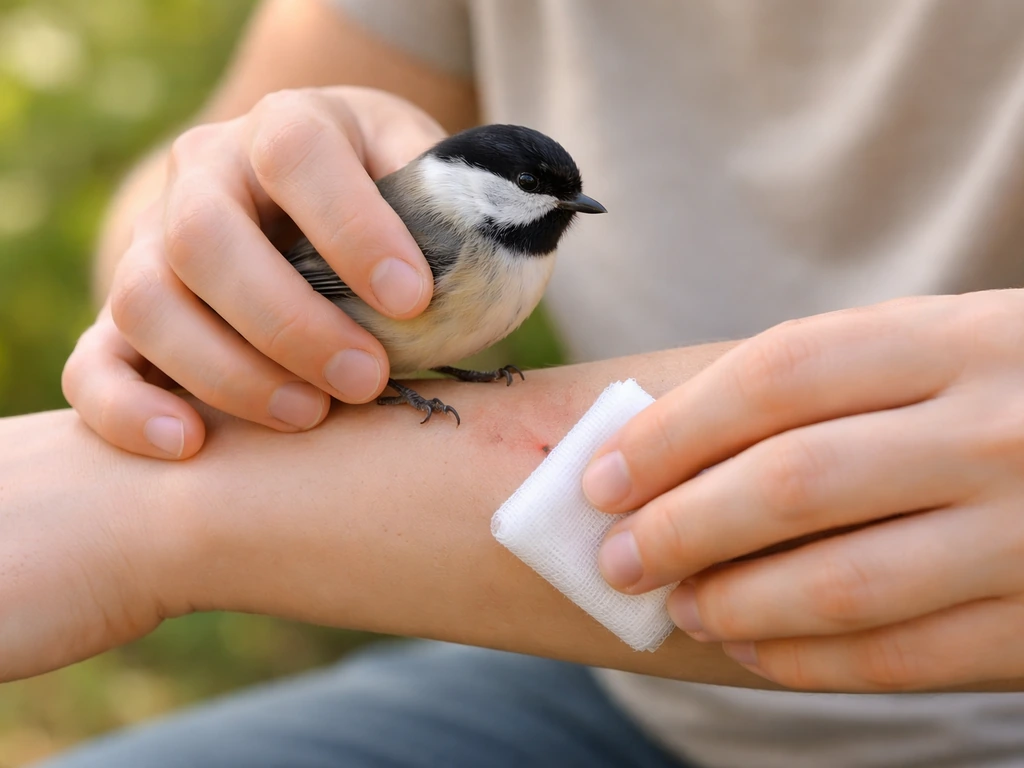
Stop bird bites now with safe, humane steps and training fixes to prevent future biting and protect hands and face.
Humane, step-by-step guide to get a trapped bird out safely, handle injuries, and prevent future entry.