When a bird bites you, stop the interaction immediately, withdraw calmly without flinching or yelling, and put distance between you and the bird. Do not pull away sharply, do not shout, and do not push back into the bird's space. Once you are clear, treat the wound, figure out what triggered the bite, and adjust how you handle the bird going forward. Most biting is fixable with consistent handling changes and a bit of patience, but you have to start by changing what you are doing in the moment, not just hoping the bird calms down on its own.
How to Stop a Bird Biting: Immediate and Long-Term Steps
Maya Carver
24 Apr 2026
Emergency response when a bird bites (protect yourself right now)
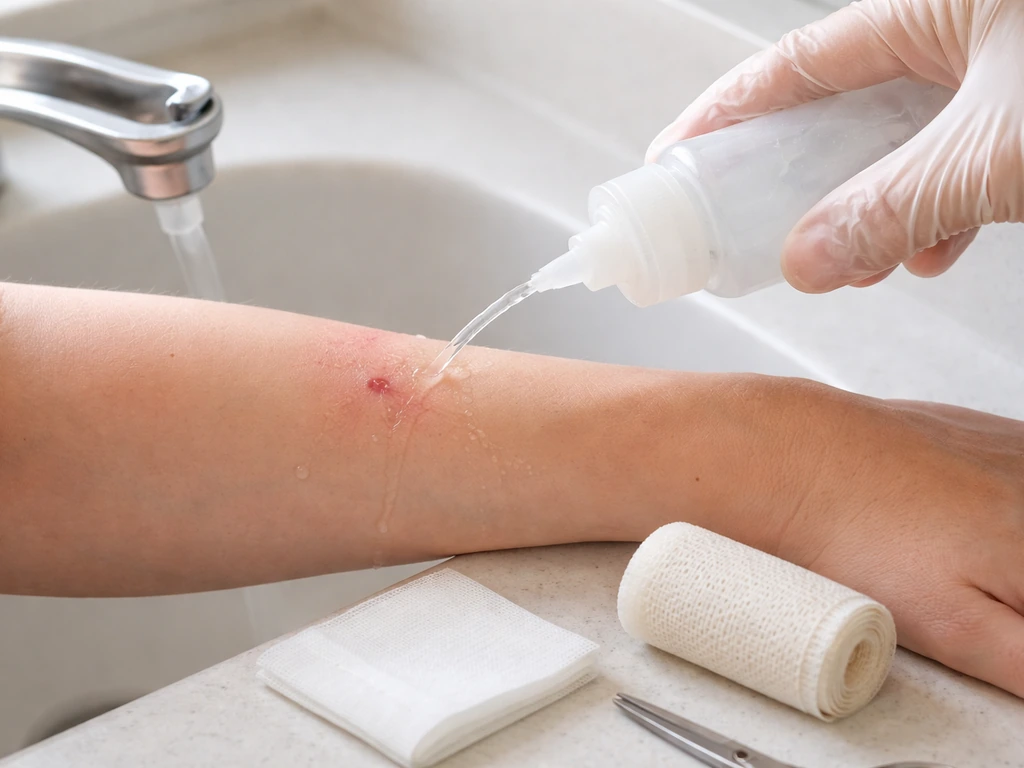
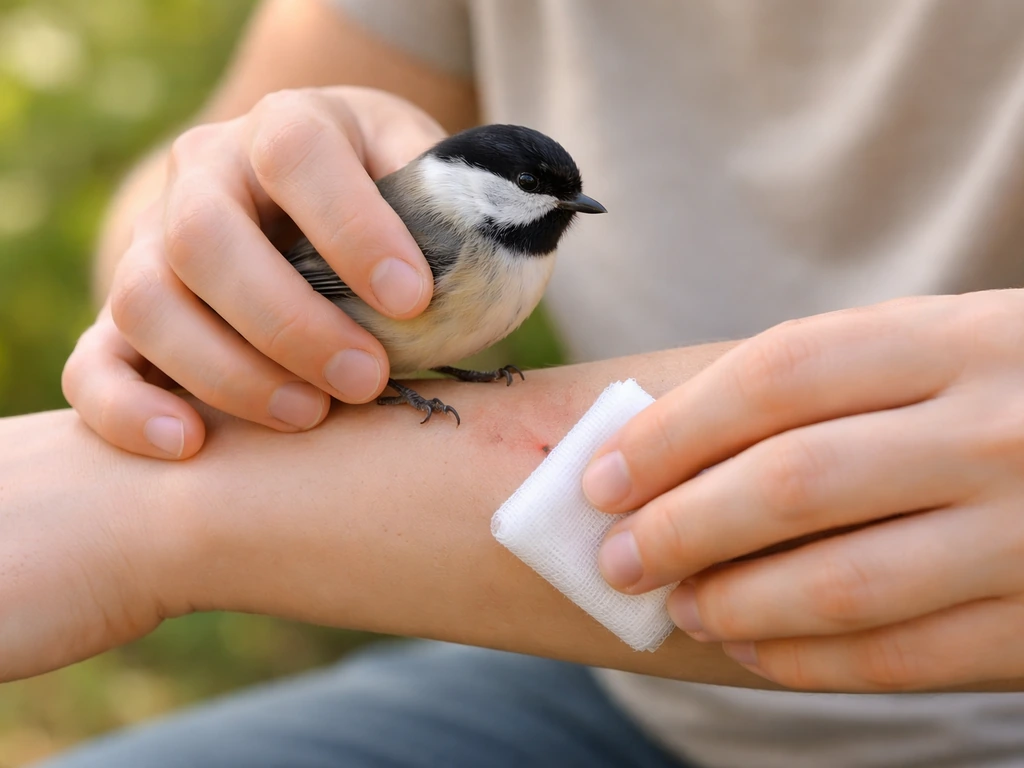
Your first job after a bite is to take care of yourself before worrying about training or behavior. Even a small bird can break skin, and puncture wounds from beaks carry infection risk, especially on hands and fingers.
- Stay calm and withdraw slowly. Jerking your hand away or yelling can startle the bird into biting again and can worsen the wound.
- Wash the wound immediately with soap and warm running water for at least several minutes. This is the single most important first aid step.
- Apply gentle pressure with a clean cloth if the wound is bleeding. Cover it with a clean bandage once bleeding slows.
- Assess the wound honestly. If it is a deep puncture, involves significant tearing, or is on your hand or face, get medical evaluation the same day. Bites on hands have a higher infection risk because of the tight tissue structures involved.
- Contact your healthcare provider if you are unsure about your tetanus status, if the wound shows any sign of infection within 24 to 48 hours (redness spreading, swelling, warmth, discharge), or if your bird had contact with wild birds recently.
- If the bird is a wild or protected species rather than a pet, do not attempt further handling yourself. Note what species it appeared to be, where the bite occurred, and call a licensed wildlife rehabilitator or your local animal control office.
For most pet bird bites that only break the skin, good wound care and monitoring are enough. But do not skip the medical check if the bite is on your hand, is a deep puncture, or you have any doubt about wound severity. Puncture wounds, especially on the hand, can involve deeper structures and often require prompt medical evaluation and treatment, including possible antibiotics and surgical debridement depending on severity puncture wounds from beaks carry infection risk. Hands in particular need prompt attention because infection can spread quickly through the tight structures there.
Understand the bite trigger (why your bird bites)
Birds almost never bite without a reason. The reason is usually one of a handful of predictable triggers, and once you know which one is driving the behavior, the fix becomes much clearer.
The most common bite triggers
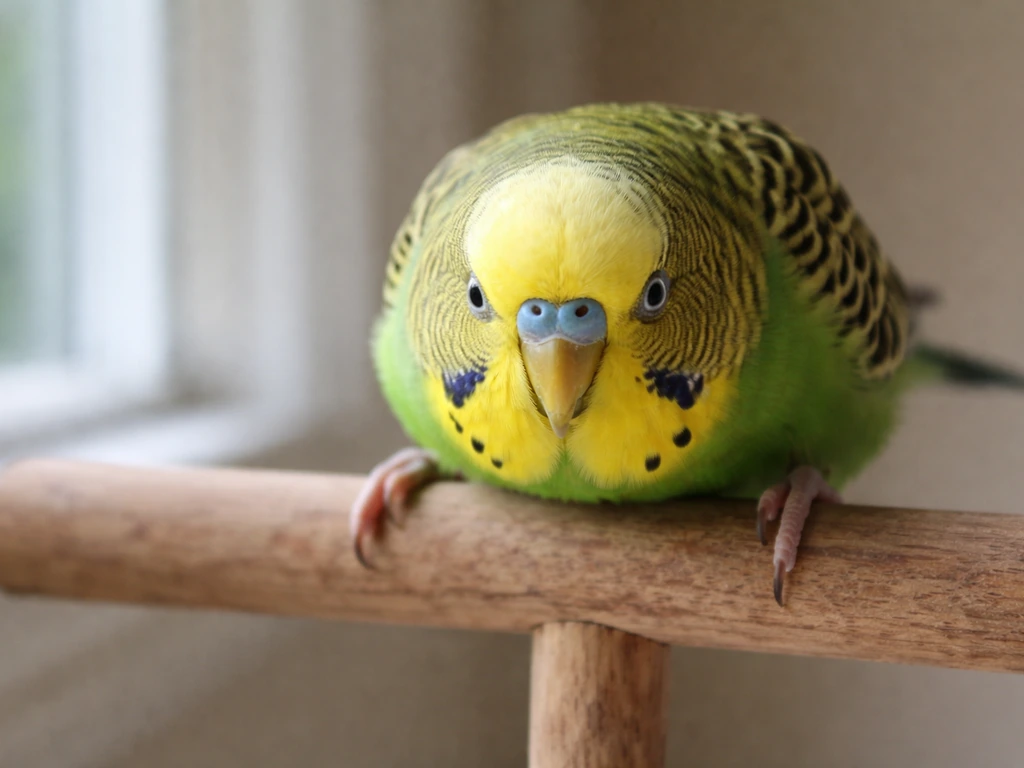
- Fear or feeling cornered: The bird felt it could not escape and bit as a last resort. If you ignored warning signals like flattened feathers, wide eyes, a crouched posture, or snapping without contact, the bird escalated to a real bite.
- Overstimulation: Petting sessions that go on too long or touch sensitive areas (back, wings, under the tail) can flip a bird from content to aggressive very quickly.
- Hormonal surges: During breeding season, typically late winter through spring, hormones can make even a normally calm bird defensive and territorial. This is one of the most common seasonal triggers.
- Territorial behavior around the cage: Many birds treat their cage as a nest and will bite hands that reach inside uninvited, especially if they are nesting or hormonal.
- Pain or illness: A bird that suddenly starts biting when it previously did not is telling you something may be physically wrong. This warrants a vet check before any behavior work.
- Redirected excitement or fear: Loud noises, new people, or a threat outside the window can make a bird redirect a bite onto the nearest available target, which is often your hand.
- Biting that got rewarded: If the bird has learned that biting makes you go away, put it down, or give it what it wants, the behavior will keep happening because it works.
Take a few days to keep a simple log: what time did the bite happen, what were you doing, where was the bird, what happened immediately after. Patterns usually become obvious within a week, and that information is also useful if you end up consulting an avian vet or behavior specialist.
Humane handling changes to reduce biting
How you approach and handle your bird every day is the biggest variable you can control. Small changes in your body language and routine make a significant difference, often faster than any formal training.
Read the warning signs before a bite happens
A bird that is about to bite usually tells you first. Flattened feathers, a crouched posture, pinned pupils, lunging without contact, or snapping at air are all pre-bite signals. When you see any of these, stop the interaction, move away calmly, and give the bird space. Do not push through the warning signs hoping the bird will settle. That approach teaches the bird that warning signals do not work, so it goes straight to biting.
Handling rules that actually work
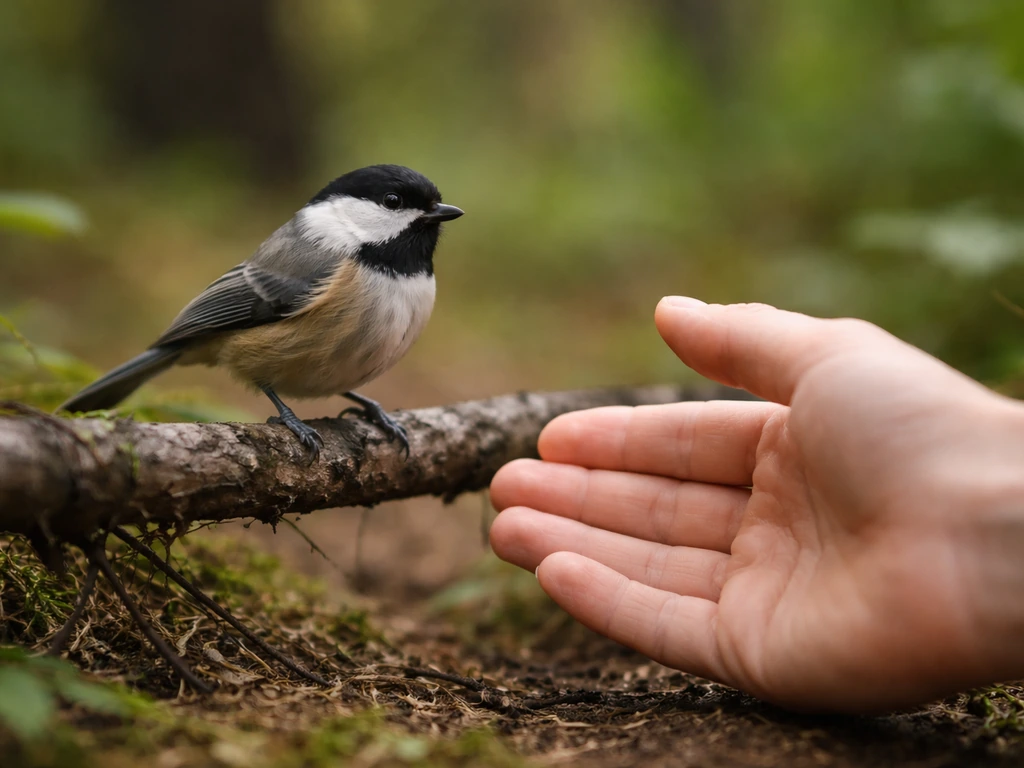
- Approach from the side or below rather than coming straight at the bird from above, which mimics a predator approach.
- Keep your movements slow and predictable. Sudden gestures are a common trigger.
- Never reach into the cage to grab the bird when it is showing signs of agitation. Step-up requests should happen outside the cage or at the cage door when the bird is relaxed.
- Avoid touching the back, wings, or tail area outside of veterinary necessity. These areas can be hormonally stimulating and trigger defensive biting.
- Keep handling sessions short enough that the bird stays relaxed throughout. End on a good note before the bird shows signs of stress.
- If a bite does occur during a session, do not keep going with the same interaction. The RSPCA is direct about this: doing nothing and continuing the same behavior will not stop the biting.
Training steps to teach 'no bite'
You cannot punish biting away. Physical punishment increases fear and stress, which makes biting worse, not better. What actually works is a combination of removing the reward that maintains biting and consistently reinforcing the behavior you want instead.
Step 1: Remove what reinforces the bite
Ask yourself what happens right after the bird bites. If you back away, put the bird down, give it a treat to distract it, or react dramatically, any of those responses can be reinforcing the biting. The goal is to make biting unrewarding without creating more fear. A calm, immediate withdrawal of your attention (not a dramatic retreat, not a shout) is the right response. Place the bird back on its perch or return it to its cage briefly, then walk away for 30 to 60 seconds. This is called time-out from positive reinforcement, and it works because interaction with you stops being the consequence of biting. A time-out from positive reinforcement, defined as contingent removal or reduction of access to positive reinforcers when problem behavior occurs, is discussed in behavior literature for parrots.
Step 2: Reinforce calm behavior with a marker
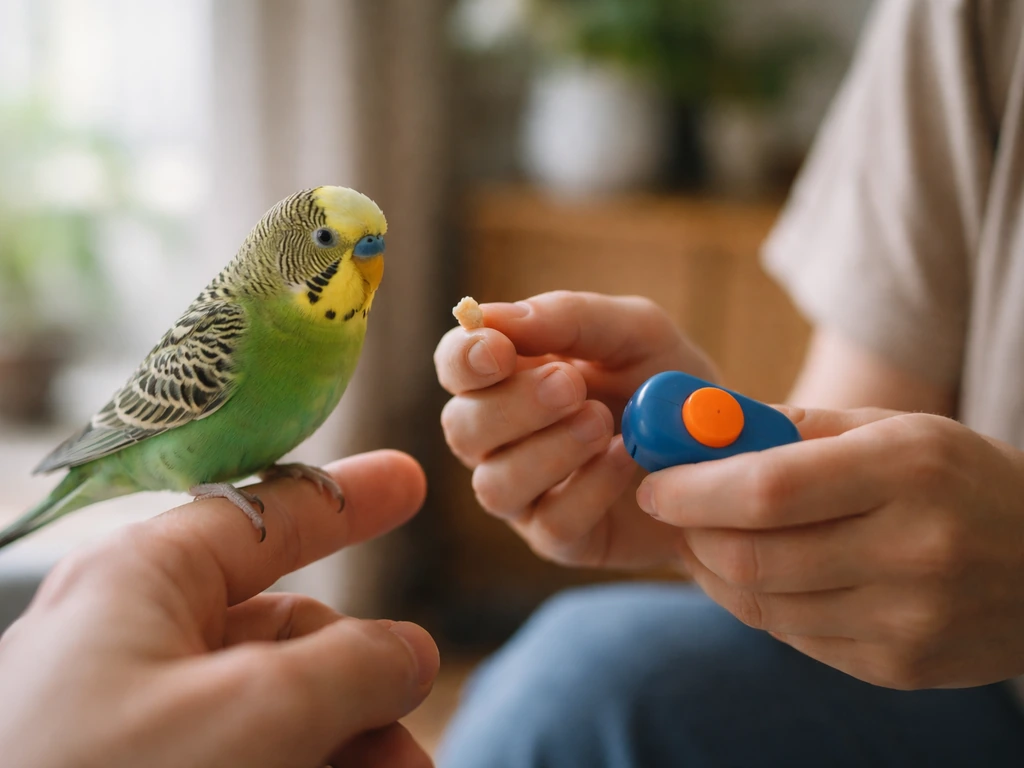
Use a consistent marker, either a clicker or a short spoken word like 'yes,' to mark the exact moment the bird does something you want, such as stepping up calmly, staying relaxed when your hand is near, or accepting a gentle touch without biting. Follow the marker immediately with a small, high-value food treat. The marker makes it clear to the bird exactly what earned the reward. Timing matters: the marker has to come within about one second of the desired behavior to be effective.
Step 3: Build up tolerance gradually
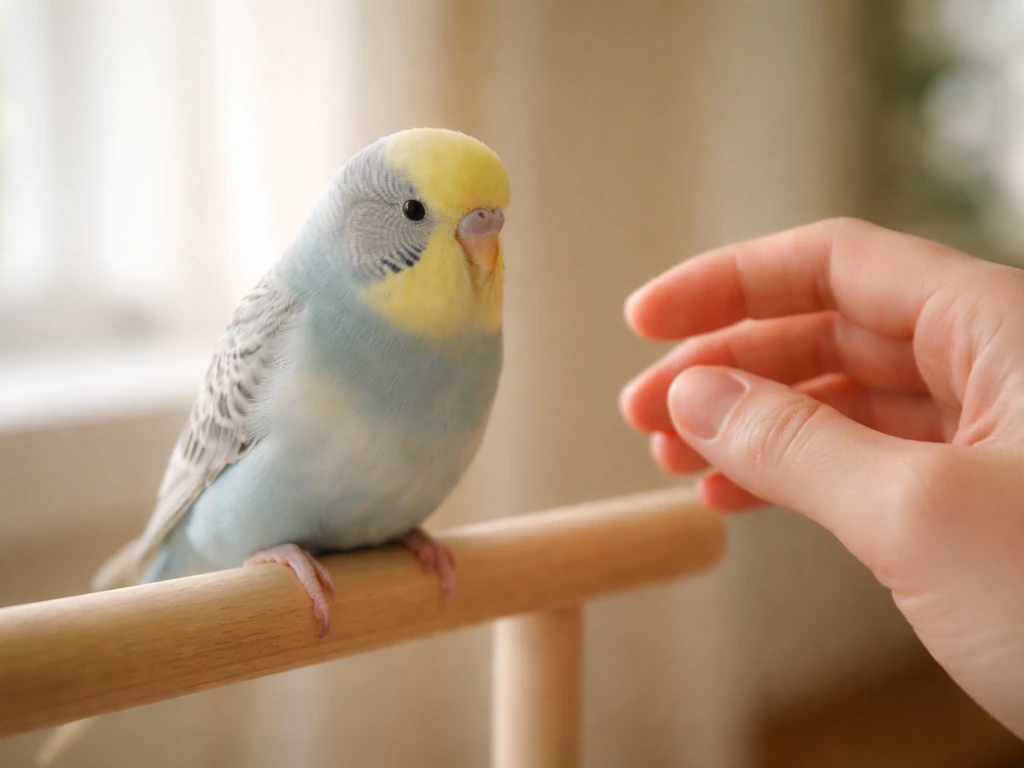
If your bird bites when you try to step it up or touch certain areas, break the training down into very small steps. Start with just moving your hand nearby and rewarding calm acceptance. Progress slowly over multiple short sessions, never pushing ahead faster than the bird can handle without showing stress. This desensitization approach is the same method used to train birds to accept toenail trimming and other handling routines: reward contact with the feet a little at a time until the bird is comfortable.
Step 4: Keep sessions short and consistent
Five to ten minutes of focused positive reinforcement training once or twice a day produces better results than longer, irregular sessions. Consistency matters more than duration. The bird learns faster when the rules are the same every time.
Management and environment adjustments
Training alone is not enough if the bird's environment is set up in a way that keeps triggering biting. A few practical changes can dramatically reduce the number of biting incidents while training is underway.
Perch placement and cage setup
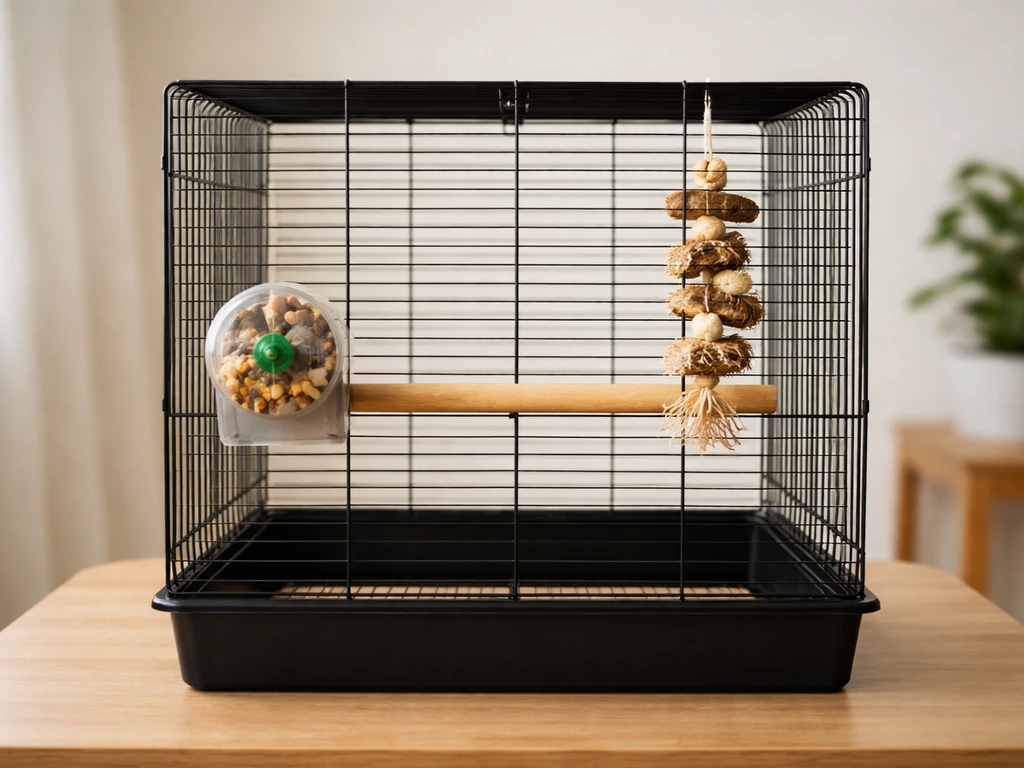
Position perches so the bird is roughly at your chest height when you interact with it. A bird that is perched higher than your head is much more likely to bite because it feels dominant and in control of the interaction. Avoid perching setups that put the bird above eye level during handling sessions.
Enrichment to reduce stress-driven biting
A bored or under-stimulated bird is more likely to bite out of frustration or redirected energy. Provide foraging opportunities, puzzle feeders, chewable toys, and rotating enrichment items so the bird has appropriate outlets for natural behaviors. To reduce chewing damage, offer safe chew toys and make the wood inaccessible while you redirect the bird to those alternatives. To prevent feather plucking, provide more enrichment and foraging so your bird has healthier ways to spend its energy and feel secure. Environmental deprivation can contribute directly to destructive behavior and aggression, so enrichment is not optional for a bird that is biting.
Timing interactions around known stress periods
- Avoid handling during breeding season hormonal peaks (late winter through spring for most species). Limit interactions to calm, low-demand activities during this period.
- Do not attempt handling when the bird is tired, especially in the late evening, or when it has just been frightened by a noise or disturbance.
- Avoid handling immediately after a cage cleaning or rearrangement, which can leave some birds temporarily territorial and defensive.
- Reduce interaction time if there are unusual household stressors such as construction noise, new pets, or unfamiliar visitors.
Managing access to biting situations
Until biting is under better control, limit the bird's unsupervised access to areas and situations where biting tends to happen. If your goal is to stop a bird from attacking you, focus on removing the trigger in the moment and reinforcing calm behavior right after the warning signs. To stop a bird from pecking the house, focus on identifying the cause of the pecking and remove the trigger with management and humane training. If the bird bites when on a shoulder near your ear or face, keep shoulder time to zero until trust is rebuilt through training. Related problem behaviors like ear-biting specifically are worth addressing as their own pattern, since face and ear bites carry higher injury risk.
Troubleshooting persistent biting
If you have been consistent with the steps above for two to four weeks and the biting is not improving, or if the biting has suddenly gotten worse, work through this checklist before assuming it is purely a training problem.
| Symptom / Pattern | Likely Cause | What to Do |
|---|---|---|
| Biting suddenly started or got much worse | Possible pain, illness, or internal stress | Vet check before any behavior work. Rule out medical causes first. |
| Biting only during late winter or spring | Breeding season hormones | Reduce stimulating contact, limit handling to essentials, wait out the hormonal period |
| Biting only in or near the cage | Territorial defense of nest space | Redirect step-up requests to neutral perches outside the cage, avoid reaching in uninvited |
| Biting when stroked on the back or wings | Hormonal overstimulation | Restrict petting to head and neck area only |
| Biting after long handling sessions | Overstimulation or fatigue | Shorten sessions, watch for early warning signals, end before the bird escalates |
| Biting when strangers are present | Fear or territorial response to new people | Introduce strangers slowly with positive reinforcement, keep the bird at a safe distance initially |
| Biting despite consistent training | Training is accidentally reinforcing biting, or medical cause undetected | Review your response to each bite for unintentional rewards; schedule avian vet assessment |
One of the most common mistakes people make is continuing to do the same thing that triggers the bite, just with more patience. Patience matters, but the approach also has to change. If the bird bites every time you reach into the cage, reaching into the cage the same way is not training, it is just repeating the trigger. If your bird keeps attacking its reflection, treat the mirror like a trigger and reduce access to shiny reflective surfaces while you retrain calm behavior.
When to escalate to an avian vet or professional
Some biting situations go beyond what handling changes and DIY training can fix, and recognizing when to escalate is part of responsible bird ownership.
Call an avian vet if:
- Biting started suddenly in a bird that was previously calm and handleable. Sudden behavior changes are a red flag for underlying pain or illness.
- The bird shows other signs of illness alongside the biting: changes in droppings, reduced appetite, fluffed feathers, lethargy, or abnormal posture.
- Biting is accompanied by self-directed behaviors like feather plucking or repetitive movements, which can indicate significant stress or a medical issue.
- You have been working on the problem consistently for several weeks with no improvement.
- The wound from a bite is not healing, is showing signs of infection, or involves a deep puncture, especially on your hand or face.
Call a licensed wildlife professional if:
- The biting bird is a wild species rather than a pet. Many wild bird species are protected under federal and state law and cannot be handled, kept, or relocated without proper permits.
- You have been bitten by a wild bird and are unsure of the species. Document what you can about the bird's appearance and the circumstances of the bite.
- The bird appears injured, sick, or disoriented. Contact a licensed wildlife rehabilitator rather than handling the bird yourself.
- You are dealing with repeated aggressive encounters with nesting wild birds on your property during breeding season. A wildlife professional can advise on legal, humane deterrent options.
When you contact an avian vet or behavior specialist, bring your bite log with dates, times, triggers, and your responses. A complete behavioral history combined with a physical exam gives the vet or behaviorist the best foundation for an accurate diagnosis. Merck's veterinary guidance is clear that excluding medical causes through a full physical and neurological exam should always come before assuming a behavior problem is purely behavioral.
Quick decision checklist
- Did the bite break skin or create a puncture wound? Clean it, monitor it, and seek medical attention for any deep or hand/face bite.
- Did biting start suddenly with no clear trigger? Book a vet appointment before doing any behavior modification.
- Is the bird a wild or protected species? Do not attempt handling. Call wildlife control or a rehabilitator.
- Has consistent training and handling change failed after four or more weeks? Consult a certified avian behavior specialist.
- Are there signs of illness alongside the biting? Vet first, behavior work second.
FAQ
How should I decide whether a bird bite needs urgent medical care?
Yes, but use a different protocol for different severity. If skin is punctured, wash right away with running water and mild soap, apply a disinfectant, and monitor closely. Seek urgent care when the bite is on your hand or finger (higher infection risk), the wound is deep, bleeding does not slow, you see spreading redness, warmth, swelling, pus, fever, or worsening pain. Birds can also carry pathogens that are hard to judge by appearance, so when in doubt, get evaluated.
Should I continue handling my bird after it bites to prevent the behavior from escalating?
Do not keep handling the bird “to finish the moment.” Treat it like an interrupted interaction, then resume only after your wound is cared for and the bird is calm. Give the bird a short reset period (placing it back on a perch or in its cage briefly, then walking away for 30 to 60 seconds), and only reintroduce training later in a quiet setting when you can do short, controlled sessions.
What if my bird starts biting more suddenly, even though I changed my approach?
A bite that comes without obvious pre-bite signals, happens repeatedly in the same context despite management, or suddenly worsens can indicate something besides training (for example pain, illness, hormonal changes, or neurological issues). If you have followed consistent steps for 2 to 4 weeks with no improvement, or the pattern changes abruptly, schedule an avian vet visit and bring your bite log for a full physical assessment.
My bird bites when I ask it to step up. How do I break that down without getting more bites?
Use your marker, then remove the trigger and try again at a lower difficulty. If stepping up reliably triggers biting, start with rewarding calm when your hand is nearby, then progress to brief contact with the feet, then stepping, only at the pace the bird stays relaxed. If the bird bites during any step, stop that trial, give space, and resume with an easier step later the same day.
How can I stay safe while retraining a bird that targets my hands or face?
Wear protection during the retraining phase, especially on hands and forearms. Use a stable perch or training station so you are not reaching into the bird’s space, and keep sessions short and predictable. If face or ear bites happen, avoid shoulder time entirely until you see reliable calm handling in front of you, then rebuild gradually from perch-level interaction.
Does my reward method matter, for example should I use treats or attention when training biting?
If your marker is followed by attention, that attention becomes the reward and can accidentally maintain biting if it occurs. Make sure treats are delivered immediately after the desired behavior, with minimal extra talking or sudden movement. Also ensure the treat is placed, not tossed, if tossing causes the bird to lunge and bite in pursuit.
What are common ways people accidentally reward the biting behavior?
Yes. If you react dramatically or the bird gets what it wants right after biting (such as being moved toward you, getting out of the cage, or extended interaction), the behavior can be reinforced. The “unrewarding” response is a calm, immediate withdrawal of interaction, a brief reset, then a short return only to easier conditions where you can reward warning-signal calmness.
Can my bird’s cage setup or daily routine make biting worse even if my training is good?
Yes, especially in some birds the environment can make biting harder to stop. If the bird is perched above eye level during interactions, reduce that setup. Also increase outlets that match natural behaviors, like foraging and chewing, and remove easy access to tempting unsafe items. If you use cage timeouts, ensure the bird still has safe enrichment afterward to avoid frustration.
How do I use my bite log to pinpoint the trigger when there are several possible causes?
Birds may bite for multiple reasons at once, so treat the log as a detective tool. Look for repeats by location (cage vs stand vs shoulder), timing (morning vs evening), and body context (hand near face, hand reaching into cage, towel/cloth presence). When the trigger is consistent, adjust management for that specific context while retraining, rather than making one generic change.
At what point should I stop DIY training and seek professional help?
Try a structured plan: confirm medical and physical contributors first, then run short daily sessions with the same steps and criteria. If biting is persistent beyond 2 to 4 weeks, or rapidly worsening, escalate to an avian vet or a behavior specialist. Bring dates, times, triggers, body posture or signals you observed, and what happened immediately after each bite.
Next Article
How to Get a Trapped Bird Out of Your House Safely
Humane, step-by-step guide to get a trapped bird out safely, handle injuries, and prevent future entry.