If your bird is plucking its feathers right now, the fastest thing you can do is reduce every obvious stressor in its environment today: lower noise, cover part of the cage for security, check that the temperature is stable, and add at least one foraging toy to redirect the behavior. That buys you time while you track down the root cause, which is almost always one of four things: a medical problem, stress, boredom, or a husbandry issue. The most important rule here is that you treat the plucking as a symptom, not the problem itself.
How to Stop a Bird From Plucking Its Feathers Fast
Maya Carver
3 May 2026
Immediate humane steps to reduce feather-plucking
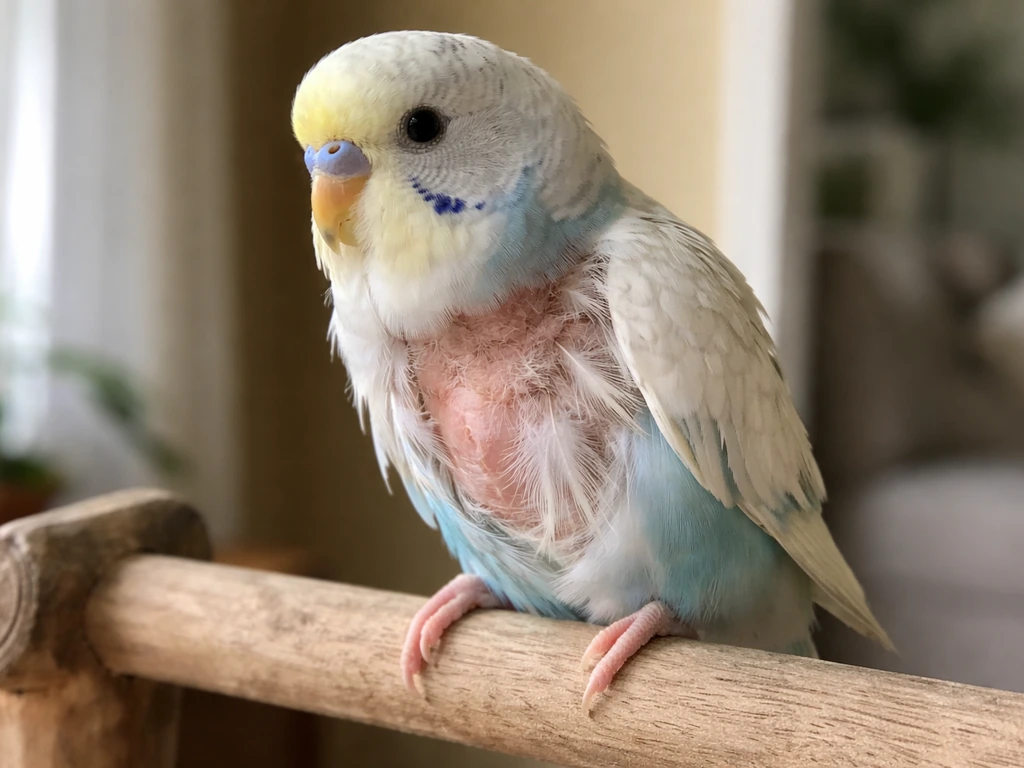
When you notice active plucking, the first priority is to slow the damage without causing additional stress. Feather destruction most commonly targets areas the bird can reach with its beak, typically the breast, inner wings, and thighs, and the behavior can escalate quickly from chewing feather shafts to breaking skin. Acting in the first hour makes a real difference.
- Remove or reduce the most obvious irritants immediately: loud music, TV, other pets that are staring at the cage, drafts, or direct sunlight hitting the cage for hours.
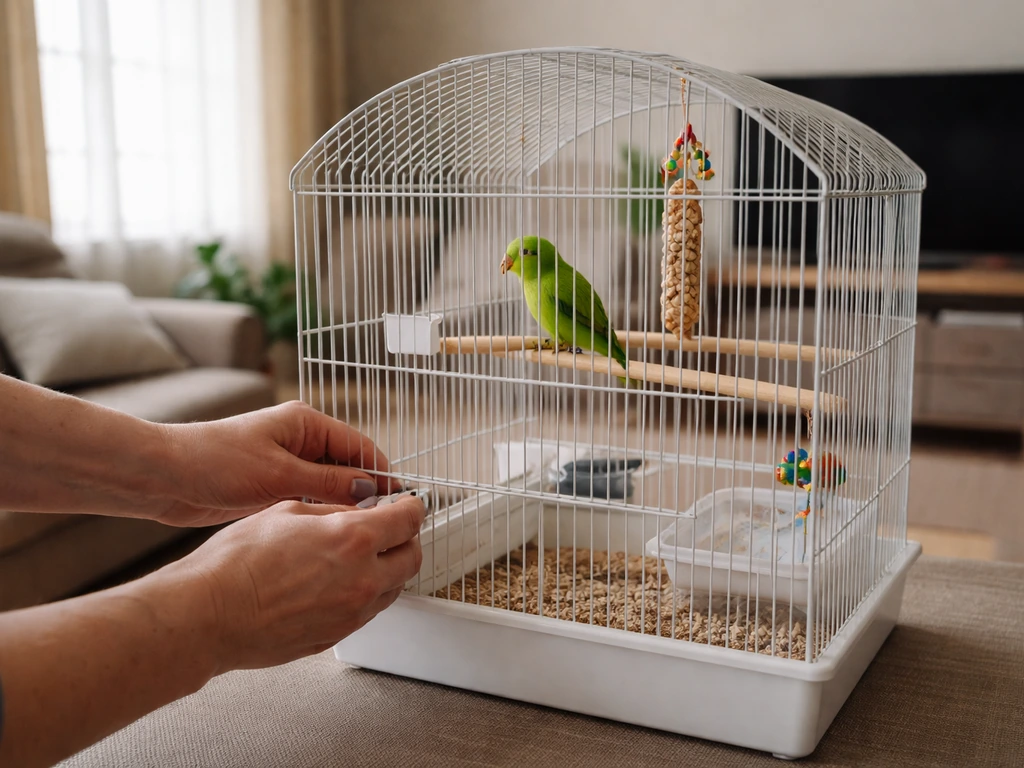
- Drape a light cloth over two sides of the cage to give the bird a sense of cover and safety without blocking all airflow.
- Offer a foraging toy or puzzle feeder right now to redirect beak activity away from feathers.
- Check the temperature around the cage. Most parrots are comfortable between 65°F and 85°F (18°C to 29°C). Cold drafts or dry air from heating vents are common triggers.
- If you can see broken skin or bleeding, do not attempt home treatment beyond very light pressure with a clean cloth. This is a vet call, not a DIY fix.
- Note the time, location on the body, and what was happening just before you saw the plucking. You will need this pattern information for your vet.
An blank" rel="noopener noreferrer">Elizabethan collar (E-collar) is sometimes fitted by a vet to prevent a bird from reaching its feathers and causing further self-trauma, but as VCA notes, the collar is only a bandage. It does nothing to fix the underlying cause and can itself cause stress, so it should only be used under veterinary guidance and never as a first-response grab from a pet shop.
Identify the cause: stress, boredom, pain, or environment
Feather-destructive behavior sits at the intersection of medical and psychological causes, and you genuinely cannot tell them apart by looking at the bird.
According to the Merck Veterinary Manual, feather loss and plucking can have both medical causes (such as skin inflammation or infection, cancer, malnutrition, and toxin exposure) and psychological causes (such as stress, boredom, and sexual frustration), and behavioral feather plucking is suspected when medical causes aren’t found Merck Veterinary Manual, true medical causes include systemic illness, skin inflammation or infection, cancer, malnutrition, and toxin exposure. .
According to the Merck Veterinary Manual, true medical causes include systemic illness, skin inflammation or infection, cancer, malnutrition, and toxin exposure. Psychological causes are linked to stress, boredom, and sexual frustration. LafeberVet's clinical guidance is clear: always rule out medical causes first, because behavioral causes are essentially a diagnosis of exclusion. LafeberVet provides clinical guidance on feather picking, including potential causes and the role of veterinary evaluation and testing [rule out medical causes first](https://lafeber.
com/vet/feather-picking/).
The following checklist helps you categorize what you are seeing before you contact a vet, which speeds up the diagnostic conversation considerably.
Medical red flags (call your vet today or tomorrow)
- Plucking started suddenly with no change in environment or routine
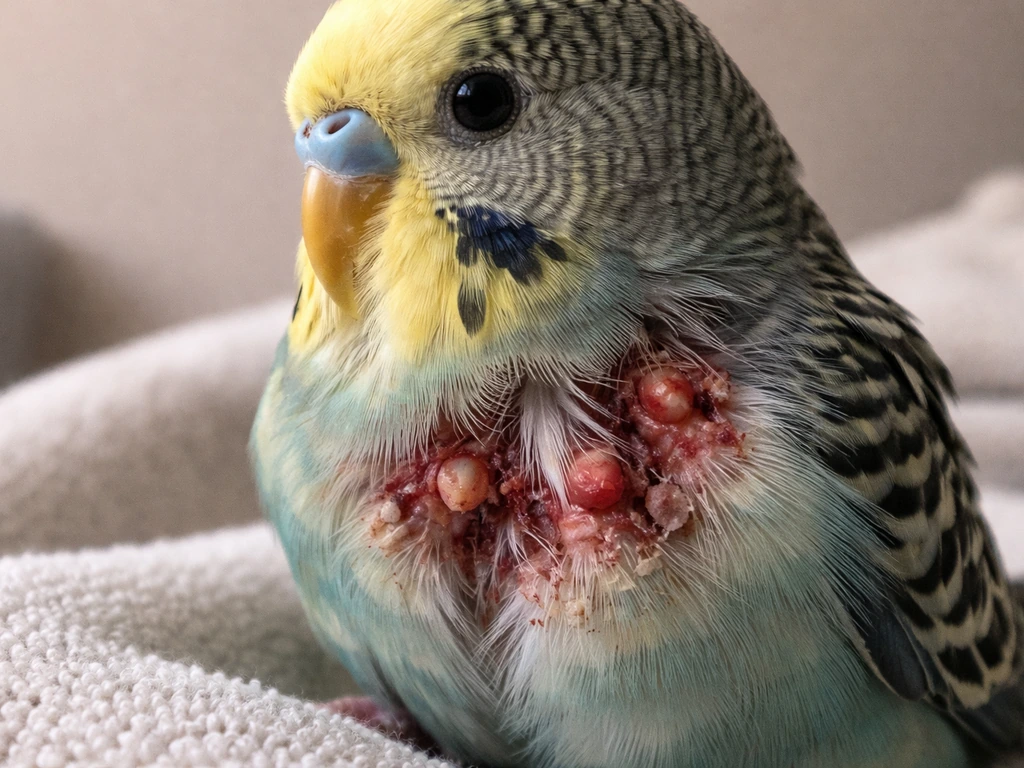
- You can see broken skin, scabbing, bleeding, or swollen follicles
- The bird is also lethargic, losing weight, has changes in droppings, or is breathing with effort
- Plucking is concentrated on the head or neck (areas the bird cannot easily reach, suggesting a companion bird or a mite issue)
- The bird is sneezing repeatedly or has discharge around the nares
- Feather quality has changed: overly brittle, discolored, or stress bars visible on multiple feathers
Behavioral and environmental red flags (start fixes today)
- Plucking began after a schedule change, a new person or pet in the home, a cage move, or a period of reduced interaction
- The bird spends more than 10 to 12 hours a day alone
- The cage has fewer than three enrichment items or they have not been rotated in over two weeks
- The bird is getting fewer than 10 to 12 hours of darkness per night (important for hormonal regulation)
- Diet is seed-heavy with little variety in fruits, vegetables, and formulated pellets
- High humidity or very dry air (below 40% relative humidity) around the cage
Behavior and husbandry fixes you can do today
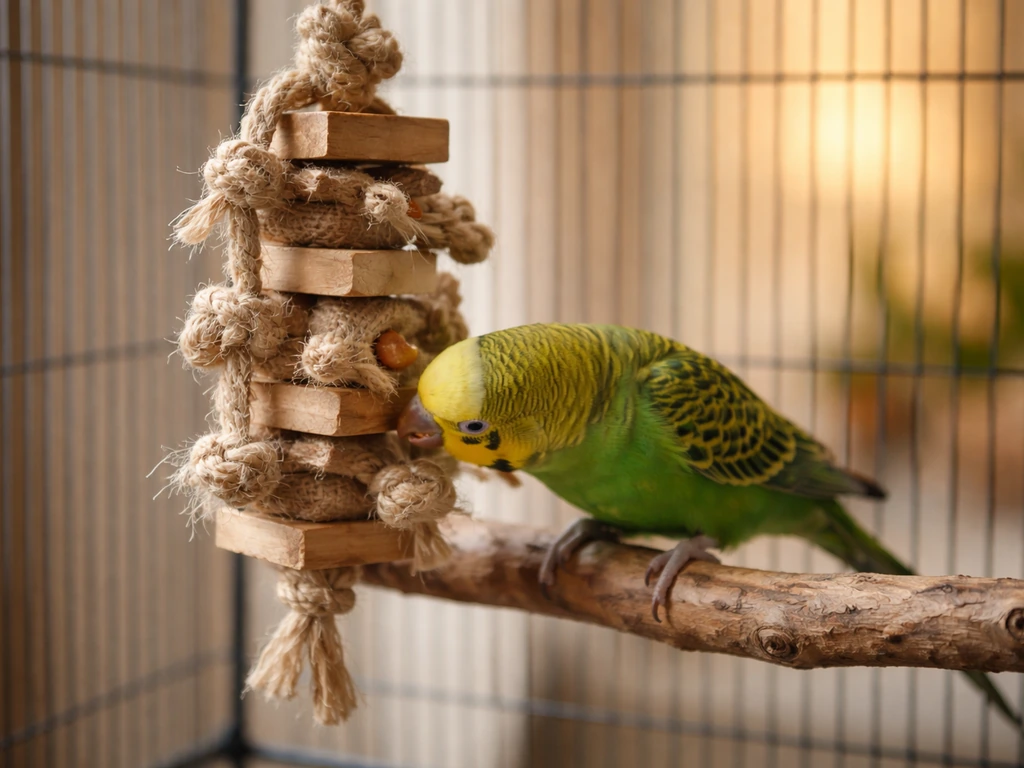
Once you have ruled out an immediate medical emergency, there is a solid list of husbandry changes you can make today that address the most common behavioral drivers of feather plucking. These are not substitutes for a vet visit if red flags are present, but they are the right things to do in parallel.
Enrichment and interaction
- Introduce at least one foraging toy that requires the bird to work for food. Foraging occupies the beak and the brain at the same time.
- Rotate two or three toys out of the cage every three to four days. Novelty matters more than the number of toys present.
- Increase your hands-on interaction by 15 to 20 minutes spread across the day rather than one long session. Multiple short interactions are better for anxious birds.
- Use training sessions (simple target training with a stick works for most parrots) to build confidence and give the bird a sense of control over its environment.
- If the bird is alone during the day, leave calm talk radio or nature sounds playing. Avoid heavy bass or sudden loud sounds.
Diet improvements
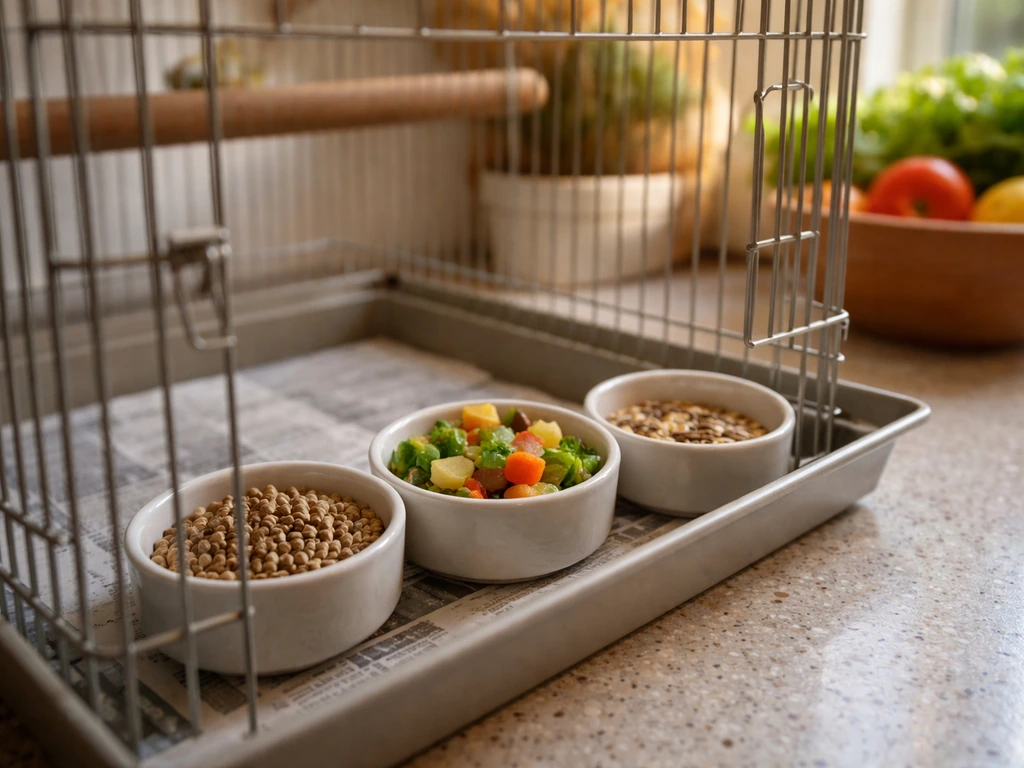
- If the bird is on an all-seed diet, begin transitioning to a formulated pellet base (60 to 70% of diet) mixed with fresh vegetables, fruits, and some seeds as treats. Nutritional deficiencies, especially in amino acids and certain vitamins, directly affect feather quality and skin health.
- Ensure fresh water is available and changed at least once daily.
- Avoid avocado, chocolate, onions, caffeine, and any food with artificial additives.
Sleep and routine
- Cover the cage fully at a consistent time each night to provide 10 to 12 hours of darkness. Inconsistent light cycles disrupt hormones and raise baseline stress.
- Keep feeding, out-of-cage time, and sleep at the same times each day. Birds are highly routine-dependent, and unpredictability is a genuine stressor.
- If the bird is in a high-traffic area of the home, consider moving the cage to a quieter spot during the main sleeping window.
Medical and parasite checks plus when to see an avian vet
A standard avian wellness exam for a feather-plucking bird will typically include a physical examination, weight check, blood panel (CBC and chemistry), and in many cases a skin scraping or feather pulp test to check for bacterial or fungal infection and ectoparasites. Your vet may also recommend a crop swab, fecal test, or imaging depending on what the physical exam finds. Bring your written notes about when the plucking started, where on the body it occurs, and any recent environmental changes.
Parasites are a less common cause in indoor pet birds than in wild or aviary birds, but they do occur. Red mites (Dermanyssus gallinae) are nocturnal and may not be visible during the day, so check the cage seams and perch ends with a flashlight at night if you suspect them. Feather lice leave a distinctive powdery debris at the base of feathers. Both are treatable with appropriate avian-safe products, but you need a correct diagnosis before applying anything to the bird.
When to call the vet right away (do not wait)
- Active bleeding or open wound on the skin
- The bird has plucked an area completely bare and is now breaking skin
- Signs of systemic illness: lethargy, fluffed feathers combined with eyes closed during the day, labored breathing, or no interest in food for more than 24 hours
- Sudden onset plucking in a bird that has never done it before, especially in a bird over five years old
- You suspect toxin exposure (new paint, non-stick cookware fumes, cleaning products used near the cage)
Environment and enrichment changes (perches, nesting, routine)
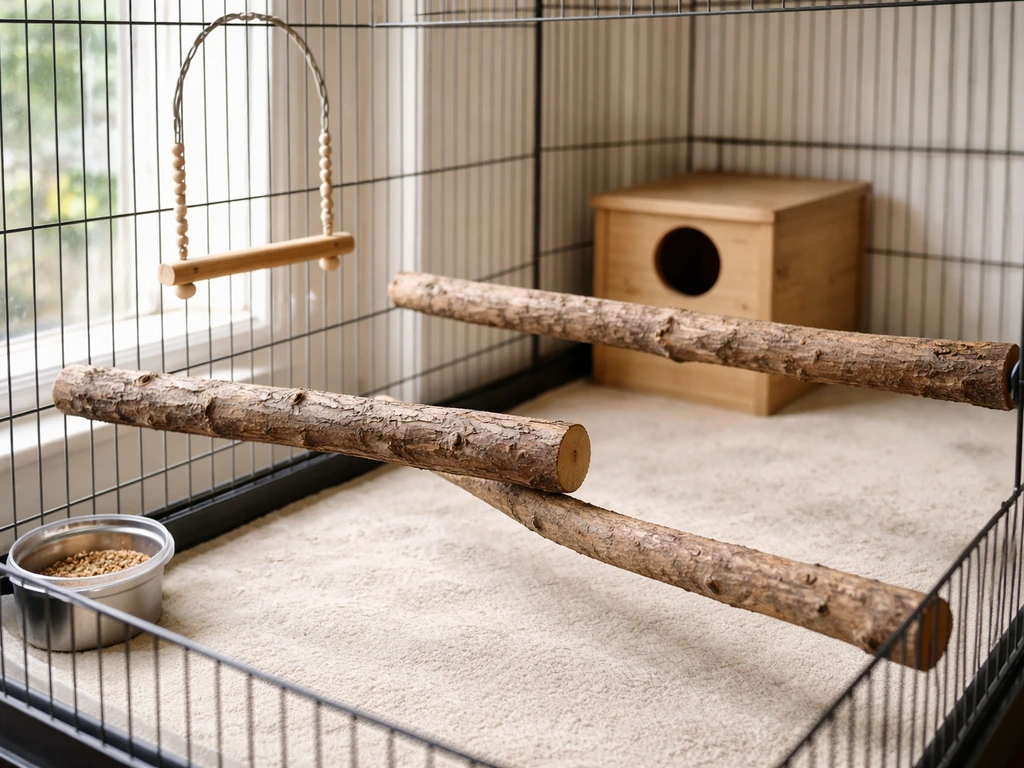
The physical environment of the cage is often overlooked and it matters more than most owners realize. A bird that is uncomfortable, cramped, or bored is a bird that will redirect that energy somewhere, and feathers are the most accessible target. If your bird targets its own reflection in windows or mirrors, address that trigger alongside the general environment and enrichment changes stop a bird from attacking its reflection.
Cage and perch setup
- The cage should be wide enough for the bird to fully spread both wings without touching the bars. Height is less important than horizontal space for most parrots.
- Provide at least three perches of varying diameter and texture (natural wood, rope, and a therapeutic perch with an irregular surface). Uniform round dowels cause foot problems and boredom.
- Position one perch at a height that gives the bird a clear view of the room's main activity area. Birds are prey animals that need to see what is coming.
- Remove or replace frayed rope toys promptly. Loose fibers can catch on feathers and cause secondary plucking as the bird tries to free itself.
- Clean the cage thoroughly at least once a week. Bacterial buildup on perches and cage bars can cause skin irritation that drives plucking.
Nesting and hormonal triggers
Nest boxes, dark enclosed spaces, and even certain toys can trigger hormonal behavior in pet birds, particularly in spring. A hormonally aroused bird is significantly more likely to pluck. If plucking increases seasonally (roughly February through June in the Northern Hemisphere), remove any nest-like items from the cage, reduce daylight hours artificially by covering the cage earlier, and discuss hormonal management with your vet if the seasonal pattern is severe.
Bathing and humidity
Dry skin is a real driver of feather plucking, and indoor heating during winter months can drop relative humidity below 30%, which is far too dry for most parrots. Mist your bird with lukewarm water two to three times per week or offer a shallow bathing dish. A small cool-mist humidifier near (but not directly blowing at) the cage during dry months can help considerably. Target 50 to 60% relative humidity around the cage.
Long-term prevention plan and building-proofing basics
Stopping the current plucking episode is only half the job. Keeping it from coming back requires a maintenance mindset, and a simple schedule makes that manageable.
| Timeframe | Action |
|---|---|
| Daily | Fresh water, foraging opportunity, 15-20 min of direct interaction, consistent lights-out time |
| Every 3-4 days | Rotate toys, check perches for damage or bacterial buildup, observe feather condition |
| Weekly | Full cage clean, weight check if scale is available, note any behavior changes in a simple log |
| Monthly | Review diet variety, assess humidity levels seasonally, inspect cage bars and perch fittings |
| Annually (or at first sign of relapse) | Wellness exam with an avian vet, update enrichment strategy based on the bird's current age and behavior |
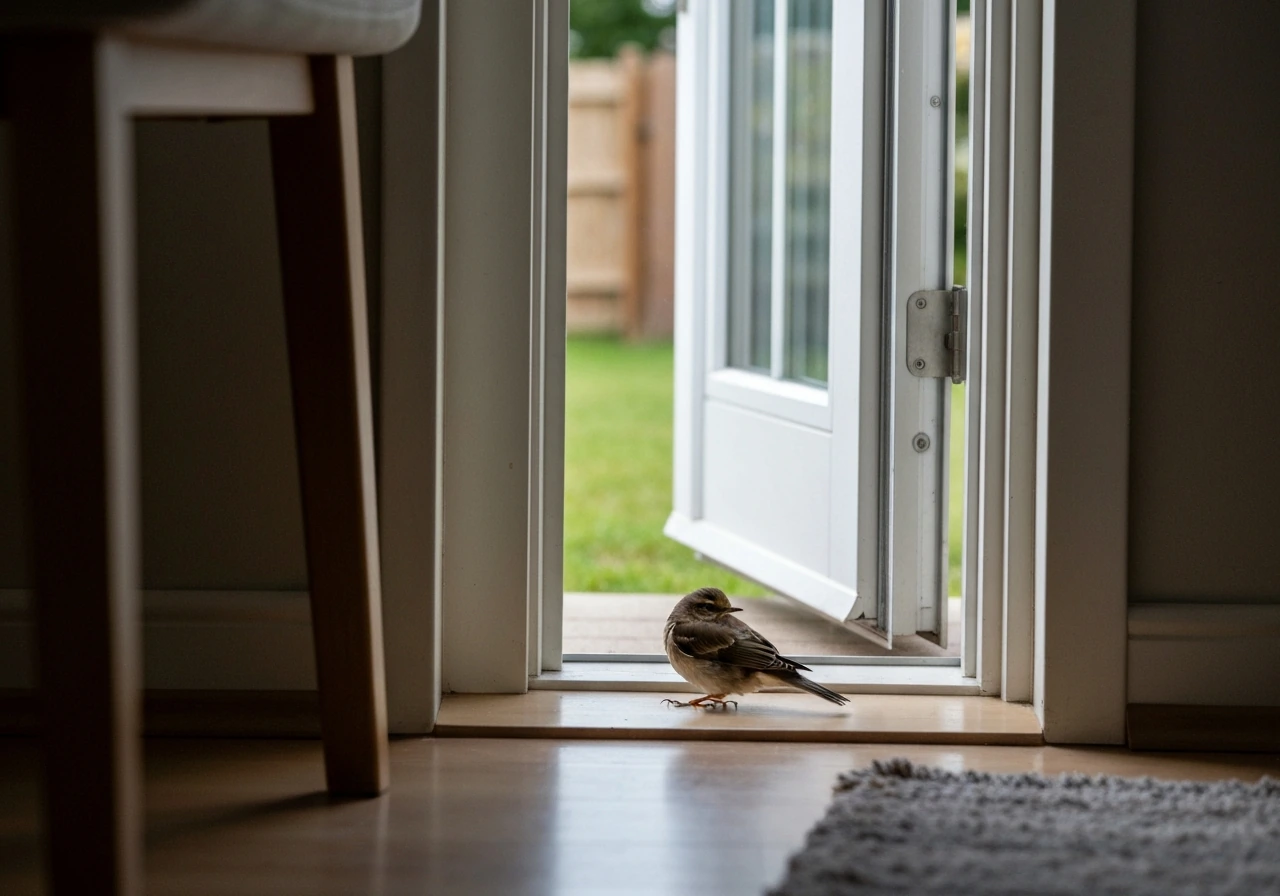
If you manage birds in a building context rather than a home setting (for example, parrots kept in a facility or a situation where wild birds have nested indoors and a trapped bird is injuring itself), the same husbandry principles apply for captive birds. For wild birds found inside buildings and showing signs of stress-related self-trauma, the intervention shifts quickly to wildlife professional territory, which is covered in the next section.
Building-proofing to prevent wild birds from entering and becoming trapped or stressed is also worth addressing as a long-term measure. If the issue you are dealing with is a bird attacking you instead of feather plucking, the best next step is to learn how to stop a bird from attacking me and keep distance safely while it calms down.
Seal gaps larger than half an inch in eaves, soffits, and roof edges after confirming no birds or active nests are present. To stop a bird from pecking at your house, seal entry points and reduce the spots that make the bird feel trapped or exposed Seal gaps larger than half an inch in eaves, soffits, and roof edges. Install bird-safe netting or wire mesh over vents and open structural cavities.
This prevents the scenario where a wild bird enters, becomes trapped, and develops stress behaviors including feather damage.
When to escalate to a wildlife or professional animal handler (legal and safety notes)
If you are dealing with a wild bird rather than a pet bird, the legal landscape changes significantly and you need to know this before you intervene. In the United States, the Migratory Bird Treaty Act (MBTA) prohibits taking, possessing, or disturbing migratory birds and their nests or eggs without a valid federal permit. This covers the vast majority of wild bird species you are likely to encounter. In the UK, the Wildlife and Countryside Act 1981 similarly protects active bird nests, and moving a nest at the wrong time can be a criminal offense, as the RSPCA notes.
This means that if a wild bird has become trapped inside a building and is injuring itself, you generally cannot handle, relocate, or treat it yourself without legal risk. The right move is to contact a licensed wildlife rehabilitator or your local animal control authority. Provide them with the species if you can identify it, the location inside the building, how long the bird has been there, and any visible injuries. They have the permits, equipment, and training to handle the situation safely and legally.
Escalation checklist: when to make the call
- The bird is a wild or migratory species (not a domestic pet bird)
- A pet bird has open wounds, is bleeding, or has stopped eating for more than 24 hours and a vet visit is not happening within hours
- Your vet has already run a full diagnostic workup and the plucking continues despite treatment, suggesting a complex behavioral or neurological cause that needs a board-certified avian specialist or veterinary behaviorist
- A wild bird has nested inside a building and chicks are present: do not remove without a permit
- You are managing a multi-bird facility and plucking is spreading to other birds, which can become a learned behavior or indicate a systemic environmental problem requiring professional assessment
Feather plucking is one of the most frustrating problems bird owners and facility managers face because the causes are layered and the fix is rarely a single change. But the path forward is straightforward: reduce stress today, rule out medical causes with a vet, fix the environment systematically, and maintain a consistent routine.
If your bird is biting your ears instead of plucking feathers, the same approach applies: address stress, make the environment less stimulating, and consider behavior training with clear boundaries. If your goal is how to stop bird attacks, start by making the environment safer and less stressful for the bird and the people around it reduce stress today.
If your bird is biting, that is still a behavior you can manage by reducing the underlying triggers and getting medical issues ruled out. Most birds improve significantly within four to eight weeks when all the contributing factors are addressed together. Keep a simple weekly log of where plucking is occurring and what changed in the environment, because that data is the single most useful thing you can bring to your vet or a wildlife professional.
FAQ
What should I do in the first 30 to 60 minutes if the bird is actively breaking feathers or bleeding?
Don’t rely on mittens, bandages, or wrapping feathers yourself. If the bird can still reach the area, the problem usually continues or worsens, and covering skin can hide infection. Instead, use temporary protection only as your vet directs (for example, an E-collar or a supervised barrier) while you start stress reduction and schedule a medical check.
How can I best track details for my vet when trying to figure out why my bird is plucking?
Start with a “where and when” map and a short symptom list for your vet. Note body locations, whether there are open wounds or crusting, changes in droppings or appetite, any new foods or supplements, and any recent household changes (new pets, construction noise, relocation, new cage accessories). This helps your vet prioritize skin and systemic causes faster than you can by guessing.
How do I tell whether my bird’s plucking is more likely medical versus behavioral?
Yes, and it changes your plan. If you see bald patches plus red, scaly skin, swelling, or rapidly expanding lesions, treat it as possibly medical first (infection, inflammation, mites, or other skin disease). If the bird plucks despite stable care, normal skin appearance, and adequate enrichment, stress or hormonal drivers become more likely, but you still should not skip ruling out medical causes.
Can I stop feather plucking just by adding more toys and attention?
Focusing only on toys can backfire if the underlying issue is skin disease, dry air, parasites, or hormonal triggers. Treat enrichment as a redirection tool, not the root-cause fix. If plucking continues in the same reachable areas after a couple of enrichment changes and stable routine, schedule a vet workup rather than adding more and more distractions.
What if my bird plucks mostly when it sees itself in mirrors or windows?
Common triggers include mirrors, windows, and polished surfaces that create a persistent “mate” or territorial target. If plucking increases when you’re home or during certain daylight hours, cover reflective surfaces, reposition the cage away from direct sightlines, and keep the schedule predictable. Consider that the trigger may be social, not boredom.
What’s the safest way to increase humidity if I suspect dry skin is driving plucking?
First check for dry-air signs, then increase moisture gradually. Use lukewarm misting or a shallow bathing option a few times weekly, and consider a cool-mist humidifier near the cage but not blowing directly into it. Avoid spraying aerosols scented products or using household humidifiers that may disperse unknown additives.
How should I handle seasonal or hormonally driven plucking without causing other problems?
Daylight management should be conservative. If you have nest-like items, remove them and reduce artificial daylight earlier in the day so you are not changing the bird’s schedule abruptly. If the plucking is strongly seasonal or accompanied by mounting, regurgitation, or aggression, discuss hormonal management with your avian vet rather than trying extreme light changes yourself.
What’s the safest way to treat suspected mites or lice?
If you suspect mites or lice, you need correct identification before treatment. Some products can irritate skin or be ineffective if the cause is different. Also, address the environment, not just the bird, by cleaning and washing cage components per your vet’s or product’s guidance, since red mites can hide in seams and return after partial treatment.
Can I use topical creams or oils to stop plucking and heal the skin?
Don’t use human allergy or steroid creams, and don’t apply “natural” oils directly to feather follicles. They can trap moisture, worsen inflammation, or interfere with a diagnosis. If skin is irritated or broken, let your vet recommend the exact topical approach after they rule out infection and parasites.
How long should it take to see improvement, and what if it gets worse before it gets better?
Yes, it can take longer than you expect, even when you act quickly. Most birds improve over weeks when you remove stressors, correct husbandry, and address any medical issues, but early gains can be subtle and relapse can happen during changes in routine. A weekly log of body locations and environmental changes helps you and your vet distinguish progress from setbacks.
When is it urgent enough to contact an avian vet right away?
If the bird is still actively plucking, do not wait for “full healing” before pursuing the root cause. The priority is to reduce damage, confirm health, and keep conditions stable. If wounds are present or expanding, contact an avian vet urgently for exam and skin testing, even if you have already started lowering stress.
What should I do if I find a wild bird trapped indoors and it is injuring itself?
For wild birds, legal and safety issues matter. In most places in the US and UK, you should not handle or relocate an injured or trapped wild bird without the appropriate authority or permits. Contact licensed wildlife rehabilitators or local animal control, and provide timing, exact location inside the building, and any visible injuries so they can send the right help.